Speech and Hearing Science - Chapter 4 Breathing
 Call Kai
 Learn
Learn Practice Test
 Spaced Repetition
 Match
Match Flashcards
 Knowt Play
1/72

There's no tags or description
Looks like no tags are added yet.
Name | Mastery | Learn | Test | Matching | Spaced | Call with Kai | Chat |
|---|
No analytics yet
Send a link to your students to track their progress
73 Terms
breathing
inhal/exhal of air
inhal/inspiration
movmt of air INTOOO upper and lower airways
upper airway
above glottis
exhlation/expiration
movmt air OUTTT of lower and upper airways
respiration
gas exchange at cellular
lower structures
trachea, brochii tree, lungs and aveolli, supprtng systems like skelteal etc
lungs
smooth, spngy. right side has 3 lobes left side has 2 lobes
lugs are elastic and exert inward relaxation SMOOTH MUSCLE INVOLUNTARY
blood vessels, connective tissue, brochialtree passageway is 90% air
lungs increase in what 3 directions. why
A to P
I to S
and laterrally
lungs attached to thoracic cage
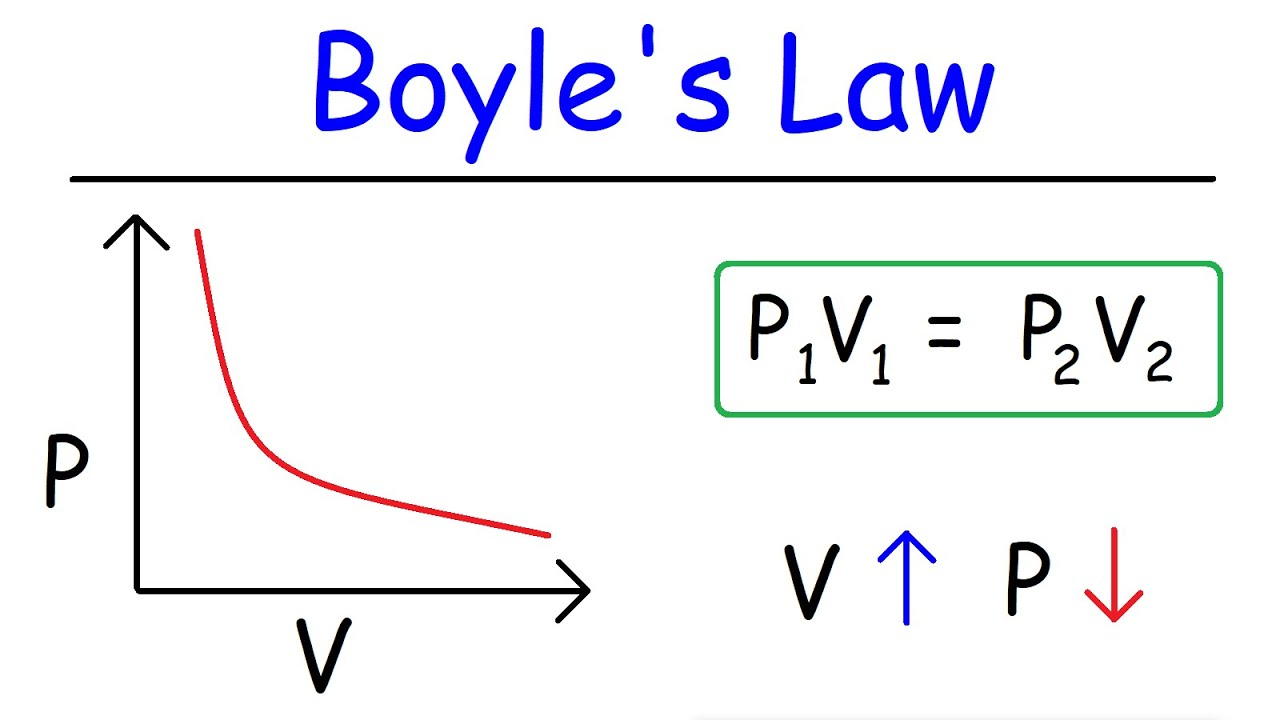
increase lung volume leads to ___ pressure compared to atompheric pressure
lowering
boyles law
*given constant temp
what veretebrae is the traches at
T6
terminal bronchial
last bronchi, tiniest
how many divisions or generations of bronchi
38
first 9 are not engaged in gas exchange. this is called dead space!
alveoli
size?
number?
func
microscopic
7 million
helps maintain concentration gradient for ventilation!!!! - surfactant prevents collapse of lung.
skeletal framework includes
bones, cartilages, ligaments and tendons
pectoral gridle
ribcage
sternum
spine
pelvic girdle
PROTECTION, STABILITY N MOVEMENT
joints are important for what
relelveant for MOVEMENT
recall types of joints from a&Pneur
neural control func
makes mvmt possible
cns - brain and spinal cord
pns - cranial and spinal nerves
afferent vs efferent
extrapyramidal and IAP
regulate tone and posture
motor control
functins of neural control sysems
dap/pyramidal
excitatory / contractions
control circuit
regulaye purposeful motion
fcp/lmn
mediates all activity
more number of muscle fibers innervated = higher ___ ration. which leads to ___
innervation ration
leads to actual muscle action that supports gross movements
percentage of possible contraction
10-50%
what is a passive movement for muscles
relaxation
4 diff work of muscles
isotonic - contract shorten
concentric - chorten mvmt of skeleteal
isometric- contract opposed by another muscle, no shorten no mvmt
eccentric - conract, partially opposed, mvmt is slowed
mvmt depends on __ of muscle
load
load can be or .
iinternal or external body forces
internal - weight of the body parts and opposing pull of muscles
external - from outside , gravity etc
muscles work in pairs
agnoist - prime mover
antagonist - opposes contraction
muscle activity is not mutually exclusive
inhale throacic….
raisies and expands
and vice versa for exhalation
during inhalation the diarpgam
flattens in center and spreads on edges which compresses the abdominal contents
what does it mean for muscle to produce synergy
stability, expansins, elevation and ddepression that is all controlled
motor eualivance
using diff muscles in unique ways to come to a same goal
different betwn castal and rostal intercoastals
tidal breathing
inhal and exhal during restful breathing
visceral pleura
lung layer
parietal pleura
thoracic cavity lavyer
what should the intrapleural pressure be btwn lung
-5 cm h20/ neg pressure pulls it outward so important
prevents collapse!!

thoracic vs lung pressure relationship
lung always want to compress. thoracic wants to expand.
at 65% both ends are equally pulling
we cannot have more that 65% vital capacity. force btwn is too strong
elastic recoil force!!
quiet breathing cycle is
wherre does it begin
mention pressure/volume changes and direction
tidal breathing
begins with diapram
increase lung volume, reduce pressure, inward airflow, pressure equalizes
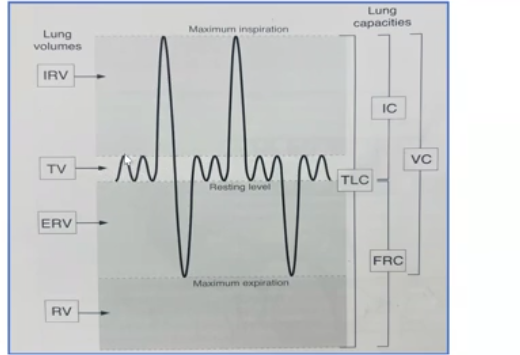
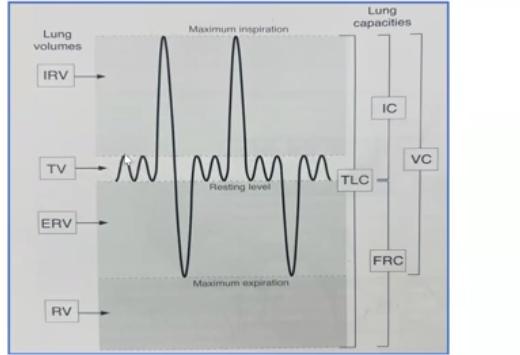
residual volume (RV)
past maximum expiration. there is no way for you to expel this air and still be alive.
residual air will completely empty if you are DEAD
vital capacity contins
breathing! big and quiet breathing.
IRV + TV + ERV
but NOOOOO residual volume
when you see vital think life or alive!
what is the “resting level”
the level in which quiet breathing (or tidal volume) occurs.

IRV vs ERV
maximum inspiration vs maximum expiration
erv stands for
expiratory reserve volume
maximum expiration
in efficent speaking we do not use this too often.
total lung capacity (tlc)
erthan!
IRV and ERV and RV
tidal breathing takes up what percentage of air?
how many cycles/min approximately?
how far is the diaphragm moving
15% of vital capacity
12-15 cycles per minute
diaphragm moves 1 cm
another term for forced inhalation
IRV - inspiration
more air than tidal volume
in tidal breathing is inpiration longer or shorter than expiration
shorter
what concept is important for speech breathing
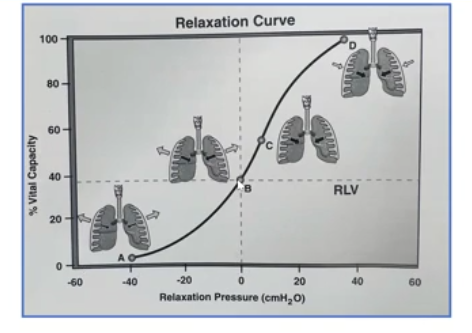
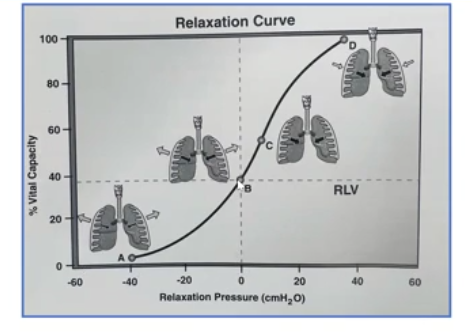
relaxation pressure concept
FRC stands for
functional residual capacity

positive relaxation pressure =
forces act to decrease lung volume
negative relaxation pressure =
forces act to increase lung volume
frc=
erv + rv
speech breathing requires lung pressure to be
maintained
subglottal pressure required for soft phoantion
2-3 cm H20
subglottal pressure for loud range
greater than 15 cm H20
2-30 is the full range
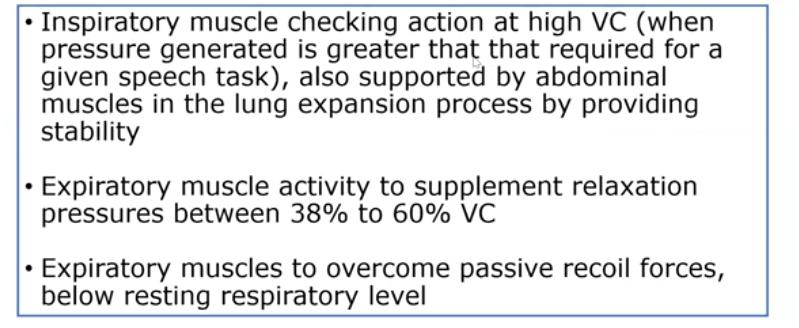
inspiratory muscle checking
rate of breathing during speech
12-20 cycles (like quiet breathing)
timing differs for speech!
volume and muscular activity differs as well.
exhalation and inhalation time for speech breathing
(percentage changes)
inhalation decreased from 40% to 10%
exhation increases from 60 to 90%
action of inspiration muscles directly realte to
lung volume
speech breathing is a __process
adaptive
posture, body type, cognitive-linguistic all affect speech
calcicular breathing
when you breathe in you raisie your shoulders. abd muscles is drawn in while inhaling
could be comfy for individ
chest breathing/high breathing
ab muscles is restrict and compressed. chest going up and down.
could be comfy for individ
when reading aloud higher __ rate
ventilation
airflow is work directly proportional to
pressure
airway resistance increases or decreases with diamater of
the tube!
bronchiole s are narrow but air resistance arent high because of all the branching!
elastic resistance effects speech breathing. the greater the elastic resistance the __ the lung volume
higher .
more work can be done.
viscosity is resistance to flow of fluids. breathhing while in sauna vs outside
dysfunc breathing disorders

dyspnea
shortness of breath
stridor
noisy breathing - turbulent flow (contriction)
fatigue associated breathing sounds like
more effort to speak
slp diagnosis speech breathing problems
not breathing disorders - thats for physicians