equine husbandry and handling
 Call Kai
 Learn
Learn Practice Test
 Spaced Repetition
 Match
Match Flashcards
 Knowt Play
1/19

There's no tags or description
Looks like no tags are added yet.
Name | Mastery | Learn | Test | Matching | Spaced | Call with Kai | Chat |
|---|
No analytics yet
Send a link to your students to track their progress
20 Terms
horse behaviour
like to play with each other in the herd
mutual grooming
highly social, so never live alone and can feel threatened if out of a herd
stereotypical behaviour of horses
box walking (repeated circuits around their stable)
weaving (standing still, the horse moves their weight from one leg to the other whilst swinging their head)
self mutilation (repeatednly nipping various areas of the body or kicking against objects)
crib biting (grasping a fixed object pulling backwards ‘gulping the air’)
wind sucking (swallowing the ai with their necks arched, similar to crib biting with no object)
what causes stereotypical behaviours and when are they first established
limiting ability to express atural bahviours
foragin
free to exercise
mutual grooming
companionship
stress
change in management
stereotypies established the first 9 months of life
foals stabled away from equines similar age at higher risk
restructed from forage after weaning- at high risk
what makes up body language
ear
eye
nose
head and neck
tail
posture
horse gives several warnings before reacting
kicking
biting
barging
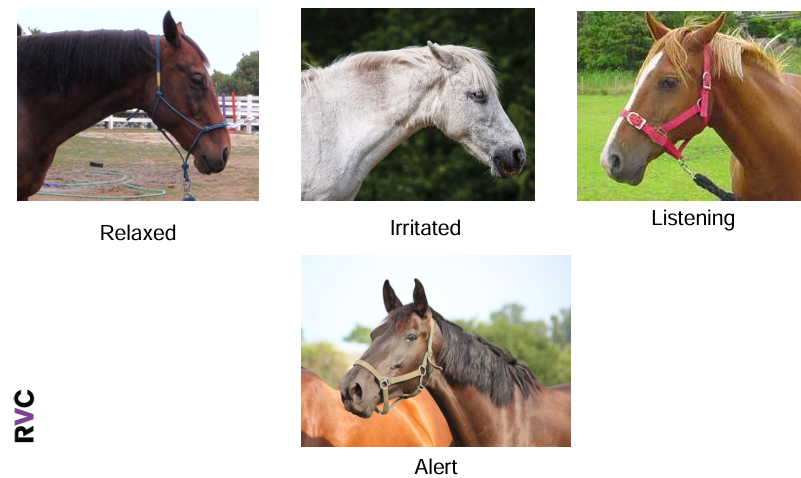
ear
pricked forward- alert or awake
drooping/floppy- dozing, content, relaxed and or happy
laid back- listening or focusing on something behind or concentrating
pinned back- annoyance or anger
multidirectional- hesitancy or confusion or listening in2 directions at once
eyes
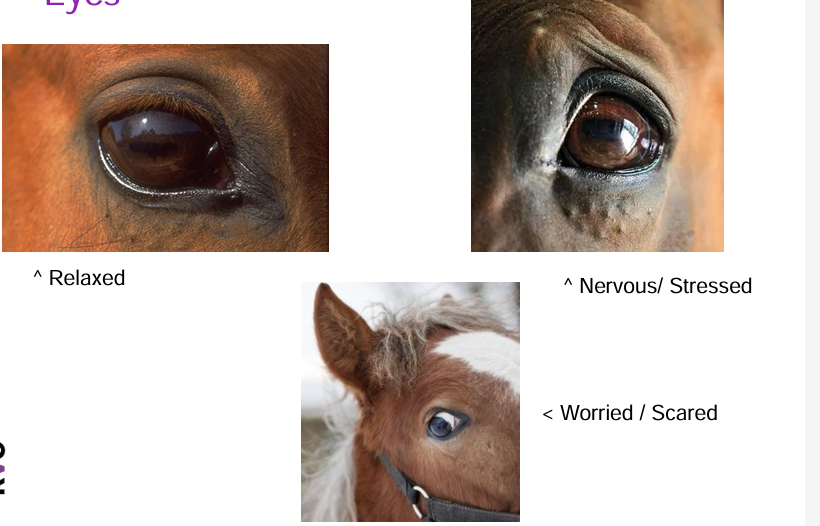
expressive
worried lines- wrinkled indicate discomfort, stress and fear
whites showing of hte eye- fear, alarm or anger
nose
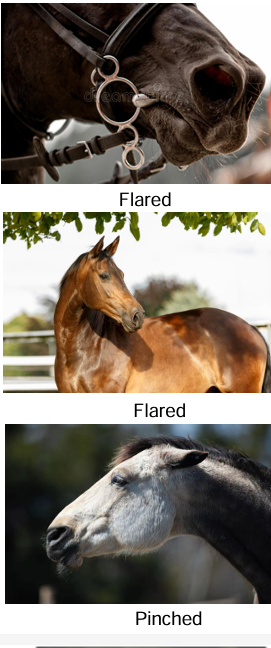
flared- frightened, anxious, after heavy exercise, omething of strong interest
pinched nostrils- anger pain or something of great concern
head and neck
arched- hesistant or mildly alarmed
head up- alarm or extreme agitation ;-;
to side wit ears pinned back- very angry >:(((
head tilted- interested :3
head extended and tilted- TREATS PLEASE!!! >o<
tails
swishing-angry, extremely agitated
clamped- fright
flagged- excited, seen a lot with arab
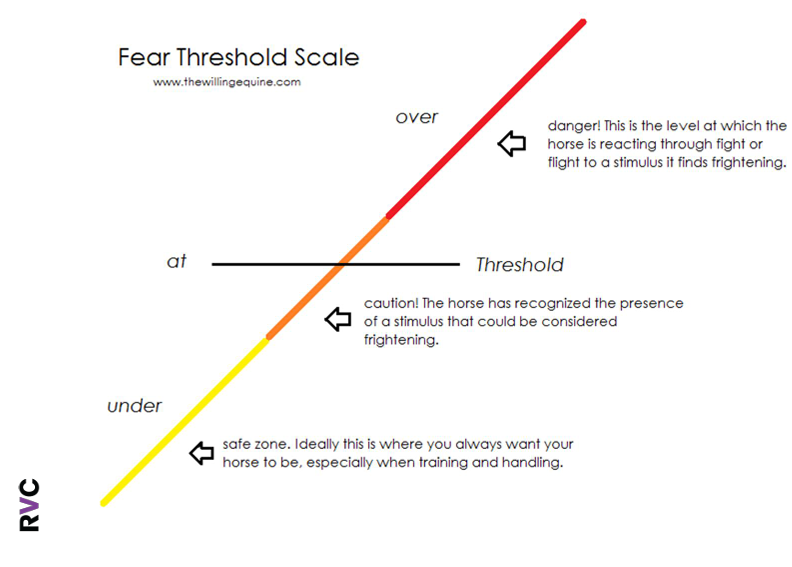
fear threshold
vocal communication
squeal and grunt- aggression or excitement
snorts- sees or smells something new or exciting
whinny- locating herd or excitement
whickering softly- a reassurance
blind spots and kick zone
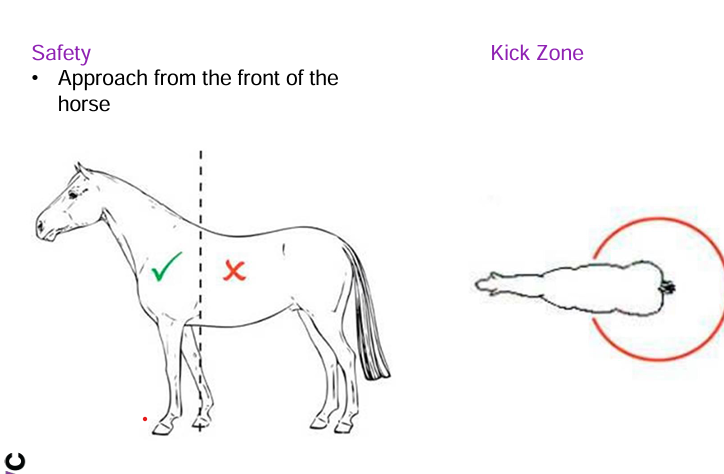
more flight zone
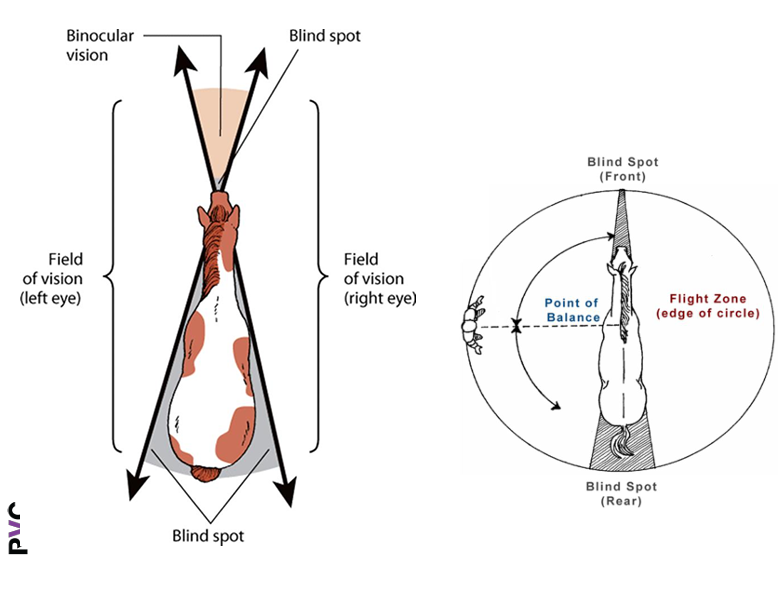
fight responses
biting
kicking
rearing
striking with forelimb
bucking more common under saddle
rearing- standing upright on hindlimb
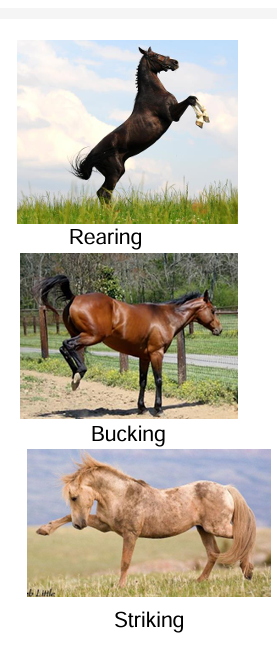
snaffle bridle
when is it used
what is it used for
what can be the cause
used when more control of direction and pace is needed
nearly always used for riding and driving
used when more control is needed eg when leaing a strong horse, new env, fresh
not all horses can have a bit in
jaw/mouth/dental injuries
young horse who has not been bitted yet
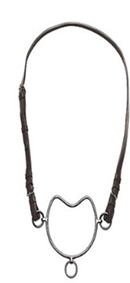
chifney
what is it used for
risks
does it have more or less control than a snaffle bit
anti rearing or ring
more controlthan a snaffle bit
many stallions, racehorses and very strong horses are rouinely handles in a chifney
due to their severity they can cause damage to the hrose if used inappropiately or by a rough handler
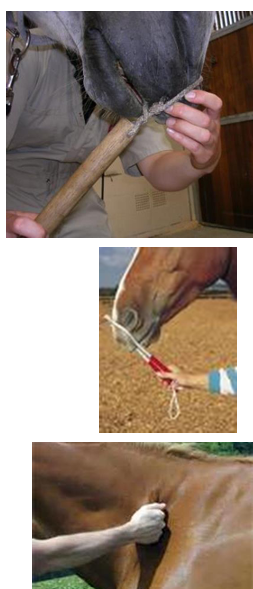
twitch
hw does it work
what should the horse where when this is placed
risks
length of time that should not be exceeded
what to check
works by releasing endorphins into the blood stream raising pain threshold causing the horse to go into a sedative state
horse should also be wearing a headcolllar and o bit when twitch is placed
not all accet and may become violent and dangerous
should not be left on for more than 5-10min
mske sure it is not rubbing on gums or so tight resulting in lesions
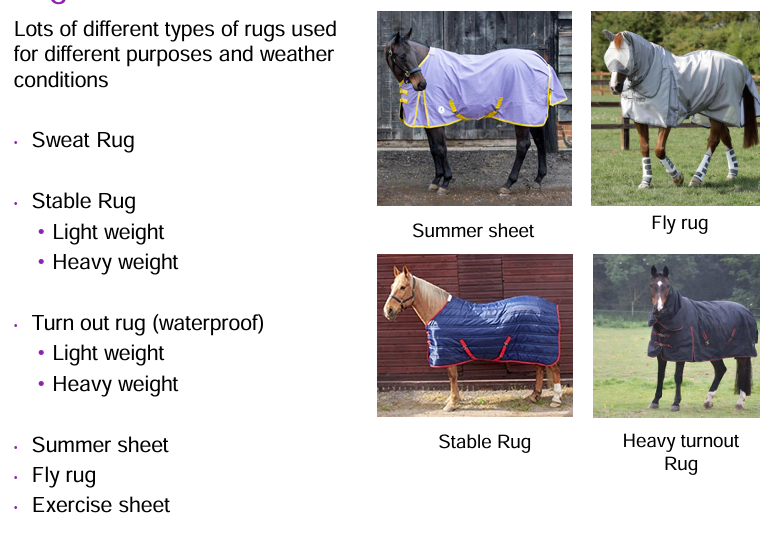
rugs
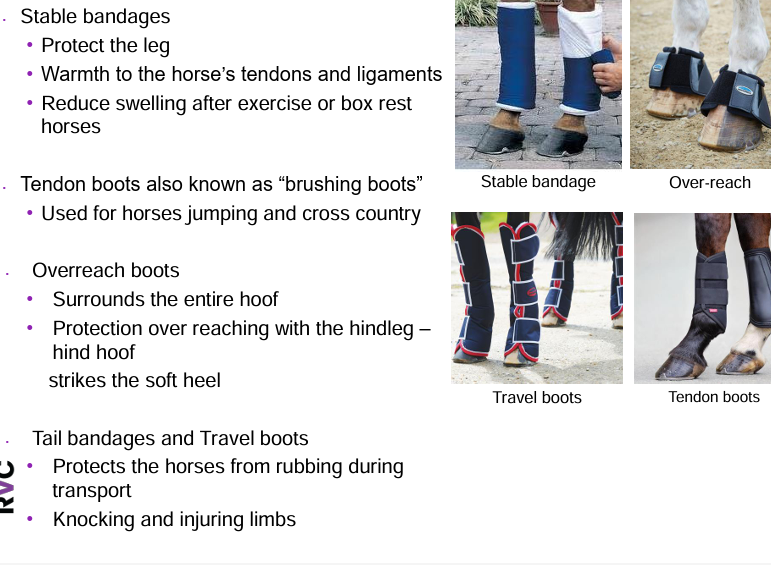
boots and bandages
what do you need in a grooming kit
body brish
dandy brush
hoof pick
plastic curry comb
rubber curry comb
mane comb
sponge
sweat scraper