Experiment 9: Viscosity and Refractive Index of Liquid Petroleum Products
 Call Kai
 Learn
Learn Practice Test
 Spaced Repetition
 Match
Match Flashcards
 Knowt Play
1/18

There's no tags or description
Looks like no tags are added yet.
Name | Mastery | Learn | Test | Matching | Spaced | Call with Kai | Chat |
|---|
No analytics yet
Send a link to your students to track their progress
19 Terms
Measure and calculate the viscosity of petroleum products
Study the effect of temperature on the kinematic viscosity of the petroleum products
Determine the refractive index of petroleum products
Objectives of the experiment
Viscosity
Meausre of the oil’s flow characteristics with resistance to flow
Kinematic viscosity
Measure of the flow characteristics of a fluid under gravity
Dynamic viscosity to the density, both at the same temperature
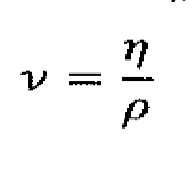
Ratio of kinematic viscosity
stoke (St) and has the units of cm2 /s
Unit of kinematic viscosity in cgs unit
m2 /s, 104 St
SI unit of kinematic viscosity and its equivalent to St
Centistoke (1/100 of a Stoke) = 1 mm2 /s
Common unit used in the petroleum industry
1.0039 cSt at 20o C
Kinematic viscosity of pure water
Absolute or dynamic viscosity
Measure of a material’s resistance to flow

Formula of absolute/dynamic viscosity
Poise (P)
Unit for dynamic viscosity
g/cm·s
Cgs unit of dynamic viscosity
0.1 Newton· second/m2
SI unit equivalent to poise
Specifications of lubricating oils
What dynamic and kinematic viscosity help define
1.002 cP at 20o C
Absolute viscosity of water
ASTM D445: Kinematic Viscosity of Transparent and Opaque Liquids
Most widely used method for determining the viscosity of lubricating oils
Time required for a volume of liquid to flow under gravity through a calibrated viscometer at a controlled temperature
What the viscosity determination is based on
40o C and 100o C
Kinematic values used to calculate the viscosity index of lubricating oils by ASTM method D2270
Gasoline
Motor oil
Diesel fuel
Viscometer
Viscosity bath
Refractometer
Materials used for the experiment