Periodic Table of Elements and Molecules
0.0(0)
Studied by 0 people Call Kai
 Learn
Learn Practice Test
 Spaced Repetition
 Match
Match Flashcards
 Knowt Play
Card Sorting
1/24

Earn XP
Description and Tags
Last updated 1:58 PM on 2/3/23
Name | Mastery | Learn | Test | Matching | Spaced | Call with Kai | Chat |
|---|
No analytics yet
Send a link to your students to track their progress
25 Terms
1
New cards
Describe an atom and what are the parts of an atom.
composed of subatomic particles: protons, neutrons, and electrons. Broken into the Nucleus and Electron Cloud
2
New cards
What are the charges and locations of protons, neutrons, and electrons?
Nucleus (Protons = Positive, Neutrons = Neutral), Electron Cloud (Electrons = Negative )
3
New cards
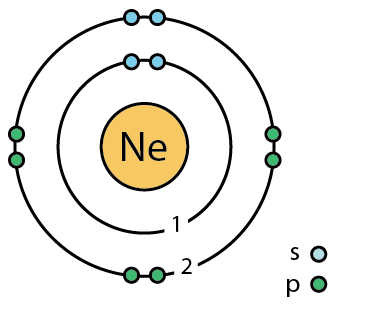
Neon - Bohr Model
P= 10
N= 10
E= 10
VE= 8
N= 10
E= 10
VE= 8
4
New cards
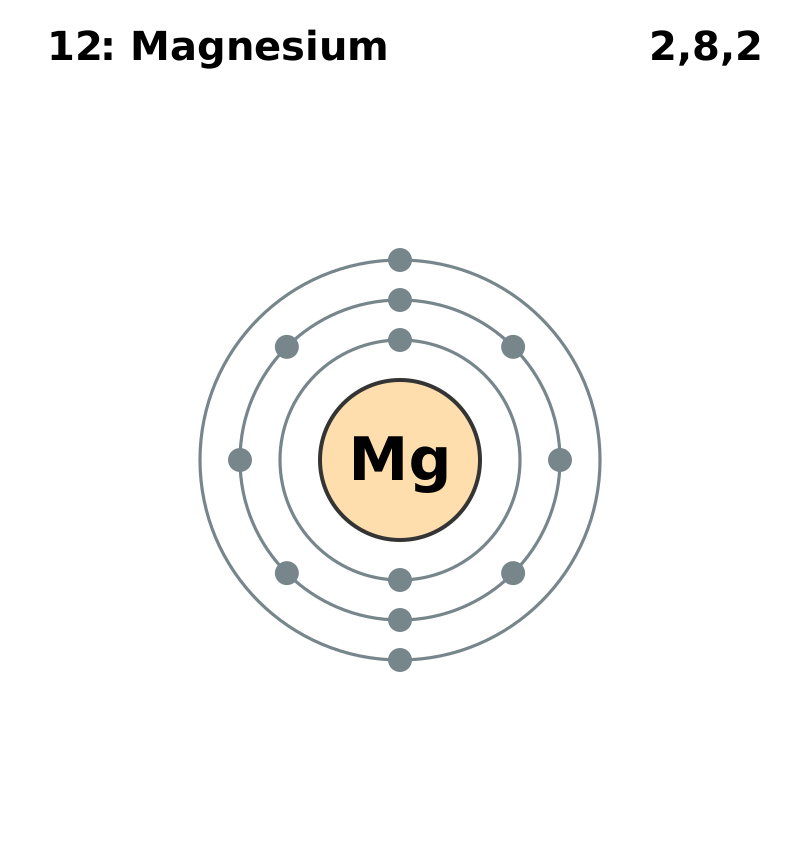
Magnesium- Bohr Model
P= 12
N= 12
E= 12
VE= 2
N= 12
E= 12
VE= 2
5
New cards
Description of Bohr Models.
The nucleus which contains protons and neutrons surrounded by the electron cloud containing the electrons and their energy level.
6
New cards
What does the atomic number indicate?
The number of protons.
7
New cards
What are the number of neutrons in Sulfur, Carbon, Nitrogen, Helium, and Aluminum?
16,6,7,2,14
8
New cards
How is the Periodic Table is organised?
Increasing atomic number and groups and rows.
9
New cards
What is a group of the Periodic Table?
Are the columns of The Periodic Table within the groups the elements hold similar characteristics and have same number of valance electrons.
10
New cards
What is a period of the Periodic Table?
Are the rows of the Periodic Table; also indicates the energy level.
11
New cards
What are three of the chemical and physical properties of metals?
Usually solid at room temp, shiny, dense, melt at a high temperature, few valance electrons, ductile, and malleable.
12
New cards
What are the names of the following groups? Group 1, Group 2, Group 3-12, Group 17, Group 18?
Alkali Metals, Alkaline Earth Metals, Transition Metals, Halogens, Noble Gases.
13
New cards
Which group of metals contains the most reactive metals?
Alkali Metals
14
New cards
What are three chemical and physical characteristics of nonmetals?
Dull, low density, melt at a low temperature, usually a gas at room temperature, brittle, poor conductors of heat and electricity.
15
New cards
Which is the most reactive group of nonmetals?
Halogens
16
New cards
What is the most stable group of nonmetals?
Noble Gases
17
New cards
What are three chemical and physical characteristics of metalloids?
Properties of both Metals and non metals, can be shiny or dull, ductile, malleable, semiconductors.
18
New cards
Why is an atoms charge zero?
It is zero because the number of protons and electrons are the same, protons are positive; electrons are negative therefore if you had 1 proton their would be 1 negative electron would be zero and neutral.
19
New cards
What is the number of valence electrons for the following elements Nitrogen, Oxygen, Phosphorus, Carbon, Sodium, Argon?
5,6,5,4,1,8
20
New cards
What does it mean for something to be Ductile or Malleable?
Ductile means stretched into thin wires
Malleable means pounded into thin sheets without breaking.
Malleable means pounded into thin sheets without breaking.
21
New cards
How many groups and how many periods are on the Periodic Table?
Group 18 and Periods 7
22
New cards
What are elements 57-71 called?
Lanthanides
23
New cards
What are elements 89-103 called?
Actinides
24
New cards
How many valance electrons are in Group 1, Group 13, Group 15, Group 17, Group 18?
1,3,5,7,8
25
New cards
What are the rules for valance electrons if an atom has 1-3 VE, 4 VE, 5-7 VE, or 8 VE?
1-3 will lose the electrons, 4 will gain/lose, 5-7 will gain, 8 will not gain or lose.