Chapter 8 Synaptic Communication
 Call Kai
 Learn
Learn Practice Test
 Spaced Repetition
 Match
Match Flashcards
 Knowt Play
1/63

There's no tags or description
Looks like no tags are added yet.
Name | Mastery | Learn | Test | Matching | Spaced | Call with Kai | Chat |
|---|
No analytics yet
Send a link to your students to track their progress
64 Terms
When a neuron communicates with another cell it is called a
synapse
Neurons communicate with:
another neuron, glial cells, effector organs
There are two types of synapses
chemical and electrical
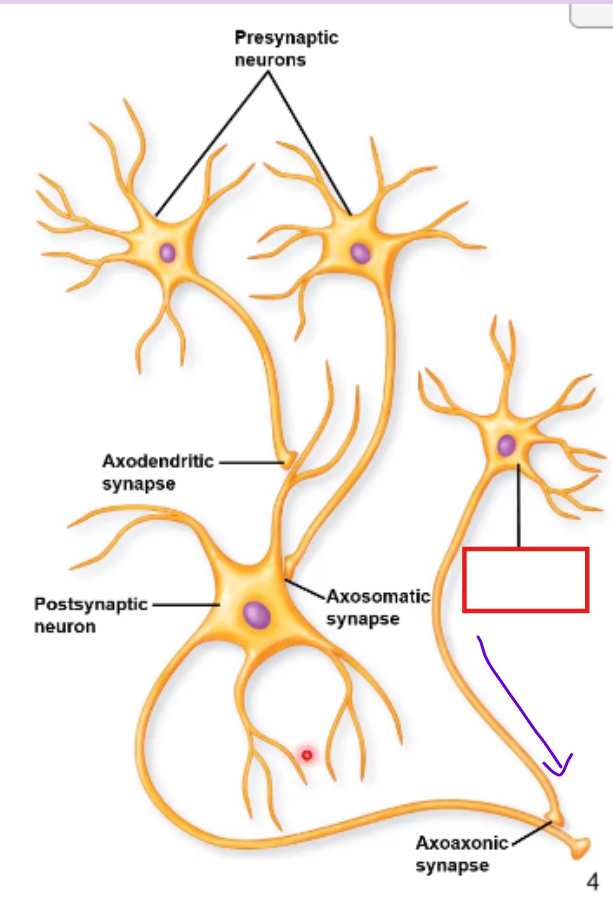
In a chemical synapse the neuron that is sending a neurotransmitter is the ___________ neuron
presynaptic

in a chemical synapse the neuron that is receiving is the ___________ neuron
post synaptic
in a chemical synapse the place where a presynaptic and postsynaptic neuron get close is the
synaptic cleft

Vesicles found in presynaptic neuron are derived by the ___________, these vesicles are packed with _________
Golgi complex; neurotransmitter
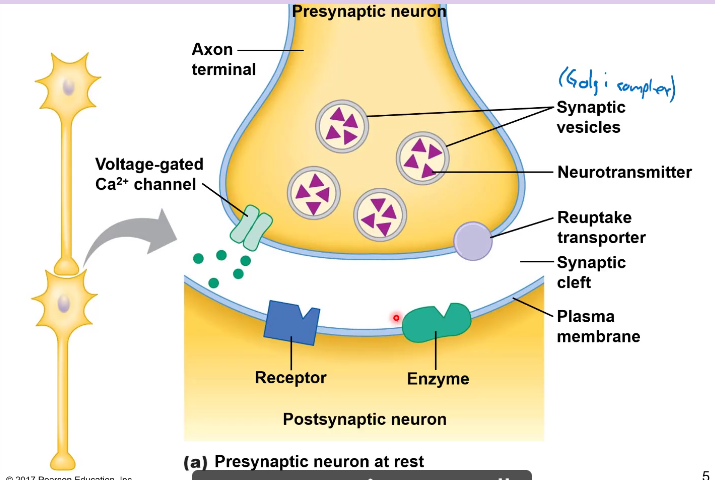
On the presynaptic neuron there is a ________________, and reuptake transporter
voltage gated calcium channel

on the post synaptic neuron there is:
a receptor and enzymes
voltage gated calcium channels open when membrane potential Vm is ________ above resting
depolarized
on the presynaptic axon calcium is higher _______
outside

When calcium enters the axon it binds with _________ on the membrane
protein complexes

The increase of calcium concentration triggers ________ of neurotransmitter from __________
exocytosis; synaptic vesicles
_______ diffusion causes the neurotransmitters to go from presynaptic cleft to postsynaptic
simple
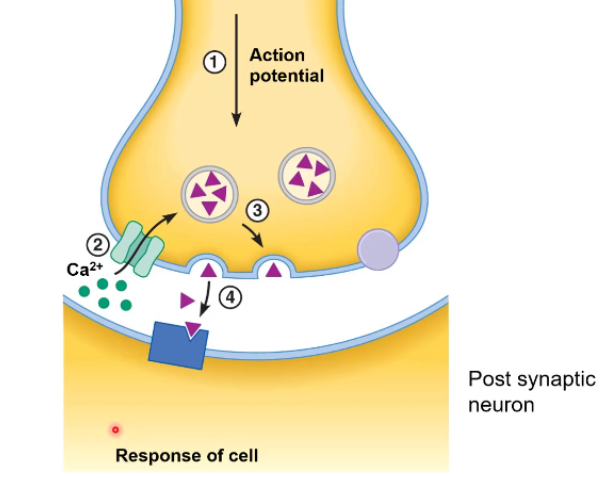
the postsynaptic cell has ______ for the neurotransmitter
receptor
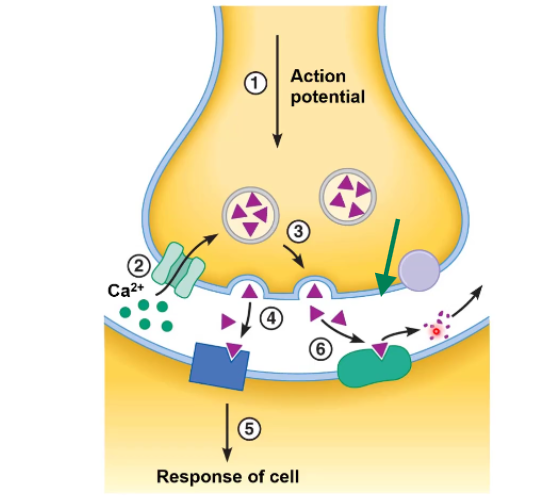
After the neurotransmitter does its job they are broken down by _______ on the postsynaptic cell
enzymes

some neurotransmitters are taken back by the presynaptic neuron through
another way to remove neurotransmitter
reuptake transporters
Aside from enzymes and reuptake transporters, another way neurotransmitters are removed is through ______
diffusion
time between the neurotransmitter being sent from presynaptic neuron to receptor on postsynaptic is called
synaptic delay
during the synaptic delay the ___________ machinery does its thing
exocytosis
another name for G protein coupled receptors is
these are slow compared to ionotropic receptors
amplify signals
metabotropic receptors

receptors on the postsynaptic neuron have ___________ allowing ions to pass through when open and closes after neurotransmitter unbinds. These are fast
ionotropic receptors

ionotropic receptors are:
ligand gated ion channels

when a neurotransmitter binds to a metabotropic receptor the G protein can go and bind to a:
ion channel

another thing the G protein does in a metabotropic receptor is bind to a _______ and a __________ is produced
amplifying enzyme; second messenger
Metabotropic receptor
the second messenger can find an __________ to open or close
or
the second messenger can produce _________
ion channel; other cell responses
when a neurotransmitter binding to a receptor changes the membrane potential on the post synaptic neuron it is called
postsynaptic potentials PSP
postsynaptic potentials PSP is a response to a __________ opening or movement of _______
ion channel; ions causing Vm change
postsynaptic potentials are ______ potentials
subthreshold to ac action potential
graded
When a post synaptic depolarizes a neuron it is called an
caused by Na+ or Ca++ entering cell
excitatory postsynaptic potential
most common neurotransmitters that trigger excitatory postsynaptic potential ESPS are
glutamate, acetylcholine
some postsynaptic potentials are hyperpolarizing
cause Vm to be more negative than rest
these are called
inhibitory postsynaptic potentials
inhibitory postsynaptic potential IPSP are generated when ________ enters cell or ________ leave cell
chloride; potassium
a common neurotransmitter that cause IPSP is
GABA

excitatory vs inhibitory
most likely to cause action potential
depolarization
excitatory

excitatory vs inhibitory
less likely to cause action potential
hyperpolarization
stabilize membrane
inhibitory
the type of postsynaptic potential that occurs depends on the
postsynaptic receptor

Ionotropic receptor is an __________ type receptor
excitatory

during a ionotropic receptor the driving force for _____ entry is much greater causing a depolarization
sodium

A net depolarization is a ____, it is fast
EPSP

Sodium enters the cell because the resting potential is ________ while potassium’s is _______
farther away; closer
why is the inside of a cell more negative than outside when resting?
nucleotides have a negative charge
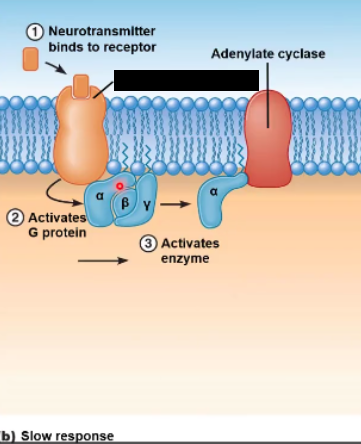
EPSPs can be generated by ___________ receptors as well. This response is ______
metabotropic; slow
receptors are?
proteins

When cAMP activated protein kinase A, it phosphorylates the ________ causing it to close
potassium channel
When potassium channels close and prevent potassium from leaving the cell, it causes _________________ because the ____________ was reduced.
net depolarization; hyperpolarization
with sodium coming in and potassium going out of the cell leads to a ______________ of the cell, which is an ______, a slow
net depolarization; EPSP
the channel linked receptors on the postsynaptic receptors allow __________
both sodium and potassium
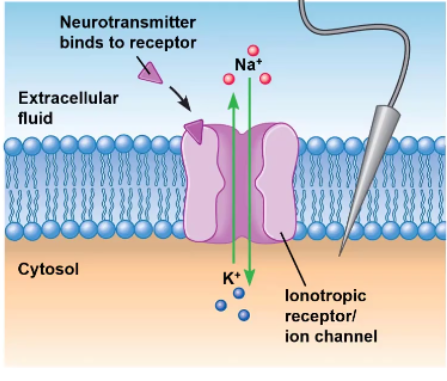
the resting potential is closer to ____ so there is a higher driving force for it
Ek
an inhibitory synapse generates an _________, which makes it difficult to get to AP threshold
IPSC
When a neurotransmitter from inhibitory synapse binds to a receptor, it opens channels for __________ or ___________
potassium; chloride
if an inhibitory synapse neurotransmitter opens a K+ channel it will ____________ the membrane inducing an ________
Potassium will leave cell
hyperpolarize; IPSP
if an inhibitory synapse neurotransmitter open a Cl- channel allowing chloride _____ the cell, causing an ______
into; IPSP

Potassium leaves cell causing a __________ or an IPSP
hyperpolarization

The reason why the membrane potential goes back up to rest is because the neurotransmitter will _________ randomly, causing the channel to _______
unbind; close
what is the all or none principle
an action potential occurs when it membrane potential reaches threshold and if it doesn’t there is no action potential
How does a neuron’s membrane potential reach/exceed threshold?
multiple synaptic inputs to the same neuron
what is summation
adding effects of graded potentials
IPSPs and EPSPs are both ________ potentials and can be summed
graded
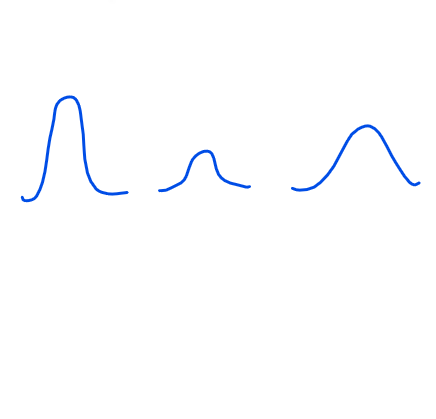
graded potentials can be big, tiny or somewhere in between
depolarization
EPSP
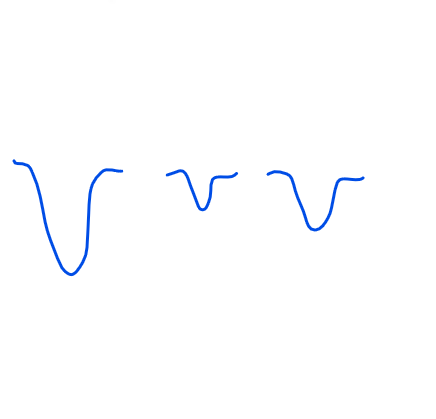
graded potentials can be big, tiny, or somewhere in between
hyperpolarized
IPSP