4.1 - Surface area to volume ratio
 Call Kai
 Learn
Learn Practice Test
 Spaced Repetition
 Match
Match Flashcards
 Knowt Play
1/14

There's no tags or description
Looks like no tags are added yet.
Name | Mastery | Learn | Test | Matching | Spaced | Call with Kai | Chat |
|---|
No analytics yet
Send a link to your students to track their progress
15 Terms
What is the relationship between an organism’s size & their SA:V ratio?
As organisms get bigger, their surface area : volume ratio gets smaller
Meaning, it becomes more difficult for them to exchange materials with their surroundings
How does SA:V ratio affect transport of molecules?
The smaller the SA:V ratio, the further the distance molecules need to travel to reach all parts of the organism
So diffusion alone is not sufficient
Why do larger organisms need a mass transport system but smaller organisms do not?
Larger organisms have a smaller SA:V ratio, so some cells are far from the surface
Diffusion alone cannot deliver oxygen, glucose & nutrients to cells
What 3 features do larger organisms require to survive because they can’t rely on diffusion?
Multicellular: their bodies are composed of many small cells, rather than one big cell
Mass transport system: uses energy (from ATP) to pump nutrient solutions quickly around large bodies
Specialised exchange system: with a large surface area
What is Fick’s law?
Rate of diffusion is proportional to (surface area x concentration difference) / distance
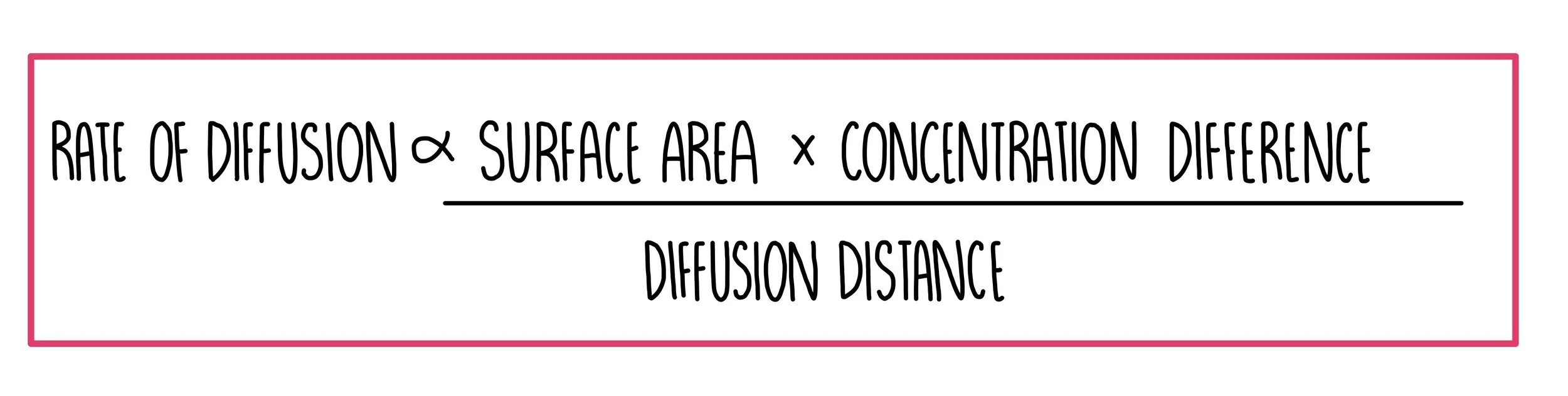
What does Fick’s law tell us exchange surfaces must have in order to support a fast rate of diffusion?
A large surface area
A small distance between the source & the destination
A mechanism to maintain a high concentration gradient across the gas exchange surface
Where does gas exchange take place in humans & how does this surface meet the 3 requirements of Fick’s law?
On the alveoli inside the lungs:
Large surface area - although each alveolus is tiny, an average adult has about 600 million alveoli
Small distance between the source & the destination - walls of the alveoli are one cell thick, minimising diffusion distance
A mechanism to maintain a high concentration gradient - oxygen always diffuses down its concentration gradient (from air → blood), while simultaneously carbon dioxide can diffuse down its concentration gradient (from blood → air)
How to work out the surface area of a cube/cuboid?
Work out the area of each face
Add the six areas together
Include the units

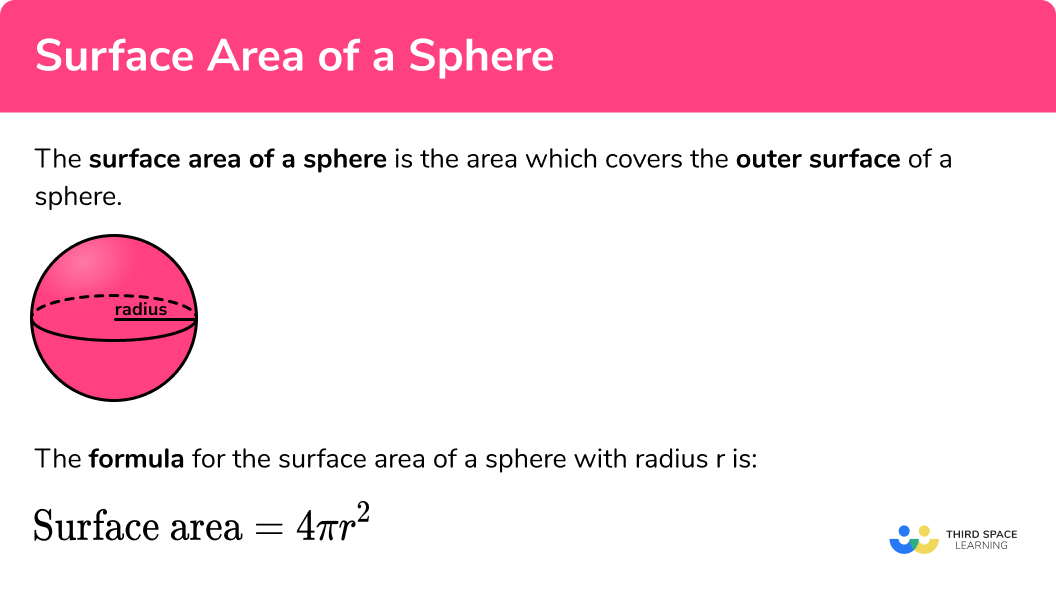
What is the equation to calculate the surface area of a sphere?
SA = 4πr²
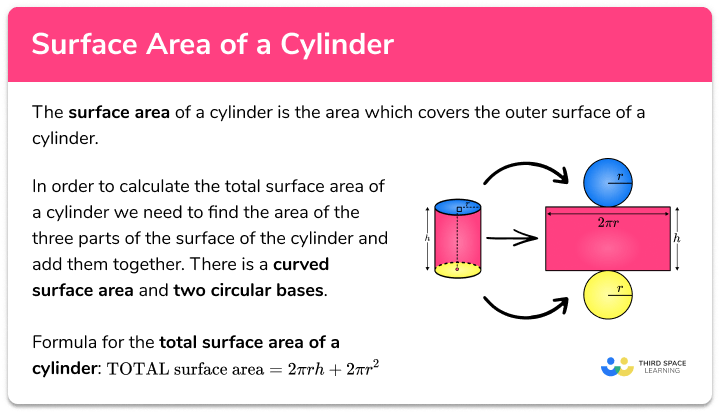
What is the equation to calculate the surface area of a cylinder?
SA = 2πr² + 2πrh
What is the equation to calculate the volume of a cube/cuboid?
Volume = length x width x height

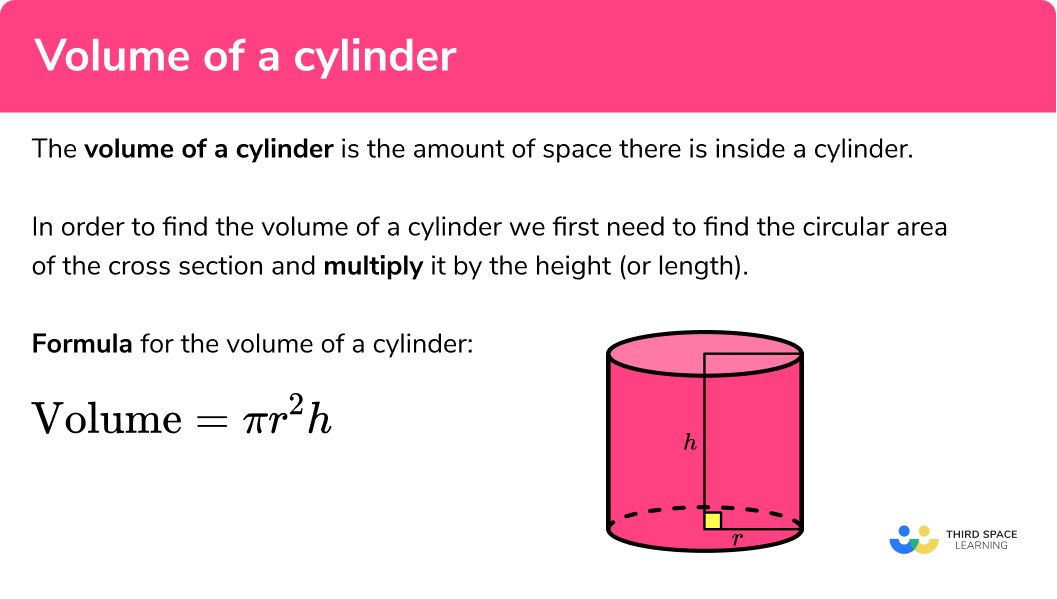
What is the equation to calculate the volume of a cylinder?
Volume = πr²h
What is the equation to calculate the volume of a sphere?
Volume = (4/3)πr³

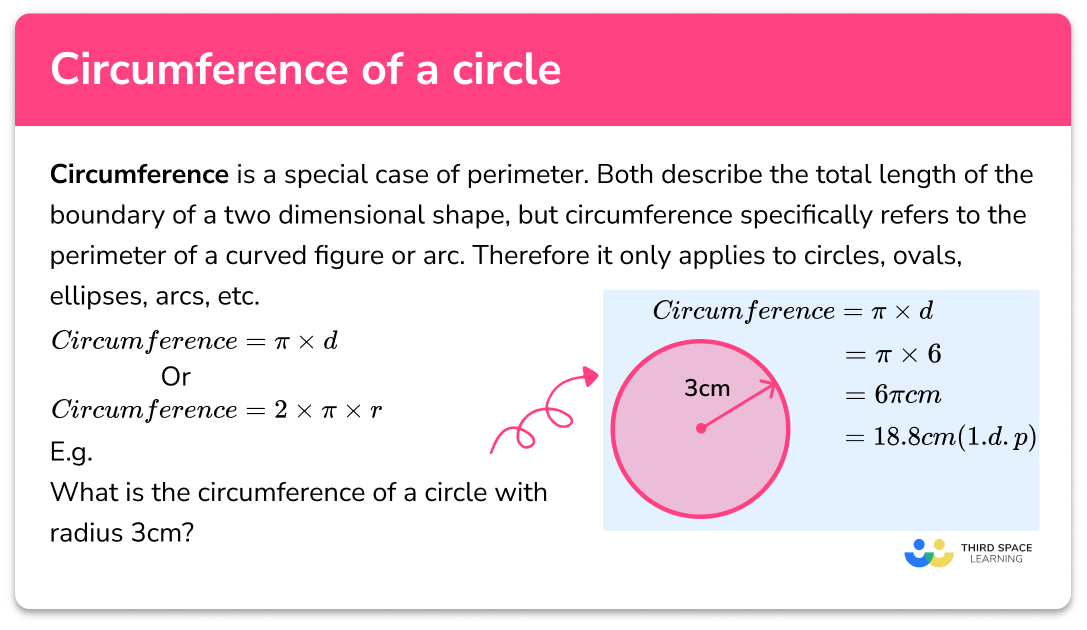
What is the equation to calculate the circumference of a circle?
C = 2 x π x r
or
C = π × d
How is the surface area to volume ratio calculated?
By dividing the surface area by the volume of the object (does not have any units)