History of Economic Thought Lecture 6
 Call Kai
 Learn
Learn Practice Test
 Spaced Repetition
 Match
Match Flashcards
 Knowt Play
1/19

There's no tags or description
Looks like no tags are added yet.
Name | Mastery | Learn | Test | Matching | Spaced | Call with Kai | Chat |
|---|
No analytics yet
Send a link to your students to track their progress
20 Terms
Econometrics
Economics lacked mathematical formulation in the early years and over time, more sophisticated models were needed to analyze empirical data.
Econometric models solve NOTHING, they help prove economic theories.
Frisch and Tinbergen Models.. what is econometrics?
They were pioneers of econometric model building
Frisch:
According to Frisch econometrics was a research methods that consists of:
Mathematical formulations of economic theories and,
Systematic tests of those using mathematical statistics
Frisch’s model focused on identification: methods developed to identify patterns/relationships in data
Tinbergen
Expanded on Frisch’s work by adding more variables and he introduced large numerical estimation.
Frisch-Tinbergen policy planning
Frisch: Expanded business cycle theory
Macroeconomic model that describes the demand for money as a function of consumption and investment
Model was able to generate business cycles (able to predict how the economy would behave)
Tinbergen: business cycle theory
Extended Frisch’s model as a tool for formulating anti-depression policies by utilizing a large numerical model wherein different variables are simultaneously estimated.
Still used for forecasting and policy in many countries
Trygve Haavelmo
Economic theory and the statistical estimation of theoretical relationships must be regarded in close connection with each other
In girly pop language: Economic theory and statistics go together… real bad. Purrr.
He had pioneering contributions to the foundation of econometrics, i.e., methods used to estimate and test quantitative economic relations
Haavelmo and the Principles of econometrics
Autonomy: A relationship is unaltered by changes in other relationships that characterize the economy
Relationship between A and B, should not be affected by random variable C (its giving fidelity to variables)
Identification problem: extended analysis of Frisch, mainly, how many variables are needed to estimate a relation
Simultaneity: all equations in a model should be estimated simultaneously especially when data is used for different markets
Granger and Engle on time series analysis
Granger
Cointegration methods:
to differentiate between, and combine the analysis of, short-term fluctuations and long-term trends
Two variables are both affected by a third variable, which leads to a misinterpretation of their relationship » Cointegration detects and corrects this!
Engle
Developed methods to study the volatility properties of time series in economics
Error terms not randomly distributed over time
Variables exhibit greater fluctuations in some periods than in others
ARCH-models deal with this
Heckman and self-selection bias/ What is the Heckman correction procedure?
Self-selection bias: if groups were different from the beginning this may be problematic if characteristics are difficult to measure/observe.
Solution: random assignment experiments, though not always possible
Heckman correction procedure:
Define the problem and ensure that researchers understand limitations of their findings
Developed statistical techniques to correct for bias
Note: Read over married women in labour force. But in a nutshell:
Estimate if the woman works, then for those women, estimate the determinants of wages.
Inheritance Heckman
Classicals: rational, self-interested behaviour
Chicago School policy evaluation: Heckman was against laissez-faire of his Chicago colleagues
Earlier econometricians: building on existing methods and techniques
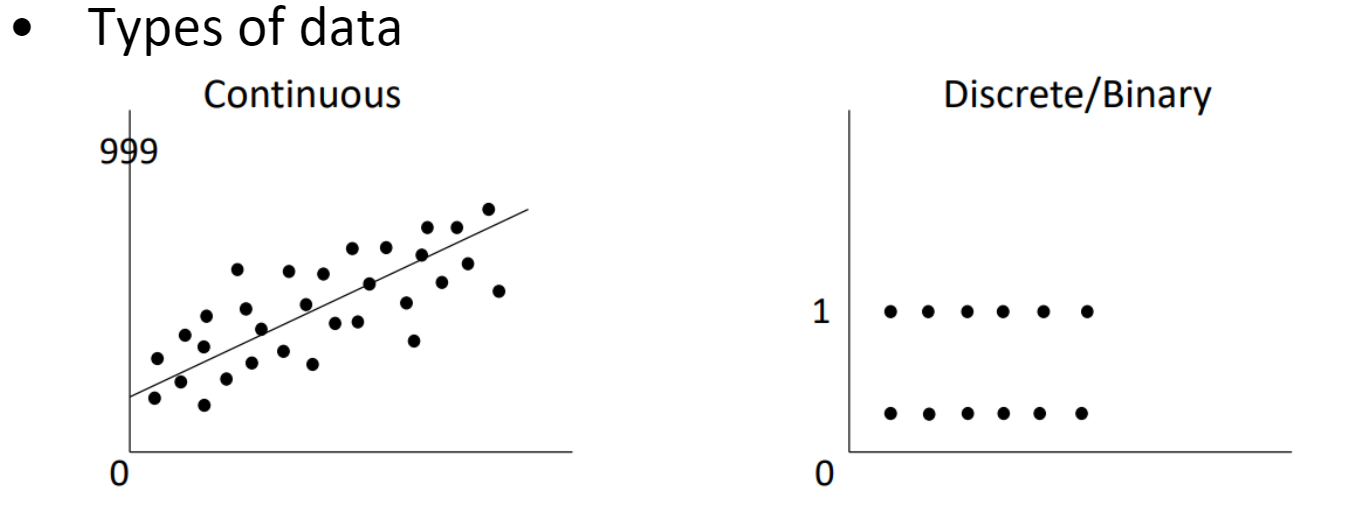
McFadden Discrete choice analysis
Discrete choice models: regression methods that take into account the binary nature of a variable of interest
McFadden showed how to statistically handle fundamental aspects of microdata!
Before him, all models focused on continuous outcomes
Card and the minimum wage natural experiment
Card, (like Angrists & Imbens) had a focus on causality and decided to test this with the help of randomized controlled trials and natural experiments » » » Design based approach!
Natural experiments: study design in which subjects are exposed to as good as random variation caused by nature, institutions, or policy changes
Minimum wage natural experiment:
What is the impact of minimum wage on employment?
Treatment: rise minimum wage in New Jersey
Control: Pennsylvania
Sample: employment in fast-food restaurants
Finding: minimum wage had no impact on the number of employees
Guido Imbens and Joshua Angrist, returns to school natural experiment
How much more would you earn if you chose to study longer?
Natural variation in amount of schooling arising from variation in birth month: People born later in the year tend to study for longer.
Difficulties with natural experiments:
Treatment heterogeneity: different people or groups respond differently to the same treatment
Imperfect compliance: when participants in a study don't fully follow the treatment they were assigned.
They also provided conditions under which we can use a natural experiment to estimate the effects of an intervention
Local average treatment effect (LATE)
Deductive vs Inductive approach
Deductive: Based on theory. Facts speak for themselves
all dogs have fleas ⇒ this is a dog ⇒ therefore this dog has fleas
Frisch, Tinbergen and Haavelmo applied this type of reasoning
Inductive approach: Based on empirical evidence
I have observed 100 dogs and every dog had fleas ⇒ all dogs must have fleas
McFadden and Heckman applied this type of reasoning
Becker’s preferred form of reasoning
Abductive approach: He rejected purely deductive and inductive reasoning, a combination of both is needed. Theory backed by evidence.
Becker and Economic Imperialism and his model
Extending economic approach to topics that were not characterized by markets or prices (e.g. sociology, political science, law, social biology, anthropology)
Main economic principles of economic liberalism and his model
Maximizing, rational behaviour
Importance of equilibrium as part of a theory
Emphasis on efficiency allow complicated problems to be written in simple, abstract terms.
Preferences are stable but can evolve.
Becker and Discrimination
Discrimination has to do with taste components is unrelated to the worker’s productivity.
This “taste component” is costly, and thus decreases profits, hence discrimination will not exist in competitive markets.
No need for government intervention/anti-discrimination laws (Bestie its not that easy)
Inheritance for Discrimination theory and Becker’s contribution
Inheritance
Relation to Adam Smith’s invisible hand:
Focus on efficiency
Individuals acting in their self-interest further the general goals of society (How naive.)
Relation to Marshall: the idea that competitive equilibrium is efficient
Relation to Marginalists: focus on individual choice behaviour and utility maximization
Contribution
Becker was the first to looked at origins of preferences!
Preferences can change over time through consumption decisions and choices of lifestyle e.g. rational habit formation can include addiction
Becker and Fertility/Family and Inheritance
Low income families became larger than rich families in the 20th century due to the income and time cost effects.
As richer women became more educated, they earned higher wages and thus the opportunity costs of having children increased (income effect)
Time effect: If a woman works, she will not have sufficient time for raising children and vice versa.
Becker: Family is a ‘factory’ which produces goods it wants to consume
Ui=f(xi,ti)
x = number of kids
t = mother’s time
Inheritance
Malthus’ theory not consistent with facts
Mincer (1963) – importance of the price of women’s time as a relevant opportunity cost
Becker formalized this idea in a household production function: theory that treated children as household outputs valued in final utility, where mother’s time was a leading input
Becker used dynamic general equilibrium theory to generalize Malthus’ population theory:
Including nonmarket activities
Trade-off child quantity – quality (Becker, 1991)
Becker’s Theory of Human Capital
Becker made the distinction between: formal schooling (general) vs on-the-job training (specific)
Education enhance wages
Policy implications: is there under- or overprovision of education? Should the state subsidize education?
Implication for policy: Education was a public good and should be subsidized.
Inheritance
Friedman and Kuznets (1945) implicit theory of human capital, with an empirical emphasis
Becker: comprehensive theoretical framework on human capital – abductive approach (data-driven model building)
Becker’s Impact
Discrimination: perfect competition is very unrealistic in today’s market, so discrimination seems to be a fact of life (although governments will try to reduce it as much as possible)
Family/fertility
Investing in education for girls is the main programs in developing countries
Specific case: even now China relaxed the one-child policy, its fertility will not rise much given the huge economic development in China
Crime: are criminals really rational? Serial murders are almost by definition irrational (unless they have a very high discount rate)
Human capital: opportunity cost of investing in schooling still very relevant in everyday life choices
Moreover, Becker did pioneering microeconomic analysis in a time where large-scale data were beginning to be collected and Becker was more interested in the mechanisms at work than overall treatment effects.
Note: Just read this over sis.
Development of economic thought
History of economic thought is the development of economics as profession
Economics was regarded an investigation of
The nature and causes of the wealth of nations (Smith)
The laws which regulate the distribution of the produce of the earth (Ricardo)
Laws of motion of capitalism (Marx)
Human behaviour as a relationship between given ends and scarce means which have alternative uses (since Marginalists)
Main issues remained since Adam Smith
What determines prices?
What causes economic growth?
What factors determine the income distribution?
Broadening and deepening of perspective
Deepening
Competitive equilibrium theories
Markets with asymmetric information
Research on the microeconomic foundations of macroeconomic theories
Broadening
Theories imperfect competition
More specialized topics
New fields of interest
Trends
Economic imperialism
Marshall: Economics is the study of men “in the ordinary business of life”
Economic ideas and economic tools are now extended to new areas, which – according to Marshall – would not be part of traditional economics
At the same time, ideas from other sciences have been adopted and tested in economics
Increasing formalisation
19th century: economics was a “literary” field of study
Marginalist breakthrough: formalization of economic theory began, increasingly more after WWII
Greater role for empirical research
Increased importance of empirical research
Both theoretical and empirical methods became more rigorous, and empirical analysis is subject to higher standards
Reasons for change:
Data availability improved
Progress in econometrics
Development of data processing technology
Increasing use of lab experiments
Economics becomes profession
Early years, university affiliation was the exception rather than the rule for leading economists, in particular, no economics degree
This situation changed radically around the marginalist breakthrough
Globalisation of economics
Early years, Great Britain was leading country in development of economics as a scientific discipline
During the 20th century, centre of gravity toward US
Internet allows rapid dissemination of research results