Yeast (Exam 3)
 Call Kai
 Learn
Learn Practice Test
 Spaced Repetition
 Match
Match Flashcards
 Knowt Play
1/64

There's no tags or description
Looks like no tags are added yet.
Name | Mastery | Learn | Test | Matching | Spaced | Call with Kai | Chat |
|---|
No analytics yet
Send a link to your students to track their progress
65 Terms
What are the general characteristics of yeast?
- Unicellular
- Rapid growers
- Reproduce via budding
Yeast colonies are ...
Creamy, pasty, smooth, wrinkly, pigmented
Yeast colonies have _____ that develop at the border of the colonies.
feet
Yeast can be found as normal flora in the ...
Mouth, skin, vaginal tract, GI tract/stool)
Yeast are ______ organisms.
opportunistic
What clinical diseases are caused by Candida albicans?
- Intertriginous candidiasis
- Paronychia
- Onychomycosis
- Vulvovaginitis
- Thrush
- Pulmonary, ocular, endocarditis, UTI, meningitis, fungemia, disseminated
Risk factors of Candida albicans infection
- Broad-spectrum antibiotics
- Previous ICU stays
- Central venous catheters
- Immunocompromised/suppressed
Candida spp. (not albicans) are normal flora of ______ and ______ surfaces, rarely pathogenic.
mucocutaneous, cutaneous
Candida spp. (not albicans) causes ______ infections.
nosocomial
Cryptococcus neoformans affects the ...
Brian, lungs
Yeast specimen sources can be ______ or ______.
sterile, non-sterile
Yeast can be identified via ...
- Direct exam
- Germ tube test
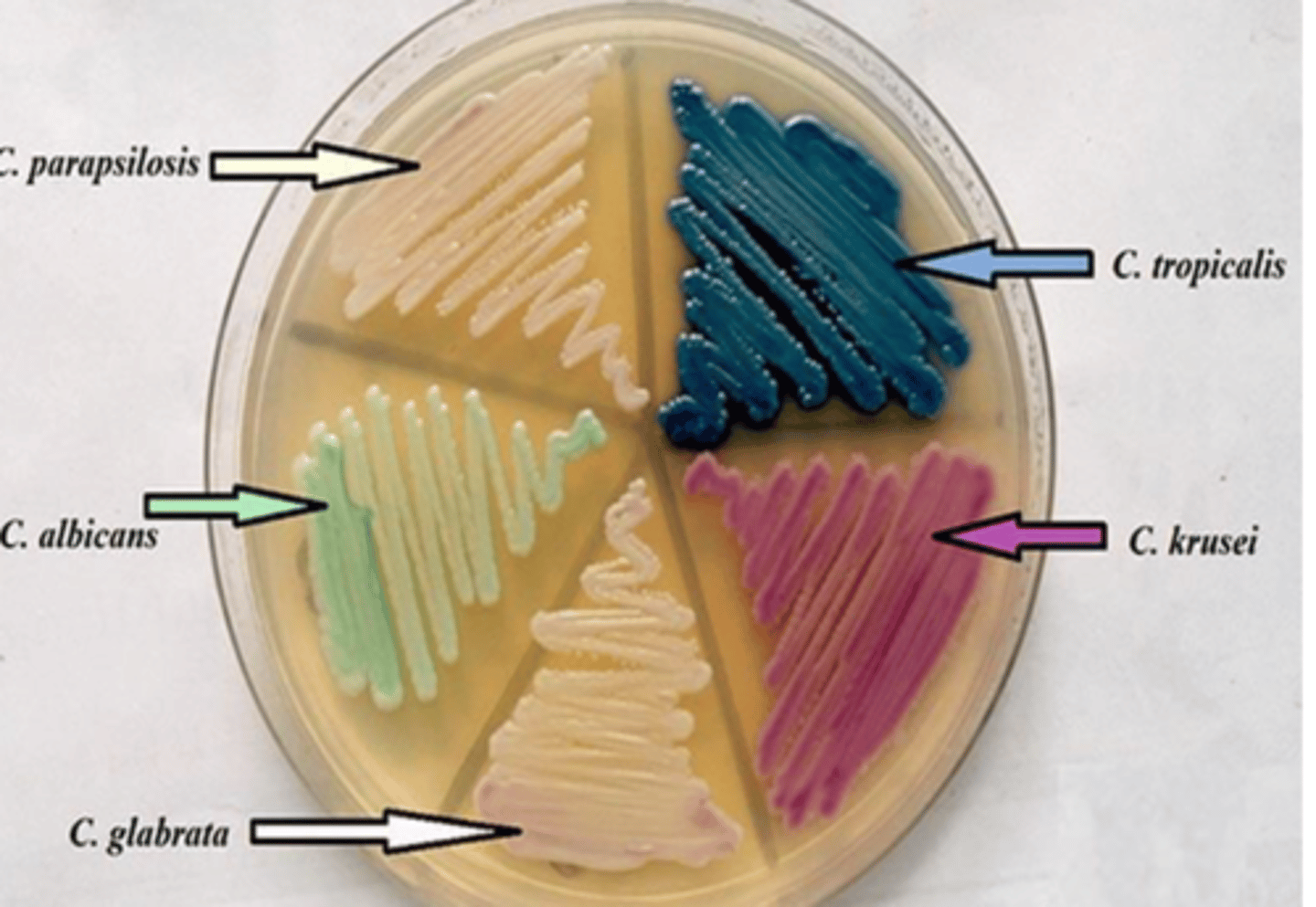
- CHROMagar
- Biochemical tests
- Microscopy
CHROMagar
What biochemical tests can be used to identify yeast?
- Assimilation
- Fermentation
- Urease
- Nitrate assimilation
______ is used for microscopy of yeast.
RIOT (Cornmeal, rice, potato dextrose)
Describe the procedure of the germ tube test
- Tube with pooled human serum
- Inoculate with yeast
- Incubate at 37 C for 2.5-3 hours
- Put on a slide and observe
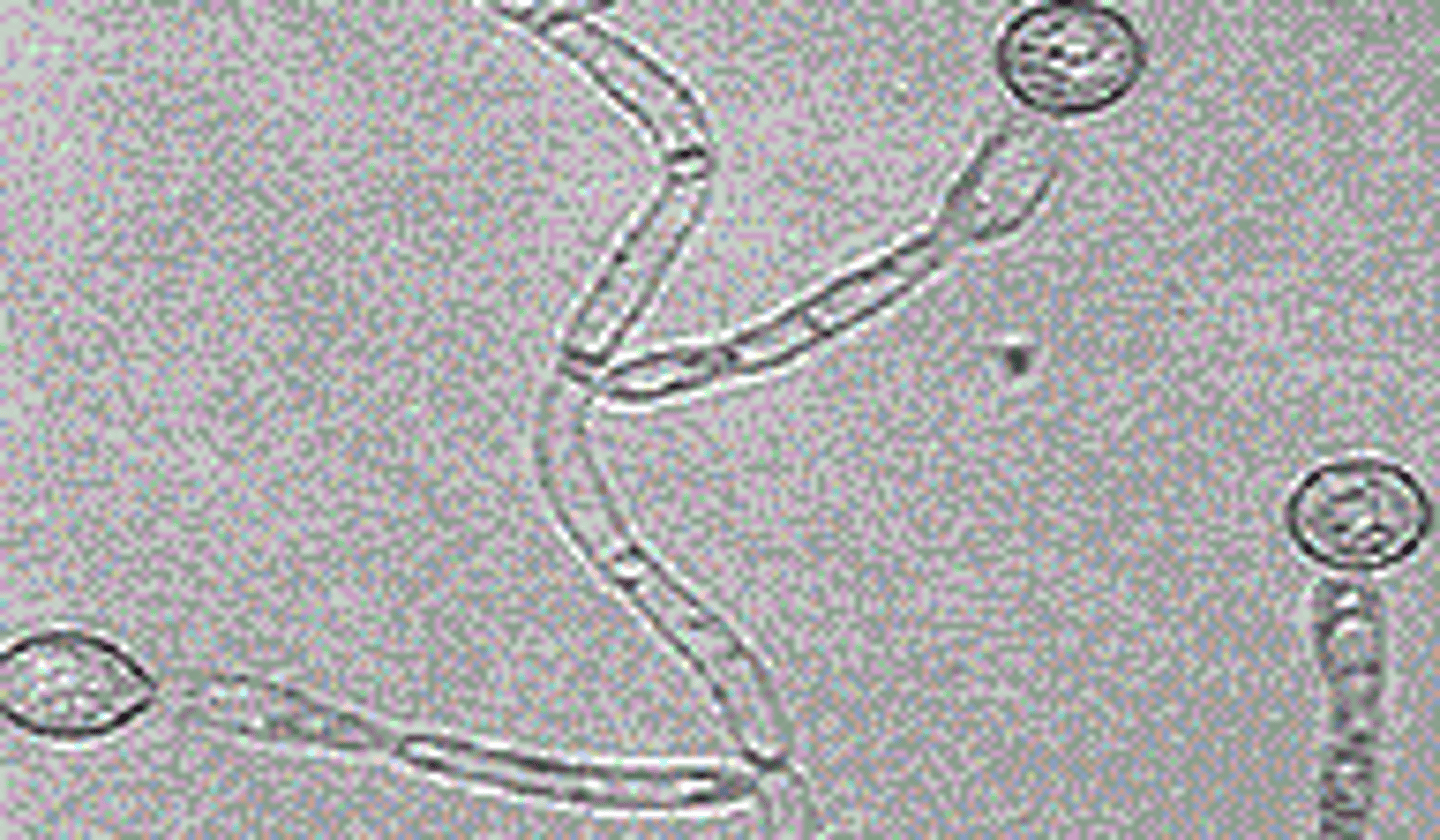
Germ tube positive
Candida albicans only
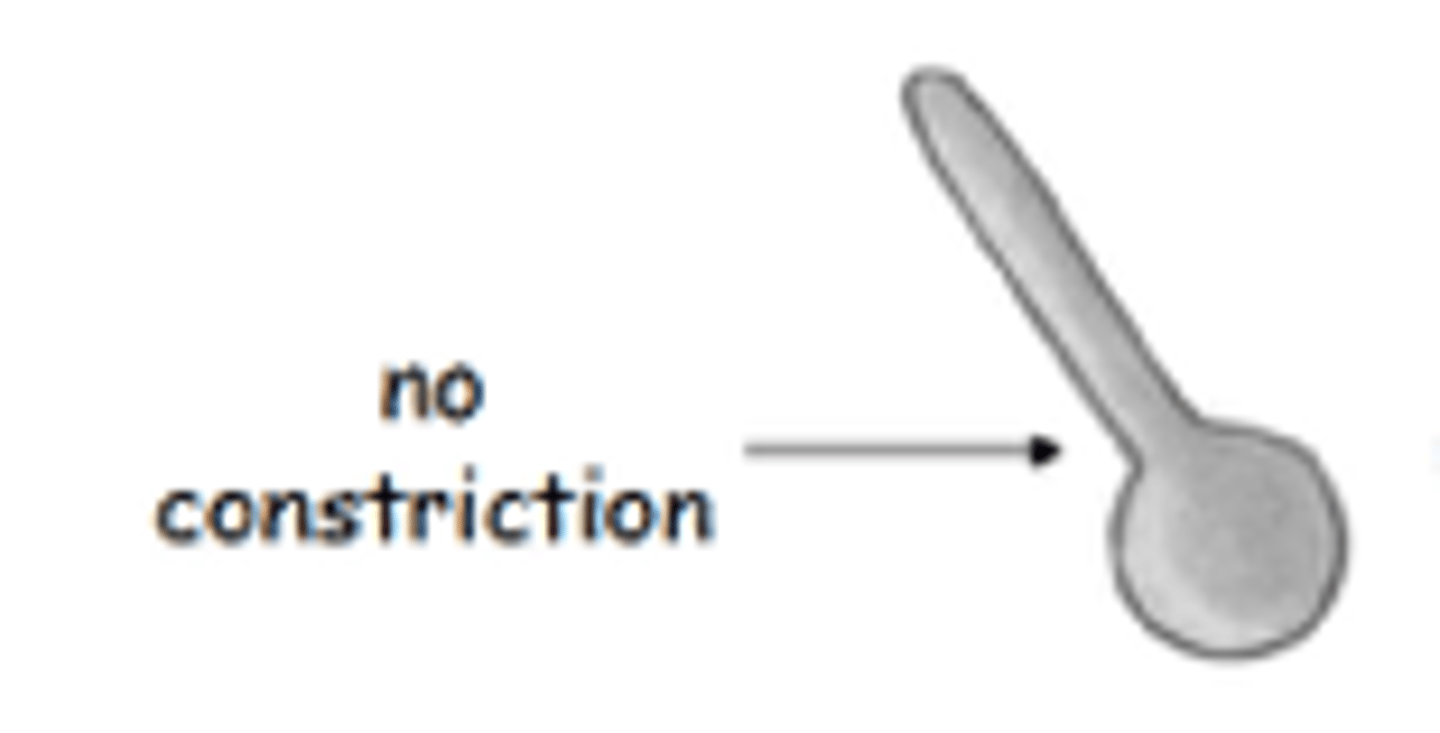
Germ tube negative
Constriction(s)
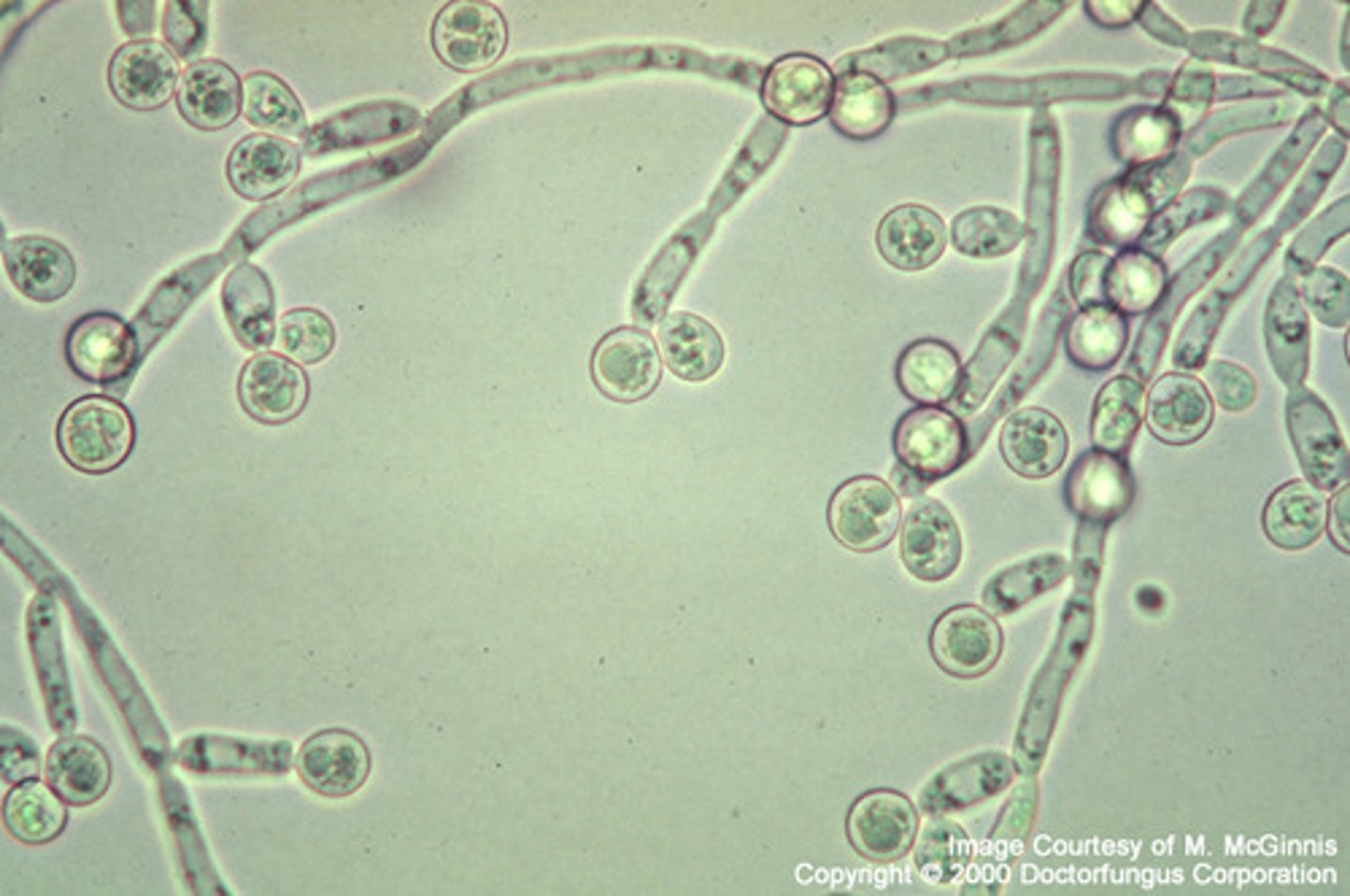
Candida albicans morphology
Pseudohyphae
Clusters of round blastoconidia
Terminal chlamydospores
Candida albicans assimilates ______.
sucrose
Candida albicans is nitrate and urease ______.
negative
Candida stellatoidea is similar to Candida albicans, but it does not assimilate _______.
sucrose
Candida tropicalis morphology
Ovoid or elongate blastoconidia, singly along pseudohyphae at junctions
May form true junctions
Birds on a wire
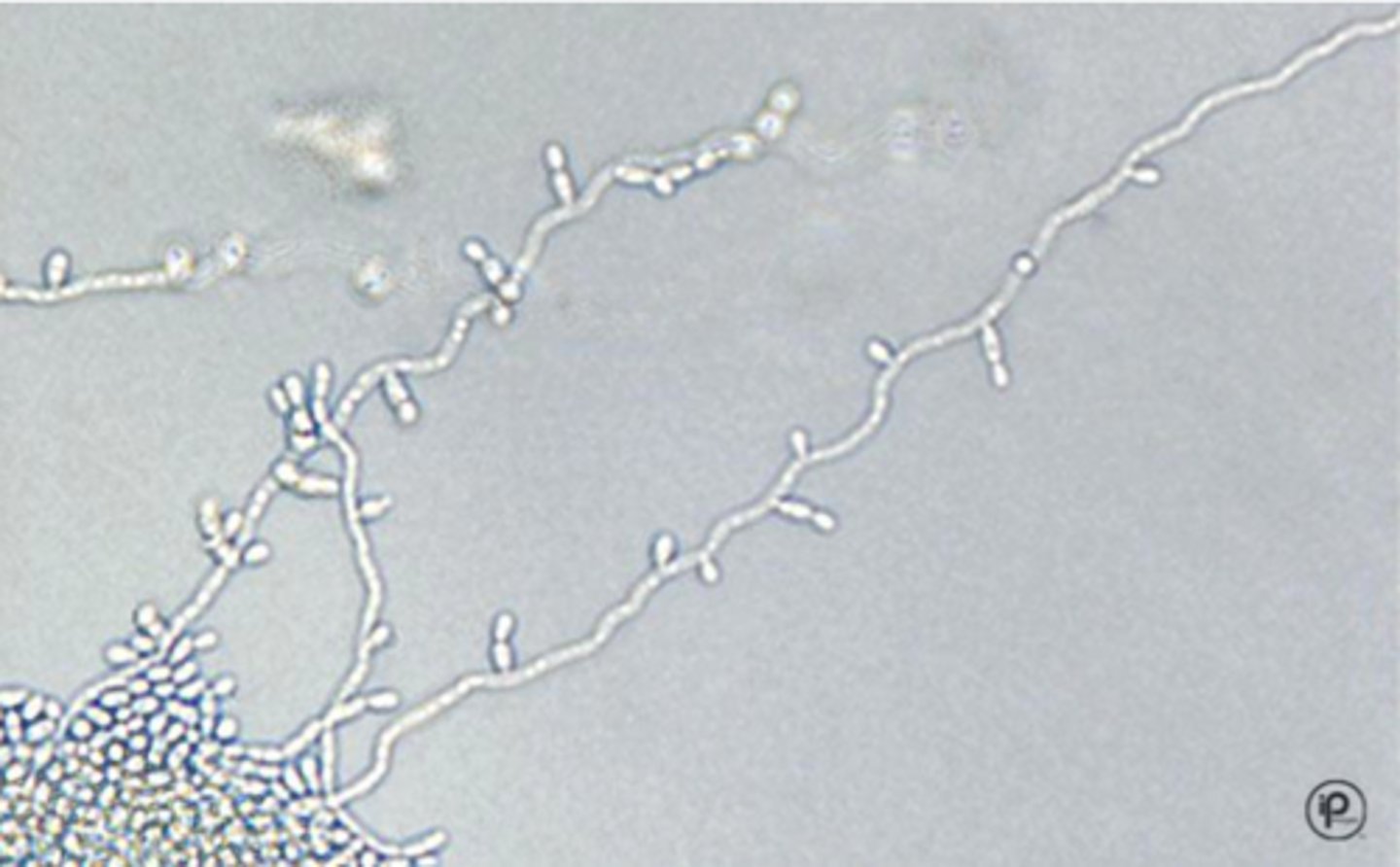
Candida tropicalis is nitrate and urease ______.
negative
Candida tropicalis causes ...
- Vaginitis
- Intestinal, bronchopulmonary, systemic complications
Candida parapsilosis morphology
Curved, delicate pseudohyphae with giant cells
Ovoid or elongate blastoconidia, singly or in short chains/clusters
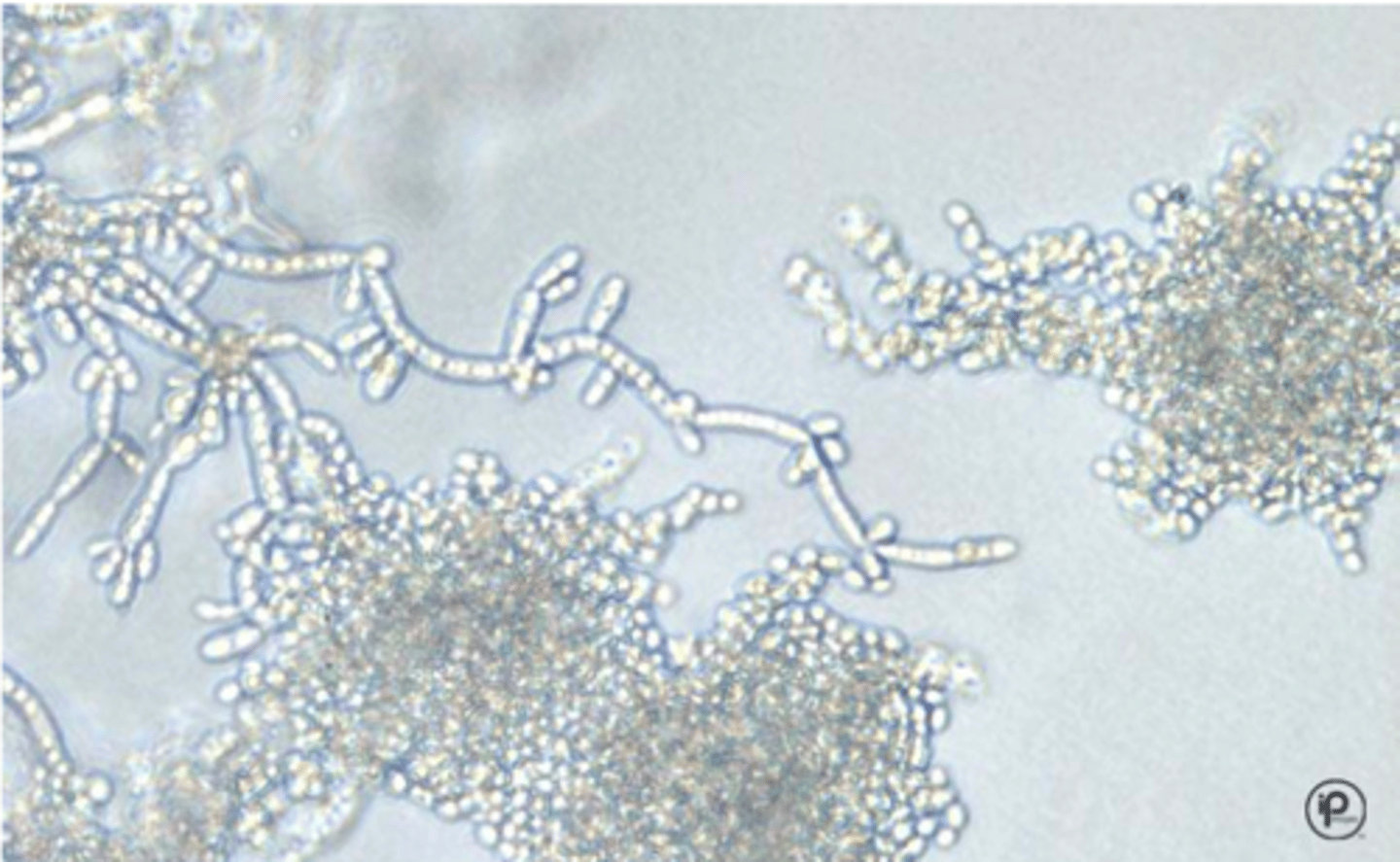
Candida parapsilosis is nitrate and urease ______.
negative
Candida parapsilosis causes ...
UTI, pyelonephritis, endocarditis, paronychia, otitis externa, vaginitis, endophthalmitis
Candida guilliermondii morphology
Few, short pseudohyphae with small clusters of blastoconidia at the constrictions
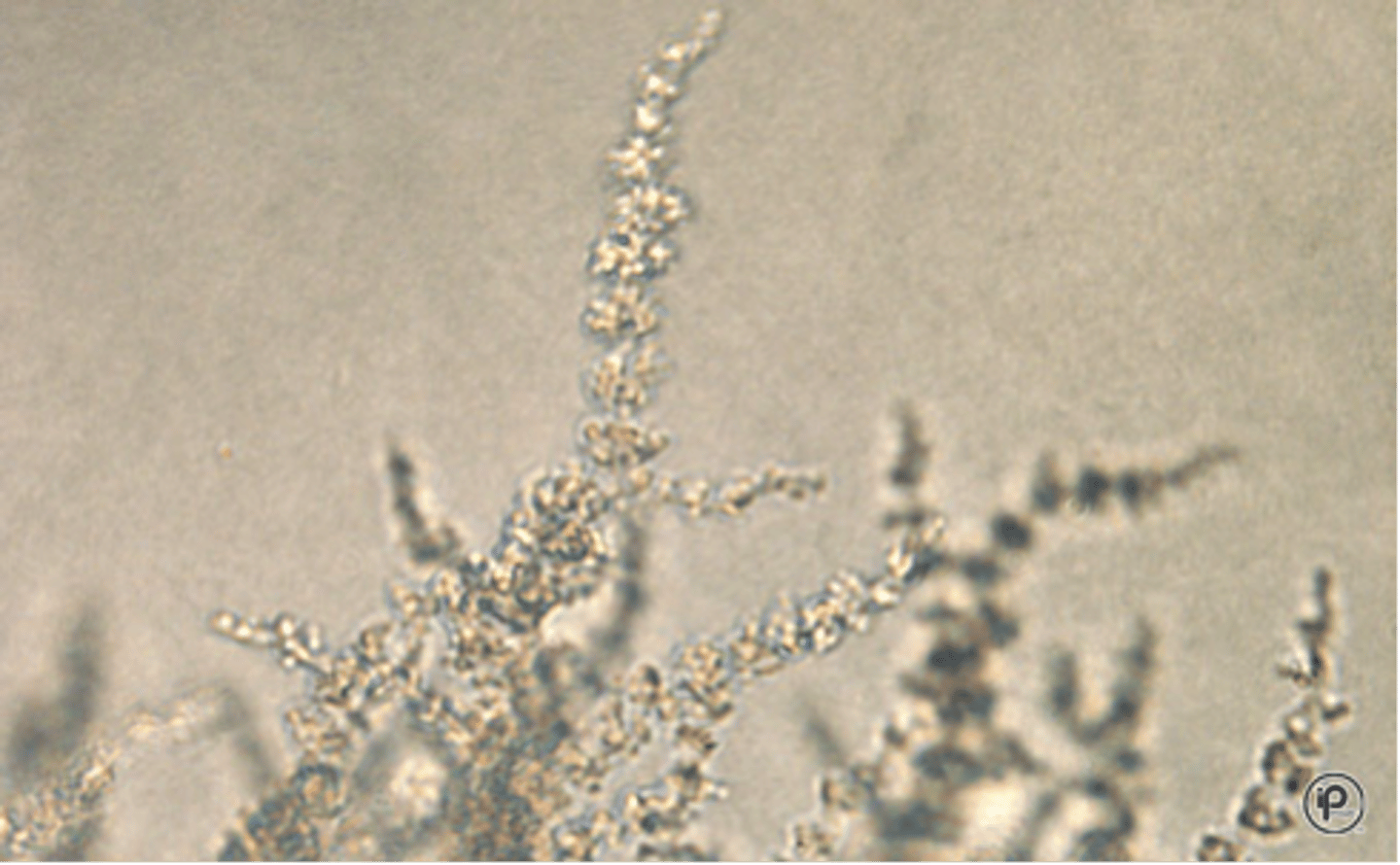
Candida guilliermondii is nitrate and urease ______.
negative
Candida guilliermondii causes ...
- Eye and skin problems
- UTI, endocarditis, osteomyelitis, keratitis, cutaneous
Candida kefyr morphology
Elongated blastoconidia at junction
Log-jam clusters
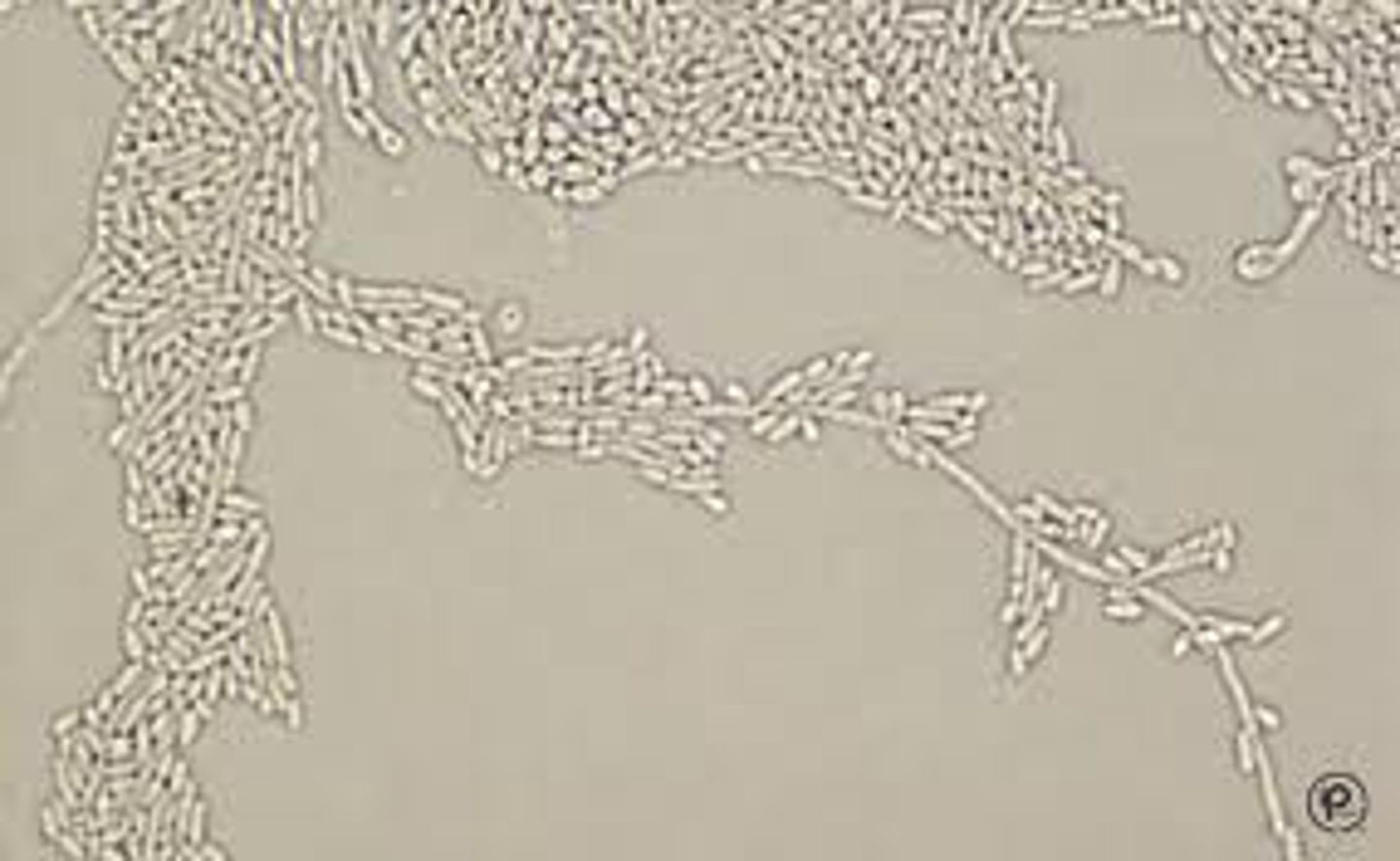
Candid kefyr is urease and nitrate ______.
negative
Candida kefyr causes ...
UTIs, endocarditis, keratitis, onychomycosis
Candida krusei morphology
Crossed matchsticks, tree-like
Long branching pseudohyphae
Elongate blastoconidia form chains at junctions
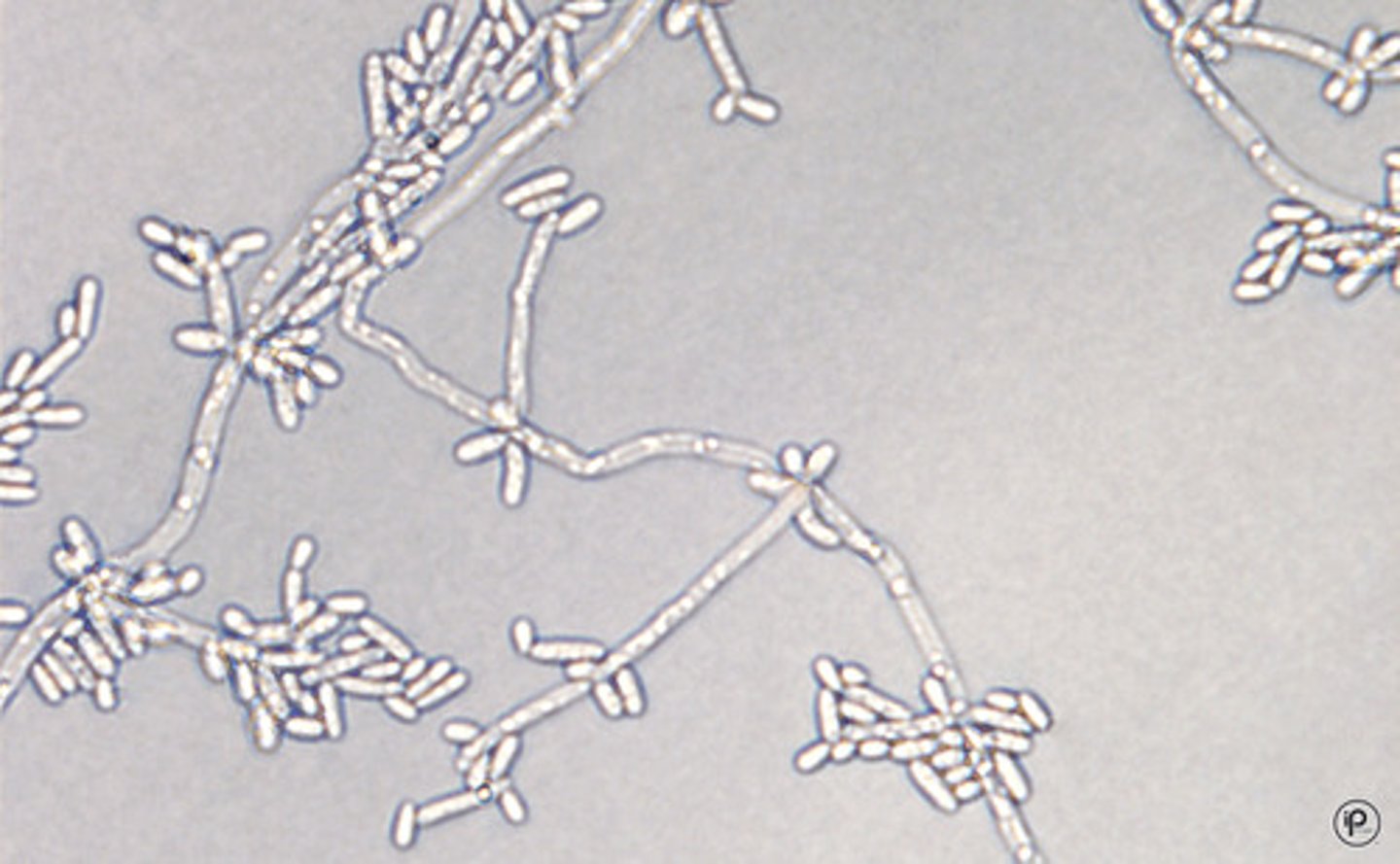
Candida krusei is urease ______ and nitrate ______.
positive, negative
Candida krusei causes ...
Endocarditis, vaginits
Candida glabrata morphology
No pseudohyphae
Small blastoconidia with single terminal bud
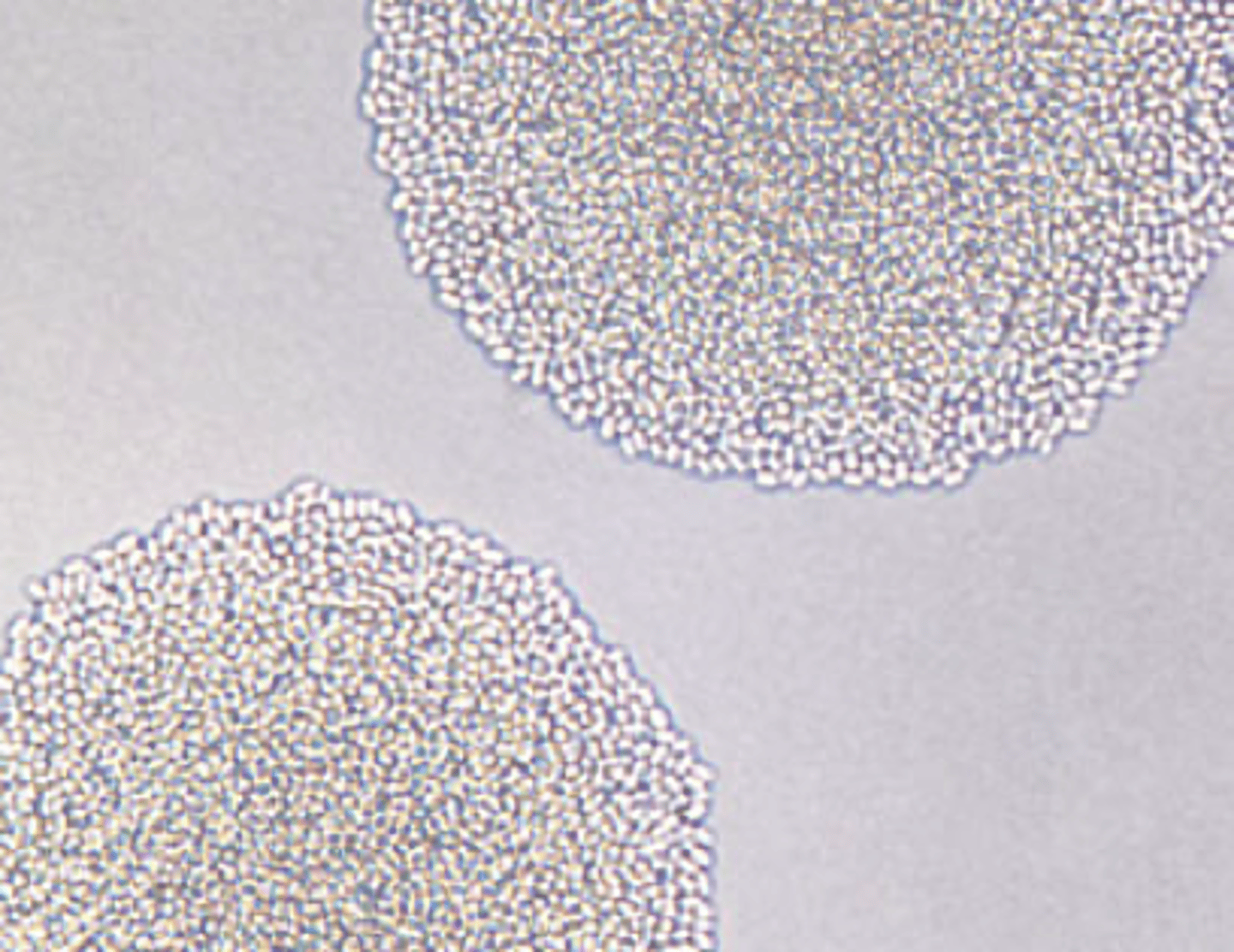
Candida glabrata is urease and nitrate ______.
negative
Candida glabrata assimilates ______ and ______.
glucose, trehalose
Candida glabrata causes ...
Fungemia, endocarditis, meningitis, UTIs, lung issues
Cryptococcus neoformans morphology
No pseudohyphae
Round cells with small isthmus
Capsule
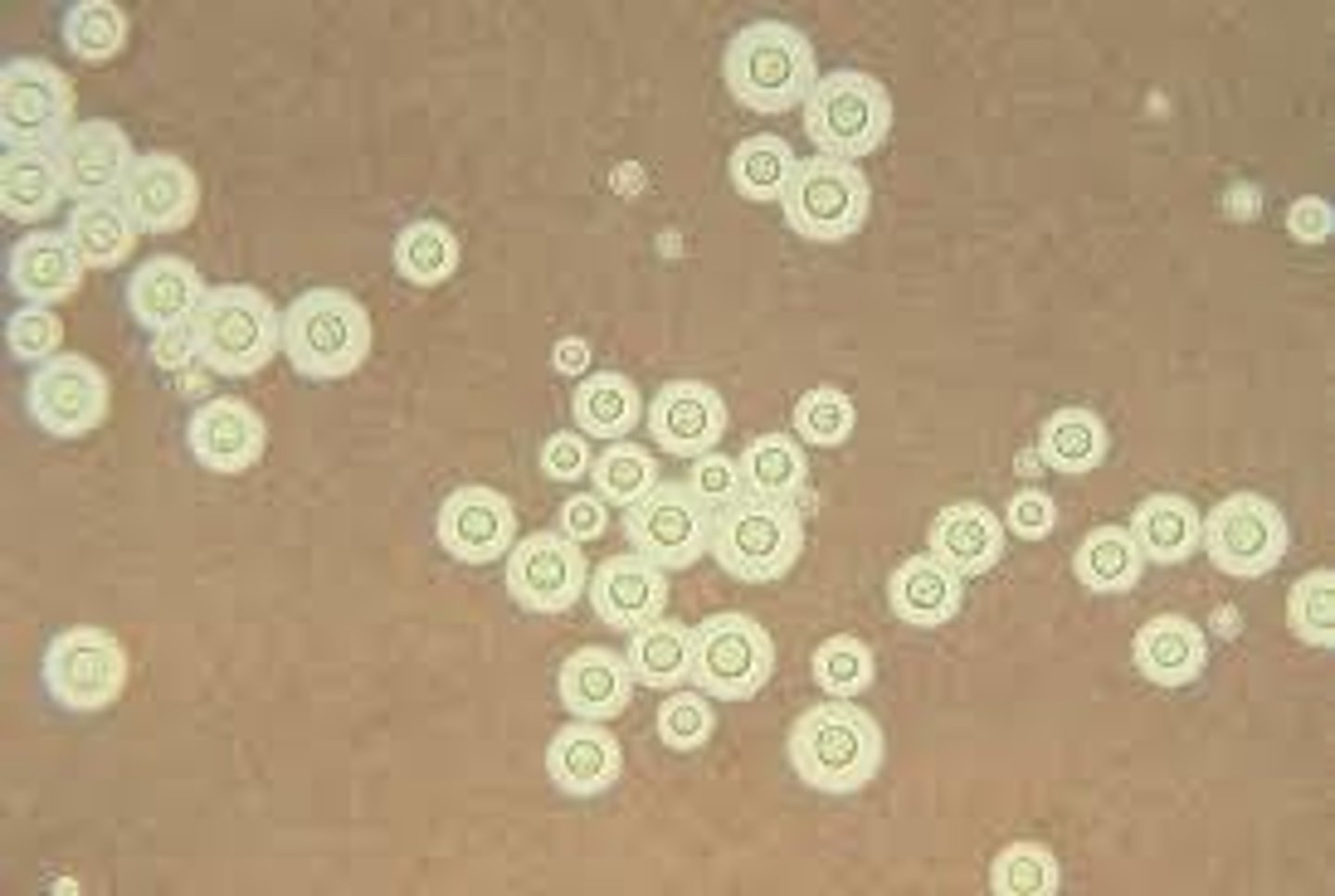
Cryptococcus neoformans is opportunistic, spread by ______.
pigeons
Cryptococcus neoformans is urease ______ and nitrate ______.
positive, negative
Cryptococcus neoformans causes ...
Chronic or subacute pulmonary disease
CNS and brain, bones, eyes, skin
Cryptococcus neoformans can be plates on ______ agar.
Birdseed
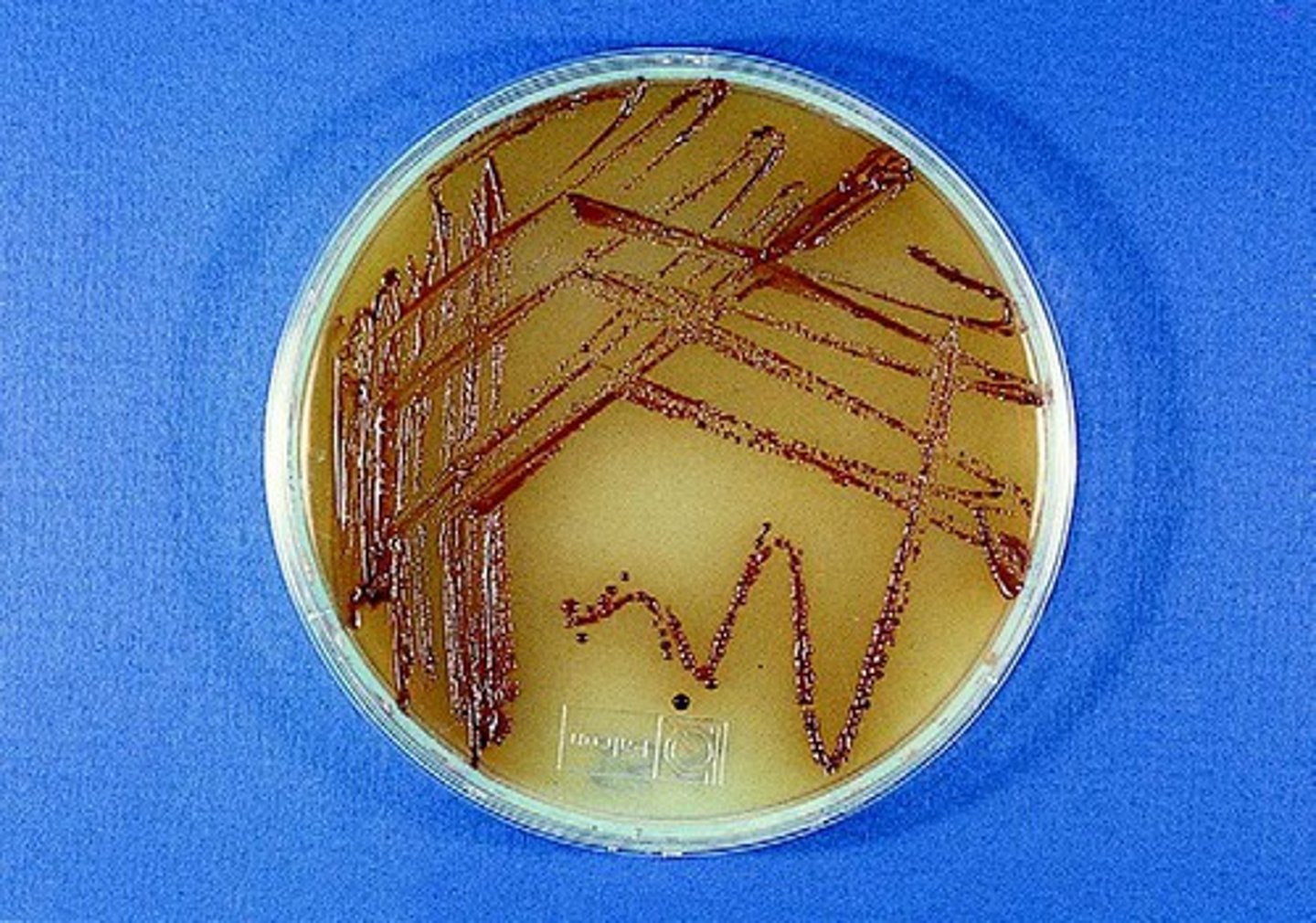
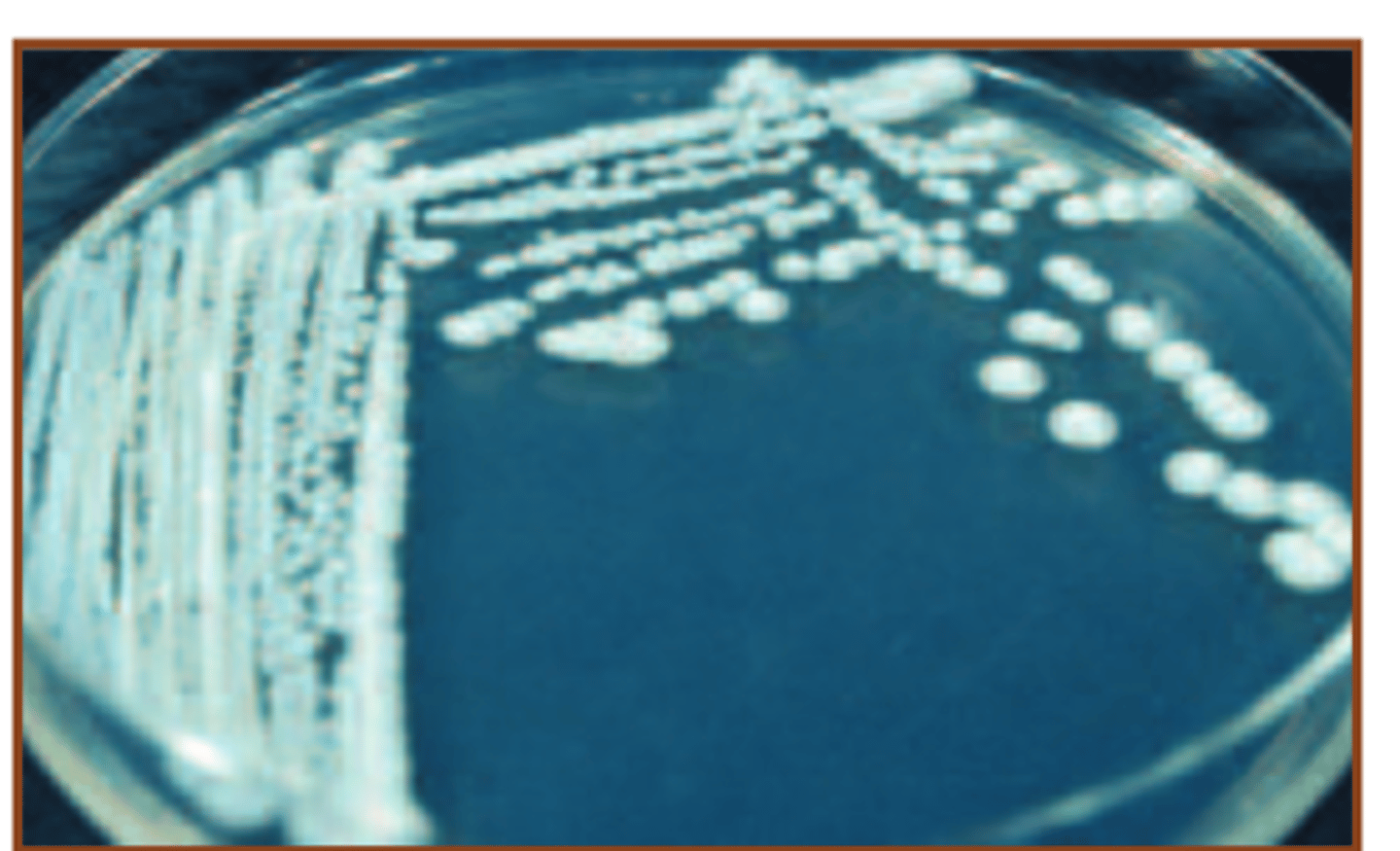
Saccharomyces cerevisiae colonies
Asci produced on ascospore media
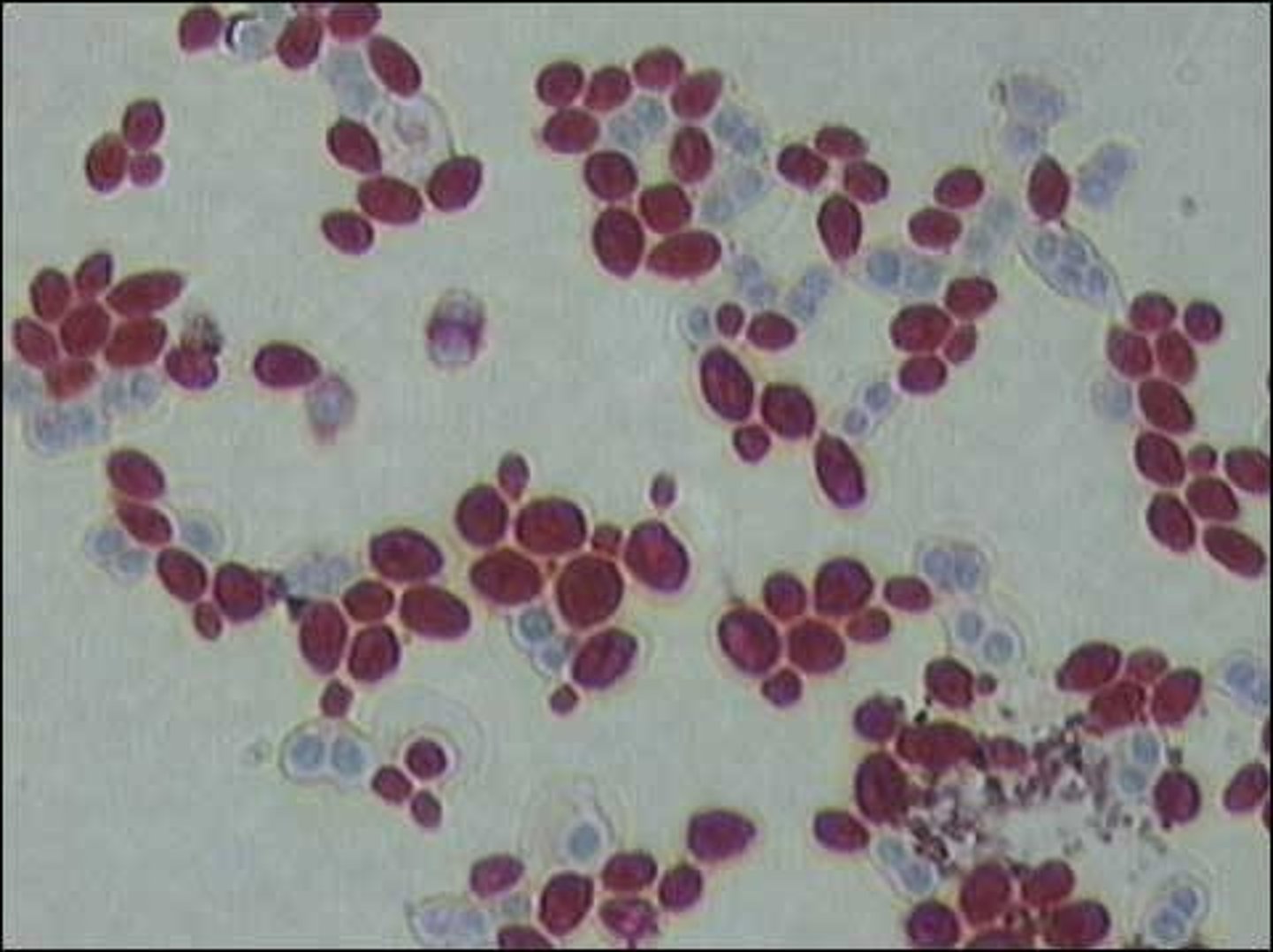
Saccharomyces cerevisiae morphology
Short pseudohyphae with oval multi-budding blastoconidia
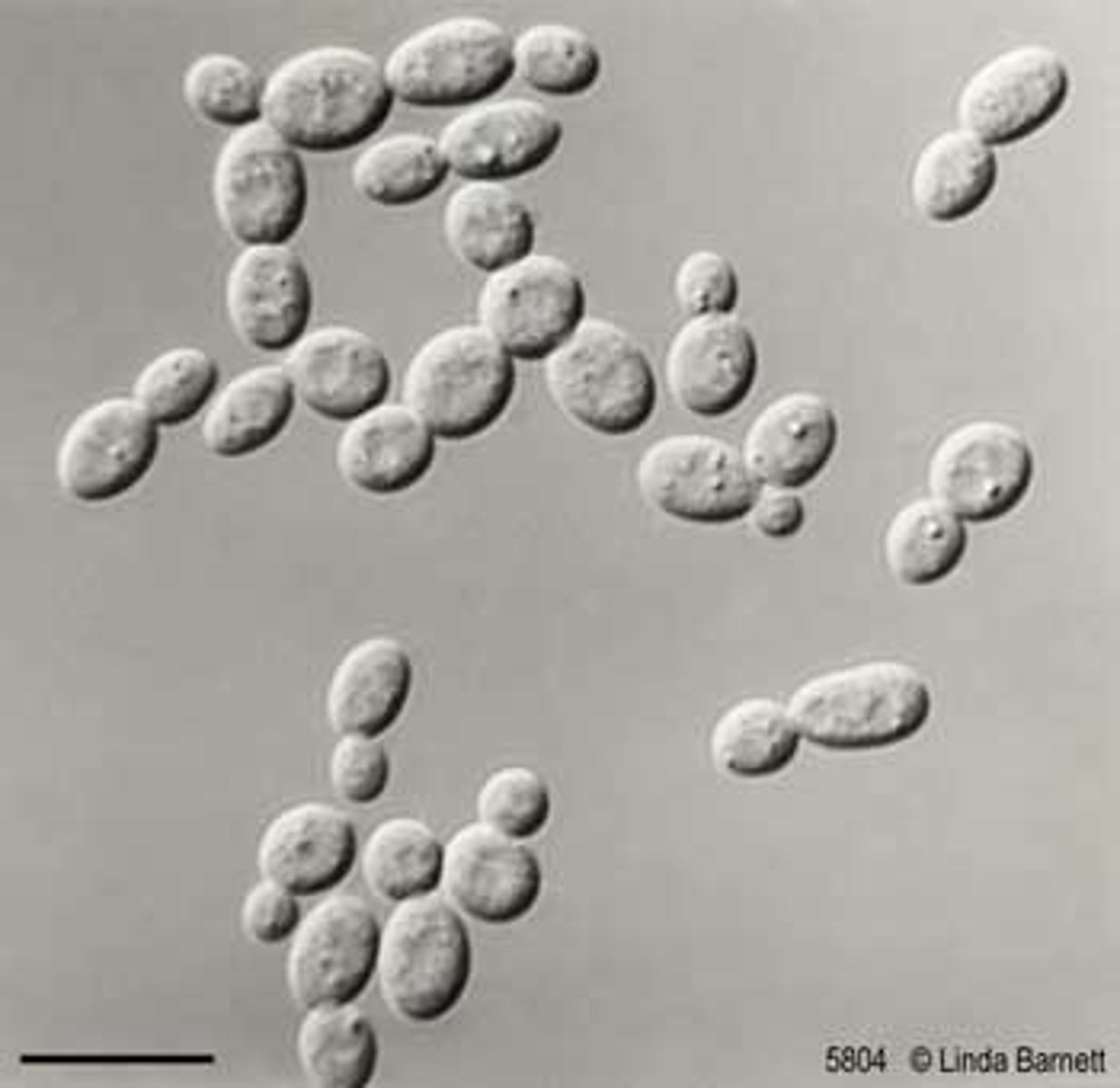
Saccharomyces cerevisiae is germ tube ______.
negative
Saccharomyces cerevisiae is urease and nitrate ______.
negative
Rhodotorula rubra colonies
Coral red/orange/golden yellow
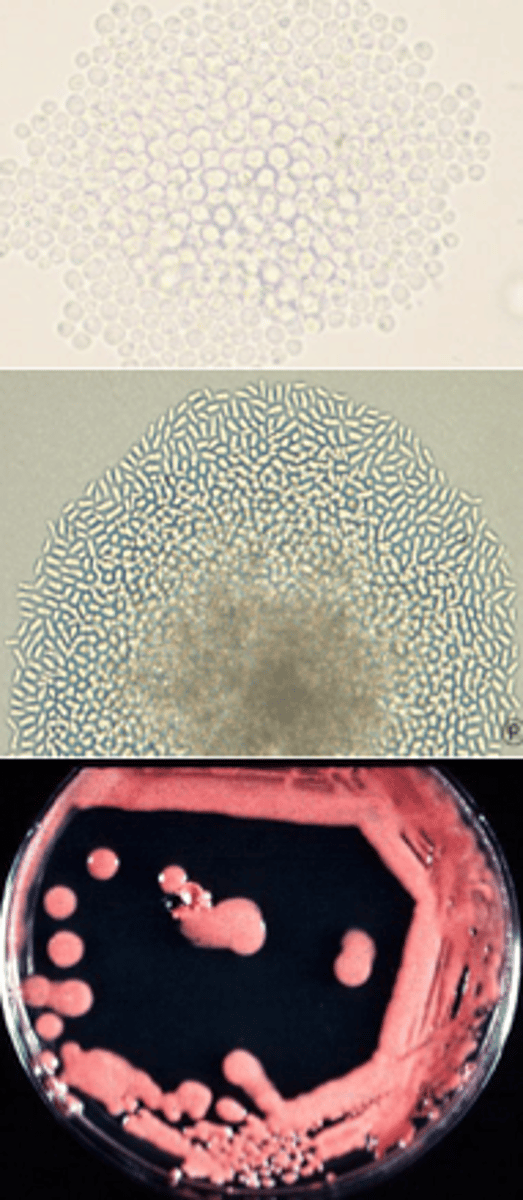
Rhodotorula rubra morphology
Globose or oval blastoconidia
Rare pseudohyphae
Rhodotorula rubra is germ tube ______.
negative
Rhodotorula rubra is urease and nitrate ______.
positive
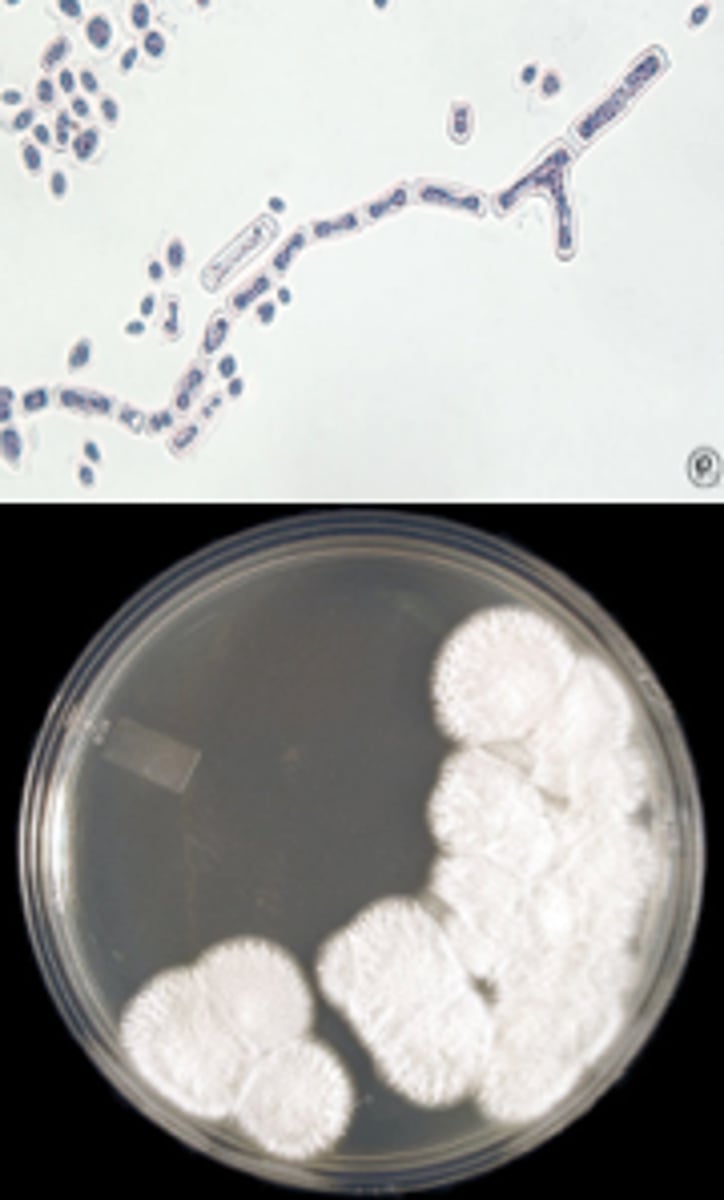
Geotrichum candidum colonies
Immature: Yeast-like
Mature: Mold-like
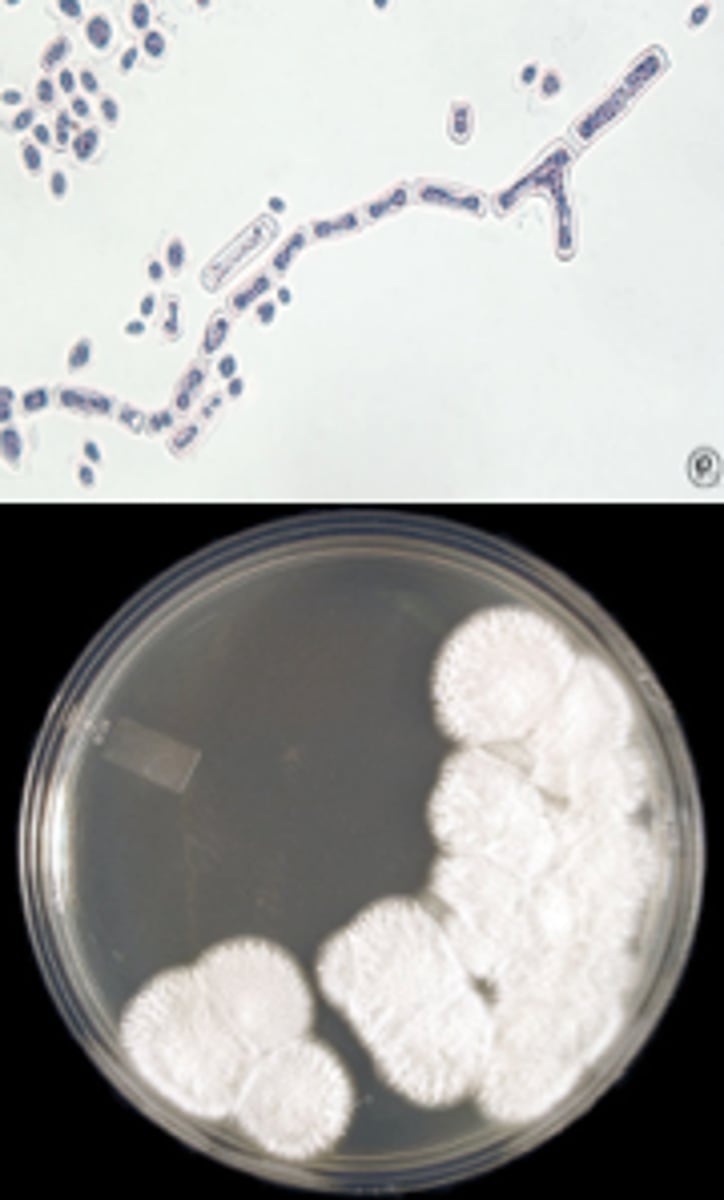
Geotrichum candidum morphology
Rectangular
Wide, septate, hyaline
True hyphae with lateral branching
Arthroconidia break off hyphae
Free arthroconidia germinate from one corner
No blastoconidia or pseudohyphae
Geotrichum candidum is germ tube test ______.
negative
Geotrichum candidum is nitrate and urease ______.
negative
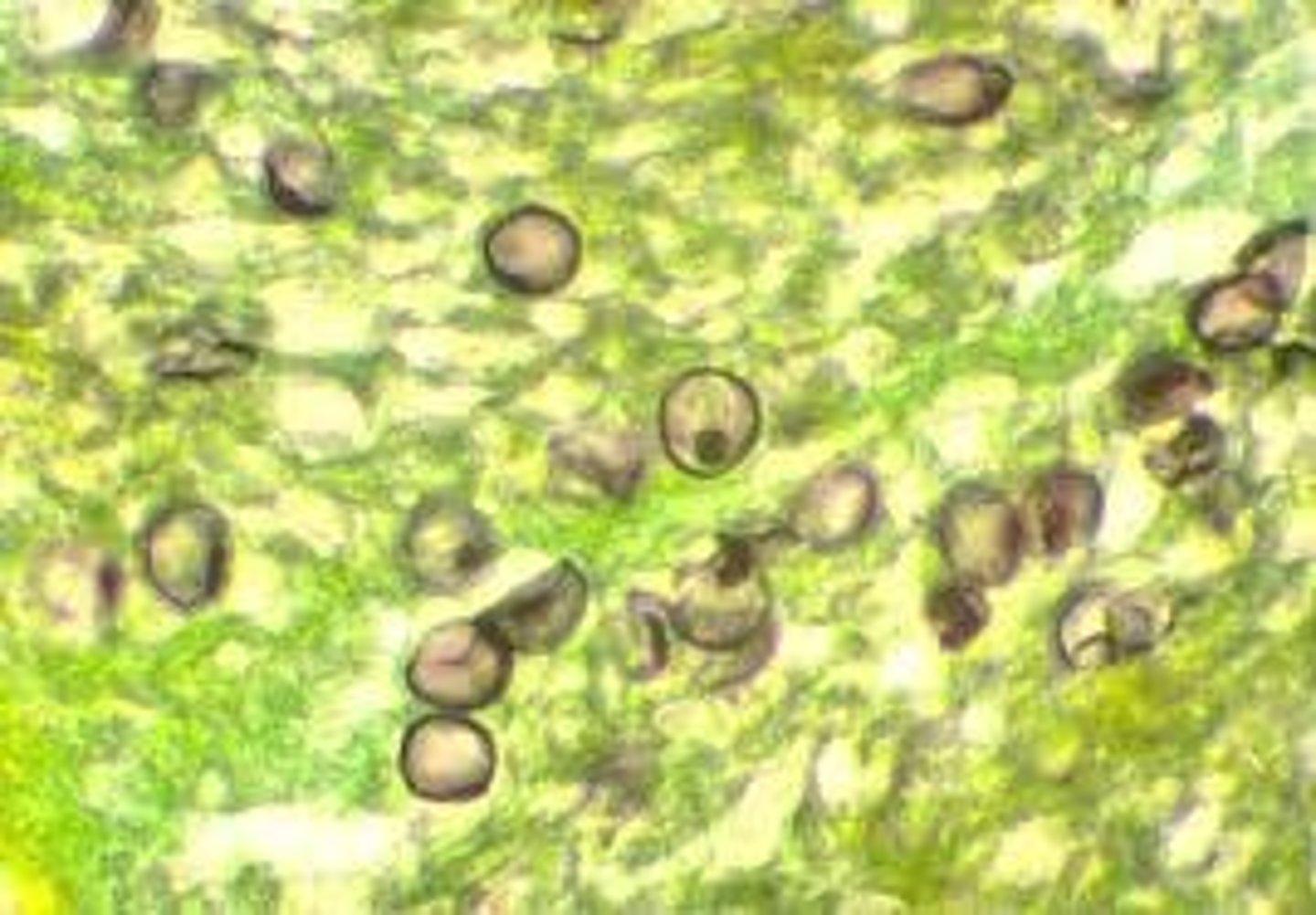
Pneumocystis (carinii) jiroveci morphology
Troph, precyst, cyst
Pneumocystis (carinii) jiroveci is germ tube ______.
N/A, negative
Pneumocystis (carinii) jiroveci uses what identification methods?
- Brochopulmonary secretions with GMS
- Direct fluorescence Ab
- Giemsa stain
- PCR
Pneumocystis (carinii) jiroveci causes ______ disease.
PCP
Interstitial pneumonia
Frothy, honeycombed, foamy exudate
Candida auris colonies
Grows at 37-40(42) C
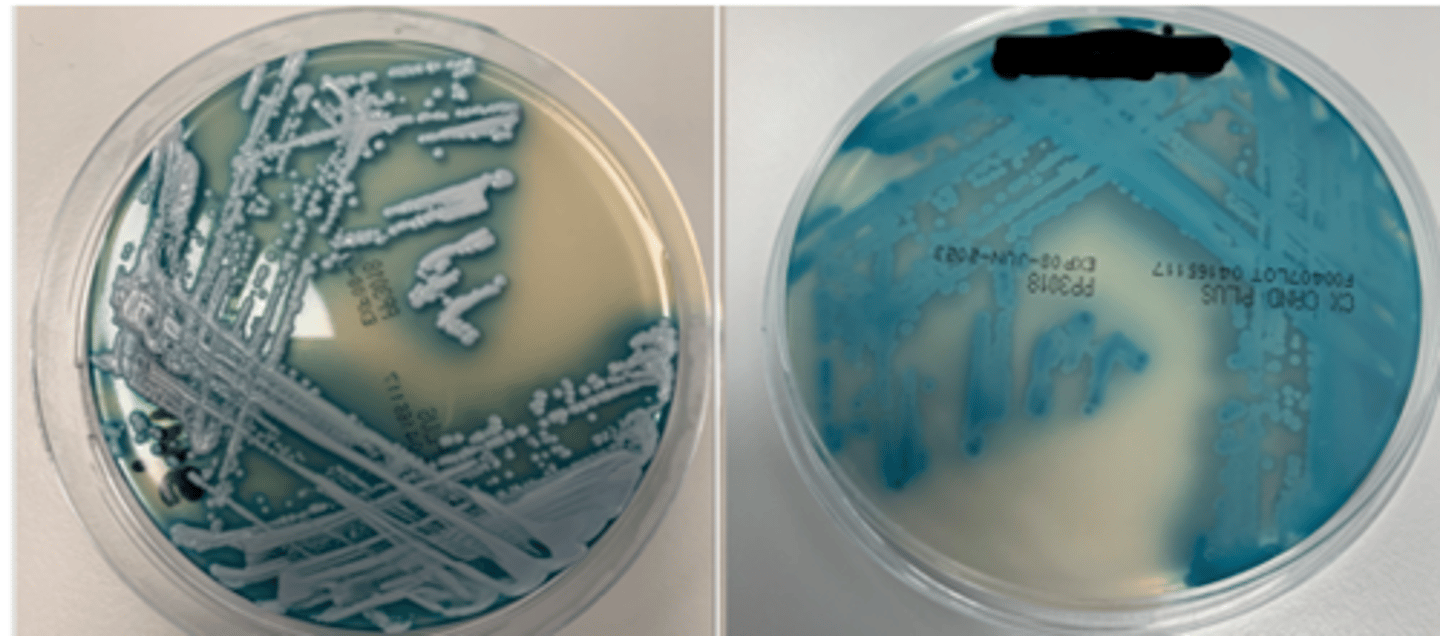
Candida auris morphology
No pseudohyphae
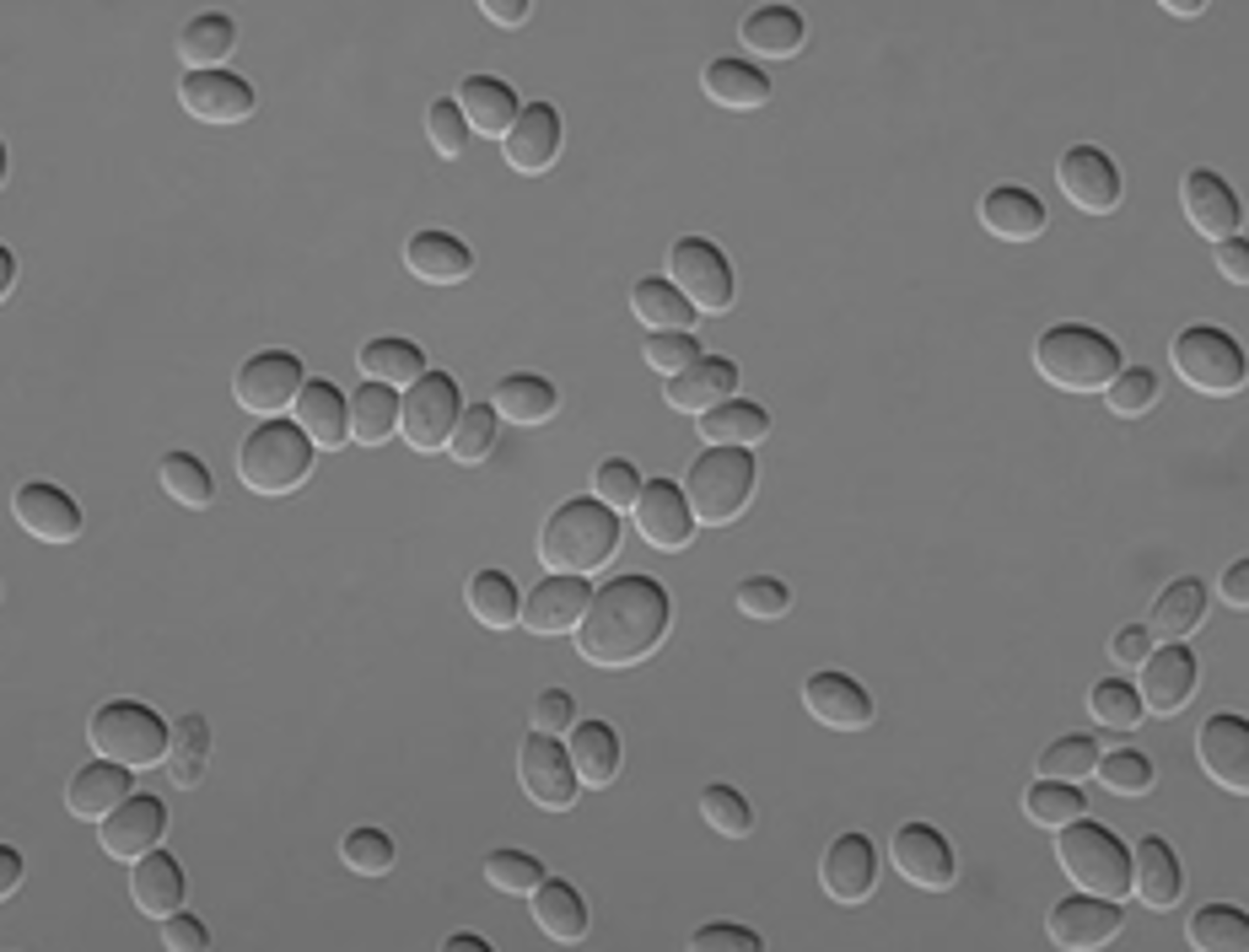
Candida auris is easy to misidentify and requires ______.
MALDI-TOF