Lecture 10: Paleomagnetics
0.0(0)
Studied by 0 people Call Kai
 Learn
Learn Practice Test
 Spaced Repetition
 Match
Match Flashcards
 Knowt Play
Card Sorting
1/26

Earn XP
Description and Tags
Last updated 11:56 PM on 3/6/23
Name | Mastery | Learn | Test | Matching | Spaced | Call with Kai | Chat |
|---|
No analytics yet
Send a link to your students to track their progress
27 Terms
1
New cards
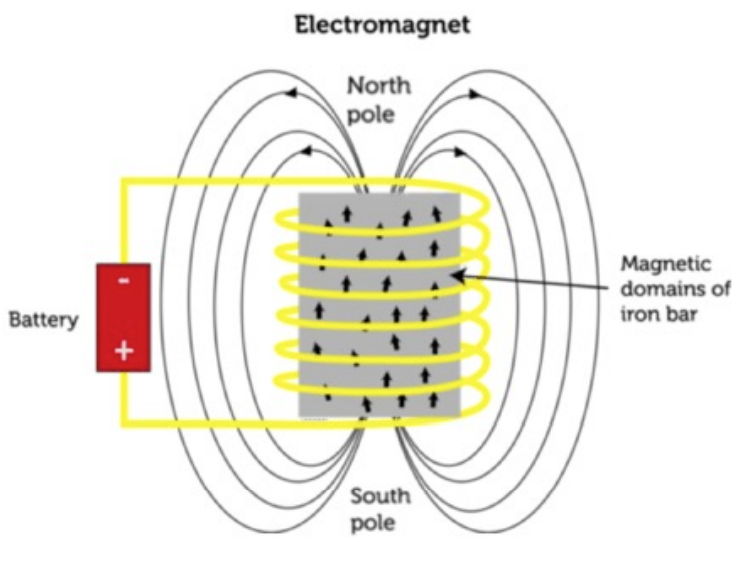
What is an electromagnet?
A type of magnet in which the magnetic field is generated by an electric current around an iron core. By shutting off the current, you shut off the magnet.
2
New cards
What do you need for an electromagnet to form?
a current and an iron core
3
New cards
Does the outer core fulfill these conditions?
Yes, it has convection currents and high levels of iron and nickel.
4
New cards
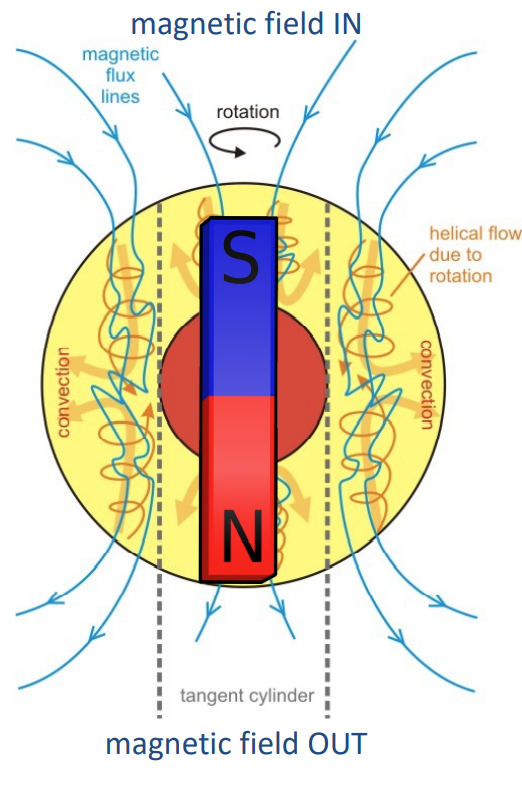
How does the rotation of Earth affect the convection of the outer core.
Due to spin of Earth, the convection (outward then inward) is accompanied by rotation. The rotation and convection together make heat rise and fall in a helical spiral.
5
New cards
What makes Earth a giant electromagnet?
The spiraling Fe-rich outer core generates electric currents- called the geodynamo.
6
New cards
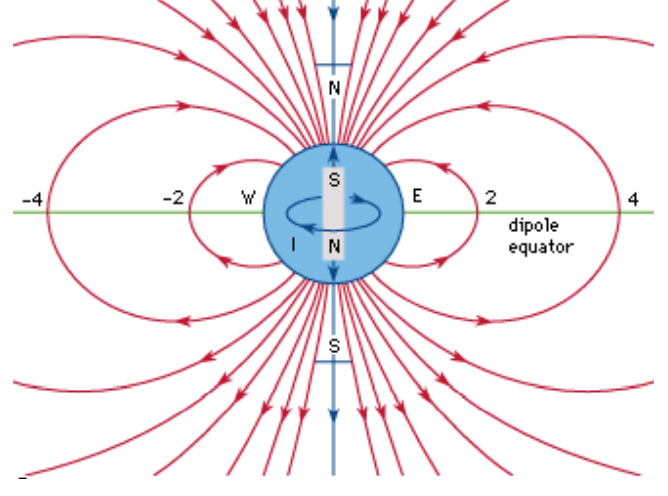
Describe Earth’s internal magnetic battery/field?
The magnetic field moves out of the north internal magnetic pole and into the south internal magnetic pole.
7
New cards
What is unique about Earth’s internal and external poles?
The south internal magnetic pole points to the North Magnetic Pole, and vice versa.
8
New cards
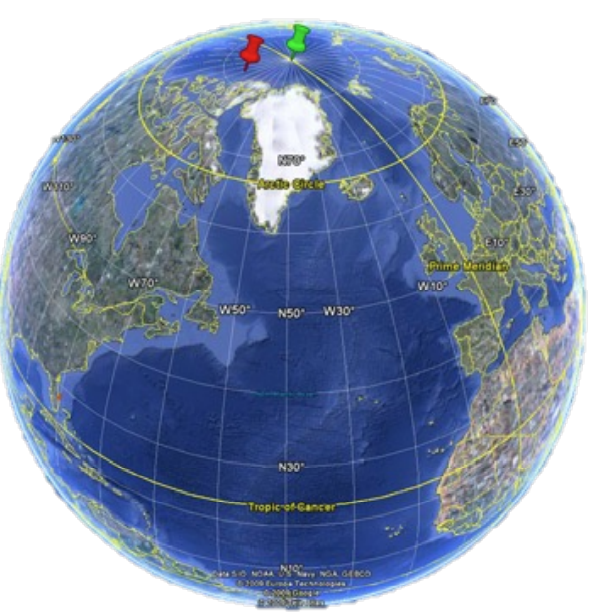
What is the magnetic declination?
The angle *on the horizontal plane* between the magnetic and geographic poles. The north/south geographic pole has a straight axis, but the north/south magnetic pole has a tilted axis. They are separated by an angle of 11.5 degrees.
9
New cards
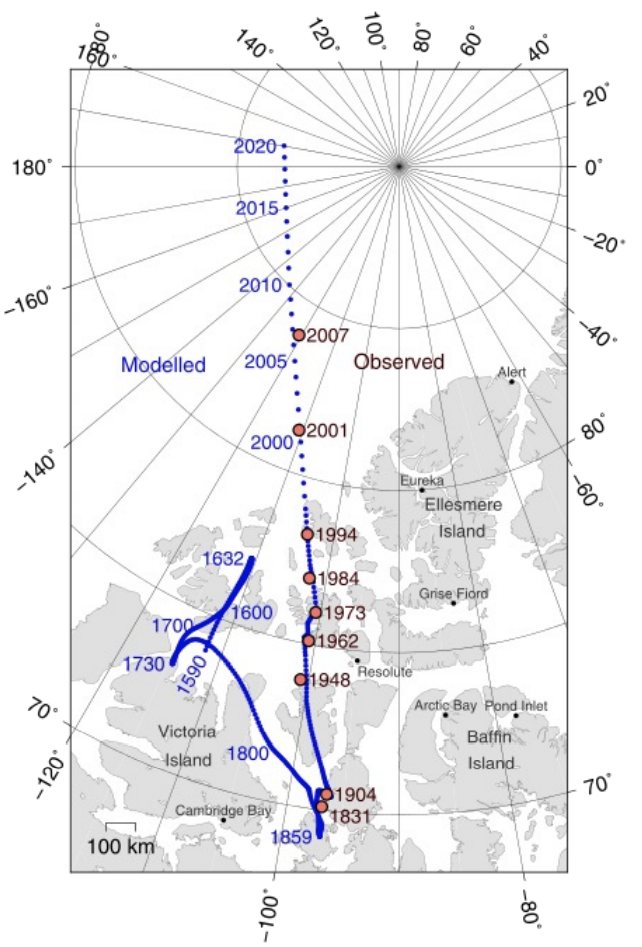
What determines the axis of the magnetic poles?
The axis of the magnetic poles is determined by internal magnetism and can wander over time. The north magnetic pole has moved about 10 km. per year in the recorded past. Recently it’s accelerated to about 55 km per year.
10
New cards
What happens to the strength of the magnetic field over time?
The strength of the magnetic field varies through time.
11
New cards
What is happening to the overall geometric field currently?
The overall geomagnetic field is weaking; this has accelerated in the past several years. Geomagnetic intensity has declined almost continuously from a maximum 35% above the modern value achieved approximately 2,000 years ago. The rate of decrease and the current strength are within the normal range of variation.
12
New cards
What is the normal range of current strength.
25,000 to 65,000 nanoteslas
13
New cards
Where is the magnetic field weakest? Strongest?
weakest at the magnetic equator and strongest at the magnetic poles
14
New cards
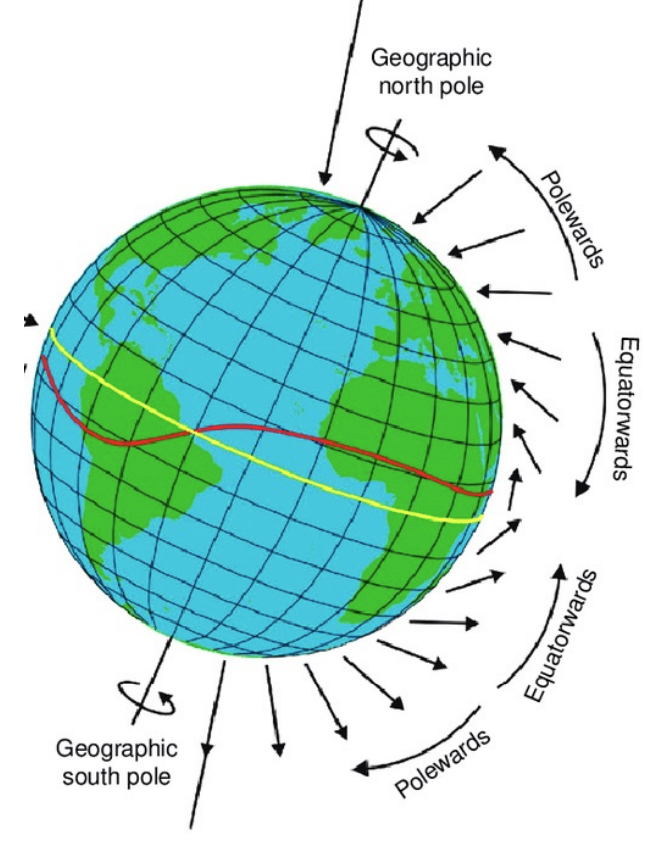
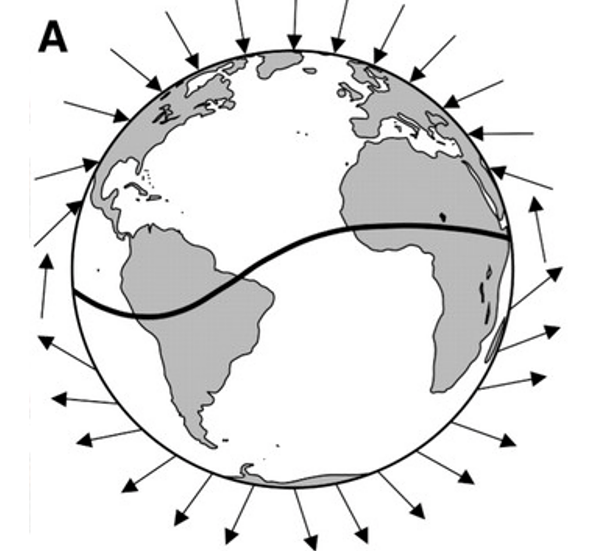
What is magnetic inclination?
The magnetic field is oriented at different angles to the surface of Earth depending on latitude. As you move from equator to either pole the angle the magnetic field makes with the surface of the Earth changes from 0 degrees (parallel) to 90 degrees (perpendicular).
15
New cards
What’s the difference between the magnetic inclination angle in the southern versus northern hemisphere?
the magnetic force field is oriented *away* from Earth in the southern hemisphere → magnetic inclination angle is thus negative
the magnetic force field is passing into Earth in the northern hemisphere → magnetic inclination angle is positive
the magnetic force field is passing into Earth in the northern hemisphere → magnetic inclination angle is positive
16
New cards
What is remnant magnetism?
magnetic information locked into the minerals at their time of formation
17
New cards
Magnetic minerals trapped in rocks help us determine…
magnetic direction, magnetic inclination, and polarity
18
New cards
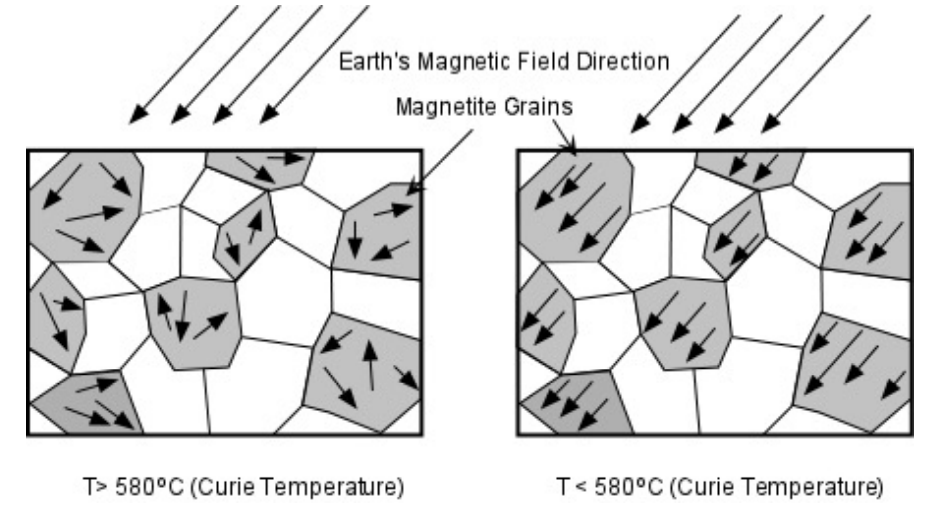
How do igneous and sedimentary rocks record the magnetic field of Earth at their time of formation?
As igneous magnetic minerals crystalize and reach their Curie Temperature, they align themselves with the Earth’s prevailing magnetic field.
When magnetic minerals in sediment deposit, they also align themselves to Earth’s prevailing magnetic field.
When magnetic minerals in sediment deposit, they also align themselves to Earth’s prevailing magnetic field.
19
New cards
Magnetic Direction
Which way was north at the time the mineral formed or was deposited.
If the preserved magnetic direction in the mineral differs from the current magnetic direction, then the mineral has been rotated subsequent to its formation/deposition (i.e. the tectonic plate that rock is on has rotated).
If the preserved magnetic direction in the mineral differs from the current magnetic direction, then the mineral has been rotated subsequent to its formation/deposition (i.e. the tectonic plate that rock is on has rotated).
20
New cards
Magnetic Inclination
Which latitude the mineral formed or was deposited.
If the preserved magnetic inclination differs from the current magnetic inclination, then the mineral has changed latitude subsequent to its formation/deposition (i.e. the tectonic plate that rock is on has changed latitude).
If the preserved magnetic inclination differs from the current magnetic inclination, then the mineral has changed latitude subsequent to its formation/deposition (i.e. the tectonic plate that rock is on has changed latitude).
21
New cards
What do geologists need to know to examine how rocks and plates have moved through time?
1. The age of rocks through radiometric dating
2. The magnetic direction (how has the plate rotated through time?)
3. The magnetic inclination (how has latitude changed through time?)
22
New cards
Give an example.
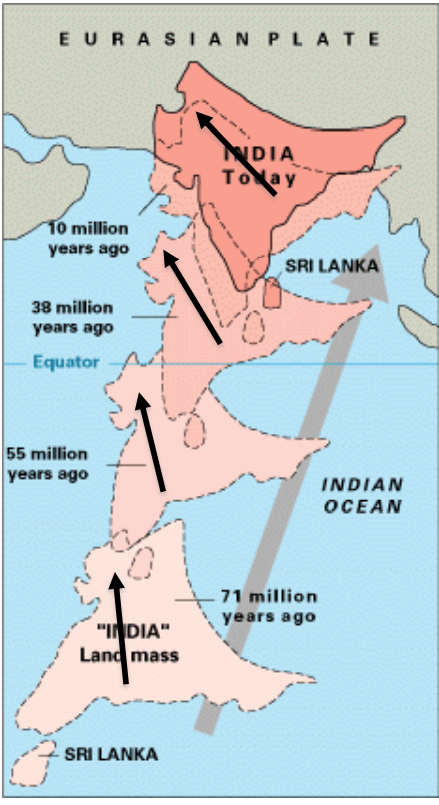
By sampling rocks from the Jurassic to the present on the Indian Subcontinent for the magnetic direction, inclination, and age, geologists have determined:
1. India changed latitude from deep in the southern hemisphere to its current position in the northern hemisphere.
2. The speed that India moved (the rate of change). By measuring a sequence of remnant magnetism through time, geologists can also discover *rates* of positional change.
3. How India rotated through its latitudinal changes
1. India changed latitude from deep in the southern hemisphere to its current position in the northern hemisphere.
2. The speed that India moved (the rate of change). By measuring a sequence of remnant magnetism through time, geologists can also discover *rates* of positional change.
3. How India rotated through its latitudinal changes
23
New cards
What can’t we determine with this information?
how plates change position relative to longitude
24
New cards
What happens to Earth’s internal magnet through time?
The internal magnet periodically reverses through time.
25
New cards
Describe normal versus reverse polarity?
Normal polarity: when the north magnetic pole = south internal magnetic pole (like today).
Reverse polarity: when the north magnetic pole = north internal magnetic pole.
Reverse polarity: when the north magnetic pole = north internal magnetic pole.
26
New cards
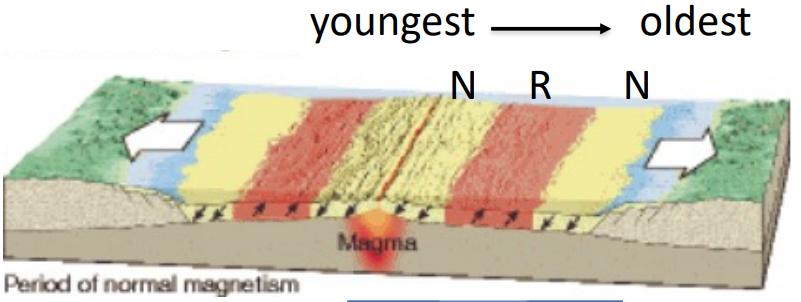
How can seafloor spreading centers help geologists determine how polarity has changed in the past?
As new igneous rocks cool below their Curie Temp at these centers, they assume the prevailing magnetic inclination, magnetic direction, and polarity. Therefore, if we sample these rocks, geologists can find change in polarity from the younger rocks closer to the center to the older and farther rocks.
27
New cards
Is there a pattern to polar reversals?
No, they are random and of different durations.