Anatomy Lab Quiz #3
 Call Kai
 Learn
Learn Practice Test
 Spaced Repetition
 Match
Match Flashcards
 Knowt Play
1/102

There's no tags or description
Looks like no tags are added yet.
Name | Mastery | Learn | Test | Matching | Spaced | Call with Kai | Chat |
|---|
No analytics yet
Send a link to your students to track their progress
103 Terms
levels of structural organization
atoms
molecules
cells
tissues
organs
organ system
organism
tissues
cells working together
organs
tissues working together to perform a function
organ system
series of organs that have a similar job
cell
basic structural and functional unit of living organisms
mitochondria
site of ATP synthesis
ribosome
sites of protein synthesis
rough endoplasmic reticulum
modify proteins after they are made and transports them to golgi and other sites
smooth endoplasmic reticulum
lipid synthesis, detoxification of drugs, glycogen breakdown
golgi apparatus
protein sorting
lysosome
contains hydrolases that digest intracellular debris; garbage disposal of the cell
peroxisome
oxidation of fatty acids, a major source of metabolic energy; synthesis of cholesterol/bile
endocytic vesicle/endosome
used for transport into the cell, endocytosis
plasma membrane
comprised of a phospholipid bilayer ad functions in selective/permeability to regulate passage of materials into and out of the cell
nucleus
store and protect cell’s genetic material and act as control center for cellular activities; transcription site
nucleolus
synthesizes rRNA and assembles them into ribosomes for protein production
Centriole
organize the mitotic spindle during cell division and form basal bodies for cilia and flagella
cell membrane
protective, selective permeable barrier that separates inside of cell from outside environment while regulating transport of materials entering and exiting

which part is hydrophilic and which part is hydrophobic
head - hydrophilic
tail - hydrophobic
cell membrane is mostly made up of
lipids (rest is made up of proteins)
phagocytosis
cellular “eating”
pinocytosis
cellular “drinking”
cellular extensions
protruding parts of a cell used for either motility or to increase surface area (ex. cilia, microvilli, flagella)
reverse transcription
creating a double stranded DNA molecule from RNA copy (HIV and HepB do this)
transcription
DNA information is encoded in mRNA in the nucleus
translation
mRNA’s information is decoded and used to assemble polypeptides in the cytosol
substitutions
point mutations (a single letter)
silent
codes for the same AA
missense
codes for a different AA
nonsense
codes for an early stop (shortened protein)
AUG
start
UAA
stop
UAG
stop
UGA
stop
mRNA
messenger
rRNA
ribosomal
tRNA
transfer
protein structure
basic structural material of the body
protein functions
structural framework, movement, catalysis, transport, regulation, body defense
protein structure layers
primary structure
secondary structure
tertiary structure
quaternary structure
DNA is found
within the nucleus of a cell
DNA functions
contains genetic material; directs protein synthesis; replicated itself before cellular division
eukaryotic cell cycle
interphase
mitosis
G0
interphase
G1
S
G2
Mitosis
prophase
metaphase
anaphase
telophase
G1
first gap phase; growth and normal metabolic roles
S
synthesis phase; DNA replication
G2
second gap phase; growth and preparation for mitosis
Prophase
chromosomes shorten and thicken; spindle fibers appear; centriole migration
metaphase
chromosomes lined up on equator waiting for signal to split at the centromere
anaphase
centromere division and sister chromatids pulled to ends
telophase
end of nuclear division
cytokinesis
cytoplasmic division into cells
G0
dormant state where a cell stops dividing and exits the active cell cycle (ex. cancerous cells)
which part of the cell cycle is not included in interphase
mitosis
where do most mutations occur in the cell cycle
S phase/Synthesis
what is the difference between cytosol and cytoplasm
cytoplasm includes organelles and cytosol is just the liquid
how many hydrogen bonds exist between cytosine and guanine
3
which two DNA nucleotides are purines
adenine (A) and guanine (G)
which phase of mitosis is marked by the end of “nuclear” division
telophase
why are the 20 amino acids from our list considered “essential”?
must be consumed
what is the total magnification when using 100x ocular?
1000x
where in the cell would you find rRNA?
cytoplasm
where in the cell does transcription occur?
nucleus
lysosomes pinch off from which other organelle?
golgi apparatus
what are cristae and why do they exist?
inner folds of the mitochondria that increase surface area and ATP production

1
nuclear envelope
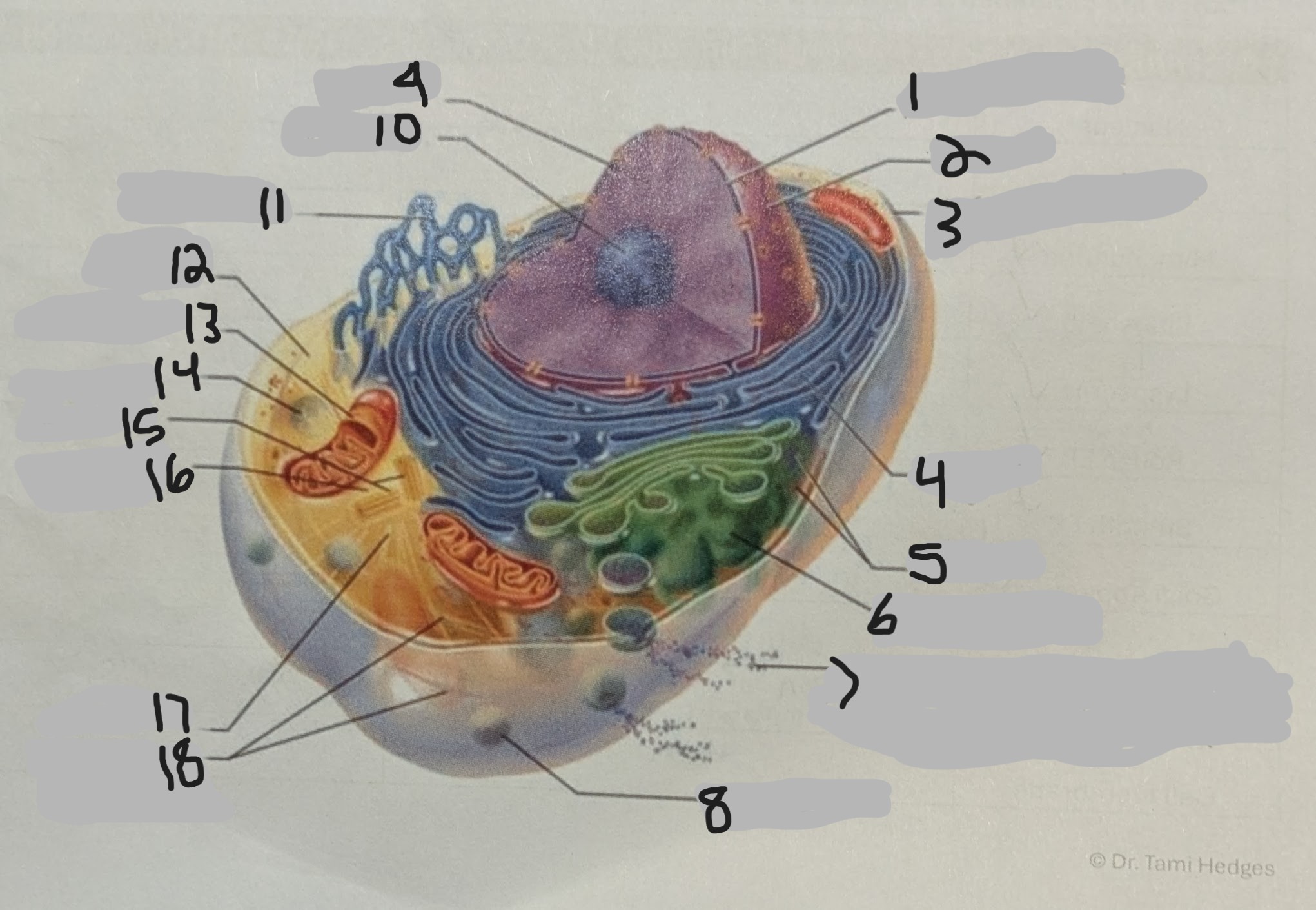
2
nucleus

3
plasma membrane

4
rough ER

5
ribosome

6
golgi apparatus
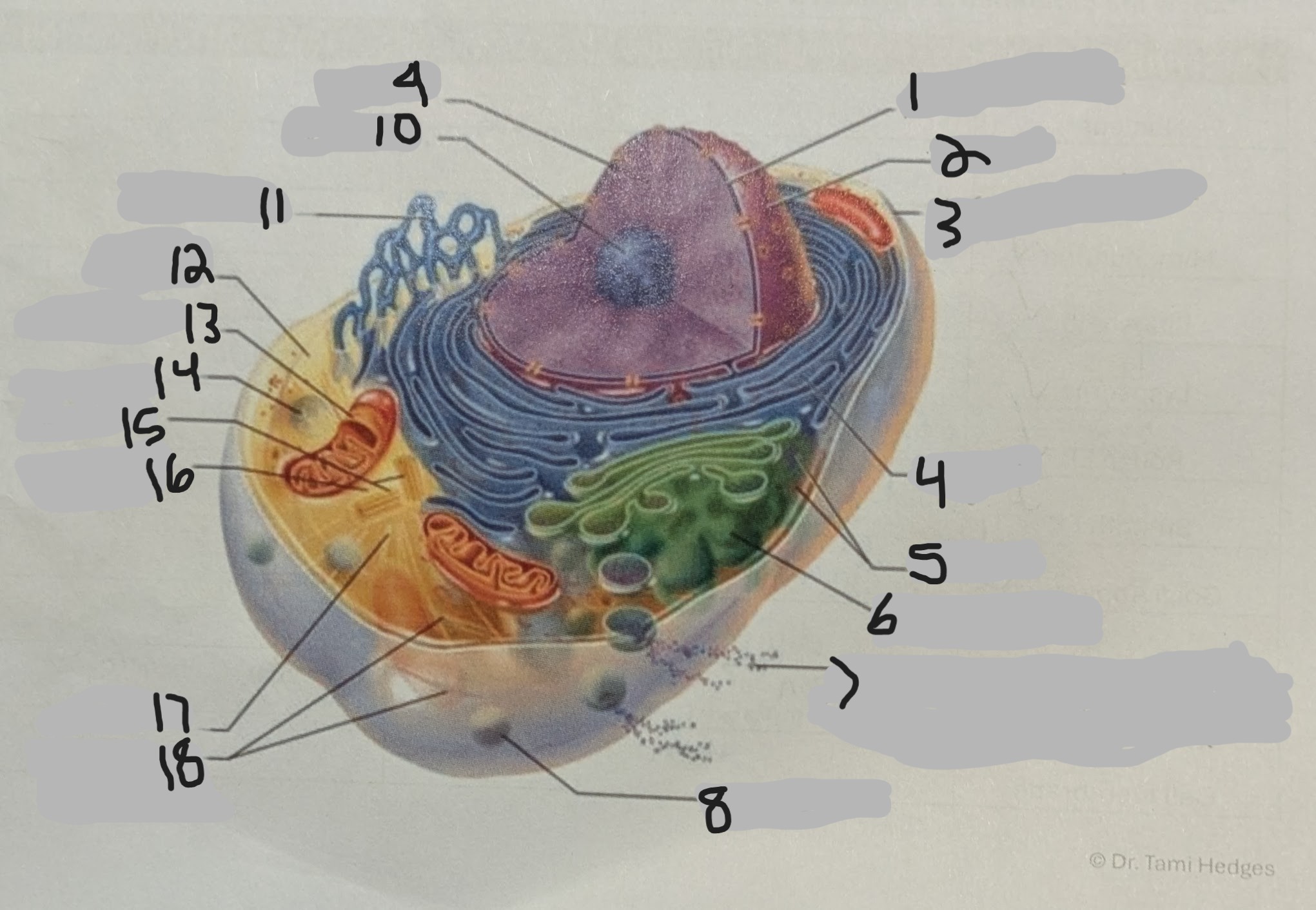
7
secretion being released from cell through exocytosis

8
peroxisome

9
chromatin

10
nucleolus

11
smooth ER

12
cytosol

13
mitochondria
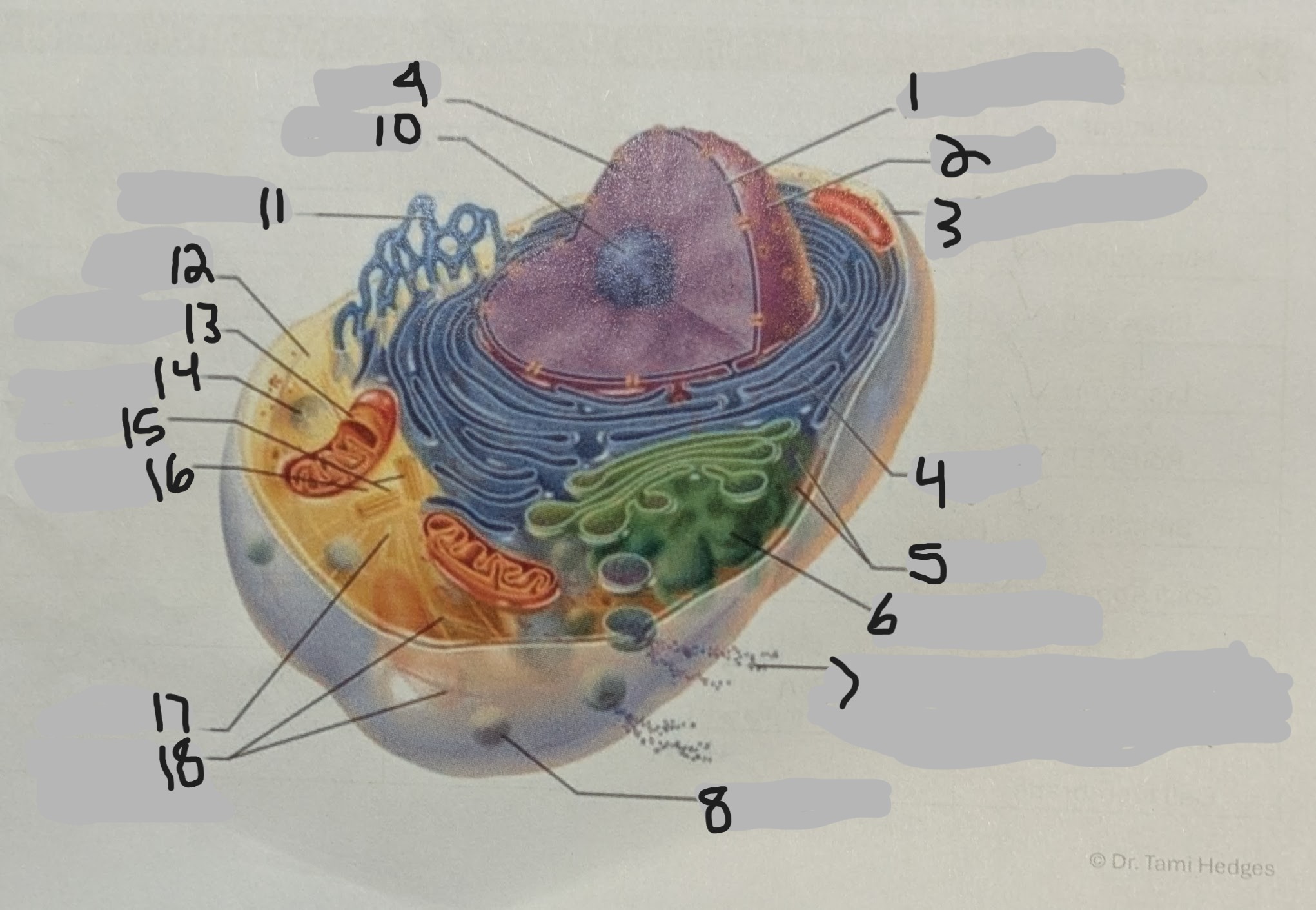
14
lysosome

15
centrioles

16
centrosome matrix

17
microtubule

18
intermediate filaments
primary protein structure
series of linear amino acids forming a polypeptide chain using peptide bonds for attachment
secondary protein structure
regular, local structure of the protein backbone and is stabilized by hydrogen bonds
tertiary protein structure
completed 3-dimensional unit that forms a compact globular molecule as the R-groups of subsequent amino acids react to one another and cause the folding of one singular chain
quaternary structure
more complex proteins structures with 2 or more polypeptide chains interacting

1
nucleus

2
nuclear envelope

3
nuclear pore
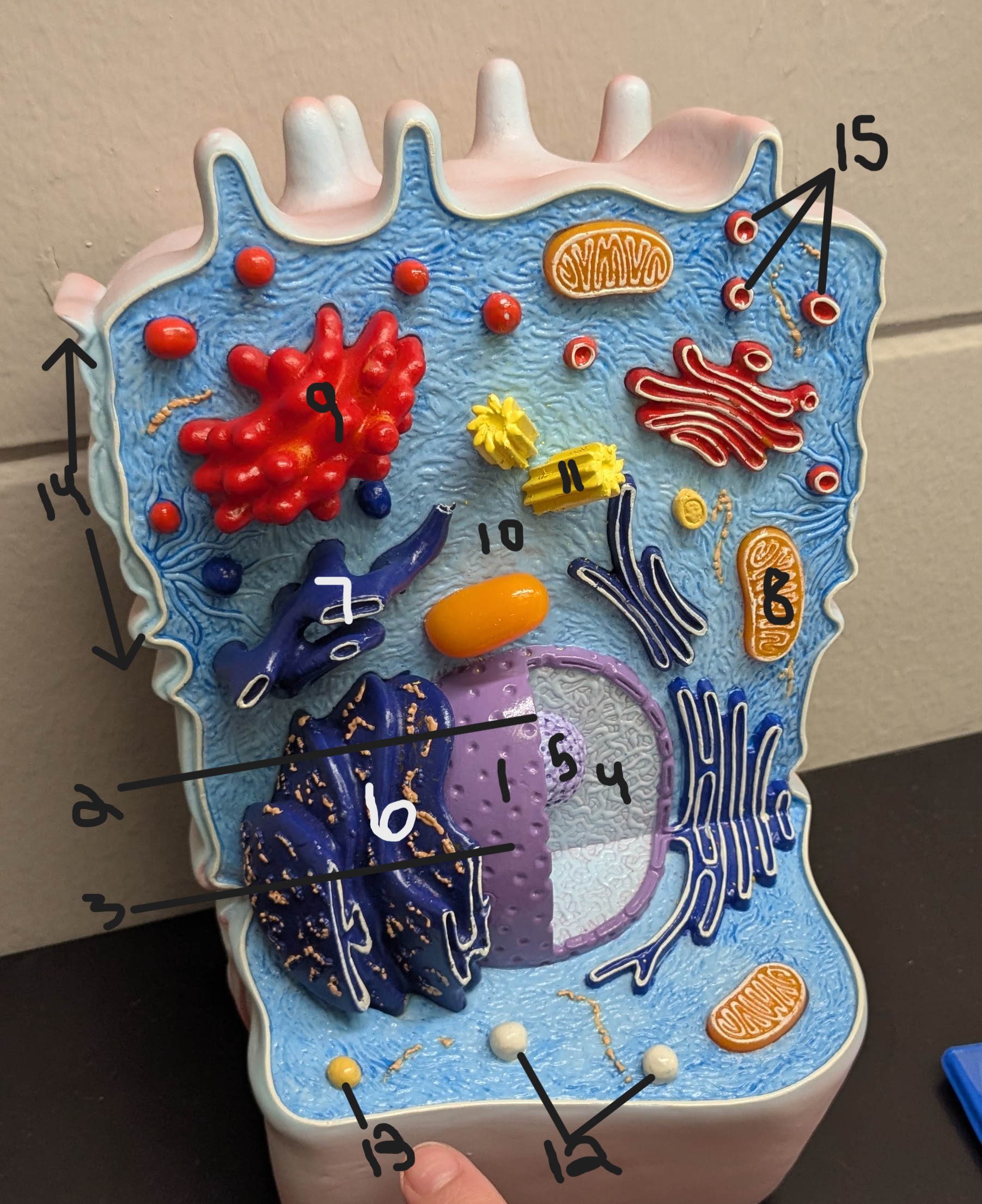
4
chromatin (DNA)
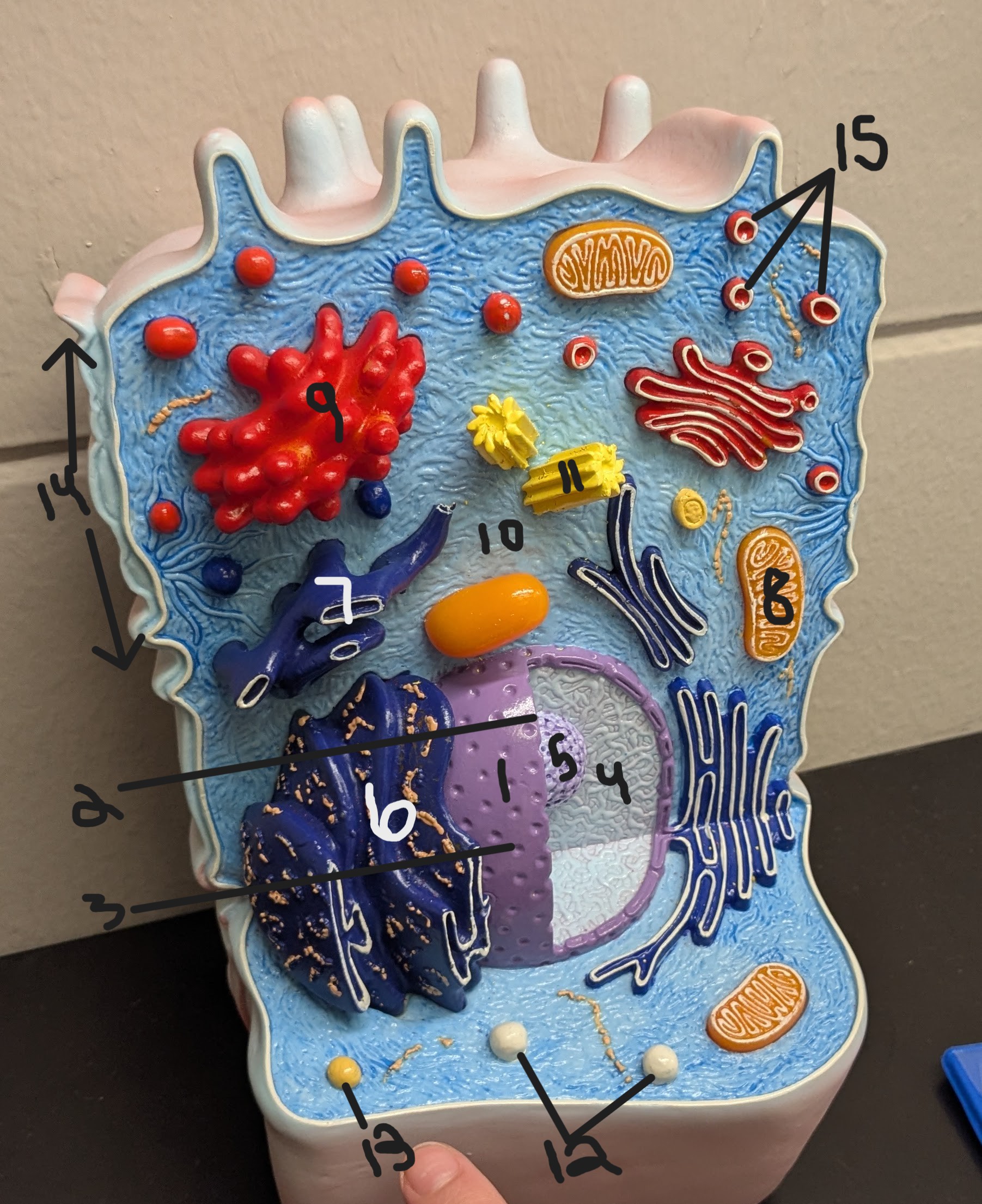
5
nucleolus

6 (in white)
rough ER (w/ribosomes)

7 (in white)
smooth ER

8
mitochondria

9
golgi apparatus

10
cytosol/cytoplasm

11
centrioles

12
lysosomes