Types of Tissue (Lab)
 Call Kai
 Learn
Learn Practice Test
 Spaced Repetition
 Match
Match Flashcards
 Knowt Play
1/97

There's no tags or description
Looks like no tags are added yet.
Name | Mastery | Learn | Test | Matching | Spaced | Call with Kai | Chat |
|---|
No analytics yet
Send a link to your students to track their progress
98 Terms
4 Tissue Types
Epithelial Tissue
Connective Tissue
Muscle Tissue
Nervous Tissue
Simple (Epithelium)
One cell layer thick; all cells are tightly bound, all cells attach directly to the basement membrane
Stratified (Epithelium)
Two or more layers thick, only the deepest layer directly attaches to the basement membrane
Shapes of Epithelium Cells
Squamous (flattened)
Cuboidal (cubed)
Columnar (columned )

Simple Squamous Epithelium (structure)
Single layer of thin, flat, irregularly shaped cells resembling floor tiles
The single nucleus of each cell bulges at its center
Simple Squamous Epithelium (function)
rapid diffusion
Filtration
Some secretion in serous membrane
Simple Squamous Epithelium (found in)
Air sacs in lungs (alveoli)
Lining of the heart chambers and lumen of blood vessels (endothelium)
Serous membranes of body cavities (mesothelium)

Simple Cuboidal Epithelium (function)
absorption and secretion
Simple cuboidal epithelium (found in)
thyroid gland follicles
Kidney tubules
Ducts and secretory region of most glands
Surface of ovary

Nonciliated Simple Columnar Epithelium (structure)
single layer of tall, narrow cells resembling floor
Oval-shaped nucleus in basal region of cell
Nucleus oriented lengthwise in cell
Apical region of cells have microvilli
May contain goblet cells and secrete mucin
Where is nonciliated simple columnar epithelium tissues found?
lining of most of digestive tract
Lining of stomach (no goblet cells)

Ciliated Simple Columnar Epithelium (structure)
Single layer of tall, narrow, ciliated cells
oval-shaped nucleus oriented lengthwise in the basal region of the cell
Goblet cells may be present
Ciliated Simple Columnar Epithelium (function)
Secretion of mucin and movement of mucus along apical surface of epithelium by action of cells
Oocyte movement through uterine tube
Where are Ciliated Simple Columnar Epithelium found?
lining of uterine tubes
Larger bronchioles of respiratory tract

Stratified Cuboidal Epithelia (structure)
two or more layers of cells
Cells at the apical surface are cuboidal/cube shapped
Stratified Cuboidal Epithelium (function)
protection and secretion
Stratified Cuboidal Epithelium Found in…
large ducts in most exocrine glands
In some parts of the male urethra

Stratified Columnar Epithelium (structure)
two or more layers of cells Cells
Cells at apical surface are columned shaped
Stratified Columnar Epithelium (function)
protection and secretion
Stratified Columnar Epithelium found in…
large ducts of some exocrine glands
In come regions of male urethra
Rare

Transitional Epithelium (Structure)
appearance may vary depending on if the tissue is stretched or relaxed
Shape of cells at apical surface changes
Some cells may by binucleated (2 nuclei inside a single cell)
Transitional Epithelium (function)
distention and relaxation to accommodate urine volume changes in bladder, ureters, and urethra
Transitional Epithelium are found in…
lining of urinary bladder
Ureters
Part of urethra
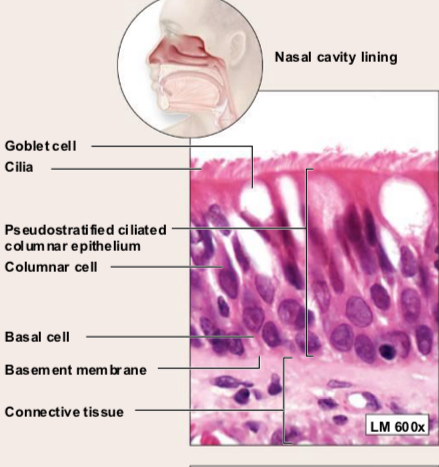
Pseudostratified Columnar Epithelium (structure)
single layer of cells varying in heights making it appear multilayered
All cells connect at basement membrane
Not all cells reach apical surface
Ciliated form has goblet cells, nonciliated lack goblet cells
Pseudostratified Columnar Epithelium (Function)
protection
Ciliated form also involved in secretion of mucin and movement of mucus across surface by ciliary action
Pseudostratified Columnar Epithelium (found in…)
Ciliated form lines of most respiratory tract
nasal cavity, part of pharynx, larynx, trachea, bronchitis
Nonciliated is rare
lines epididyn and part of the male urethra
Loose Connective Tissue
Relatively fewer cells and fibers than in dense, fibers are loosely arranged
3 Types of LOOSE Connective Tissue
Areolar Connective Tissue
Adipose Connective Tissue
Reticular Connective Tissue

Areolar Connective Tissue (Structure)
Abundant vascularized ground substance (gel-like)
Scattered fibroblasts
Many blood vessels
Lesser amounts of collagen and elastic fibers
Areolar Connective Tissue (function)
Forms delicate, thin layers b/w muscles
Binds skins to underlying organs
Provides nerve and blood vessel packing
Areolar Connective Tissue Is found in…
Subcutaneous layer under the skin
Surrounding nerves and vessels
Surrounds organs

Adipose Connective Tissue (structure)
closely packed fat cells (adipocytes) / large in size like marshmellows
Nucleus squeezed to one side
Adipose Connective Tissue (function)
protects adds cushion
Stores energy supply in fat vacuoles
Insulates
Adipose Connective Tissue is found in….
subcutaneous layer
Surrounding kidney and other organs
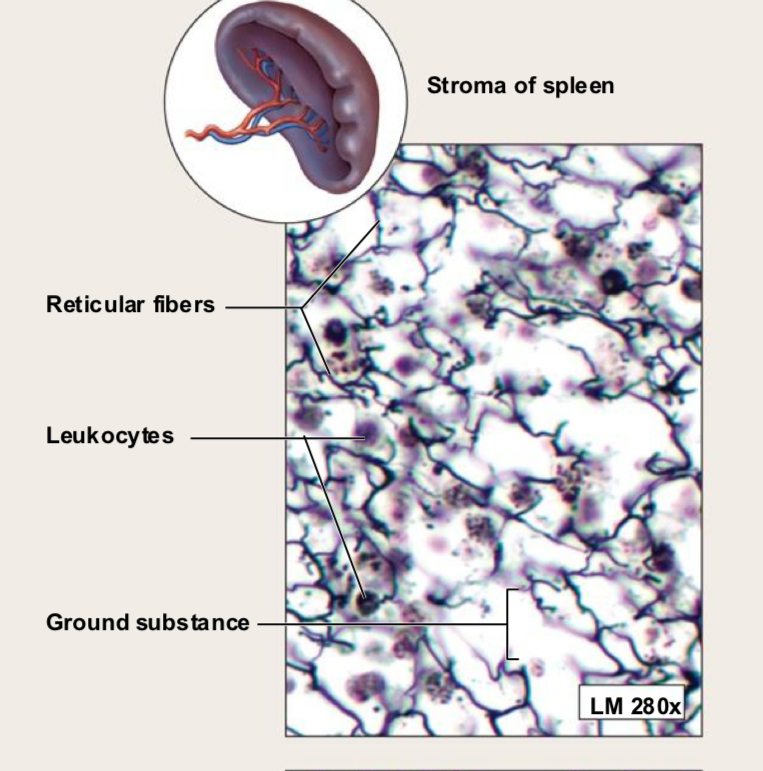
Reticular Connective Tissue (structure)
ground substance is gel-like liquid
Scattered reticular fibers, fiberblasts, and leukocytes
Reticular Connective Tissue (Function)
Provides supportive framework for spleen, lymph nodes, thymus, bone marroe
Reticular Connective Tissue is found in…
Forms stroma of lymph nodes
Spleen
Thymus
Bone Marrow
Dense Connective Tissue
Higher proportion of fibers to ground substance; protein fibers are densely packed together
3 types of DENSE Connective Tissue
Dense Regular Connective Tissue
Dense Irregular Connective Tissue
Elastic Connective Tissue

Dense Regular Connective Tissue (Structure)
densely packed
Parallel to direction of stress collagen fibers
scarce ground substance
Dense Regular Connective Tissue (function)
Provides great strength and flexibility primarily in a single direction
attaches muscle to bone
Attaches bone to bone
Resists stress applied in one direction
Dense Regular Connective Tissue found in…
tendons
Ligaments
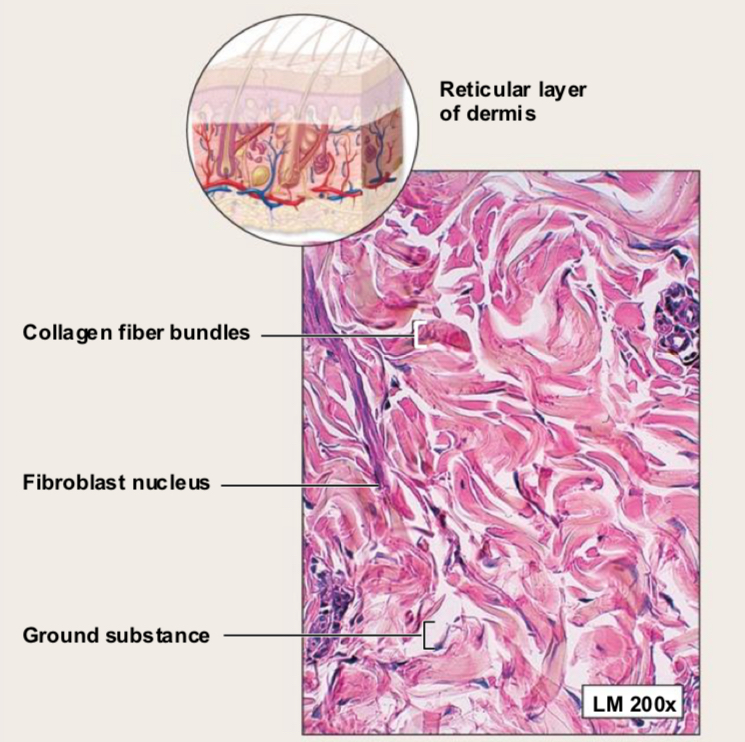
Dense Irregular Connective Tissue (Structure)
predominantly collagen fibers (randomly arranged and clumped together/lightly swirled)
Fibroblasts in spaces among fibers
More ground substance
Dense Irregular Connective Tissue (function)
provides tensile strength in all directions
Dense Irregular Connective Tissue (function)
Provides tensile strength/ withstands stress in all direction
Dense Irregular Connective Tissue found in…
walls of large arteries
Dermis
Periosteum covering bone
Perichondrium covering cartilage
Organ capsules
3 Types of Cartilage Connective Tissue
Hyaline cartilage
Fibrocartilage
Elastic Cartilage

Hyaline Cartilage (structure)
glassy appearing matrix
Lacunae house chondrocytes usually covered by perichondrium
Hyaline Cartilage (Function)
smooth surfaces for movement at joints
Model for bone growth
Supports Soft Tissue
Hyaline Cartilage Found in…
Soft part of nasal septum (nose)
most fetal skeleton
Covers articular ends of bones
Costal cartilage
Larynx, trachea (supporting rings of respiratory passages)

Fibrocartilage (structure)
parallel collagen fibers in matrix
Lucunae house chondrocytes (looks like a shell in water)
No perichondrium
Fibrocartilage (function)
resists compression
Absorbs shock in some joints
Fibrocartilage found in…
Intevertebral discs
Public symphysis (connects L/R hope bone)
Menisci of knee joints
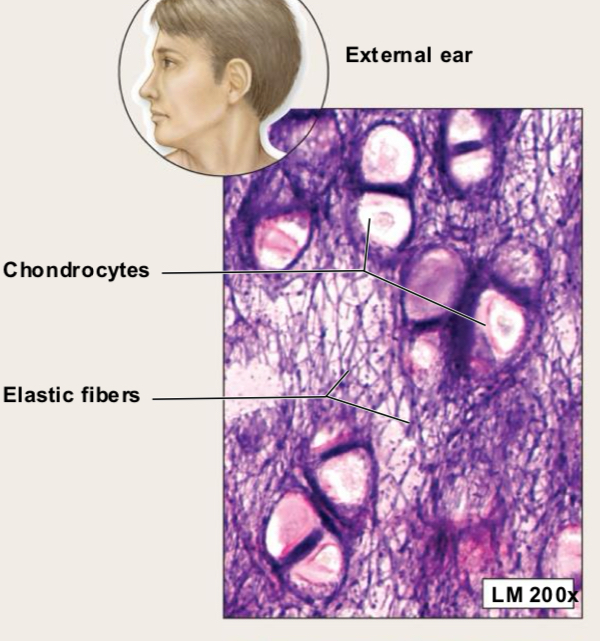
Elastic Cartilage (Structure)
contains abundant elastic fibers
Fibers form weblike mesh around lacunae
Perichondrium present
Elastic Cartilage (function)
maintans structure and shape while permitting extensive flexibility
Elastic Cartilage found in…
external ear
Epiglottis of the larynx
2 Types of Bone Connective Tissue
Compact
Spongy
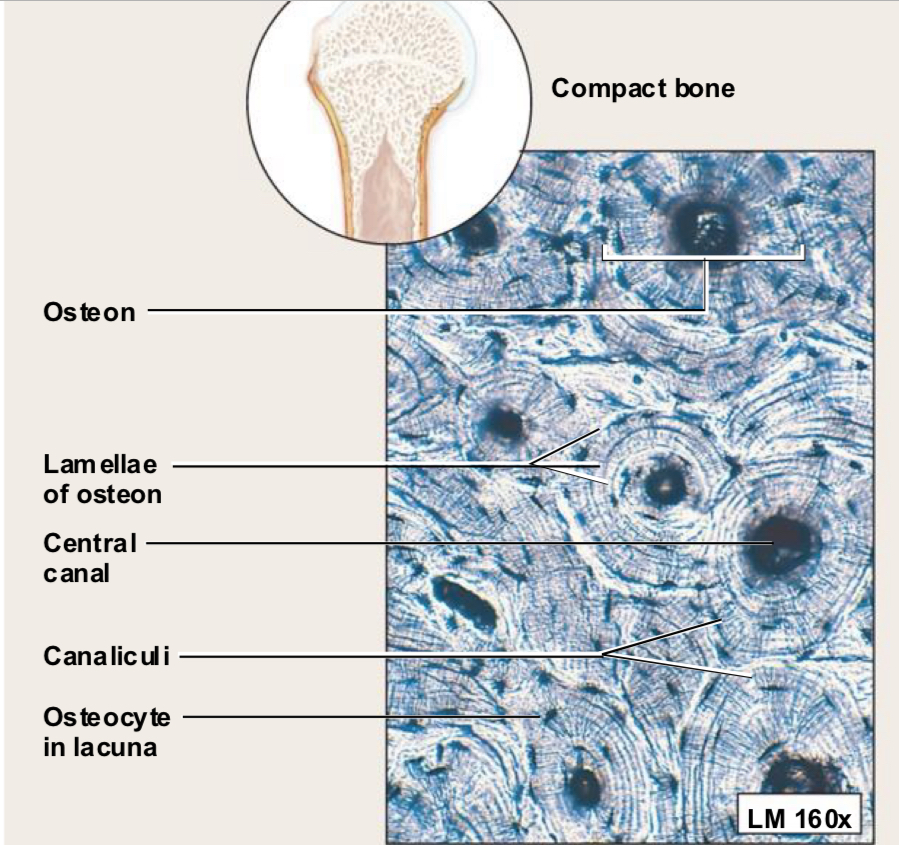
Bone (Connective Tissue Structure)
Compact bone
calcified matrix arranged in osteons
Concentric lamellae arranged around a central canal containing blood vessels (looks like tree trunk)
Spongy Bone
Contains more spaces
Bone arranged in meshwork pattern (looks like sponge)
Bone Connective Tissue (function)
Supports soft structures
Protects vital organs
Provides levers for movement
Stores calcium and phosphorus
Spongy bone: site of hemopoiesis (production of blood)
Bone Connective Tissue found in…
Bones of the body
Type of Fluid Connective Tissue
Blood
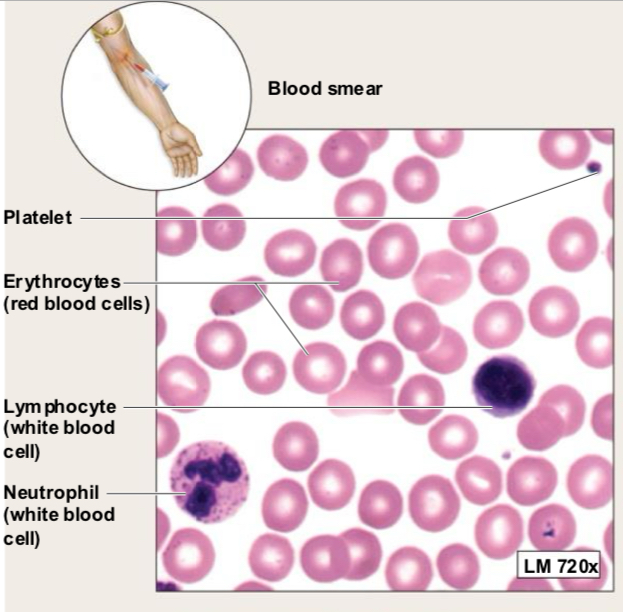
Blood (Connective Tissue Structure)
contains erythrocytes (red blood cells), leukocytes (white blood cells), and platelets
Soluble protein fibers
Watery ground substance form plasma
Blood (Connective Tissue Function)
Erythrocytes transport oxygen and some carbon dioxide
Leukocytes initiate and control immune response
Plasma contains clotting elements to stop blood loss
Platelets help with blood clotting
Plasma transports nutrients, wastes and hormones throughout the body
Blood Connective Tissue Found in…
blood vessels (arteries, veins, capillaries
Heart
leukocytes lymphatic organs can migrate to infected/inflamed tissues of the body
Elastic Cartilage
Forms framework in outer ear
Adipose Connective Tissue
Functions as heat insulator beneath skin
Blood Connective Tissue
Contains large amounts of fluid and lacks fibers
Bone Connective Tissue
Cells arranged around central canal
Loose (areolar) Connective Tissue
Binds skin to underlying organs
Dense (regular) connective tissue
Main tissue of tendons and ligaments
Adipose Connective Tissue
Provides stored energy supply in fat vacoules
Hyaline Cartilage
Forms the flexible soft part of the nasal septum
Fibrocartilage
Pads between vertebrae that are shock absorbers
Hyaline Cartilage
Forms supporting rings of respiratory passages
Adipose Connective Tissue
Cells greatly enlarged with nucleus pushed to the side
Loose (areolar) connective tissue
Forms delicate, thin layers between muscles
Bone Connective Tissue
Matrix contains collagen fibers and mineral salts
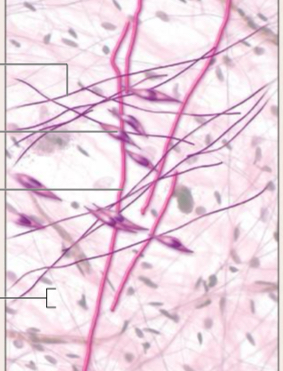
Areolar Connective Tissue
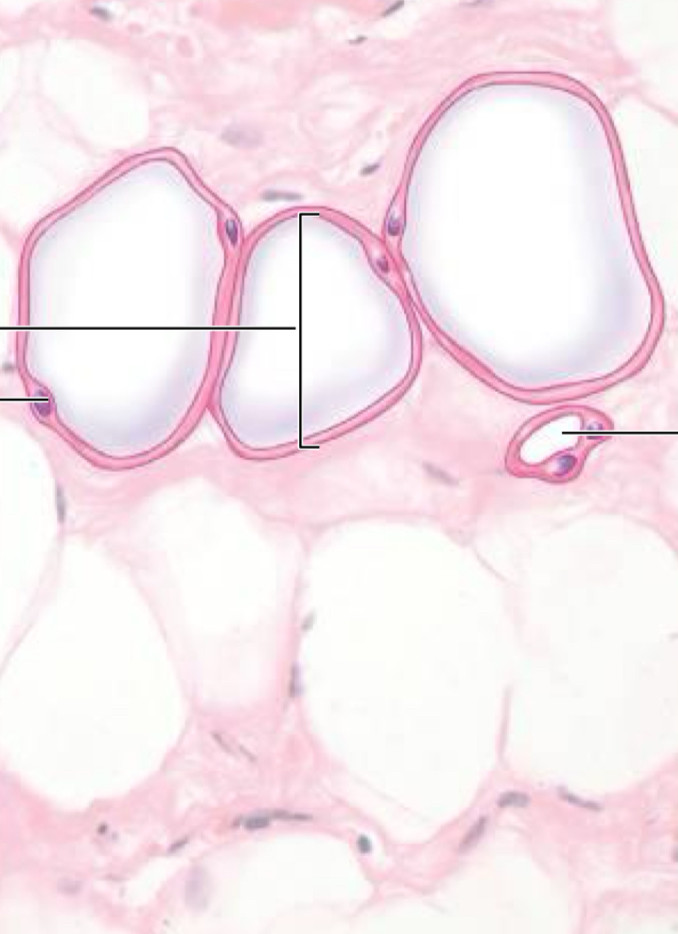
Adipose Connective Tissue
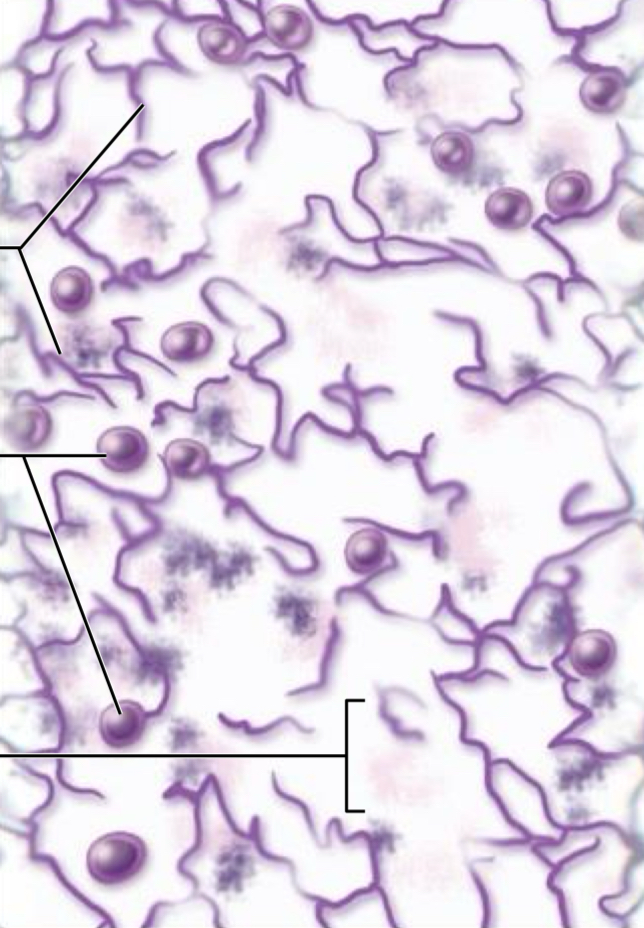
Recticular Connective Tissues

Dense Regular Connective Tissue

Dense Irregular Connective Tissue

Elastic Connective Tissue

Hyaline Cartilage

Fibrocartilage

Elastic Cartilage
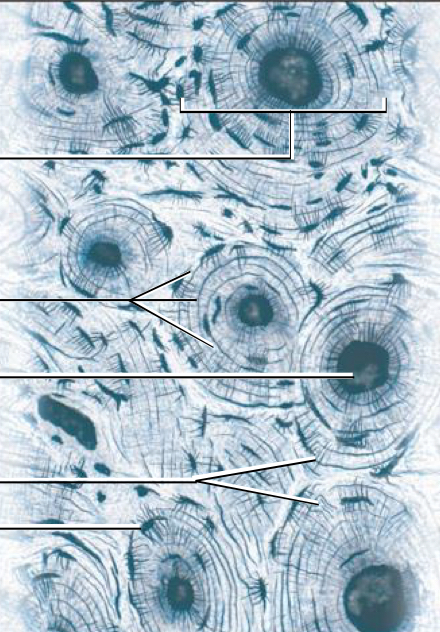
Bone (connective tissue)

Blood (connective tissue)
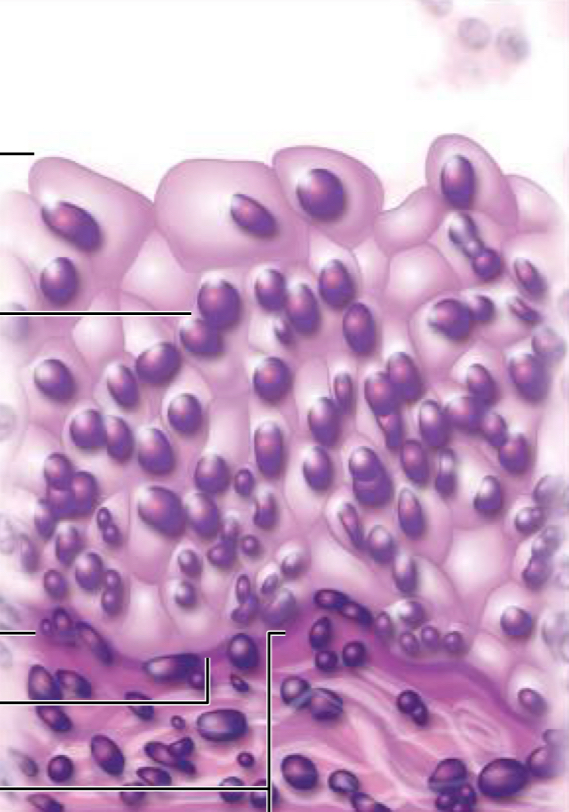
Transitional Epithelium

Pseudostratified Columnar Epithelium
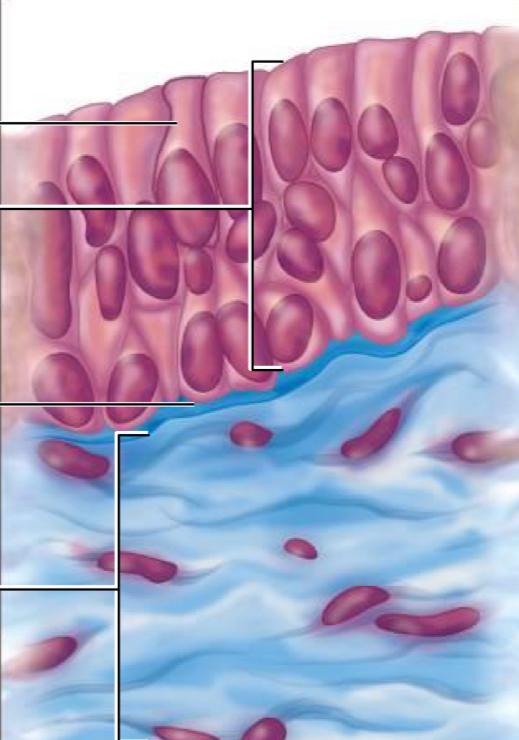
Stratified Columnar Epithelium

Stratified Cuboidal Epithelium

Keratinized Stratified Squamous Epithelium

Nonkeratinized Stratified Squamous Epithelium

Ciliated Simple Columnar Epithelium
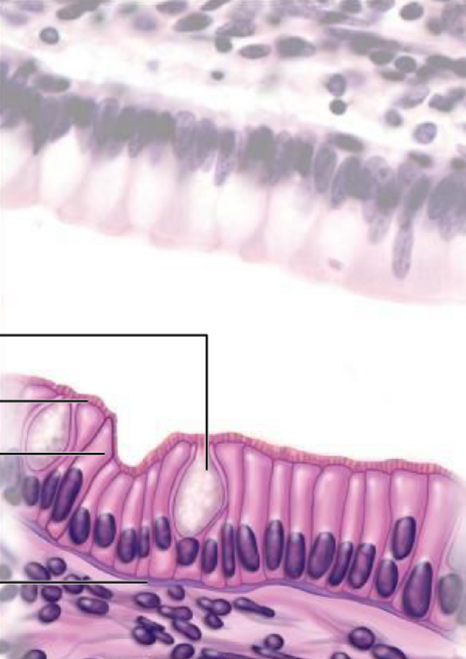
Nonciliated Simple Columnar Epithelium

Simple Cuboidal Epithelium

Simple Squamous Epithelium