THE IMPRESSIONISM
 Studied by 0 people
 Call with Kai
 Learn
Learn Practice Test
 Spaced Repetition
 Match
Match Flashcards
 Knowt Play
1/27

There's no tags or description
Looks like no tags are added yet.
Name | Mastery | Learn | Test | Matching | Spaced | Call with Kai |
|---|
No study sessions yet.
28 Terms
Impressionism
1874
freedom from representing reality as is
Concentrated on artists perception of reality
Main focus were the study of LIGHT & COLOUR
Whate sparked impressionism?
PHOTOGRAPHY
Allowed painters to STOP CONCENTRATING ON DEPICTING REALITY - FREE TO USE EXPRESSIVE METHODS / COLOURS / COMPOSITIONS
INDEPENDENT ART EXHIBITION IN NADAR
It was there when term IMPRESSIONISM was first used, by a French critique about Monet’s SUNRISE which was just an IMPRESSION OF REALITY
Who influenced impressionism?
Camile Corot (1796 - 1875)
Painting en plain air, suppression of details in favour of MOOD & COLOUR, prominent STRUCTURALITY & GEOMETRICATION
GUSTAVE COURBET (1819-77)
Collaged compositions, SENSITIVE subjects, AMPLIFIED SURFACE TEXTURE, stylistic innovations, lack of celebration of religion in favour of reality & life-like qualities
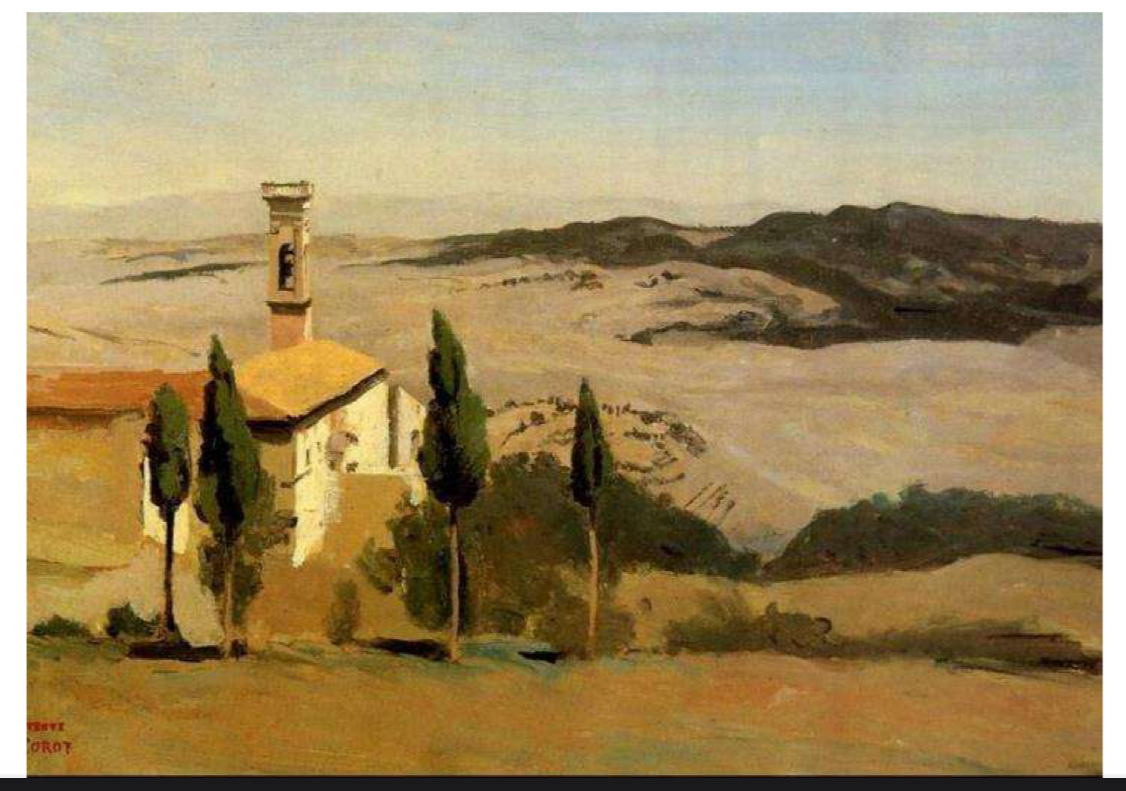
Corot
simplified house features
Simple geometrical structure
Little highlights - rather flat
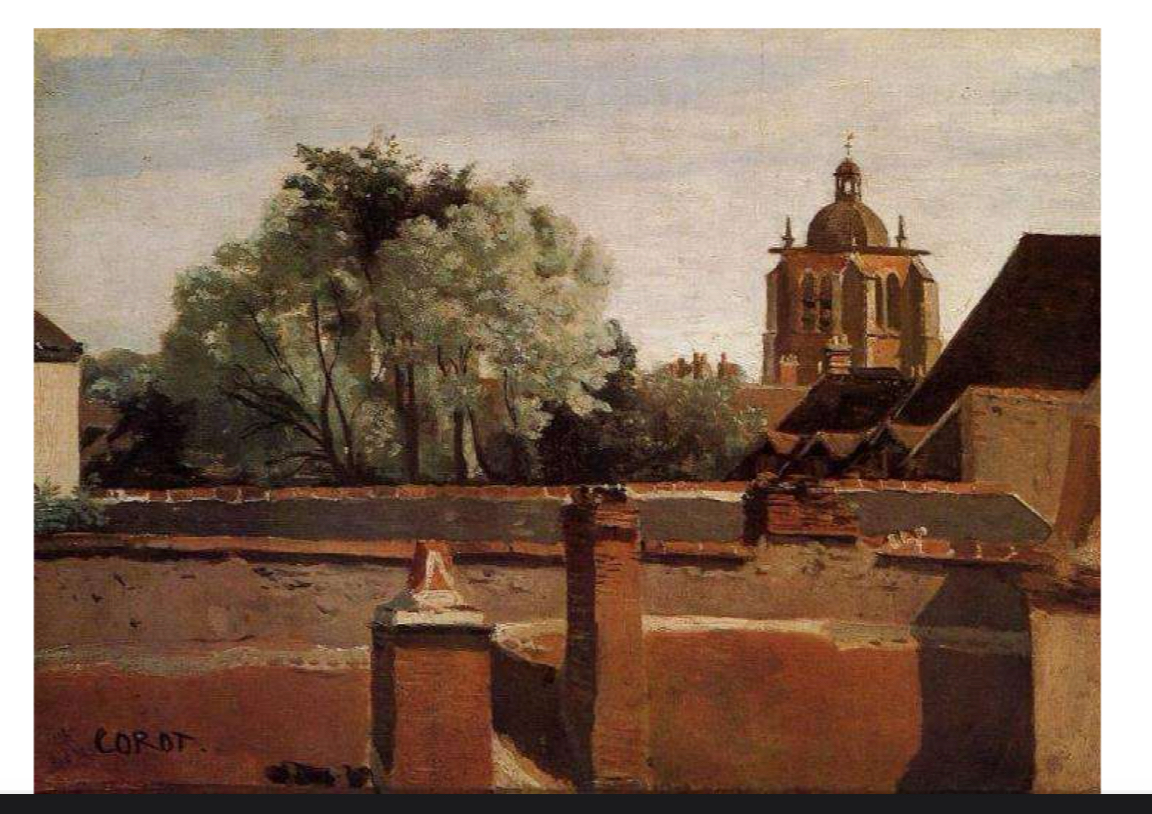
corot
Only the tree is oval and with definition
Harsh shadow
Lack of detail
Flat & simple structures
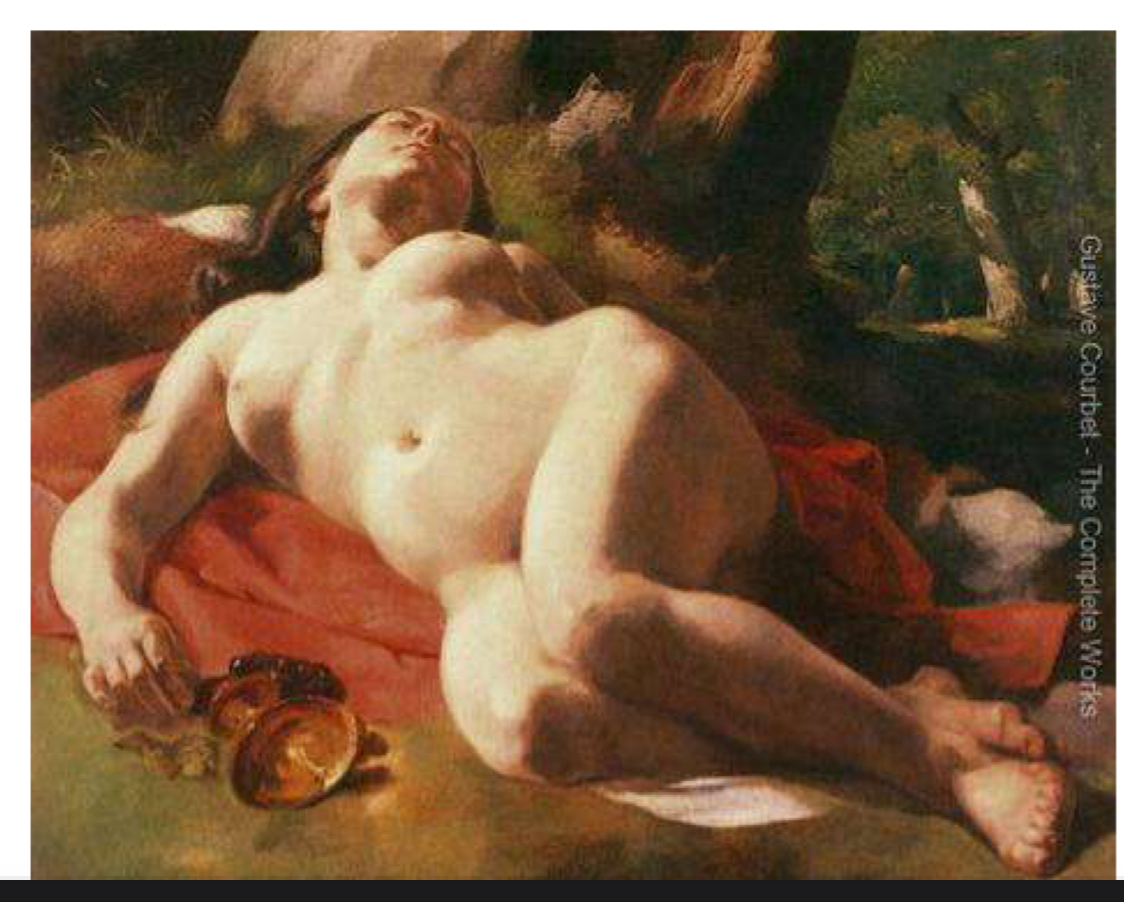
COURBET
Controversial subject
Lack of religious conotations
Narrow perspective
New & scandalous
Slightly undefined & blurry
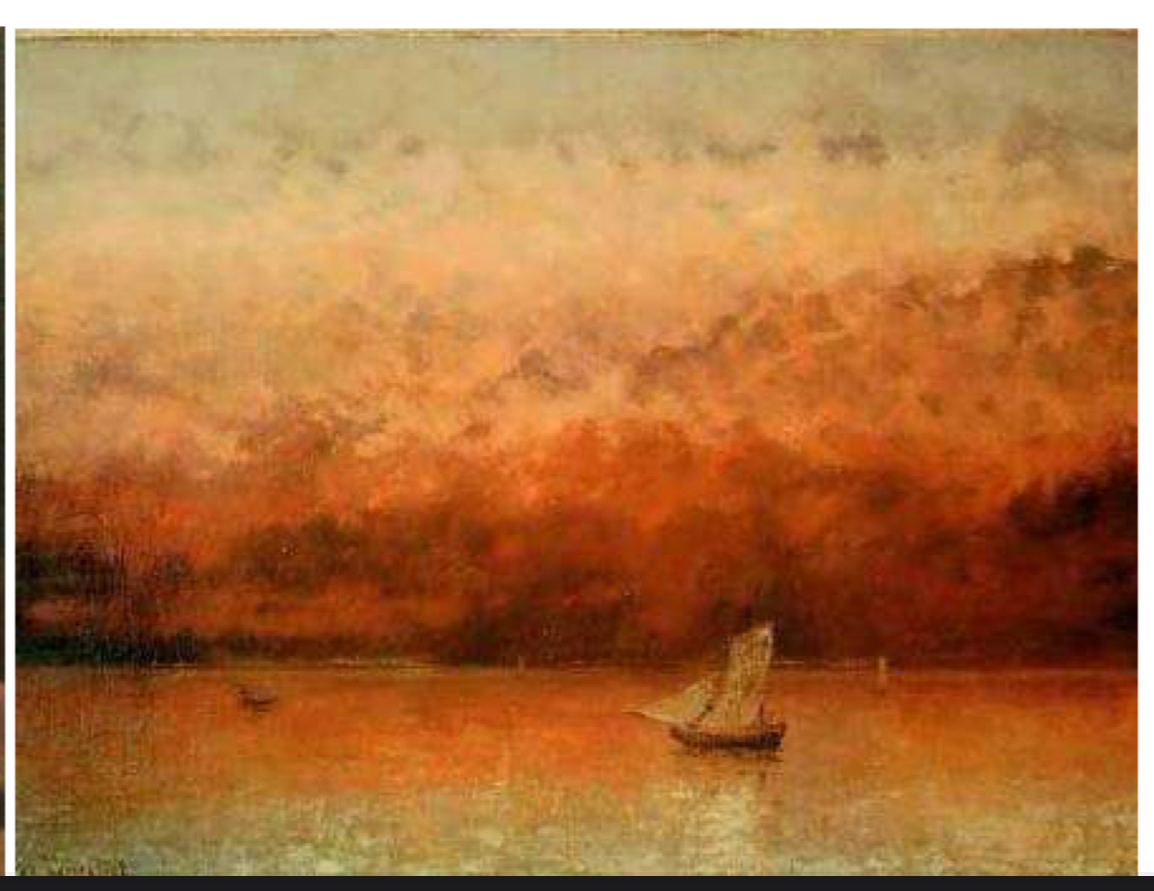
courbet
Blurred horizon lines
Lack of detail or refined shape
Unrealistic colour palette used
CLAUDE MONET
1840-1926
French
One of the FOUNDING MEMBERS of the ANONYMOUS SOCIETY OF PAINTERS
His artwork gave birth to the name “impressionism”
Main topics: landscapes & leisure activities of paris
Pioneer of the act of PERCEIVING nature
HUGE PLAIN AIR CANVASES
Elimination of linear perspective = emphasis on 2D
Unrealistic colour palette with vibrant hues
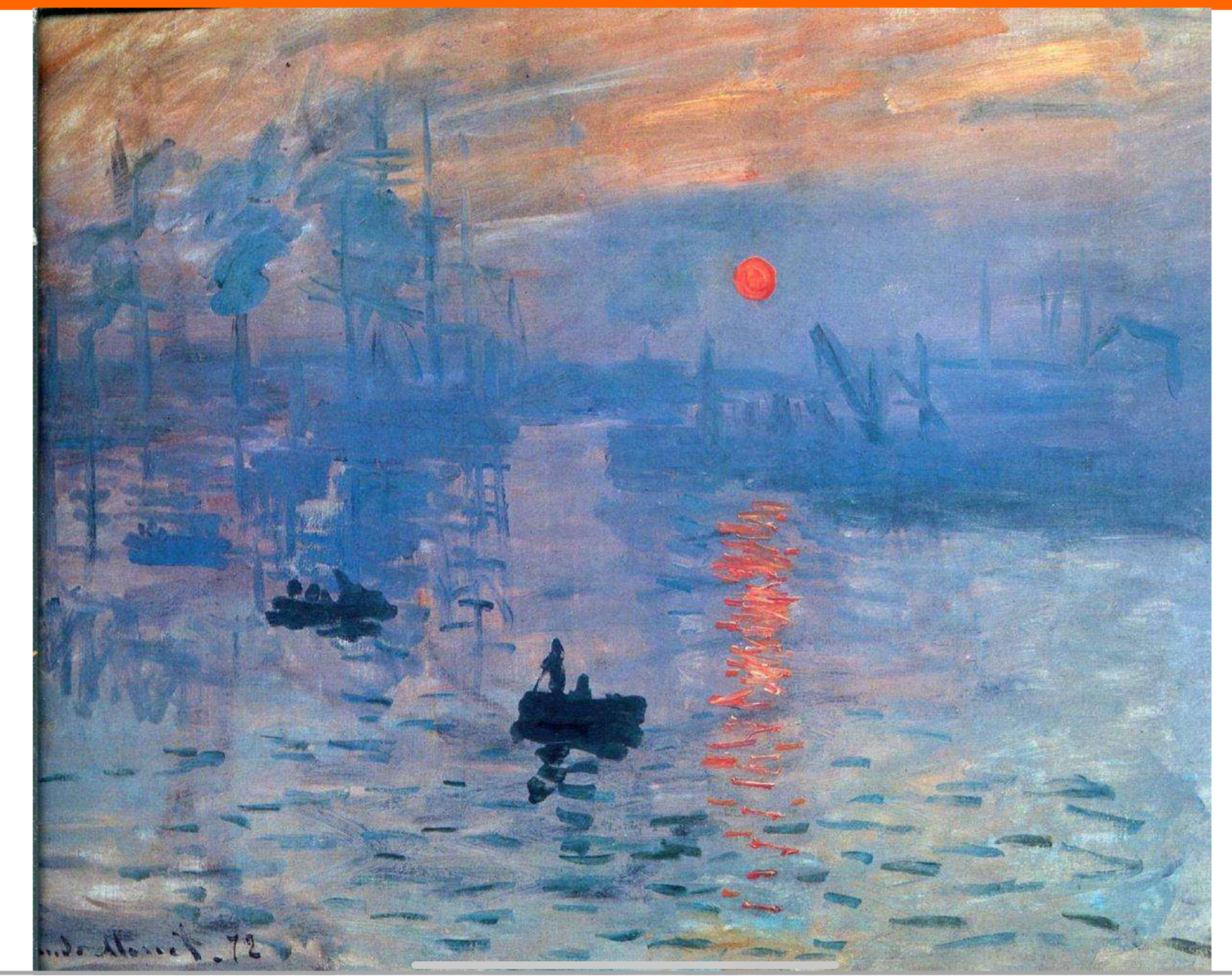
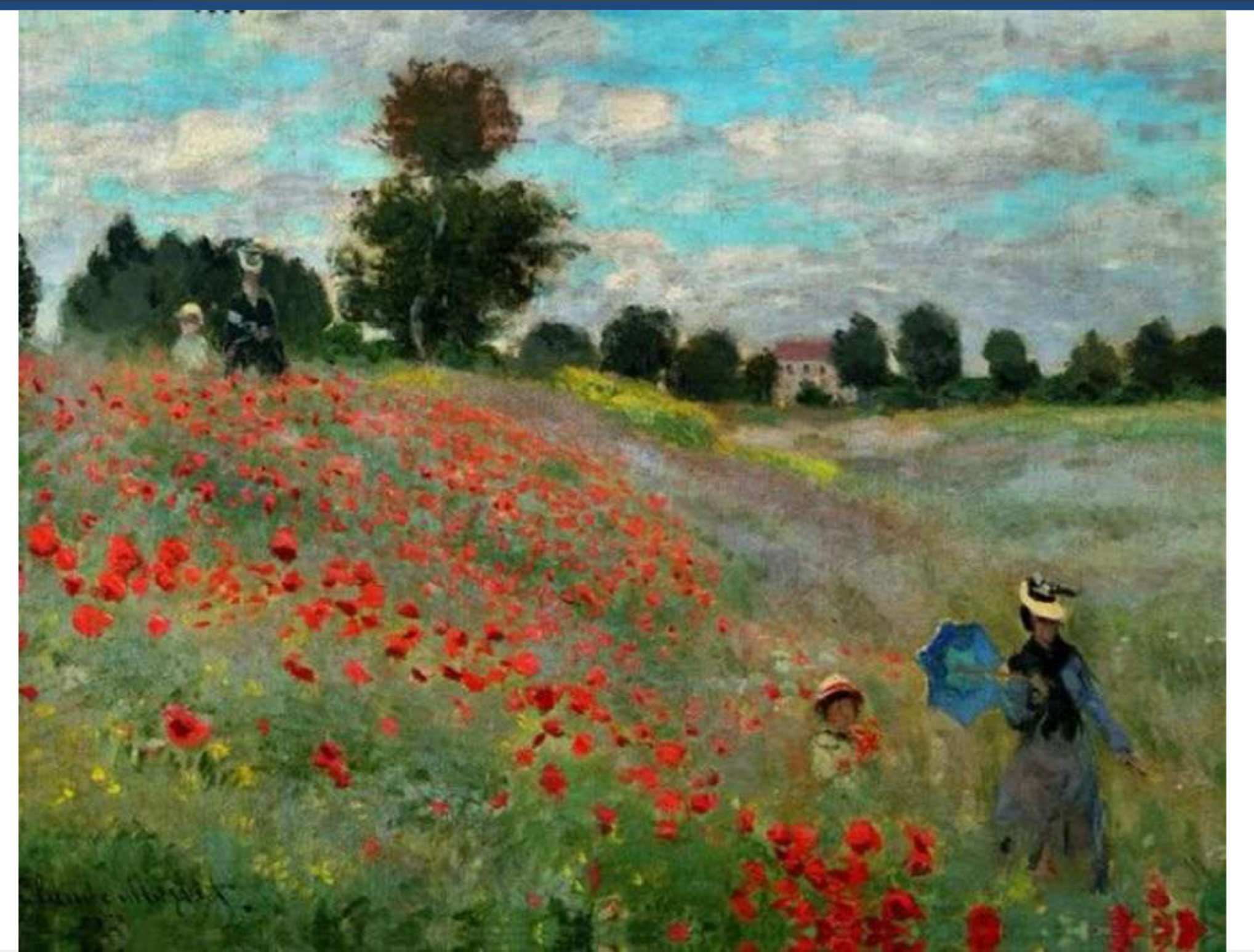
Monet, Poppies Blooming, 1873
Blurring
Lack od detail (we dont know who the people are)
Unrealisticly vivid
Sole beauty of the landscape & scene
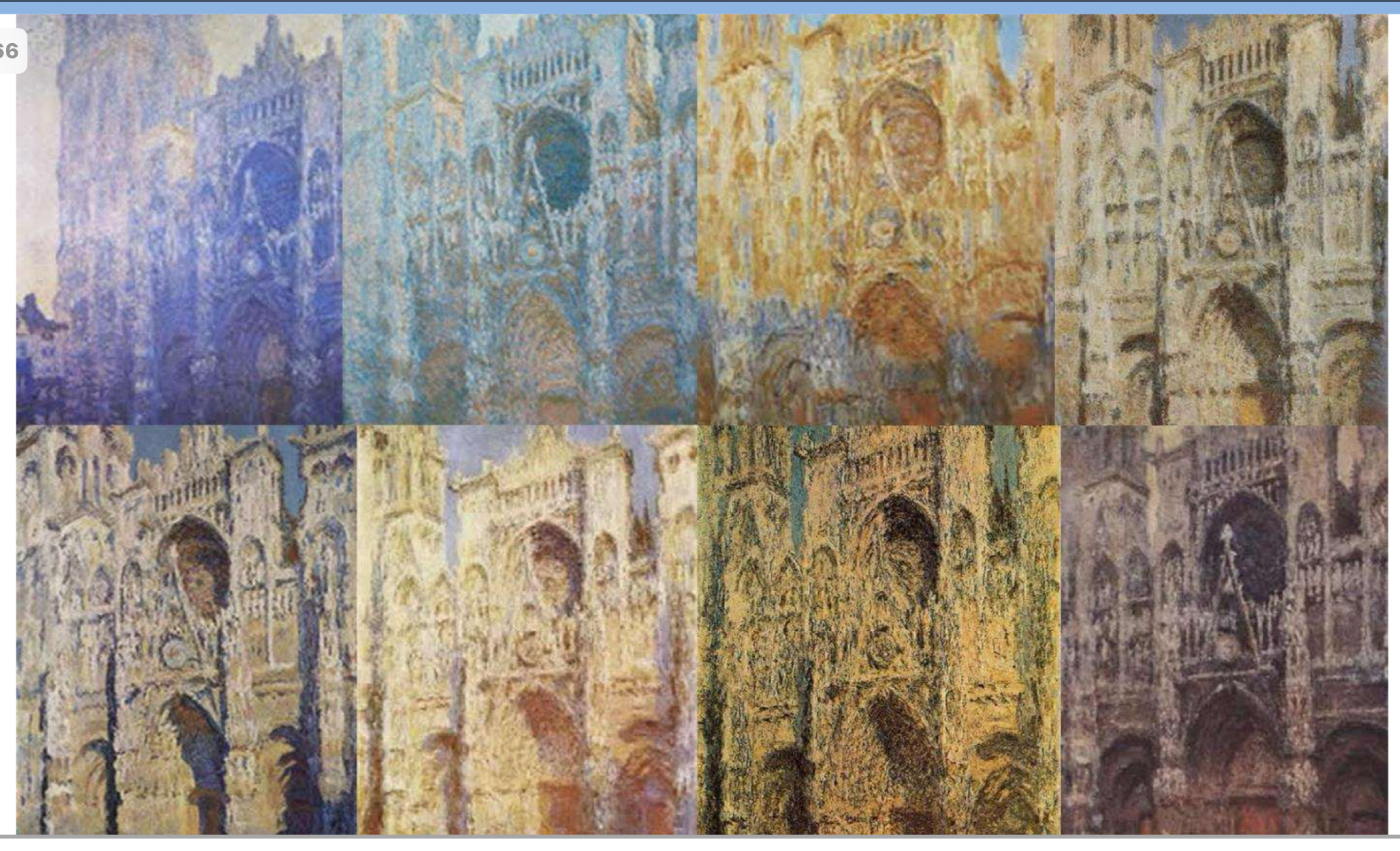
Claude Monet, Rouen Cathedral, 1892-94
A collection of works on the same subject, at different times
Study of light - colour relationship
New representation of light
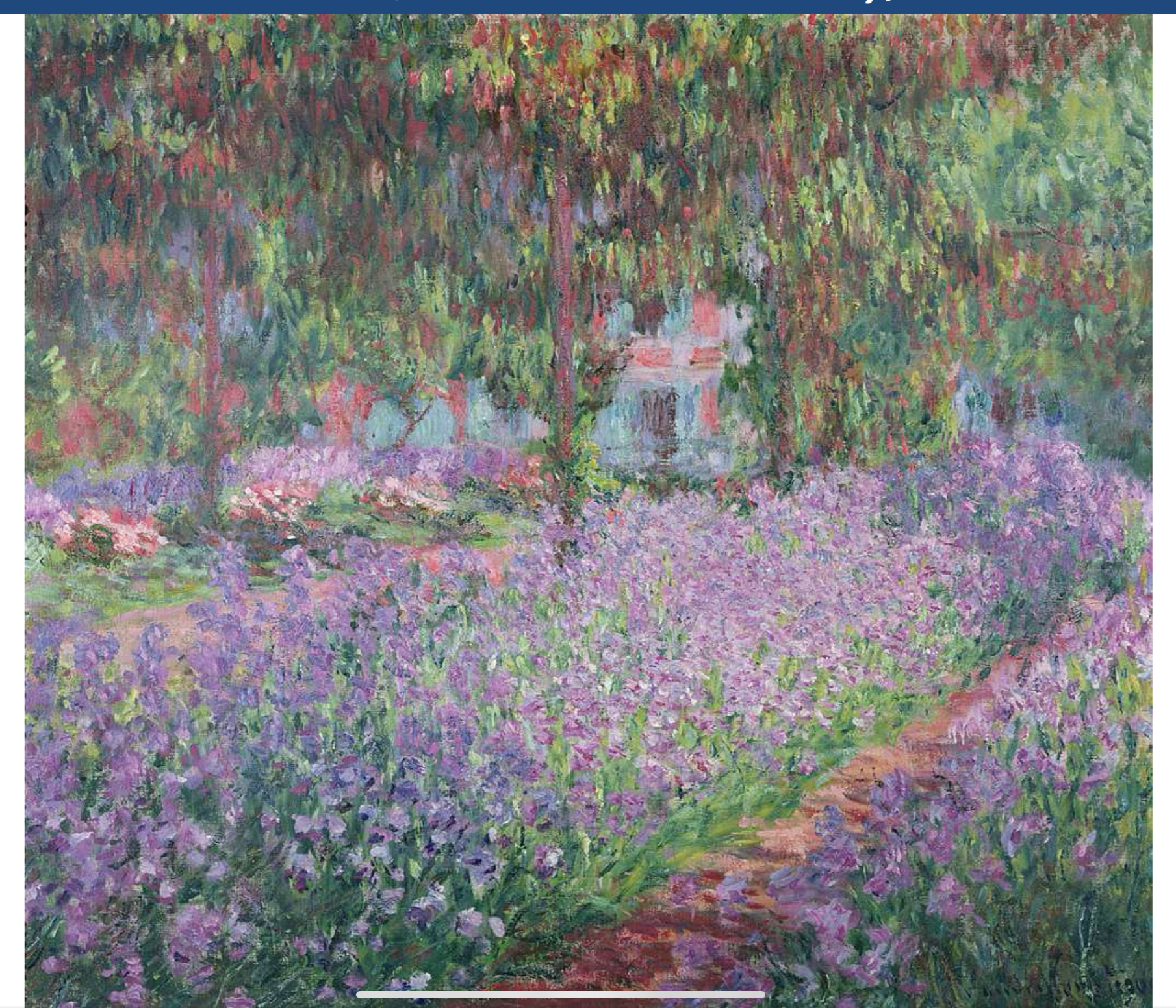
Claude Monet, Garden at Giverny, 1900
Study of colours via a new technique (blockes of colour, no horizon, no definite structure/detail)
Blury & vibrant
The light is painting the landscape
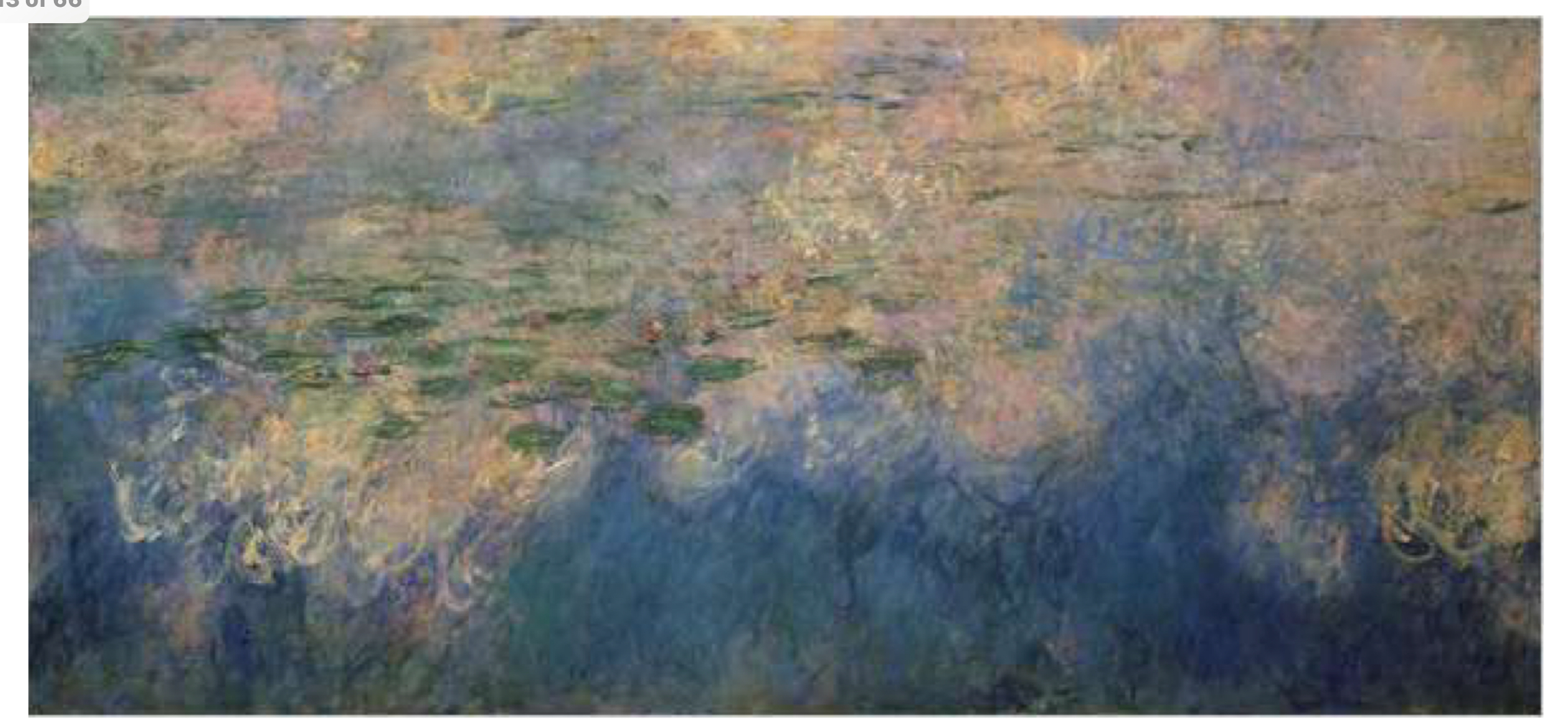
Claude Monet, WAter Lillies, 1918-1926
one of his last works
an ambint room that absorbs attention
Blurrying together into one whole
Displayed in a circular room - the viewer is completely immersed into pure colour
No horizon
No detail
Edgar degas
french
1834-1917
He studies life via photography
Doesn’t work in plain air
Mainly does portrayal of motion & unnatural poses
Fascinated with women and ballerinas
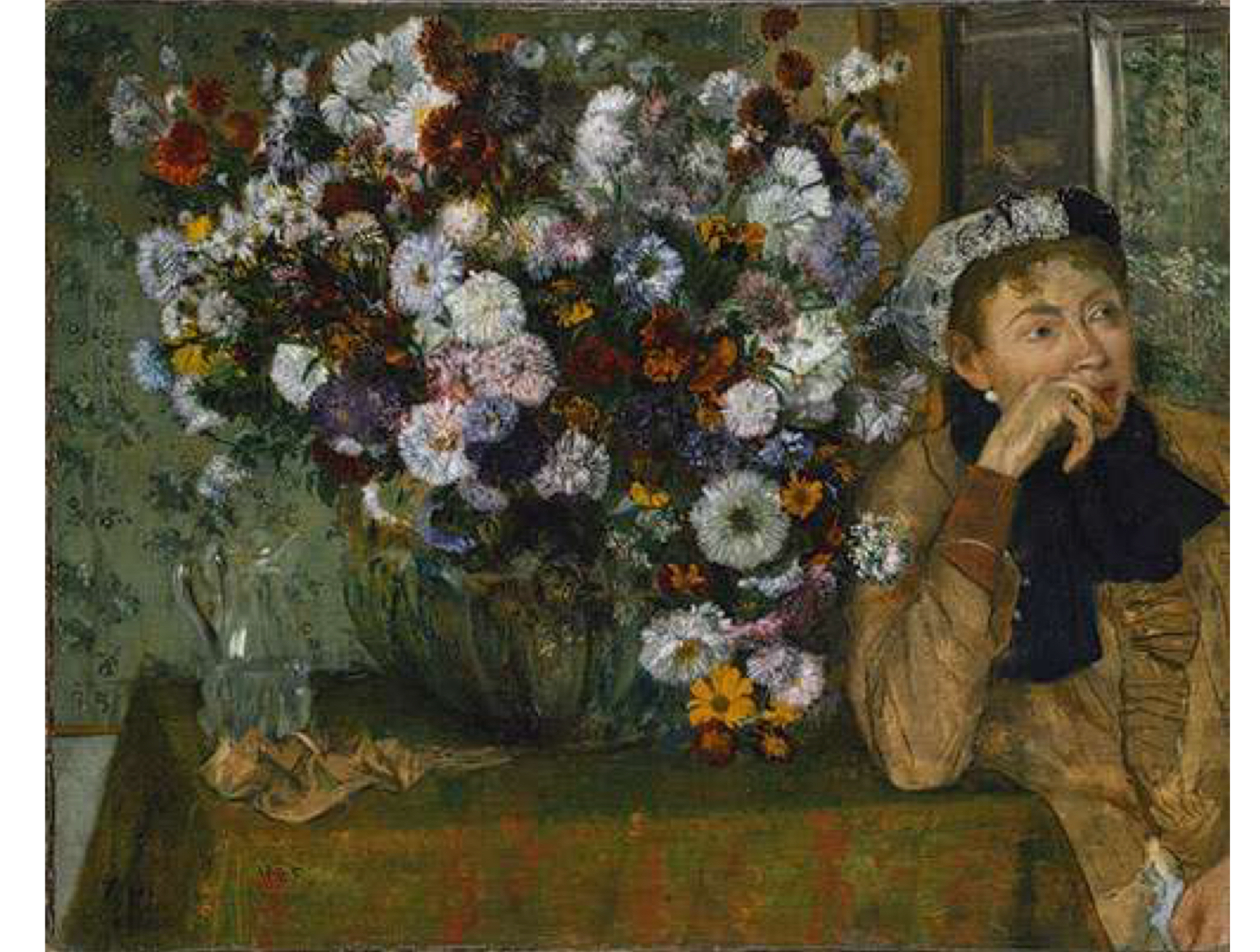
Edgar degas, A woman seated beside a vas if flowers, 1865
shift of importance (big flowers, small woman)
Blurry
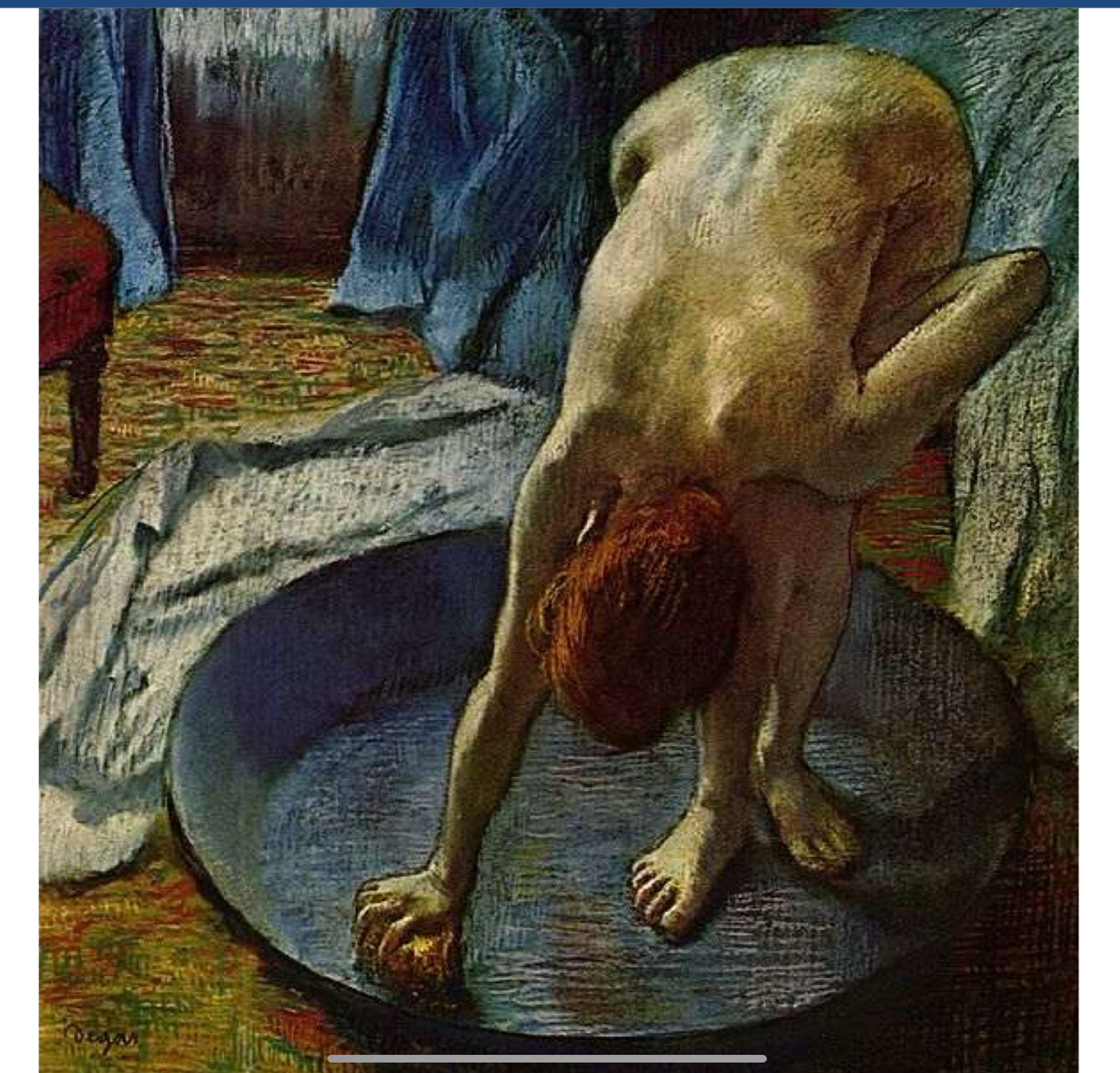
Edgar Degas, The tub, 1886
Representation of woman in an UNUSUAL & INTIMATE SETTING (vouyeristic even)
Lack of sexiness & no celebration of beauty
Rough skin texture
Crammed room without a viisble horizon
Unlike standard portrayald of bathers (no grace, no sexiness, not portrayed in nature, no looking at the viewer as if inviting)
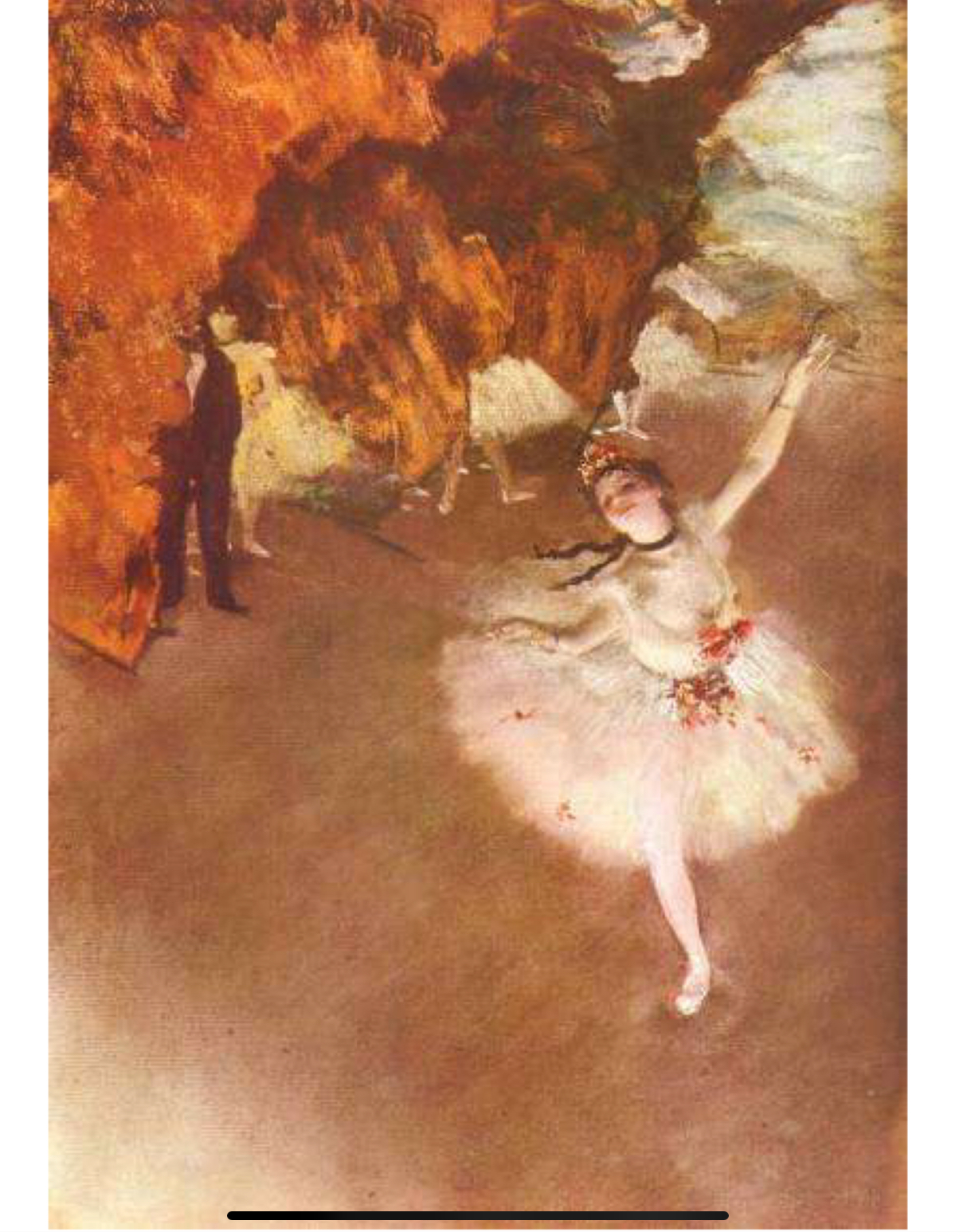
Edgar Degas, The star, 1876
REprresentation of the beauty of movement
Very dynamic (lack of back leg) & bluriness
Blurry and non-detailed bg - focus on the dancer
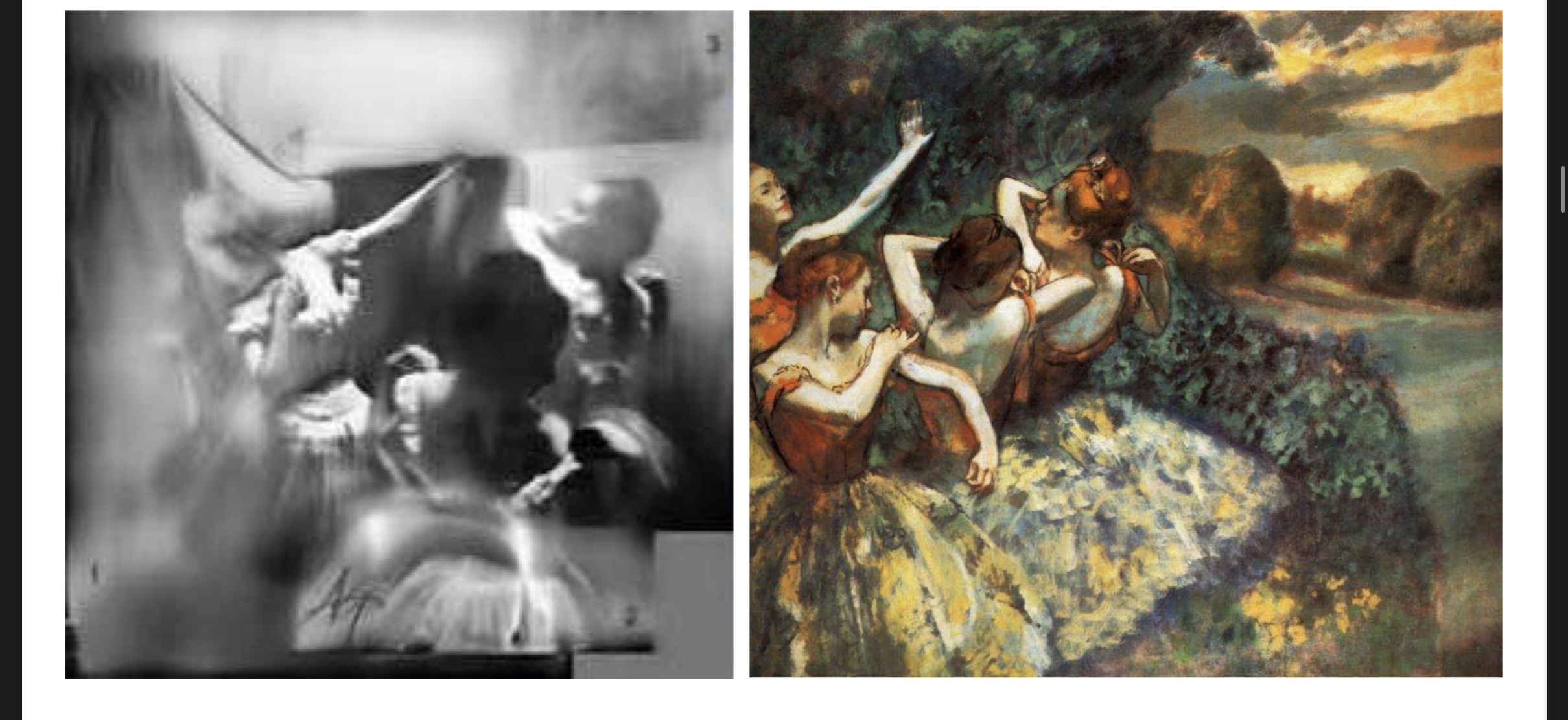
Edgar Degas
Left - Dancers behind the curtains, 1897
Right - Four Dancers, 1900
Both works portray the same balerinas (use of photography)
Visible blurring and portrayed mid-movement
He is not intrested in reality BUT IN TEH MOVEMENT
Inventive and unreal - the 4th dancer is imagined
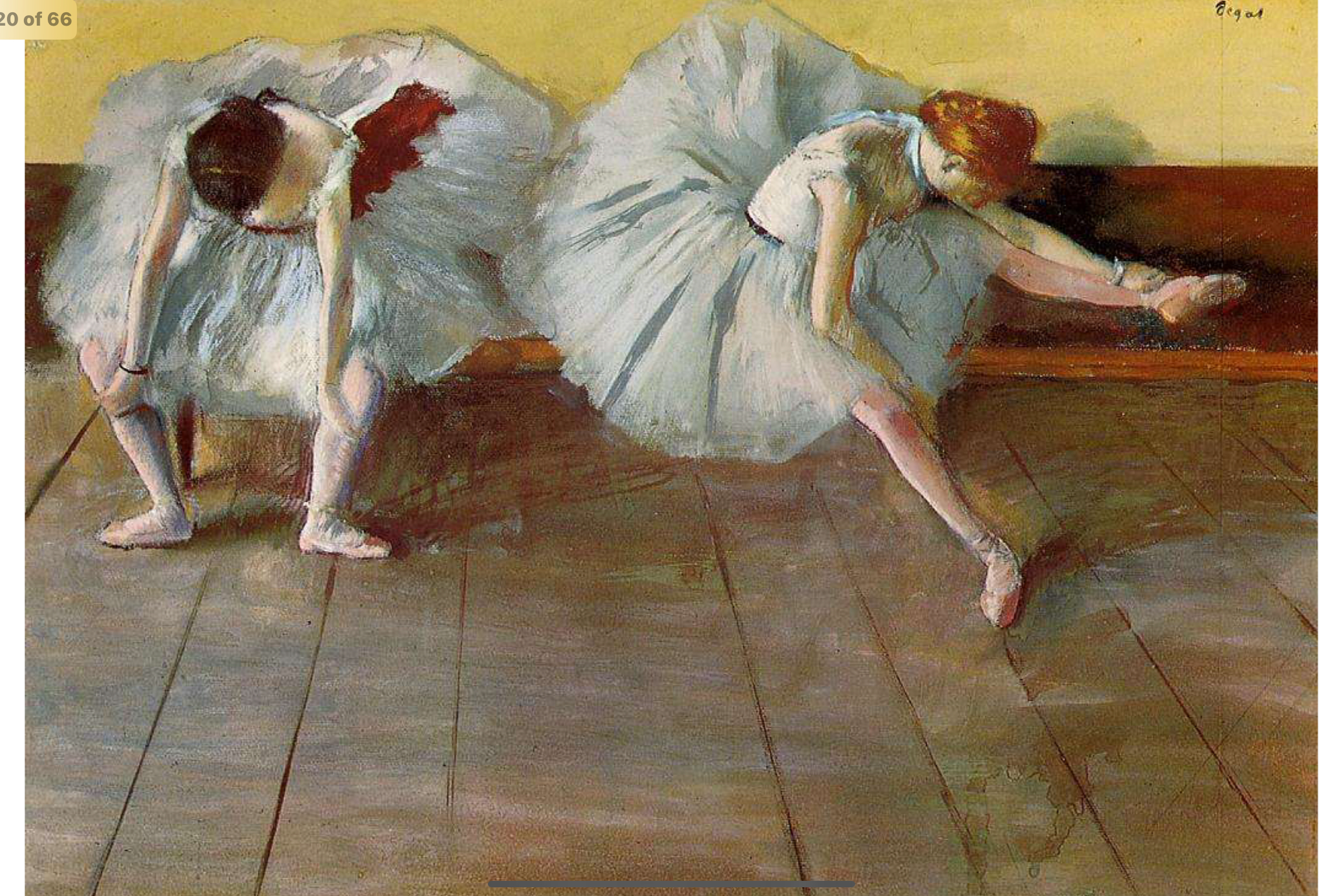
Edgar Degas, Two ballet dancers, 1879
narrow perspective and incorrect floor Movement - deliberate direction of attention to the dancers
Unnatural poses, lack of grace, mid-movement
Unnatural depth
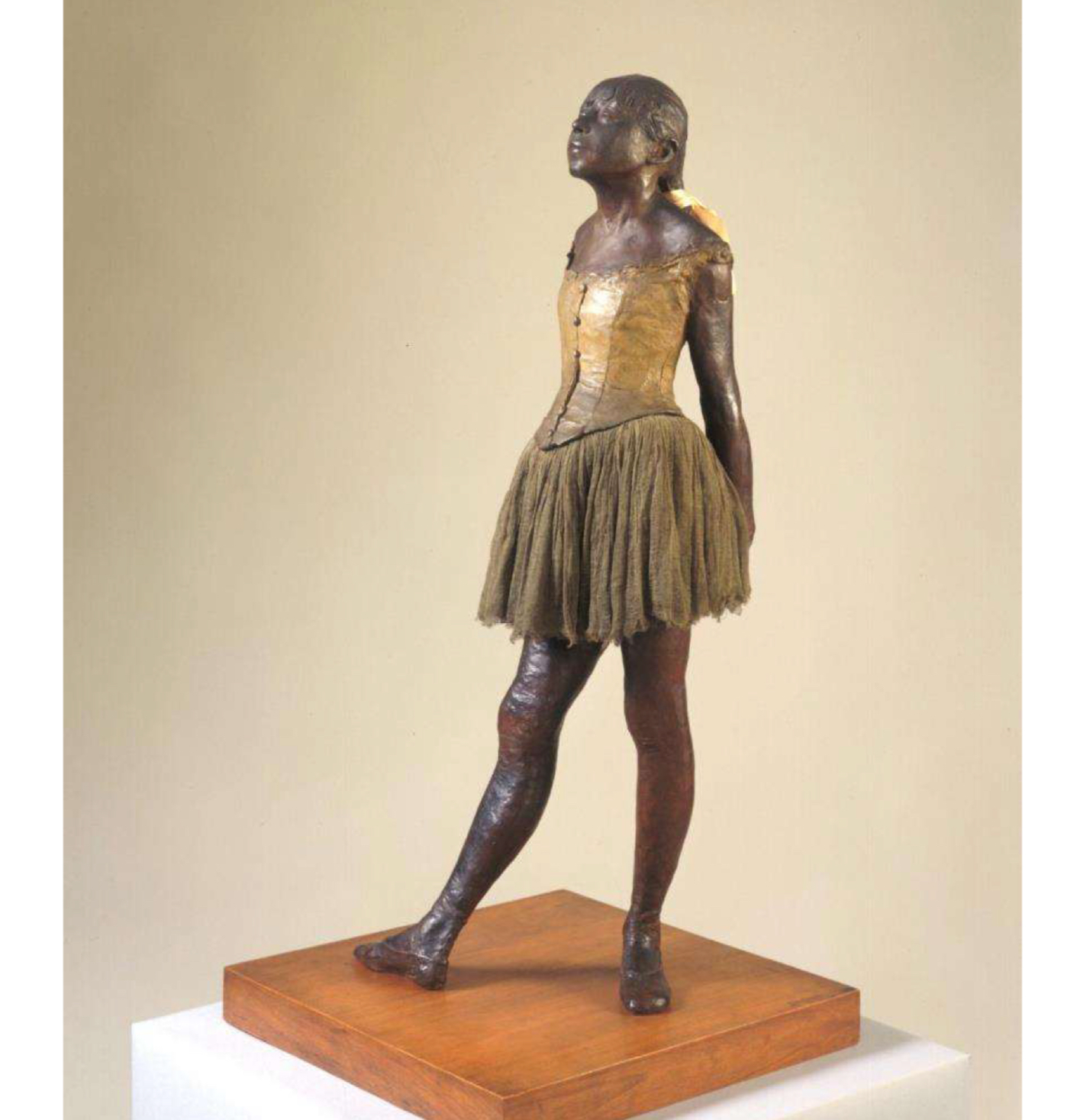
Edgar Degas, Little dancer aged 14, 1879-81
Real elemnts are fabric and the size (life-sized)
Portrayed mid ballet move
Lack of grace and smoothness
Just motion
AUGUSTE RENOIR
FRench
1841-1919
Mainly represented life of parisians (the upper crust)
Everything is about fun & walefare of the rich
Also dedicated to depictions of NUDE WOMEN / SCULPTING / PORTRAITS / TOPICS OF SENSUAL APPEAL
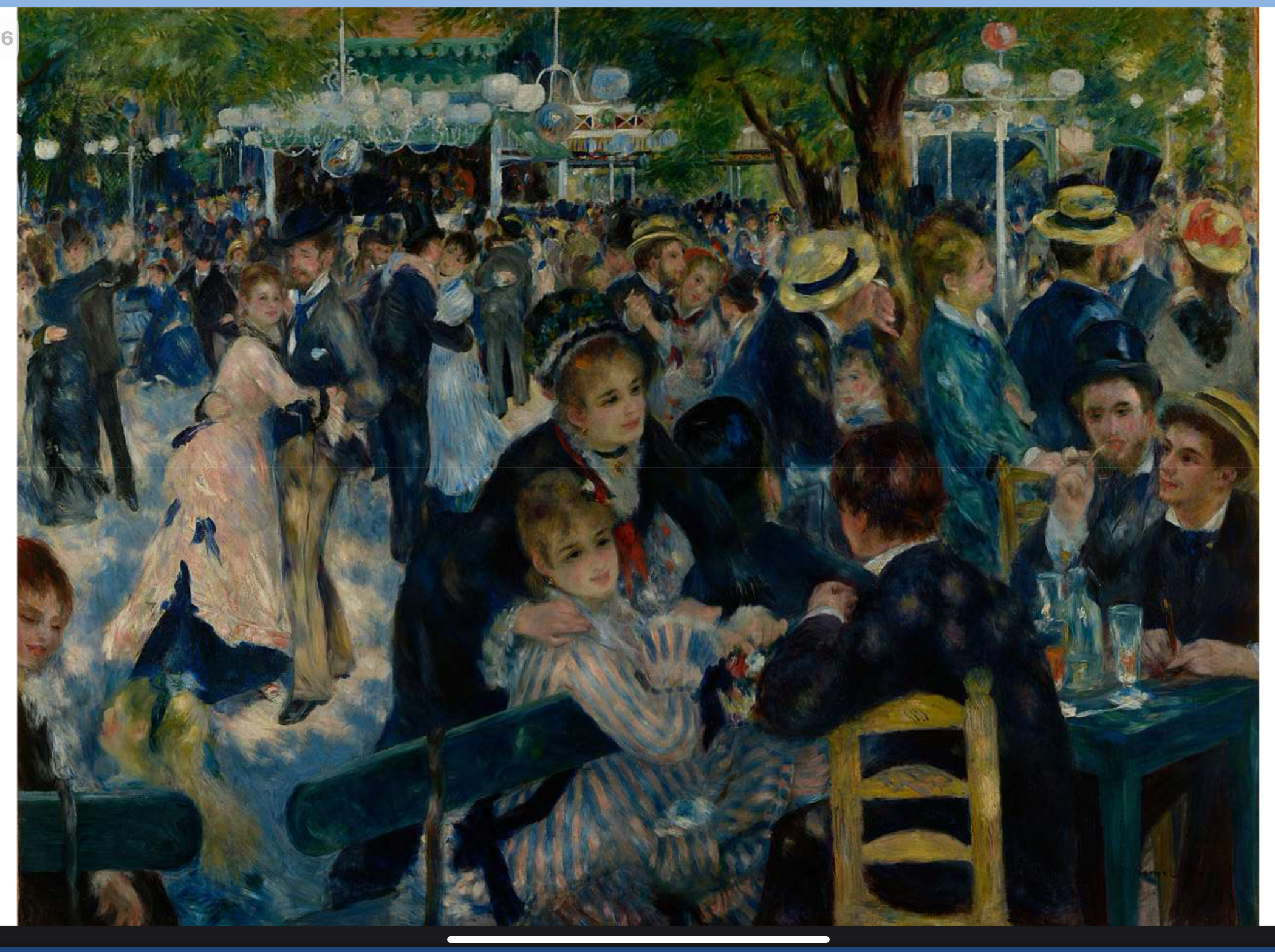
Auguste Renoir, Dance at Le Moullin de la Galette, 1876
full of tiny stains of colour - shows light apssing through trees and adds dynamism
Characters are simmilar, lack of distinct characteristics
The goal is to represent THE SITUATION
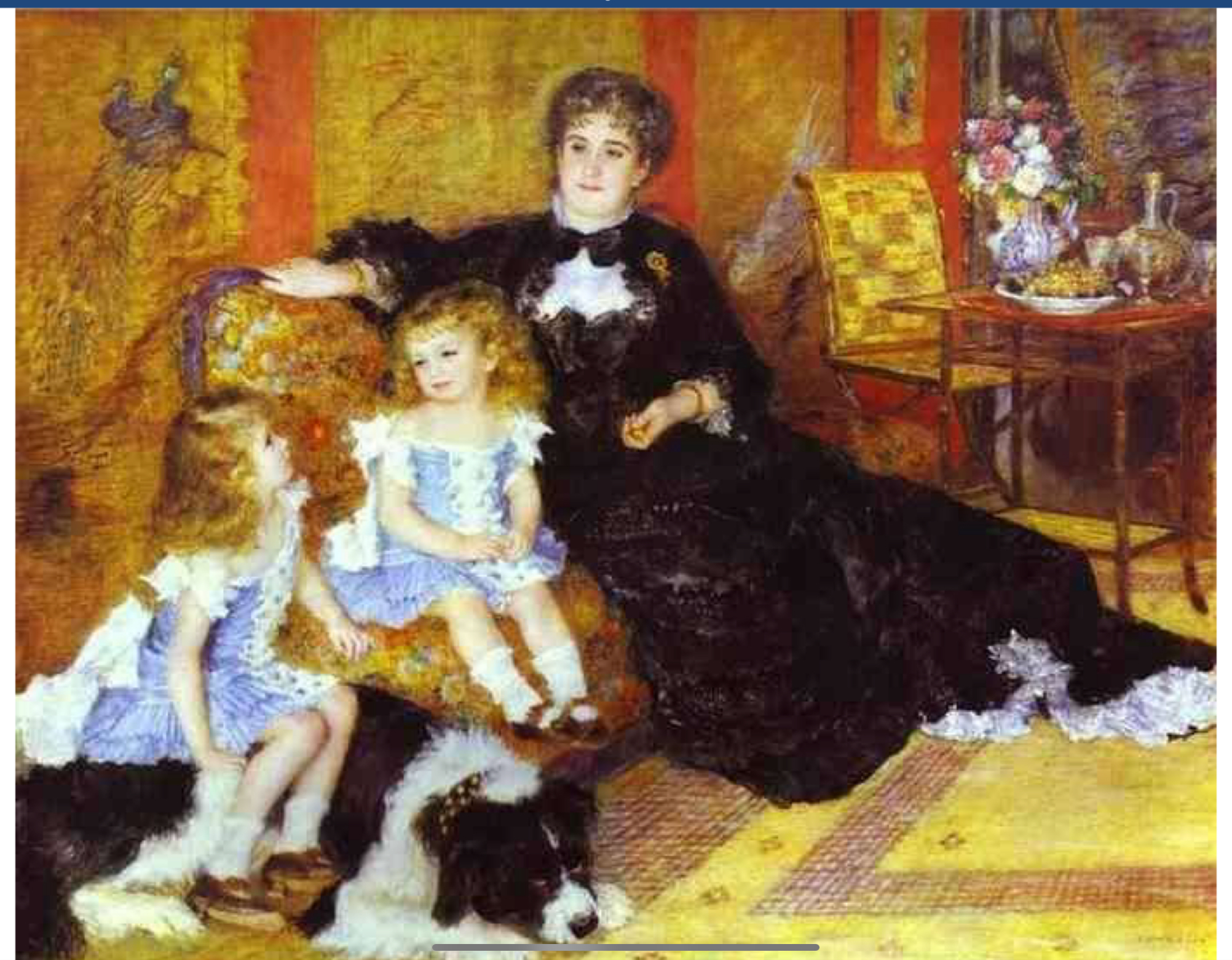
Auguste Renoir, Madame Charpentier & her children, 1878
Represents how he can be detailed (the chair in the back & faces), but still blurry & impressionistic
People’s faces and dresses stand out as important
Use of symbolism (dog - fidelity & love, triangular composition - places madamme in the centre of attention, rectangles on chair - japanese print/fashion)
typical Renoirs style, showing who the portrayed is and what they stand for
EDUARDO MANET
French
1832-83
PIVOTAL PAINTER (transitioned from REALISM TO IMPRESSIONISM)
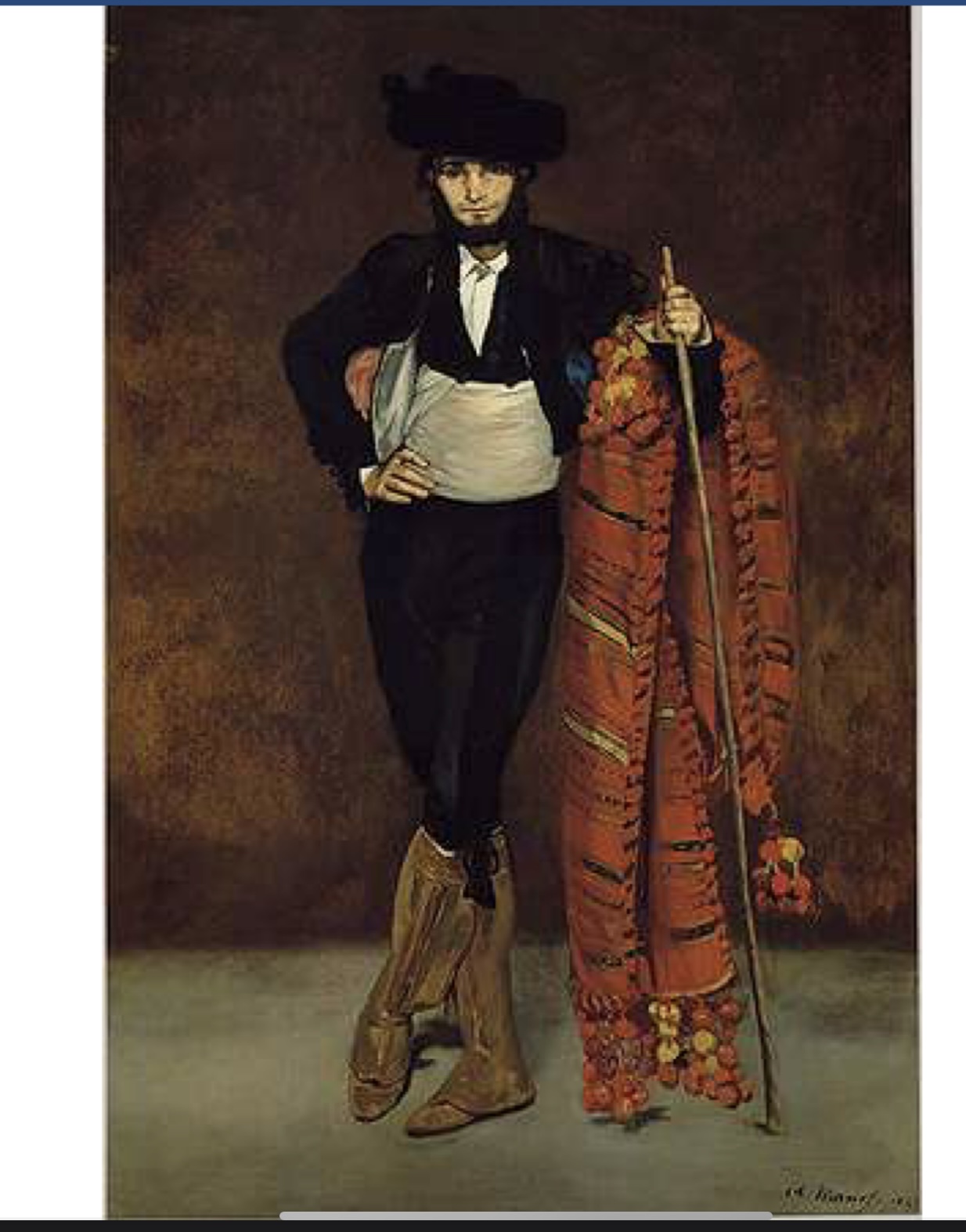
Eduardo Manet, Young man in the costume of a Majo, 1863
Eralier work - links to classic style
Typical plain portrait bg
Slightly blurry and lacking proper detail (impr)
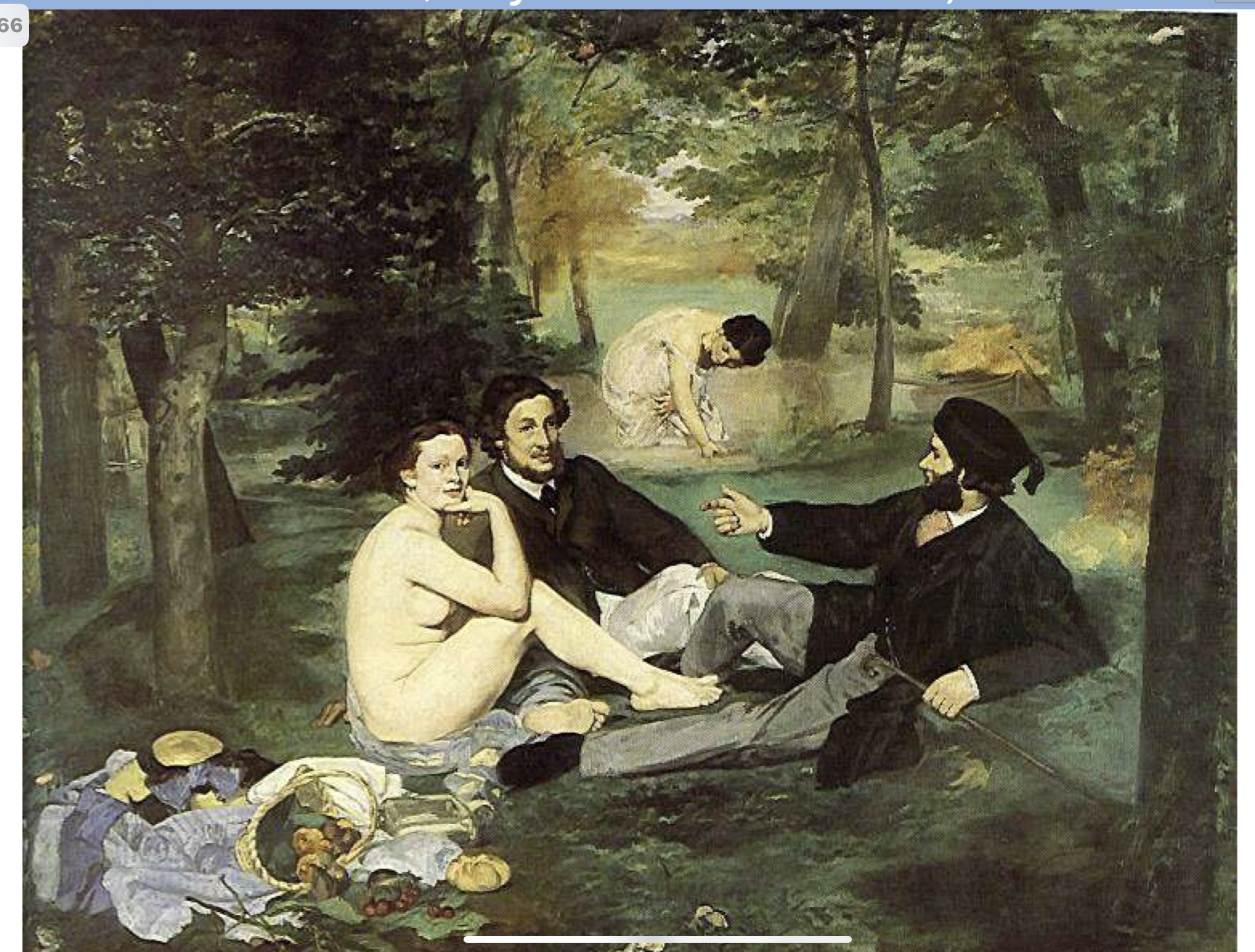
EDuard Manet, Dejeuner sur l’herbe, 1862-3
Most famous painting refused by teh academy
Completely scandalous
Naked known rostitute staring at the viewer
Lack of smoothness of body
Completely incorrect perspective (the bather in the back is too big)
Teh rendering of the fabric is masterous - MAnet can paint but refuses to
based on Titian’s and Ralmondi’s paintings - classical paintings which adds salt to injury
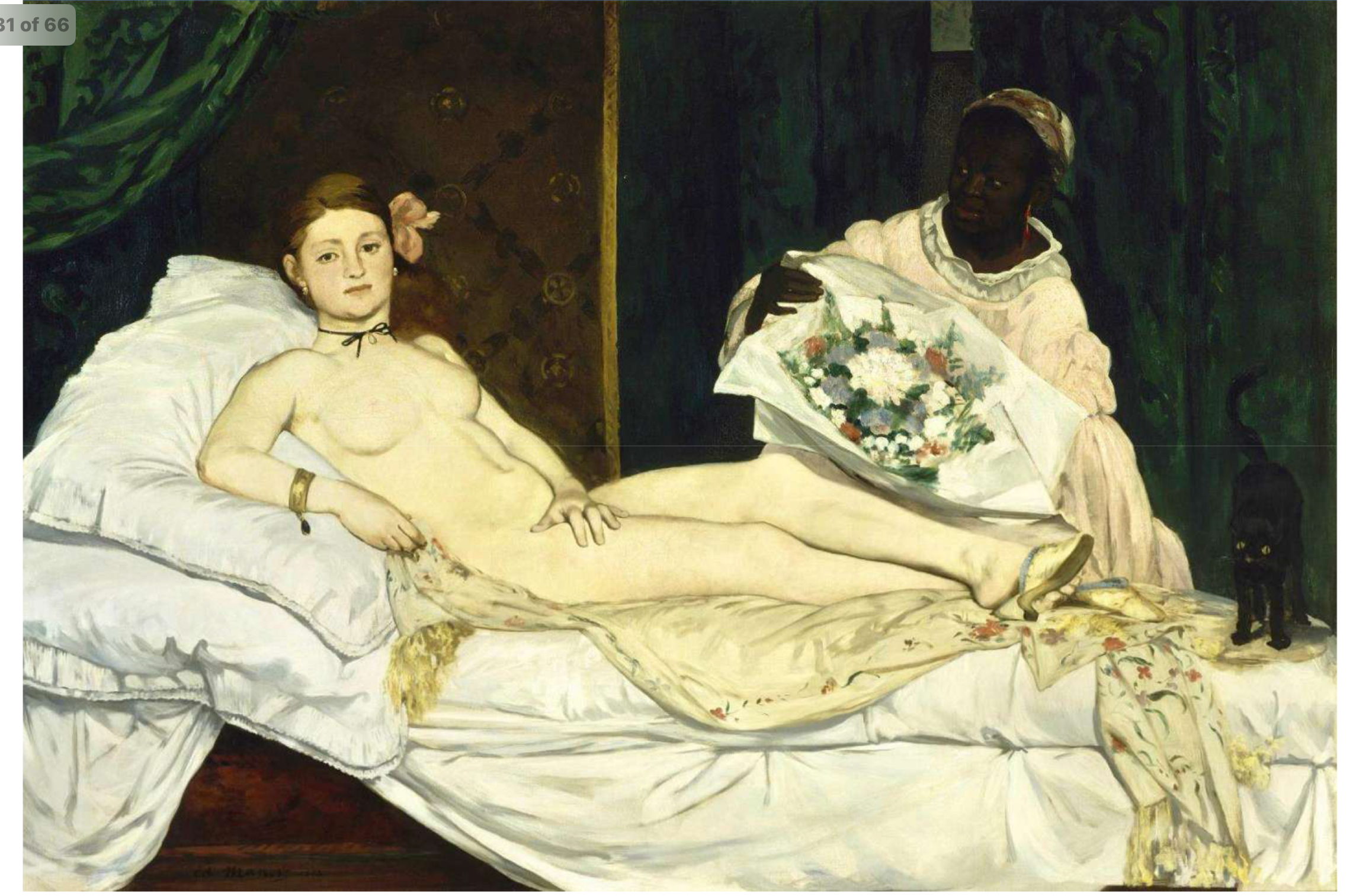
Eduardo Manet, Olympia, 1863
Flat body with no texture
Portrayal of known prostitute - scandalous
Titian is again the inspo (Venere di Urbino), but the cat = evil, but titian uses dog = fidelity,
Server brings olympia flowers from admirers, in titians only the godess is important
Nakedness was accepted in the past but only UNREALISTIC - MAja by GOYA is an imagned person who is too perfect & ideal, hence accepted
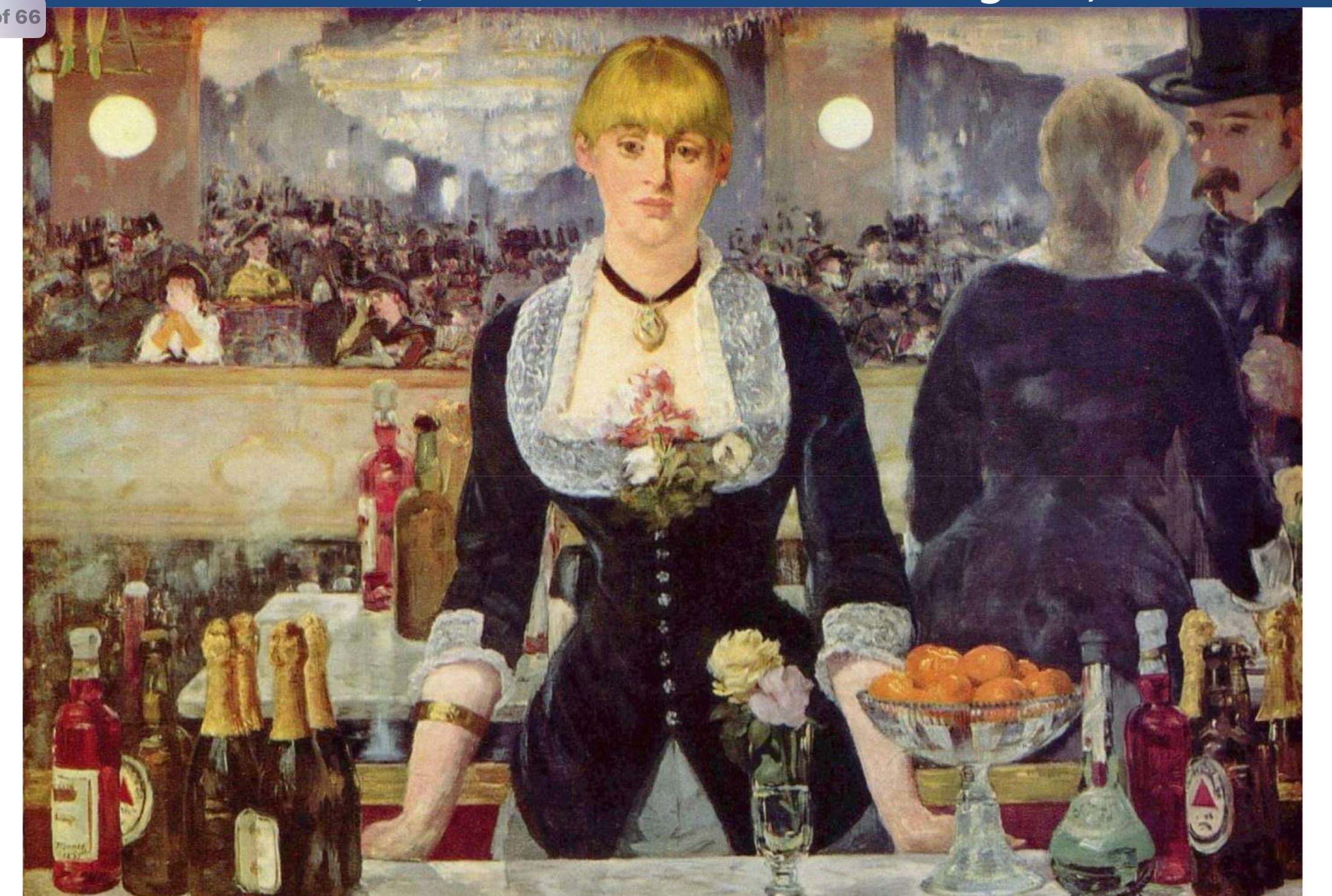
Eduardo Manet, A Bar at the Folies-Bergere, 1882
Manet knows how to apint but breaks rules intentionally
Wrong perspective - mirror in the back
We can see us, as the man in the mirror
The mirror makes the apinting completely unrealistic
We are INSIDE & VEREYTHING WE SEE IS A REFLECTION
Still life painted with great detail = shows his knowledge