W4~ chapter 27: Soft - Tissue Injuries
 Call Kai
 Learn
Learn Practice Test
 Spaced Repetition
 Match
Match Flashcards
 Knowt Play
1/73

There's no tags or description
Looks like no tags are added yet.
Name | Mastery | Learn | Test | Matching | Spaced | Call with Kai | Chat |
|---|
No analytics yet
Send a link to your students to track their progress
74 Terms
The largest organ of the body is:
Skin
What is the function of skin?
acts a a formal protective barrier, the first line of defense against outside forces
Epidermis vs Dermis
Epidermis: the outermost waterproof barrier covering the body
Dermis: The home that houses blood vessels, hair follicles, sweat, and sebaceous glands
What is the function of skin?
Body Temperature, Sensation, and Barrier
During Inflammation what happens to the cells?
The cells move to the damaged area for repair
What does Histamine do?
It dilates blood vessels, increasing blood flow, causing leaky capillary
What are Closed Injuries?
Injuries characterized by blunt trauma, pain, swelling and discoloration
What is Contusion?
Contusion is bruising from bleeding underneath the skin
What is Hematoma?
It is Blood collection from tissues/ body cavity damage
What is Crushing?
the force of pressure applied on the body
If force is applied for a prolonged 4 hours, what risks do we run into?
arterial compromise
What is Compartment?
Swelling and bleeding in an enclosed space
In Open Injuries what happens to the protective layer of the skin
It is Damaged
Abrasion, Laceration, Avulsion, and Penetrations are the 4 types of:
Open Soft Tissue Injuries
Abrasion vs Laceration vs Avulsion vs Penetration
Abrasion: A wound of the superficial layer of skin; damage to the dermis capillary
Laceration: A jagged cut of skin via tear tissue
Avulsion: The energy is separated layers of the tissue; don’t remove that flap
Penetration: when an object pierces the skin and affects the underlying tissue
The 4 types of Penetrating wounds are…
Amputation, Penetrating, Blast and Impaled
Amputation vs Penetration vs Blast vs Impaled
Amputation: A body part is severed beyond repair because of the damage
Penetration: An object pierces and creates an entrance wound
Blast: Force caused by direct or indirect impact of an explosion
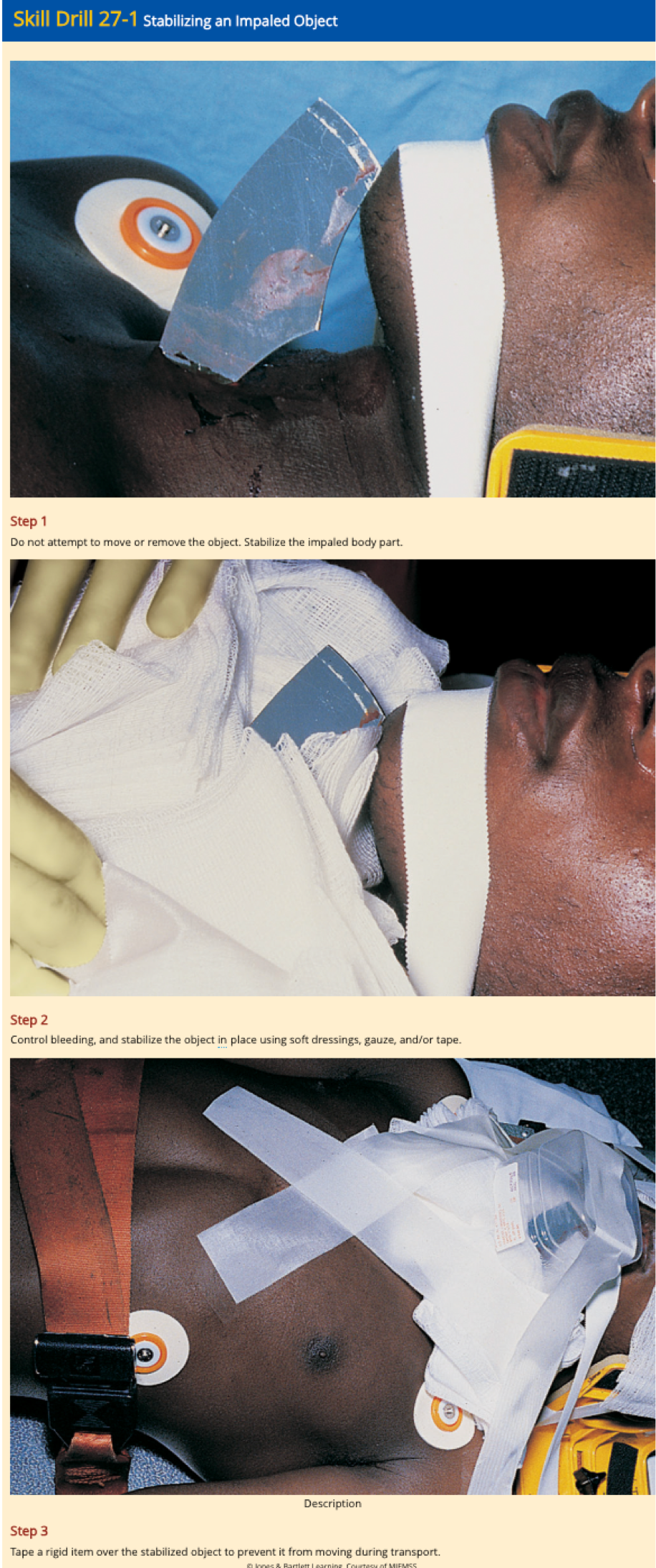
Impaled: Penetrated into the skin yet the object remains in the skin
Amputation can lead to ____ shock
Hypovolemic
How to treat an Impaled Object
use occlusive dressing to hold it in place, be able to identify weapon, look at whole counts and document the findings as accurate as possible.
Should you use splints for Closed Injuries
Yes to control bleeding
Do Open or Closed wounds look more severe?
Open Wounds
Multiple System injuries need…
a rapid 50-60 second pat down assessment
A neurological(LOC, pupils) and musculoskeletal(DCAPBTLsexam should take place during the…
Secondary Assessment
How to know if something should be splinted?
If it is Painful, swollen or deformed
What are the rules to treating closed soft tissue injuries?
Rest, Ice, Compression, Elevation and Splinting
Mental Changes are an early indicator for ___
Shock
Which body parts need occlusive dressing for injuries?
Chest, Upper Abdomen, or Upper Back
Always assume open wounds are ____
contaminated so make sure to sterilize and use moisture rich dressing
What is Evisceration?
A wound where the organs portrude through
What shoukd you avoid when dealing with a patient handling Evisceration?
Don’t touch it and leave it sterile and moist, flex their knee and leg to alleviate the abdomen pressure
Under which exception can you remove an impaled object
If it is at the cheek or mouth/ obstruction of airway; until then you can only remove the object if it is way too long
What are the steps to stabilize an impaled object
What is air embolism?
when air in the lungs blocks flow; air bubble enters
What procedures to take with air embolism?
apply gentle pressure as to not block the carotid artery; apply cervical color carefully
When dealing with animal bites remember to…
assess scene safety, remember animals carry a lot of bacteria and splint injuries for comforting
What is Rabies?
A CNS infection, that must be assessed immediately to the ED
Do Human Bites contain bacteria?
Yes they contain a lot and runs very seriously
What is bite treatment
Apply a dry and sterile dressing
Promptly immobilize the area with a splint or bandage
Provide transport to the ED for surgical cleansing of the wound and antibiotic theraoy
What are 3 types of Burns?
Radiation, Thermal and Electric
In burns, what increases exposure?
How long the burn persists for and conciseness
What are complications of burns?
Damage to the skin, susceptibility to infection, hypothermia, volemia, and shock
What are the 3 classification of burns in adults?
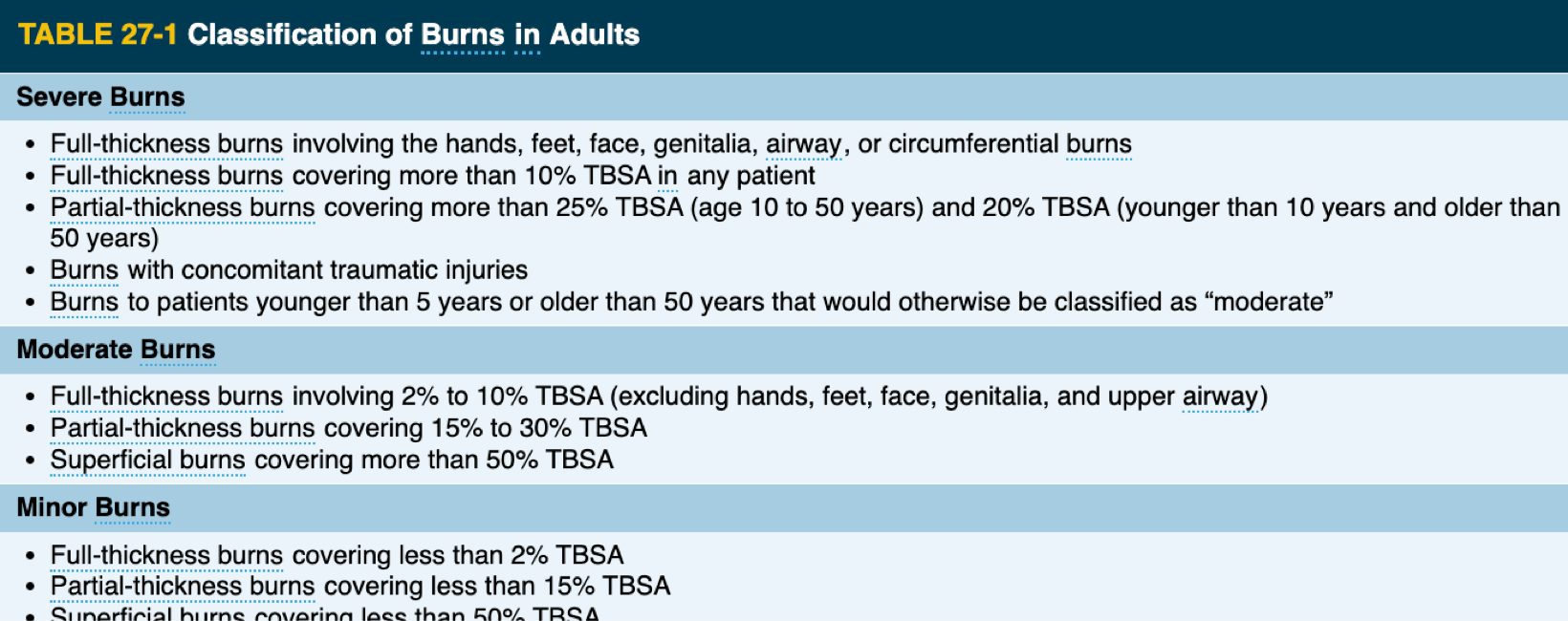
Severe Burns, Moderate Burns, and Minor Burns
Severe vs Moderate vs Minor Burns
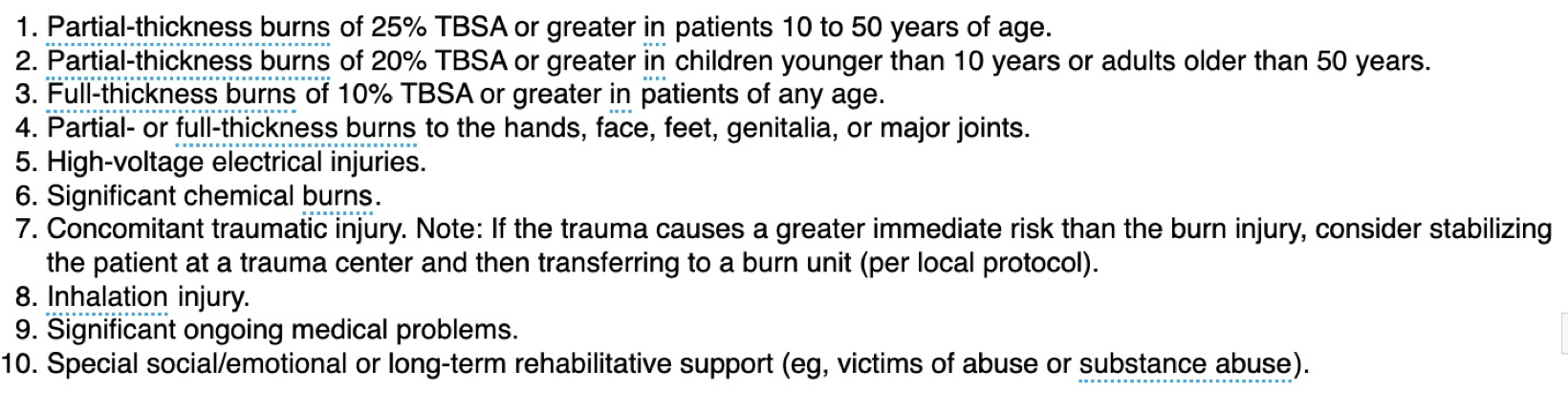
Describe the varying degrees of burns
Describe and write the 3 types of burns based on depth
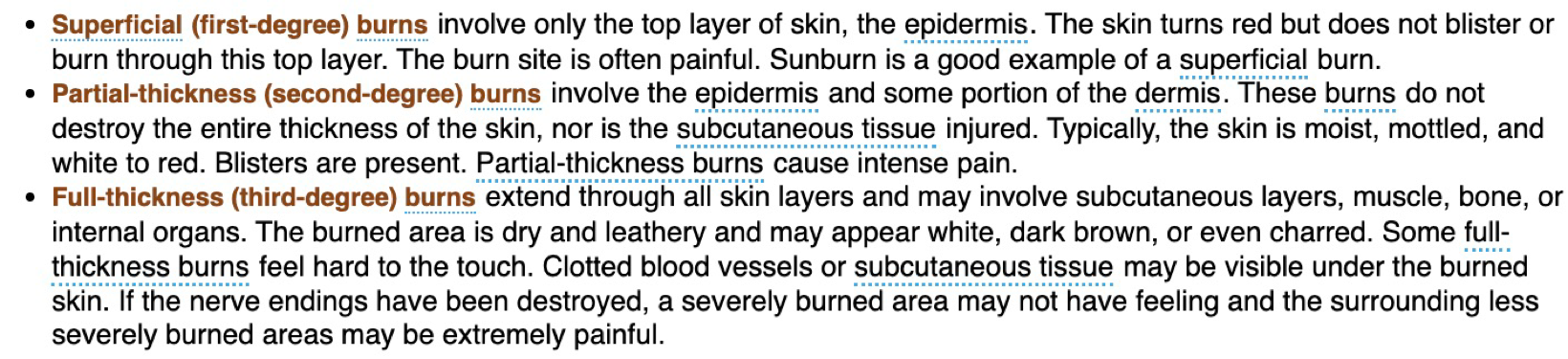
Superficial vs Partial Thickness vs Full Thickness
Superficial: First Degree burns
Partial Thickness: Second Degree Burns
Full Thickness: Third Degree Burns
Rule of Palm vs Rule of 9
Rule of Palm: hand = 1%TBSA
Rule of 9: Body in segments equating to 9% TBSA
How should you use classify burns
with their source, depth and severity
With a burn patient what is your goal?
To stop the burning process
What are the steps to caring for a burn?
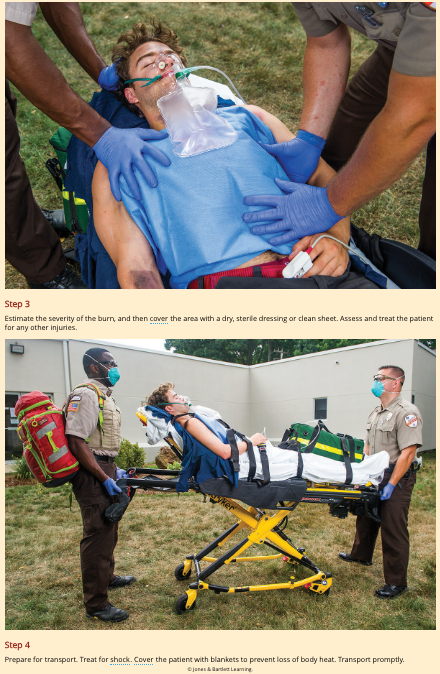
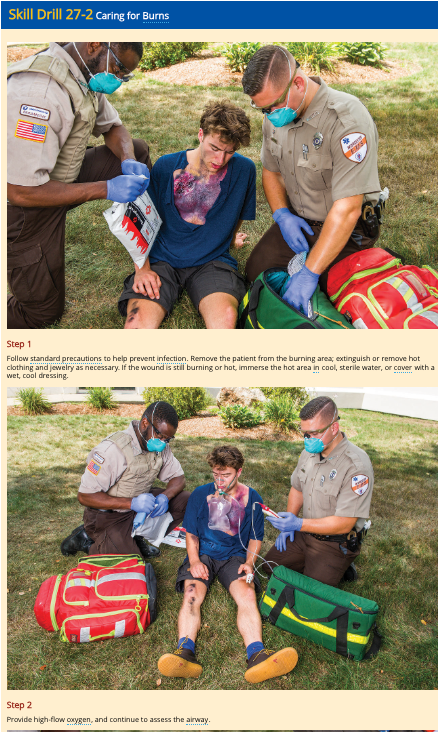
What are Thermal Burns?
Tissue Injury of external heat sources via electricty, chemicals, or radiation burns
What are the 5 types of Thermal Burns
Flame (fire), Scald (liquid), Contact (object), steam, flash (explosion)
How does our bodys defense system act against thermal burns
reflex protect prolonged contact with hot objects
What are Inhalation Burns?
Burns caused from enclosed places that have a lack of ventilation, this can this cause airway obstruction and URS inflammation
What are the treatment options for Inhalation Burns?
Respiratory Therapy, Mist, Aerosol, and Humidifiers
What are two common causations for inhalation burns?
Toxic Gases and Hydrogen Cyanide
Toxic Gases vs Hydrogen Cyanide?
Toxic Gases: O2 id displaced by CO2 on hemoglobin bc it is 250X more better
Hydrogen Cyanide: harder to diagnose
What are Chemical Burns?
Burns that are less likely wearing strong PPE, treatment is specific to the chemical. ; Don't use water on dry chemical powders
What are Electrical Burns?
direct voltage contacts (conductor vs insulator)
Why are humans good conductors?
Because we are majority water?
What must you be wary of when dealing with Electrical Burns?
You can get electrocuted via patient contact so do not assess the scene without safety; it can lead the patient of cardiac arrest don’t act until the scene is clear
2 electrode darts belong to…
Taser Injuries
What are the effects of Taser Injuries?
Excited Delirium then cause Dysrythymia that causes death
What are Radiation Burns
caused by Ionization or rays or particles
What are the 3 types of Radiation Burns?
Alpha: Can’t pass the skin barrier
Beta: passes the skin barrier
Gamma: Strongest based on wavelengths
Are radiation burns/ exposure contagious?
no
What are the universal dressings?
gauze, adhesive and soft self adhesive
Large Wounds deserve what type of dressing?
Thick and absorbent material; pad for rigid splints
Small Wounds deserve what types of dressing?
Gauze pads and adhesive dressings
Severe Wounds deserve what types of dressing?
Occlusive, Aluminum foil and plastic cover
What are bandages used for?
To secure dressing, gauze and adhesives
For adhesive allergies, what bandage should you use?
Paper or Plastic
Which bandage runs the risk of acting as a tourniquet?
Elastic bandages
__ ____ and ____ are used to stabilize extremities and control bleeding.
Air Splints and Vacuumn