Lecture 5: Review Slides Constantinople
 Call Kai
 Learn
Learn Practice Test
 Spaced Repetition
 Match
Match Flashcards
 Knowt Play
1/12

There's no tags or description
Looks like no tags are added yet.
Name | Mastery | Learn | Test | Matching | Spaced | Call with Kai | Chat |
|---|
No analytics yet
Send a link to your students to track their progress
13 Terms
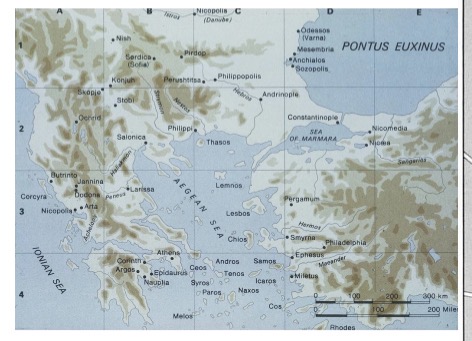
Constantinople, now Istanbul, Turkey,
4th-6th centuries (ca. 300-600CE
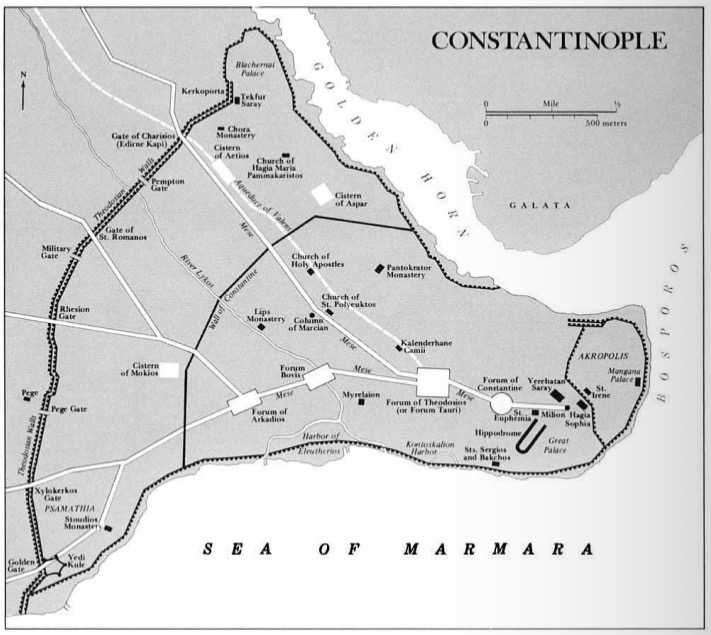
Constantinople, now Istanbul, Turkey,
4th-6th centuries (ca. 300-600CE)
Plan of Constantinople in the Byzantine period. Note geography, location of Mese, the two sets of walls (Constantinian and Theodosian; earlier Severan walls not shown), and the series of imperial fora strung along Mese
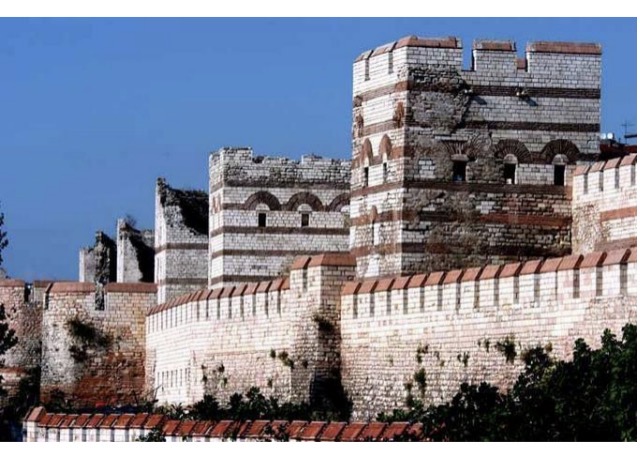
View of the Theodosian Walls of Constantinople, 413, built by Emperor Theodosius II;
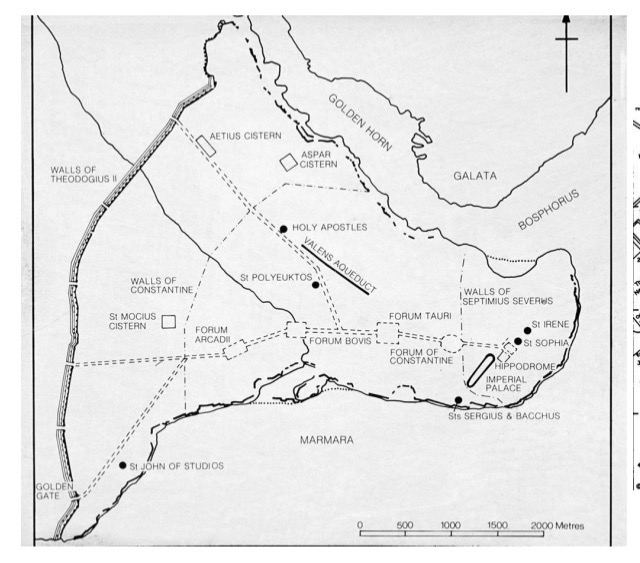
Constantinople, plan showing three sets of walls, the Mese and
location of imperial fora.
The Mese was lined by colonnades as in other Roman cities and served
as a backdrop of important imperial processions (ceremonial entries,
coronations, etc.), as represented in the Trier Ivory on the next slide. The
successive imperial fora were stretched out along the Mese.
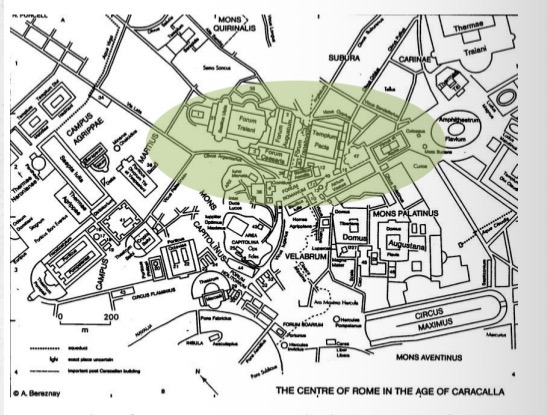
Rome, plan of Forum Romanum and adjacent Imperial Fora
(not required to identify on a test, but you should be able to
explain how Constantinople’s fora were different from Rome)
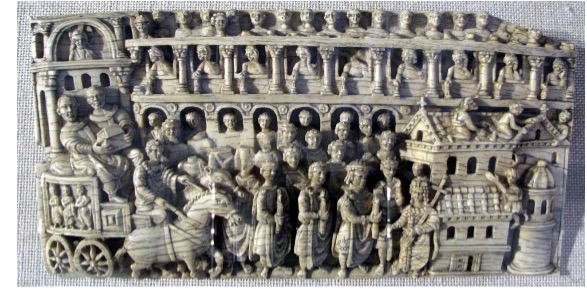
Trier Ivory, 4th cent., showing imperial procession in
Constantinople, with emperor shown at left. Note how the street
is lined by colonnades, an urban element that linked the city to
other Roman colonial cities
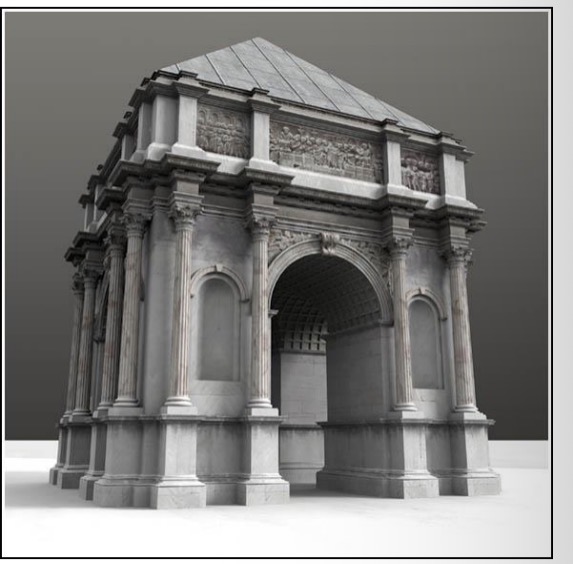
Digital reconstruction of Milion, a four-pier arch (tetrapylon) at
the eastern end of the Mese inscribed with the distances to
major cities of the Roman empire. Replicated a similar mile-
marker in Rome.
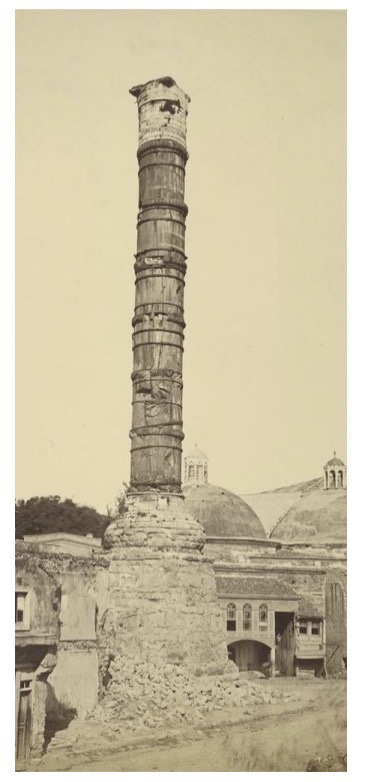
Constantinople, Forum of Constantine, ca. 328; historic photo
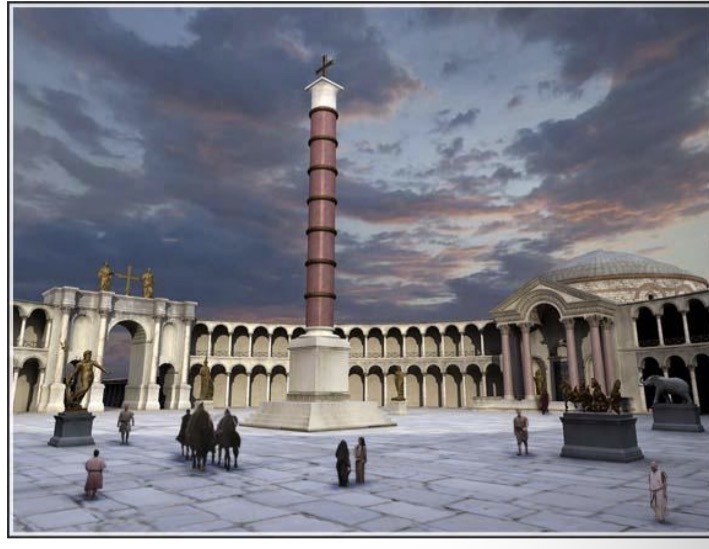
digital reconstruction view of forum of Constantine. Located just outside the Severan walls, a hinge between the
old and new city.
Round or elliptical in shape and surrounded by colonnades as in other Roman colonial
cities (e.g. Pompeii or Jerash, Jordan). Triumphal arches marked access points to Mese.
A porphyry honorific column originally surmounted by a statue of Constantine as Apollo
the sun god, inspired by similar monuments in Rome (e.g. Column of Trajan) and Roman
cities.
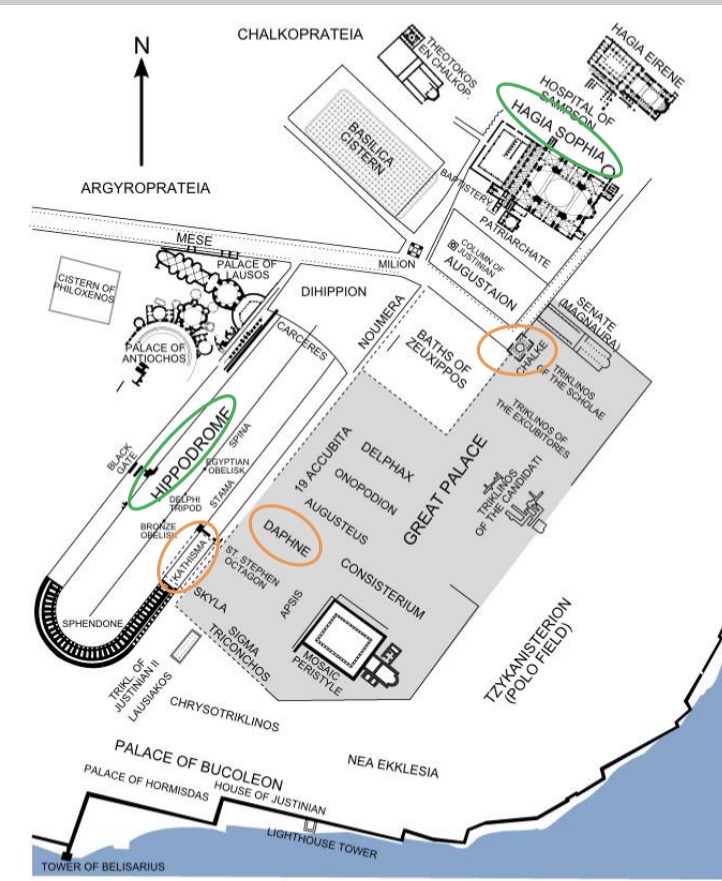
Constantinople, schematic plan of Great Palace of
the Byzantine emperors, ca. 340-1200.
Chalké Gate is located next to Augusteion (formerly
the Tetrastoon). Daphné was the residential wing
built by Constantine, built next to the Hippodrome,
or racetrack.
Hippodrome was begun by Septimius Severus and
the first structure completed by Constantine after
the city’s founding. Note the Kathisma (imperial
viewing box) connected to the palace.
The imperial church of Hagia Sophia was placed
north of the Augusteion. Constantine’s city put the
major religious building, imperial palace, and center
of urban ritual and entertainment in proximity to
one another.
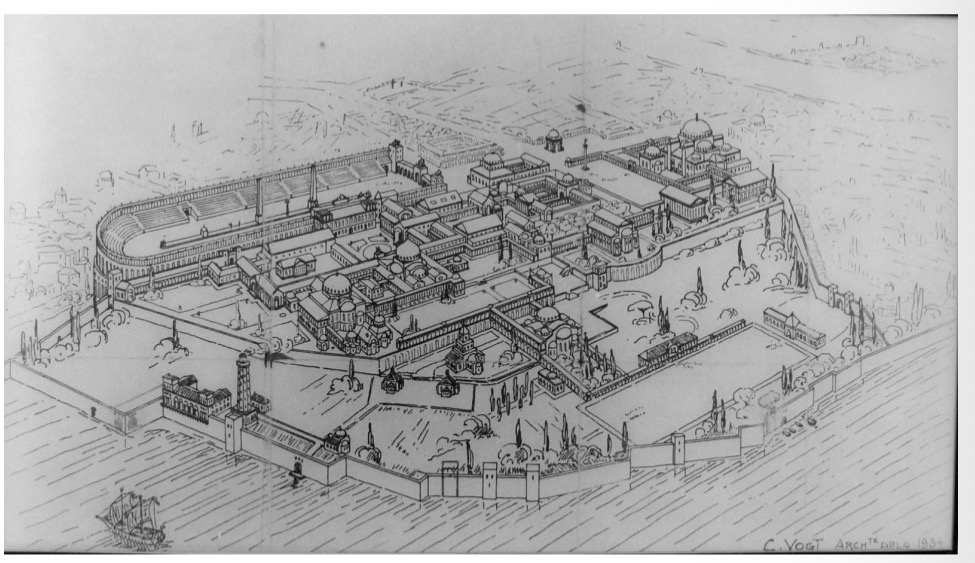
Constantinople, reconstruction view of Great Palace of the Byzantine emperors and Hippodrome, ca. 340-1200. The palace
connected to the Hippodrome, replicating the configuration of the Palatine Hill (location of imperial palaces) and Circus Maximus in
Rome itself. The spina of the Hippodrome was marked by columns and obelisks (trophies of war), and other monuments celebrating
imperial power.
Christianizing the Imperial Capital
Constantine’s churches (both rebuilt by EmperorvJustinian)
Hagia Sophia
Church of the Holy Apostles
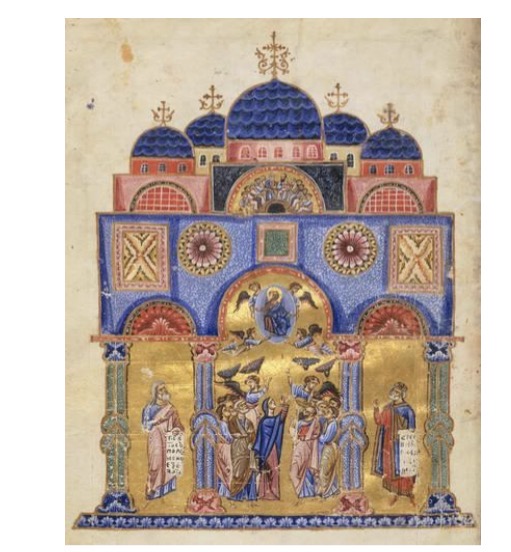
Church of the Holy Apostles (Apostoleion)
Left, medieval manuscrip
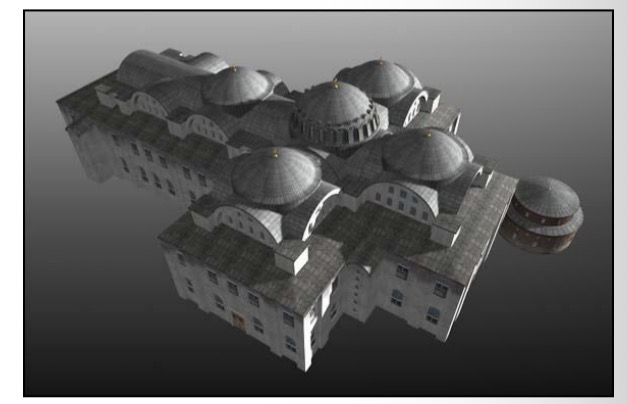
below, digital reconstruction of church of holy aspotles
Founded by Constantine, rebuilt by Justinian, 6th cent., now
destroyed. Martyrium type with quincunx plan (cross with
five domes). Original location of mausoleum of Constantine
under the main dome. Located on an important hill near the
Constantinian Walls.