Anatomy Lab 7- Respiratory System
 Call Kai
 Learn
Learn Practice Test
 Spaced Repetition
 Match
Match Flashcards
 Knowt Play
1/71

There's no tags or description
Looks like no tags are added yet.
Name | Mastery | Learn | Test | Matching | Spaced | Call with Kai | Chat |
|---|
No analytics yet
Send a link to your students to track their progress
72 Terms
respiratory system
Involves the processes of ventilation, and gas exchange (gas exchange)
to get O2 into the body and get CO2 out
goal of respiratory system
active, diaphragm, intercostal
Inspiration is _____ and requires _______ and ________ muscles
passive, lungs, chest
Expiration is ______and relies on relaxation of ______ and ______
upper and lower portions
Tract is split into
conducting zone
Passages from nasal cavity to terminal bronchioles (warm, humidfy, filter)
respiratory zone
Sites of gas exchange: respiratory bronchioles, alveolar ducts, alveoli
from the nose to the larynx
upper respiratory system
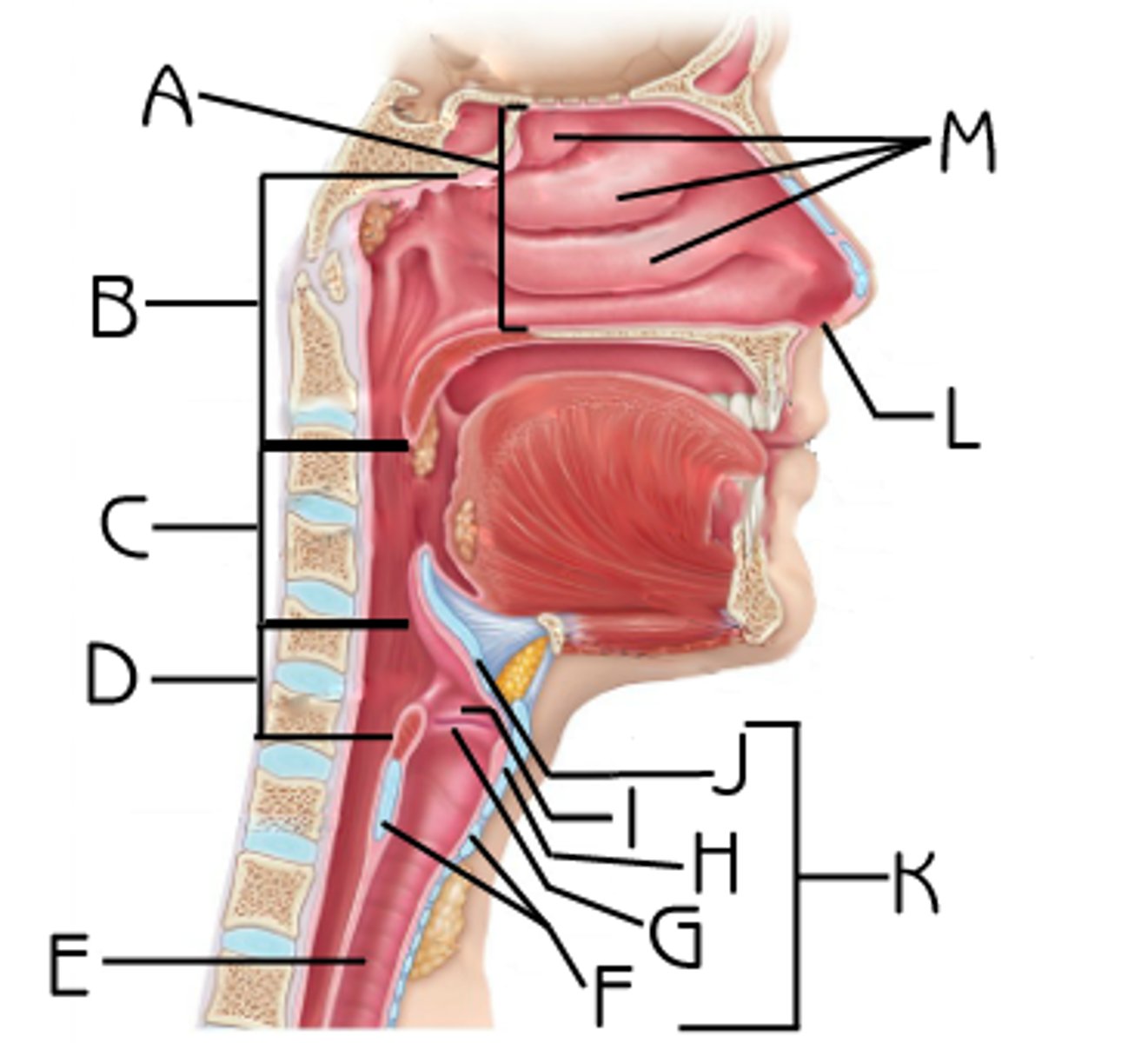
external nares
name L; nostrils lined with mucous membranes
vomer, perpendicular plate
Internal nose is split into chambers by the _____ and ______________ of the ethmoid
superior, middle, inferior
The turbinate bones are the ______, ________ and ______ nasal conchae
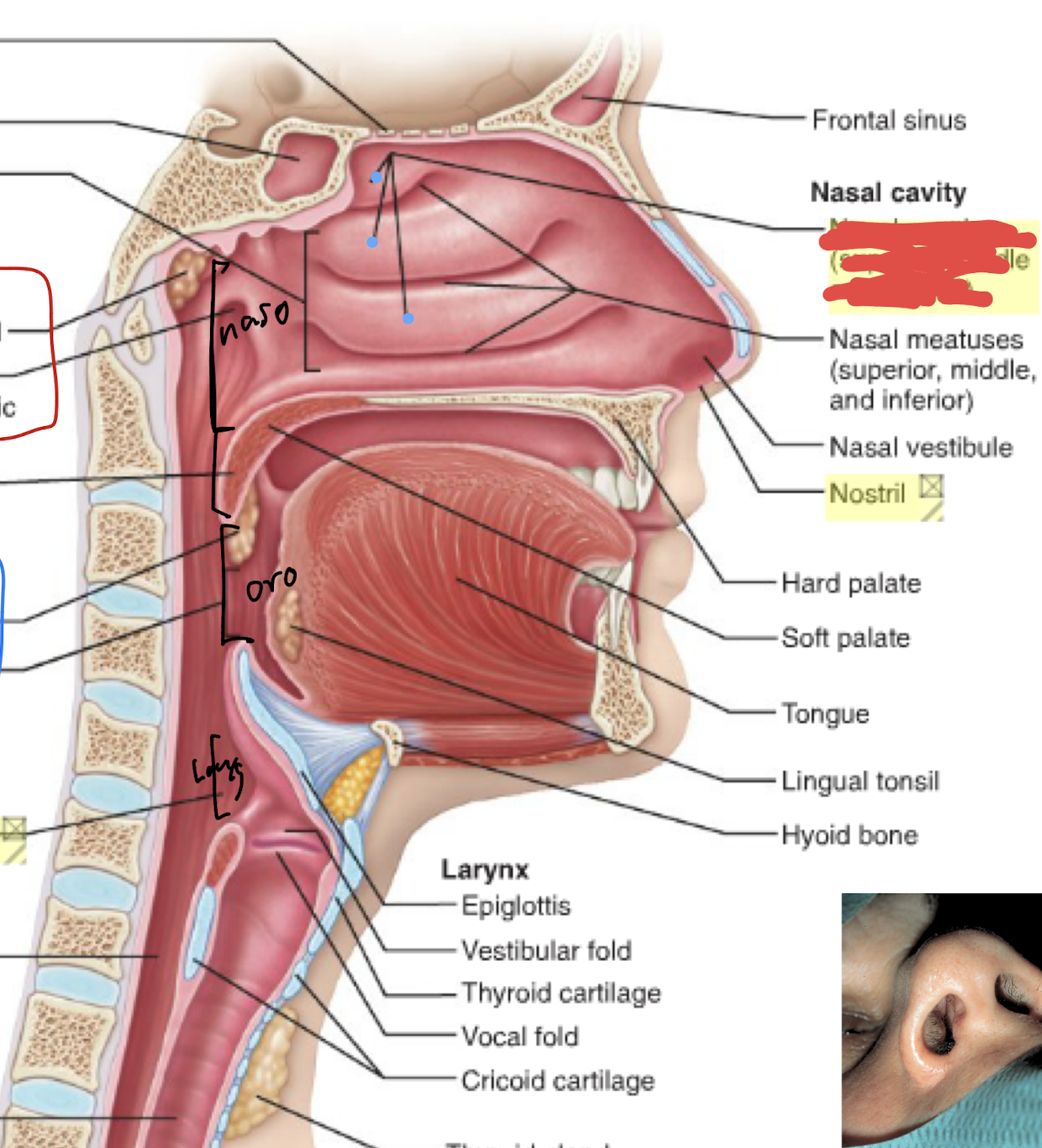
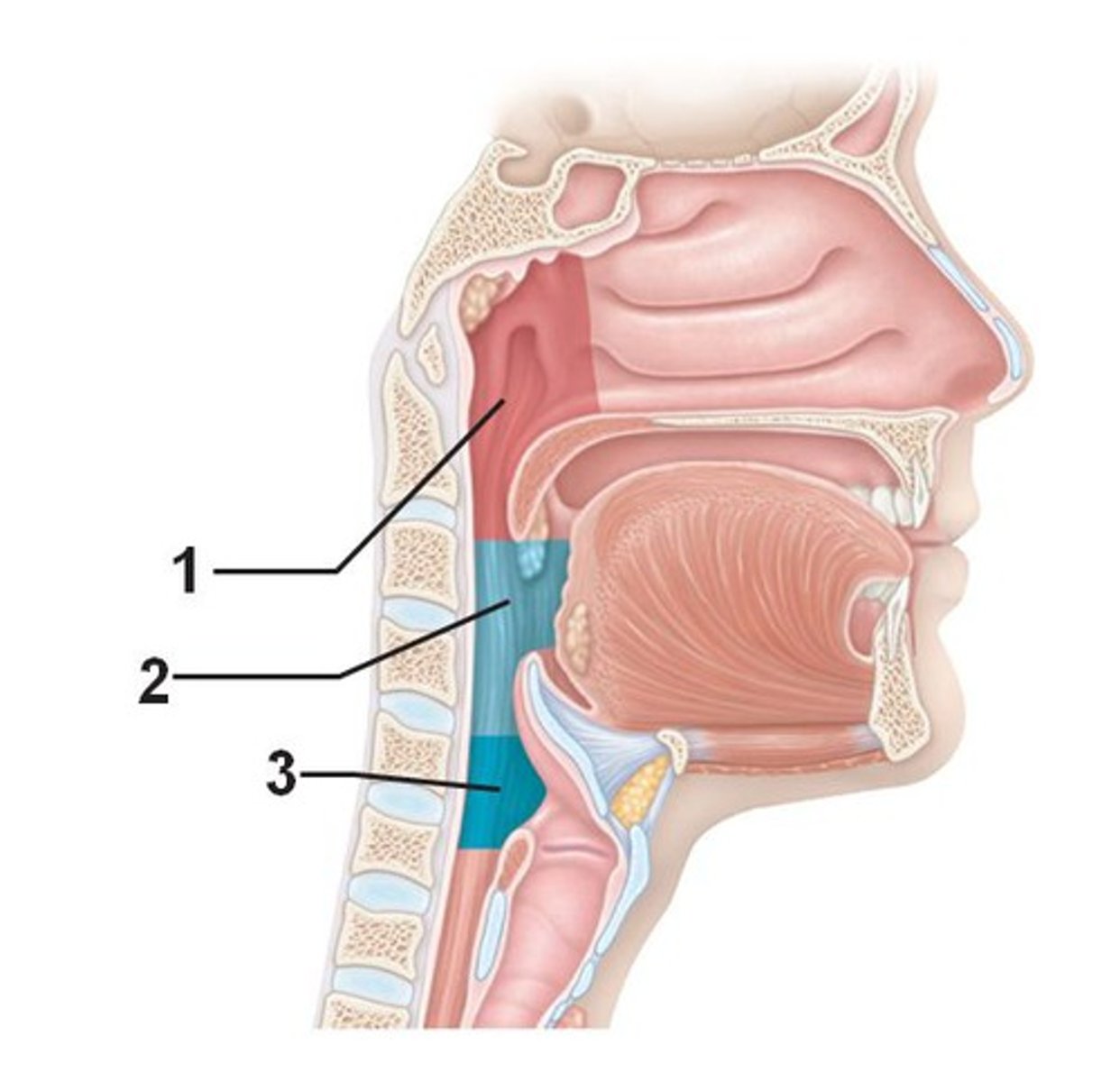
nasopharynx
name 1; from the posterior nares to the soft palate, contains pharyngeal tonsils and auditory tube openings.
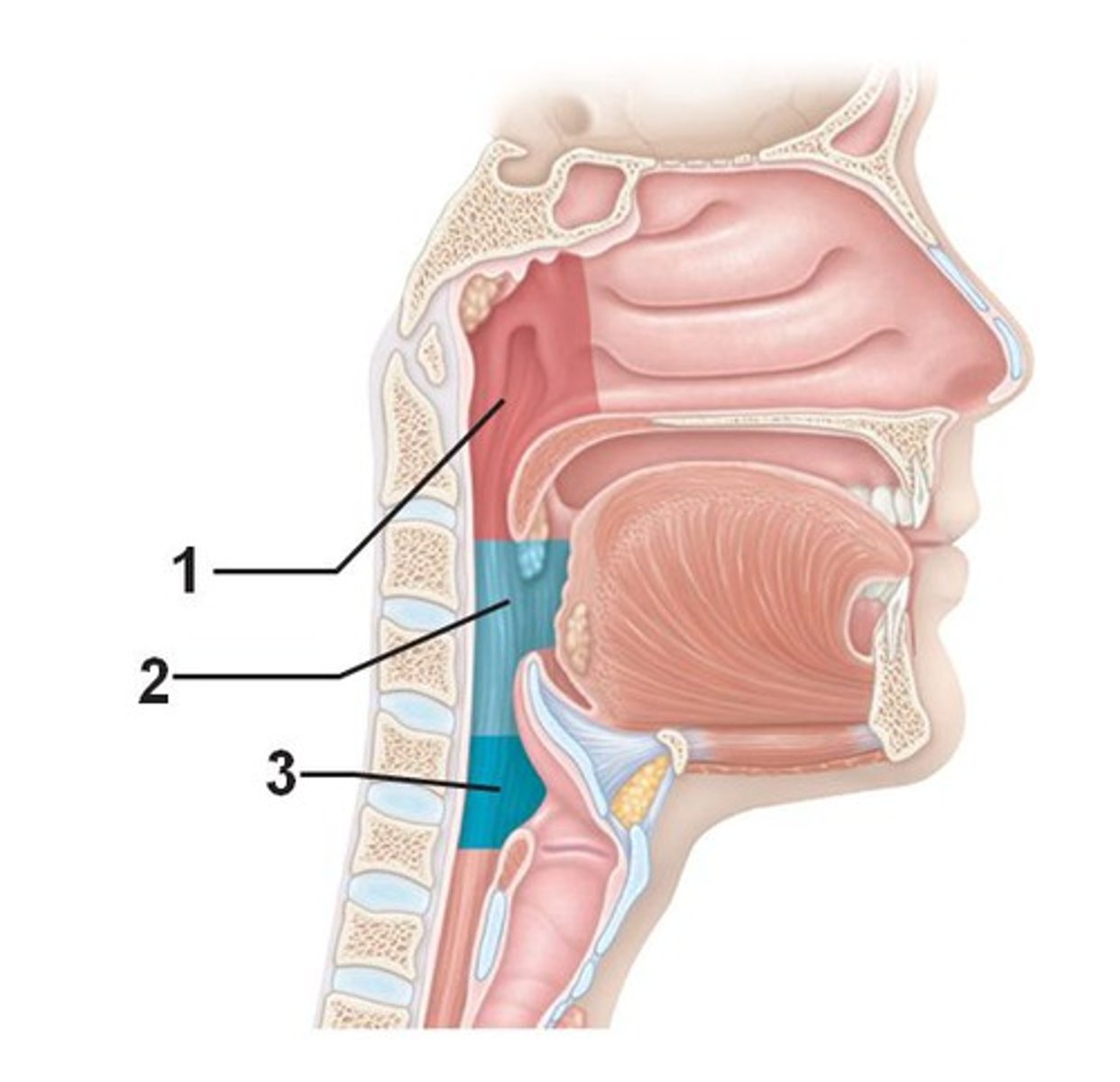
oropharynx
name 2; from the soft palate to hyoid bone, contains the palatine and lingual tonsils and the isthmus of the fauces (opening at the back of the mouth into the throat)
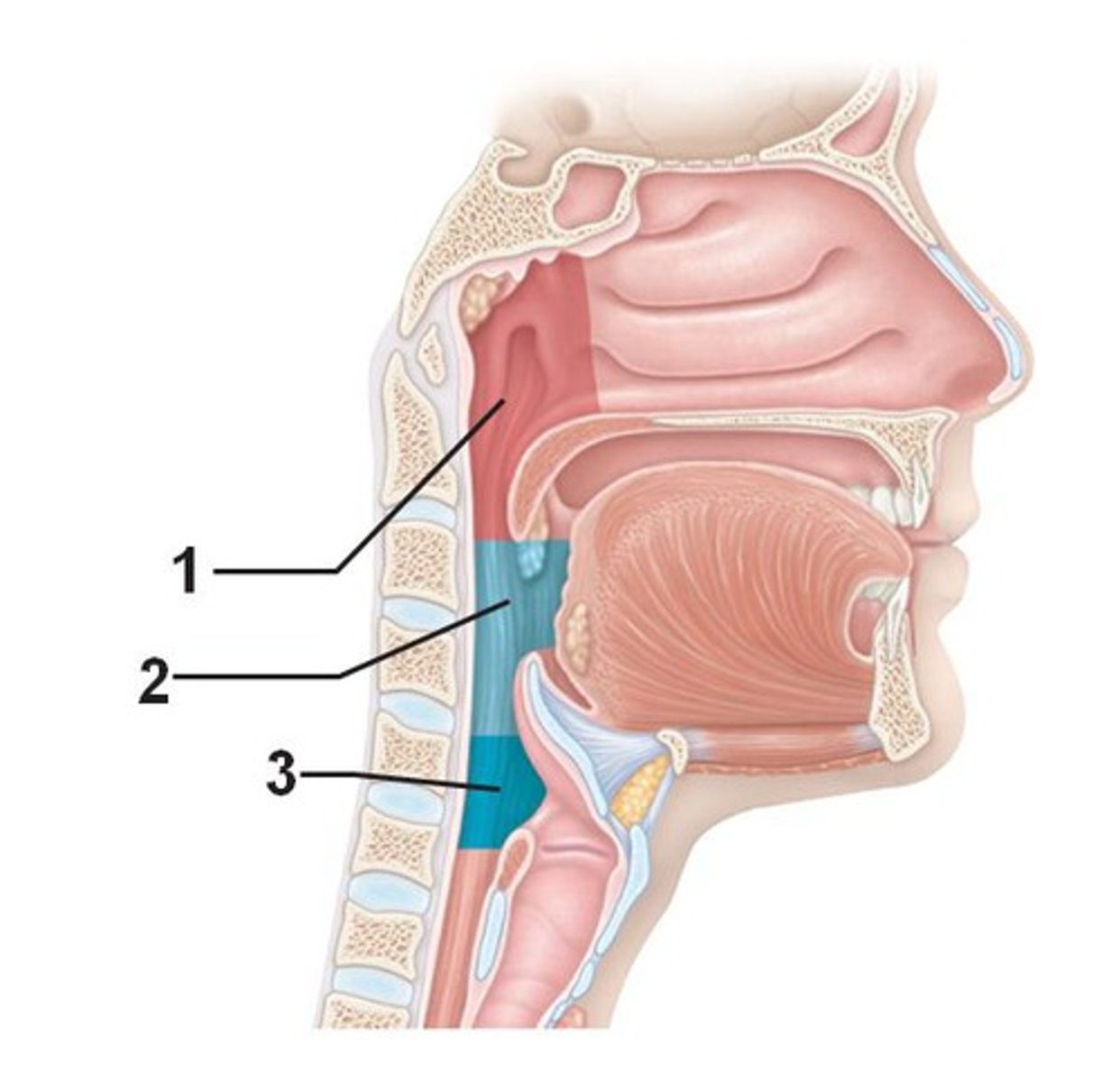
Laryngopharynx
name 3; area where the trachea and esophagus split
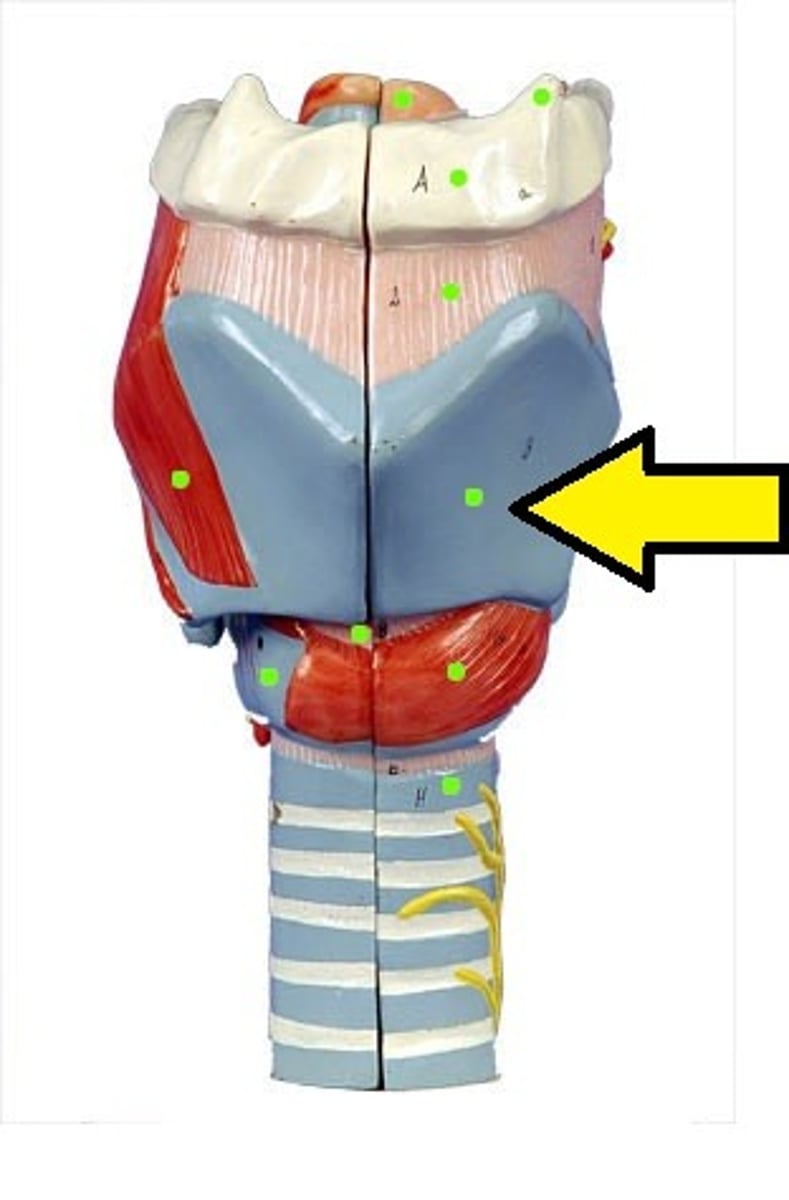
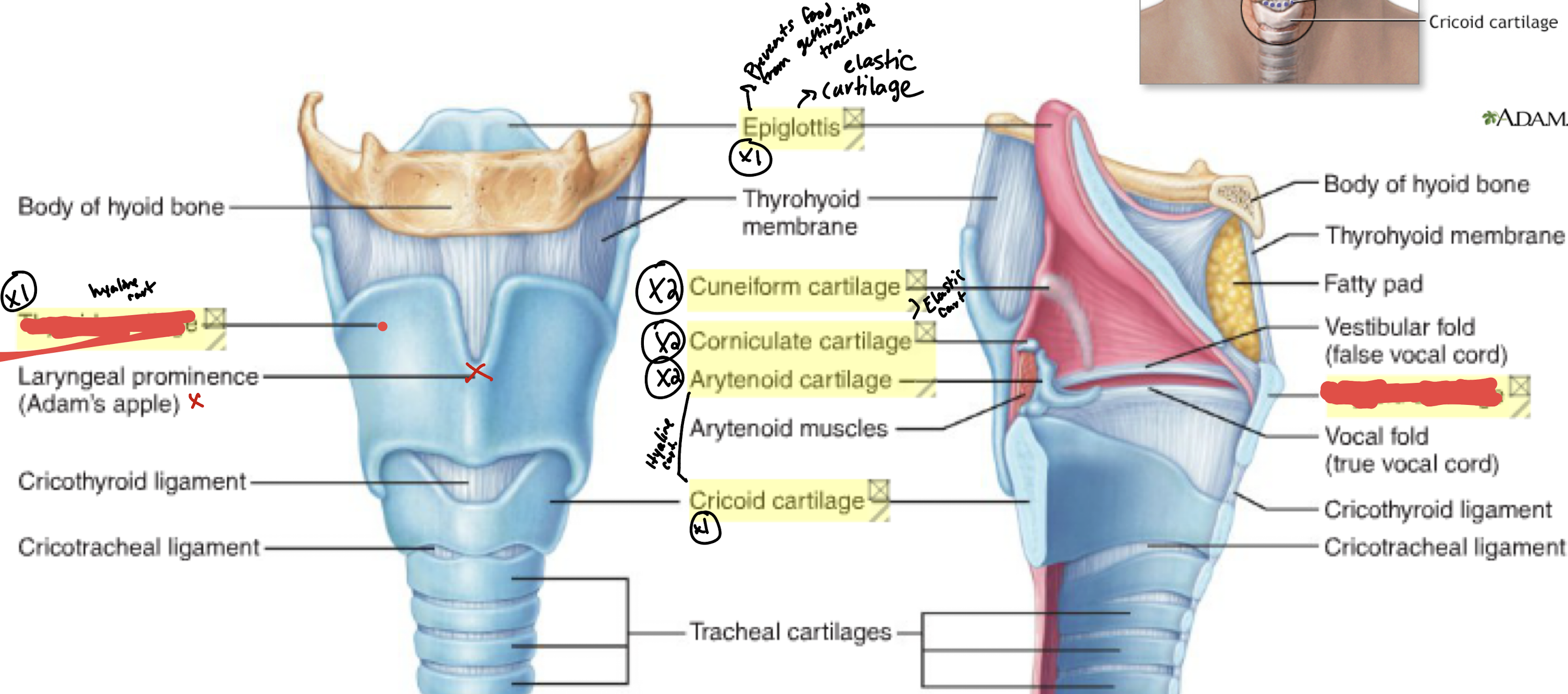
thryoid
name this
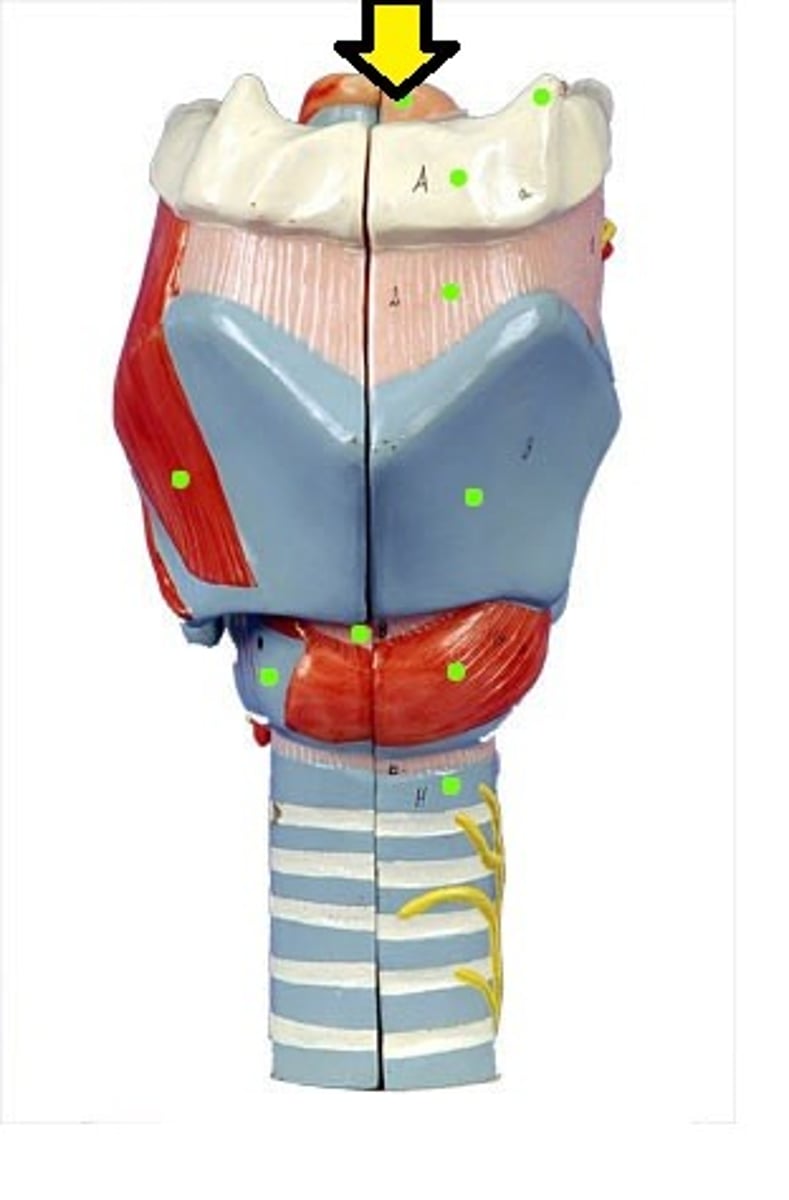
epiglottis
name this
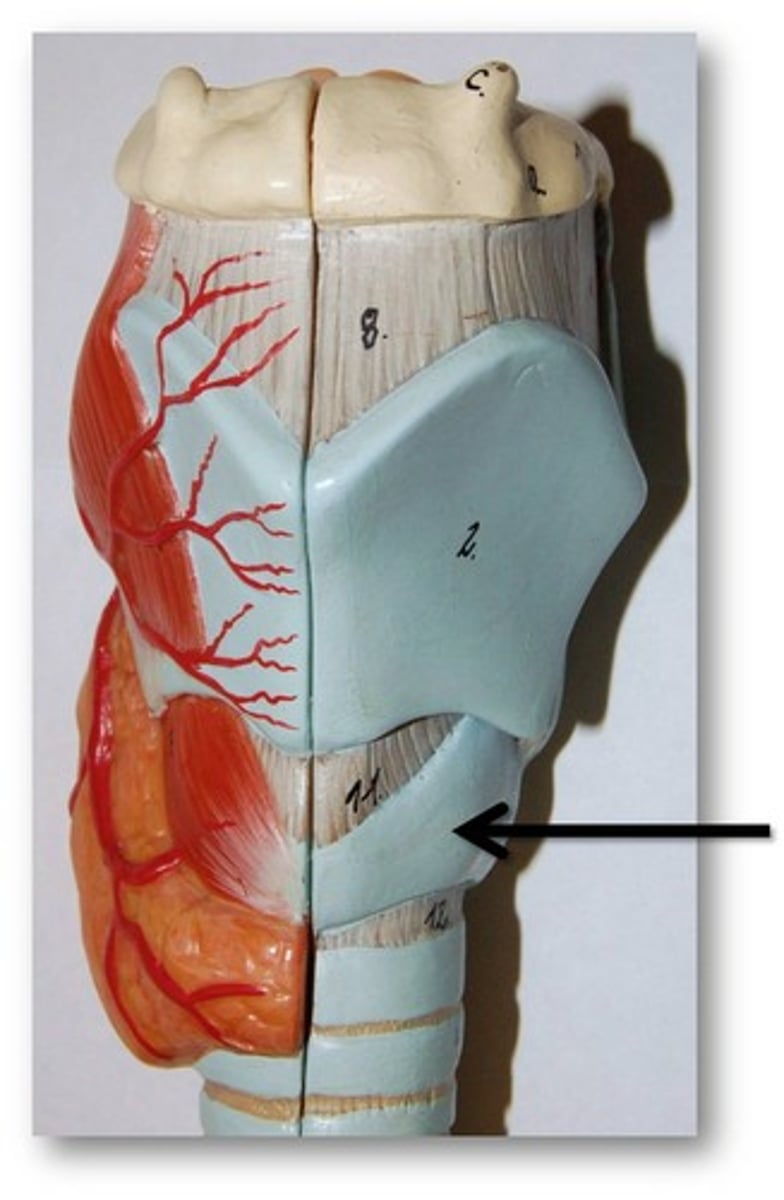
cricoid
name this; hyaline cartilage
arytenoids (x2)
name this; hyaline cartilage
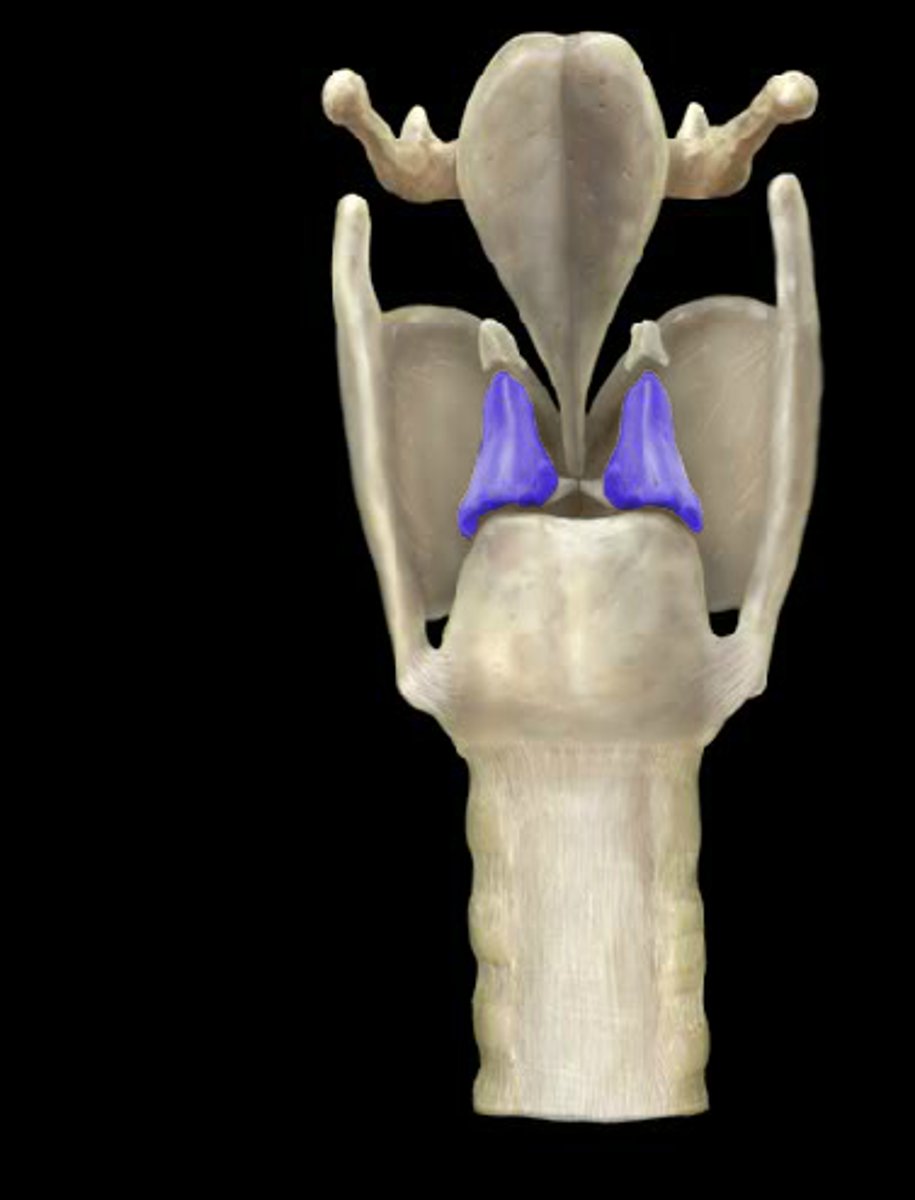
corniculate x2
name this; elastic cartilage
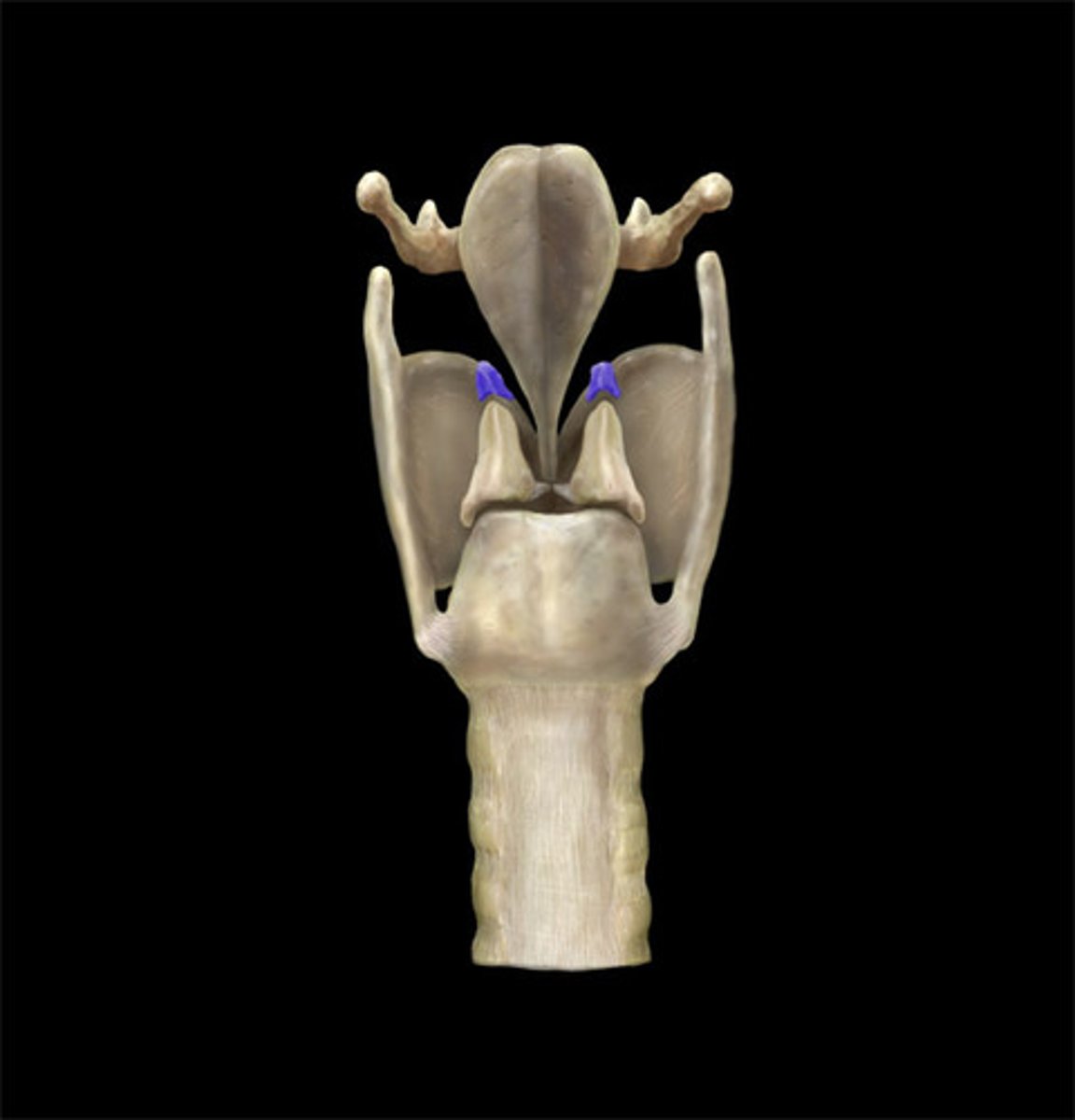
cuneiforms x2
name these; elastic cartilage
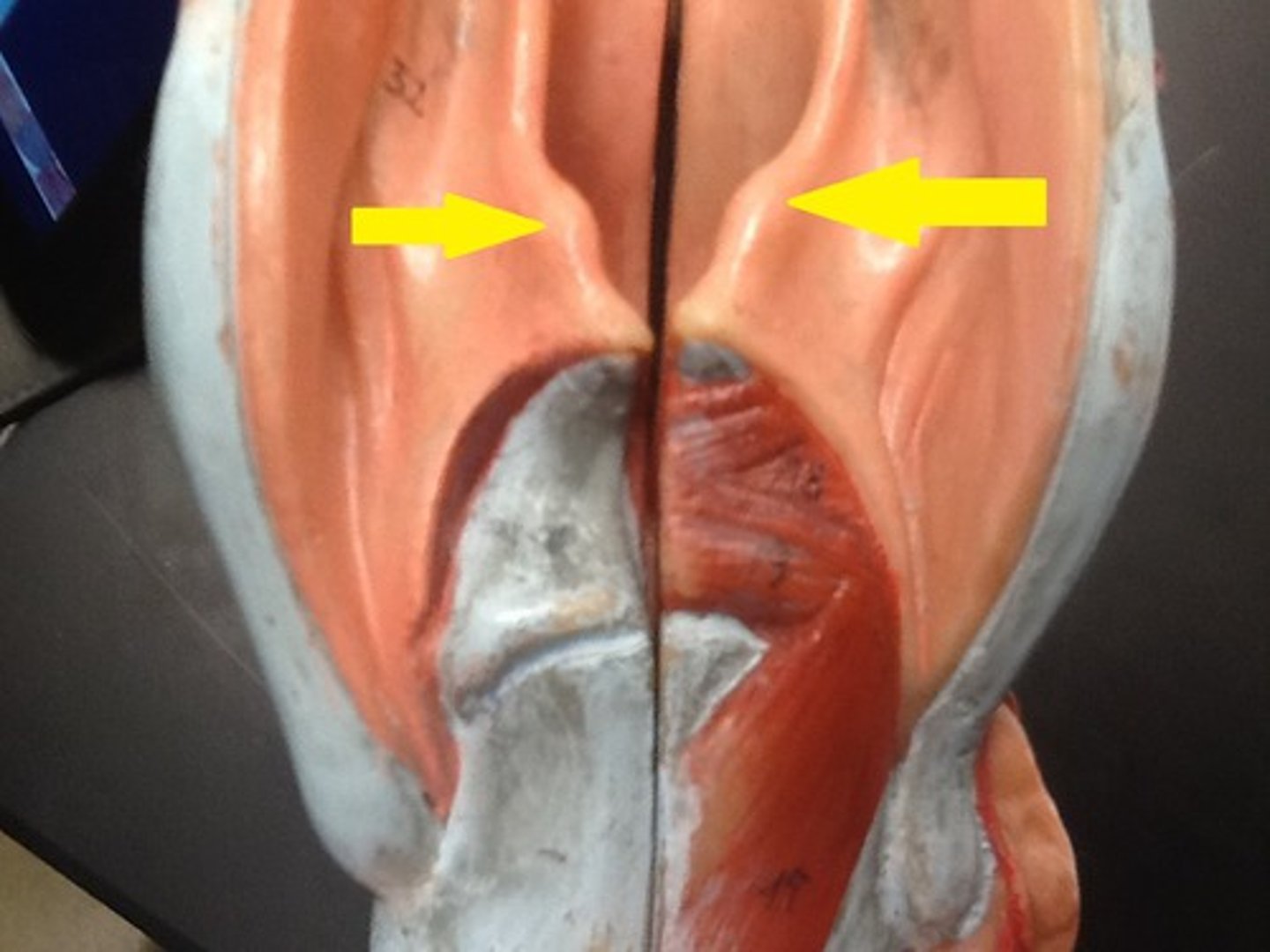
vocal cords
name this; ligaments, which span the inside of the larynx, controlled by skeletal muscle, vibrate, and produce sounds
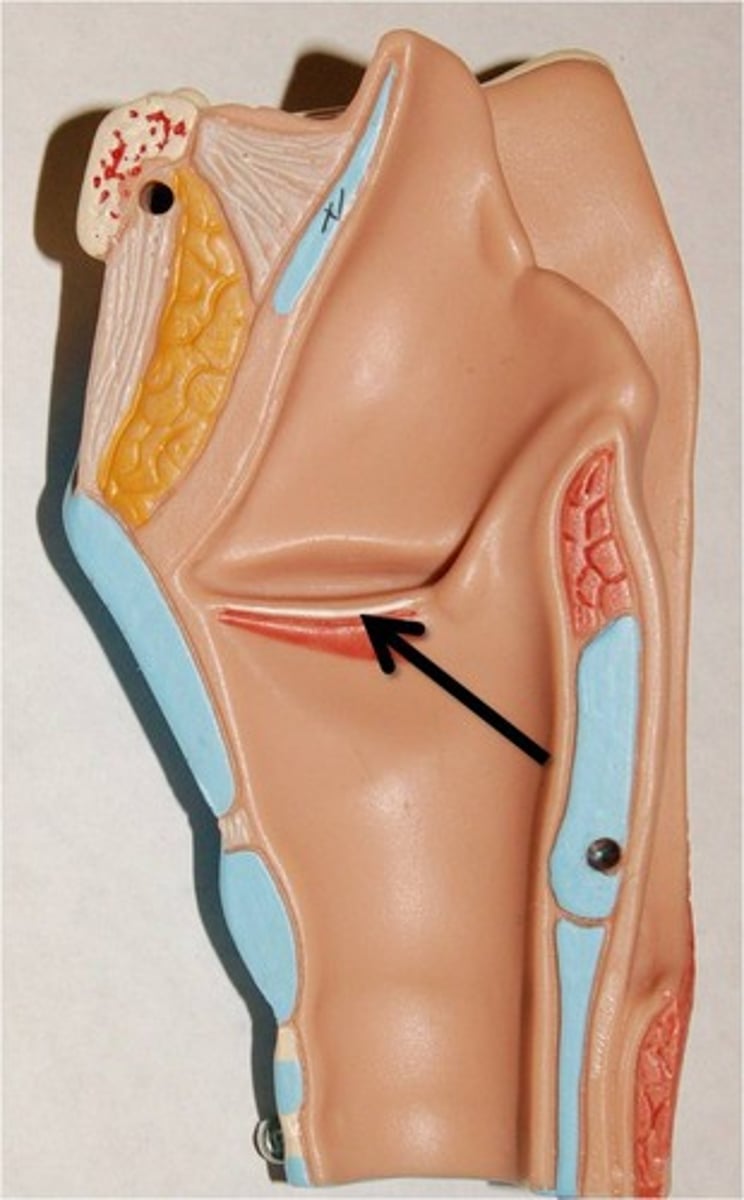
epiglottis
elastic cartilage flap that covers the glottis (entryway to lower resp. tract that just above the trachea) when we swallow
lower respiratory tract
from larynx down into lungs
trachea
name this
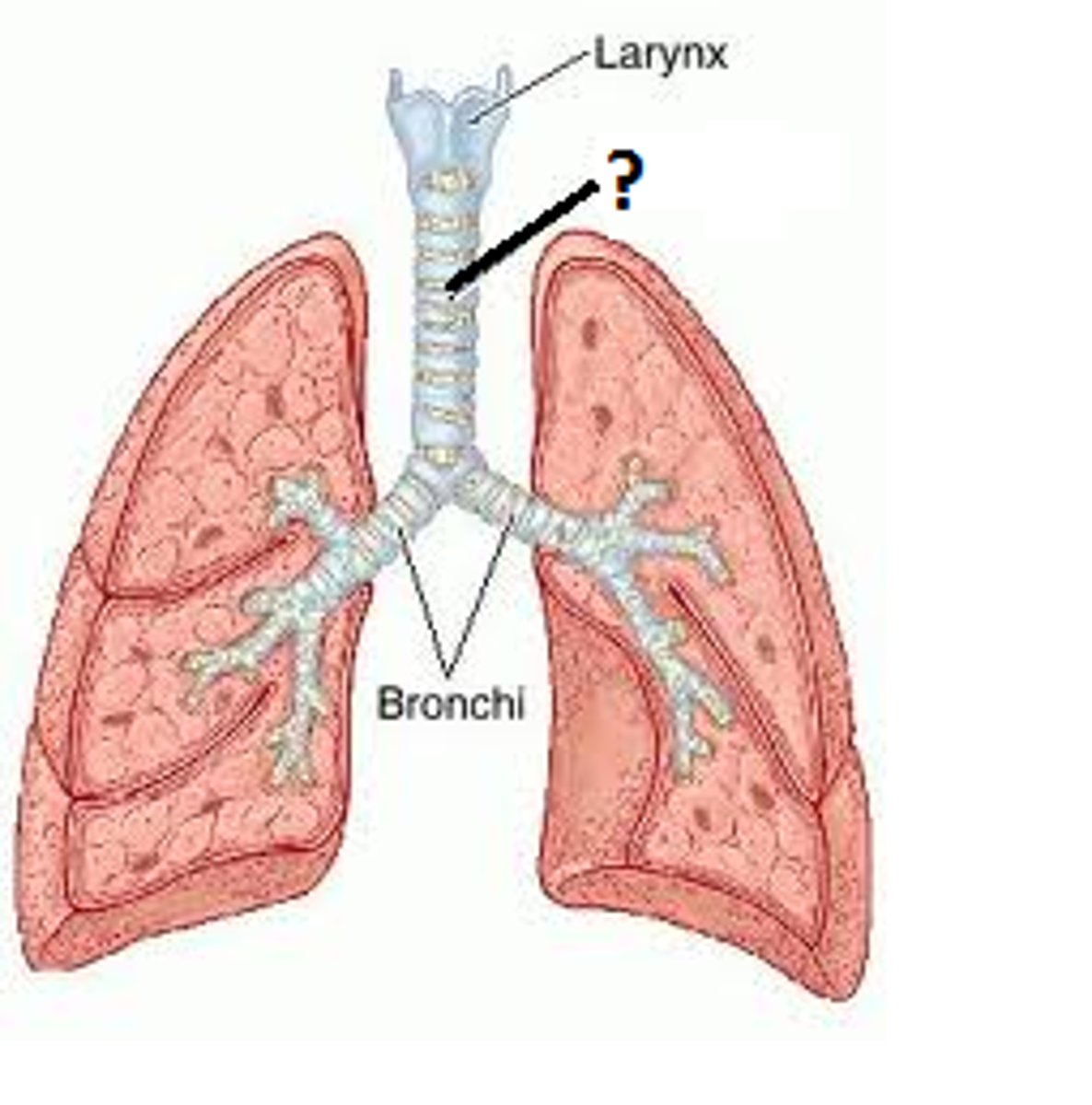
trachea
-Held open by C-shaped rings of hyaline cartilage.
-Rings are necessary to conserve energy (so you don't have to force it open each time you breathe)
carina
name this; last tracheal cartilage, very sensitive, stimulates a strong cough reflex, it is where the trachea splits
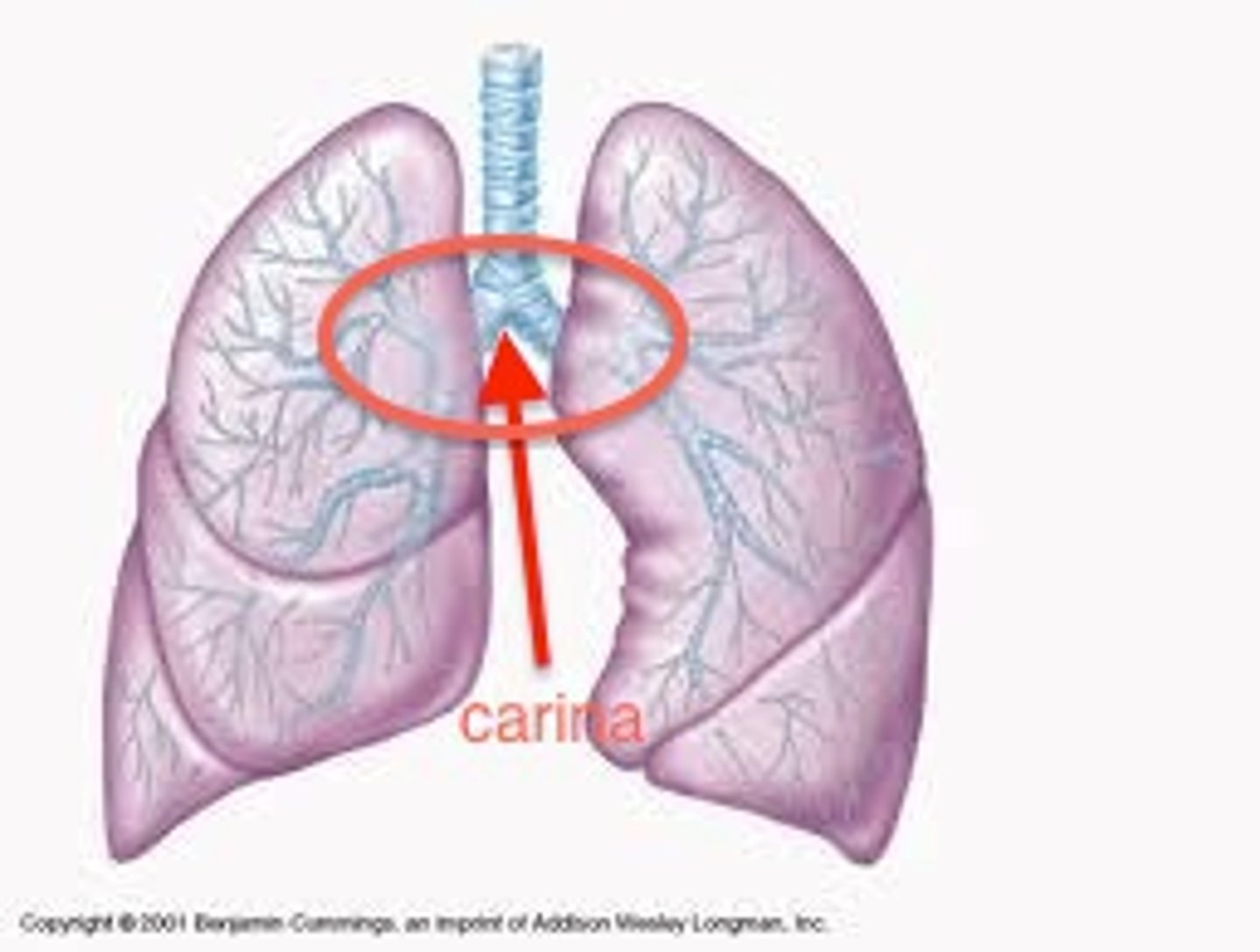
primary bronchi
Trachea terminates as the left and right _________
pleura; partietal; visceral
covering of the lungs; outer layer is _____ and the inner is ____
serous fluid
Small amounts of ___________ are secreted between the layers to keep the friction low between them
negative intrapleural pressure, surfactant
Lung collapse is prevented by the ___________ and the chemical _______
pneumothorax
Puncturing the pleura results in a
mediastinum
Lungs located in the _________
2, 3
The left lung has _ lobes and the right lung has _ lobes
hilum
Trachea subdivides into 2 primary bronchi that enter the lungs at the
bronchioles
name this
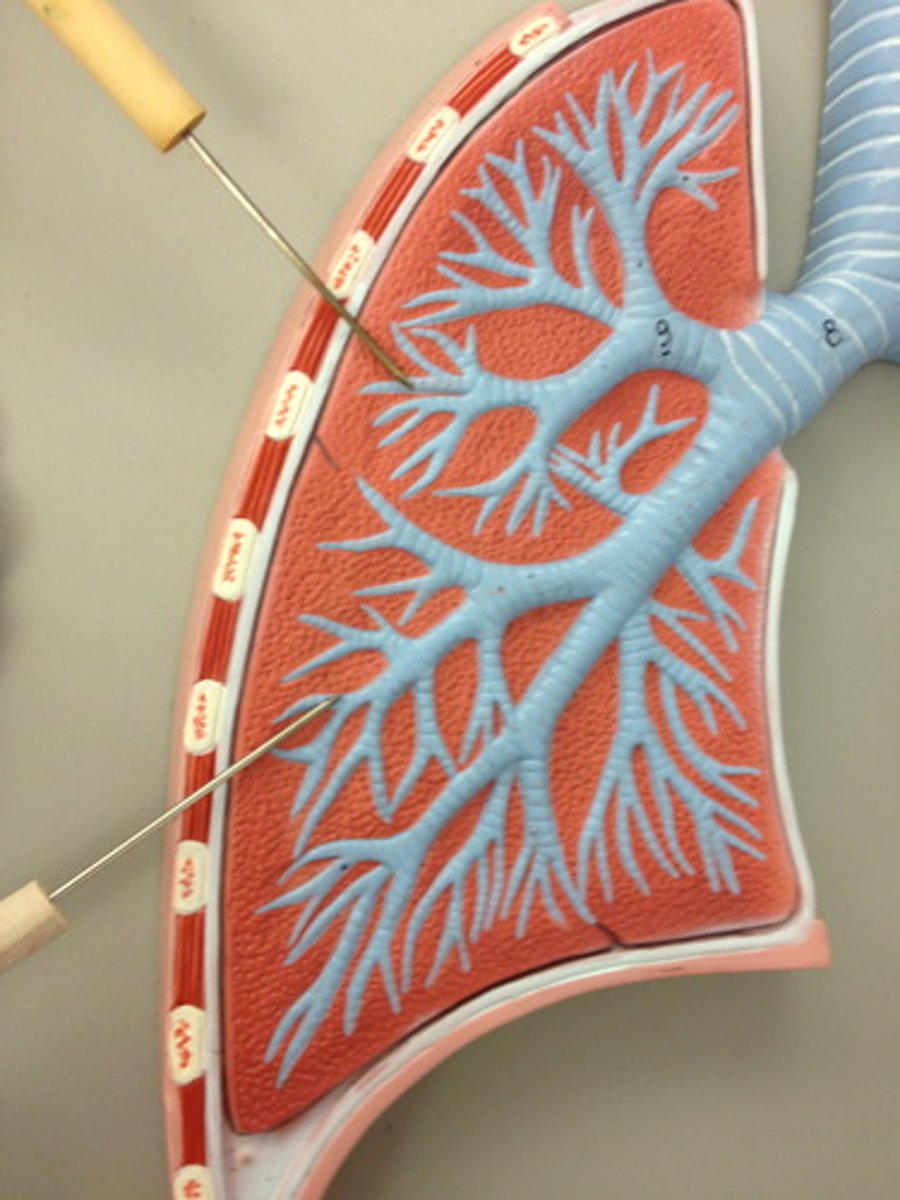
primary bronchus (right and left)
name this
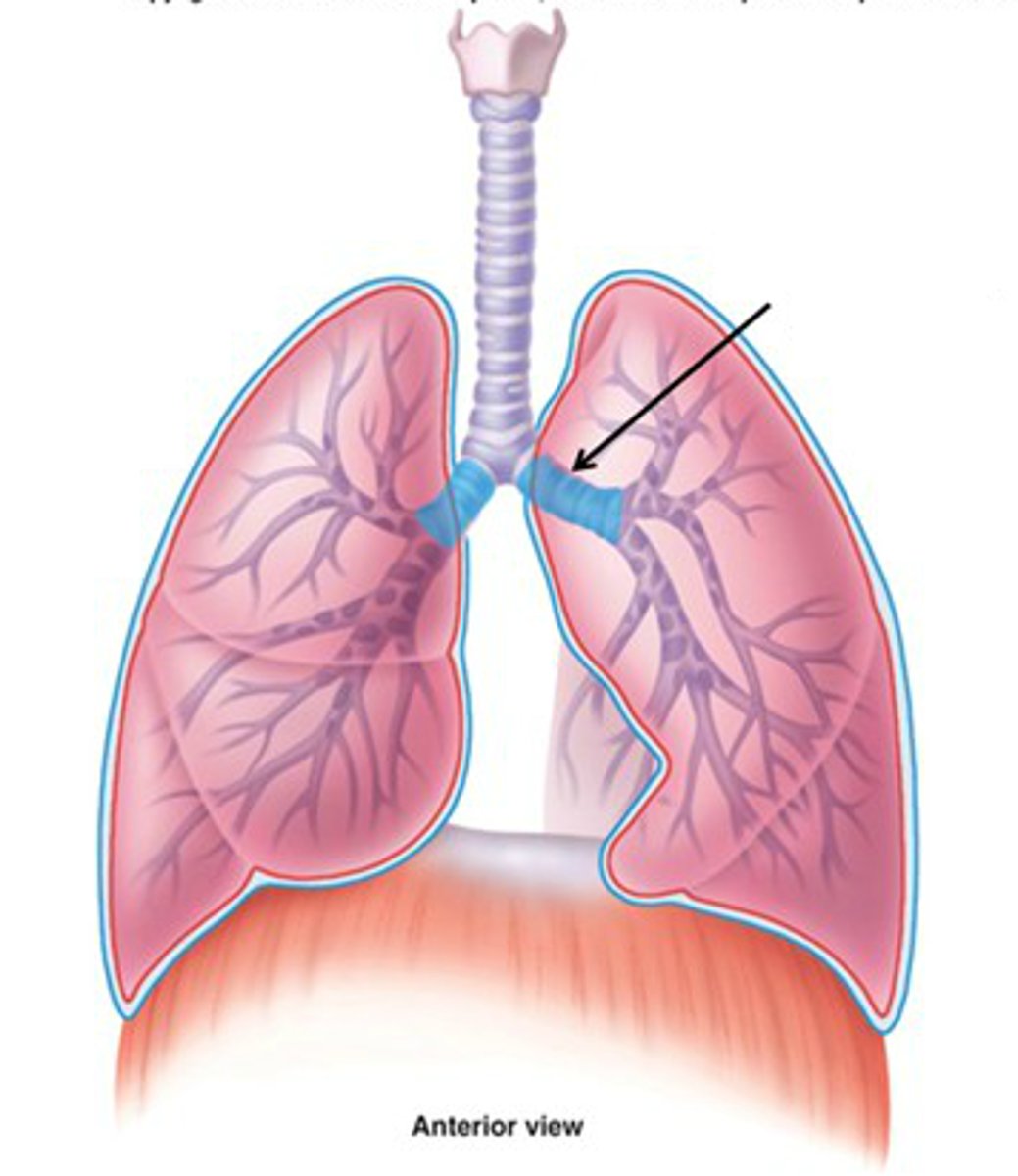
secondary bronchus (2L and 3R)
name this
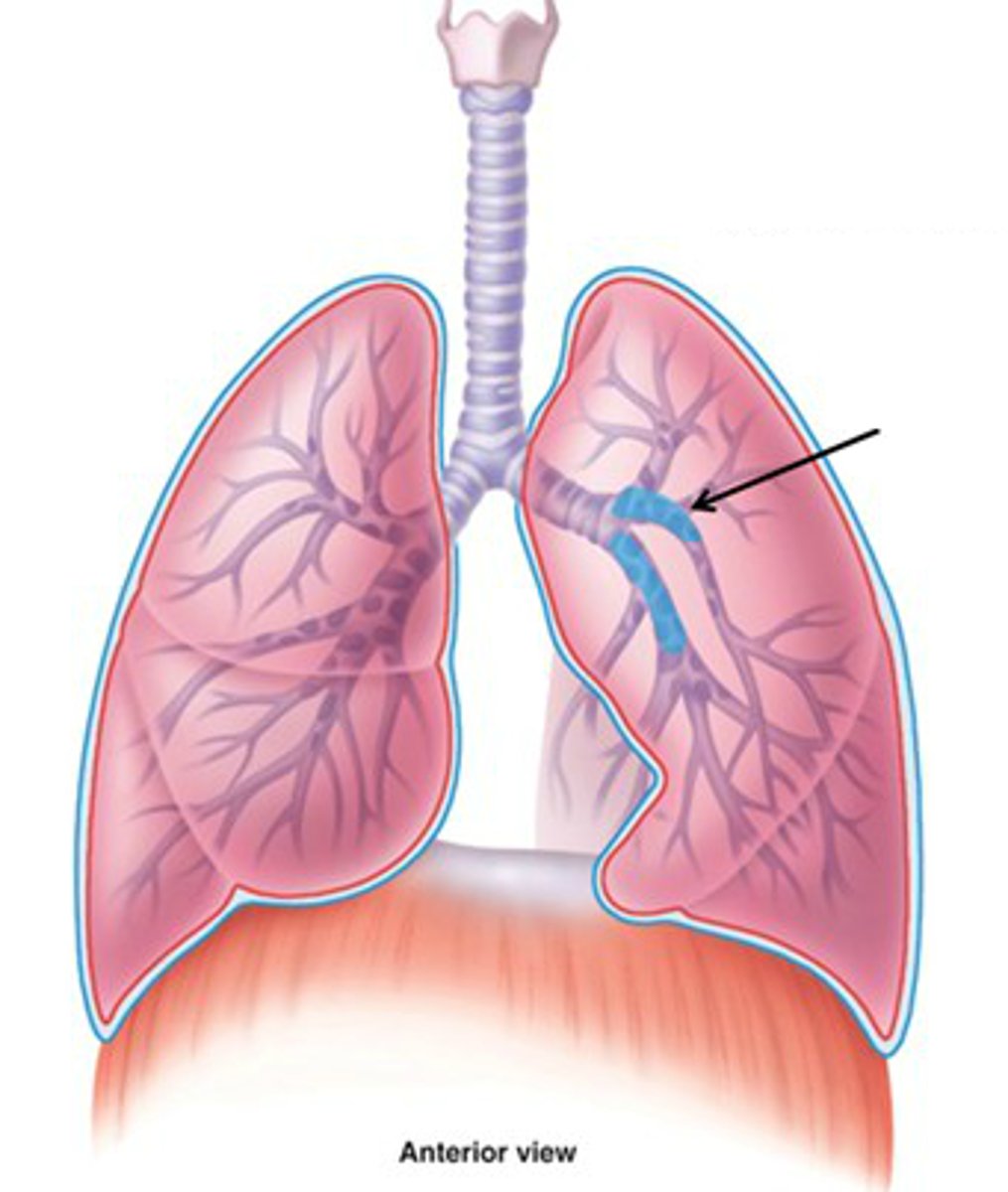
terminal bronchioles
Last non-respiratory bronchioles are called the
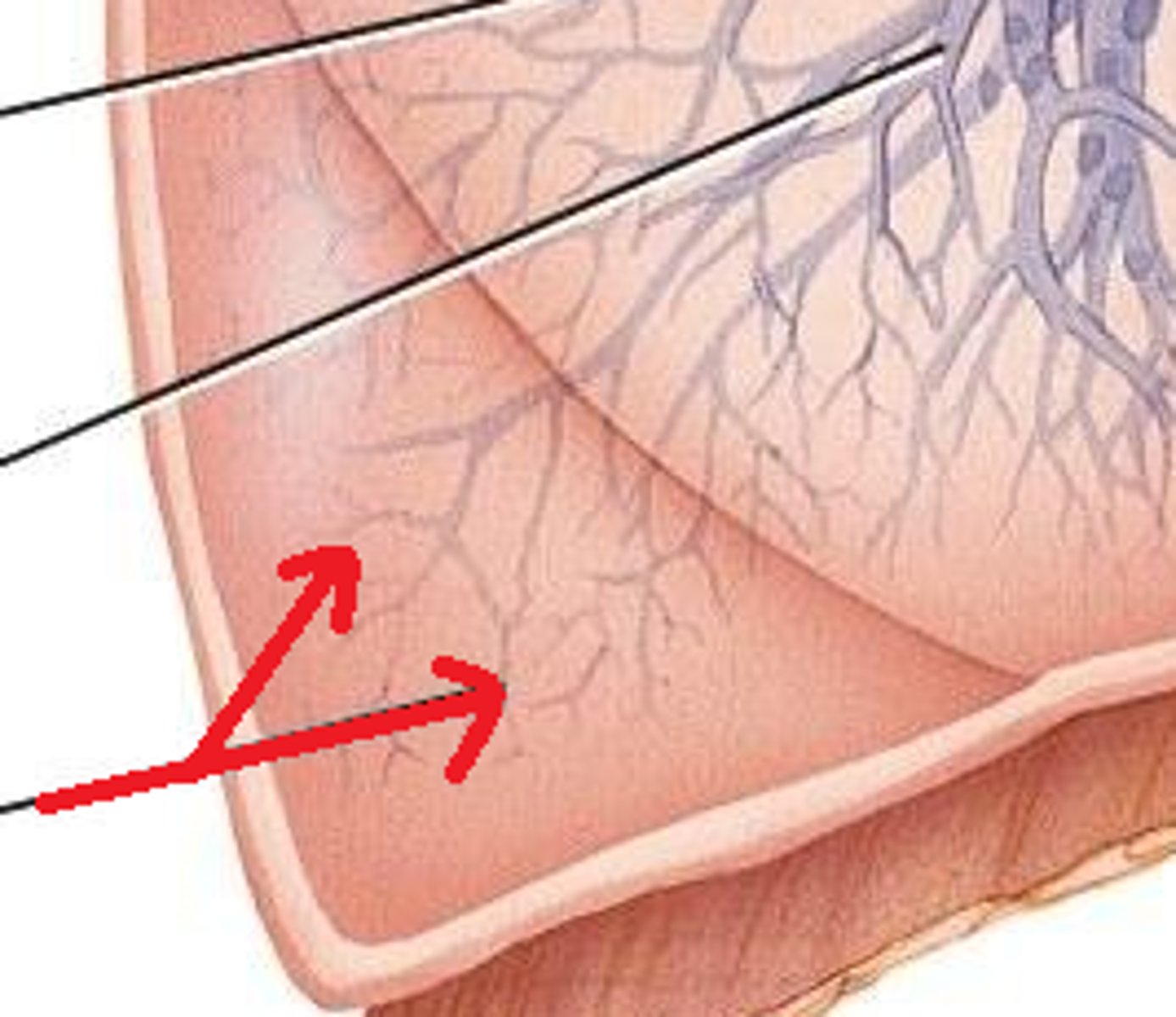
respiratory, alveoli
terminal bronchiles terminate as _______ bronchioles that subdivide into millions of tiny ______
gas exchange
Alveoli cluster in sacs, they are only 1 cell layer thick and this is where ___________ occurs with the pulmonary capillaries.
alveoli
Only the respiratory bronchioles and ______ are in the respiratory zone.
respiratory membrane
▪ Composed of alveoli and pulmonary capillaries.
▪ Gas exchange occurs across this membrane
diaphragm, external intercostals,
muscles of inspiration
inspiration
requires active muscle contraction, breathing in
expiration
a passive process in which the lungs recoil of their own accord due to their elasticity, breathing out
internal intercostals and abdominal muscles
muscles of expiration
P =1/V
boyles law
500ml - is the amount of air inhaled or exhaled during normal quiet breathing
TV (tidal volume)
700-1200ml - the amount of air that and be forcibly exhaled after a normal TV
ERV(expiratory reserve volume)
900-3100ml - the amount of air that can be forcibly inhaled after a normal TV
IRV(inspiratory reserve volume)
Is the total lung capacity available for air movement
VC(vital capacity)
IRV+ERV+TV; 3100-4800 mL
VC = _______ which is about
Immovable amount of air remaining within the lungs ~1200ml
RV(residual volume)
Total amount of air in your lungs
TLC(total lung capacity)
VC (IRV+ERV+TV) +RV
TLC=
RR times TV
MRV(minute respiratory volume) =
similar to CO
RR*(TV-DAS)
AVR(alveolar ventilation rate) =
total gas exchange per min during resting conditions
takes into account dead air space (DAS) in conducting zones 150ml
150 ml
how much is the Dead Air Space (DAS)
VC-ERV-TV
IRV=
increases; decreases; collapse
when pneuothorax occurs, air gets into pleural space which ____ pressure and thus ____ volume leading to lung ____
Internal nose
is the chamber that reside over the oral cavity, separated from the mouth by the hard palate
Functional Residual Capacity = ERV + RV
Volume of air remaining in the lungs after a normal, passive exhalation ( around 3L in healthy adults);
equilibrium point where the chest wall's outward expansion matches the lungs' inward elastic recoil.
Thyroid cartilage x1
Name this; hyaline cartilage
tertiary; brochioles
secondary bronchi split into ____ bronchi that serve the lobules of the lungs. The branching continues to the level of the ____
Oral Cavity
Name this
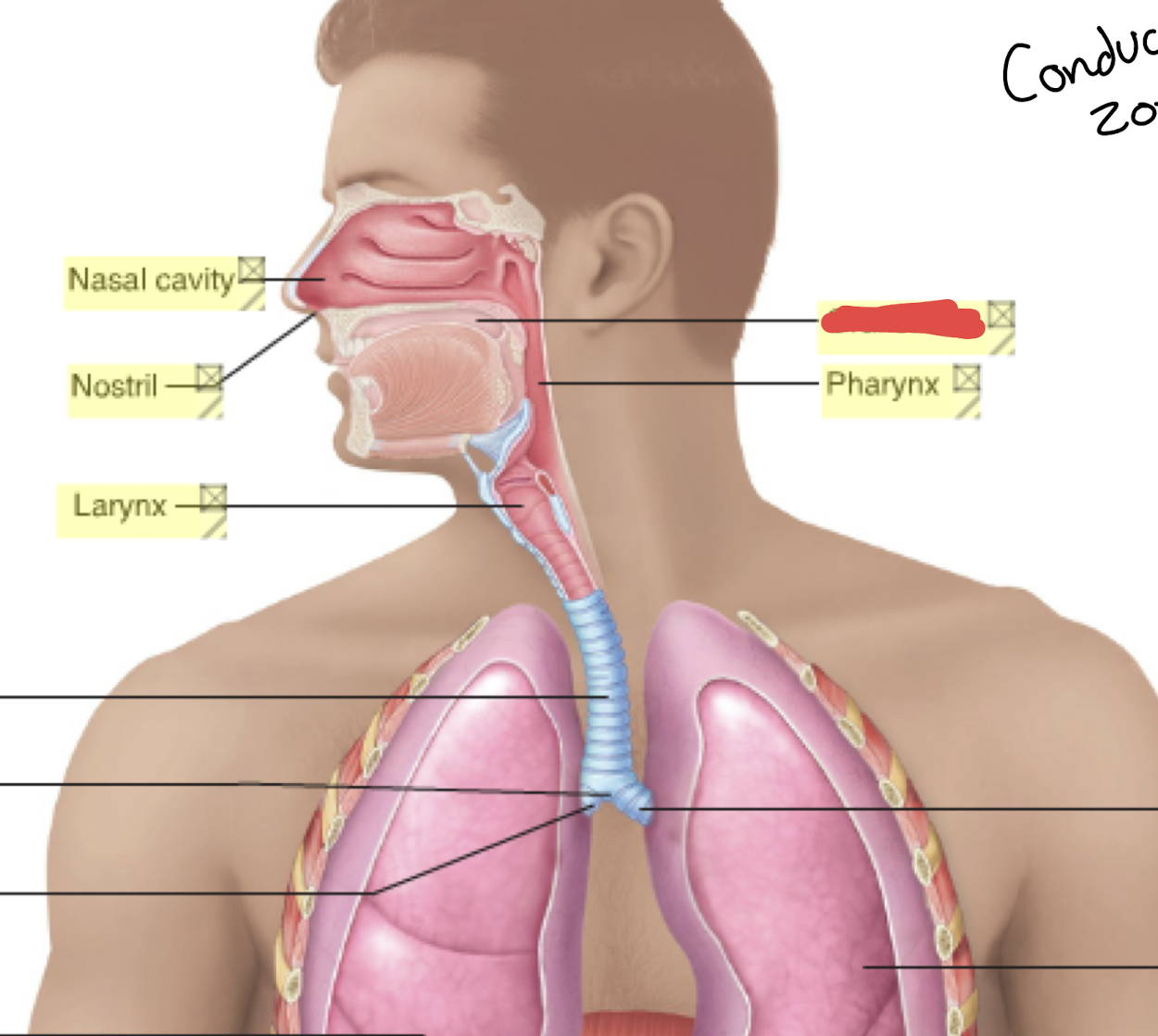
Pharynx
Name this; throat
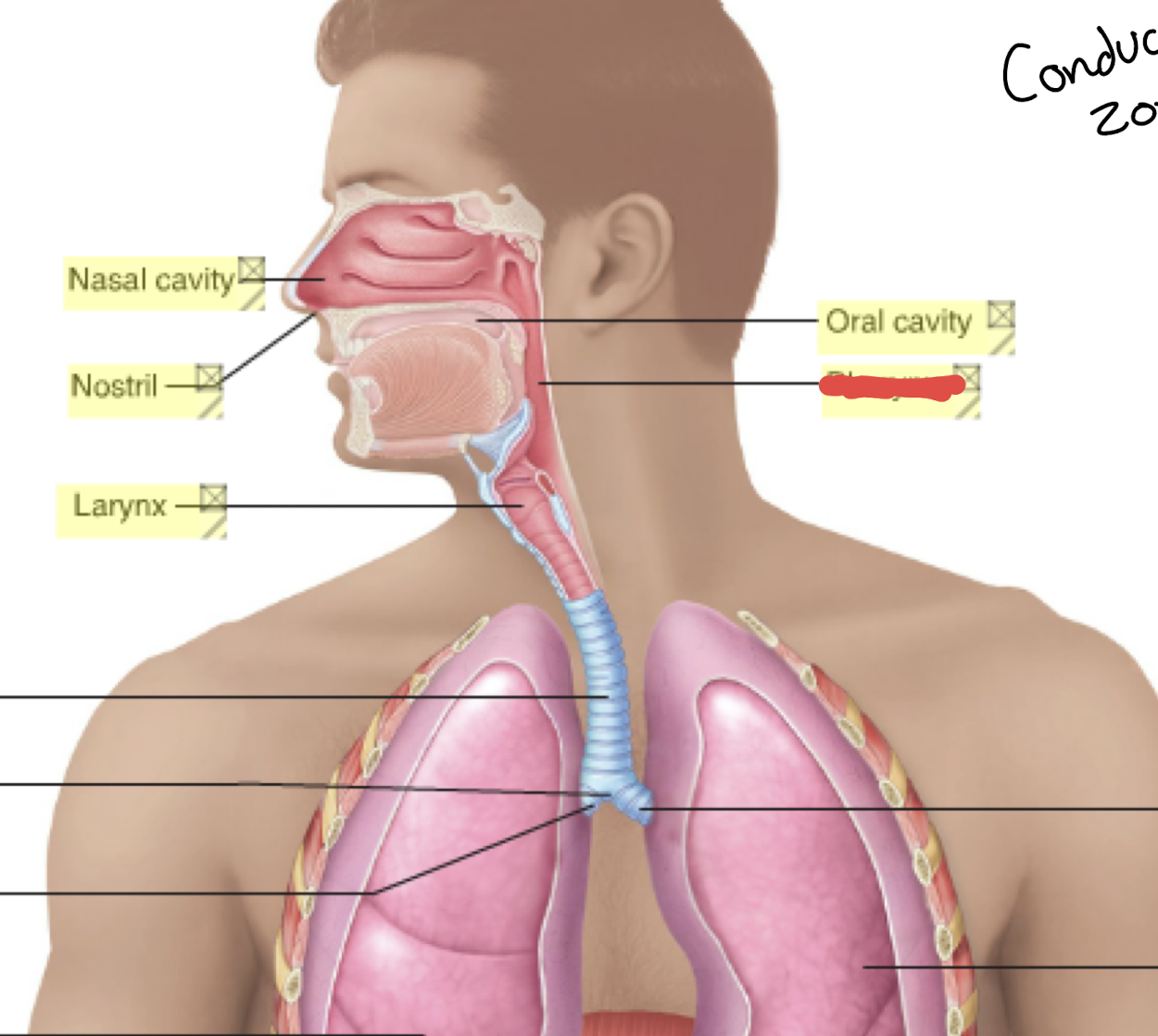
Larynx
Name this; voice box made of 9 cartilages
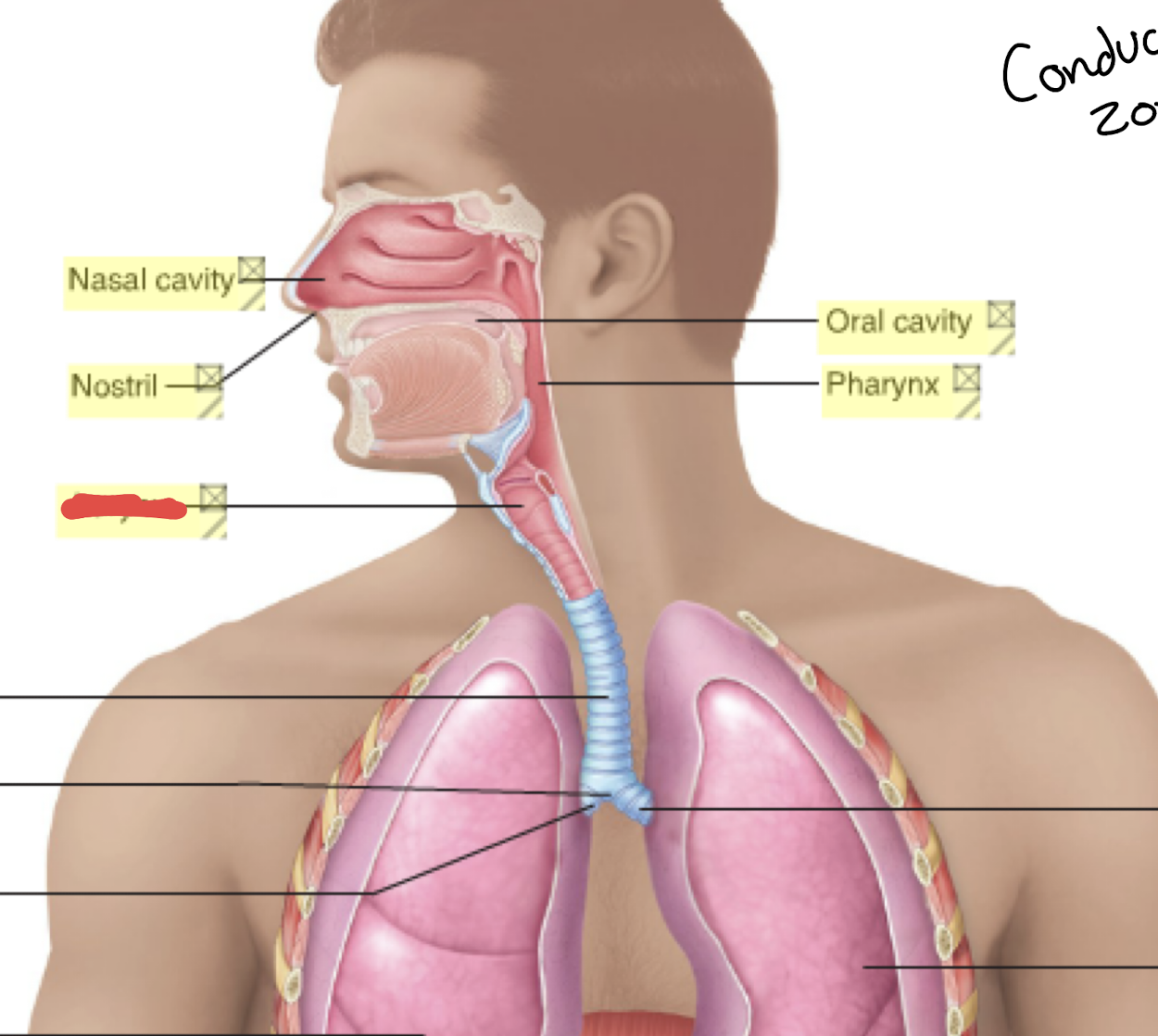
Nasal Cavity
Name this
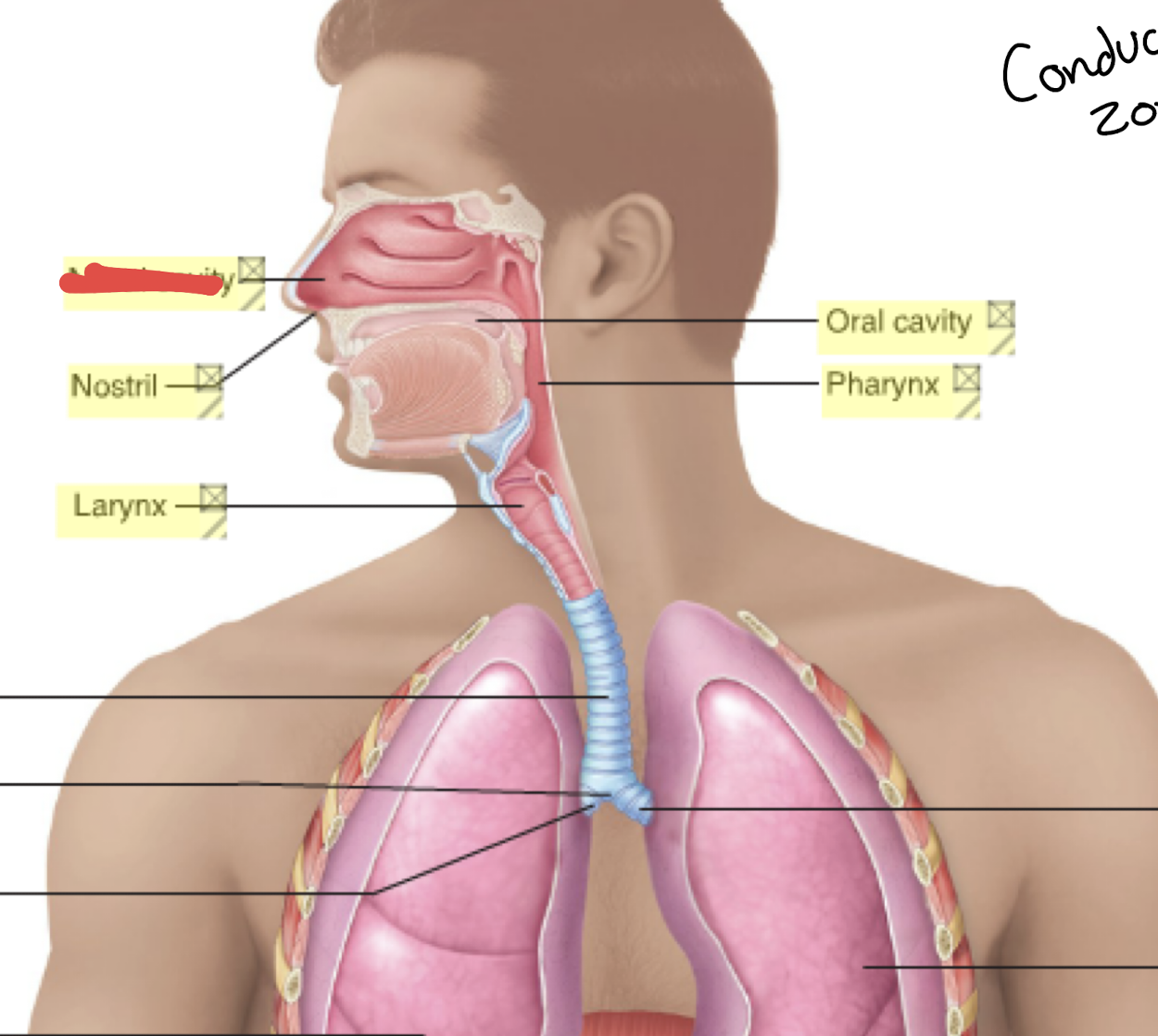
Nostril
Name this

Pleurisy
inflammation of the pleura
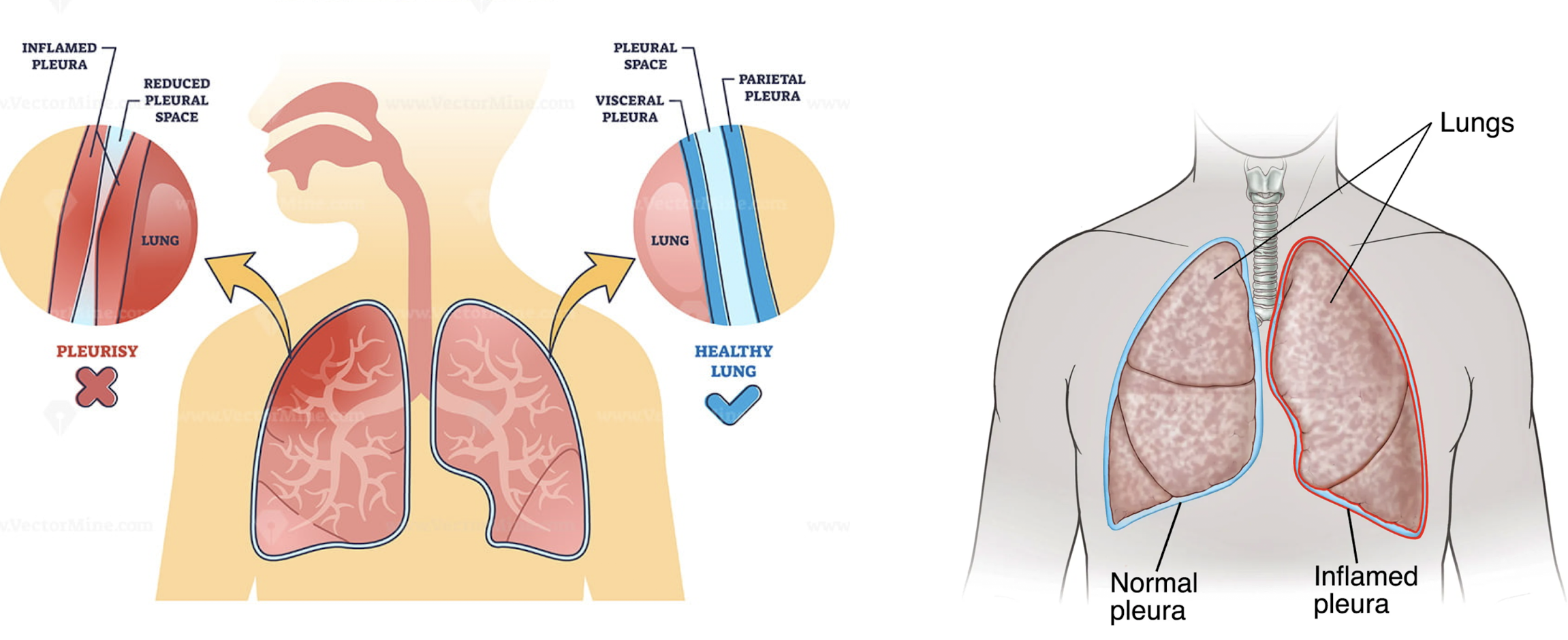
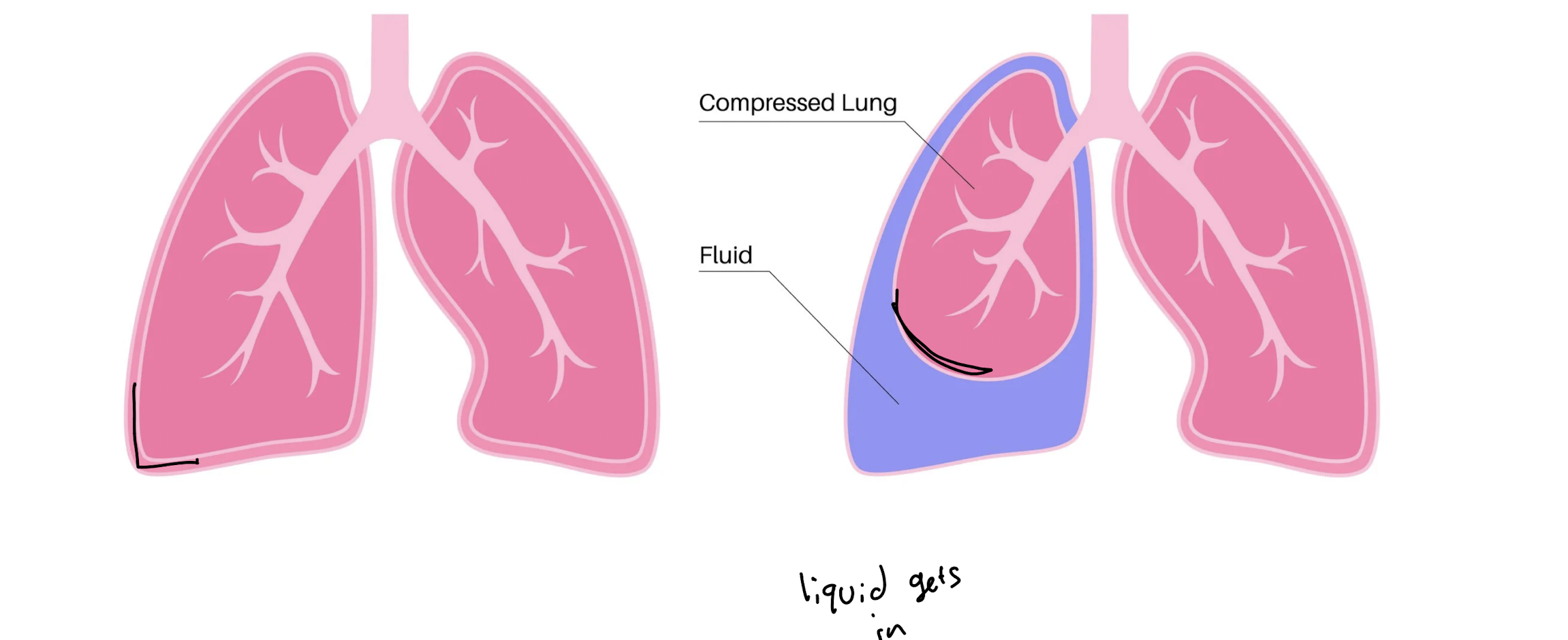
Pleural Effusion
liquid gets into the pleura cavity and compresses the lung
Inspiratory Capacity (3600ml) IRV + TV
The maximum volume of air that can be inspired over and above the resting tidal volume