Childhood Anemia
 Call Kai
 Learn
Learn Practice Test
 Spaced Repetition
 Match
Match Flashcards
 Knowt Play
1/13

There's no tags or description
Looks like no tags are added yet.
Name | Mastery | Learn | Test | Matching | Spaced | Call with Kai | Chat |
|---|
No analytics yet
Send a link to your students to track their progress
14 Terms
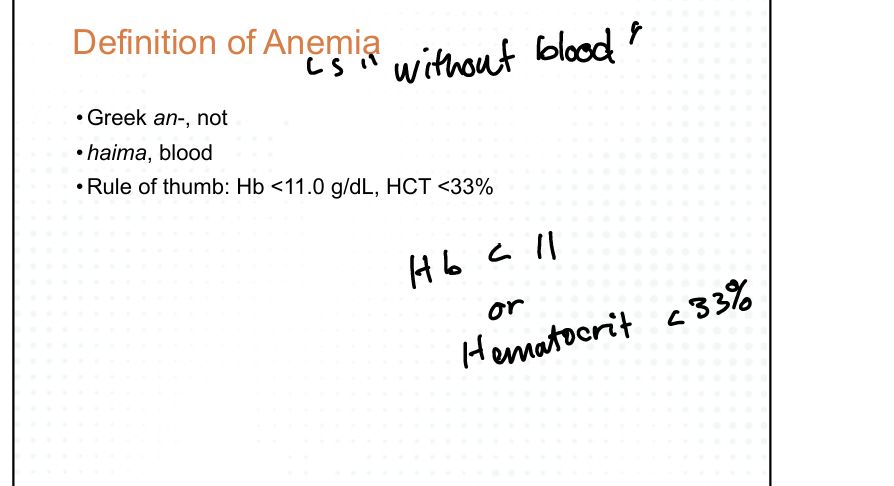
Definition of childhood anemia
Hb <11 g/dL or Hct <33% in children
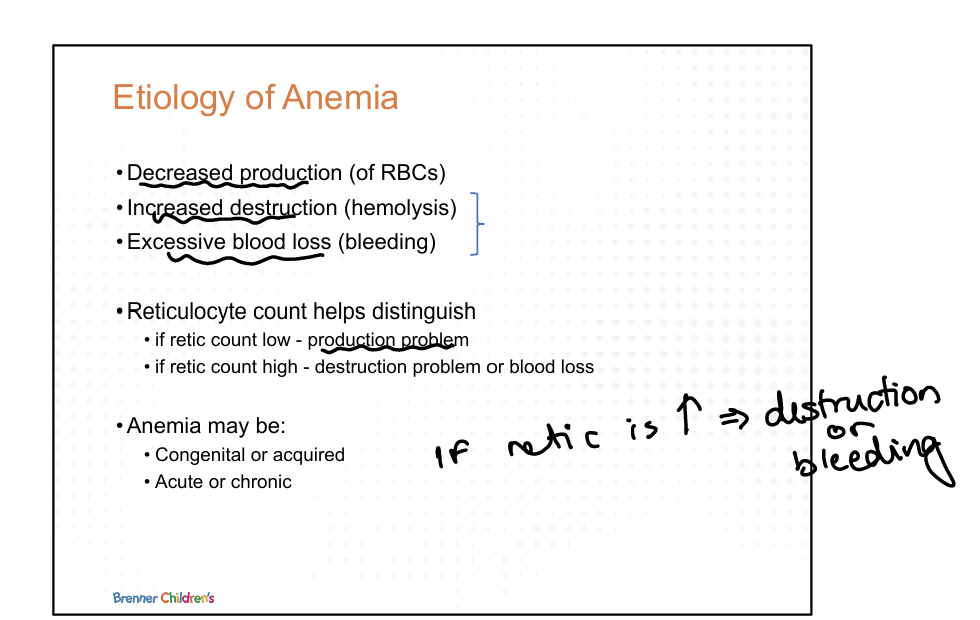
Etiology of anemia
Three mechanisms: decreased RBC production, increased RBC destruction (hemolysis), or blood loss
Risk factors for iron deficiency anemia
Excessive cow’s milk intake, picky eating, poor diet, prematurity, menorrhagia, GI bleeding, exclusive breastfeeding beyond 4–6 months without supplementation.
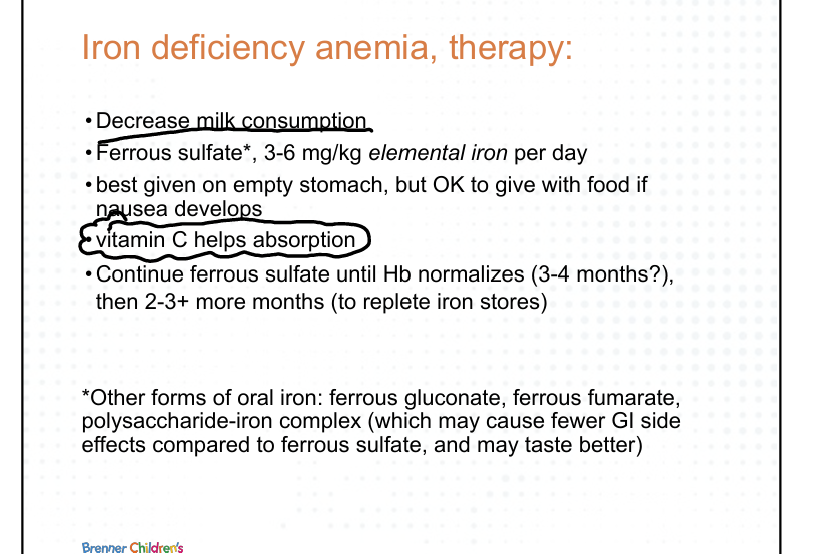
Treatment of iron deficiency anemia
Ferrous sulfate 3–6 mg/kg/day; vitamin C for absorption
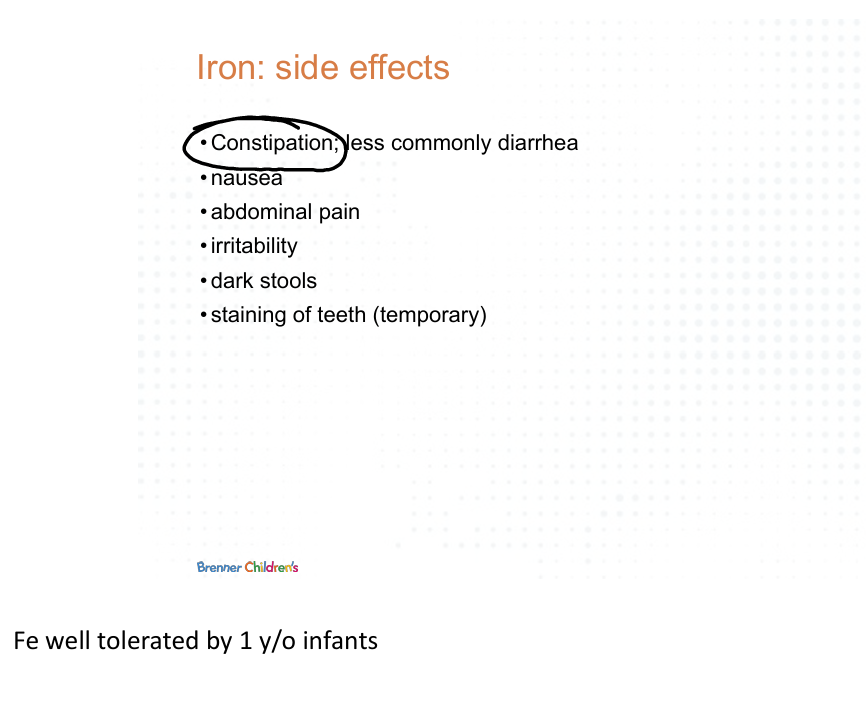
Side effects of iron therapy
Constipation, nausea, abdominal pain, irritability, dark stools, temporary tooth staining.
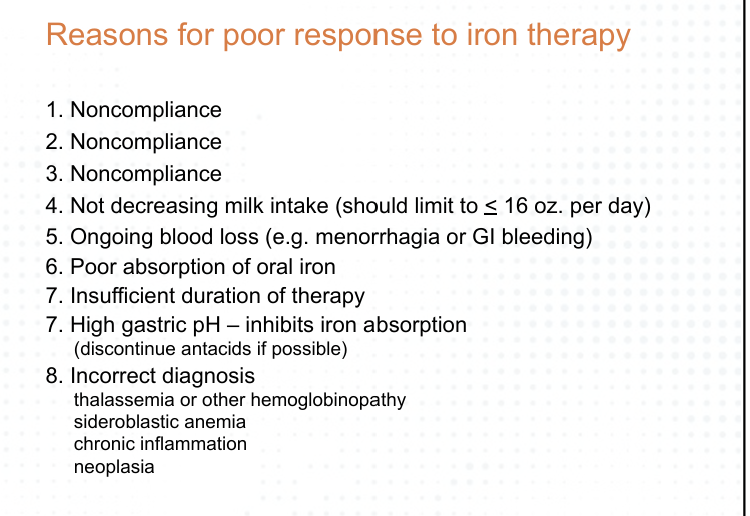
Reasons for poor response to iron therapy
Noncompliance, excessive milk intake, ongoing blood loss, poor absorption, short duration, high gastric pH, incorrect diagnosis (thalassemia, inflammation, malignancy).
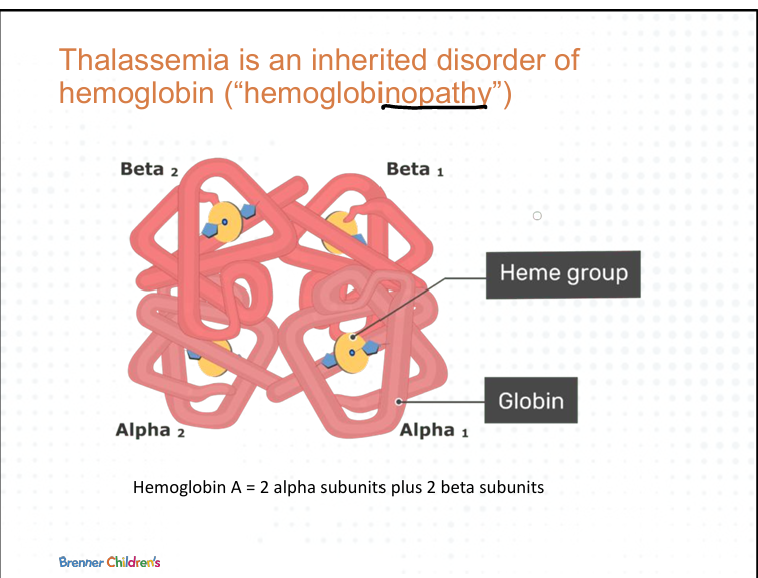
Thalassemia trait
Inherited hemoglobinopathy causing microcytosis with normal/high RBC count and normal RDW
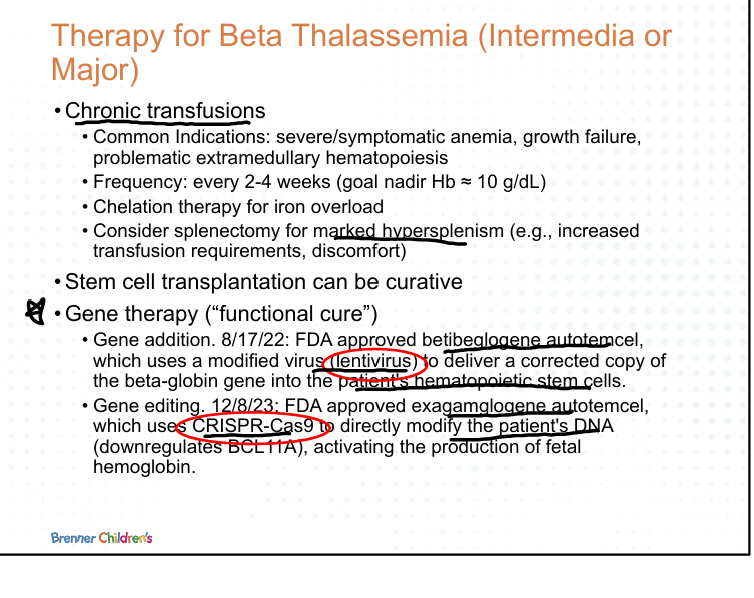
Therapy for beta thalassemia major
Chronic transfusions, iron chelation, splenectomy for hypersplenism, curative stem cell transplant, gene therapy (lentiviral addition or CRISPR editing).
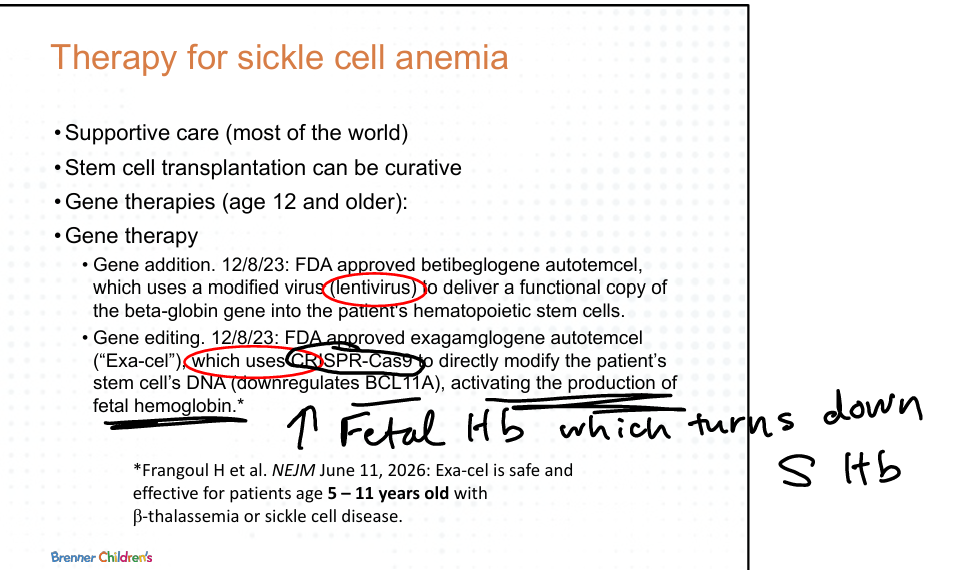
Therapy for sickle cell anemia
Supportive care, transfusions, curative stem cell transplant, gene therapy (BCL11A editing to increase fetal Hb).
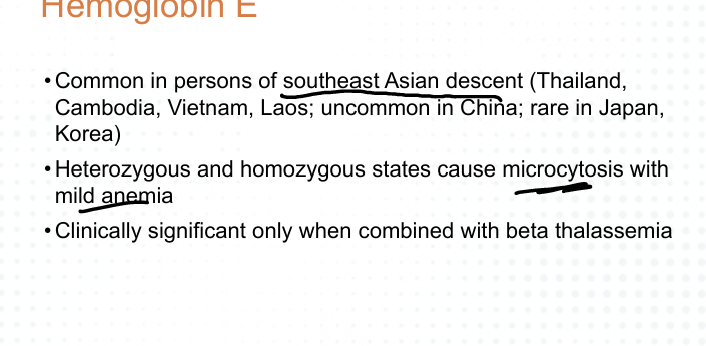
Hemoglobin E often seen
Common in Southeast Asia
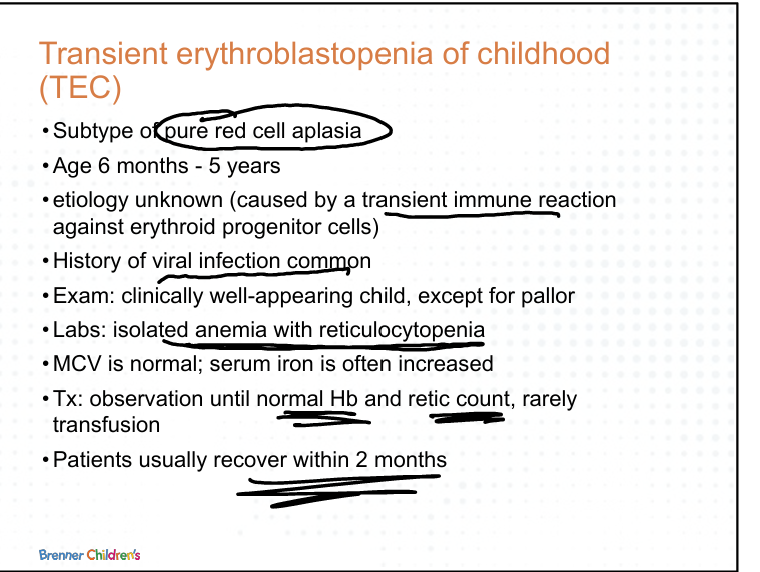
Transient erythroblastopenia of childhood (TEC)
Self-limited pure red cell aplasia
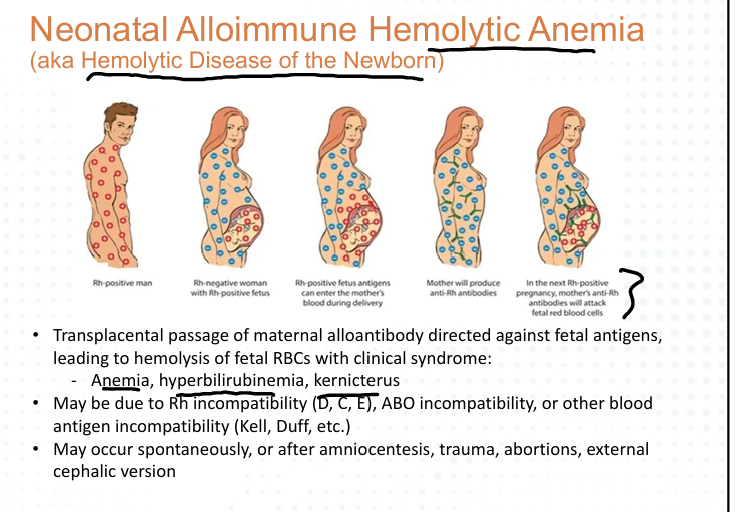
Neonatal alloimmune hemolytic anemia (aka Hemolytic Disease of the Newborn)
Maternal antibodies attack fetal RBCs (Rh, ABO, Kell)
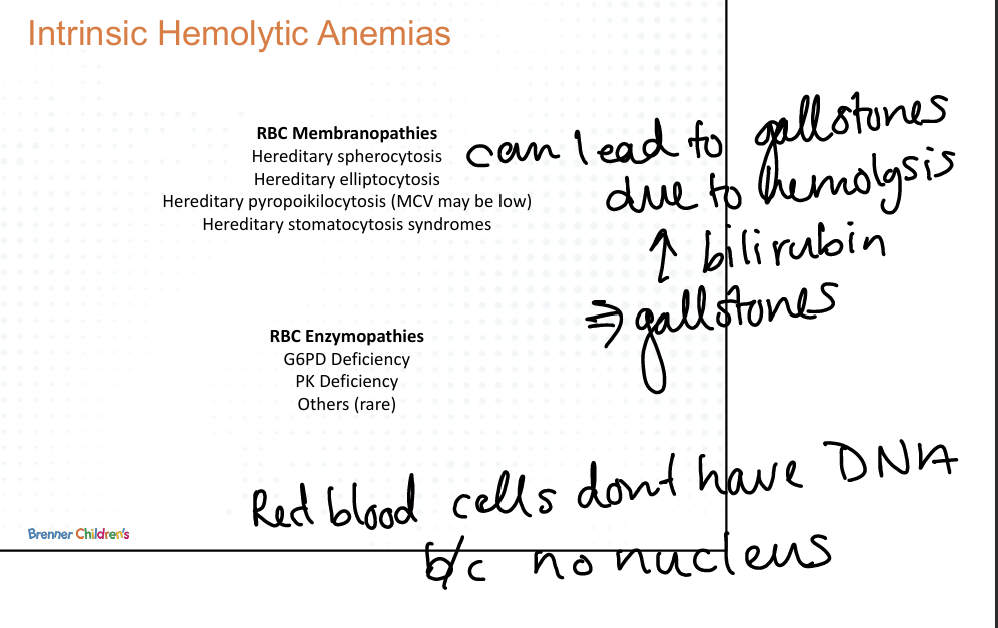
Intrinsic hemolytic anemias
Membrane defects (spherocytosis, elliptocytosis), enzyme defects (G6PD, PK), unstable hemoglobins
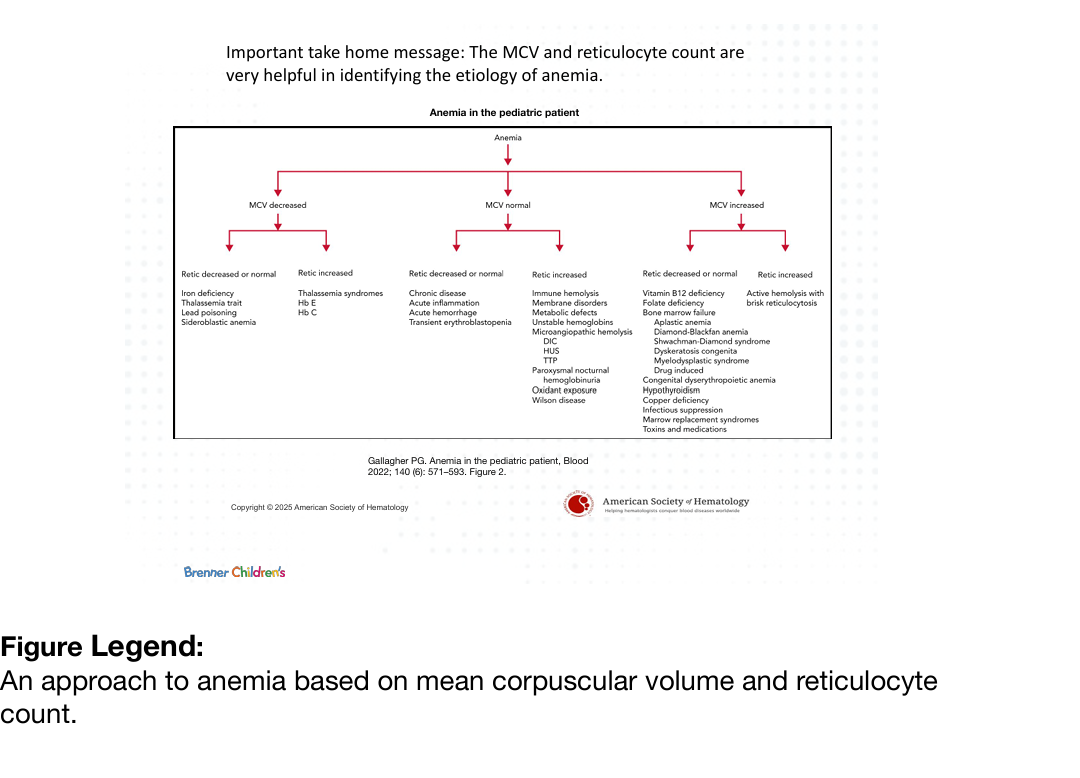
Key diagnostic approach
Use MCV + reticulocyte count to categorize anemia and narrow differential.