Chapter 3 Anatomy
 Call Kai
 Learn
Learn Practice Test
 Spaced Repetition
 Match
Match Flashcards
 Knowt Play
1/176

There's no tags or description
Looks like no tags are added yet.
Name | Mastery | Learn | Test | Matching | Spaced | Call with Kai | Chat |
|---|
No analytics yet
Send a link to your students to track their progress
177 Terms
Tissues Definition
are groups of closely associated specialized cells that are similar in structure and perform related functions
Histology Definition
study of tissues
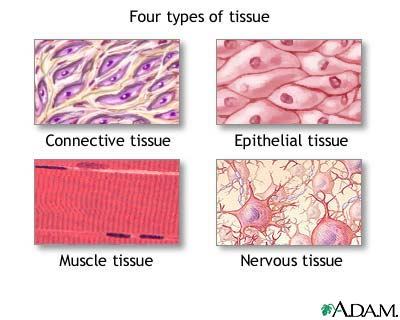
Four primary tissues
Epithelial Tissue
Connective Tissue
Muscle Tissue
Nervous Tissue
Acronym CMEN 🤨
Epithelium Definition
Epithelium is a sheet of cells that covers a body surface or lines a body cavity
Epithelium (singular) / Epithelia (plural)
What are the five major functions of epithelial tissue?
Protection
Absorption
sensory reception
secretion
ion transport
What does “cellularity” mean in epithelial tissue?
Epithelia are densely packed with very little extracellular material
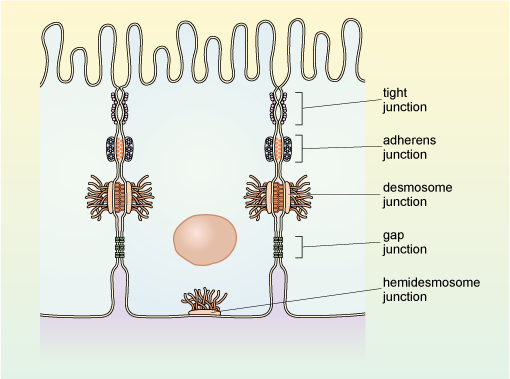
What specialized contacts are found between epithelial cells?
Cell junctions
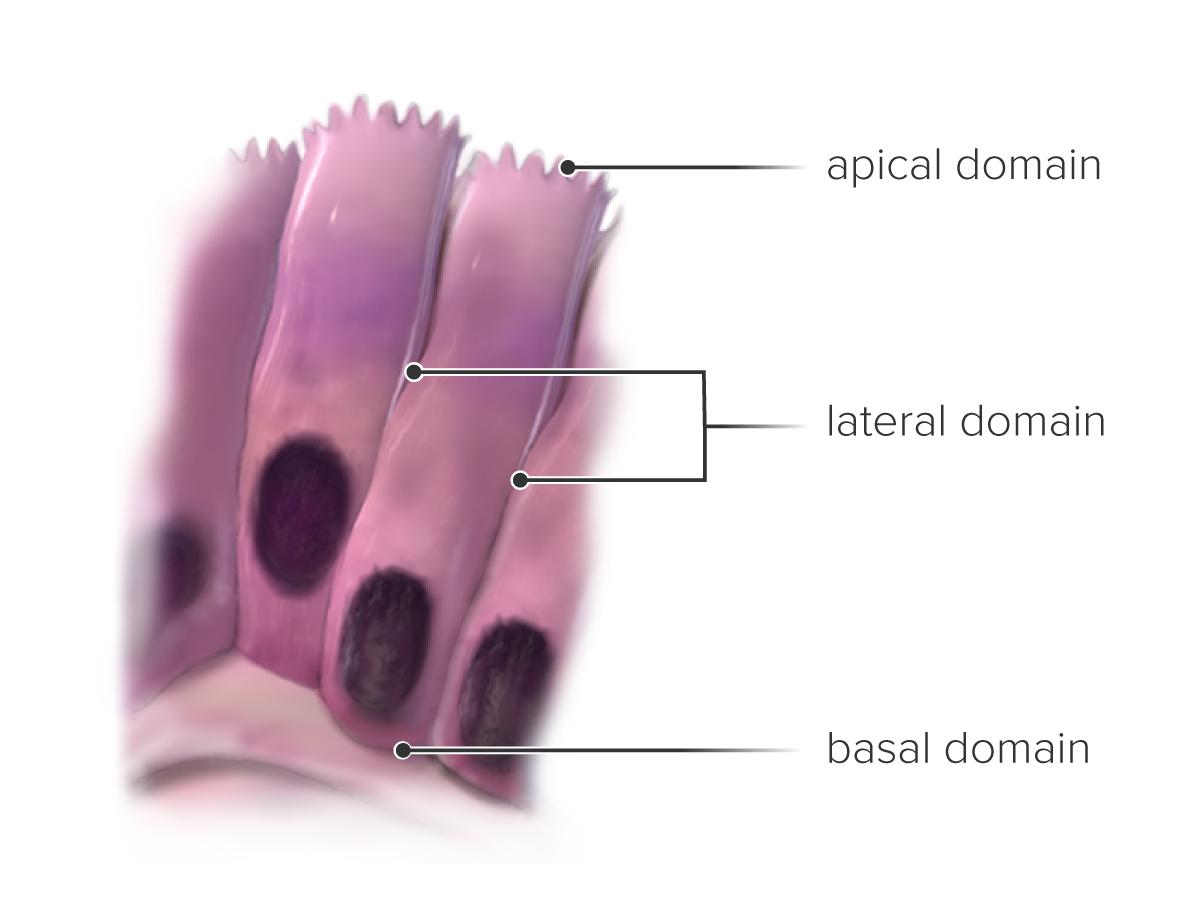
What does “polarity” mean in epithelial tissue?
The apical and basal regions differ in structure and function
What supports epithelial tissue?
Underlying connective tissue.
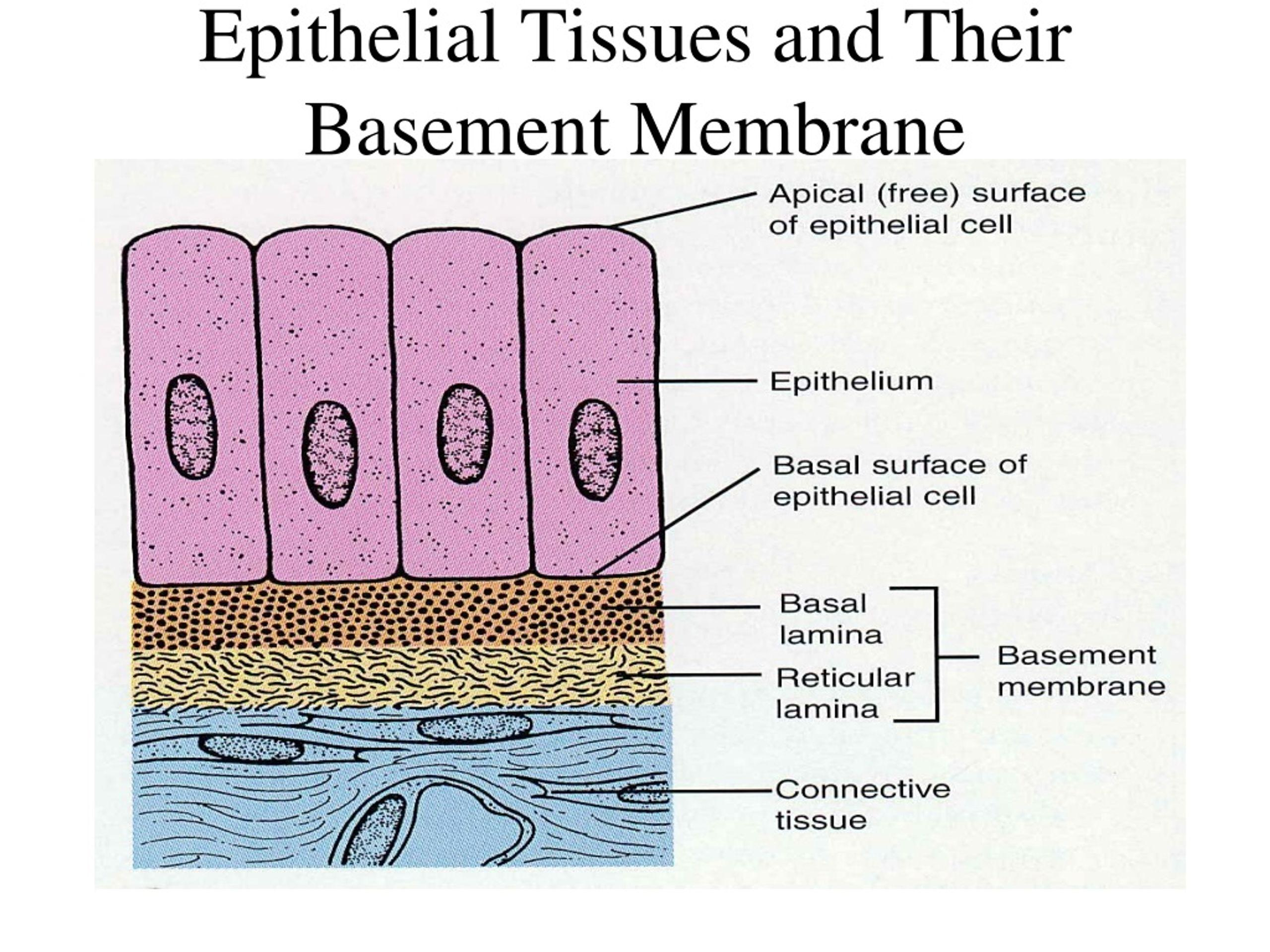
Is epithelial tissue vascular?
No. it is Avascular but innervated
what is Avascularity?
Having no blood vessels.
Epithelial cells get oxygen and nutrients by diffusion (high concentration —> low concentration) from the Connective tissue underneath.
What does innervated mean?
having nerve endings
This is so epithelial tissue can detect sensations such as touch, pain, pressure, or temperature.
Why can epithelial tissue regenerate quickly?
It has a high mitotic rates and the presence of mesenchymal (stem) cells.
What does high mitotic rate mean?
Cells divide and replace themselves quickly
What are the three epithelial surface regions?
Apical, lateral, and basal
(top → sides → bottom)

What are microvilli?
Apical projections that increase epithelial surface area.
may anchor sheets of mucus

What are stereocilia?
Very long apical microvilli that cannot move.
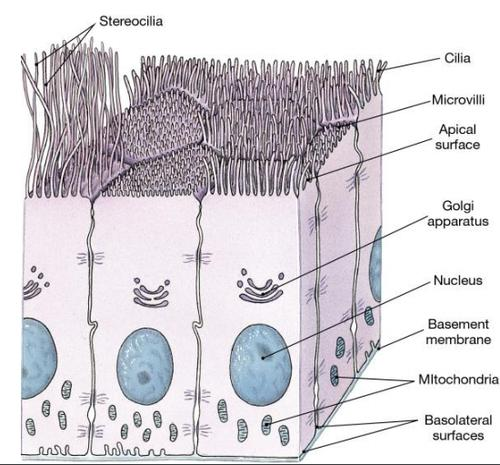
What is the function of cilia?
Move fluid, usually mucus
They are apical, tiny, hair-like structures that stick out from the surface of many cells in the body

What structures are found on the lateral surface of epithelial cells?
Cell junctions

What are the three major epithelial cell junctions?
Desmosomes
tight junctions
gap junctions
What are Desmosomes?
Junctions that hold neighboring cells tightly together, giving tissue strength and preventing cells from pulling apart

What are tight junctions?
Junctions that seal neighboring cells together, preventing substances from passing between them.

what are gap junctions?
small channels between neighboring cells that allow ions and small molecules to pass from one cell to another

What is a cell junction?
A lateral surface feature of neighboring cell connections that help them attach, seal, or communicate.

What is the basal lamina?
A protein sheet on the Basal surface that acts as a filter and scaffold for regenerating epithelial cells

What forms the basement membrane?
A Basal feature Formed by the Basal lamina plus some underlying reticular fibers.
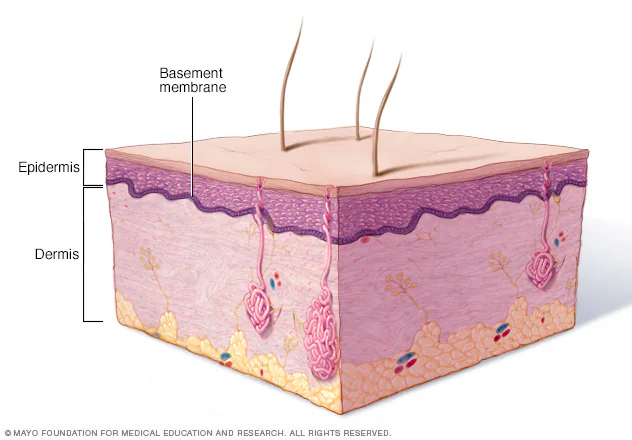
What features make up the apical surface?
Microvilli
cilia
stereocilia.
What features make up the lateral surface?
Desmosomes
tight junctions
gap junctions.
What features make up the basal surface?
Basement membrane
hemidesmosomes.
What two features are used to classify epithelial tissue?
number of cells layers
cell shape
What does “simple” epithelium mean?
One layer of cells

What does “stratified” epithelium mean?
Two or more superficial/apical layers of cells
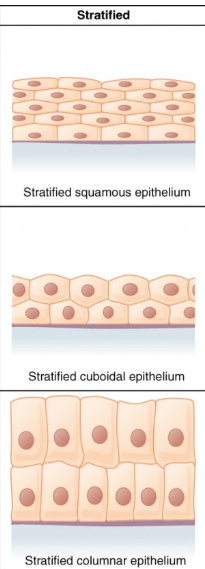
What is “pseudostratified” epithelium
A simple epithelium containing both short and tall cells, making it appear layered.
can include cilia or no cilia
only appears with (pseudostratified columnar)

What are squamous epithelial cells shaped like?
Flat and thin
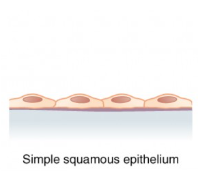
What are cuboidal epithelial cells shaped like?
Cube-shaped with spherical nuclei

What are columnar epithelial cells shaped like?
Tall cells with oval/elongated nuclei, usually located basally (towards basal surface “basement membrane” and not apical surface).

What makes transitional epithelium unique?
they are stratified epithelium that stretches and changes shape due to the expansion of their cell’s lumens (open spaces)
can be found in places such as the Urinary bladder and ureters since they consistently change shape.

Where is simple squamous epithelium found?
Forms the endothelium of blood vessels and mesothelium of the ventral body cavity.
What is endothelium?
Simple squamous epithelium that lines the inside of blood vessels and the heart.

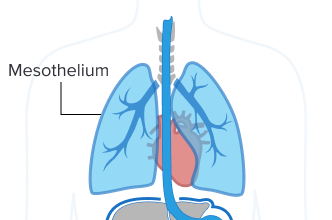
What is mesothelium?
Simple squamous epithelium that lines the ventral body cavities and covers the organs within them.
What is the main advantage of simple squamous epithelium?
Its thin cells allow rapid diffusion (passive).
This means substances (nutrients and oxygen) don’t have far to travel, so they can move across the tissue very quickly.
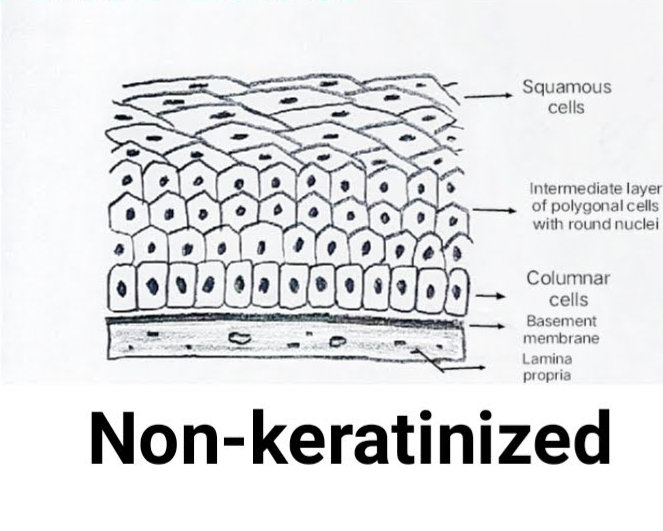
Where is non-keratinized stratified squamous epithelium found?
Esophagus, mouth, and vagina.
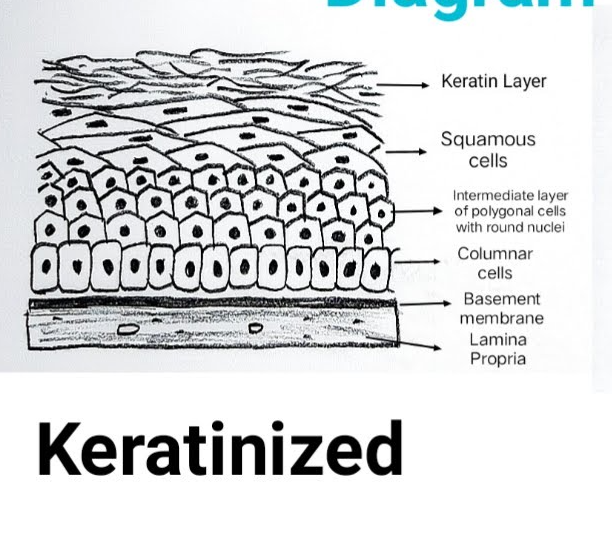
Where is keratinized stratified squamous epithelium found?
Epidermis (top layer) of the skin.
What is the main function of stratified squamous epithelium?
Protects underlying tissue from abrasions.

What is keratinization?
The process where epithelial cells fill with keratin, die, and form a tough, protective outer layer.

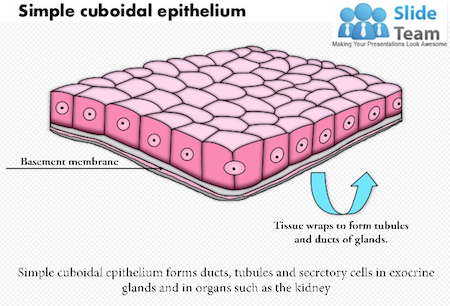
Where is simple cuboidal epithelium found?
Kidney tubules and ducts/secretory portions of small glands.
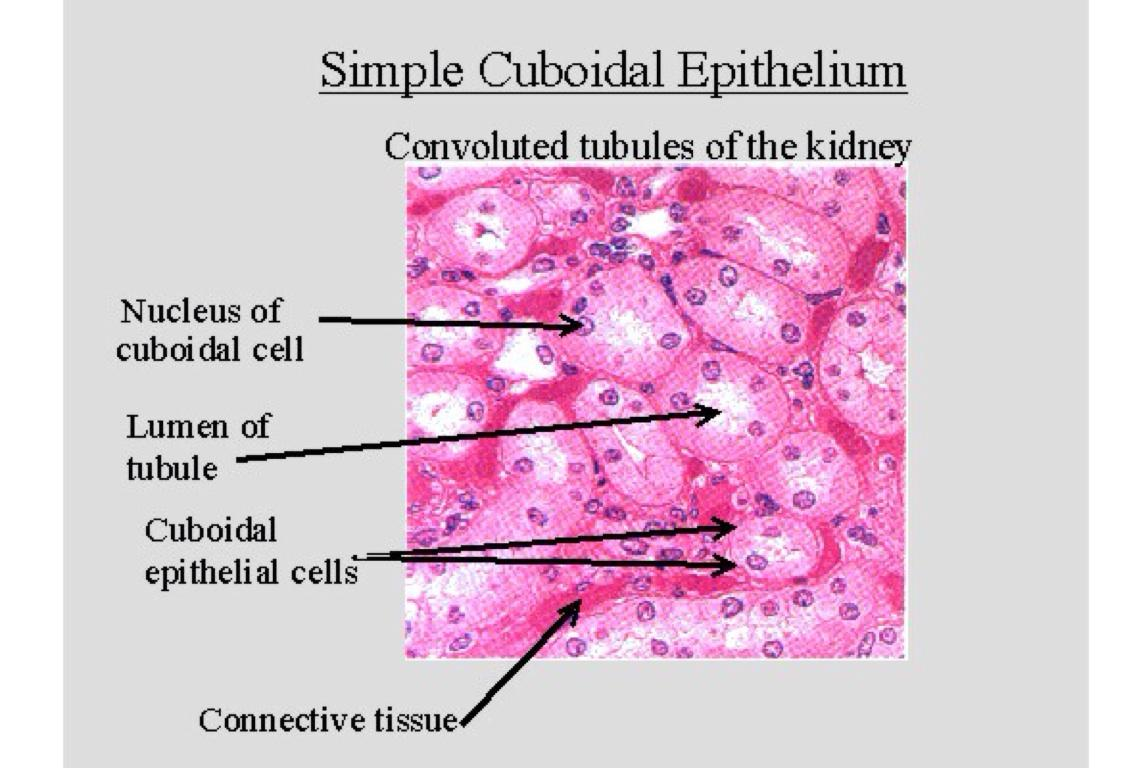
What are the main functions of simple cuboidal epithelium?
Secretion and absorption.
Where is stratified cuboidal epithelium found?
Large ducts of sweat, mammary, and salivary glands.
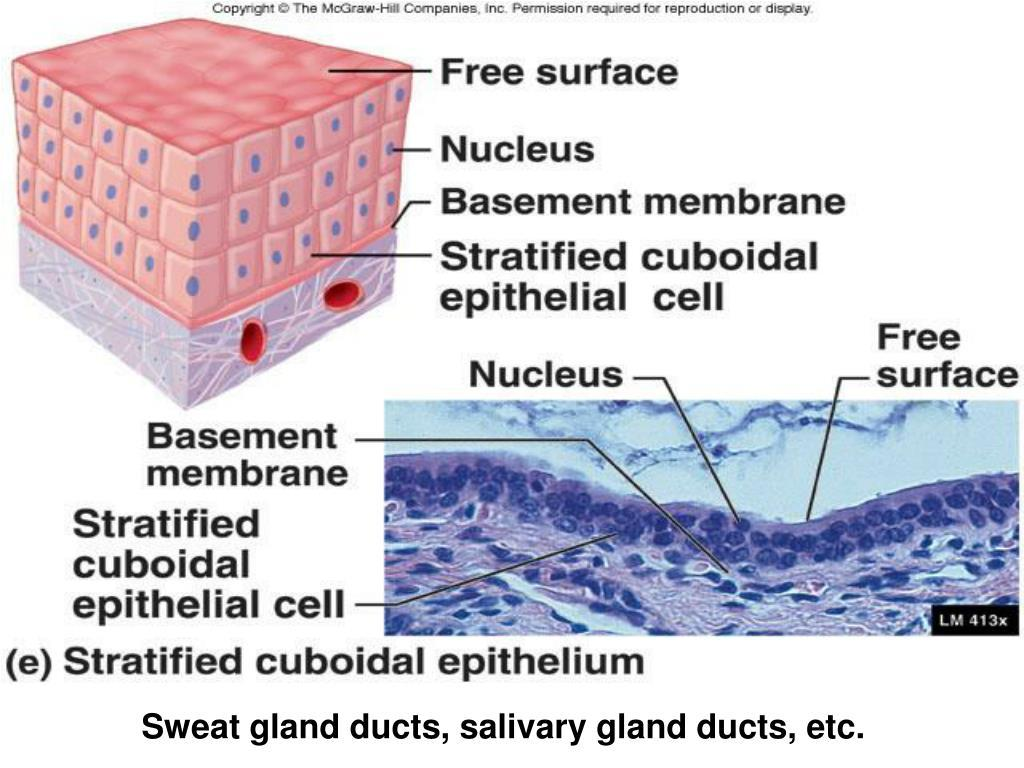
What is the main function of stratified cuboidal epithelium?
Protection
Where is non-ciliated simple columnar epithelium found?
Stomach, intestines, gallbladder, and some gland ducts.

Where is ciliated simple columnar epithelium found?
Small bronchi, uterine tubes, and some regions of the uterus.

Why do some Columnar epithelium have cilia and others not?
Ciliated columnar epithelium needs to move substances along its surface, while non-ciliated columnar epithelium is mainly specialized for absorption and secretion. Non-ciliated usually feature microvilli.

What are the functions of simple columnar epithelium?
Absorption, secretion, and ion transport.
Is stratified columnar epithelium common?
No, it is rare.
Where is stratified columnar epithelium found?
Parts of the male urethra and large ducts of some glands.
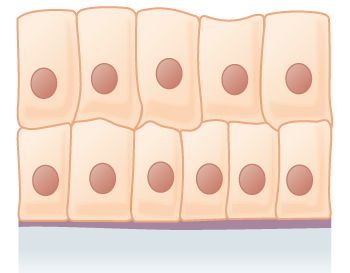
What does stratified columnar epithelium do?
Protection and secretion.
Where is non-ciliated pseudostratified columnar epithelium found?
Sperm-carrying ducts and ducts of large glands.
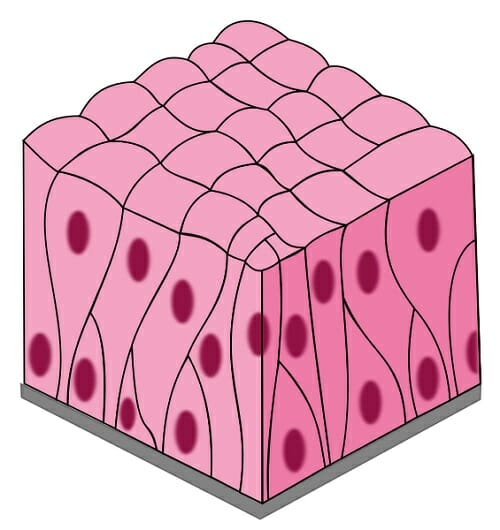
Where is ciliated pseudostratified columnar epithelium found?
Trachea and most of the upper respiratory tract.
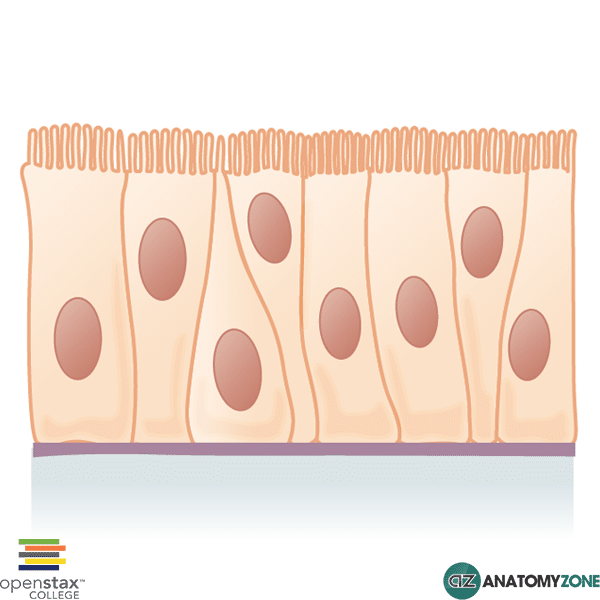
What are the functions of ciliated pseudostratified columnar epithelium?
Secretes mucus and moves it using cilia.
Where is transitional epithelium found?
Ureters, bladder, and part of the urethra.

How can you identify transitional epithelium?
It has multiple layers of cells with large, rounded/dome-shaped cells on the apical surface that flatten when the tissue stretches.
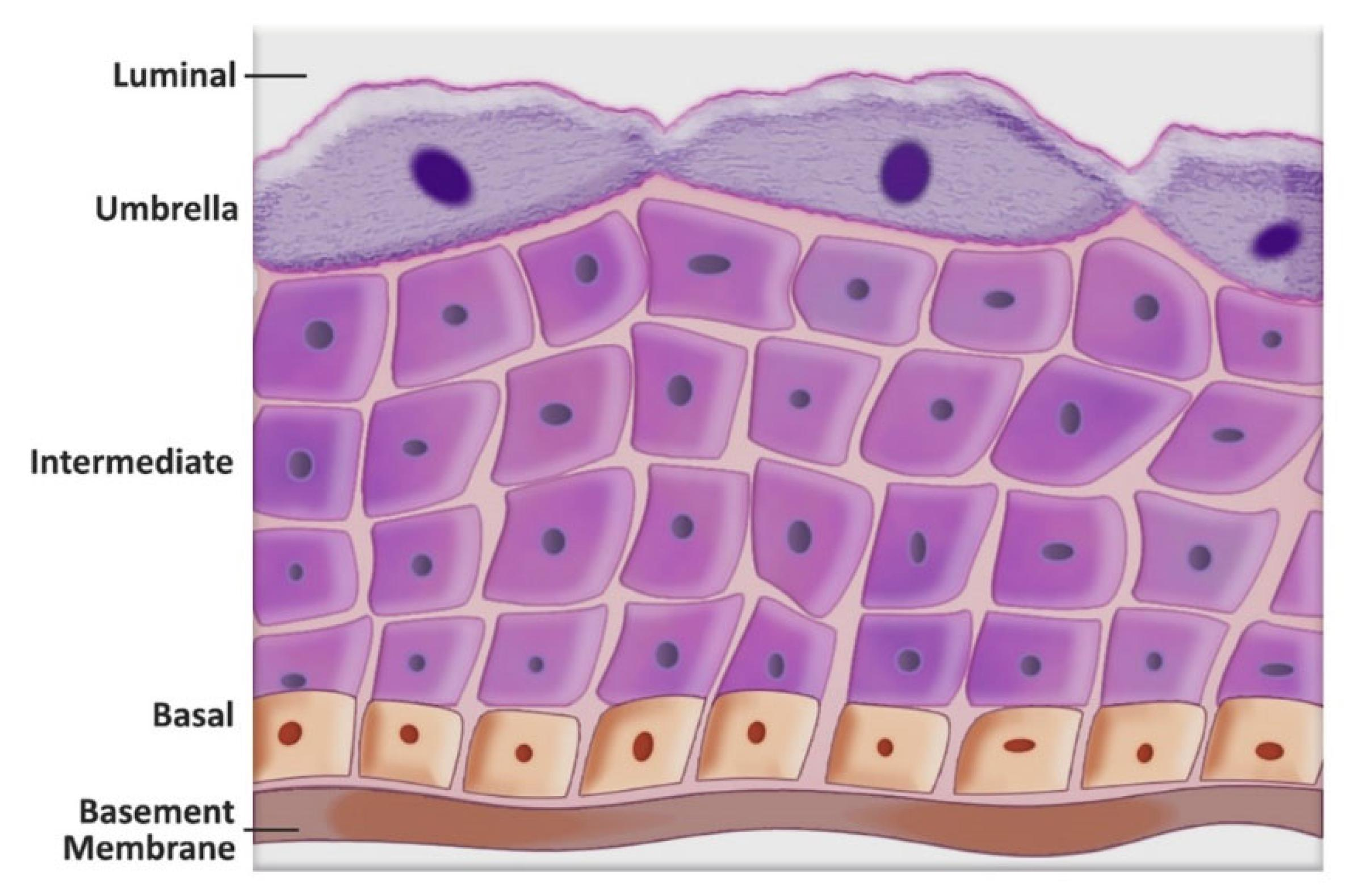
What is the main function of transitional epithelium?
Allows urinary organs to stretch/distend.
What is a gland?
Epithelial cells specialized to make and secrete a product.
What are the two major types of glands?
endocrine
exocrine
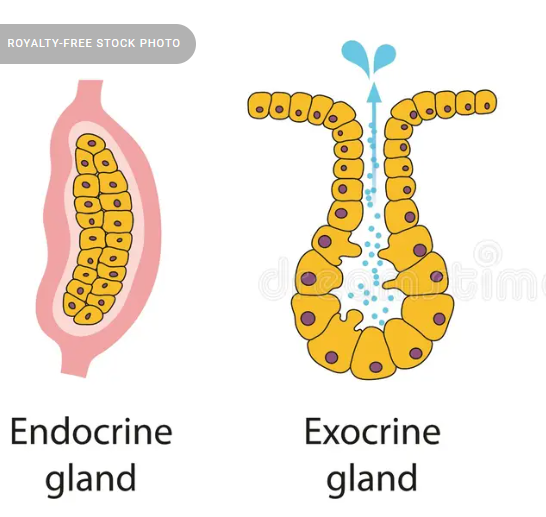
What are exocrine glands?
Glands that secrete products onto body surfaces (skin) or into body cavities through ducts.
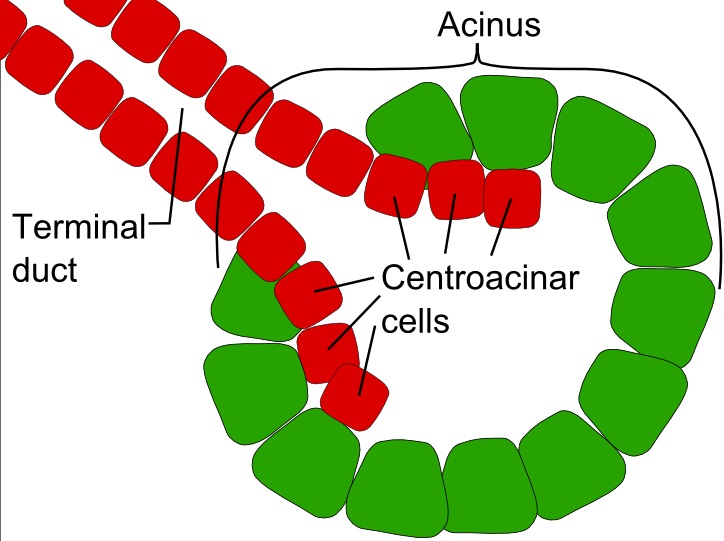
Do exocrine glands have ducts?
Yes, they have ducts.
What do serous glands produce?
A watery solution that usually contains enzymes.

What do mucous glands produce?
Thick, sticky mucus.
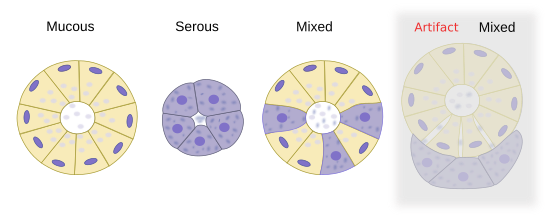
What do mixed glands produce?
Both serous and mucous secretions.
(enzyme watery solution AND mucus)

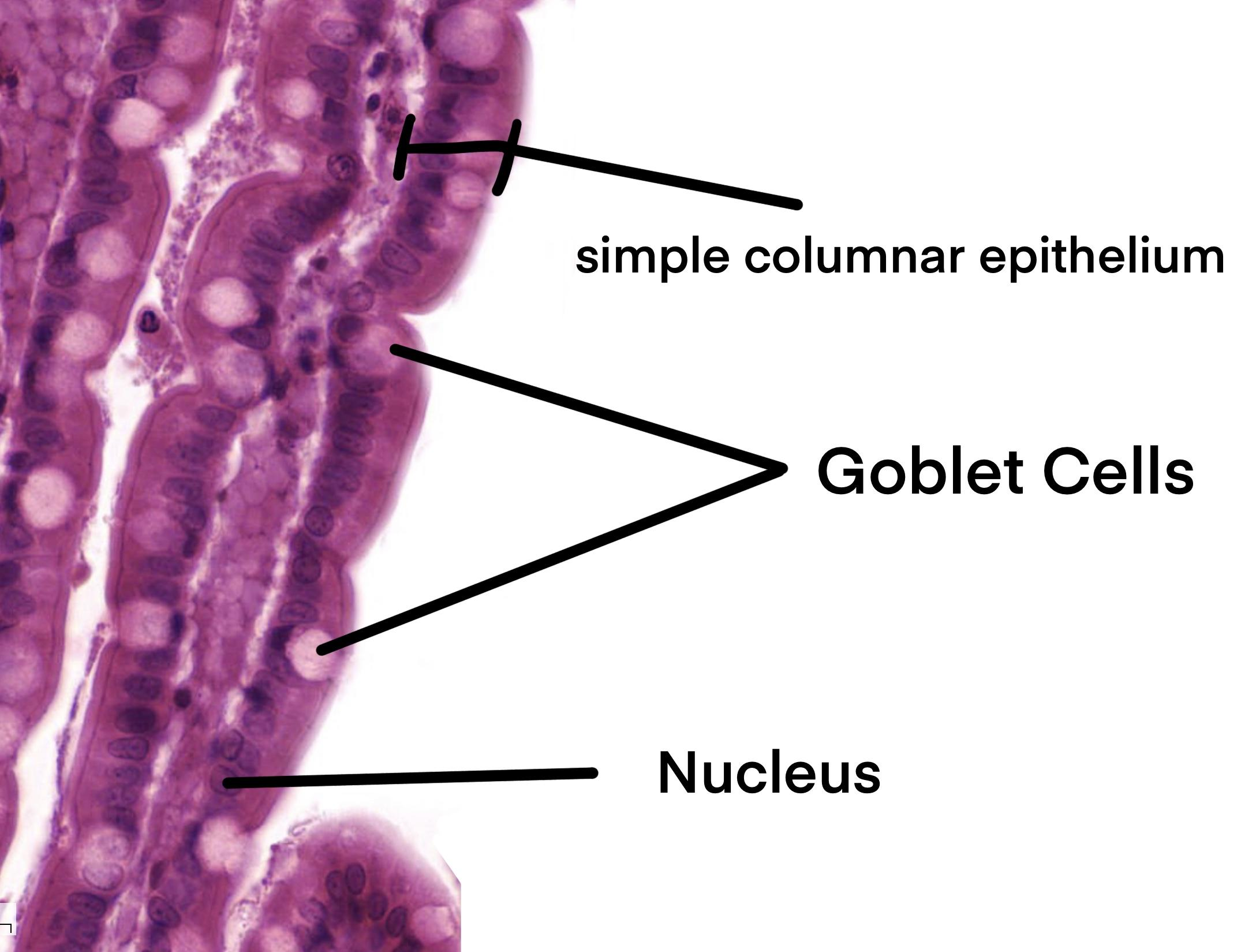
What is a unicellular gland?
A single secretory cell that occurs in epithelia containing scattered gland cells, such as a goblet cell.
What are multicellular glands?
Groups of gland cells that produce exocrine or endocrine secretions.

What happens during apocrine secretion?
Part of the secreting cell is lost with the secretion.
(e.g. lactiferous glands in the breast)
APOcrine → A Portion is lost
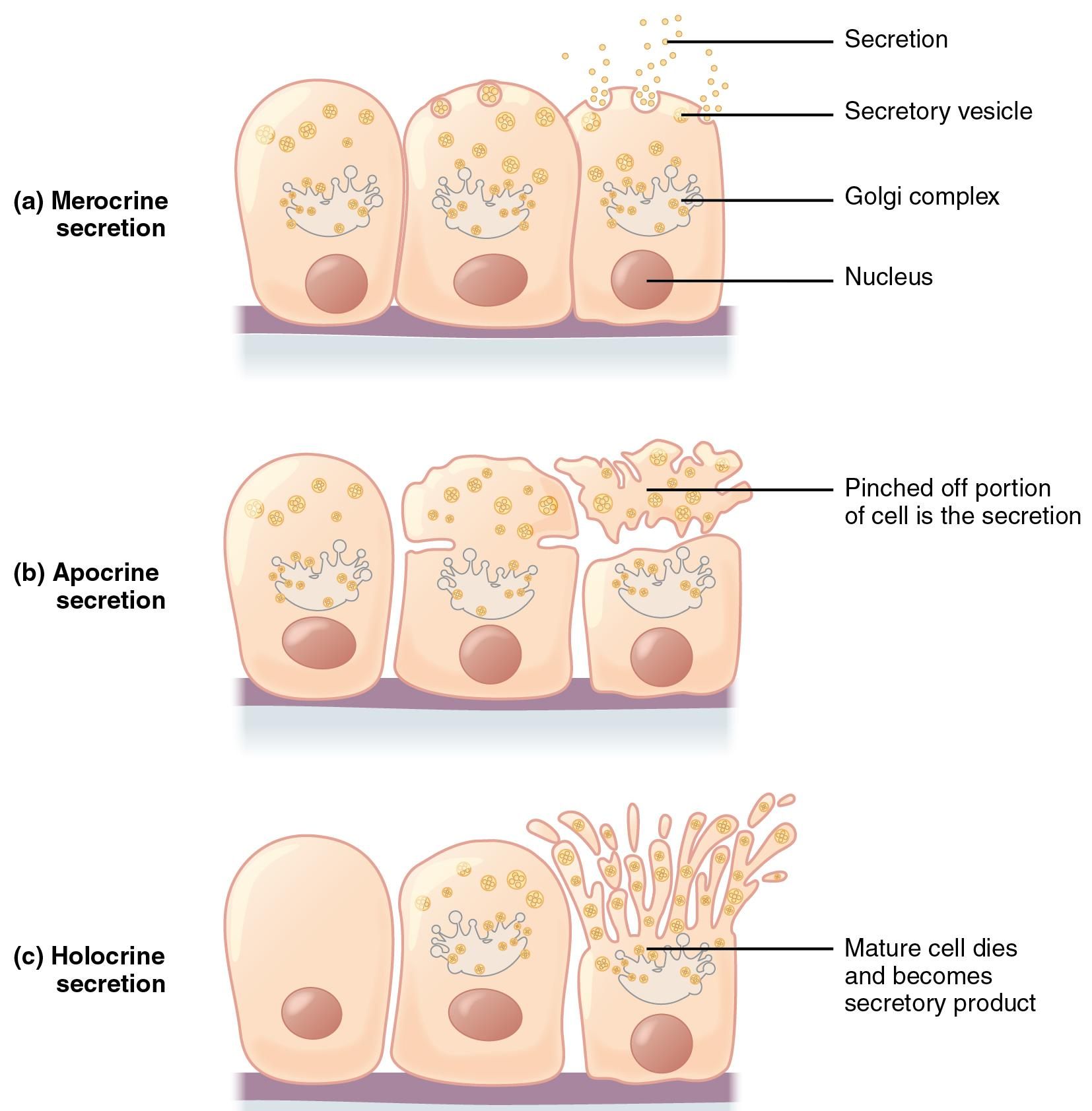
What happens during holocrine secretion?
The entire cell disintegrates to release its secretion.
(e.g. sebaceous glands)
HOLOcrine → Whole cell is lost

What happens during merocrine (eccrine) secretion?
Products are released by exocytosis.
(e.g. mucus and serous glands)
MEROcrine → releases by exocytosis

What are endocrine glands?
Ductless glands that secrete products, usually hormones, directly into the bloodstream.
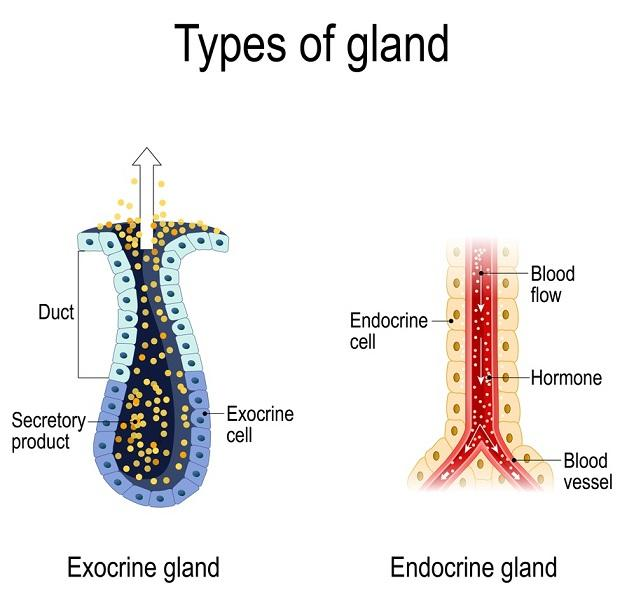
Do endocrine glands have ducts?
No — they are ductless.
What is the most diverse and abundant tissue type?
Connective tissue.
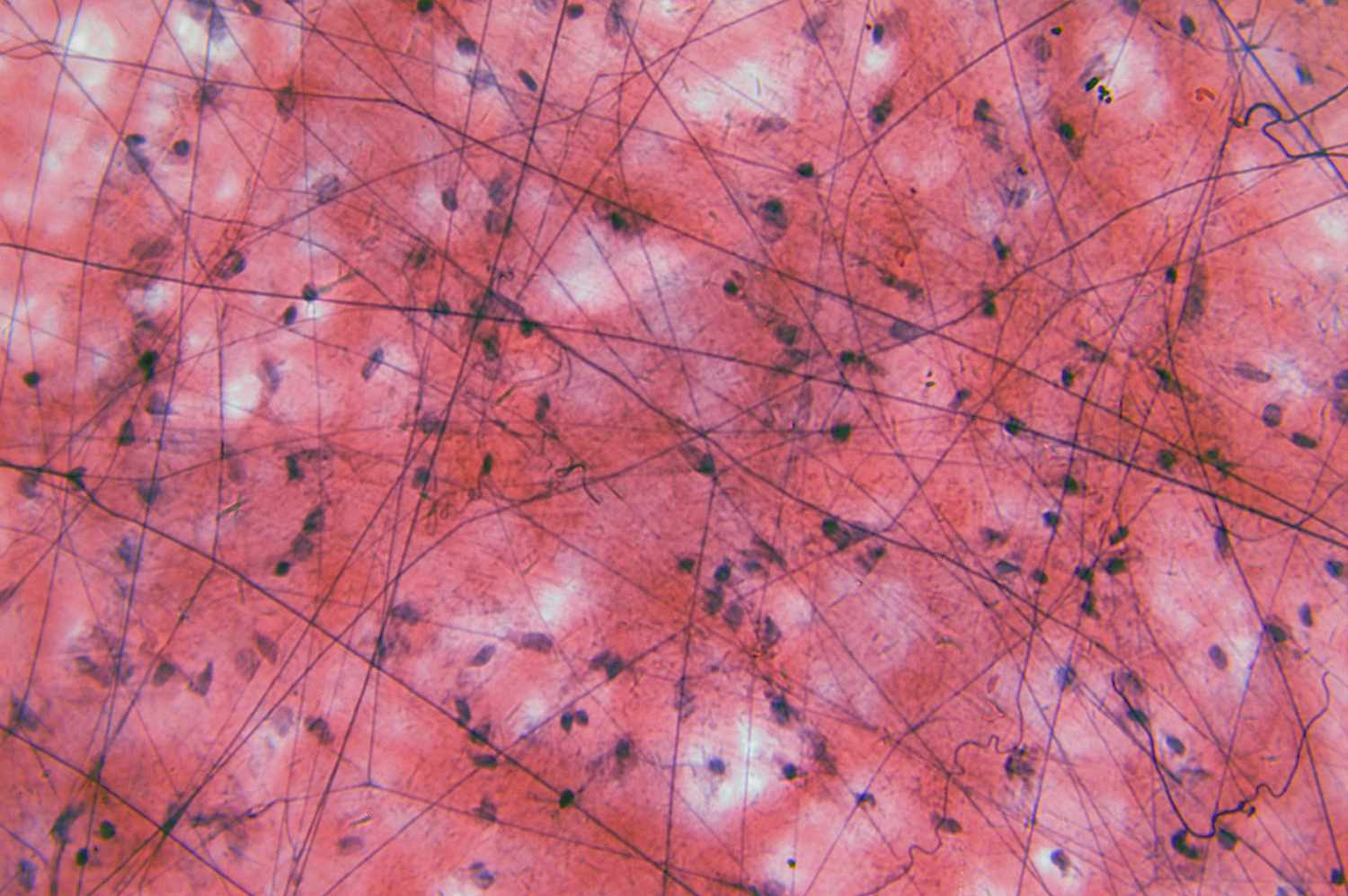
What are the four classes of connective tissue?
Connective tissue proper
cartilage
bone
blood.
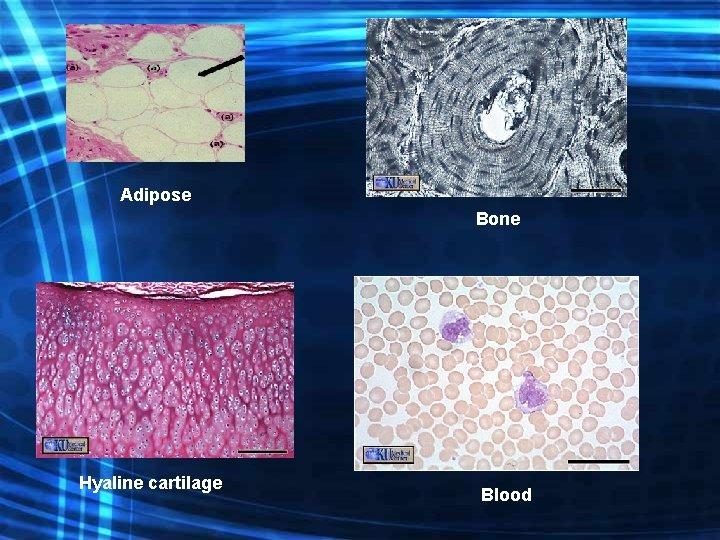
What is the common embryonic origin of connective tissue?
Mesenchyme.

What separates cells in connective tissue?
A large amount of extracellular matrix.
(epithelial tissue is Packed tight, while Connective tissue is spaced more loosely)

What are the components of extracellular matrix?
Ground substance + fibers + tissue fluid.
What is the most abundant cell in connective tissue proper?
Fibroblast.

What do fibroblasts produce?
Fibers and ground substance of the extracellular matrix.
What are the three types of connective tissue fibers?
Collagen
reticular
elastic fibers.
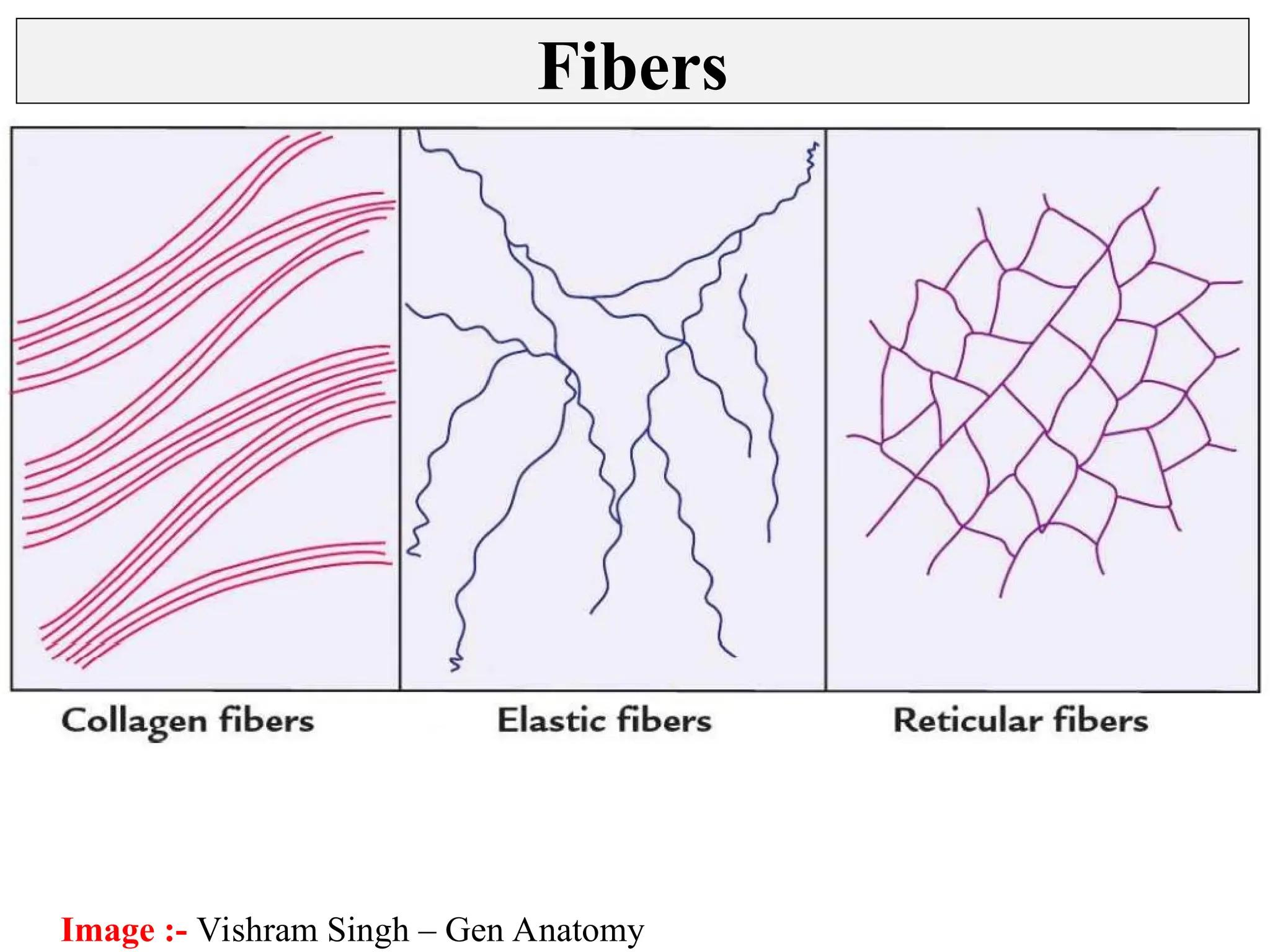
What is the function of collagen fibers?
Resist tension.

What is the function of reticular fibers?
Provide structural support.

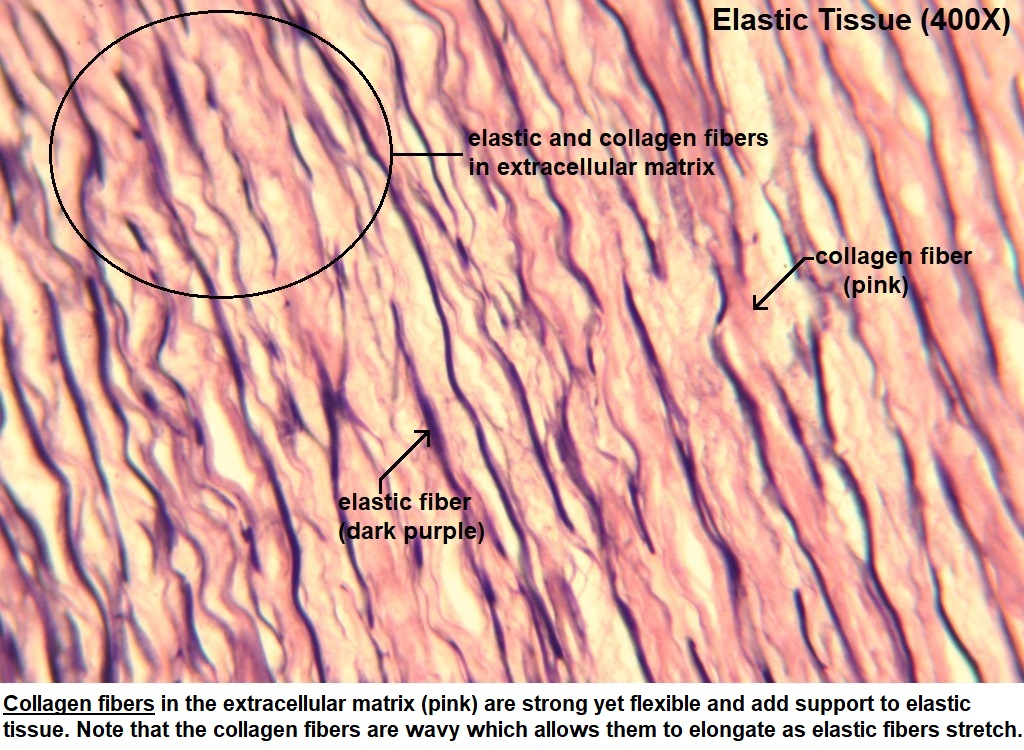
What is the function of elastic fibers?
Allow stretched tissues to recoil.
What are the three types of loose connective tissue proper?
Areolar
adipose
reticular.
Areolar → loose, messy-looking fibers with lots of open space
Adipose → large, round fat cells that look like bubbles
Reticular → branching net-like network of fibers

Where is areolar connective tissue found?
Under almost all epithelia and surrounding capillaries.
What fibers are present in areolar tissue?
Collagen, reticular, and elastic fibers.
What are the major functions of areolar connective tissue?
Support/binding, holding tissue fluid, fighting infection, and storing nutrients.

What is adipose tissue primarily composed of?
Adipose (fat) cells.
What is a major function of adipose tissue?
Nutrient/energy storage.

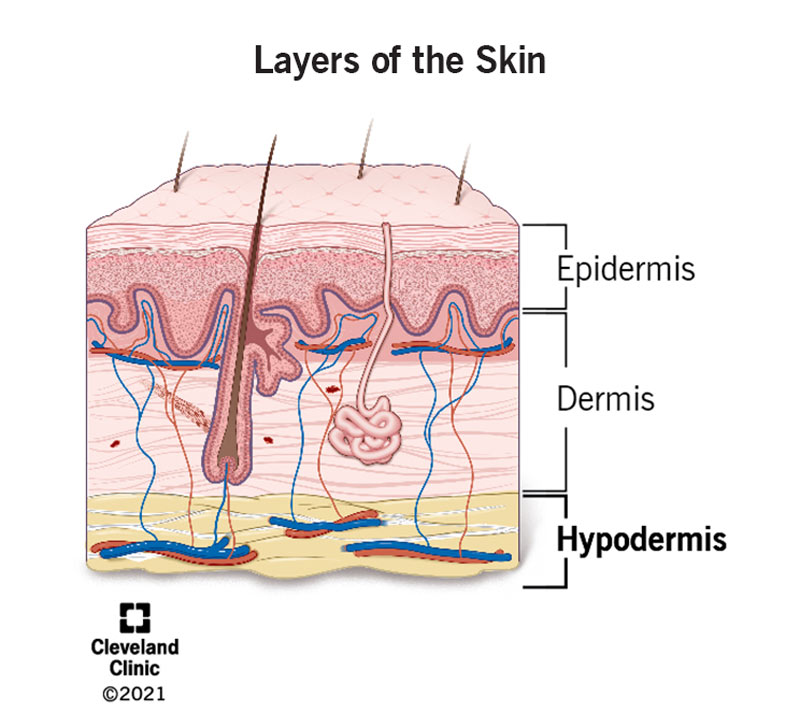
Where is white fat abundant?
Hypodermis.
What is the function of brown fat in babies?
Generates heat and helps warm the blood.
What fibers are found in reticular connective tissue?
Reticular fibers.
Where is reticular connective tissue found?
Bone marrow, lymph nodes, and spleen.

What does reticular connective tissue form?
Networks of caverns that hold free blood cells.
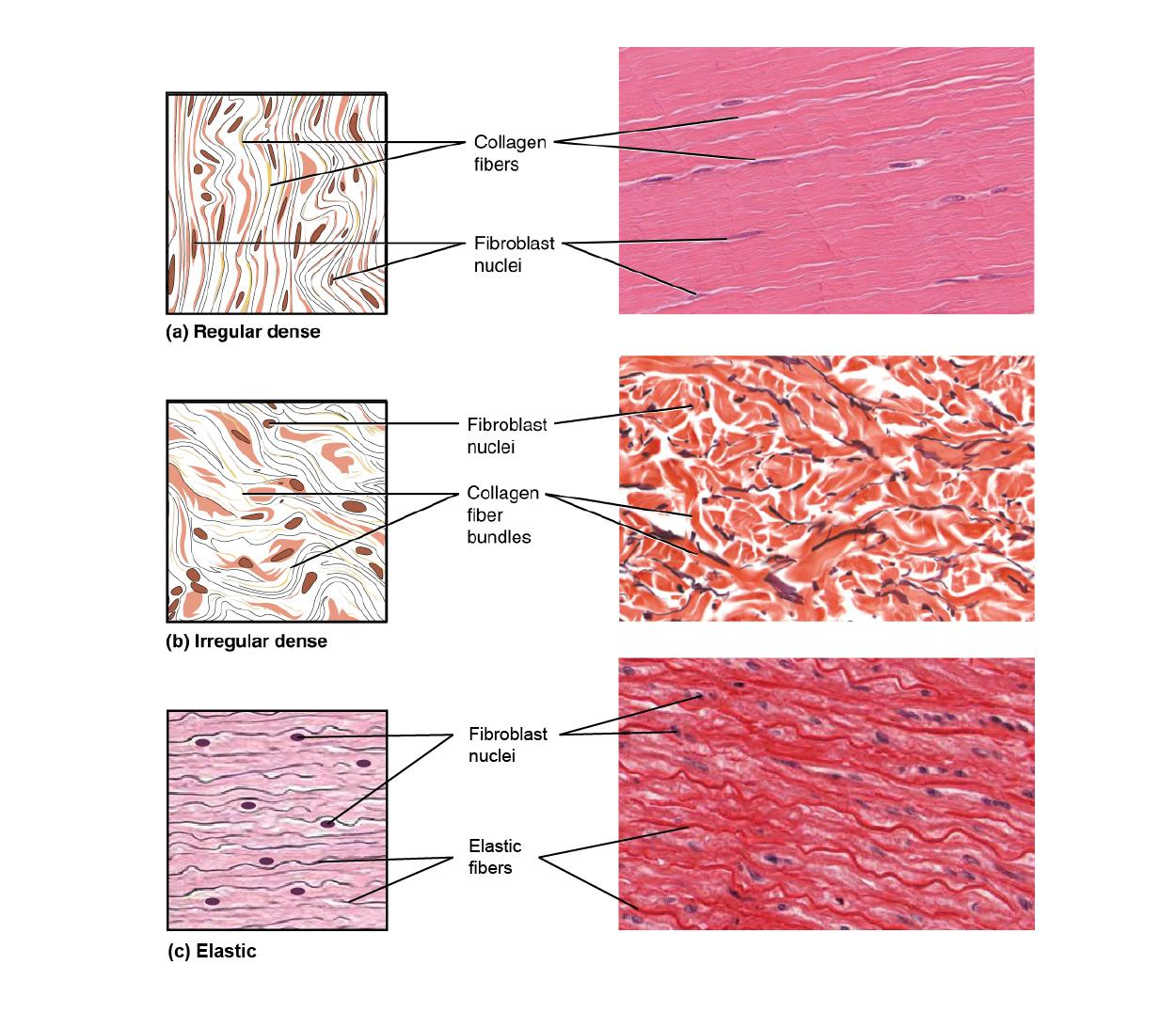
What is a major characteristic of dense connective tissue?
Very thick collagen fibers that resist strong pulling forces.

What are the three types of dense connective tissue?
Dense irregular
dense regular
elastic.
Dense regular → collagen fibers run parallel in the same direction
Dense irregular → collagen fibers run in many different directions
Elastic → lots of wavy elastic fibers