BioPsy: Finals L2.5 - Somatosensation
 Call Kai
 Learn
Learn Practice Test
 Spaced Repetition
 Match
Match Flashcards
 Knowt Play
1/27

Earn XP
Description and Tags
Name | Mastery | Learn | Test | Matching | Spaced | Call with Kai | Chat |
|---|
No analytics yet
Send a link to your students to track their progress
28 Terms
Somatosensation
Refers to the senses of the body. Includes various types of senses.
Somatic Senses
Position Sense
Vibration Sense
Touch
Pain
Temperature
Somatosensory Receptors
Are specialized sensory nerves that respond to various stimuli, including vision, hearing, taste, and smell, as well as general somatic senses which make up the somatosensory system, which is involved in the sense of touch, proprioception, pain, and temperature. [Taken from Google]

Mechanoreceptors
Responds to physical forces.
Responds to physical stimuli.
Position
Vibration
Touch
Deep within our skin, they are concerned with body position.
Helpful in detecting vibrations in our body.

Nociceptors
Somatosensory Receptors that creates ‘pain’.

Thermoreceptors
Somatosensory Receptors responsive to temperature.
Skin
Specifically where the somatosensory receptors are located.
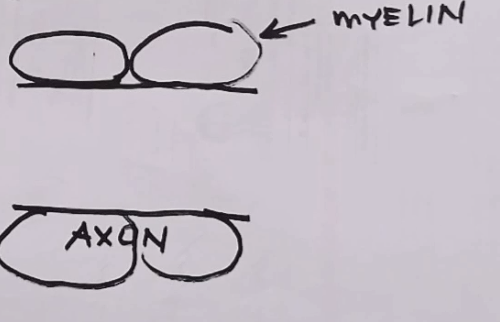
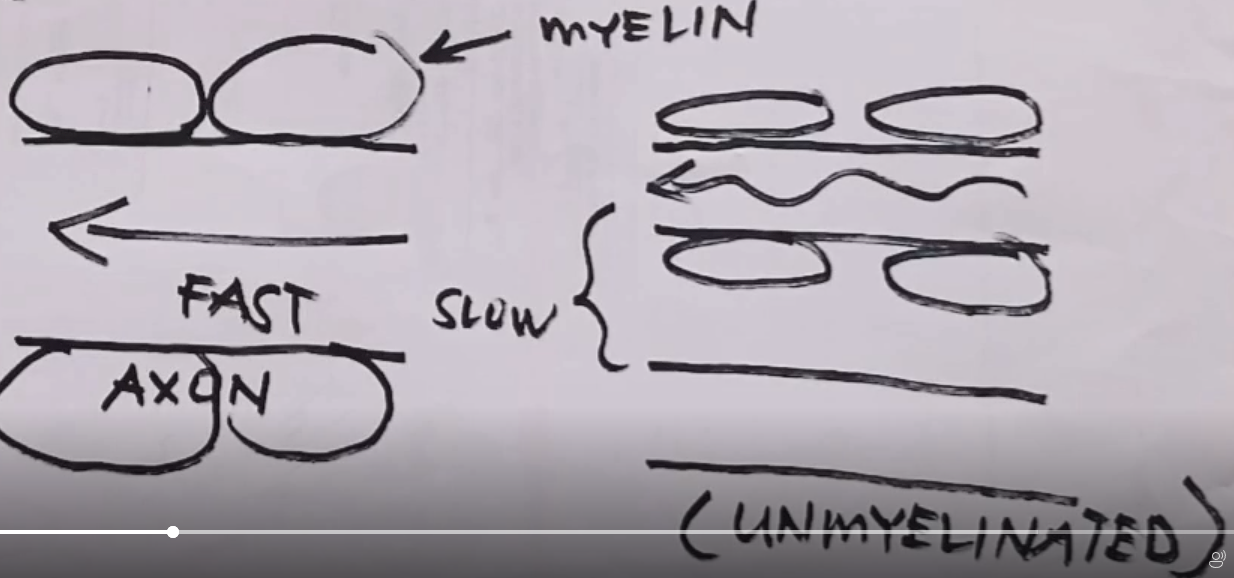
Large Diameter Axon and Thick Myelin Sheaths
The Somatosensory axons that are responsible for Position, Vibration, and some form of touch usually has:
______________
______________
Small Diameter Axon and Thin or No Myelin Sheaths (Unmyelinated Axons)
The Somatosensory axons that are responsible for Pain and Temperature, usually has:
______________
______________
The speed of action potential equal to Axons & Myelin Sheaths
The thicker the axons & myelin sheath, the faster the conduction of action potential.
The thinner they are, the slower the conduction of action potential.
Fine touch sense
Tends to travel to fast somatosensory neurons
Gross touch sense
Tends to travel in slow somatosensory neurons
Pain
Begins with specialized receptor, a bare nerve ending. Because of the axons carrying pain information have little to no myelin sheaths, they conduct impulses relatively slowly.
2 - 20 m/s
Sharp Pain
Conveyed by thicker axons.
Released a neurotransmitter called glutamate and also releases certain typed of neuropeptides.
Substance P
CGRP
Calicitonin Gene Relatide Peptide (CGRP)
One of the transmitters released during sharp pains.
Duller Pain
Conveyed by thinner axons.
Released a neurotransmitter called glutamate.
Paths of the pain sensitive cells
Pain sensitive cells in our spinal cord that relay information to several sites in the brain.
Ventral Posterior Nucleus
Somatosensory Cortex
Spinal Path: Pain
Crosses immediately from the receptors on one side of the body to attract ascending contralateral side of the spinal cord.
Spinal Path: Touch
Ipsilateral side of the spinal cord to the Medula
Crosses the contralateral side.
Emotional Pain
Painful stimuli also opens a pathway to the:
Medula > Thalamus > Amygdala > Hippocampus > Prefrontal Cortex > Anterior Cingulate Cortex
These areas not react to the sensation, but rather the emotional aspect.
(e.g., Seeing someone you love experience pain, you experience a sympathetic pain)
Hypnosis
Some people are suggestive to _______, this is because of a decrease of response cingulate cortex without much effect to our somatosensory cortex.
Cingulate Gyrus
People with damage to this part of the brain still feels pain, but does not distresses them.
Hurt feelings
Resembles physical pain is some regards. It shows up as activity in both the emotional areas, especially in the Cingulate Cortex and the sensory areas responsive to physical pain.
Tickle
When you touch yourself, your brain compares the resulting stimulation to the expected stimulation and generates a weaker somatosensory response than you would experience from an unexpected touch.
The sense of anticipation prepares the brain for the tickle.
Itch
Happens when:
Mild tissue damage is present (e.g., when your skin is healing from a cut). The body releases histamines and is not reduced by using Capsaicin.
Contact from certain plants (Cowhage) and is not reduced by taking antihistamines.
The receptors are slow to respond and when they do, the axons transmit impulses at an usually slow velocity of only ½ m/s or 3-4 seconds from foot to brain.
Histamines
It dilates blood vessels and produces an itching sensation. Can be reduced by using antihistamines
Cowhage
Tropical plants with barbed hair. Can be reduced by using Capsaicin.
Vigorous scratching
Inhibits itch due to mild pain as it relieves itch.