PATH 201 - LECTURE 3
 Call Kai
 Learn
Learn Practice Test
 Spaced Repetition
 Match
Match Flashcards
 Knowt Play
1/67

There's no tags or description
Looks like no tags are added yet.
Name | Mastery | Learn | Test | Matching | Spaced | Call with Kai | Chat |
|---|
No analytics yet
Send a link to your students to track their progress
68 Terms
what is response to cell injury specific to
cell type
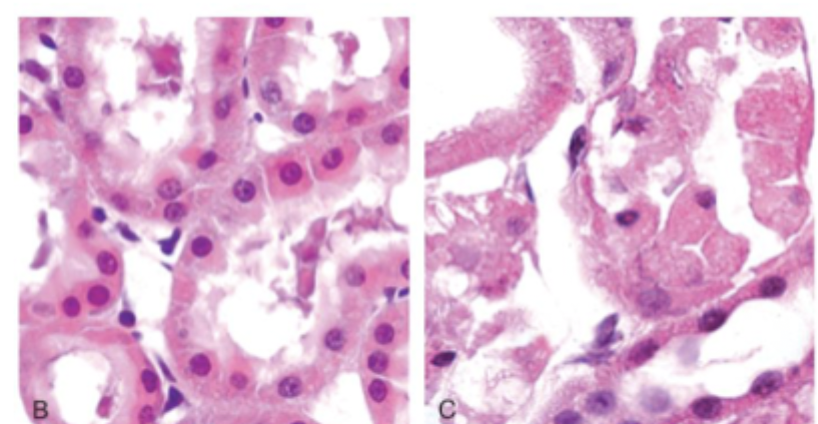
what type of cell death is this and how do u know
irreversible
loss of cell nuclei
fragmentation of cells
leakage of contents
what are the two types of cell death
necrosis and apoptosis
what type of cell death is termed cell suicide
apoptosis
what type of cell death is termed cell homicide
necrosis
what happens to a normal cell following irreversible cellular stress
necrosis
cell death
what happens once a cell has undergone necrosis
cell swells
membrane ruptures
its cellular contents begin to leak out which triggers inflammation attracting neutrophils and macrophages
dead cell is broken down by autolysis or heterolysis
debris is cleared by macrophages
describe autolysis
digestion by the cells own lysosomal enzymes
describe heterolysis
digestion by enzymes released from inflammatory cells such as neutrophils and macrophages
what are 3 changes that the nucleus undergoes in a necrotic cell
nuclear fading
nuclear shrinkage
nuclear fragmentation
describe nuclear fading
chromatin dissolution due to action of DNAses and RNAses
describe nuclear shrinkage
DNA condenses into a shrunken basophillic mass
describe nuclear fragmentation
nuclei membrane ruptures and nuclei undergo fragmentation
what are the morphological types of necrosis
coagulative
liquefactive
caseous
fatty
gangrenous
describe coagulative necrosis
the tissue architecture is retained
where do we see coagulative necrosis
heart and kidneys
what is coagulative necrosis generally due to
hypoxia
describe liquefactive necrosis
cellular destruction and pus formation
what is liquefactive necrosis often caused by
bacterial/fungal infection
brain ischaemia
describe caseous necrosis
combination of coagulative and liquefactive necrosis
cheesy appearance
describe fatty necrosis
caused by lipases
where do we normally see fatty necrosis
pancreas and breast
what is gangrenous necrosis in response to
severe hypoxia and subsequent bacterial infection
what type of response does necrosis trigger
inflammatory response
what does an inflammatory response triggered by necrosis lead to
clearing of necrotic material and healing
describe apoptosis
it is programmed cell death
is apoptosis always pathological
no it can be physiological aas well
describe what happens to the cell during apoptosis
cell shrinkage
chromatin condensation
cytoplasmic blebs and apoptopic bodies
phagocytosis of apoptopic bodies by adjacent cells
membranes and organels preserved
does apoptosis trigger an inflammatory response
no
describe what happens to the nucleus of a cell during apoptosis
fragmentation into nucleosome sized fragments
compare what happens to the cellular contents in apoptosis versus necrosis
in apoptosis the cell contents remain intact
in necrosis enzymatic digestion occurs and contents leak out of the cell
describe what happens to the plasma membrane in apoptosis compared to necrosis
plasma membrane is disrupted in necrosis
it remains intact but altered structure in apoptosis
which type of cell death affects groups of cells
necrosis
which type of cell death is active
apoptosis
which type of cell death is always pathological
necrosis
which type of cell death causes an increase in cell size
necrosis
which type of cell death does not cause inflammatory response
apoptosis
what are 3 major molecular mechanisms of cell injury
ATP depletion
reactive oxygen species
misfolded proteins
DNA damage
inflammation-mediated injury
what normally causes ATP depletion in a cell
hypoxia - lack of oxygen
most ATP using oxidative phosphorylation (ADP>ATP)
lack of oxygen means no ATP
what is the consequence of ATP depletion on the cell
initially it will cause reversible cell stress
if it continues over a prolonged period, it will led to cell death
type is necrosis
what causes ROS to increase
hypoxia, chemicals, radiation, inflammation
what does ROS do to the cell
damages lipids, proteins, DNA > necrosis
can also trigger apoptosis
describe what causes misfolded proteins
mutations
aging
infections (viral)
hypoxia
ischaemia
what happens when we have misfolded protiens
they accumulate in the ER
we get ER stress
if the problem cannot be rectified
cell undergoes apoptosis
what does misfolded proteins cause (disease wise)
causes neurodegenreative disease such as
huntingtons
parkinson
alzheimer
describe what causes DNA damage
ROS
radiation
chemicals
etc
what mechanism does the cell have against DNA damage
the cell detects it through intracellular sentinels
stabilisies p53 which causes the cell cycle to stop
the DNA attempts to repair itself
if not - apoptosis of the cell
describe inflammation mediated injury
In infections and autoimmune disease, inflammatory cells attempt to eliminate microbes or abnormal targets. However, they also release
cytokines
proteolytic enzymes
ROS
can be damaging and cause necrosis or apoptosis
what is apoptosis’s role during embryogenesis
when we are developing we have webbed fingers and toes - apoptosis removes this webbing
what is an example of hormone dependant apoptosis
during mentruation we get thickening of the endometrium, if there is no implantation, it is shed - the shedding is done by apoptosis
what is apoptosis’s role in cell division
cell division is not a perfect process
apoptosis takes care of any cells that were mistakes
at what points in the cell cycle is cells checked for DNA damage
between G1 and S phase
between G2 and mitosis
describe the checkpoint before S phase
if DNA damage is detected
p53 (tumour supressor) accumulates>p21
p21 inhibits cyclin CDK complexes which stops the cell moving into the G1 phase
where does DNA damage cause cells to accumulate
in G1, because the checkpoint happens jsut before entry into S phase
if damage is detected, they are not able to go through
what are the two pathways of apoptosis
extrinsic
intrinsic
describe the intrinsic pathway of cell apoptosis
cell injury is detected by BH3 sensors in the cytoplasm of the cell
cascade down to Bcl-2 effectors (Bax, Bak) which affect mitochondria
mitochondria leaks cytochrome C and other pro-apoptopic proteins
cytochrome c leads to activation of initiator caspases and then executioner caspases
describe the extrinsic pathway of cell apoptosis
ligand-mediated
adaptor proteins within the cell feed into initiator caspases when a ligand binds
initiator caspases go downstream and activate executioner caspases
what happens when executioner caspases are activated
endonuclease activation and breakdown of the cytoskeleton which creates the membrane blebs
what are the receptors associated with apoptosis
TNF-R family
Fas
what are the ligands associated with apoptosis
FasL expressed on T cells
what caspase mediates the intrinsic pathway
caspase 9
what caspase mediates the extrinsic pathway
caspase 8
what are caspases
proteases that mediate apoptosis
how are caspases activated
inactive procaspases have cleavage sites
they must be cleaved, and they can then come together and be activated
what controls the intrinsic apoptopic pathway
proapoptopic entities such as BAX and BAK
antiapoptopic entities such as BCL-2
what does malfunction of apoptosis lead to
disease
what causes cancer
malfunction in pro and anti apoptopic genes
what is cervical cancer caused by
inactivation of p53 (tumour suppressor protein that accumulates with DNA damage) by human papilloma virus