Pediatrics Week 1 -- Family Centered Care/Growth + Development/Peds Assessment
 Call Kai
 Learn
Learn Practice Test
 Spaced Repetition
 Match
Match Flashcards
 Knowt Play
1/32

There's no tags or description
Looks like no tags are added yet.
Name | Mastery | Learn | Test | Matching | Spaced | Call with Kai | Chat |
|---|
No analytics yet
Send a link to your students to track their progress
33 Terms
Key principles of caring for children
Health promotion, and disease/injury prevention
Family centered care
A philosophy of care that recognizes the family as the constant in the child's life --> emphasizes respect, participation, collaboration, and information sharing between the family and the HCPs

Why is it key to understand the child's household dynamics?
Members of the household will be responsible for the child's care and wellbeing

Ecological theory of development
Bronfenbrenner --> the child is part of a community within a society that impacts development, health and wellbeing (micro, meso, exo, macro-systems)

Child poverty statistics
1/5 children live below the poverty line
50% of children live in low income families
2.5 million children are homeless
How do social/household stressors impact children's health?
Poverty and homelessness reduce health access, treatment, and effectiveness
Family stress theory
The way a family reacts to internal and external stressors --> can have cumulative, chronic impacts on health outcomes

Adverse Childhood Experiences
Stressful or traumatic experiences, including abuse, neglect, household dysfunction --> ex: witnessing domestic violence, growing up with substance abuse, mental disorders, parental discord, or crime in the home

What are the impacts of ACEs on health?
Exposure to ACEs have been shown to increase the risk of substance use, cancer, cardiac disease, mental health diseases

Protective factors against ACEs
Stable relationships, parental resilience and coping systems, access to resources, social support

Effects of hospitalization on children
How to provide atraumatic care to the child
Minimize parental separation, reduce loss of control, emphasize routine, reduce fear of the unknown, minimize bodily injury or pain

Active listening
Empathic listening in which the listener echoes, restates, and clarifies

Manifestations of separation anxiety
Crying, running
Withdrawal, silence
Anger, rejection

Physical growth
A quantitative increase in size or body mass that determines the health and nutrition of the child
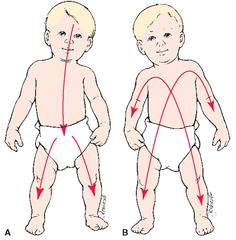
Development
A qualitative increase in the child's capacity to function and respond to their environment

Important physical growth measurements
Length/height
Weight
Head circumference
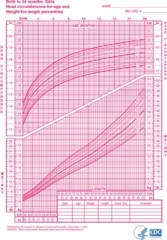
What is normal growth
Continuous, but nonlinear progression of changes in the height, weight and head circumference --> must be consistent with the standards for a given population
Pattern of motor skill development in children
Gross to fine motor skills develop in a cephalocaudal/central to peripheral fashion

Infant growth milestones
Weight triples by 1 year, and height increased of 1 foot
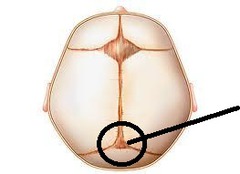
Fontanels close by 1 year
Toddler growth milestones (1-2)
3-5lbs a year, grows about 5 inches
Immature abdominal muscles, slightly bowed legs normal, maturation of digestive system, voluntary control of elimination, bladder capacity increases, develop & coordinated w/ each other, can maintain body temperature

Preschool growth milestones (3-5)
Slender/erect posture, little difference in physicality according to sex, body systems are mature & stable, refinement of eye-hand coordination & muscle coordination
School age growth milestones (6-12)
Differences in gender begin to show, tooth loss, more steady on feet, fat percentage reduces

Adolescence growth milestones
Transition from childhood to adulthood, physical and sexual maturity, puberty, relationships, work

Denver Developmental Screening Test
A test used to assess the development of children between birth and 6 years of age:
1. Gross motor skills
2. Fine motor skills
3. Personal-social skills
4. Language skills
Psycho-social Development Theory
Erik Erikson --> social interactions are crucial in development which happens in stages based on social crises

Psycho-social Development Theory 0-1 yr crisis
Trust vs mistrust --> hope develops
Psycho-social Development Theory 1-3 yr crisis
Autonomy vs shame and doubt --> willpower develops
Psycho-social Development Theory 3-5 yr crisis
Initiative vs guilt --> purpose develops
Psycho-social Development Theory 6-12 yr crisis
Industry vs inferiority --> competence develops
Psycho-social Development Theory adolescence crisis
Identity vs role confusion --> love develops
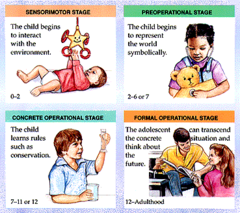
Cognitive Development (Piaget)
Sensorimotor-explores through the senses, gains object permanence
Preoperational-can't see other people's point of view (egocentrism)
Concrete operational-concept of conservation, logical thinking
Formal operational-adult reasoning develops, abstract thinking, metacognition (thinking about thinking)
Moral Development (Kohlberg)
Preconventional: young children focus on how their actions will effect themselves
Conventional: Base decision on how others will view them, follow standards
Post conventional: Moral reasoning for the good of society, uphold justice