IPHY 2420: Intro to Nutrition EXAM 1
 Call Kai
 Learn
Learn Practice Test
 Spaced Repetition
 Match
Match Flashcards
 Knowt Play
1/232

There's no tags or description
Looks like no tags are added yet.
Name | Mastery | Learn | Test | Matching | Spaced | Call with Kai | Chat |
|---|
No analytics yet
Send a link to your students to track their progress
233 Terms
Which disease or condition is a risk factor for many chronic diseases and conditions?
Obesity
What is the measure of energy in foods?
kilocalories (kcal)
List the macronutrients
Carbohydrates
Fat
Protein
List the major features of the macronutrient: Carbohydrates
Carbon, Hydrogen, Oxygen
4 calories/gram
primary energy source
List the major features of the macronutrient: Fat
Carbon, Hydrogen, Oxygen
9 calories/gram
primary energy source
List the major features of the macronutrient: Protein
Carbon, Hydrogen, Oxygen, Nitrogen
4 calories/gram
last resort energy source
List the micronutrients
Vitamins-Fat Soluble
Vitamins-Water Soluble
Minerals-Major
Minerals-Trace
List the major features of the micronutrient: Fat Soluble Vitamins
A, D, E, K
stored in the body
toxicity is possible
List the major features of the micronutrient: Water Soluble Vitamins
B, C
not stored in the body
excess excreted in urine-toxicity unlikely
List the major features of the micronutrient: Major Minerals
calcium, sodium
>100mg required daily
List the major features of the micronutrient: Trace Minerals
iron, zinc
<100mg required daily
How many calories per gram do carbohydrates provide?
4 calories/gram
How many calories per gram do fats provide?
9 calories/gram
How many calories per gram do protein provide?
4 calories/gram
List the fat soluble vitamins.
A, D, E, K
List the water soluble vitamins.
B, C
What is a DRI?
Dietary Reference Intake
What is a RDA?
Recommended Dietary Allowance
What is a AI?
Adequate Intake
What is a UL?
Tolerable Upper Intake Level
What factors go into calculating an individual's estimated energy
requirement?
Age
Weight
Height
Gender
Activity
What is the AMDR?
AMDR: Acceptable Macronutrient Distribution Range is the range of intake associated with reduced chronic disease risk and is expressed as % of calories
What is the AMDR for the macronutrient: Carbohydrate
45-65%
What is the AMDR for the macronutrient: Fat
20-35%
What is the AMDR for the macronutrient: Protein
10-35%
Be able to identify reputable sources of nutrition information (e.g. Registered Dietitian).
Trustworthy Experts: Registered Dietitian Nutritionist (RDN) and Dietetic Technician, Registered (DTR)
Professionals With Advanced Degree(s) In Nutrition: B.A./B.S, M.S., and Ph.D.
Medical Doctor With Appropriate Expertise In Nutrition: M.D. and D.O.
Naturopath (N.D.)
Identify and explain the four characteristics of a healthy diet.
Discuss the features of an ingredient list on a food label.
1. Serving size and servings per container
2. Calories and calories from fat per serving
3. List of nutrients
4. % Daily Values
5. Footnote for Daily Values
Understand why the inclusion of a serving size designation on a nutrition facts label is important.
Serving sizes can be used to plan appropriate amounts of food and standardized serving sizes allow for comparisons among similar products
What is being added to the new (required by 2020) nutrition facts label on foods?
Vitamin D and Potassium were added because many Americans don't get enough of these. Grams of Added Sugars were also added underneath Total Sugars. Font size of serving size and calories got bigger.
What are new food serving sizes aiming to be based on? What have previous food serving sizes been based on?
Serving sizes are based on what people typically consume, not what they should consume, which is what food serving sized were originally based on.
What nutrition information are eating establishments (with 20+ locations) required to post on menus and menu boards?
Beginning May 7, 2018, the FDA requires that calories be listed next to the name or price of a food on menus and menu boards that are part of a chain of 20+ locations.
What is the definition of a nutrient dense food?
Foods that provide the most nutrients for the fewest calories
Be able to identify nutrient dense foods.
Vegetables
What are empty calories?
Calories from solid fats and/or added sugars that provide few or no nutrients
Be able to identify a food with empty calories.
Candy
Explain the concept of energy balance and its effects on body weight?
Energy balance is energy intake versus energy expenditure (what you are burning or calories in versus calories out); macronutrient composition of the diet
When the calories you consume meet your needs, you are in energy balance and your weight will be stable (energy intake=energy expenditure=weight maintenance)
When you consume fewer calories than you expend, your body will draw upon your stored energy to meet its needs and you will lose weight (energy intake
What are the goals of digestion?
Break large molecules down to smaller molecules
Absorb the smaller molecules into the cells of the body
What is a cell membrane made up of?
Selectively permeable outer layer enclosing each cell of the body
Made up of a phospholipid bilayar with a hydrophobic interior and hydrophilic exterior; the bilayer contains phospholipids with a hydrophobic tail and hydrophilic head; also contains proteins embedded in the bilayer that move nutrients in and out of the cell
What area of the brain is involved in the regulation of feeding?
The hypothalamus region of the brain
Amount and type of food consumed have an influence over it; nerve receptors in the stomach and small intestine send messages to hypothalamus; solid foods are more filling than semisolid foods or liquids
Explain how nerve receptors in the stomach regulate hunger.
Nerve receptors in the stomach and small intestine send messages to hypothalamus
What are hormones?
Chemicals produced in glands that travel in the blood to target organs in other parts of the body
Can stimulate hunger or produce a feeling a satiety
They relay messages to the hypothalamus
How do the different macronutrients affect our satiety level?
Feeling of fullness
The macronutrient that will make you feel the most full is protein, followed by fat, and carbohydrates.
Be familiar with the layout of the gastrointestinal system (i.e., order of the different parts of it).
GI Tract: Series of organs arranged as a long tube through which the food passes
1. Digestion begins in the mouth
2. The esophagus propels food from the mouth into the stomach
3. The gastroesophageal sphincter separates the esophagus from the stomach which prevents the flow of food from the stomach back into the esophagus
4. From the stomach, chyme is slowly released through the pyloric sphincter to the small intestine (chemical digestion continues in the small intestine using pancreatic enzymes and bile, and there is no more mechanical digestion at this point)
5. Water-soluble nutrients will enter the portal vein; carbohydrate, protein, minerals, some vitamins (all B vitamins and vitamin C); portal vein transports these nutrients to the liver; Fat-soluble nutrients will enter the lymphatic vessels; fat and some vitamins (vitamins A, D, E, K); lymphatic vessels transport these
nutrients directly to the bloodstream and then to the liver
6. Undigested food components move through a sphincter called the ileocecal valve to the large intestine
7. In the large intestine, very little digestion takes place; intestinal bacteria digest remaining food particles; water and some nutrients are absorbed; material is stored 12-~24 hours prior to elimination
What are sphincters?
muscles that control the passage of material from one organ to the next
What is mechanical digestion?
chewing or the mixing of food with gastric juice
What is chemical digestion?
enzymes are used for breaking down food chemically (ex. salivary amylase is an enzyme produced by the salivary glands that begins the chemical digestion of carbohydrates)
What type(s) of digestion occur in the mouth?
mechanical (chewing) and chemical (salivary amylase is an enzyme produced by the salivary glands that begins the chemical digestion of carbohydrates)
What type(s) of digestion occur in the stomach?
mechanical (food being mixed with gastric juice) and chemical (digestion of proteins and fats)
What type(s) of digestion occurs in the small intestine?
no more mechanical digestion at this point and chemical (digestion continues in the small intestine using pancreatic enzymes and bile)
What does the suffix-'ase' indicate?
An enzyme
What is peristalsis?
The muscular contractions moving food through the GI tract
What is chyme?
Semisolid product of digestion in the stomach
What is gastric juice made up of?
Hydrochloric acid (HCl) (protein)
Pepsin (enzyme, protein)
Gastric lipase (fat)
Intrinsic factor (vitamin B12)
List the accessory organs that are involved in digestion.
Salivary glands
Liver
Gallbladder
Pancreas
What does the accessory organ, the salivary glands, do in the process of digestion?
produce the enzymes that break down food chemically
What does the accessory organ, the liver, do in the process of digestion?
produces bile
What does the accessory organ, the gallbladder, do in the process of digestion?
stores bile
What does the accessory organ, the pancreas, do in the process of digestion?
produces many digestive enzymes and produces bicarbonate to neutralize chyme
What is absorption and where does it occur?
Process of taking molecules across a cell membrane (stomach, intestine) and into the body
A small amount of the process occurs in the stomach and large intestine
Most of the process occurs in the small intestine
What are villi and what function do they serve?
finger-like projections on the folds and contain capillaries to absorb nutrients
What are microvilli and what function do they serve?
make up the brush border that further increase the surface area to facilitate greater absorption
How are water soluble nutrients absorbed?
enter the portal vein
include carbohydrate, protein, minerals, some vitamins (all B vitamins and vitamin C)
portal vein transports these nutrients to the liver
How are fat soluble nutrients absorbed?
enter the lymphatic vessels
include fat and some vitamins (vitamins A, D, E, K)
lymphatic vessels transport these nutrients directly to the bloodstream and then to the liver
What happens in the large intestine in terms of digestion and absorption?
Very little digestion takes place
Intestinal bacteria digest remaining food particles
Water and some nutrients are absorbed
Material is stored 12-~24 hours prior to elimination
What is heartburn?
A back-flow of gastric juice into the esophagus that causes a burning sensation
What is GERD (Gastroesophageal Reflux Disease) and what are the risk factors for it?
Chronic disease; painful, persistent heartburn is the most common symptom
Risk factors: smoking, alcohol use, overweight, pregnancy, trigger foods, large meals (creates pressure in the stomach), lying down after eating
What are peptic ulcers and what causes them?
Regions of the GI tract that have been eroded by HCl and pepsin
Stress, spicy food, alcohol no longer considered a major contributor to peptic ulcers (they causes may be involved, but they're not the main cause)
The bacterium Helicobacter pylori contributes to most gastric and duodenal ulcers; H. pylori thrives in an acidic environment and breaks down GI lining
List the recommendations given for preventing and treating peptic ulcers.
Treat with antibiotics and acid suppressants
Prevent w/hand washing, proper handling of food
What contributes to the development of peptic ulcers?
The bacterium Helicobacter pylori contributes to most gastric and duodenal ulcers
H. pylori thrives in an acidic environment and breaks down GI lining
List the potential causes of diarrhea.
Food intolerances
Infection of the GI tract
Stress
Bowel (intestines) disorders
What is the concern associated with diarrhea?
Can lead to severe dehydration
Which populations is diarrhea more of a concern for?
It is more dangerous for children and the elderly
Many children die every year from it
What is a food intolerance?
a particular food causes numerous unpleasant symptoms, including gas, pain, and diarrhea; may involve the immune system, but not anaphylaxis
What is a food allergy?
hypersensitivity reaction of the immune system to a component in a food; can be life-threatening; may need epinephrine (epi-pen)
List the monosaccharides.
Glucose
Fructose
Galactose
Describe disaccharides.
Consist of two monosaccharide molecules; one is always glucose (Sucrose, Maltose, Lactose)
Which monosaccharides make up maltose?
Glucose + Glucose
Which monosaccharides make up sucrose?
Glucose + Fructose
Which monosaccharides make up lactose?
Glucose + Galactose
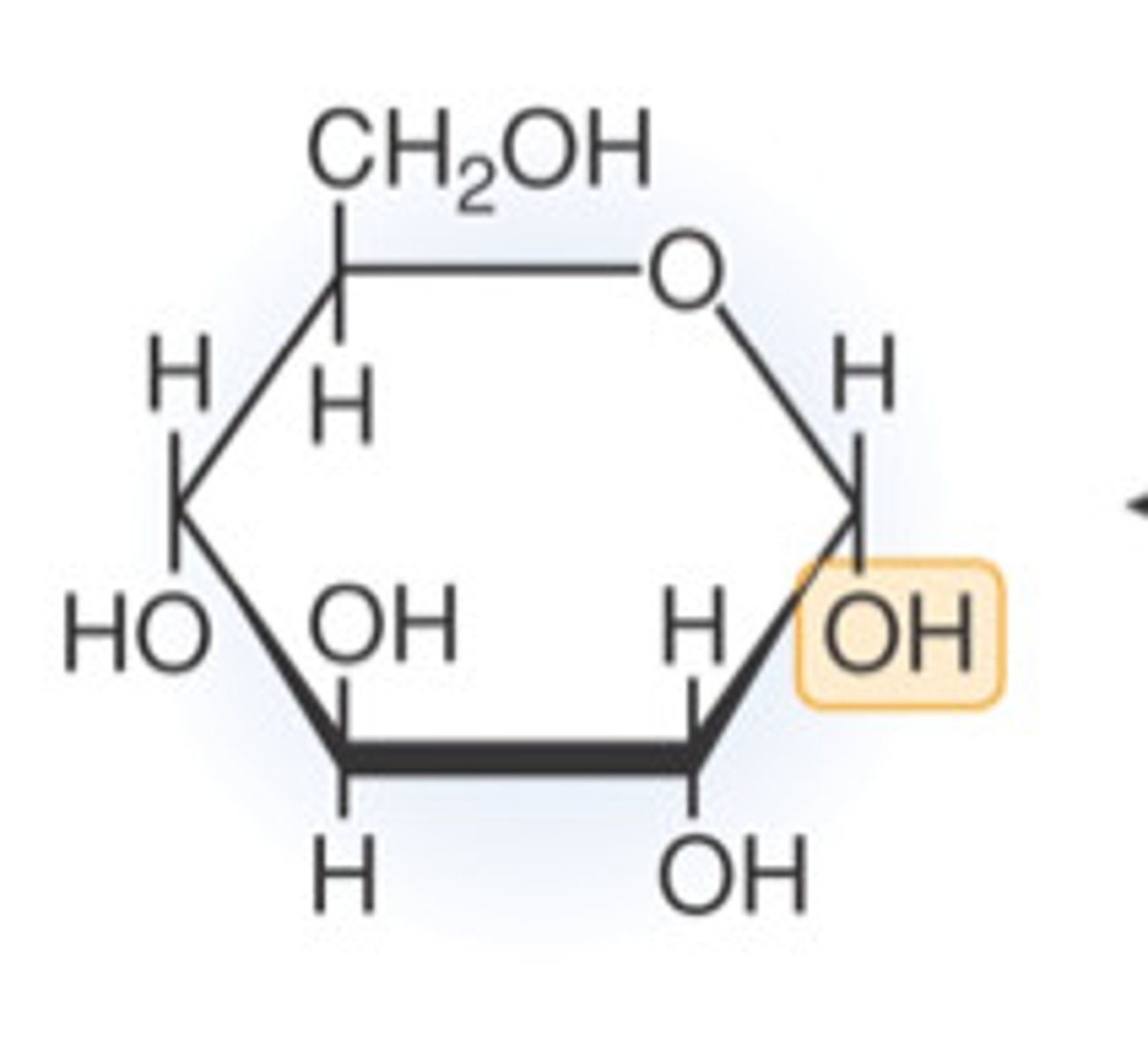
Describe glucose.
The most abundant carbohydrate in the diet
Principal form of carbohydrate found in blood "Blood sugar"
Produced by plants through photosynthesis
Found in plants as a component of disaccharides and
complex carbohydrates
The preferred source of energy for the brain
An important source of energy for all cells
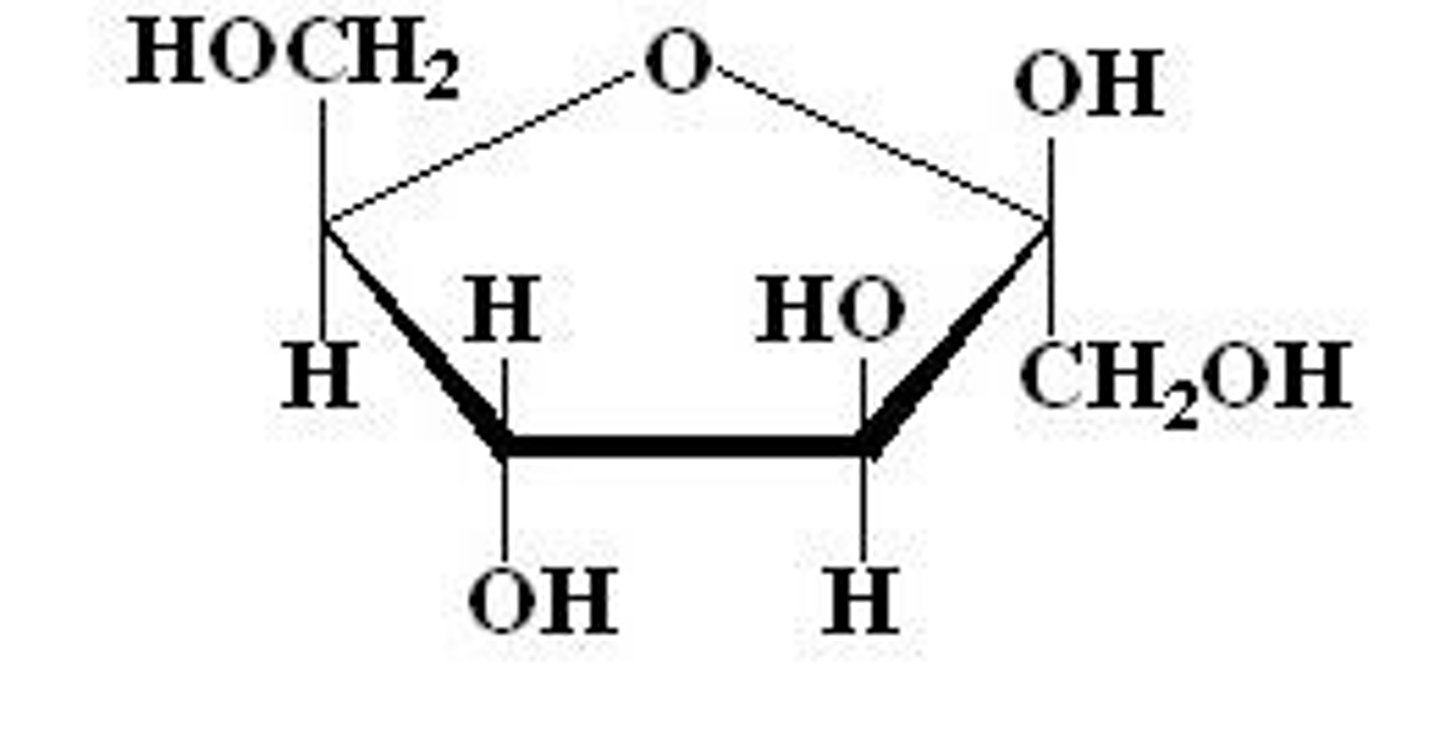
Describe fructose.
Sweetest natural sugar
Found in fruit & high-fructose corn syrup
Where in the diet is each disaccharide (maltose, sucrose, and lactose) typically found?
Maltose is found in starchy grains, vegetables and fruits.
Sucrose is found in fruits and vegetables and is purified from sugar cane and sugar beets
Lactose is found in milk and dairy products such as cow's milk, goat's milk, yogurt, cheese and ice cream.
What is the most common carbohydrate in the diet?
Glucose
Which monosaccharide is measured in the blood as a measure of "blood sugar?"
Glucose
Which monosaccharide is found in fruit?
Fructose
What are complex carbohydrates (polysaccharides)? What are the 3 types?
Poly = many and Saccharide = sugar
Chains of monosaccharides linked together
Starch, Glycogen, Fiber
What is starch? What are common food sources of starch?
Plants store glucose as polysaccharides in the form of starch
Our cells cannot use complex starch molecules as they exist in plants; we must digest (break down) starch to glucose
Grains, legumes, and tubers are good sources of dietary starch
What is glycogen?
Animals (including humans) store glucose as
a polysaccharide in the form of glycogen
Stored in the liver and muscles
Not found in food and therefore not a source
of dietary carbohydrate
Where is glycogen stored in the body?
liver and muscles
Describe fiber.
support structure of leaves, stems, plants
What is dietary fiber?
the non-digestible part of plants; fiber found naturally in foods
What is functional fiber?
fiber extracted from plants and added to foods and supplements; cellulose, guar gum, pectin, psyllium
What is Total Fiber Intake?
dietary + functional fiber
What are the properties, sources, and benefits of soluble fiber?
Properties: dissolves in water, viscous, easily digested (fermented) by bacteria in the colon
Sources: citrus fruits, berries, oats, and beans; used to thicken and stabilize foods (ex. Jams and jellies)
Benefits: lowers risk for cardiovascular disease and type 2 diabetes; lowers blood cholesterol and manages blood glucose levels
What are the properties, sources, and benefits of insoluble fiber?
Properties: generally does not dissolve in water; not fermented by bacteria in the colon
Sources: whole grains (e.g., wheat, rye, brown rice); many vegetables
Benefits: promote regular bowel movements; alleviate constipation; reduce the risk for diverticulosis
What is diverticulosis and how is it treated?
A condition in which small, bulging pouches develop in the digestive tract and can cause symptoms like belly pain or cramping, bloating, constipation, and diarrhea
Treatment: high-fiber diet or fiber supplements ; probiotics
What is diverticulitits and how is it treated?
An inflammation or infection in one or more small pouches in the digestive tract which can cause severe abdominal pain, fever, nausea and a marked change in your bowel habits
Treatment: liquid or low-fiber diet; antibiotics, penicillin, dietary supplement
Explain how a high-fiber intake is related to blood cholesterol levels.
1. Liver synthesizes bile using cholesterol
2. Bile is stored in gallbladder
3. Bile is secreted into intestine to aid in the digestion of fat
(a) High-fiber diet
4a. Fiber binds to bile and both are excreted in the feces
5a. Less cholesterol is reabsorbed from the remaining bile
6a. Blood levels of cholesterol are reduced
Explain how a low-fiber intake is related to blood cholesterol levels.
1. Liver synthesizes bile using cholesterol
2. Bile is stored in gallbladder
3. Bile is secreted into intestine to aid in the digestion of fat
(b) Low-fiber diet
4b. Less fiber is present to bind to bile, so less bile is excreted in the feces
5b. More cholesterol is reabsorbed from the remaining bile
6b. Blood levels of cholesterol are elevated