Psychomotor stimulants: cocaine and amphetamines pt 1
 Call Kai
 Learn
Learn Practice Test
 Spaced Repetition
 Match
Match Flashcards
 Knowt Play
1/15

There's no tags or description
Looks like no tags are added yet.
Name | Mastery | Learn | Test | Matching | Spaced | Call with Kai | Chat |
|---|
No analytics yet
Send a link to your students to track their progress
16 Terms
coca plant
cocaine is an alkaloid found in these leaves
native to south america
sigmund freud and cocaine
recommended it for many ailments: treatments of alcoholism, morphine addiction, depression, and digestive disorders and he declared that it was non-addictive if taken orally
coca-cola
coca-cola contained caffeine and cocaine
marketed as an alternative to alcohol during the temperance movement
900,000 in the US meet the criteria for cocaine use disorder
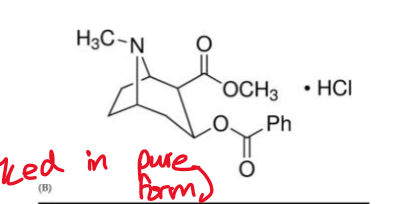
cocaine
converted into HCl salt and is crystalized
water soluble and can be taken orally, intranasally, or by IV
isnt heat stable
smokable cocaine
mixed dissolved cocaine HCl with baking soda, heat the mixture, then dry it
free crystals crackle hence the name
produces profound euphoria
Far less expensive than cocaine powder
Antidrug Abuse Act 1986- 1:100 rule crack> cocaine in criminalization and reduced to 1:18 in fair sentencing act
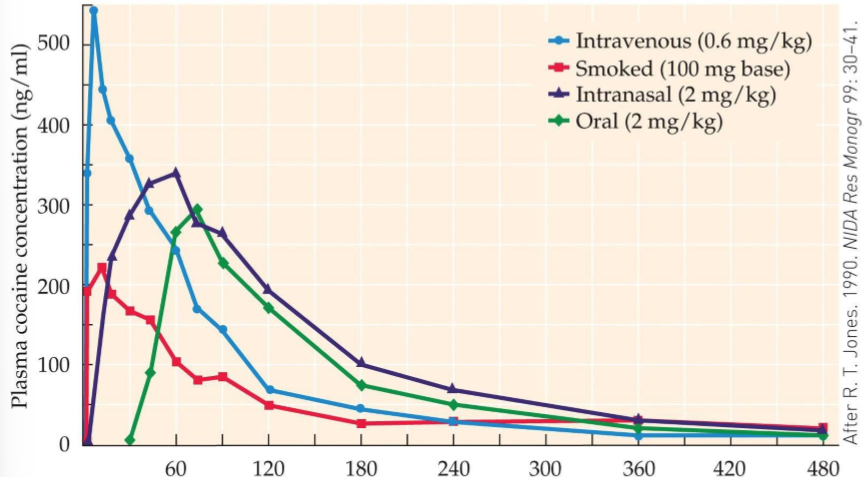
rapid entry to the brain is
important factor in the strong addictiv properities of crack cocaine
cocaine pharm
lipopillic
readily passes through the blood-brain barrier
broken down by enzymes in te blood and liver but not cyp enzymes
rapidly eliminated
short half life (30 mins to 1.5 hrs)
high lasts only for 30 mins
due to rapid elimination
drug tests only look for metabolities for cocaine
metabolities of cocaine
benzoylecgonine
cocaethylene
benzoylecogonine
detected in the urine for several days
cocaethylene
cocaine and alcohol produce a unique metabolite
has biological activity that is similar to cocaine and has a longer half life
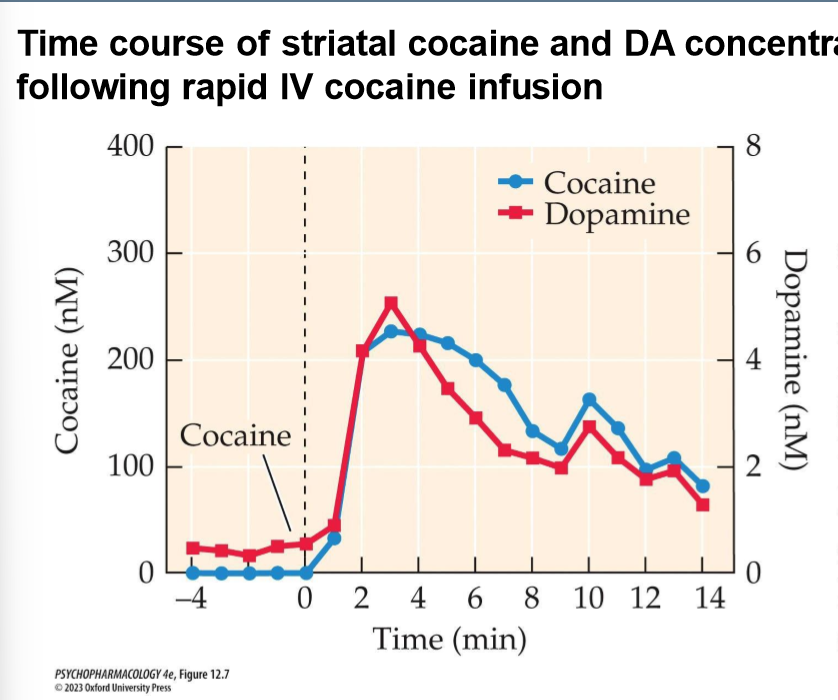
cocaine is a
monoamine inhibiter
blocks DA, NE, 5HT
cocaine binds with the highest affinity to
5 HT transporter
blocking DA reuptake appears the most important
for cocaine’s stimulating, reinforcing, and addictive properties
how do we know it is inhibition of DA reuptake that mediates the psychoactive effects?
SSRIs and SNRIs do not produce psychostimulant effects
DAT KO mice display no further cocaine induced increase in activity
SERT KO and NET KO show cocaine induced increases in activity
destruction of NET nerve fibers has little effect on psychostimulant effects of cocaine
destruction of DAT nerve fibers does not produce psychostimulant effects of cocaine
mechanisms of actions of cocaine
inhibits voltage-gated Na+ channels, making it act like a local anesthetic
prevents transmission of signals along sensory nerves
Schedule II drug
Procaine and lidocaine are some of its derivatives
potent vasoconstrictor