D324 Project+ Quiz Failed
 Call Kai
 Learn
Learn Practice Test
 Spaced Repetition
 Match
Match Flashcards
 Knowt Play
1/79

There's no tags or description
Looks like no tags are added yet.
Name | Mastery | Learn | Test | Matching | Spaced | Call with Kai | Chat |
|---|
No analytics yet
Send a link to your students to track their progress
80 Terms
You are working on a project with a fixed scope but flexible timelines. Which of the following visuals will best show the progress your team is making on the tasks in the project?
Burnup chart
Bethany Embroidery specializes in creating one-of-a kind pictures. To speed up the production and meet demand, the owner is looking into software solutions. The software that is available doesn't have some key features that would maintain the uniqueness and quality of the work. Which of the following would be Bethany Embroidery's best procurement method for the software she needs?
Build
Raul, a project manager at Dion Cloud Computing Company, is negotiating a contract where the vendor will bear the risk of any potential cost increases. Which contract type is being described?
FFP (Firm-Fixed-Price)
During which project phase are stakeholders identified and evaluated?
Initiation Phase
When should a team inspect their workload and look for reasons for variation in velocity or throughput in an Agile project?
When there is a 25% or more change in velocity or throughput across sprints
Which of the following are parts of the communication plan? (Select all that apply)
Artifacts, Channels, Goals, Outcomes
Which of the following statements is an example of OCM?
Meeting with office workers to explain the benefits of the new software
Andre is working on a project with a fixed scope but a flexible timeline. Which of the following charts will work best for a project like this?
Burnup chart
Cyril, a project manager, is undertaking a risk assessment. He has quite a bit of verified data to use to assign scores to the risks they have identified. Which form of risk assessment should he use?
Quantitative risk analysis
In a magical kingdom called Diondria, a team of wizards is working on a complex enchantment to protect the realm from dark forces. They have created a Responsibility Assignment Matrix (RAM) to clarify roles and responsibilities for the enchanted spell components. Each wizard is assigned a specific role based on their expertise and involvement in the enchantment process. Which role in the RAM is most likely responsible for actually casting the spell?
Conjuror - A Team Member
Kendra has discovered that an employee posted information on the company's website that was plagiarized. She took the post off the website immediately but now writes an email to let all employees know that this happened so that they will all understand that plagiarism is unethical and could have gotten the company into legal difficulties. What type of data is represented by the email?
Restricted data
Internal data
Fantasia wants to estimate the duration and effort for the current project. She has a lot of information about the cost, and the amount of time for component parts of the project. Which of the following estimation techniques would be best for this situation?
Bottom-up estimation
Which type of application access method offers control over the software and access to many devices?
On-premise solutions
Manar is examining his company's three-tiered design on the company's website. The layer he is concerned with is the layer where the processing of data takes place. Which of the following is the layer Manar is focused on?
Application
Dion Construction LLC is trying to enter a booming housing market by building condominiums in Orlando, Florida. However, increases in plywood prices could increase costs for new projects. Which of the following is represented by future increases in the cost of plywood?
Negative risk
Dion Green Thumb LLC has just initiated a new eco-friendly project that includes experimenting with a variety of composted soils to determine which is the most eco-friendly and cost-effective. Seth puts the compost samples in the proper boxes and plants the seeds. In Dion Green Thumb's RAM, what category does Seth fit in?
Responsible
Sharon, a project manager, is working with a global team on a project. Which of the following policies should she review to make sure that all team member can log into the network from their locations?
Remote Access
What type of contract is most suitable for projects with flexible scope and the potential for scope creep?
Cost-plus contract
Which of the following statements about schedule variance is true?
A positive schedule variance means the project is ahead of schedule
Donna, a project manager, has completed a project that produced a ton of numerical data. Which of the following tools should she use to analyze the data?
Spreadsheets
Liam, a project manager at Dion Consulting, wants to implement a project management methodology that provides a structured and controlled approach with well-defined processes and clear accountability. Which of the following methodologies would best meet their needs?
PRINCE2
What is the purpose of a SOW?
To define the project's scope, expectations, and technical requirements
Which of the following is only software based?
Multitiered architecture
During which of the following phases do tracking and reporting take place?
Execution Phase
Which of the following activities take place during the planning phase?
Define the units of work
Which of the following roles makes the products for the project?
Developer
Dion Defensive Postures is interested in protecting its physical assets from intruders through increased physical security. Which of the following should they use to increase physical protection?
Removable media locks
During which phase of a project are existing artifacts reviewed?
Initiation Phase
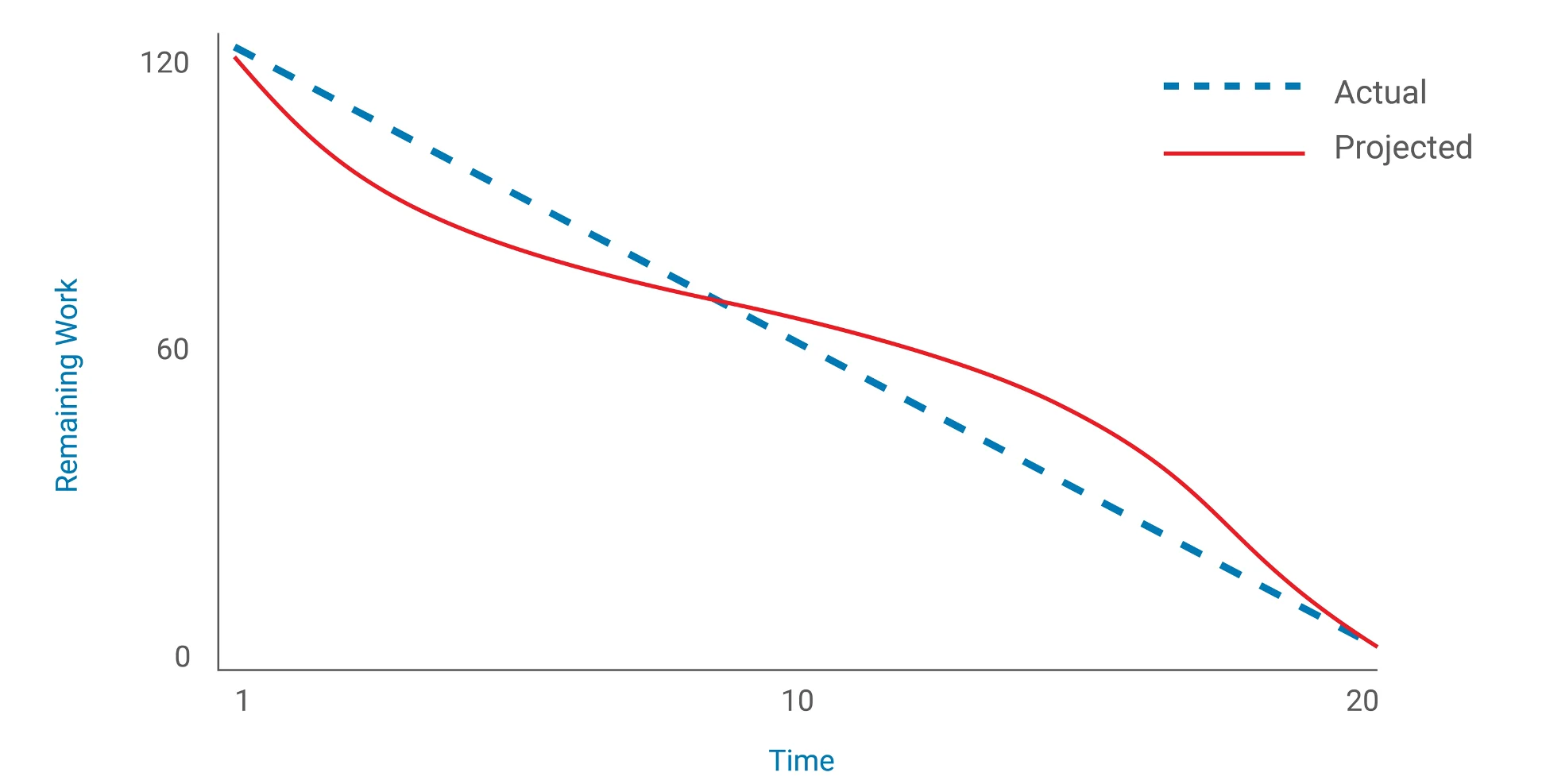
Mazen, a project manager, is looking at the chart below. What does the chart tell him about the project?
The project's tasks have been completed at a steadier pace than was estimated
Mazen, a project manager at Dion IT Solutions, is taking the first steps in assessing risk as part of the project plan. He wants to begin by using a risk assessment method that is subjective so he can get a broad view of what he is facing in terms of risk. Which of the following should he use?
Qualitative risk analysis
Dion Training has purchased new servers to replace the old ones. The use of the old servers can't end until the new servers are up and running because it would create downtime. Which of the following types of dependency is represented here?
SF
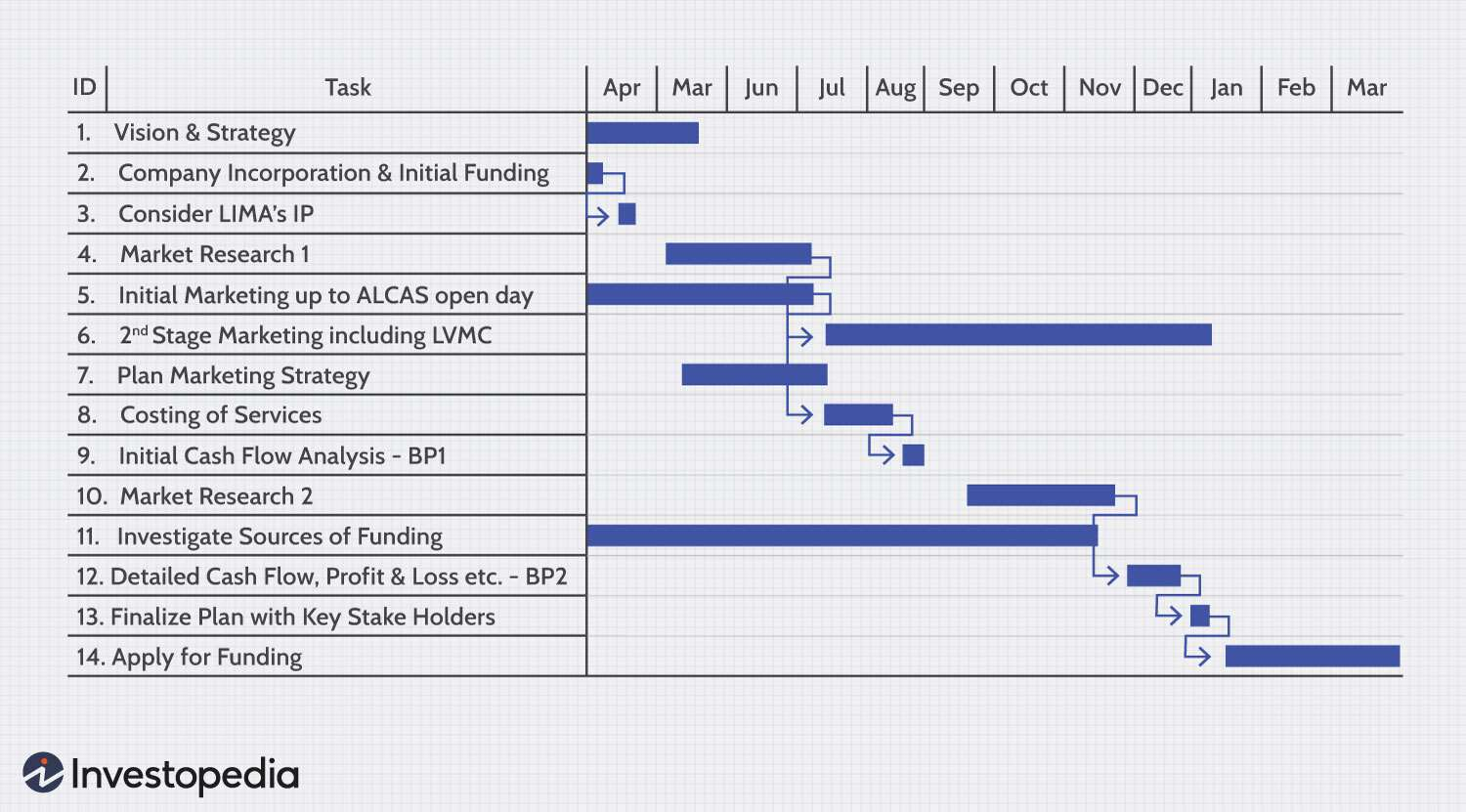
Gantt Chart (Scheduling)
What it looks like: A horizontal bar chart mapped against a calendar timeline.
Key giveaway: Look for tasks listed on the left, dates across the top, and horizontal bars showing duration and overlapping dependencies.
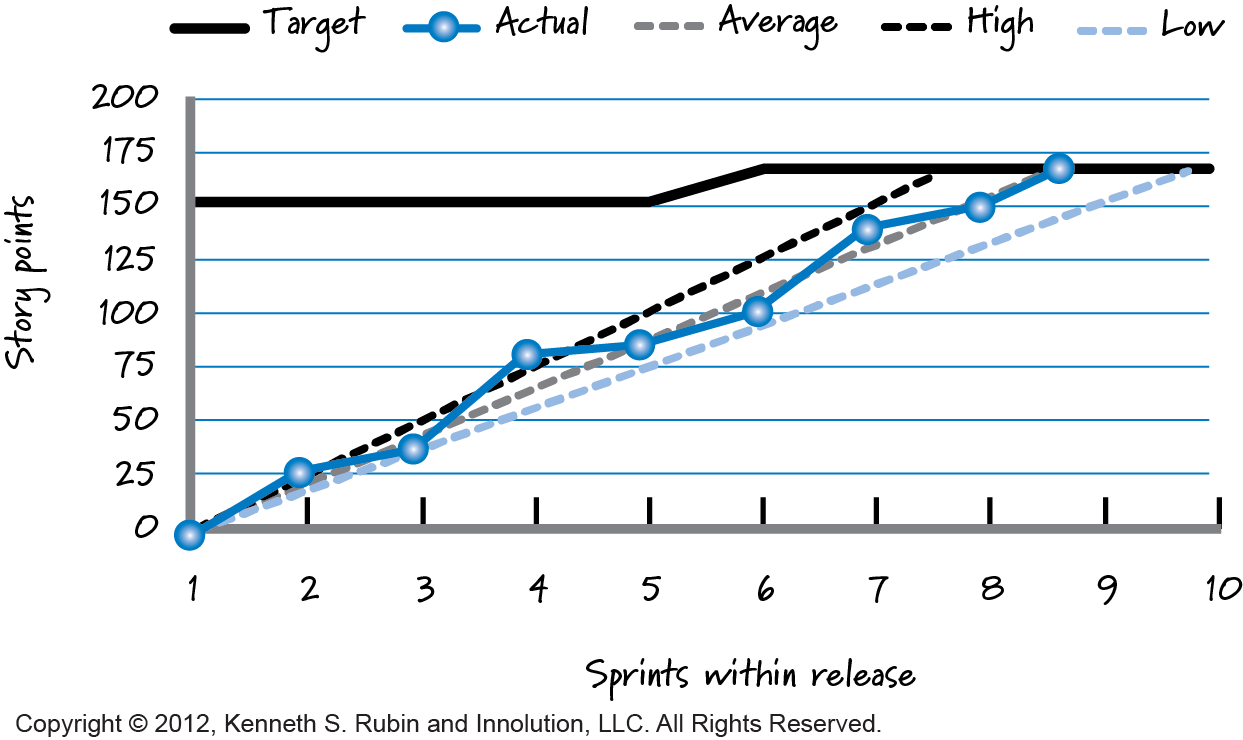
Burndown vs. Burnup Charts (Agile Tracking)
Burndown: Starts at the top (total work) and slopes downward toward zero as the sprint progresses.
Burnup: Features two lines. One line tracks the total scope (which can step upward if scope changes), and a second line slopes upward from zero to meet it as work is completed.
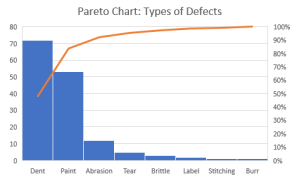
Pareto Chart (Quality Prioritization)
What it looks like: A combined vertical bar chart and line graph.
Key giveaway: The bars are sorted in descending order (highest frequency of issues on the left, lowest on the right). A cumulative percentage line climbs across the top to show the 80/20 rule in action.
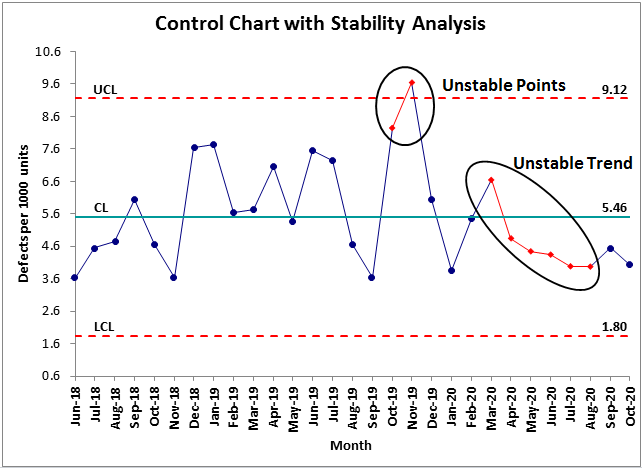
Control Chart (Quality Stability)
What it looks like: A fluctuating line graph bounded by three specific horizontal lines.
Key giveaway: It features a center Mean line, an Upper Control Limit (UCL), and a Lower Control Limit (LCL). If points fall outside these limits, the process is "out of control."
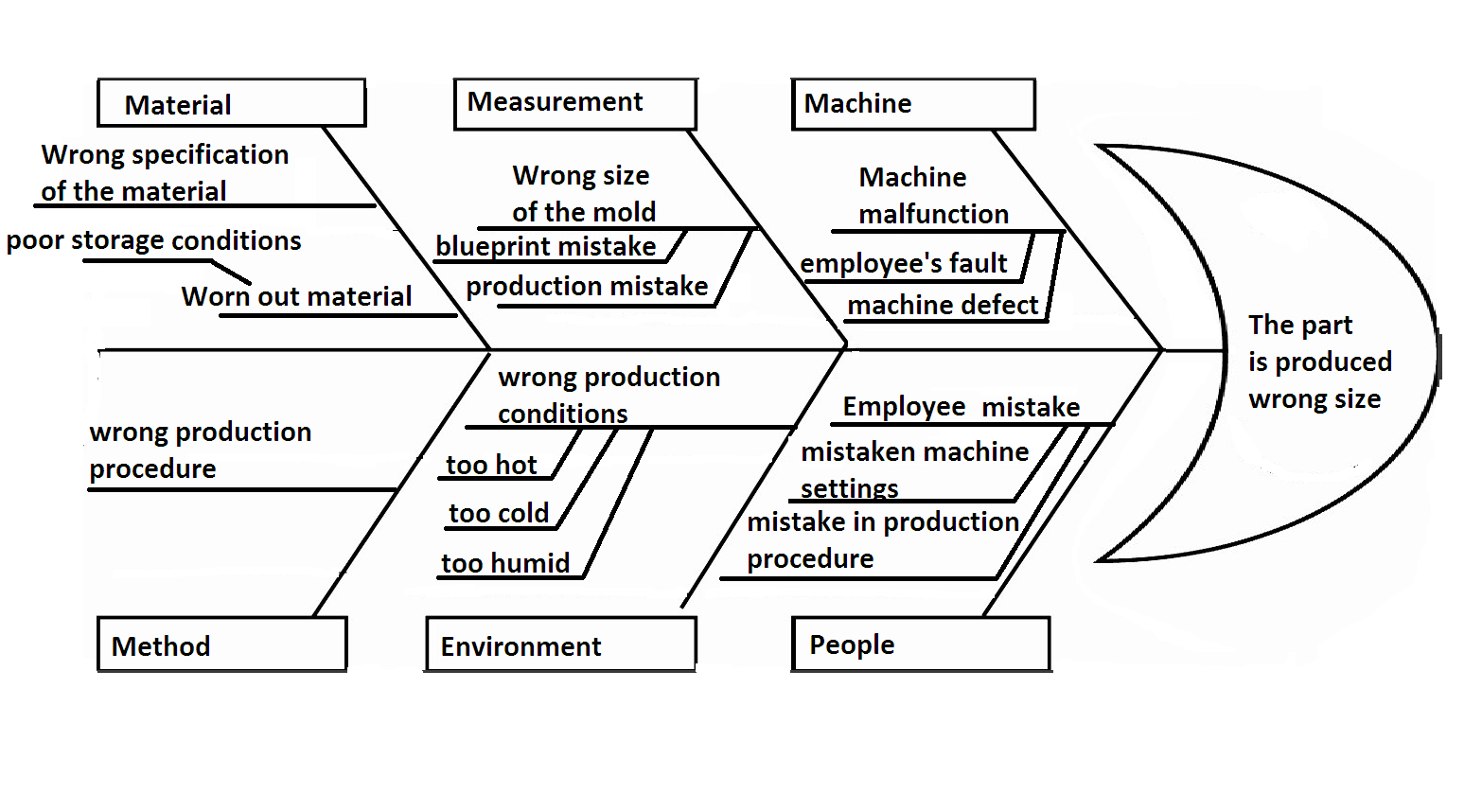
Fishbone / Ishikawa Diagram (Root Cause)
What it looks like: A horizontal spine pointing to the "Problem" (the head), with diagonal ribs branching off.
Key giveaway: The branches are categorized into sources of error (e.g., People, Process, Machinery, Environment) to brainstorm root causes.
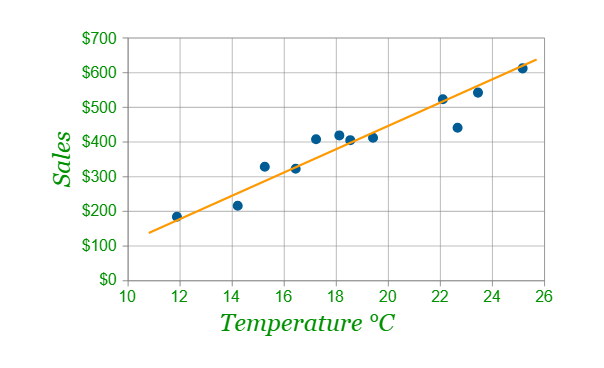
Scatter Diagram (Correlation)
What it looks like: A grid filled with individual plotted data points (dots) that look like a cloud.
Key giveaway: Used to see if an independent variable ($X$) has a relationship with a dependent variable ($Y$). The closer the dots form a diagonal line, the stronger the correlation.
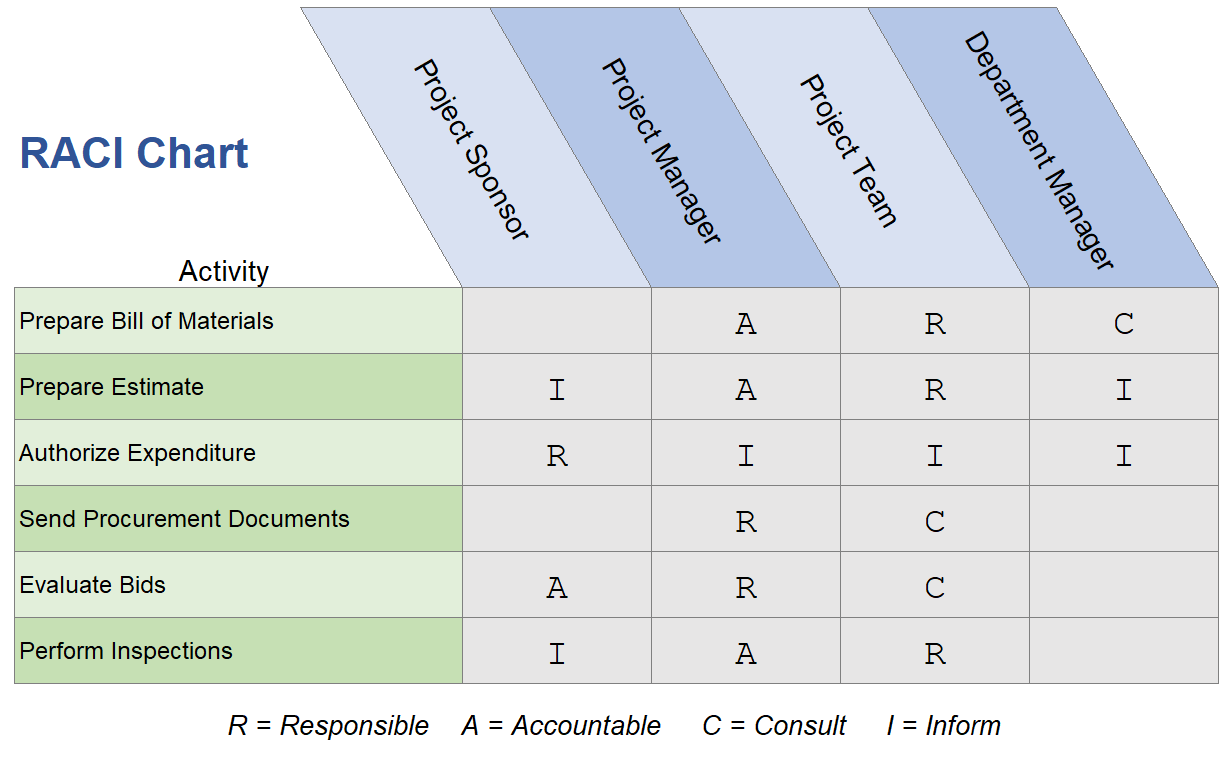
RACI Matrix (Responsibility Assignment)
What it looks like: A grid-style table rather than a graphical chart.
Key giveaway: Project roles/people are listed across the columns, and tasks are listed down the rows. The cells are filled exclusively with the letters R, A, C, or I.
Agile Frame Works
Scrum (Sprints, small autonomous teams)
SAFe (Scaled Agile Framework for large, hierarchical companies)
Kanban (Visual boards, workflow columns, WIP limits)
XP (Extreme Programming for software engineering and pair coding)
Waterfall frameworks
Traditional Waterfall (The Linear Model): The classic model where you complete one phase entirely before moving to the next (e.g., you finish all blueprint designs before buying a single piece of wood). You cannot easily go backward.
The V-Model (Validation and Verification): A specialized version of Waterfall often used in software and engineering. It takes the classic linear steps and bends them into a "V" shape, matching every early design phase directly with a testing phase at the end.
PRINCE2 (Projects IN Controlled Environments): As we saw in a previous question, this is a highly structured, process-driven traditional framework widely used internationally. It relies heavily on fixed stages, strict corporate governance, and clear documentation.
Traditional Waterfall Model
Core Concept: A sequential, plan-driven model where each phase must be 100% complete before the next begins. Work flows downwards linearly.
Keywords: Rigid, predictable, heavy upfront planning, scope baseline, sequential, phase-gates.
Best For: Projects with fixed budgets, well-defined requirements, and low likelihood of change (e.g., construction).
The V-Model (Validation & Verification)
Core Concept: A specialized Waterfall model that shapes the lifecycle into a "V". It directly pairs every early development/design phase with a corresponding testing phase at the end.
Keywords: Execution on one side, Testing on the other; early test planning.
Best For: Technical or systems engineering projects where finding defects early in the design phase is critical.
PRINCE2 (PRojects IN Controlled Environments)
Core Concept: A highly structured, process-driven Waterfall framework focused on business justification, strict corporate governance, and clearly defined management stages.
Keywords: International/UK standard, high organization, heavy documentation, defined roles.
Best For: Large-scale corporate or government projects requiring strict oversight and accountability.
Scrum
Core Concept: The most popular Agile framework. Breaks work into fixed-length iterations called Sprints (1–4 weeks) managed by a small, cross-functional, self-organizing team.
Keywords: Daily Standup, Sprint Planning, Sprint Retrospective, Product Backlog, Velocity.
Roles to remember: Scrum Master, Product Owner, Development Team.
Kanban
Core Concept: An Agile framework focused on continuous, steady workflow rather than fixed sprints. Uses a highly visual layout to manage tasks.
Keywords: Visual Board, Cards, Swimlanes, Continuous Flow, Pull System.
Golden Rule: Limits Work in Progress (WIP) to prevent bottlenecks.
Extreme Programming (XP)
Core Concept: An Agile software development framework focused on producing high-quality code and improving software responsiveness to changing customer requirements.
Keywords: Pair Programming (two coders, one screen), Test-Driven Development (TDD), continuous integration, technical excellence.
SAFe (Scaled Agile Framework)
Core Concept: An enterprise-level Agile framework designed to scale Scrum, Kanban, and Lean practices across multiple teams within a large corporate hierarchy.
Keywords: Enterprise, scaling, large organizations, hierarchical coordination, corporate alignment.
DevSecOps (Development, Security, and Operations)
Core Concept: A methodology that introduces security practices right from the start of the software lifecycle, baking it directly into the continuous development and operations pipeline.
Keywords: Shift-left security, automated security testing, cross-functional engineering, safe and continuous software deployment.
The Goal: To break down walls between developers, security teams, and IT operations so that software is delivered fast and safe.
DevSec (Development and Security)
Core Concept: An older or more limited approach that pairs software developers directly with security professionals, but completely leaves out the Operations (Ops) team.
Keywords: Siloed operations, manual security checks, non-continuous deployment.
The Flaw: While software might be coded safely, it often breaks or faces massive delays when handed over to the deployment/system admins because operations
CMS (Content Management System)
This is used to create, manage, and modify digital content on a website (like WordPress). It handles blog posts and web pages, not customer accounts or sales feedback.
EDMS (Electronic Document Management System):
This is used to organize, store, secure, and track digital files and documents (like PDFs, contracts, and scanned forms). While it is a great storage solution, it does not track customer sales accounts or natively gather customer feedback.
If the question focuses on Website text/images
CMS(Content Management System)
If the question focuses on PDFs/Contracts/Files
EDMS (Electronic Document Management System)
If the question focuses on Sales/Clients/Leads/Feedback
CRM (Customer Relationship Management)
If the question focuses on Inventory/Finance/Supply Chain
ERP(Enterprise Resource Planning)
Performance Testing
What it is: Testing how fast and stable the software runs under regular, normal everyday conditions.
Basic analogy: Driving a car at the normal highway speed limit to make sure the engine runs smoothly and doesn't shake.
Stress Testing
What it is: Pushing the software to its absolute breaking point using extreme, overwhelming traffic or data.
Basic analogy: Flooring the gas pedal and driving a car at 150 MPH until the engine starts overheating to see exactly when it blows up.
Smoke Testing
What it is: A super quick, basic test done right after a new version of software is built just to see if the most critical features work at all. It answers the question: "Does this thing turn on without catching fire?"
Basic analogy: Turning the key in a car's ignition. If the engine starts and doesn't start smoking, it passes the smoke test. You don't even take it out of the driveway yet.
Regression Testing
What it is: Testing old features after you add new code to make sure your updates didn't accidentally break something that used to work perfectly.
Basic analogy: Taking your car to the shop to fix the air conditioning, and then checking to make sure the radio and headlights still work when you get it back.
Testing, make sure you memorize this.
Expected/Normal usage → Performance / Load Testing
Extreme/Breaking points → Stress Testing
Initial/Basic functionality → Smoke Testing
After a change/update → Regression Testing
Decision Tree (Stanley's Solution)
Purpose: Used for looking forward to evaluate future choices, paths, risks, and financial outcomes.
How it works: It starts with a single decision point and branches out into various paths (options). Each path shows the potential costs, probabilities of success, and final payouts.
Why it fits Stanley: Stanley has "several paths they could take" and "high uncertainty." A decision tree will let him map out Path A vs. Path B, calculate the risks of each, and mathematically choose the best route forward.
Ishikawa Diagram (Fishbone / Cause-and-Effect)
Purpose: Used for looking backward to find the root cause of an existing problem or defect.
How it works: The "head" of the fish is the problem (e.g., "The software keeps crashing"). The "bones" branching out are the categories of potential causes (People, Process, Technology, Machinery).
Why it doesn't fit Stanley: Stanley isn't trying to figure out why something broke in the past. He is trying to decide which path to take in the future.
Issues
Does it stop all work? → Yes? Critical. (Stop here)
Is a main feature broken? → Yes? Major. (Stop here)
Is a small feature broken? → Yes? Minor. (Stop here)
Is it just a cosmetic/visual flaw? → Yes? Low.
MECE (Mutually Exclusive and Collectively Exhaustive)
This ensures that no two work packages overlap. If a task is in Element A, it is not in Element B. This prevents double-counting work or having two teams accidentally working on the exact same thing.
How to know a risk & how to treat it.
If the question describes... | ...Your answer is: |
Spotting / Discovering a threat | Identify the risk |
Scoring / Evaluating the damage | Analyze the risk |
Appointing / Planning an action | Treat the risk |
Watching / Checking a register | Monitor the risk |
Project Making.
The Architect draws the blueprints.
The Developer pours the concrete and builds the walls (makes the product).
Quality Assurance inspects the building to make sure it's up to code.
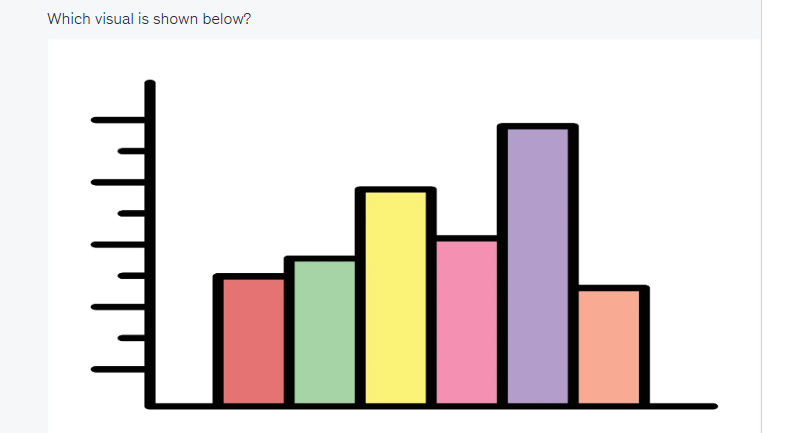
What is this chart?
A Histogram is a standard statistical chart used to show the frequency distribution of continuous data.
Burn Down / Burn up / Velocity/ Control Chart.
Fixed Scope / Showing Total Work Achieved → Choose Burnup chart (tracks total scope vs. completed work).
Fixed Timeline (Sprints) / Showing Daily Remaining Work → Choose Burndown chart (tracks work left to do).
Team Capacity / Predicting Future Sprint Output → Choose Velocity chart (tracks planned vs. actual points).
Process Stability / Finding Bottlenecks or Variations → Choose Control chart (tracks quality/cycle times within boundaries).
Simulation / Historgram / Decision Tree / Sensitivity Analysis
Look for "Simulation" → Scan for "Probability distributions" or "Predictive modeling".
Look for "Histogram" → Scan for "Visual chart" or "How often outcomes occur (Frequency)".
Look for "Decision Tree" → Scan for "Expected Monetary Value (EMV)" or "Branches of choices".
Look for "Sensitivity Analysis" / Tornado Diagram → Scan for "Determining which individual risks have the most impact".
Charts
Look for "Trends over time, chronological order, time of day" → Choose Run chart.
Look for "Upper and lower control limits, standard deviations, process stability"→ Choose Control chart.
Look for "Frequency distribution, bars touching, count of occurrences" → Choose Histogram.
Look for "Root cause analysis, brainstorming causes, categories of people/machines/methods" → Choose Fishbone diagram.
FPIF (Fixed-Price Incentive Fee):
The buyer pays a set price, but includes a financial incentive (a bonus) if the seller hits specific performance targets, like finishing a week early or under a target budget.
FP-EPA (Fixed-Price with Economic Price Adjustment):
Used for long-term projects (spanning years). It allows for pre-defined price adjustments if market conditions change drastically, such as massive inflation or fluctuating commodity costs (like fuel or steel).
CPFF (Cost Plus Fixed Fee)
The buyer reimburses the seller's costs and pays a locked-in, fixed dollar amount as a fee. The fee doesn't change based on performance or final cost.
CPIF (Cost Plus Incentive Fee):
The buyer reimburses costs and shares a performance bonus with the seller if they meet specific targets (e.g., if the seller completes it under budget, the savings are split 80/20 between buyer and seller).
CPAF (Cost Plus Award Fee):
The buyer reimburses costs and pays a bonus fee based entirely on a subjective evaluation of performance (e.g., a "customer satisfaction score" determined by the buyer).
T&M (Time and Materials):
You pay a fixed rate per hour for labor, plus the actual cost of materials. It behaves like a cost-reimbursable contract because the final total cost is open-ended, but it behaves like a fixed-price contract because the hourly rate is set in stone.
If I want to know how much money I've actually spent, I look at... _________
AC (Actual Cost)
If I want to know the budget of the work I've successfully completed, I look at..._____
EV (Earned Value)
If I want to know what my schedule says I should have spent by today, I look at...______
PV (Planned Value)
CV (Cost Variance)
is the ultimate reality check. It tells you whether you are under budget or over budget, and exactly by how much.