BIO respiration just till page 11
 Call Kai
 Learn
Learn Practice Test
 Spaced Repetition
 Match
Match Flashcards
 Knowt Play
1/32

There's no tags or description
Looks like no tags are added yet.
Name | Mastery | Learn | Test | Matching | Spaced | Call with Kai | Chat |
|---|
No analytics yet
Send a link to your students to track their progress
33 Terms
Why do living organisms respire?
Living organisms carry out respiration since they need energy to move, grow reproduce, excrete and carry out other processes.
List some examples of processes that require energy.
Active transport of substances across membranes, cell devision, secretion of substances from cells such as hormones.
Define cell respiration.
Cell respiration refers to the controlled release of energy from organic molecules in cells to form adenosine triphosphate.
What happens when heterotrophs consume autophrophs?
The carbon stored in the form of organic compounds like glucose, starch, proteins and lipids is transferred to the heterographs after digestion.
The organic compounds (glucose, starch, lipids and proteins) contain chemical energy.
How is ATP created?
From ADP and the phosphate ion using energy from repiration.
What is the primary respiratory substrate? (ie which of the organic compounds are the primary respiratory substrate?
glucose, though the others can be used.
Why is ATP important for cells?
It is the source of energy to carry out cell processes such as active transport, new protoplasm synthesis, protein synthesis, nerve impulse transmission, cell division and muscular contraction.
What is aerobic respiration?
It is the breakdown of food substances in the presence of oxygen, resulting in the release of a large amount of energy which is stored in ATP.
What is the word (and chemical) formula for respiration?
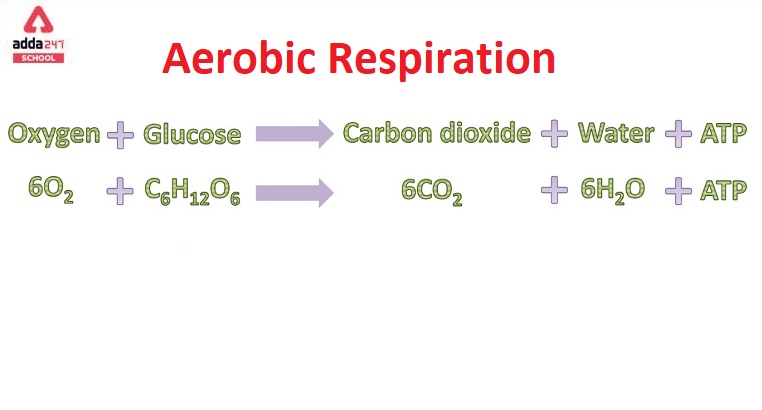
What is anarobic respiration?
It is the breakdown of food substances without oxygen, resulting the the release of a relatively small amount of energy.
What is the chemical formula of anaerobic respiration in humans?
What is lactic acid?
Lactic acid is formed when the body breaks down glucose without sufficient oxygen and it builds up in the muscles
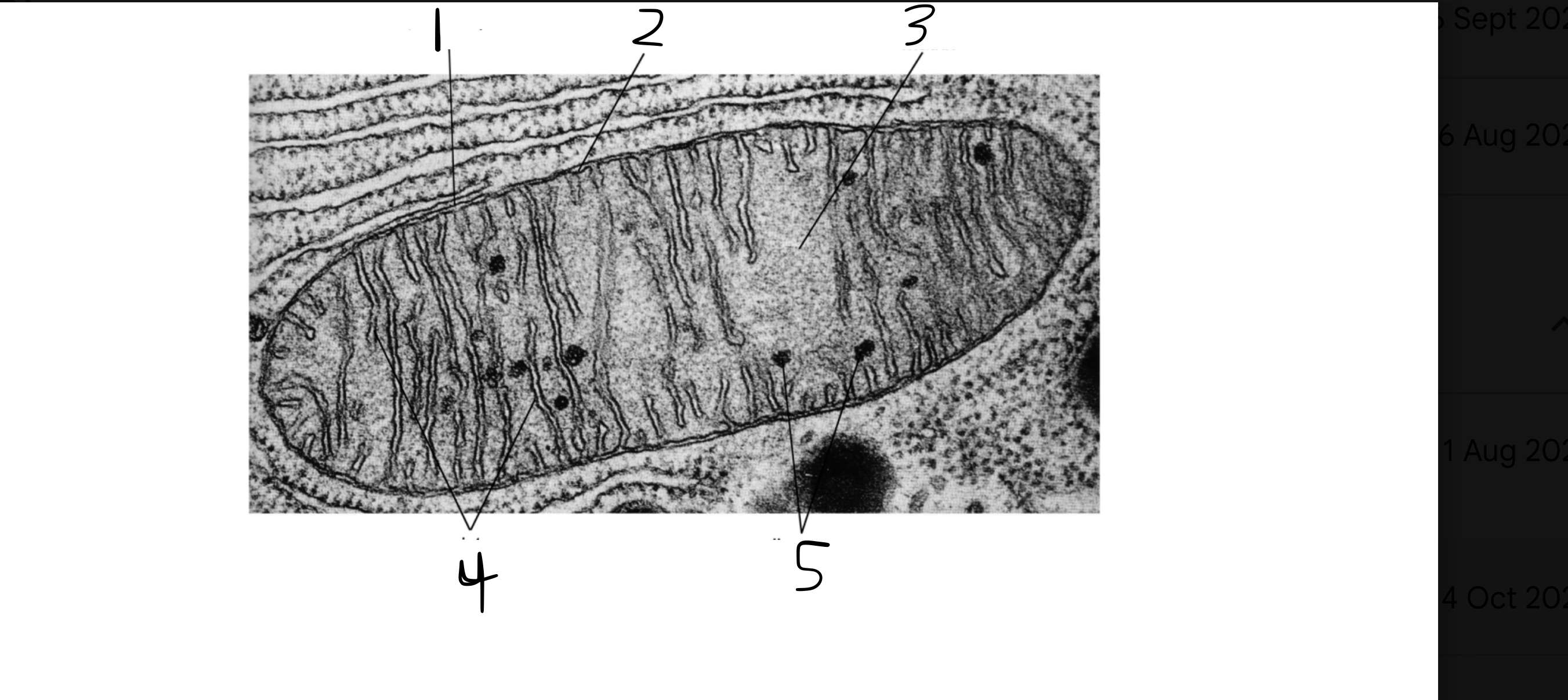
Label the parts of the mitochondria from 1 to 5.
outer membrane
inner membrane
matrix
cristae
ribosomes
What is the function of the outer mitochondrial membrane?
It physically separates the contents of the organelles form the cytoplasm.
What is the function of the inner membrane?
It contains proteins and enzymes needed for oxidative phosphorylation.
What is the function of the cristae?
It increases the surface area for phosphorylation.
What is the function of the matrix?
Contains enzyme and is the site for link reaction and krebs cycle of cell respiration.
What is the function of the ribosome?
It is the site of enzyme synthesis and proteins needed for cell respiration (link to molecular genetics: translocation and transcription)
Why is lactic acid produced (hint hint during exercise?)
During exercise, while heartbeat increased so oxygen can be transported to the muscles at a faster rate, of the muscular contractions are so vigorous that the maximum aerobic respiration is unable to meet the demand, the muscle cells will carry out anaerobic respiration, resulting in the production of lactic acid.
Define oxygen debt.
The amount of oxygen needed to remove lactic acid.
How is lactic acid removed after vigorous physical exercise?
Firstly, Since elevated heartbeat continues, the lactic acid is transported from the muscles to the liver while the oxygen is transported from the lungs the the liver.
Secondly, the continuation of deep and fast breathing also results in intake of oxygen by the lungs. Once lactic acid is removed from the muscles, the oxygen debt is said to be repaid.
Symptoms of accumulation of lactic acid?
Muscluar pain, cramps and fatigue.
What happens to the excess lactic acid formed during anaerobic respiration?
It is transported to the liver and oxidized to release energy.
How may ATP molecules are produced from how many molecules of glucose during anaerobic respiration?
2 atp from one glucose.
How is anaerobic respiration carried out in yeast?
It converts glucose to ethanol and carbon dioxide during baking and brewinng.
What is glycolysis?
It is the first stage in aerobic and anaerobic respiration.
What are the key and not so key differences between aerobic and anaerobic respiration?
Aerobic requires oxygen, anaerobic occurs in the absence of oxygen
aerobic requires mitochondria, anaerobic does not
aerobic does not create lactic acid or oxygen debt o the repaid, while anaerobic does.
Aerobic yields a large amount of ATP while anaerobic does not.
Aerobic occurs in cyto and mito, anaerobic only occurs in cyto
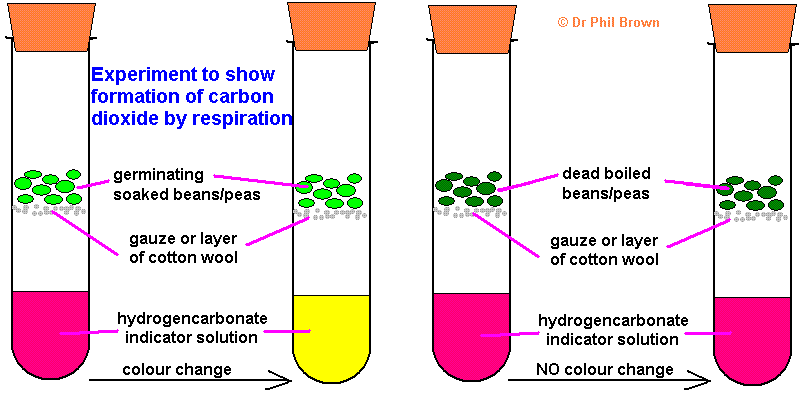
Explain the hydrogen carbonate experiment see picture
Since CO2 is an acidic case, increasing its concentration due to respiration will lower the pH, during the indicator yellow.
control - put a dead animal.
alkaline (red — no respiration, yellow— respiration)
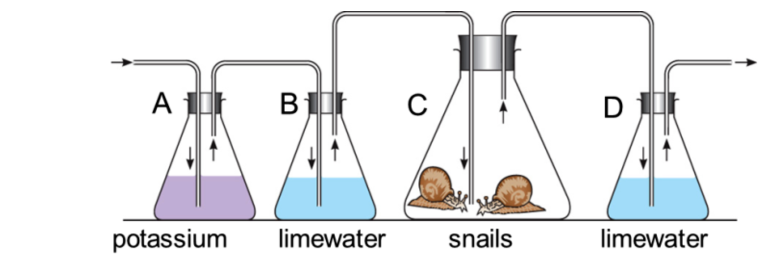
Explain the potassium hydroxide experiment.
few key qns to keep in mind
what would the limewater in B and D look like? Why is the potassium hydroxide there?
The limewater in D should be cloudy due to the production of CO2 beacuse of the respiration by the organisms.
The purpose of the potassium hydroxide is to remove carbon dioxide from entering flasks, hence the Limewater should be clear.
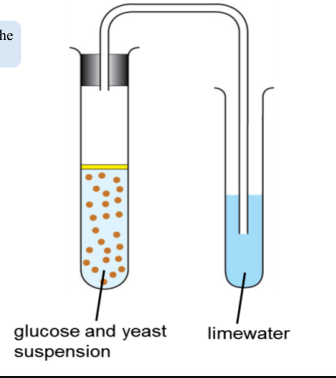
Explain the glucose and yeast suspension.
Consider a few qns pls
why was glucose solution boiled?
what is the purpose of the oil?
What is the observation?
Explanation: the yeast undergoes anaerobic respiration (since the function of the oil is to create an absence of oxygen) The glucose solution was boiled also to remove any dissolved O2 from the solution.
CO2 is released, hence the limewater will have white precipitate.
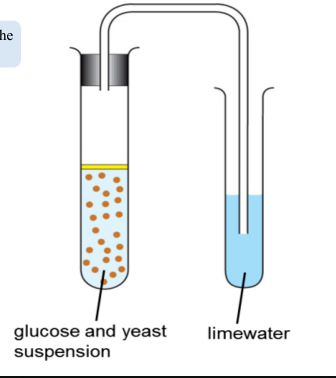
Explain the “thermometer” respiration experiment.
Consider the following questions:
What is the purpose of the antiseptic solution and the cotton wool plug?
What is the purpose of the vacuum flask?
What is the observed result to prove that respiration has taken place?
The vacuum flask minimises heat from escaping or entering to keep the results more accurate since the temperature change is used to find the rate of respiration.
The cotton plug — allows gaseous exchange
The anti-septic solution prevents growth of microorganisms like bacteria.
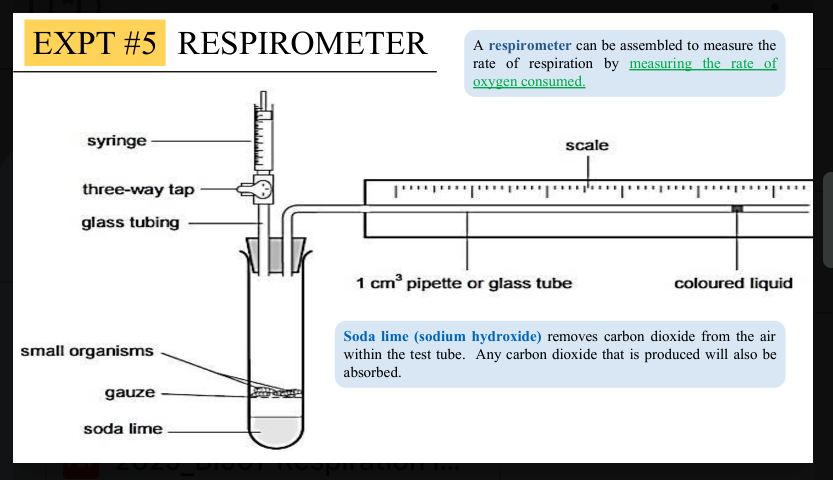
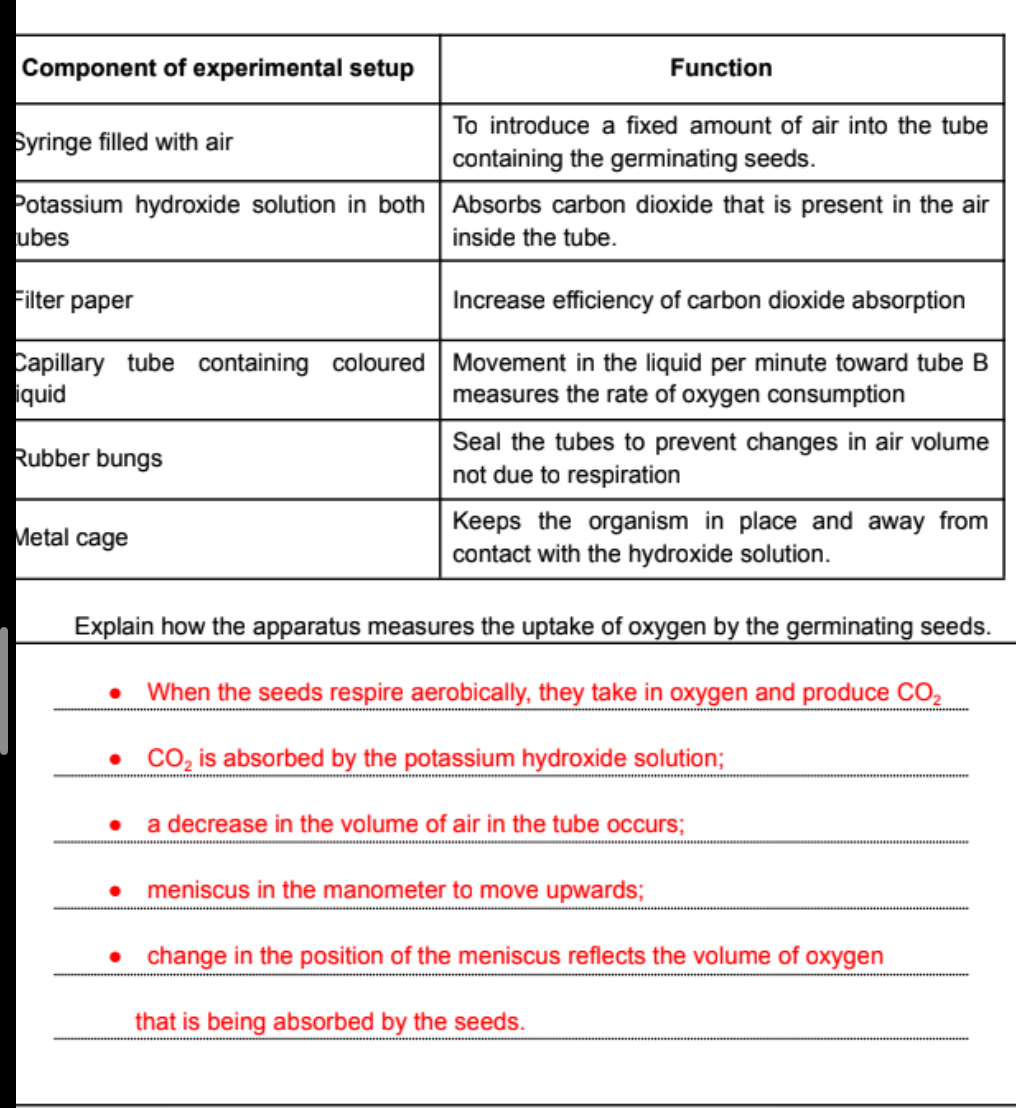
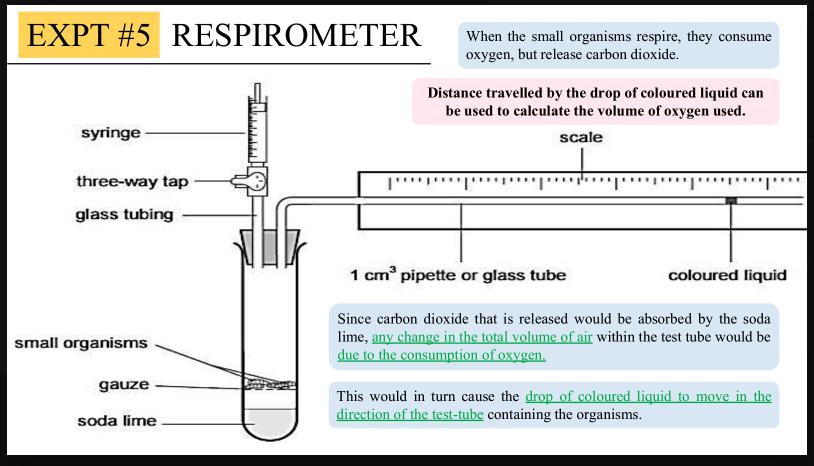
Explain respirometer experiment #1
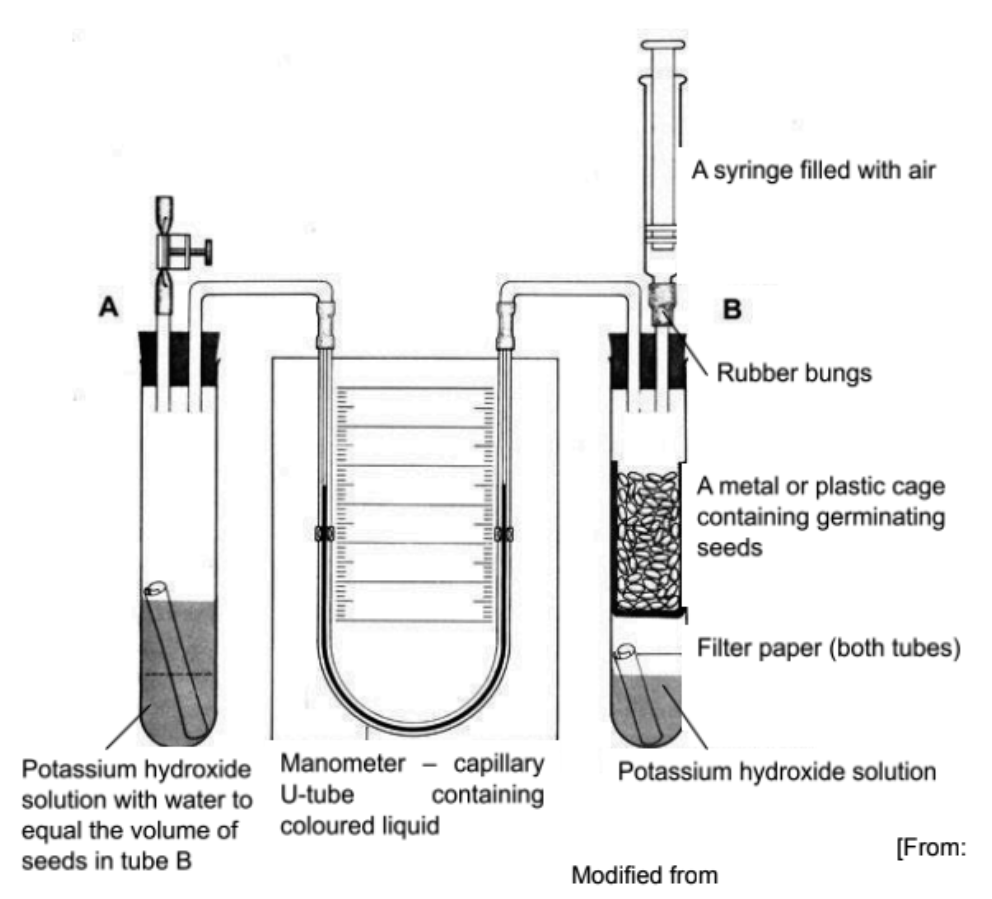
Explain respirometer experiment #2
What is the purpose of the potassium hydroxide solution and the capillary tube containing coloured liquid?