Mutations, DNA, and Genes
 Studied by 0 people
 Call Kai
 Learn
Learn Practice Test
 Spaced Repetition
 Match
Match Flashcards
 Knowt Play
1/21

Earn XP
Description and Tags
Biology I (H)
Name | Mastery | Learn | Test | Matching | Spaced |
|---|
No study sessions yet.
22 Terms
Gene mutation
a change in the DNA sequence, and can alter the protein it produces, leading to a change in traits, disease, etc.
—>OR CAN ALSO HAVE NO EFFECT AT ALL!
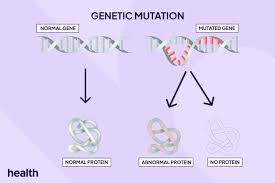
The two main types of gene mutation are _____________ and _________ mutation.
point mutation, frameshift mutation
Point mutation
a change to one or more DNA bases
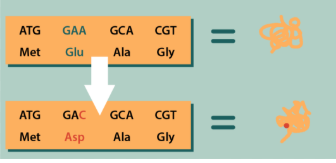
Missense mutation
change from one amino acid to another amino acid
—> i.e: sickle cell anemia
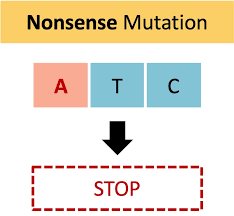
Nonsense mutation
a premature stop codon, and ends the protein sequence early
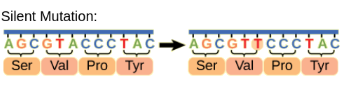
Silent mutation
change in a base, but it does not change AMINO ACID
Frameshift mutation
a shift in the entire “frame” by inserting or deleting a base
—> bases are not inserted or deleted in groups of three
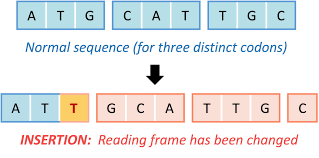
Insertion
A base is added to the DNA sequence
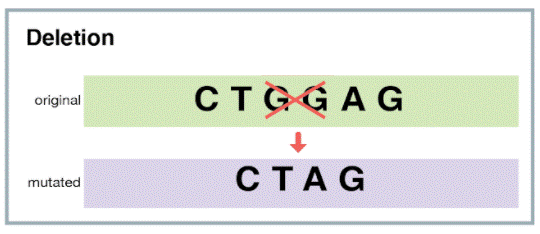
Deletion
A base is removed from the DNA sequence
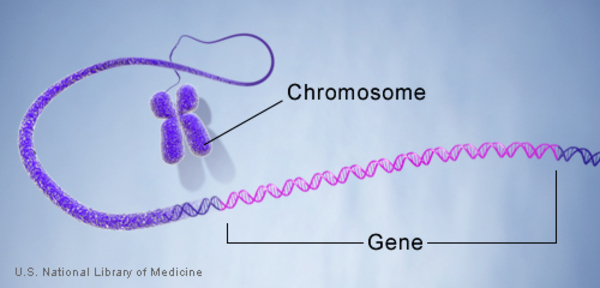
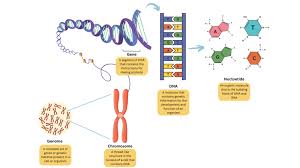
Gene
a segment of DNA
DNA is made up of chemical bases organized into two groups the ______________ and the _______________.
pyrimidines, purines
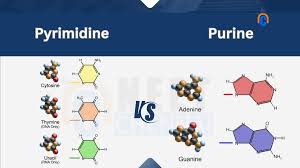
Pyrimidines
Cytosine, Uracil, and Thymine
CUT is the acronym
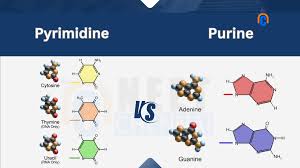
Purine
Adenine, Guanine
—> Tip! Think shorter name with less amount of bases
Deoxyribonucleic Acid
another name for DNA
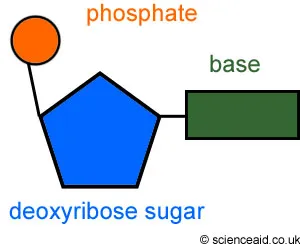
DNA is made out of __________, ____________, and _________.
sugar (deoxyribose), phosphate, chemical base (A, T, C, G)
—> DNA does not have Uracil only RNA contains Uracil swaps with Thymine
A always pairs with _____ .
T
C always pairs with _____.
G
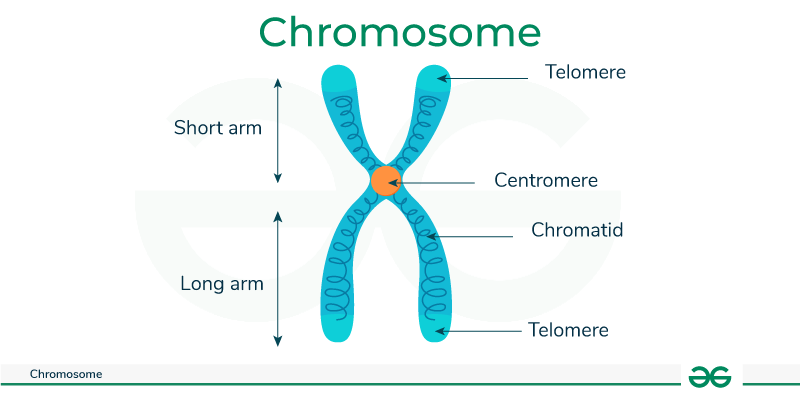
Chromosomes
coiled structure of DNA and proteins (AKA histones) that contain genetic material and its located in the nucleus of cell
Genomes
completed set set of genetic instructions (DNA), meaning its already been organized and maintained
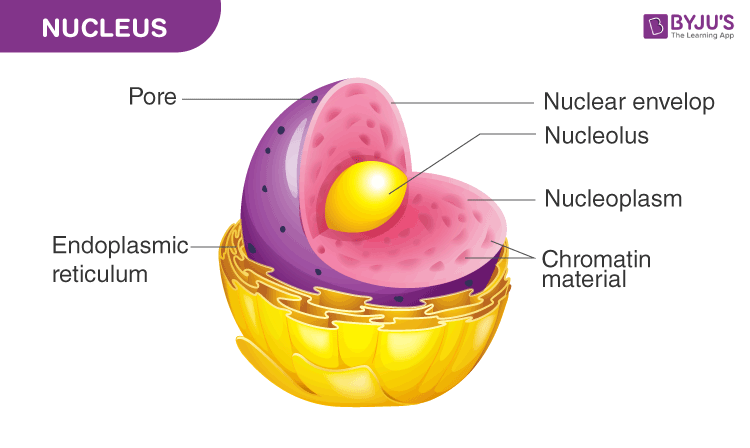
Nucleus
the organelle structure that houses DNA and also known has the brain of the cell because it contains all the instructions for the cell
also protects the nucleolus
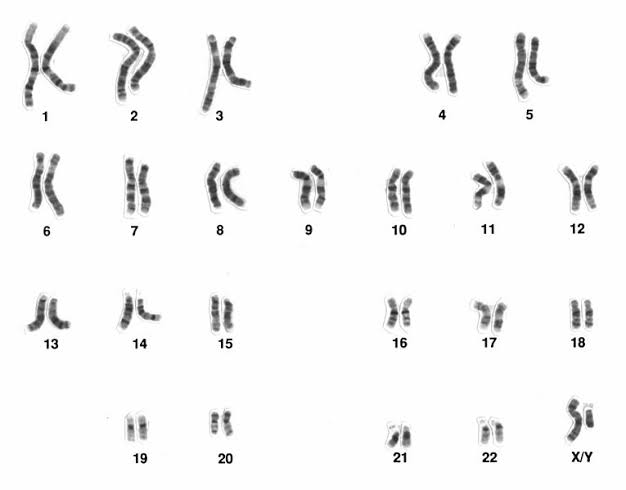
How many chromosomes do humans have?
46 chromosomes in ALL
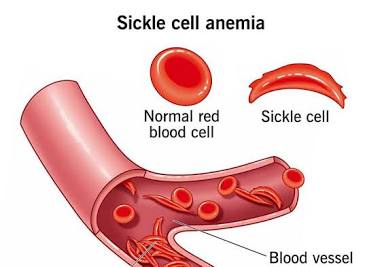
Sickle Cell Anemia
blood disorder passed down to offspring where red blood cells become crescent shaped