Modules #1-3 AP Hug
 Call Kai
 Learn
Learn Practice Test
 Spaced Repetition
 Match
Match Flashcards
 Knowt Play
1/14

There's no tags or description
Looks like no tags are added yet.
Name | Mastery | Learn | Test | Matching | Spaced | Call with Kai | Chat |
|---|
No analytics yet
Send a link to your students to track their progress
15 Terms
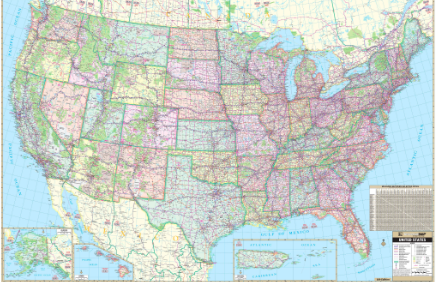
Reference Map
-FOCUSES ON LOCATIONS
-Typically display boundaries, names, unique identifiers, such as states
-May also show major cultural and physical features, such as roads
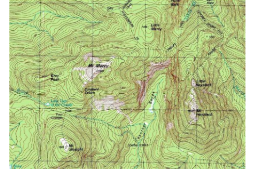
Topographic Map
-A type of reference map that shows natural/physical landscape
-Uses graphic representation, such as 3D or isolines, (lines that links different places that share a common value, like elevation) to show Earth’s surface
-Typically shows natural or physical features of landscape
Thematic Map
-Emphasizes on SPATIAL PATTERNS, FOCUSES ON DATA
-Displays a distribution of an attribute, characteristic, or relationship, such as population density, income levels, resources, etc.
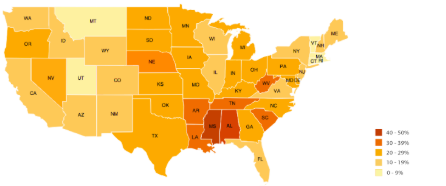
Chloropleth Maps
-Shows data collected, often using different colors to represent different values
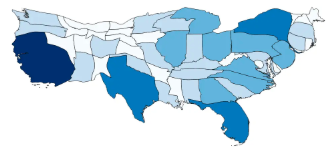
Cartograms
-DISTORTS geographical shape to show data (show size of specific data point or variable)
-The larger the area, the larger the value
Proportional/Graduated Circle Maps
-Uses symbols (such as sircles or dots) of different sizes to represent numerical values
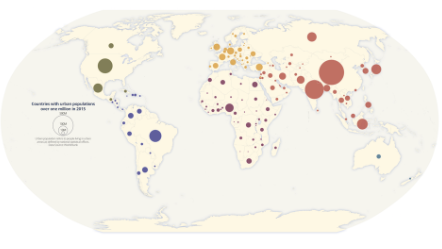
Dot Density/Distribution Maps
-Uses dots to represent objects and values
-Dots can represent one object or a number of objects

Expansion diffusion
Mainly the idea/trait that moves
Relocation diffusion
Mainly the person/people that moves
Hiearchial Diffusion
-An order when ideas transfer
-The spread of an idea/trend/project from the most influential people, places or organizations down to smaller or less influential groups
-Point A → Point B → Point C
-Ex. Fashion trends on tiktok, polka dots, teal
Contagious diffusion
-Going viral, a rapid spread of an idea
-No order
-Ex. Contagious disease or forest fire
Stimulus Diffusion
-Adaptations
-Item A → Item A, Version 1.5
-Ex. McDonald’s menu being different globally
Hiearchial & Reverse Hiarchial Diffusion
Occurs when ideas move through an established structure usually from
People or place soft power to people/places with less or no power
Ex. Rich people adapting trends and trickles down to everyone else
Reverse Hiarchial is the opposite relationship
Diffusion
Spread of an idea from one place to another
Types of Thematic Maps
Chloropleth Maps
Cartograms
Proportional/Graduated Circle Maps