Lectures 2-4: History of Food Science
 Call Kai
 Learn
Learn Practice Test
 Spaced Repetition
 Match
Match Flashcards
 Knowt Play
1/32

There's no tags or description
Looks like no tags are added yet.
Name | Mastery | Learn | Test | Matching | Spaced | Call with Kai | Chat |
|---|
No analytics yet
Send a link to your students to track their progress
33 Terms
What is food science?
The applications of chemistry, physics, biology and microbiology, engineering, and nutrition to the preservation, processing, and development of food, and food by-products
Nutritional Sciences (G)
The application of Biochemistry, Physiology, & Toxicology on the actions
& interactions of major & minor nutrients in the body.Ingestion, digestion, and assimilation
Transport, storage and excretion
What are the three types of Nutritional Sciences? (G)
Classical Nutrition
Relationship between food and health - ~1800s up to the
1970s. A material was fed with a view to preventing a nutritional deficiency.e.g. orange juice to prevent scurvy (vitamin C), ash to treat corn (niacin)
Optimal Nutrition, Discovery of the nutrients – 1940s to 1990s. Where the ‘right’ nutritional component was identified to prevent a disease
e.g. fatty acids and cardiovascular disease, folic acid to prevent spina bifida, glycemic sugars and diabetes, energy control
Molecular Nutrition - Late 1990s to present and probably into the next several decades.
Molecular Nutrition (G)
Involves Functional Foods & Nutraceuticals
Where specific molecules maintain wellness, i.e. prevent or prolong onset of a disease versus control a disease as in optimal nutrition
~ 75% of our illnesses are diet related - how do we find and eat the ‘right’ things
Individualized related closely to the human genome project
“nutrigenomics” – personalized nutrition according to your genetic make-up
“Making healthy people healthier”

What is Evolutionary Discourse? How does it affect Adaptations?
Occurs when environmental conditions are modified
As a result, an evolutionary discourse between our environment and our genetic profile arise
As a population evolves to an environment a set of genotypes, which are genetic characteristics, are considered preferential
If we modify our environment those genotypes no longer preferential
Initiate an evolutionary process to optimize our genome in accordance to the new environment
Darwin’s Vision of Evolution (G)
The organic world is a product of the operation of discoverable natural forces (evolutionary discourses), and such changes (phenotypic or genotypic) in organisms are not spastic or stochastic (Darwin, 1859).
Evolutionary adaptations occur when organisms experience modified external or environmental conditions resulting in an evolutionary discourse between the environment and its genetic profile.
Consider…Is diet capable of acting as an evolutionary discourse resulting
in detectable differences among populations?
What are the names of the 3 Agricultural Revolutions? (G)
Neolithic Revolution’
British Agricultural Revolution
The Green Revolution
Neolithic Era (G)
For most of human evolution, people lived nomadically
Our diet did not really change (imagine living off the land (Paleo Diet is the closest thing today)
But 10,000 years ago it all changed…
11 000-12000 years ago some people learned to farm.
Produced more food than they could consume
Stock breading (diets became less diverse)
Permanente installations
Stone Use
Animal domestication → increased availability of foods like milk and meat
How did Agriculture Change Society? (G)
Form settlements
Less time hunting and gathering
Trades begin to form i.e. Tool makers
Populations expanded
Culture and Arts
Farming → surplus → storage/preservation → population growth → more complex society + new food/disease challenges
British Agricultural Revolution (G)
1600’s to 1800’s
Agricultural output grew faster than the population
England and Wales, 5.5 million in 1700 to 9 million by 1801
Agricultural output per agricultural worker in Britain doubled between 1500 and 1650, doubling again by 1850
Rise in productivity accelerated the decline of the agricultural labor force, thereby adding to the urban workforce
The 2nd Agricultural Revolution led to the Industrial Revolution

What changed during the British Agricultural Revolution? (G)
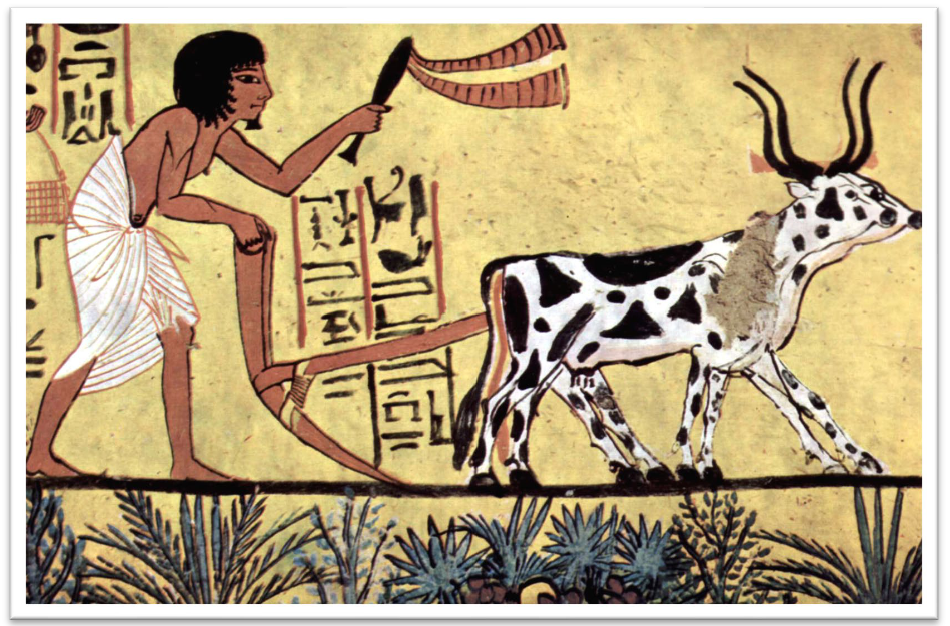
Crop rotation
Clover fixes nitrogen into a form of fertilizer
Deep plowing
Improved farming methods increased food production and efficiency, helping support population growth and industrialization
How did it lead to the Industrial Revolution?
The Agricultural Revolution increased food production and reduced the need for farm labour, helping supply the growing population, workforce, and markets needed for industrialization.
More efficient farming → farmers produced more food with less labour.
More food available → population increased because food shortages became less common.
Fewer workers needed on farms → some rural workers moved to towns and found work in factories.
Food surplus + increased population → created a larger market for goods and more demand for manufactured products.
Higher agricultural productivity → helped generate wealth that could be invested in businesses and industry.
Better farming → more food → population growth → surplus labour → Industrial Revolution
The Green Revolution (G)
1950 to 1960s onset and running
1) Use of technological & capital inputs
2) modern scientific farming
3) high yielding seeds varieties
4) chemical fertilizers
5) factory farms “consolidation of land holdings”
6) mechanical machinery

How did the Green Revolution change society from a food science perspective? (G)
🌾 High-yield crop varieties → produced much more food per hectare
💧 Increased irrigation → allowed crops to grow more reliably
🧪 Greater use of fertilizers & pesticides → improved crop growth and reduced crop losses
🚜 Mechanization & modern farming techniques → increased agricultural efficiency
🍚 Increased food supply → helped reduce famine and support rapid population growth
🌍 More intensive agriculture → also created concerns about soil degradation, water use, biodiversity loss, and chemical pollution
The Green Revolution dramatically increased food production through modern agricultural technologies, but also introduced environmental and sustainability challenges.
How did major agricultural revolutions shape food science and society?
Neolithic Revolution: Farming → reliable food supply → food storage & preservation
British Agricultural Revolution: Improved farming → increased yields → larger food supply & population
Green Revolution: Modern technology → much higher yields → mass food production & new sustainability concerns
Agricultural revolutions transformed food from something we primarily gathered into something we could increasingly produce, preserve, and mass-produce — creating new opportunities and challenges for food science.
Global Importance of the Corn Industry
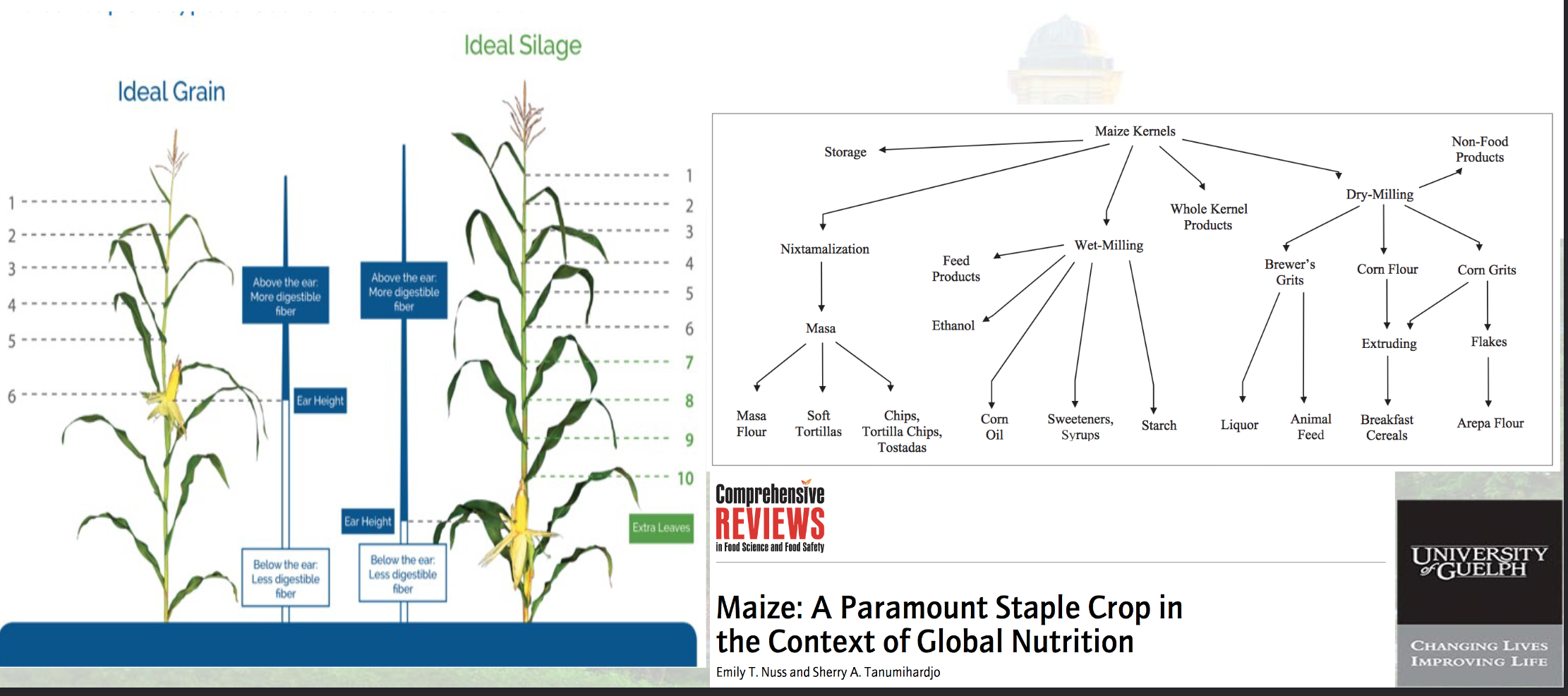
🌽 Corn is highly versatile → can be processed into many different ingredients.
🧪 Starch extraction → corn starch is used as a thickener, stabilizer, and texture modifier.
🍬 Corn → corn syrup / high-fructose corn syrup → enzymes can convert corn starch into different sugars.
🥫 Food processing → scientists study how to process, preserve, modify, and safely use corn and its components.
Corn demonstrates food science in action: one crop can be processed and transformed into many different ingredients and foods through chemical, biological, and physical processes.
Global Importance of Modern Agriculture
The role of genetically modified (GM) crops for food security is the subject of public controversy.
GM crops contribute to food production increases and greater availability and impact quality & nutrient composition.
GM crops increase farmers’ income and their economic access to food
Farm households in India, where insect-resistant GM cotton is grown significantly improved calorie consumption & dietary quality, from increased family income
Reduced food insecurity by 15–20% for cotton-producing households
GM crops will not solve the hunger, but are important to food security
The Importance of the Genetically Modified Potato
Resistant to blight
Stays white longer when cut or peeled
GMO potatoes can be engineered for traits such as disease resistance, helping reduce crop losses and improve food security; some research also targets climate-related stresses.
Shows how biotechnology can improve food security, crop sustainability, and agricultural productivity.

Does Diet Drive Evolution?
There is a relationship between the foods consumed and incisor row length (relative to body size) in a range of living anthropoids
Species with larger incisors tend to consume larger, tougher fruits
Smaller front teeth tend to feed on smaller foods, or those that require less extensive incisal preparation, such as leaves or berries
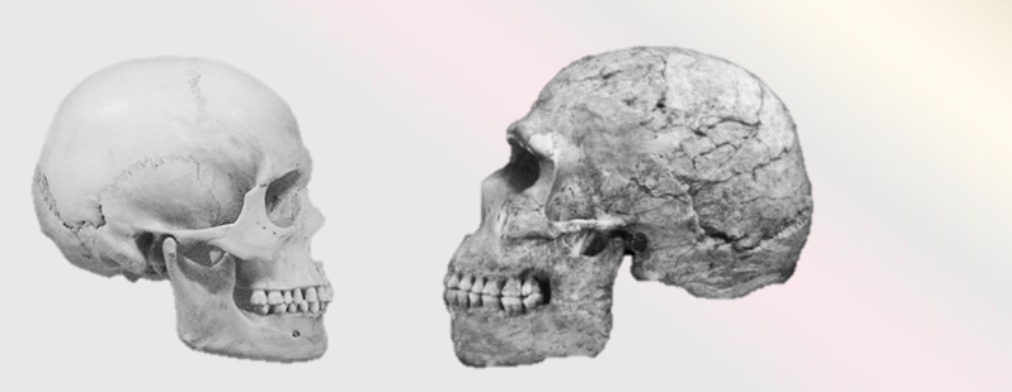
It is clear that relative tooth sizes (dentation) changed dramatically during the
late Pleistocene in the Northern HemisphereThere are differences in tooth size still observable today based on which Hemisphere your family tree resides!
What was the main reason/cause behind tooth size changing?
The important thing to look to is not so much the foods itself but what was done to it before it was eaten.
It only took 12,000 years to figure out tooth size changed in response to the introduction of fire (cooking)
Cooking was a major factor because it fundamentally changed the texture and digestibility of food.
Cooking softened food → less chewing force required → reduced need for large teeth and jaws over evolutionary time.
What is AMY1?
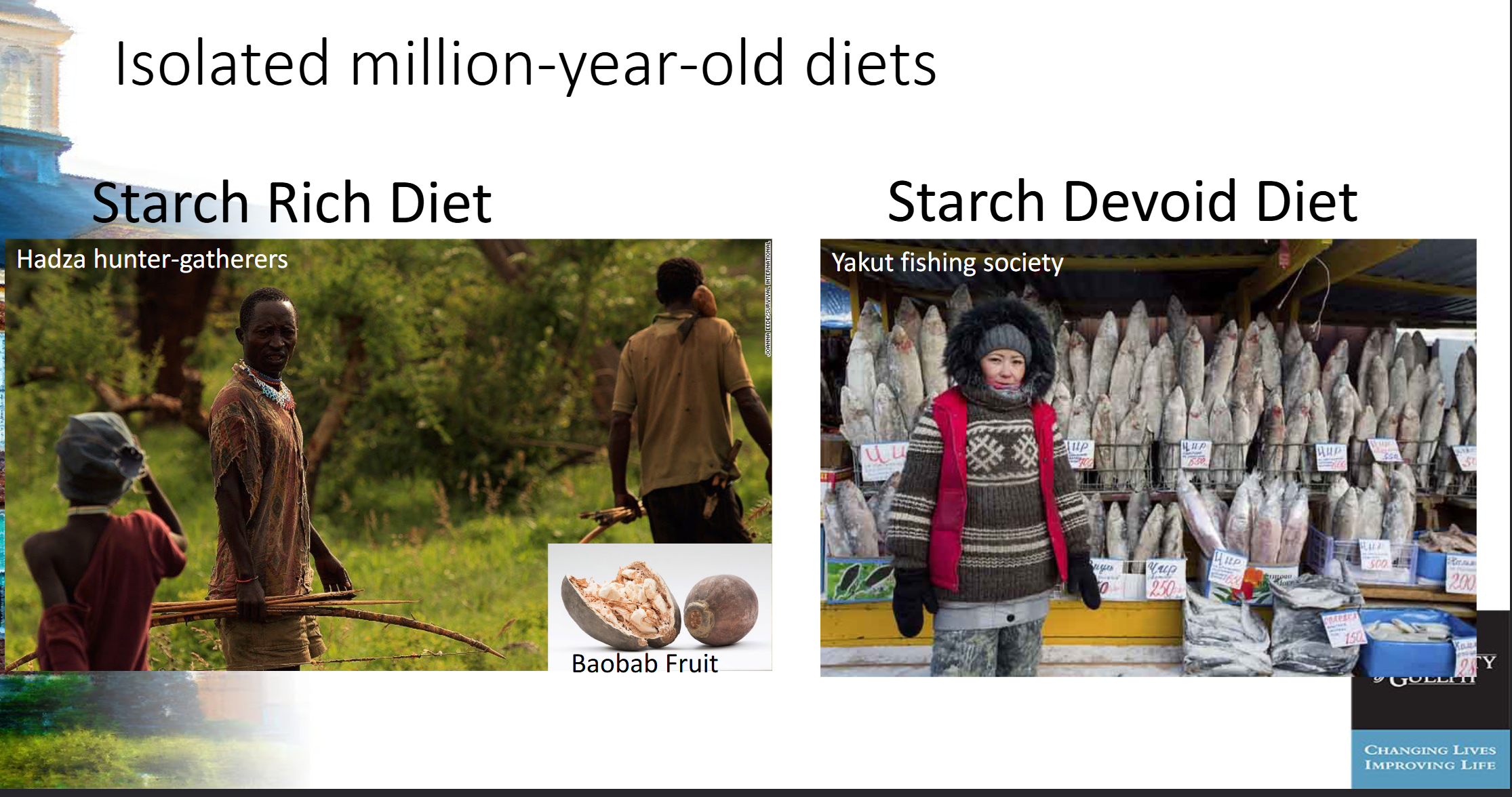
AMY1 → salivary amylase → breaks down starch
So, if someone eats a high-starch diet (lots of roots, tubers, grains, etc.), having more copies of the AMY1 gene can result in more salivary amylase being produced.
How does AMY1 Relate to Diet and Evolution?
High-starch diet → selection for more AMY1 gene copies → more salivary amylase
The researchers found that people with diets historically high in starch tended to have more copies of AMY1.
Person A: 3 copies of AMY1
→ produces less salivary amylase
→ less ability to begin digesting starch in salivaPerson B: 10 copies of AMY1
→ produces more salivary amylase
→ more starch digestion begins in the mouth
If a population has eaten a lot of starch for many generations, having more AMY1 copies could provide an advantage. Individuals with advantageous variants may leave more descendants, so the trait can become more common.
Changing diet = changing genome!

What is AMY1 correlation with obesity?
The graphs suggest that people with fewer AMY1 copies tend to have higher BMI/greater obesity risk.
For example, the slide says that having fewer than 4 copies versus more than 9 copies was associated with about an eightfold difference in obesity risk in that study.
⚠ Important: This is an association, not proof that having fewer AMY1 copies directly causes obesity. Other genetic, dietary, environmental, and lifestyle factors can also affect obesity.
What changed during the Industrial Revolution? (G)
Printing Press
Automobile
Electricity
More Importantly Our Food Changed Drastically!
Industrial Revolution → mass production + urbanization → need for food preservation, processing & safety → development of food science
Food for Thought. The Good and Bad of Industrialization
Western countries single largest cause of morbidity and mortality are diet-related chronic diseases!!!!
50-65% of the western adult population are afflicted with a diet related disease.
Food related disease do not stem from a single element of food consumption, but rather from a complex interaction of multiple nutritional factors
Global health leaders have even shifted attention from germs to
what United Nations Secretary-General Ban Ki-Moon calls “a
public health emergency in slow motion”.Perhaps, what is even more shocking is that non-communicable diseases are responsible for nearly 2/3rds of deaths in the Americas (First Time In History!)
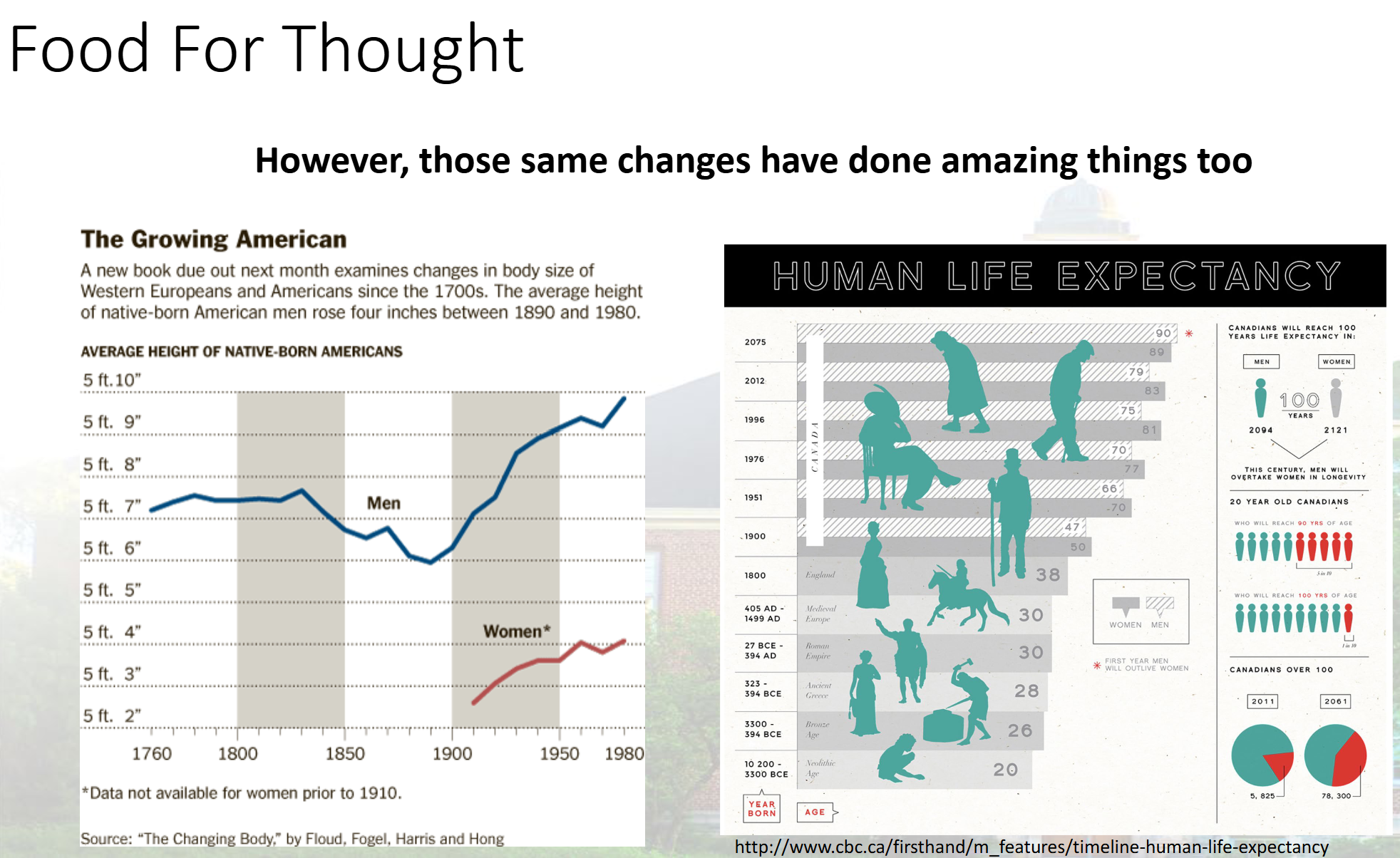
What is the most impactful affect of the Western Diet? (G)
Metabolic Disease
Diets today have led to the development of an entirely new form of
malnutrition, unheard of less than a century agoCountless populations have at least double digit percentages of people with metabolic syndrome (MetS);
Obesity is fundamental to MetS, as it precedes the emergence of impaired insulin sensitivity, dyslipidaemia, hypertension and a 1.6-fold increase in mortality

Classification of Foods (G)

Processed Foods do NOT equal Non-Processed Foods!
Canadians on average get ~48% of their calories from UPF
Individuals in the highest quintile of UFP consumption had significantly higher
body-mass-index (0.94 kg/m2; 95% CI: 0.42,1.47) and higher odds of being
obese

What does the “Death of the Homecooked Meal” Refer To?

Is Pasteurization a Positive or Negative Advancement?
Pasteurization was a major invention that decreased the incidences of Tuberculosis and Typhoid Fever
Food is now available year-round because of preservation techniques, being applied widely to the food supply

When did the Western Diet Start? (G)
It evolved through two main transitions:
~10,000 years ago: Introduction of agriculture & early animal husbandry.
~200 years ago: Industrialization leading to modern mechanized agriculture and modern livestock practices.

How different is our food supply from what we evolved with for thousands of years?
Recap Neolithic revolution did not really change what we ate
Industrial revolution wild grains and animals were modified
Food processing – Nutrient degradation and nutrient combinations which had never been seen in our 2 million years of evolution
70% of our daily energy intake was unavailable prior to the industrial revolution
Ex. Refined Sugar, Cereals, Alcohol, soft drinks, pizza, ice cream etc.

Examples of Processed Foods
Cereals: Ancestral wild grains were small and barely digestible until milling began; modern grains are heavily bred, intensely processed, and stripped of original nutrition.
Refined Sugar: Annual per capita intake surged from < 1kg (pre-500 BC) to 6.8 kg (post-Industrial Revolution) to 69 kg today, alongside high-fructose corn syrup.
Vegetable Oils (1909–1999): Industrialization caused drastic spikes in processed fats, including cooking oils (+130%), shortening (+140%), and margarine (+410%)
