Cheat sheet 8: Molecular Genetics 2
 Call Kai
 Learn
Learn Practice Test
 Spaced Repetition
 Match
Match Flashcards
 Knowt Play
1/21

There's no tags or description
Looks like no tags are added yet.
Name | Mastery | Learn | Test | Matching | Spaced | Call with Kai | Chat |
|---|
No analytics yet
Send a link to your students to track their progress
22 Terms
Genome Size
Total number of nucleotides in an organism.
Gene Number
Total number of coding sequences in an organism.
Gene Density
Ratio of gene number to genome size.
Repetitive DNA
Non-coding DNA unrelated to organism function.
Unique DNA
Coding sequences specific to an organism.
Transposable Elements
DNA sequences that can change positions within the genome.
Alternative Splicing
Single gene produces multiple protein products.
Introns
Non-coding regions within genes, absent in prokaryotes.
Exons
Coding sequences that remain in mRNA after splicing.
Epigenetics
Study of heritable changes without altering DNA sequence.
DNA Methylation
Addition of methyl groups, silencing gene expression.
Histone Acetylation
Modification that increases gene expression accessibility.
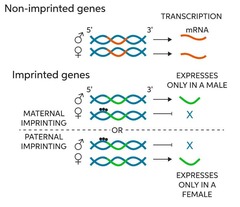
Genomic Imprinting
Expression of genes depending on parental origin.
Temperature-Dependent Sex Determination
Sex determined by environmental temperature during development.
Prader-Willi Syndrome
Condition due to paternal gene deletion on chromosome 15.
Angelman Syndrome
Condition due to maternal gene deletion on chromosome 15.
Queen Bees
Genetically identical, but express different genes due to diet.
Eukaryotes
Organisms with complex cells containing a nucleus.
Prokaryotes
Simple organisms without a nucleus, fewer genes.
Non-coding RNA
RNA molecules that do not code for proteins.
Gene Complexity
Eukaryotes have more complex genomes than prokaryotes.
Junk DNA
Non-coding DNA with no known function.