Comprehensive Sedimentary Rocks and Processes: Key Concepts and Famous Formations
 Studied by 0 people
 Call Kai
 Learn
Learn Practice Test
 Spaced Repetition
 Match
Match Flashcards
 Knowt Play
1/275

There's no tags or description
Looks like no tags are added yet.
Name | Mastery | Learn | Test | Matching | Spaced |
|---|
No study sessions yet.
276 Terms
Sedimentary Rocks
Rocks formed from the deposition or precipitation of sedimentary particles near the Earth's surface, accounting for 75% of rocks at the surface.
Mary Anning
An English fossil enthusiast who made significant contributions to the understanding of extinction events and fossil records in the early 19th century.
Physical Weathering
The breakdown of rocks into smaller pieces without changing their chemical composition.
Chemical Weathering
The breakdown of rocks through chemical reactions that alter the mineral composition.
Dissolution
A chemical weathering process where minerals dissolve in water, influenced by acidity.
Hydrolysis
A chemical weathering process where water interacts with minerals, breaking them down into new minerals.
Oxidation
A chemical weathering process where elements lose electrons, changing the mineral structure.
Bowen's Reaction Series
A series illustrating the sequence of mineral stability and crystallization at different temperatures and pressures.
Weathering
The breakdown of rocks at the Earth's surface, categorized into physical and chemical types.
Transportation
The movement of weathered material by wind, water, or ice.
Deposition
The accumulation of sediments in low areas such as riverbeds and lakes.
Burial and Lithification
The processes of compaction and cementation of sediments into solid rock.
Diagenesis
The physical and chemical changes that occur during the conversion of sediment to rock.
Compaction
The reduction of sediment volume due to pressure.
Cementation
The process where minerals precipitate from water and fill the spaces between sediment grains, binding them together.
Sedimentary Textures
The texture of sedimentary rocks influenced by the size, rounding, and sorting of clastic particles.
Strata
Layers of sedimentary rock.
Fossil Content
Indicates past life and environmental conditions within sedimentary rocks.
Ripple Marks
Features formed by water movement in sedimentary environments.
Mud Cracks
Features formed by drying conditions in sedimentary environments.
Clastic Particles
Includes boulders, cobbles, pebbles, sand, silt, and clay that make up sedimentary rocks.
Sorting
Refers to the uniformity of particle sizes in sediments; well-sorted sediments have similar sizes, while poorly sorted sediments have a mix.
Clastic Sedimentary Rocks
Rocks formed from solid particles created by weathering.
Chemical and Biochemical Sedimentary Rocks
Rocks formed from the precipitation of minerals from water through inorganic or biochemical processes.
Lithification
The process of turning loose sediment into solid rock through compaction and cementation.
Conglomerate
A clastic sedimentary rock composed of rounded gravel-sized particles.
Breccia
A clastic sedimentary rock composed of angular gravel-sized particles.
Sandstone
A clastic sedimentary rock made of sand-sized particles, primarily quartz.
Siltstone
A clastic sedimentary rock composed of silt-sized particles.
Shale
A clastic sedimentary rock composed of clay-sized particles.
Evaporites
Chemical sedimentary rocks formed when water evaporates, leaving behind minerals (e.g., halite, gypsum).
Limestone
A biochemical sedimentary rock composed mainly of calcite, formed from the shells of marine organisms.
Coal
A biochemical sedimentary rock formed from the accumulation of plant material in swampy environments.
Evaporation
The process that leads to the formation of evaporite minerals when water containing dissolved minerals evaporates.
Biochemical Processes
Processes where organisms contribute to the formation of sedimentary rocks by creating shells and hard parts that accumulate after death.
Depositional Environments
The environments where sediments accumulate, which play a crucial role in determining the characteristics of sedimentary rocks.
Deserts
Environments that typically have well-sorted sandstones.
Rivers
Environments that can produce conglomerates and sandstones depending on energy levels.
Mountains
Environments where fast-moving water can transport larger sediments.
Plains
Environments where slow-moving water carries the smallest particles.
Lakes and Swamps
Often result in the formation of shale and coal.
Sedimentary Rocks Formation
Formed by the settling of sediments. Gravity causes sediments to settle into relatively flat, horizontal layers of strata, following the Principle of Original Horizontality.
Depositional Environment
The geographic location where sediment is deposited, including various settings such as lakes, deserts, and marine environments.
Bedding
Reflects changing depositional conditions, indicating different grain sizes and energy conditions.
Navajo Sandstones
A famous set of rock formations in the American West, indicative of ancient desert environments.
Hermit Shale
Contains marine fossils, indicating that sea levels have changed over time, suggesting a swampy kind of deposit.
Cross-beds
Formed by wind or water movement, these structures indicate the direction of sediment flow.
Mudcracks
Formed when wet mud dries, leading to the contraction and creation of polygonal shapes.
Fossils and Footprints
Tracks of ancient organisms, including dinosaurs, provide insights into behavior and environmental conditions of the time.
Transgression
Occurs when sea levels rise, leading to marine sediments being deposited over terrestrial rocks.
Regression
Happens when sea levels fall, allowing terrestrial environments to re-emerge.
Example Sequence
1. Beach Sand: Initially deposited. 2. Mud Over Sand: Indicates a change to a marine environment. 3. Limestone Over Mud: Suggests a further rise in sea level.
Geological Maps
Display formations and provide a visual representation of the geology in a given area.
Key Components of Geological Maps
Color coding to represent different types of rocks and formations, and symbols and legends that help in identifying the stratigraphic layers.
Importance of Geological Study
Understanding sedimentary structures and their environments is crucial for reconstructing past geologic events and predicting future changes.
Study of Sedimentary Environments
Extends beyond Earth, applying principles of geology to other planets, such as Mars, where similar sedimentary structures have been found.
Metamorphic Rocks
Rocks formed from existing rocks (parent rocks) that undergo changes due to pressure, temperature, and chemically reactive fluids.
Metamorphism
The process by which existing rocks are transformed into metamorphic rocks due to changes in pressure, temperature, and fluid interactions.
Heat (in metamorphism)
Increases energy, causing minerals to rearrange.
Pressure (in metamorphism)
Alters the physical structure of the rock.
Fluids (in metamorphism)
Facilitate chemical reactions and mineral transformations.
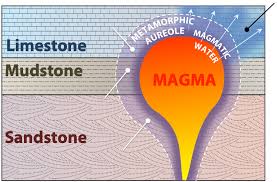
Contact Metamorphism
Occurs when rocks are heated by nearby molten magma or lava, resulting in localized changes.
Regional Metamorphism
Involves large areas of the crust subjected to high pressure and temperature, typically associated with mountain-building events.
Shock Metamorphism
Caused by meteorite impacts, leading to rapid changes in rock structure.
Burial Metamorphism
Results from the accumulation of overlying sediments, increasing pressure and temperature.
Foliation
Alignment of minerals due to differential pressure, creating layered structures.
Non-foliated
Rocks that do not exhibit layering, typically formed under uniform pressure.
Recrystallization
Minerals change size and shape without altering the chemical composition.
Neo-crystallization
New minerals form from the original minerals under metamorphic conditions.
Protolith
The original rock from which the metamorphic rock forms, significantly influencing the resulting metamorphic rock.
Metamorphic Grade
Refers to the intensity of metamorphism, determined by temperature and pressure conditions.
Foliated Rocks
Defined by crystal size, foliation degree, and metamorphic grade.
Slate
Low-grade metamorphism of shale.
Schist
Intermediate-grade metamorphism, characterized by larger crystals.
Gneiss
High-grade metamorphism, showing distinct banding of light and dark minerals.
Non-foliated Rocks
Do not exhibit foliation and are typically formed under uniform pressure.
Marble
Metamorphic rock formed from limestone.
Quartzite
Metamorphic rock formed from sandstone.
Stability Fields
Specific conditions (pressure and temperature) under which each mineral remains stable.
Index Minerals
Certain minerals that indicate the metamorphic grade and conditions, such as garnet and kyanite.
Deformation
Changes in the shape or volume of rocks due to stress.
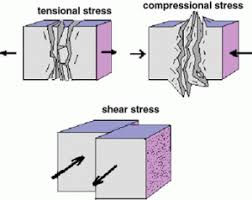
Compression
Stress that occurs when rocks are pushed together.
Tension
Stress that occurs when rocks are pulled apart.
Shear
Stress that occurs when rocks slide past each other.
Dip-Slip Faults
Movement along the fault is vertical.
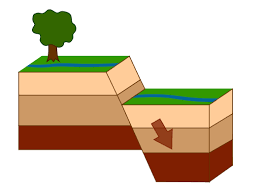
Normal Faults
Occur when the hanging wall moves down relative to the footwall.
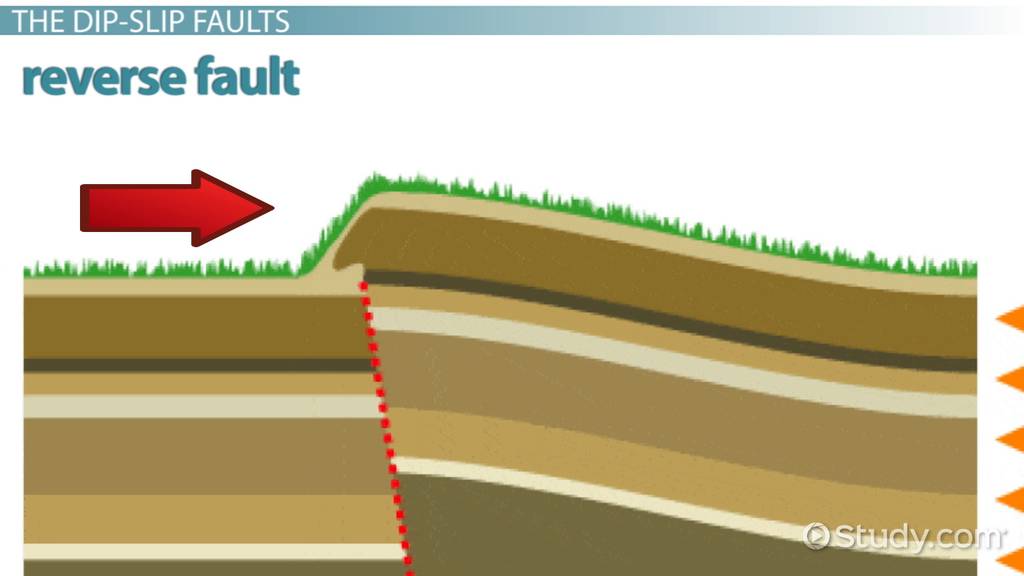
Reverse Faults
Occur when the hanging wall moves up relative to the footwall.
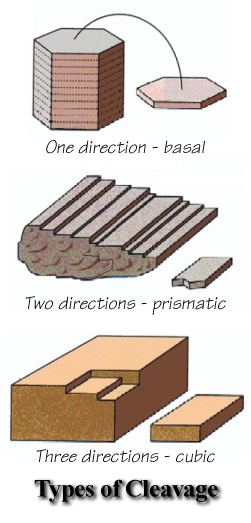
Cleavage
The ability of a rock to break along flat planes.
Metasomatism
Involves the alteration of a rock's composition due to fluids with dissolved ions, leading to new mineral formation.
Pressure Solution
Minerals dissolve where their surfaces press together.
Plastic Deformation
Minerals soften and deform under stress.
Remobilization
Minerals migrate and segregate into layers.
Stress
The force applied to a rock, which can cause deformation.
Confining Pressure
Equal stress applied from all directions.
Differential Stress
Unequal stress applied from different directions.
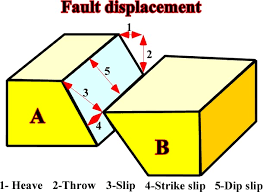
Displacement
Movement of rock blocks.
Strain
Change in shape of the rock.
Faults
Fractures in rocks where there has been movement.
Normal Fault
The hanging wall moves down relative to the footwall.
Reverse Fault
The hanging wall moves up relative to the footwall.