Positioning Your Patient for Mobility
 Call Kai
 Learn
Learn Practice Test
 Spaced Repetition
 Match
Match Flashcards
 Knowt Play
1/81

There's no tags or description
Looks like no tags are added yet.
Name | Mastery | Learn | Test | Matching | Spaced | Call with Kai | Chat |
|---|
No analytics yet
Send a link to your students to track their progress
82 Terms
What are the objectives of short-term positioning?
safety, comfort, access
When is long-term positioning used?
-a patient must remain in one position for a extended period
-a patient's mobility limitations prevent independent positional adjustments because of impairments (muscle weakness, decreased sensation, and neurologically impaired muscle control
What are the guidelines for positioning?
-explain procedures and obtain consent
-do AMAP, ANAP
-maintain normal spinal alignment AMAP
-use good body mechanics
-consider the environment
-provide a way for patient to call for help
How long can patient sit in one position?
15 minutes
A patient with a sacral pressure injury might not be able to maintain what position safely or comfortably?
supine
What is Fowler's position?
a semireclined position with the patient's knee usually somewhat flexed for comfort

What is venous thrombosis?
when blood veins become stagnant because of immobility
How do we prevent contractures?
-may need to avoid positions of comfort
-reposition frequently
What is an embolus?
a thrombus that has broken loose and is traveling in the bloodstream
What allows clinical to observe sin color changes with pressure variation and has been found to provide more accurate detecting of nonblocking erythema during skin blanching tests?
piece of glass or clear rigid plastic
When caring for patients in their homes what should you consider having? Why?
a flashlight; good lighting is vital to effective inspection
What is the correct long-term positioning for supine?
-support under calves with suspension of heels
-neutral position of glenohumeral joint by placing pillow under arm
What is the correct long-term positioning for sitting?
-more frequent repositioning because increased amount body weight and flexion contractures
-normal curves of the back are supported by seat or small bolster
-CoM over BoS
-approximate 90 degree positioning
-avoid sacral sitting
-support arms
What is dump (wheelchair)?
a wheelchair seat angle
Patients who experience pain from pressure in the perineal area sometimes opt to what?
sit in a donut to relieve pressure
What is static stability?
ability to maintain a position while stationary
What is controlled mobility?
dynamic postural control; purposeful intentional movements
What is short term positioning?
supine, prone, sidelying, and sitting
When is short term positioning used?
-a patient is preparing for a short-term therapeutic intervention
-a patient is performing a specific exercise
-a patient is able to make minor positional adjustments during treatment and change positions when treatment is complete
What is the short-term positioning checklist?
-patient safety
-good spinal alignment
-accessibility of necessary areas of the body
-trunk and extremities supported for comfort
-positioned to optimize interaction with the environment
-special need accommodated
What is the correct short-term positioning for supine?
-make sure that patient is straight and centered on table
-place pillow under head and between knee to ankle
-arms rested at patients' side or on chest/abdomen
What is the correct short-term positioning for prone?
-make sure patient is straight and centered on table
-place pillow under the ASIS or between the knee to ankle and at head or use cutout of table
-arms rested at patients' side or with forearms alongside the head
What is the correct short-term positioning for sidelying?
-make sure patient is straight and centered on table
-place pillow under head and vertically between the patient's legs
-underside arm is positioned forward of the body
What are the long-term positioning objectives?
-safety
-prevention
-intervention
-comfort and quality of life
How often do you change bed positions?
at least every 2 hours
If a patient is in bed for too long what cause happen?
bed sores (pressure injury)
What is the long-term positioning checklist?
-clear airway
-good spinal alignment
-minimized pressure over bony prominences
-minimized gravity creating shearing forces
-cushioned support surfaces
-immobile extremities elevated
-prevent joint and soft-tissue contractures
-trunk and extremities supported/stabilized
-long-term functional positions
-positioned to optimize interaction with the environment
-special needs accommodated
What are the overall goals of long-term positioning?
-safety
-prevention
-intervention
-patient quality of life
What is the correct short-term positioning for sitting (wheelchair)?
-normal spinal curves
-hips and back are in good alignment
-maintain normal lumbar spine alignment
-armrests set at the right height
How do you reduce pressure in the distal thighs and feet during short-term sitting?
raising and supporting the feet
What is the correct short-term positioning for sitting (examination or intervention)?
-normal spinal curves
-hips and back are in good alignment
-maintain normal lumbar spine alignment
-lean forward onto the supporting surface
No matter how patients are positioned and what safety precautions have been take, patients must always have a way to ask for what?
help; the clinician should provide the patient with an accessible call bell
Before any short-term positioning is complete, always ask patients what?
if there is anything that would make them more comfortable
A patient with hemiparesis following a stroke may not be able to lie in what position?
on the weak side
A patient with increased abdominal habitus may need what when in a sidelying position?
additional pillows under the chest to support the head, neck, and shoulder girdle
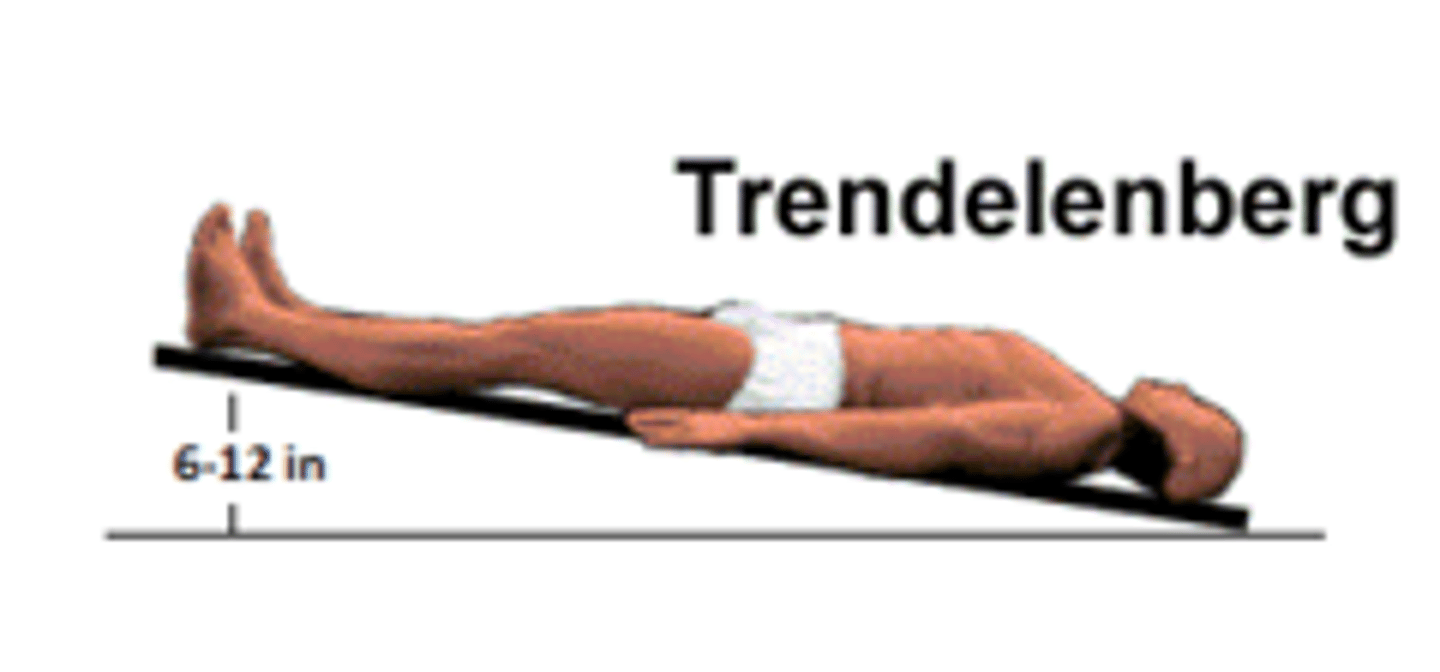
What is the Trendelenburg position?
the patient is supine with head of the bed lower than the foot of the bed
What are contractures?
limitations in joint motion caused by adaptive shortening in the ligaments, tendons, and muscles
What do the wrist and hand often develop following central nervous system disorders such as strokes and brain injury?
edema and flexion contractures
What systems does immobility negatively effect?
-integumentary
-musculoskeletal
-cardiopulmonary
-neurological
What is the most common contracture?
flexion contractures
If your patient demonstrates signs of a pulmonary embolism, including difficulty breathing, chest pain, fainting, or rapid breathing what should you do?
get emergency medical assistance immediately
What exercise can be helpful for preventing DVTs?
frequent active ankle movements
How do we promote cardiovascular health?
-positioning distal extremities at or above the level of the heart to minimize edema
-vary demand on the heart by including more upright positioning
-vary positions to promote lung drainage
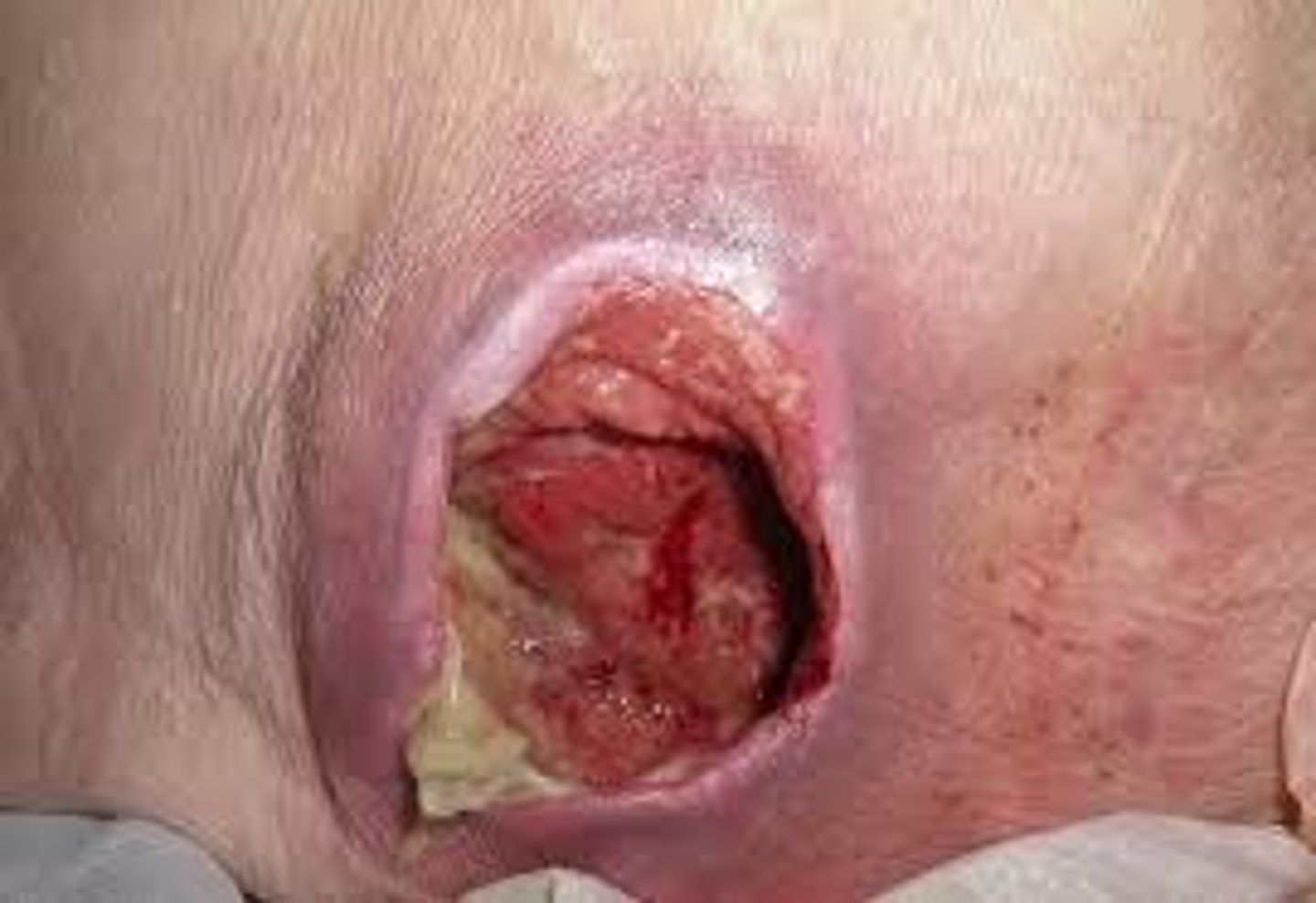
What is a pressure injury?
localized injury to the skin caused by unrelieved pressure or pressure with shear; results in damage of underlying tissue
How do you prevent pressure injuries?
-no more than 2 hours in one position in bed
-no more than 15 minutes in one position sitting
-shift weight and reposition more frequently if patient has increased risk factors
What makes a patient more susceptible to pressure injuries?
-decrease mobility
-fragile skin
-history of skin breakdown
-incontinence
-impaired sensation, posture, cognition, and circulation
-cachexia
-muscle atrophy
-friction shear
-nutritional deficiencies
-certain medications
What is ischemia?
lack of blood supply caused by obstruction and tissues begin to die
What are the key biomechanical factors that lead to pressure injury and must be considered in positioning?
load, pressure, and time
What are the high-risk areas for pressure injuries during supine?
-occiput
-scapulae
-spinous processes
-elbows
-sacrum/coccyx
-ischial tuberosity
-lateral malleoli
-heels
What are the high-risk areas for pressure injuries during prone?
-ear/side of face
-chin
-anterior shoulder
-iliac crests
-ASIS
-anterior knee
-dorsal of feet
What are the high-risk areas for pressure injuries during sidelying?
-ear/side of face
-humeral head
-hip/greater trochanter
-lateral femoral condyle
-medial femoral condyle (inside of both knees)
-lateral malleolus
-medial malleoli (inside of both ankles)
What are the high-risk areas for pressure injuries during sitting?
-occiput
-scapulae
-spinous processes
-elbows
-sacrum/coccyx
-ischial tuberosity
-heels
What is the skin blanching test?
healthy lighter-color skin will blanche when pressed and quickly return to healthy pink when pressure in released
What is the redness rule?
do not position a patient with pressure on a compromised area
When examining darker skin how do you do a skin blanching test?
-ask about the history of pressure injuries
-use good lighting
-look for coloration changes
-palpate for temperature and texture changes
-consider thermal imaging for high-risk patients
Where might a pressure injury be occurring from a sheet tucked tightly under the foot of the bed?
tips of the patient's great toes
Redness that persists more than 20 minutes after pressure relief indicates what?
the body has not yet recovered from previous pressure loading and can indicate breakdown of the sin
What is the Braden Scale?
a scale used to predict pressure sore risk
What are the factors of the braden scale?
-sensory perception
-moisture
-activity
-mobility
-nutrition
-friction
-shear
What is the correct long-term positioning for sidelying?
-arm supported to prevent hand from falling below the heart
-pillow between knees and ankles with knees flexed
-shoulder on the bed is positioned slightly forward
-pillow is folded long-ways and tucked inward under patients trunk
What is the correct long-term positioning for modified sidelying?
-3/4 supine or 3/4 prone
-pillow between knees and ankles with knees flexed
-pillow under trunk
What long-term position is rarely used?
prone
What long-term position is recommended for patients at high risk for developing pressure injuries?
modified supine
When is long-term positioning for prone used?
to promote lung function in critically ill patients by a trained team
Why do you have to beware of oversized lumbar rolls during long-term sitting?
it can create excessive lumbar lordosis, pain, and fatigue
What is sacral sitting?
sitting on the sacrum instead of ischial tuberosity
How should you position a patient with a hemiparetic shoulder?
the shoulder forward so the weight is on the patients scapula instead of medial head of humerus
How do you position a patient in supine after a stroke?
-elevate head of bed 30 degrees
-place pillow under affected shoulder blade
-position head, neck, and trunk in neutral alignment
-protract pelvis on affected side
-elevate flaccid arm and hand slighlty
What are the general guidelines for positioning a patient after a LE amputation?
-dont let the residual limb hang off bed
-dont place pillow under thigh or knee of a transtibial amputation with supine
-dont place pillow under low back
-dont allow patient to lie for long periods with knees flexed
-dont all patient to cross legs for long periods
-do keep hips in neutral rotation
-do extend the knee
-do minimized sitting time with knee flexed
What are positioning devices used for?
-reduce or eliminate load on an area
-prevent certain contraindicated motions or positions
-provide additional protection or cushioning for vulnerable areas
Does a cushion allow sufficient pressure distribution to prevent skin breakdown?
no; cushions do not do away with the need for positioning schedules or skin inspections
Why should you have multiple pillows ready for long-term positioning?
it tends to require additional pillows, cushioning, and bolsters
What is restraint?
any device, material, or manual method that limits a patients ability to move their arms, legs, body, or head freely
How do you use restraints?
-only when absolutely necessary
-requires medical order
-use least restrictive device (LRD)
-fasten with quick-release buckles or knots
-monitor patient closely
Is a pelvic strap a restraint?
it depends; if it is used to improve trunk stability then no, if it is to prevent a patient from getting out of their chair and wandering then yes
Are side rails on a bed considered a restraint?
it depends; if it is used to prevent a patient from voluntarily getting out of bed then yes, if it is used to prevent a physically unable patient from accidentally falling out of bed then no
Which restraints are attached to the bed frame?
wrist and vest restraints
How should you position a patient after a total hip arthroplasty (postlateral approach)?
-avoid hip flexion beyond 60-90 degrees
-avoid hip adduction past 0 degrees
-avoid hip internal rotation past 0 degrees
-abduction wedge
-hip adduction in sidelying
What should you keep in mind when using restraints?
-use as a last resort
-apply devices correctly
-if a medically order restraint must be removed, replace it after activity ends
-watch for skin breakdown
-reassess frequently for repositioning and less restrictive options
What is a common pattern of contracture development?
-scapular retraction
-shoulder adduction, flexion, and internal rotation
-elbow, wrist, and finger flexion
-hip adduction, flexion, and internal rotation
-knee flexion
-ankle plantar flexion
What do pressure injuries result from?
high pressure over a short time or low pressure over a long time
Still learning (81)
You've started learning these terms. Keep it up!