AP World History: Global Interactions (1450 - 1750)
 Call Kai
 Learn
Learn Practice Test
 Spaced Repetition
 Match
Match Flashcards
 Knowt Play
 Podcast
1/59

Earn XP
Description and Tags
Comprehensive flashcards covering AP World History units on Global Interactions (1450-1750), European exploration, conquest, gunpowder empires, East Asian dynasties, Russia, Africa, and European transformations.
Name | Mastery | Learn | Test | Matching | Spaced | Call with Kai | Chat |
|---|
No analytics yet
Send a link to your students to track their progress
60 Terms
North America - Political (1450-1750)
English colonies established self-governing local assemblies and charters with high local autonomy, whereas French colonies remained under direct royal administration.
North America - Innovation & Technology (1450-1750)
Adaptation of European firearms, metal tools, and specialized canoes for the trans-Atlantic and inland river fur trade.
North America - Environment (1450-1750)
Clearing of coastal forests for cash-crop agriculture, introduction of European livestock, and westward displacement of indigenous populations.
North America - Cultural (1450-1750)
French Jesuit missionary efforts to convert Amerindians to Catholicism, alongside Protestant religious pluralism in English colonies.
North America - Economic (1450-1750)
Mercantilist economic system reliant on French fur trapping in the north and English cash-crop plantation agriculture (tobacco, rice) in the south.
North America - Social (1450-1750)
Migration of complete European families to English colonies leading to strict racial separation, compared to cooperative trapper relationships in French territories.
Latin America - Political (1450-1750)
Highly centralized administrative control under royal Viceroys, monitored by special judicial courts called audiencias.
Latin America - Innovation & Technology (1450-1750)
Development of deep-shaft silver mining techniques and sugar-processing mills (engenhos) powered by water or animal labor.
Latin America - Environment (1450-1750)
The Great Dying caused by Old World pathogens (smallpox), deforestation for massive sugar plantations, and soil erosion from grazing cattle.
Latin America - Cultural (1450-1750)
Dominance of Roman Catholicism, marked by widespread conversion efforts and the development of syncretic religious practices among native peoples.
Latin America - Economic (1450-1750)
Mercantilist extraction of silver and production of cash crops (sugar) driven by forced native labor systems (encomienda, mit'a) and chattel slavery.
Latin America - Social (1450-1750)
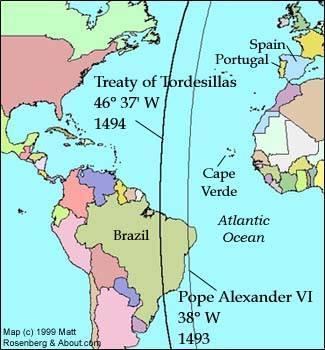
Rigid ethnic hierarchy (casta system) with Peninsulares at the top, followed by Creoles, Mestizos, Mulattoes, Amerindians, and enslaved Africans.
Russia - Political (1450-1750)
Centralized autocratic tsarism, strengthened by Peter the Great's Table of Ranks which tied noble status to state service and merit.
Russia - Innovation & Technology (1450-1750)
Military modernization adopting European artillery, firearms, shipbuilding techniques, and westernized army logistics under Peter the Great.
Russia - Environment (1450-1750)
Territorial expansion across the Eurasian steppe and Siberia to obtain furs, alongside construction of St. Petersburg on the Baltic coast.
Russia - Cultural (1450-1750)
Russian Orthodox Christianity, heavily influenced by forced westernization decrees imposing European dress and beard removal on nobles.
Russia - Economic (1450-1750)
Agrarian economy supported by hereditary serfdom, with state-directed industrial manufacturing to support imperial military expansion.
Russia - Social (1450-1750)
Dominant landowning boyar aristocracy governing a vast majority of bound serfs, with free Cossack warrior communities on the frontiers.
Ottoman Empire - Political (1450-1750)
Absolute rule by the Sultan, supported by an extensive imperial bureaucracy headed by the Grand Vizier.
Ottoman Empire - Innovation & Technology (1450-1750)
Early adoption of gunpowder cannons and heavy artillery, alongside state-sanctioned restrictions on the Arabic and Turkish print revolution.
Ottoman Empire - Environment (1450-1750)
Control over key land and maritime crossroads across Eastern Europe, North Africa, and the Middle East connecting the Black and Mediterranean Seas.
Ottoman Empire - Cultural (1450-1750)
Sunni Islamic state that implemented the millet system to grant self-governing religious autonomy to Orthodox Christian and Jewish subjects.
Ottoman Empire - Economic (1450-1750)
Control of Eurasian trade routes and tax farming, severely disrupted in the 16th and 17th centuries by inflation caused by New World silver.
Ottoman Empire - Social (1450-1750)
The devshirme system levying Christian boys to create an elite Janissary infantry, alongside organized urban merchant and artisan guilds.
Safavid Empire - Political (1450-1750)
Autocratic rule by the Shah, who established a standing firearm army of converted slaves to check the political power of tribal qizilbash elites.
Safavid Empire - Innovation & Technology (1450-1750)
Modernization of artillery and musket production with European assistance, though lacking a naval fleet for maritime trade.
Safavid Empire - Environment (1450-1750)
Landlocked empire centered on the Iranian plateau, with a planned imperial trade capital built at Isfahan.
Safavid Empire - Cultural (1450-1750)
Twelver Shi'ism established as the mandatory state religion, blending Persian literature, poetry, and distinctive colorful dome architecture.
Safavid Empire - Economic (1450-1750)
State-sponsored trade network supported by royal workshops producing high-value raw silk textiles and Persian carpets.
Safavid Empire - Social (1450-1750)
Tensions between Turkish qizilbash warrior chieftains, Persian bureaucrats, and Christian slave converts integrated into the government.
African Empires - Political (1450-1750)
Rise of centralized, militaristic coastal and forest kingdoms (e.g., Asante, Dahomey) that expanded political power through trade monopolies.
African Empires - Innovation & Technology (1450-1750)
Import and strategic military deployment of European firearms to consolidate regional power and capture rivals.
African Empires - Environment (1450-1750)
Adoption of New World food crops (maize, cassava, peanuts) introduced via the Columbian Exchange, enriching agricultural diets.
African Empires - Cultural (1450-1750)
Coexistence of Islam, traditional indigenous ancestral faiths, and elite conversions to Christianity (e.g., Kingdom of Kongo).
African Empires - Economic (1450-1750)
Exchange of war captives, gold, and ivory with European coastal factories for manufactured goods, textiles, and guns.
African Empires - Social (1450-1750)
Severe gender ratio imbalances in West Africa caused by the trans-Atlantic slave trade's preference for young adult male captives.
East Asia: China - Political (1450-1750)
Centralized imperial bureaucracy guided by the civil service examination system, under Manchu Qing rule separating Manchu elites from Han subjects.
East Asia: China - Innovation & Technology (1450-1750)
Mastery of high-grade porcelain kiln production and silk weaving, alongside Jesuit transmission of European astronomical devices and clocks.
East Asia: China - Environment (1450-1750)
Cultivation of American food crops (maize, sweet potatoes) on previously unusable soil, spurring massive demographic expansion.
East Asia: China - Cultural (1450-1750)
Dominance of Neo-Confucian ideals, ancestor veneration, high literacy, and popular urban novels such as Dream of the Red Chamber.
East Asia: China - Economic (1450-1750)
Favorable global balance of trade, absorbing much of the world's silver supply in exchange for exports of silk, porcelain, and tea.
East Asia: China - Social (1450-1750)
Confucian social order placing scholar-gentry at the top and merchants at the bottom, accompanied by patriarchal practices like foot-binding.
East Asia: Japan - Political (1450-1750)
Centralized feudalism under the Tokugawa Shogunate, controlling regional daimyos through the alternate attendance (sankin-kotai) system.
East Asia: Japan - Innovation & Technology (1450-1750)
Widespread adoption of woodblock printing and limited 'Dutch Learning' (Rangaku) in medicine and geography via Deshima island.
East Asia: Japan - Environment (1450-1750)
Intensive agricultural land management, sophisticated irrigation systems, and deliberate population controls due to limited mountain geography.
East Asia: Japan - Cultural (1450-1750)
Blending of Neo-Confucianism, Shintoism, and Buddhism, alongside popular urban arts including Kabuki theater and ukiyo-e prints.
East Asia: Japan - Economic (1450-1750)
Enforcement of the closed-country policy (sakoku), which restricted foreign maritime trade to foster a flourishing domestic commercial economy.
East Asia: Japan - Social (1450-1750)
Four-tier social hierarchy (Samurai, Peasants, Artisans, Merchants), where long peace forced indebted samurai to rely on wealthy urban merchants.
South Asia - Political (1450-1750)
Centralized Mughal imperial control supported by bureaucratic tax collectors (zamindars) and cooperation with regional Hindu rajas.
South Asia - Innovation & Technology (1450-1750)
Deployment of mobile field artillery in conquest, alongside monumental engineering exemplified by the Taj Mahal.
South Asia - Environment (1450-1750)
Agricultural intensification across the fertile Gangetic plain, focusing heavily on indigo, cotton, and silk production.
South Asia - Cultural (1450-1750)
Synthesis of Indo-Persian culture, Akbar's syncretic Din-i Ilahi, and the development of Sikhism in the Punjab region.
South Asia - Economic (1450-1750)
World-leading production and export of printed cotton textiles, driven by active trade with European joint-stock companies.
South Asia - Social (1450-1750)
Ruling Muslim minority presiding over a Hindu majority, characterized by strict caste divisions and social customs like purdah and sati.
Europe - Political (1450-1750)
Development of centralized absolute monarchies claiming divine right (France, Spain) and constitutional parliamentary states (England, Netherlands).
Europe - Innovation & Technology (1450-1750)
Invention of the moveable-type printing press, major Scientific Revolution discoveries, and caravel ship designs with mounted naval cannons.
Europe - Environment (1450-1750)
Rapid urban expansion, clearing of forests for naval ship construction, and global biological exchanges driven by the Columbian Exchange.
Europe - Cultural (1450-1750)
Major intellectual shifts including Renaissance Humanism, the Protestant Reformation, the Scientific Revolution, and the Enlightenment.
Europe - Economic (1450-1750)
Rise of commercial capitalism, joint-stock companies, private banking, and state-directed mercantilist trade competition.
Europe - Social (1450-1750)
Growth of a prosperous urban middle class (bourgeoisie) and a gradual transition toward nuclear families marrying for personal choice.