Mammalogy Unit 1
 Call Kai
 Learn
Learn Practice Test
 Spaced Repetition
 Match
Match Flashcards
 Knowt Play
1/145

There's no tags or description
Looks like no tags are added yet.
Name | Mastery | Learn | Test | Matching | Spaced | Call with Kai | Chat |
|---|
No analytics yet
Send a link to your students to track their progress
146 Terms
Mammalogy
The study of mammals
Mammal Shared Features
Vertebrate
Endothermic
Coat of fur
Possess mammary glands
Give birth to live young (few exceptions)
Endothermic
Internal generation of body heat; aided by fur/hair
Vibrissae
Specialized hair


Aristotle
One of the earliest important figures in the study of mammalogy
Aristotle’s first classification scheme
Viviparous quadrupeds:
Cloven hoofs
Solid-hoofed
others
Cetaceans
Humans

Galen
Famous Roman physician. Anatomist - discovered organ system (130-201 AD)

Mark Catesby
English explorer who documented animals in North America (1683 - 1749)

Georges Buffon
French explorer who documented animals in North America (1707 - 1788)
Carolus Linnaeus
Wrote Systema Naturae (1758) which established bases for modern taxonomy
Binomial Nomenclature
E.g. Homo sapiens
Lewis and Clark
1804: St. Louis to Pacific Ocean
First to report and describe many mammals
Zebulon Pike
1805: Tasked with finding the source of the Mississippi (failed).
Described many new mammals of the American Southwest
Fur Trade
Late 1700s - Early 1800s. Period of severe exploitation, crashed populations of many mammals. By the 1850s became almost nonexistent due to overexploitation.

Spencer Fullerton Baird
Wrote the General Report on North American Mammals (1859) (1823 - 1887)

C. Hart Merriam
Wrote North American Fauna. Developed techniques to identify mammals, including cranial traits and dentition. First president of the American Society of Mammalogists (1919) (1855 - 1942)
Joseph Grinnell
Established mammalogy as an academic discipline. Defined the niche. (1877 - 1939)
Biological Species Concept (BSC)
Species are distinct when reprod
Phylogenetic Species Concept (PSC)
Species are the smallest diagnosable cluster of individual organisms within which there is pattern of ancestry and descent
Subspecies
Group of organisms that can inbreed with others from another population
Phylogenetic Tree
A way to show relationships between organism through evolutionary time
Cladogram
A way to show relationships between organisms through their shared traits
Monophyletic Group
A group of species descended from one common ancestor.
Root
Most recent common ancestor of all species in a phylogenetic tree
Outgroup
Helps infer primitive states of in-group
Node
Represents a speciation event
Internal branch
A hypothesized ancestral species
Convergent Evolution
Some species may look similar, but are unrelated.
Edentata
Meaning “toothless”. Originally comprised of both families Cingulata and Pilosa until being found to be polyphyletic
Biogeography
The distribution of organisms
Causes of changes in species range
Continental Dirft
Rise of Landforms
Ecological Constraints
Extinction & Diversification
Pangaea
Supercontinent: 225 MYA Permian
Laurasia & Gondwanaland
Supercontinents: 200 MYA Triassic
Current Faunal Regions
Nearctic
Palearctic
Neotropical
Argentine
Ethiopian
Mediterranean
Madagascan
Australian
Oriental
West Indian
Vicariance
Geographic isolation of populations over time
Wallace’s Line
Discovered by Alfred Russell Wallace. Found going through Southeast Asia and Australia; species on either side of the line are fundamentally different from each other
The Great American Interchange
Panamanian isthmus rises out of the ocean during the Pleistocene, allowing for dispersal between the Americas
Bergmann’s Rule
An ecogeographic principle that states that within a broadly distributed taxonomic clade, populations and species of larger size are found in colder environments and species of smaller size are found in warmer regions
Allen’s Rule
Mammals in colder climates have shorter limbs than those in warmer climates
Chicxulub Crater
Apart of the modern day Yucatan Peninsula. The impact site of the meteorite that caused the K-2 extinction event 65 MYA.
Pennsylvanian Period
First appearance of synapsids 323 MYA
Triassic Period
First appearance of mammals 248 MYA
Paleocene Epoch
Adaptive radiation of metatherians and eutherians 65 MYA
Amniota
Common ancestor of mammals & reptiles.
Key Traits: amniotic sac, shelled egg
Cranium
Top part of a mammal skull
Mandible
The dentary bone
Heterodont Dentition
Different types of teeth for different purposes
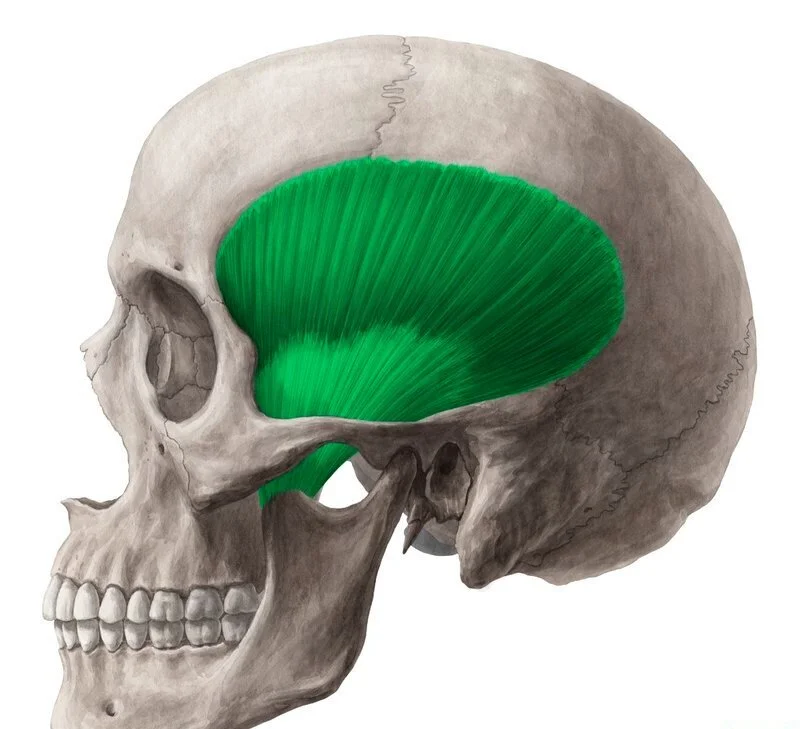
Temporal Fossa
Opening for temporalis muscle to connect to dentary bone
Synapsida
Mammal-like reptiles (~320 MYA). Had one temporal opening behind orbit and heterodont dentition.
Eventually diverged intp Pelycosauria and Sphenacodontia, the latter would later diverge into Therapsida
Pelycosauria
Terrestrial herbivores and the largest land vertebrates during the Permian. ~280 MYA
Sphenacodontia
Dominant carnivore with an angular bone in their inner jaw, which would eventually become the middle ear in mammals. ~280 MYA
Mammalian ear bones
Malleus, Incus, Stapes

Zygomatic Arch
Allows for passage of jaw muscles
Temporalis
Jaw closing power
Masseter
Grinding force

Therapsida
Carnivores. Limbs went from being out to the side to being underneath their body. ~248 MYA
Cynodontia
Emerged from Therapsids during the Triassic. Developed a secondary palate, complex cheekteeth, cusps on the teeth, and 2 occipital condyle. Very mammal-like. 213 MYA

Secondary Palate
An adaptation that allows some mammals to breath more efficiently and retain moisture in the nasal cavity
Diphyodont
2 sets of teeth, including deciduous (milk teeth) and permanent
Thecodont
Teeth set in sockets called dental alveoli
Food Habits
Insectivorous
Carnivorous
Herbivorous
Omnivorous
Insectivorous Orders:
Monotremata
Notorctemorpha
Pilosa
Pholidota
Tubulidentata
Carnivora (aardwolfs)
Eulipotyphla
Chiroptera
Cingulata
Procumbent
Forward pointing incisors, found in insectivores
Tactile Receptors
Structures that help insectivores find invertebrate food (Platpus bill, Eimer’s organ)
Eimer’s Organs
22 fleshy appendages that provide sensory input
Myrmecophagous
“Ant-eaters”. Has reduced and/or simplified (peg-like) teeth, enlarged salvary glands that has digestive enzymes and produce sticky secretions, and a long, sticky tongue.
Carnassials
Modified premolar, used for shearing
Papillae
Specialized hairs on tongue of felines used to scrape meat from carcass
Sanguinivorous
“Blood-eating”. Famously vampire bats. Have knife-like canines, small cheekteeth and a frooved tongue to lap up blood
Herbivorous Browsers and Grazers
Cetartiodactyla
Perissodactyla
Diprodontia
Pilosa
Probos
Herbivorous Gnawers
Rodentia
Lagomorpha
Rumination
Digastric digestive system
Foregut Fermentation
Ruminants. Multi-chambered stomach
Rumen
Moistens food
Reticulum
Cud forms, regurgitated, enzymes digest
Omasum
Food swallowed 2nd time, kneeded
Abomasum
“True Stomach” of foregut fermenters
Hindgut Fermentation
Do not regurgitate food and absorbs nutrients in the small intestine. Less efficient but passes food rapidly. Must eat more.
Coprophagy
Feed on feces, which optimizes uptake of nutrients
Insectivores
Invertebrate eaters. Lack fibrous diet and have a fast digestion because fermentation is not required

Carnivores
Meat eaters. Have a short intestine and small cecum

Ruminant Herbivores
4-chambered stomach, large rumen and long small and large intestine.
Non-ruminant Herbivores
Simple stomach, but large stomach
Integument
Refers to skin, glands, hair, and epidermal derivatives. Plays a role in homeostasis, behavior and predation
Erector Pili
Muscles that make your hair stand up
Angora
Hair growth that is continuous
Definitive Hair Growth
Growing to a certain point before being shed
Pelage
Body hair
Awn
Guard hairs. Long and coarse
Underfur
Short, dense, fine fur underneath awn
Bristles
Long, angora growth for visual signaling
Disruptive Hair Coloration
Disorients predator
Crypsis Hair Coloration
Camouflages
Aposematic
Warning coloration
Scent Glands
Modified eccrine or apocrine glands that secrete pheromones for mate attraction. Can also be used for defense.
Mammary Glands
Used for milk production (lactation)
Distil Phalanx
End of a cats claw
Horn
Inner core of bone from frontal bone, outer layer is keratinized epidermal growth. These often grow continuously and can be found in both sexes
Antlers
Made entirely of bone, are branched, experience annual regrowth and are only in males (except caribou)
Ambulatory
Walking species