6.2/3/5 - Bacteria as pathogens, action of antibiotics
 Call Kai
 Learn
Learn Practice Test
 Spaced Repetition
 Match
Match Flashcards
 Knowt Play
1/35

There's no tags or description
Looks like no tags are added yet.
Name | Mastery | Learn | Test | Matching | Spaced | Call with Kai | Chat |
|---|
No analytics yet
Send a link to your students to track their progress
36 Terms
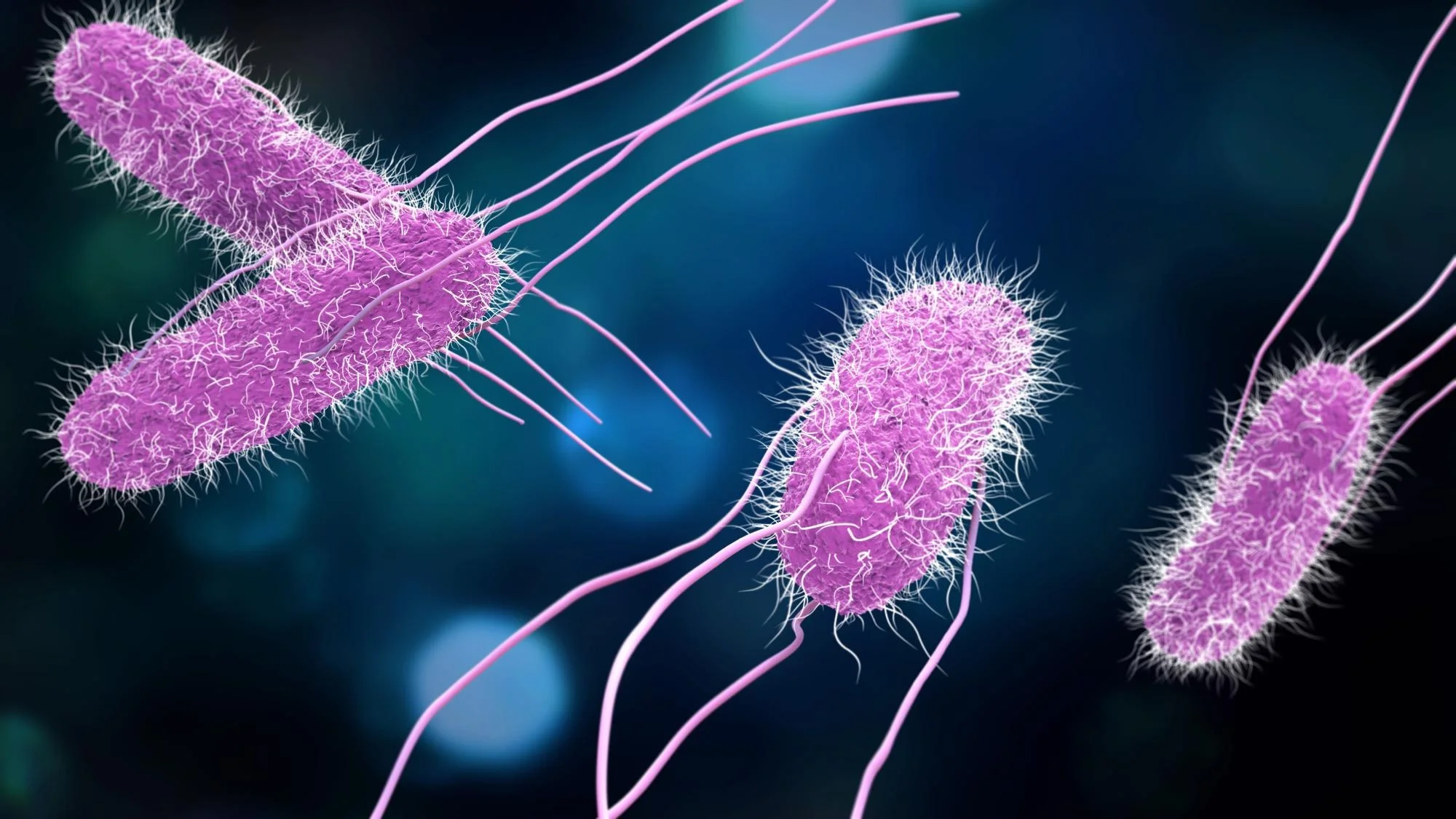
What is the Latin name for the pathogen of salmonella?
Salmonella enterica (Gram-negative bacterium)
How is salmonella transmitted?
Through food, particularly poultry & eggs, especially when uncooked, lightly-cooked or through pasteurised milk (e.g. mayonnaise, ice-cream & soft-boiled eggs)
What is the mode of infection for salmonella?
Colonises the lumen of the small intestine & remains there
Releases endotoxins, which stimulates the inflammatory response in epithelial cells
Reduces the absorption of water, resulting in diarrhoea
What is the pathogenic effect of salmonella?
Sudden signs 1-2 days after eating infected food
Symptoms include: diarrhoea, vomiting, abdominal pain, mild fever & headache
Recovery usually in 2-3 days
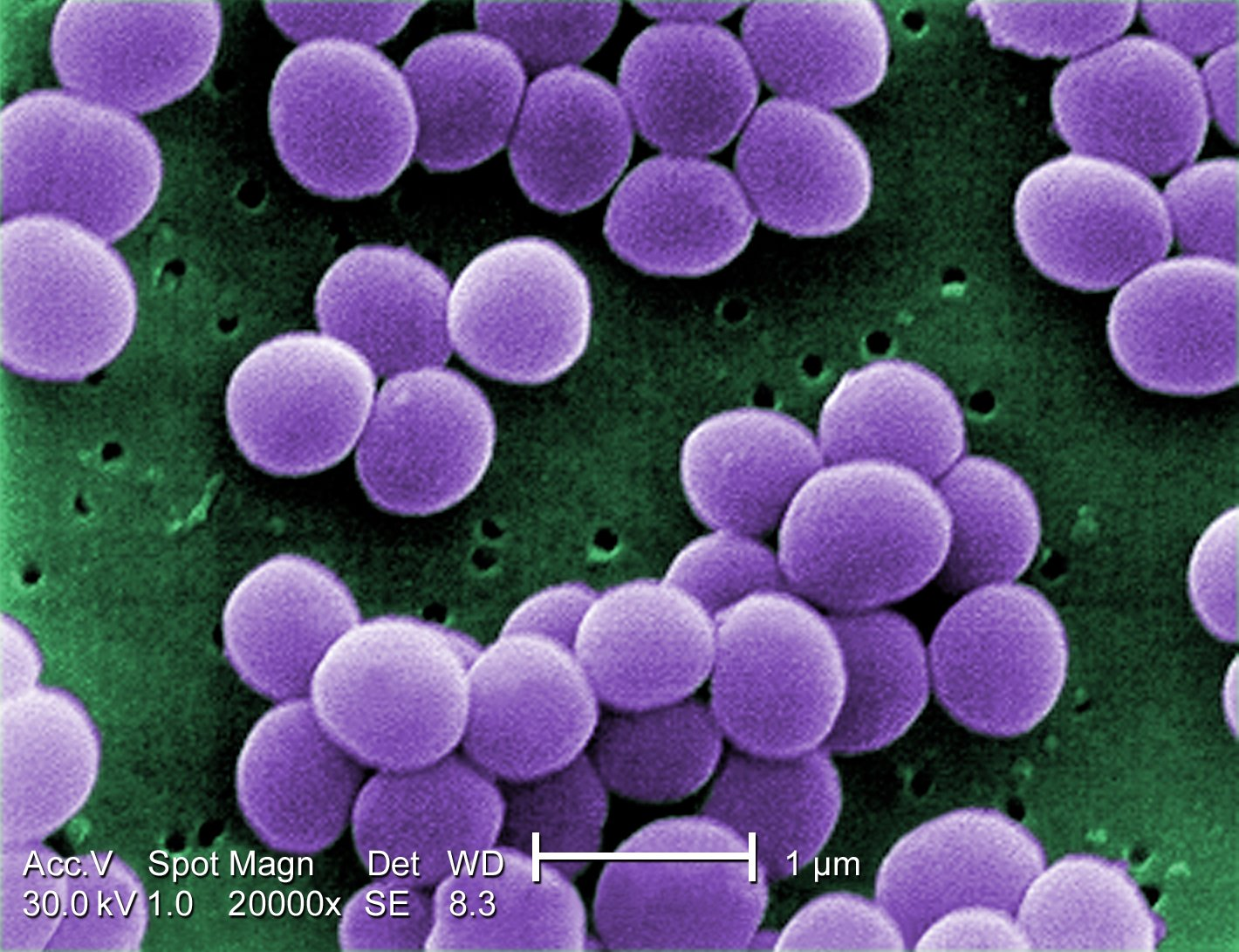
What is the Latin name for the pathogen of staphylococcal (staph) infections?
Staphylococcus aureus (Gram-positive bacteria)
How are staph infections transmitted?
Most people have commensal Staphylococcus bacteria growing harmlessly on their skin & on nasal mucosa (moist lining inside nose)
The bacteria become pathogens when they enter the body through a break in the skin (e.g. cut, burn or insect bite)
What is the mode of infection for staph infections?
Once in the body, Staphylococcus release exotoxins, including:
haemolysins → polypeptides that form pores in the host cell membranes
superantigens → proteins that stimulate a massive primary immune response, which can cause toxic shock & death
What is the pathogenic effect of staph infections?
Skin infections (e.g. boils, impetigo, cellulitis & abscesses)
Invasive infections (e.g. pneumonia, sepsis & toxic shock syndrome)
What is the Latin name for the pathogen of TB?
Mycobacterium tuberculosis
How is TB transmitted?
Through aerosol droplets from the coughs & sneezes of infected people
What is the mode of infection for TB?
Two stages:
Latent tuberculosis:
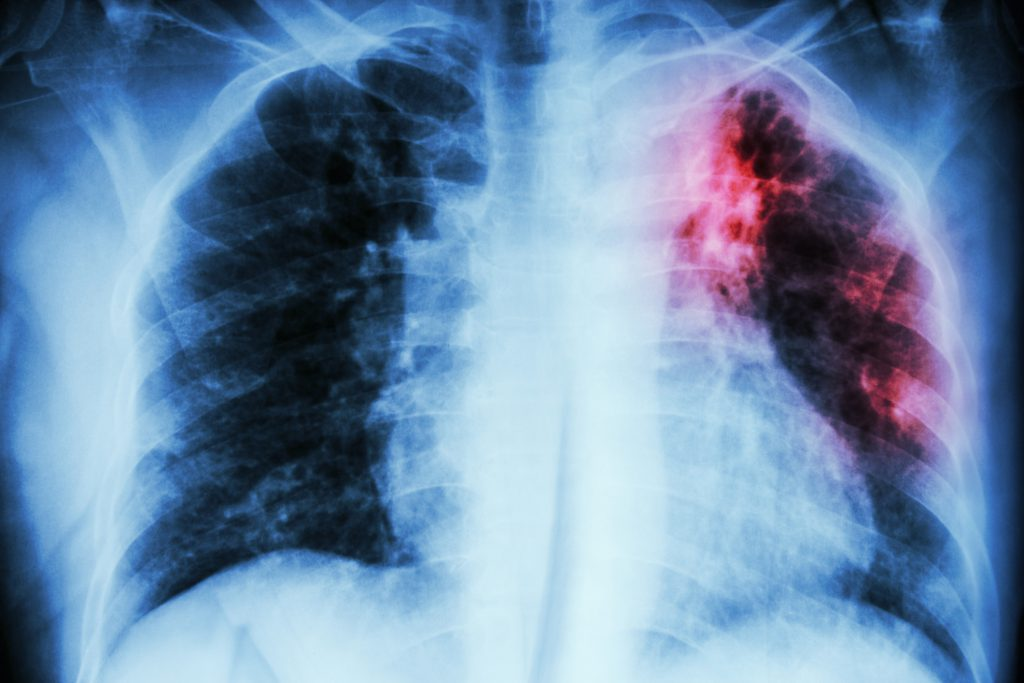
TB bacteria invade alveoli, multiply & form tubercles (lumps) where they remain alive, but dormant
The immune system surrounds them with fibrous scar tissue
Active tuberculosis:
After months or years, bacteria become active, multiply in lung cells & destroy them
The bacteria can spread via the bloodstream to other organs, where they invade & damage tissues
What is the pathogenic effect of TB?
Typical symptoms include:
persistent long-lasting cough that may bring up bloody phlegm
weight loss/loss of appetite
night sweats
fever & tiredness
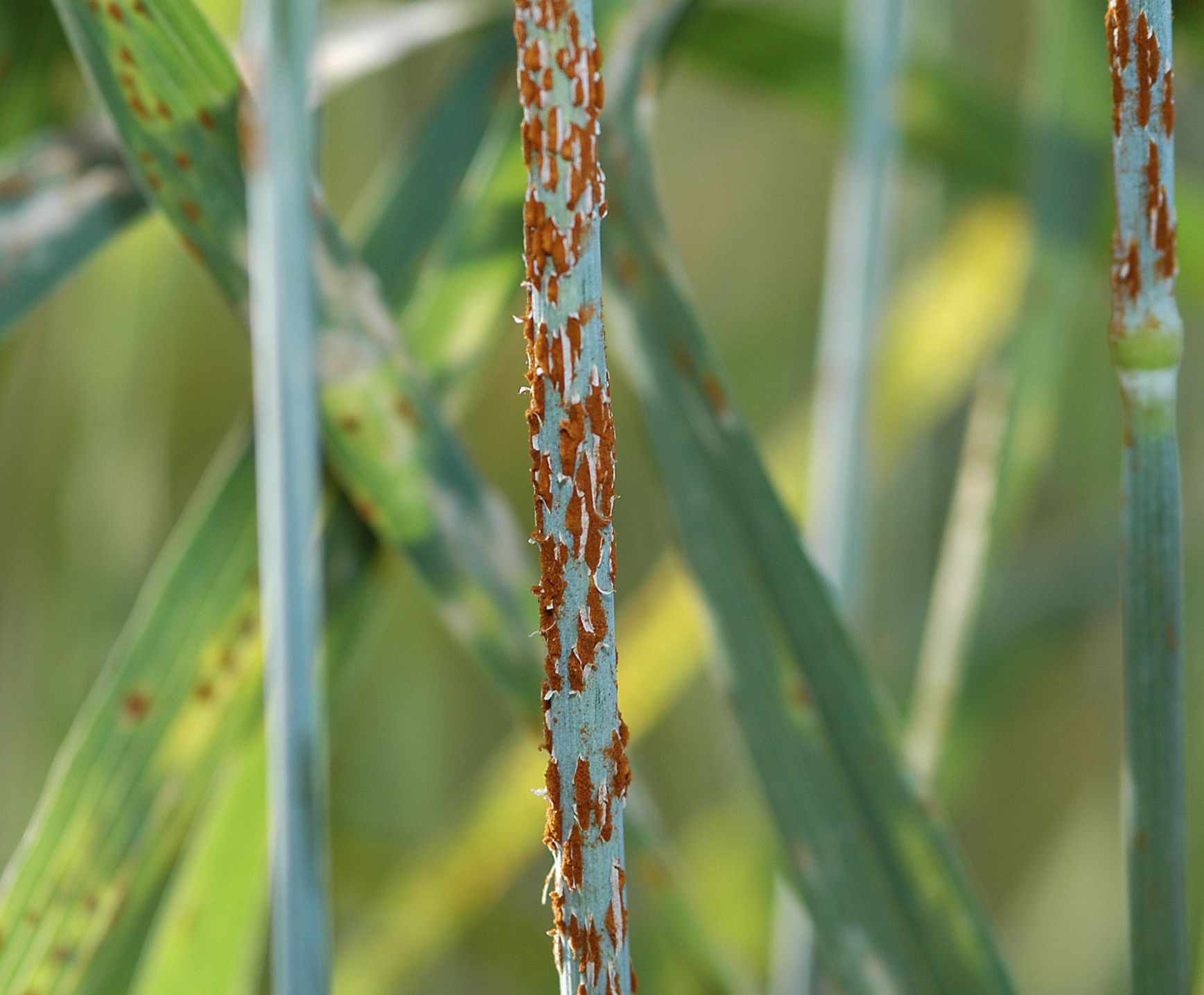
What is the Latin name for the pathogen of stem rust fungus?
Puccinia graminis
How is stem rust fungus transmitted?
By wind-dispersed spores of Puccinia, spread by from infected plants
What is the mode of infection for stem rust fungus?
Puccinia spores germinate on leaves, sending hyphae through the stomata
Inside, the fungus forms mycelium which spreads through the leaf & secretes digestive enzymes to destroy plant tissue → reduces photosynthesis & weakens the plant
Hyphae also take water & mineral ions from the xylem & damage its walls, causing stems to weaken & collapse
What is the pathogenic effect of stem rust fungus?
The fungus forms brick-red blisters on the surface of the leaves & stem
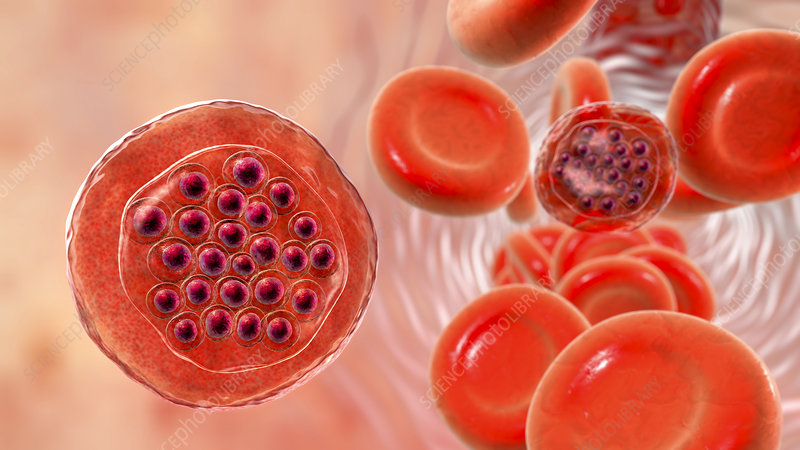
What is the Latin name for the pathogen of malaria?
Plasmodium (protoctist)
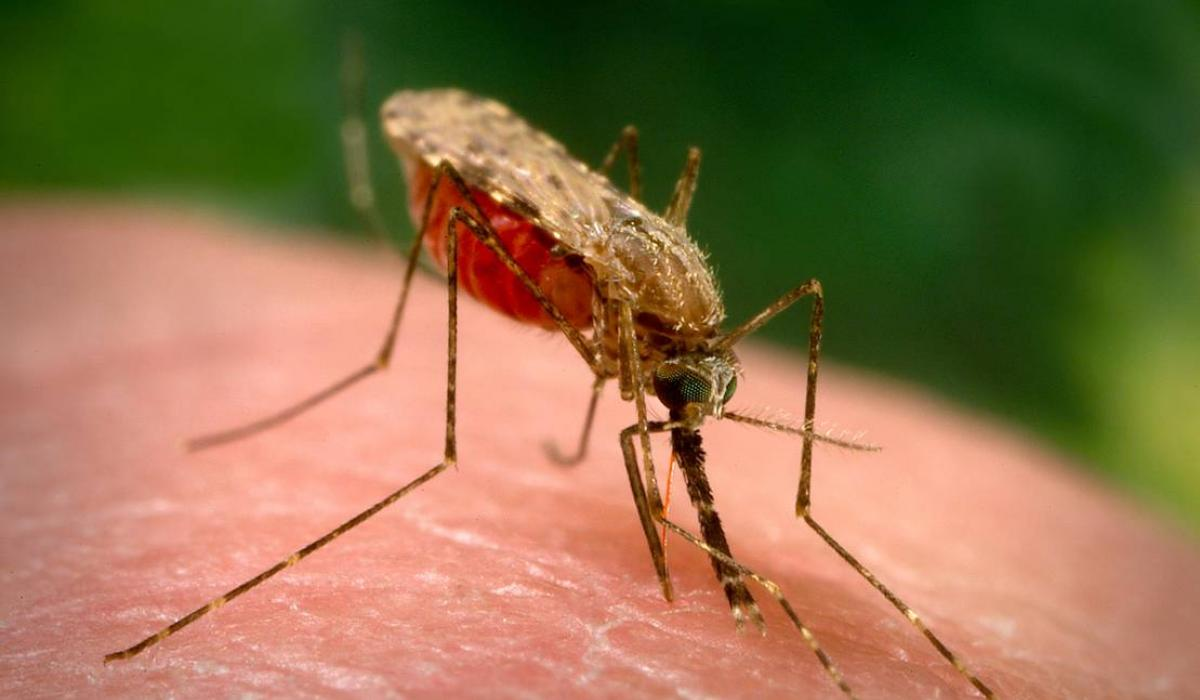
How is malaria transmitted?
Anopheles mosquito vector:
has a long, sharp proboscis (needle-like mouthpart) which penetrates human skin for feeding, allowing plasmodium cells to enter & travel to blood vessels
plasmodium cells travel back into female mosquitoes when they take a blood meal from an infected human & are passed on to the next human she drinks from
What is the mode of infection for malaria?
The Plasmodium travels to the liver, where it reproduces asexually to make many clones
Clones enter red blood cells & multiply every 2-3 days, bursting the cells & infecting more
The repeated destruction of red blood cells leads to anaemia & death
What is the pathogenic effect of malaria?
Symptoms typically begin 1-4 weeks after infection & at first, are similar to flu symptoms:
headache & fever
muscle pain & vomiting
paroxysm (cycle of coldness followed by a fever, occurring every 2 days)
What is the Latin name for the pathogen of influenza?
Influentia
How is influenza transmitted?
Through air-borne droplet infections from the coughs & sneezes of infected individuals:
infected people are infectious from a day before symptoms show themselves until a week afterwards
What is the mode of infection for influenza?
The virus infects epithelial cells in the nose, mouth, throat, tracheae & bronchi, reproducing inside them & killing them by cell lysis
The loss of ciliated cells stops mucus removal, allowing bacterial infections
Dead cells increase mucus production, which irritates the throat & triggers coughing
What is the pathogenic effect of influenza?
The onset is sudden after an incubation period of 1-4 days. Symptoms include:
fever & shivering
headache & muscular pain
coughing of excess mucus & loss of appetite
(recovery is usually 4 days, unless there are secondary infections, which can be fatal if untreated)
What are exotoxins?
Proteins produced & released by bacteria during metabolism & reproduction:
rapidly made while bacteria are alive, spread through blood & bodily fluids & quickly damage host cells, causing early symptoms
made of amino acids → sensitive to temperature changes & can denature
What is an example of a disease that produces exotoxins?
Staph infection
What are endotoxins?
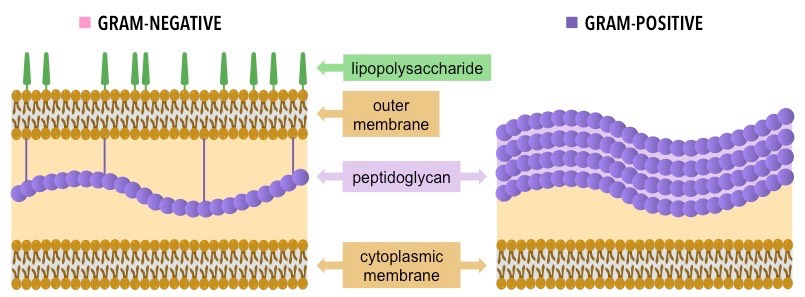
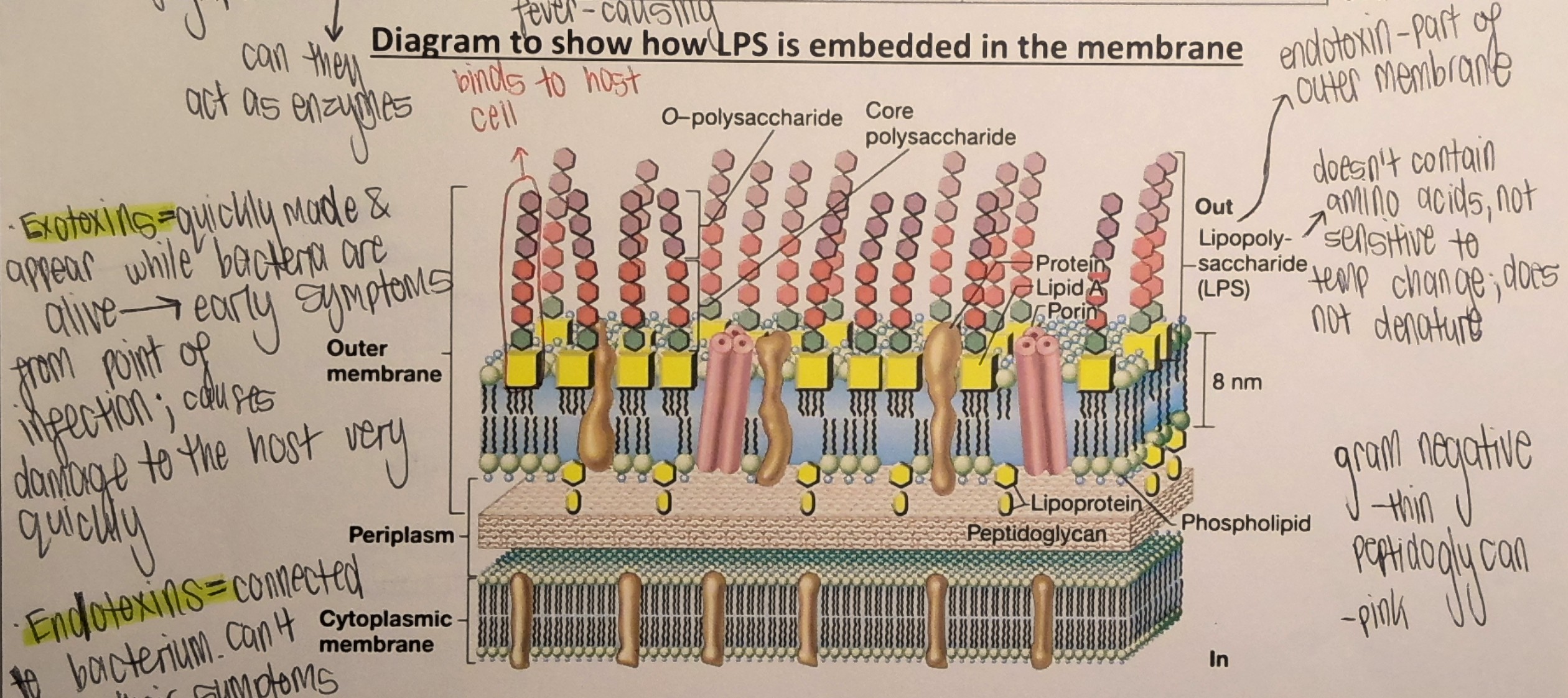
Lipopolysaccharides found in the outer membrane of Gram-negative bacteria:
may be released when bacterium breaks down, affecting tissues locally
symptoms only appear once the endotoxins are released & bind to host cells
What is an example of a disease that uses endotoxins?
Salmonella
What is the difference between endotoxins & exotoxins in their location in the membrane?
Endotoxins: part of the outer membrane of Gram-negative bacteria
Exotoxins: synthesised inside the cell & diffuse outside
What type of antibiotic is penicillin?
Bactericidal (bacteria-killing)
Narrow-spectrum (only affects some bacteria)
How does penicillin (& related antibiotics: ampicillin, amoxicillin & methicillin) work?
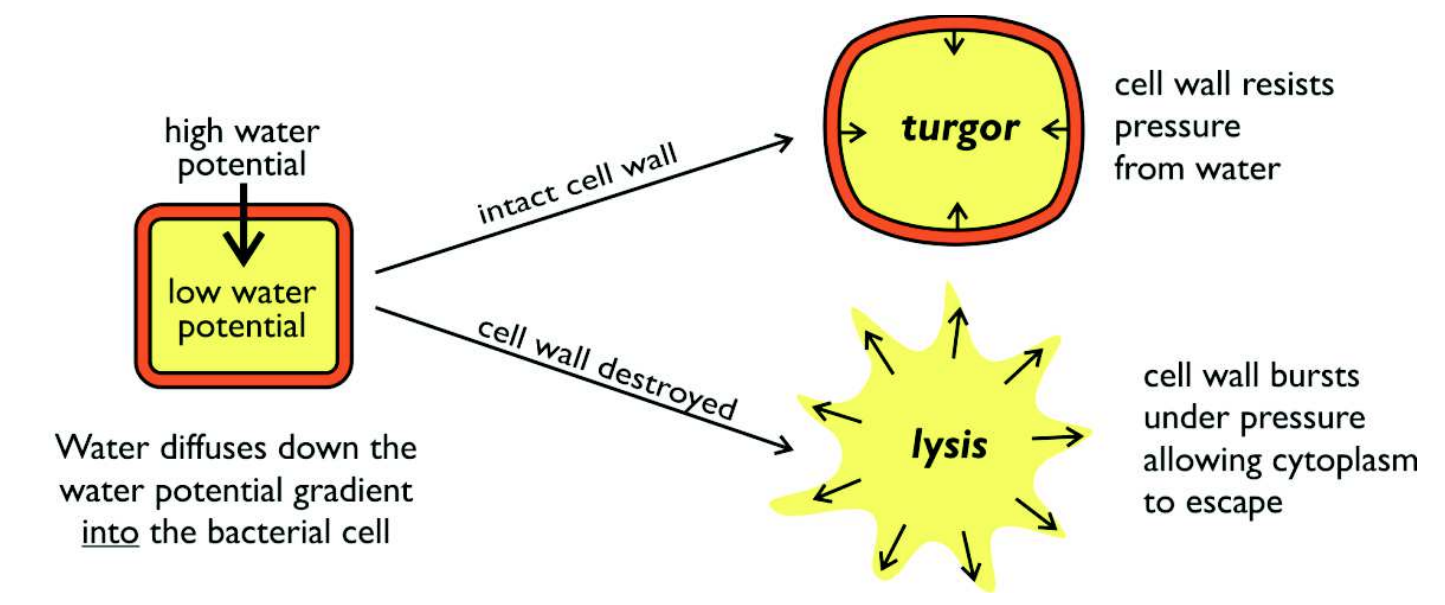
Inhibits the enzyme, transpeptidase, which cross-links the peptidoglycan chains in the bacterial cell walls
Without these cross-links, the cell wall falls apart & the cell is left without a cell wall
The cell can’t withstand the turgor pressure due to osmosis & the cell bursts by osmotic lysis
What type of bacteria is penicillin most effective against?
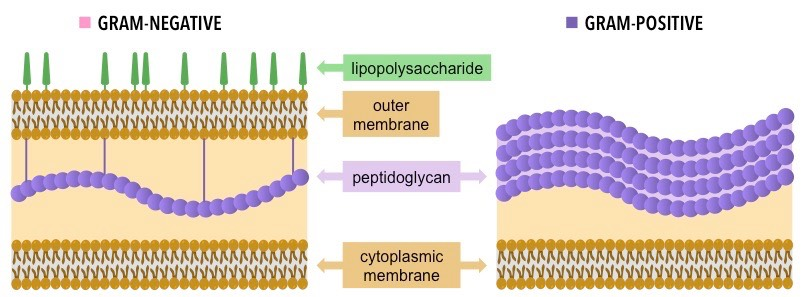
Gram-positive bacteria, as it relies on a thick peptidoglycan cell wall:
gram-negative bacteria are not affected by penicillin as it can’t easily cross the outer lipopolysaccharide membrane to reach the thin peptidoglycan cell wall
How does tetracycline (& streptomycin + erythromycin) work?
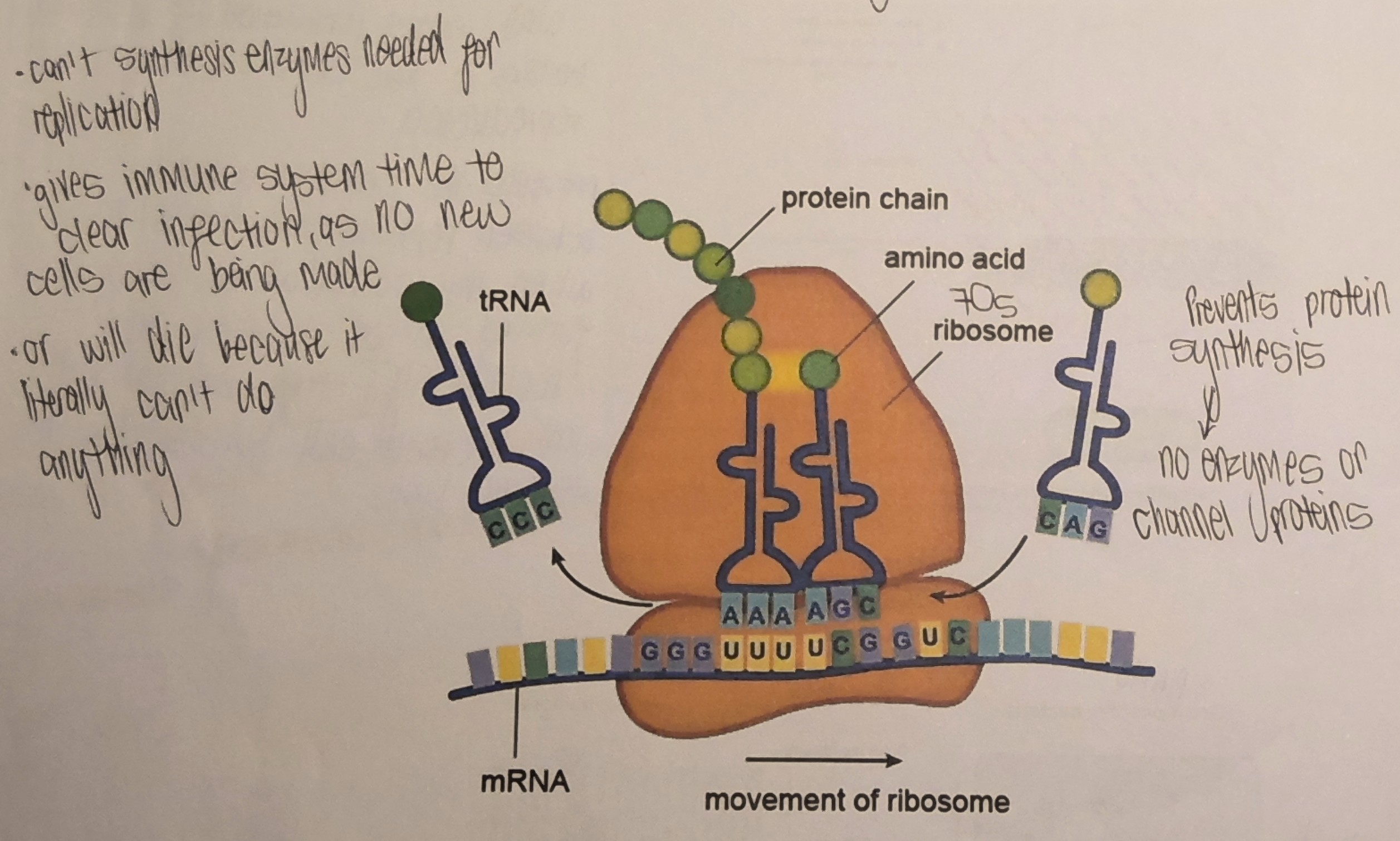
Binds to 70S bacterial ribosomes, blocks the attachment of tRNA & stops protein synthesis
This stops further growth & cell division, but doesn’t kill the bacterium
What type of antibiotic is tetracycline?
Bacteriostatic (doesn’t kill bacteria, only prevents reproduction)
Broad-spectrum (effective against almost all bacteria)
What is a Gram positive cell wall?
Stains purple
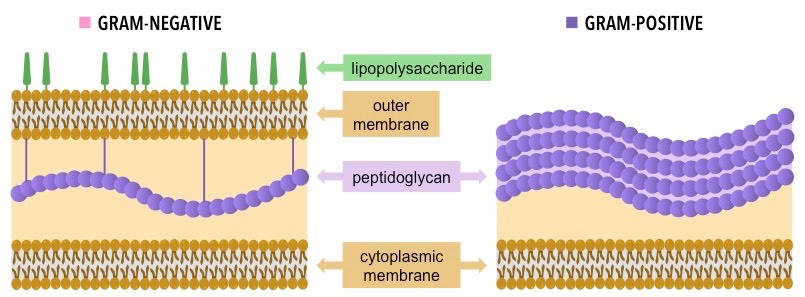
Has a thick peptidoglycan cell wall outside the cell membrane
Cell wall is very strong & allows the bacteria to withstand severe physical conditions
What is a Gram negative cell wall?
Stains pink
Has a thick layer of periplasm, a thin peptidoglycan cell wall & a second, outer membrane which contains lipopolysaccharides
This layer resists antibiotics & lysozyme enzymes → more difficult to kill