haemoglobin
 Call Kai
 Learn
Learn Practice Test
 Spaced Repetition
 Match
Match Flashcards
 Knowt Play
1/26

There's no tags or description
Looks like no tags are added yet.
Name | Mastery | Learn | Test | Matching | Spaced | Call with Kai | Chat |
|---|
No analytics yet
Send a link to your students to track their progress
27 Terms
what is haemoglobin?
a globular protein with a quaternary structure that is found in red blood cells
what does haemoglobin do?
carries oxygen from the lungs around the body
what is the process, loading (or associating)?
process by which haemoglobin binds with oxygen
this takes place in the lungs
what is the process, unloading (or dissociating)?
the process by which haemoglobin releases o2
this takes place in the tissue
haemoglobin affinity for oxygen?
haemoglobins with high affinity for O2 take up O2 more easily, but release it less easily
haemoglobins with low affinity for O2 take up O2 less readily but release it more easily
attraction to oxygen?
haemoglobin has a high affinity for oxygen
when red blood cells reach the lungs, oxygen diffuses into the red blood cells and binds to haemoglobin
4 molecules of oxygen bind to one molecule of haemoglobin
when oxygen binds to haemoglobin, oxyhaemoglobin is formed
what happens to the oxygen when the red blood cells reach the tissues in the body?
oxygen is released from the oxyhaemoglobin in a process called dissocation
quaternary structure of haemoglobin?
it is a protein made from 4 different polypeptide chains
the 4 chains give haemoglobin a quaternary structure
haem groups of haemoglobin?
each polypeptide chains in a haemoglobin molecule has a haem group
a haem group is a prosthetic group that is attached to the protein
the haem groups contain an iron ion
the iron ion is what makes haemoglobin red
what must haemoglobin be able to do?
readily associate at the gas exchange surface
readily dissociate at respiring tissues
what happens to the affinity for oxygen under different conditions?
it changes depending on the partial pressure of oxygen, which is a measure of oxygen concentration
high partial pressure means high saturation
things to remember:
partial pressure = how much oxygen available
affinity = how strongly haemoglobin binds to oxygen
saturation = how much oxygen haemoglobin has bound
saturation effect on affinity?
saturation also has an effect on affinity, as after binding to the 1st oxygen molecule, the affinity of haemoglobin for oxygen increases due to a change in shape
this makes it easier for the other oxygen molecules to bind
oxygen dissociation curve?
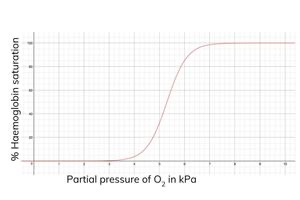
what does the oxygen dissociation curve show?
initially the curve is shallow because it is hard for the first oxygen molecule to bind
once it has bound though, it changes shape (tertiary structure changes shape) making it easier for oxygen molecules 2 and 3 to bind, hence the steep increases
this is called positive cooperativity
finally, the gradient begins to flatten out because the likelihood of the 4th oxygen finding a binding site is low
what are the 2 types of haemoglobin?
foetal haemoglobin and adult haemoglobin
why does fetal haemoglobin have a different affinity for oxygen comapred to adult haemoglobin?
it needs to be better at absorbing oxygen because by the time oxygen reaches the placenta, the oxygen saturation of the blood has decreased
therefore, foetal haemoglobin must have a higher affinity for oxygen in order for the foetus to survive at low partial pressures
what else is the affinity of haemoglobin for oxygen affected by?
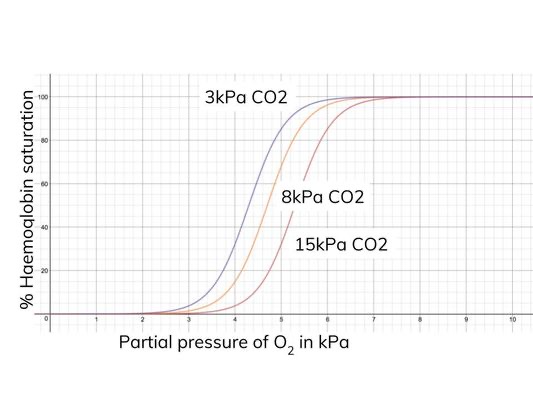
the partial pressure of carbon dioxide
why is affinity for oxygen affected by CO2
carbon dioxide is released by respiring cells which require oxygen for the process to occur
therefore, in presence of carbon dioxide, the affinity of haemoglobin for oxygen dexreases, thus causing it to be released
this is known as the Bohr effect
the greater the concentration of CO2, the more readily the haemoglobin releases its O2
what is the effect on partial pressure of carbon dioxide on the affinity of haemoglobin for oxygen called?
the bohr effect
why does the affinity decrease?
because carbon dioxide creates slightly acidic conditions which change the shape of the haemoglobin protein, making it easier for the oxygen to be released
explain this graph?
concentration of CO2 is low at gas exchange surface, so affinity for oxygen is increased (curve is shifted to the left)
concentration of CO2 is high in rapidly respiring tissues, so affinity for oxygen is reduced (curve is shifted to the right)
Left = Loads oxygen
Right = Releases oxygen
when does haemoglobin become saturated with oxygen?
as it passes through the lungs
are all haemoglobin molecules loaded with their maximum 4 oxygen molecules?
no
when are they not all loaded?
at low respiratory rate, only one of the 4 molecules will be released
blood returning to the lungs therefore contains haemoglobin that is still 75% saturated with oxygen
if a tissue is very active, then 3 oxygen molecules will be released
why do different species have different types of haemoglobin with different oxygen dissociation curves?
because they need to adapt to their environments and conditions
e.g- those living at a low partial pressure of oxygen (lugworms) have evolved haemoglobin that has a higher affinity of oxygen
another word for affiinity?
attraction