Chapter 11 Econ
 Call Kai
 Learn
Learn Practice Test
 Spaced Repetition
 Match
Match Flashcards
 Knowt Play
1/31

There's no tags or description
Looks like no tags are added yet.
Name | Mastery | Learn | Test | Matching | Spaced | Call with Kai | Chat |
|---|
No analytics yet
Send a link to your students to track their progress
32 Terms
Economic Growth
Refers to an increase in real GDP, or the real quantity of goods and services produced over a period of time (typically a year), and is usually expressed as:
- A percentage change in real GDP over a period of time
or
- A percentage change in real GDP per capita over a period of time
% Change in Real GDP Per Capita
% change in real GDP per capita = % change in real GDP - % change in population
Short-Term Growth
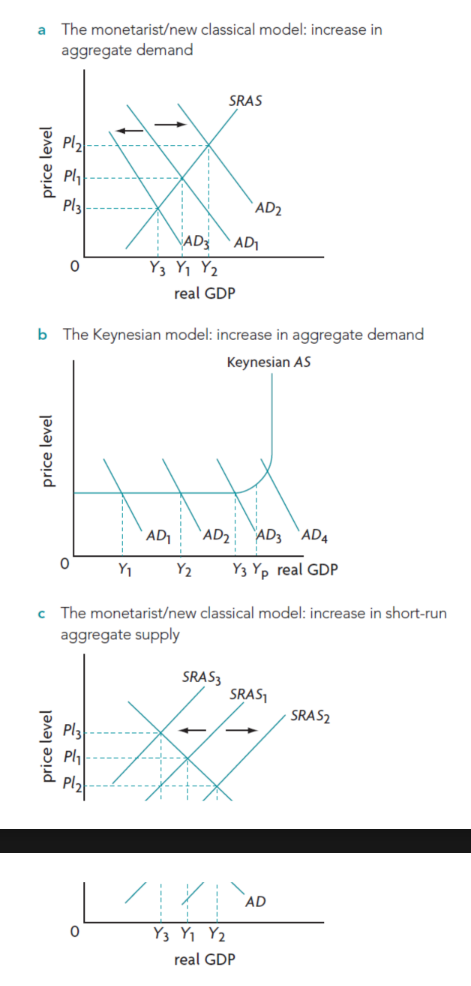
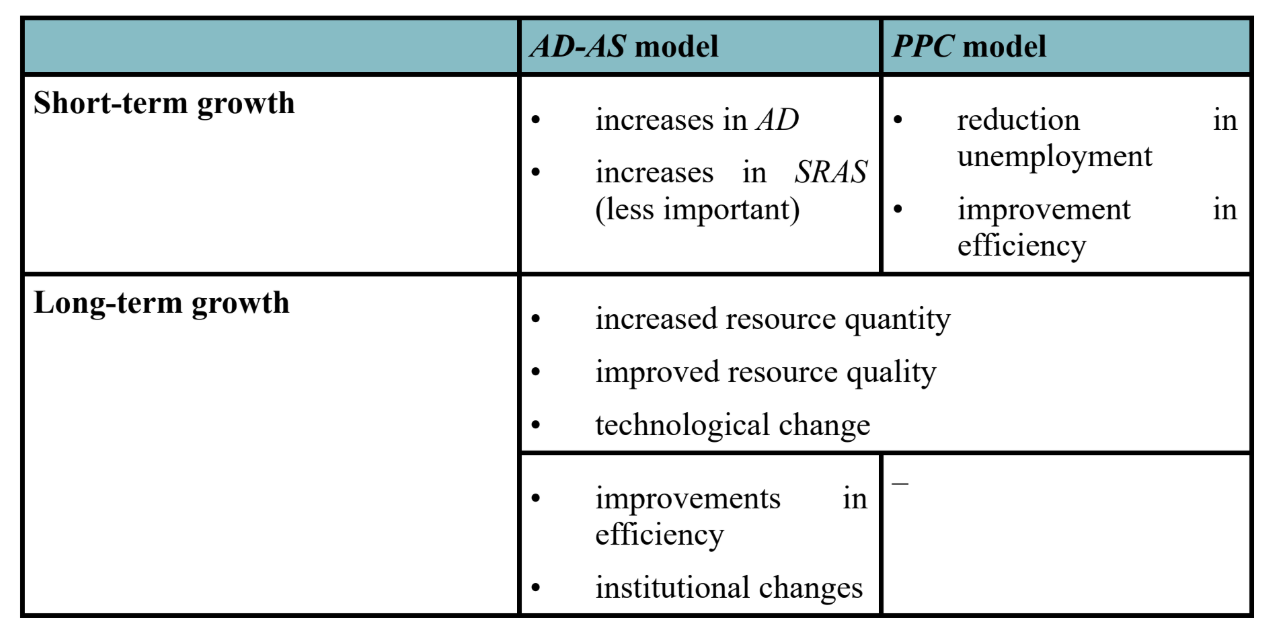
Growth of an economy (growth in real output) over relatively short periods of time. Is shown by a movement of a point inside the PPC to a point closer to the PPC, or by upturns in the business cycle usually due to increases in aggregate demand.
Long-Term Growth
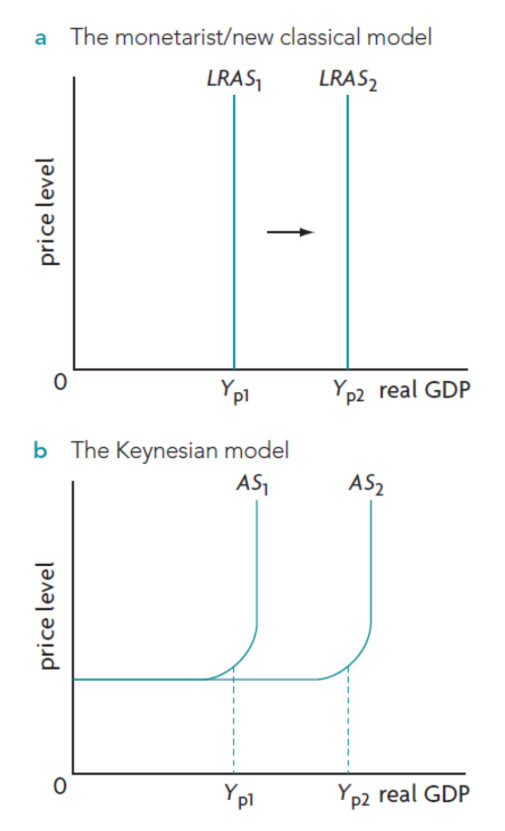
Growth of an economy (growth in real output) over long periods of time. Is shown by rightward shifts of the LRAS curve corresponding to the long-term growth trend of the business cycle, or outward shifts of the PPC.
Short-Term Growth (Diagrams)
Increasing Potential Output, Shifts in Aggregate Supply Curves and Long-Term Economic Growth (Diagrams)
Using the Production Possibilities Model to Illustrate Economic Growth

Factors That Cause Economic Growth
Capital
Generally refers to resources that can produce a future stream of benefits, which arises from investment, or spending undertaken to create that stream of benefits.
Physical Capital (Capital Goods)
Is the standard type of capital, which results from investments, or spending to produce machines, equipment, roads, etc.
Human Capital
Refers to the skills, abilities, knowledge and level of health of workers. It results from investments, or spending on education, training, and generally anything that affects level of education and health.
Natural Capital
Refers to everything under the land (metals, oil) plus everything on the land (rivers, lakes) plus a country’s overall natural environment and ecosystem (air, wildlife, biodiversity).
Marketable Commodities
Refers to commodities that are bought and sold such as timber, minerals, metals, natural gas, coal and oil.
Ecological Resources (Common Pool Resources)
Refers to examples such as soil quality, rivers, clean air, biodiversity, and the ozone layer.
Productivity
Refers to the quantity of output produced for each hour of work of the working population. For an economy as a whole, it can be measured as real GDP divided by the total number of hours worked.
Living Standards (Standards of Living)
Refer to levels of income, wealth and consumption of goods and services, including health care and education.
Factors That Allow Economic Growth to Have Positive Effects on Standards of Living
- The distribution of income
- Household spending
- The share of income controlled by women
- Government spending on merit goods
- Contributions by non-governmental organisations (NGOs)
Factors That Can Impact Economic Growth
- Living standards
- Environment
- Distribution of income
Government Debt (National Debt or Public Debt)
Refers to the amount of money that a government owes to lenders outside of the government itself.
Government Budget
A type of plan of a country’s revenues and expenditures over a period of time (usually a year).
Balanced Budget
Refers to if tax revenues are equal to government expenditures over a period of time.
Budget Deficit
Refers to if expenditures are larger than tax revenues.
Budget Surplus
Refers to if expenditures are smaller than tax revenues.
Sustainable Debt
Refers to a level of debt where the borrowing government has enough revenues to meet its debt obligations without accumulating arrears while also allowing economic growth to continue at an acceptable level.
Debt Obligations
Refers to payment of interest and repayment of the borrowed amount.
Arrears
Refers to overdue debt payments.
Bonds
A form of debt. A certificate issued by the government that promises to pay interest at various intervals until a certain date when the money is repaid to the bond holder.
Debt-To-GDP Ratio
Measures a country’s government debt as a share of GDP of the borrowing country.
Debt Servicing
Refers to the payments that must be made in order to repay the principal (the amount of the loan) plus interest payments.
Credit Rating
An assessment of the ability of a borrower to pay back loans, usually carried out by agencies that are qualified to do this.
Debt Trap
Refers to a situation where a country must keep on taking out new loans in order to pay back the old ones.
Austerity
Refers to the policy of increasing taxes and reducing government spending to deal with budget deficits and government debt.