Common Feline Cancers Vocabulary Flashcards
 Call Kai
 Learn
Learn Practice Test
 Spaced Repetition
 Match
Match Flashcards
 Knowt Play
1/9

Earn XP
Description and Tags
Vocabulary flashcards focusing on common feline cancers, their clinical presentations, diagnostic procedures, treatments, and prognosis facts based on lecture notes.
Name | Mastery | Learn | Test | Matching | Spaced | Call with Kai | Chat |
|---|
No analytics yet
Send a link to your students to track their progress
10 Terms
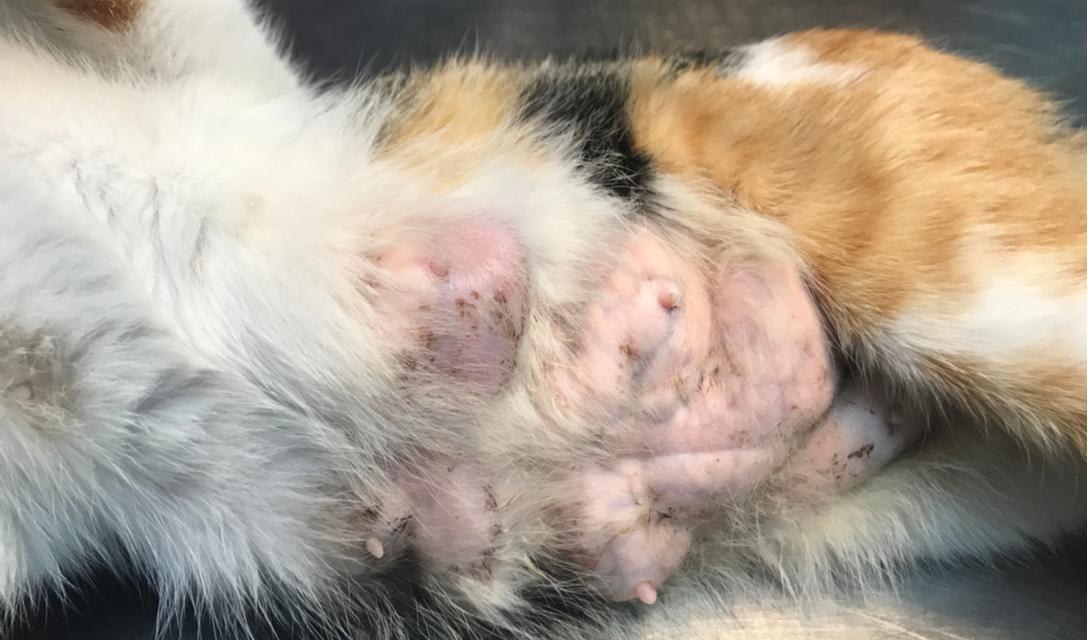
Feline Mammary Tumors
Common feline cancer (85-90% malignant) presenting in unspayed females or cats spayed after several litters as an enlarged mammary gland or rm nodule, most commonly involving anterior glands.
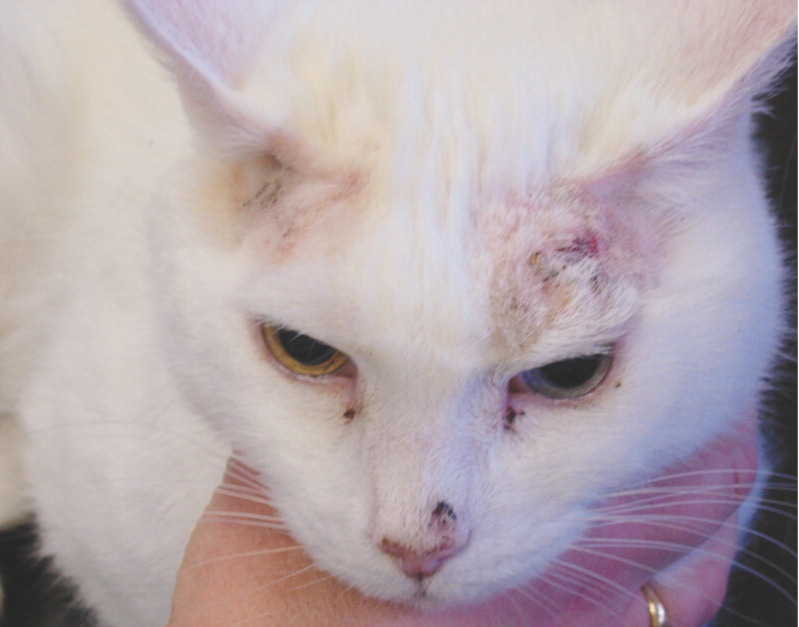
Cutaneous Squamous Cell Carcinoma (SCC)
Form of SCC presenting as small, crusty or ulcerated sores on the head (pinnae, nasal planum, eyelids) in white-haired cats.

Oral Squamous Cell Carcinoma (SCC)
Form of SCC in senior/geriatric cats affecting the tongue, gingiva, and sublingual areas; carries a very poor prognosis with survival times ranging from 3-4 months.
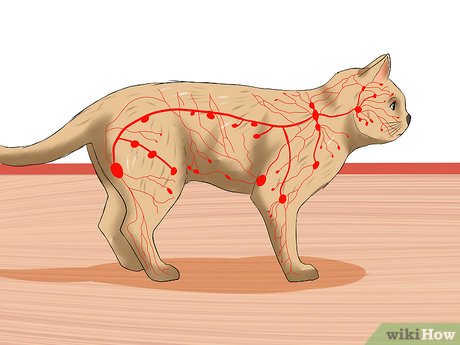
Lymphosarcoma (LSA)
Cancer accounting for 30% of all feline tumors, characterized by lymphadenopathy and thickened bowl loops.

FeLV Link to LSA
Viral infection linked with most feline lymphosarcoma cases except for the GI form.
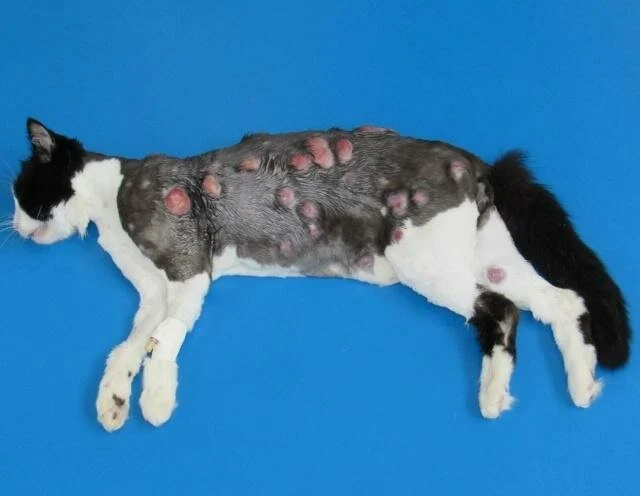
FIV Risk in LSA
Feline immunodeficiency virus infection that makes cats 5X more likely to develop LSA.
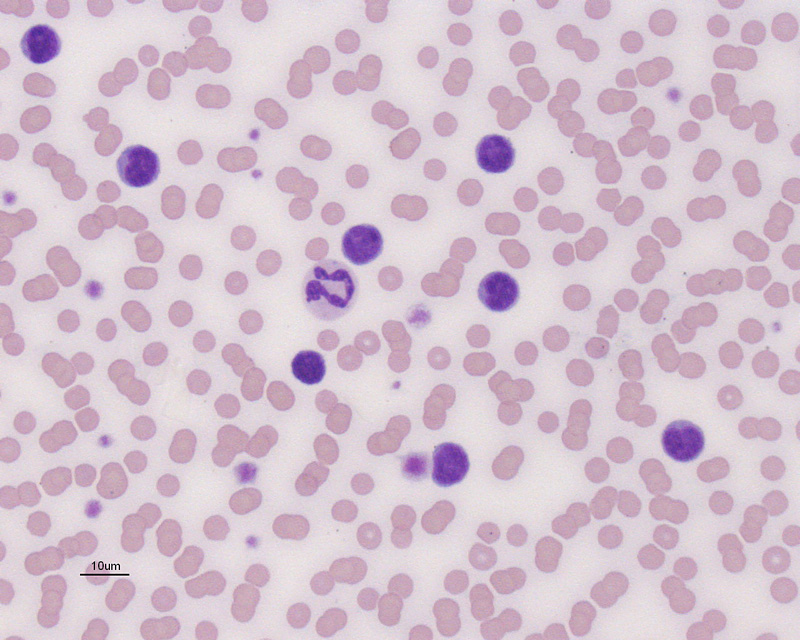
Small Cell GI LSA Treatment
Specific medical treatment for small cell gastrointestinal LSA consisting of prednisolone and chlorambucil.
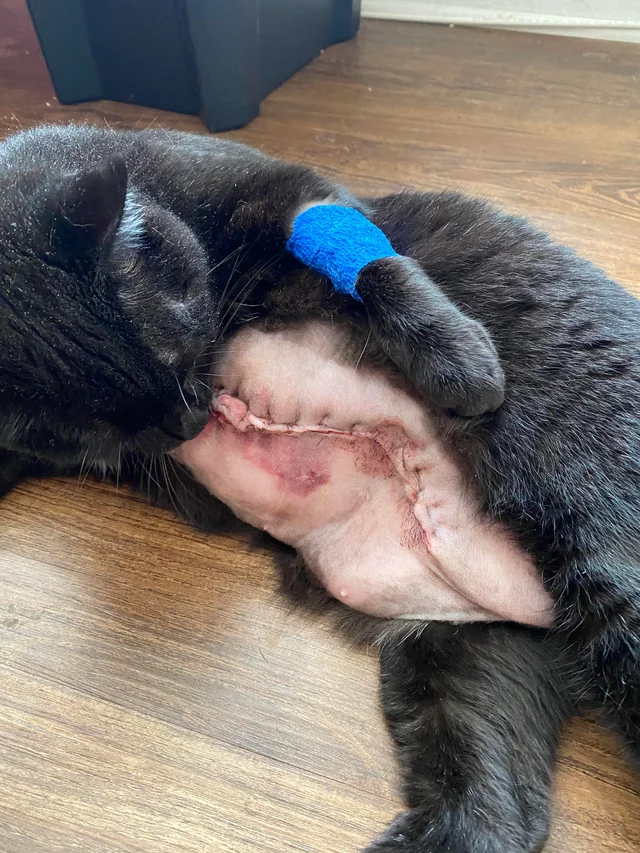
Feline Mammary Tumor Surgical Treatment
Surgical procedure consisting of unilateral mastectomy and regional lymph node removal (axillary and inguinal).
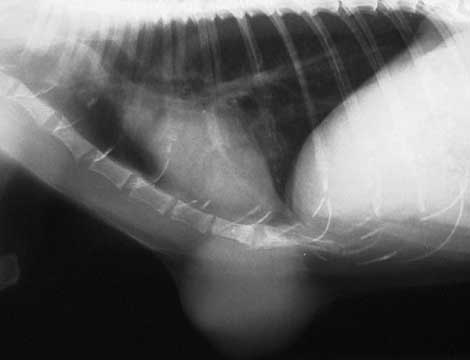
Thoracic Radiographs in Mammary Tumors
Diagnostic imaging performed to evaluate common metastases to lungs and lymph nodes.
Low-grade LSA Prognosis
Feline lymphosarcoma category where survival time with treatment can range from 6 months-1 year.