HAP Ch 4A
 Call Kai
 Learn
Learn Practice Test
 Spaced Repetition
 Match
Match Flashcards
 Knowt Play
1/72

There's no tags or description
Looks like no tags are added yet.
Name | Mastery | Learn | Test | Matching | Spaced | Call with Kai | Chat |
|---|
No analytics yet
Send a link to your students to track their progress
73 Terms
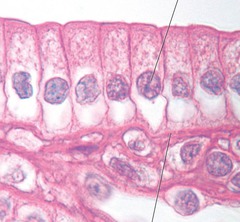
Simple Columnar epithelium
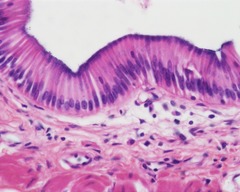
Simple squamous epithelium

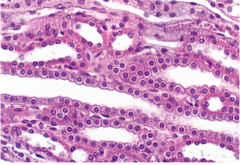
Simple Cuboidal epithelium

Pseudostratified columnar epithelium

Simple squamous epithelium (location)
Kidney glomeruli; air sacs of the lungs; lining of heart, blood vessels and lymphatic vessels; lining of ventral body cavity (serosae)
Simple cuboidal epithelium (location)
Kidney tubules; ducts and secretory portions of small glands; ovary surface
Simple columnar epithelium (location)
Nonciliated type lines most of the digestive tract (stomach to rectum), gallbladder, and excretory ducts of some glands; ciliated variety lines small bronchi, uterine tubes, and some regions of the uterus
Pseudostratified columnar epithelium (location)
Ciliated variety lines airways of most of upper respiratory tract; nonciliated variety lines larger ducts of many glands, epididymis, and part of male urethra
Pseudostratified columnar epithelium (function)
secrete substances, particularly mucus; propulsion of mucus by ciliary action
Simple squamous epithelium (function)
Allows materials to pass by diffusion and filtration in sites where protection is not important; secretes lubricating substances in serosae
Simple cuboidal epithelium (function)
urine formation in the kidneys, and glandular secretion, absorption
Simple columnar epithelium (function)
Absorption; secretion of mucus, enzymes, and other substances; ciliated type propels mucus (or reproductive cells) by ciliary action
Simple squamous epithelium (appearance)
Single layer of flattened cells with disc-shaped central nuclei and sparse cytoplasm; simplest epithelia
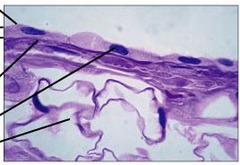
Simple cuboidal epithelium (appearance)
Single layer of cube-shaped cells with large, centrally located spherical nuclei

Simple columnar epithelium (appearance)
Single layer of tall cells with round to oval nuclei; many bear microvilli, some bear cilia; layer may contain unicellular glands (goblet cells)

Goblet cells
secrete mucus onto the free surface of the tissue for lubrication or protection

Pseudostratified columnar epithelium (appearance)
Single layer of cells of differing heights, some not reaching the apical surface; nuclei seen at different levels; may contain mucus-secreting cells and bear cilia. May seem like multiple layers but is only one layer

Cilia
long extensions from the free surfaces of certain cells; they beat in a certain direction to move cells or mucus
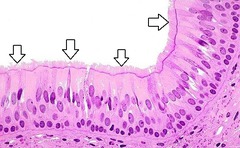
Simple Columnar epithelium

Simple Columnar epithelium
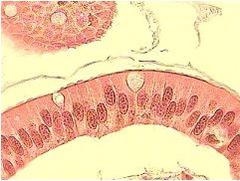
Simple Columnar epithelium
Simple squamous epithelium

Simple squamous epithelium

Simple Cuboidal epithelium

Simple Cuboidal epithelium

Simple Cuboidal epithelium
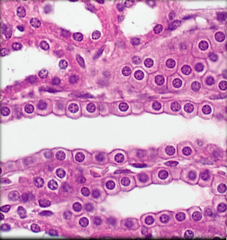
Simple Cuboidal epithelium
Pseudostratified columnar epithelium
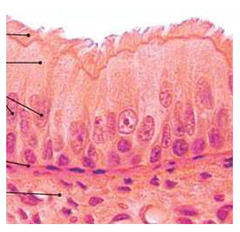
Pseudostratified columnar epithelium

Pseudostratified columnar epithelium
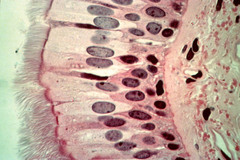
Pseudostratified columnar epithelium
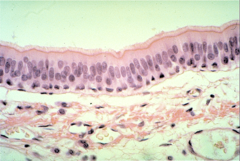
Apical surface
exposed to the outside or internally to an open space
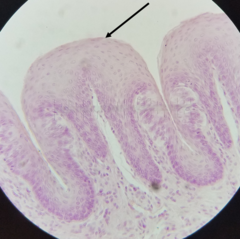
Basement membrane
anchors to underlying connective tissues
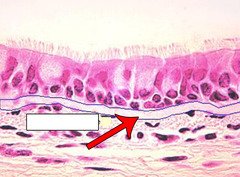
Squamous
thin and flattened

Cuboidal
cube-shaped

Columnar
tall and elongated

Simple
one layer

Stratified
two or more layers
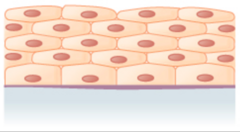
Keratinization
dry, water-proof, protective layer, in which outer cells are dead
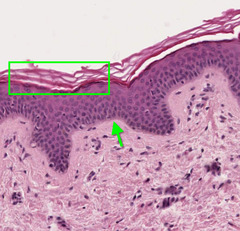
Exocrine glands
secrete products into ducts that open to a body surface
Endocrine glands
secrete into body fluids or blood
Stratified Columnar epithelium

Stratified squamous epithelium
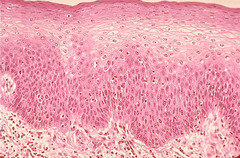
Stratified cuboidal epithelium
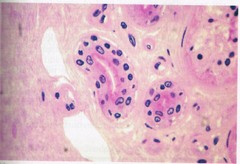
Transitional epithelium
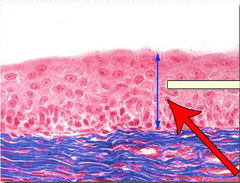
Transitional epithelium (location)
Lines the ureters, bladder, and part of the urethra

Non-keratinized stratified squamous epithelium (location)
lines the mouth, esophagus, vagina, and anal canal

Stratified cuboidal epithelium (location)
lines ducts of the mammary glands, sweat glands, salivary glands, pancreas, ovarian follicles, and seminiferous tubules

Stratified columnar epithelium (location)
pharynx, male urethra and linings of large gland ducts

Stratified cuboidal epithelium (function)
provides greater protection than a single cell layer

Transitional epithelium (function)
Stretches readily, permits stored urine to distend urinary organ

Stratified squamous epithelium (appearance)
made up of many layers of flattened cells, designed to protect underlying layers

Stratified squamous epithelium (function)
protect underlying layers against abrasions in areas with there is friction

Transitional epithelium (appearance)
dome-shaped apical surface, variable shapes whether stretched or relaxed; nuclei extends from basement membrane to apical surface
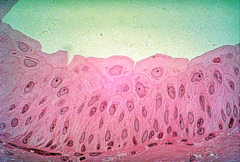
Lumen
hollow channel or space inside glands (A)

Stratified Columnar epithelium
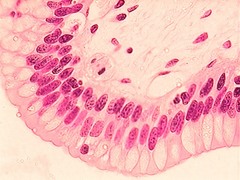
Stratified Columnar epithelium

Stratified squamous epithelium
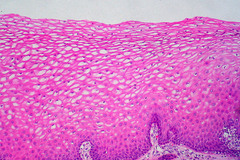
Stratified squamous epithelium

Stratified squamous epithelium

Stratified cuboidal epithelium
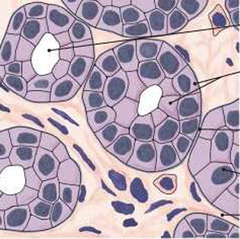
Stratified cuboidal epithelium

Stratified cuboidal epithelium

Stratified cuboidal epithelium
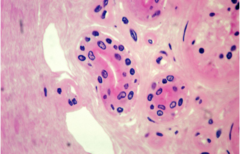
Transitional epithelium
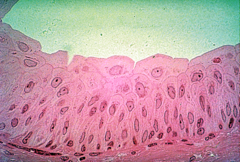
Transitional epithelium

Transitional epithelium
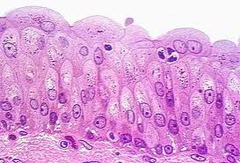
Transitional epithelium

Epithelial tissues
form protective coverings and function in secretion and absorption
Connective tissues
support soft parts and bind structures together
Muscular tissues
produce body movement
Nervous tissue
conducts impulses to control and coordinate body activities
Keratinized stratified squamous (location)
outer layer of skin
