UTA Plant Science Exam 4
 Studied by 1 person
 Call Kai
 Learn
Learn Practice Test
 Spaced Repetition
 Match
Match Flashcards
 Knowt Play
1/182

Earn XP
Description and Tags
he is green for an amazing reason
Name | Mastery | Learn | Test | Matching | Spaced |
|---|
No study sessions yet.
183 Terms
adhesion
molecule attract to other molecules of DIFFERENT kind
cohesion
molecule attract to other molecules of the SAME kind
bulk flow (mass flow)
all molecules move together
based on differences in potential energy
lots of water = high potential
very little water = low potential
diffusion
random movement of solutes from high to low concentration
active transport: move against gradient, need ATP

which way will water move in regards to solute diffusion?
high water potential => low water potential
water will move OPPOSITE direction of solute diffusion
hypotonic
low solute concentration
hypertonic
high solute concentration
osmosis
water moves from:
high to low water potential
low to high solute concentration
high to low osmotic potential
these things are DISTINCT
explain turgor pressure
hydrostatic pressure in a cell
plant has high concentration of soln. in vacuoles
this creates hypertonic soln.
water moves into vacuole, vacuole pushes against cell wall
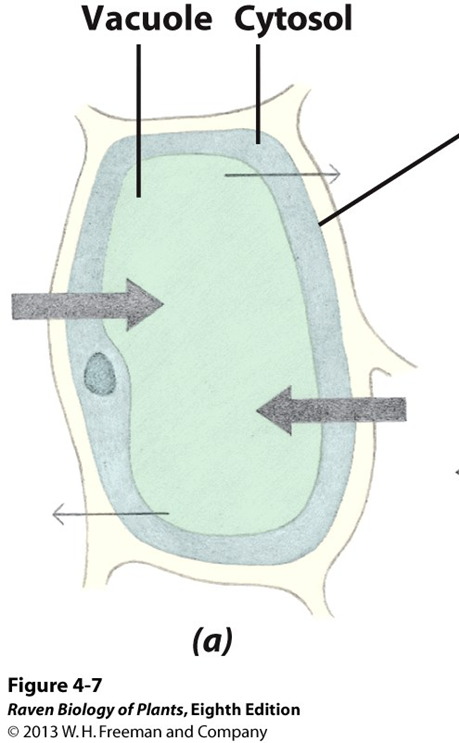
wall pressure
force of cell wall opposing hydrostatic pressure
cell walls strong enough to resist breaking by water absorption
growing cells with malleable walls enlarge rather than bursting
plasmolysis
water leaves vacuole
protoplast pulls away from cell wall, shrinks, cell becomes flaccid
if FULLY pulled away, cell becomes [plasmolyzed]
cell death!
transpiration
the loss of water vapor from plants
occurs from the shoot of the plant
leaves are main culprit
plants can lose up to 99% of their water through this
stomatal transpiration
water vapor (blue arrows) diffuses from the leaf to the atmosphere through stomata
[Evaporation] of water from cell wall surfaces bordering the extracellular space
[Diffusion] of resulting water vapor into the atmosphere via the stomata
![<p>water vapor (blue arrows) diffuses from the leaf to the atmosphere through stomata</p><ol><li><p>[<strong>Evaporation</strong>] of water from cell wall surfaces bordering the extracellular space</p></li><li><p>[<strong>Diffusion</strong>] of resulting water vapor into the atmosphere via the stomata </p></li></ol><p></p>](https://knowt-user-attachments.s3.amazonaws.com/f583b266-5627-485b-9c2c-ca008e16dac3.png)
how does a stomata open and close
high turgor pressure [turgid]: open
low turgor pressure [flaccid]: closed
![<ul><li><p>high turgor pressure [turgid]: open</p></li><li><p>low turgor pressure [flaccid]: closed</p></li></ul><p></p>](https://knowt-user-attachments.s3.amazonaws.com/c1feaf7d-cb79-429d-935d-e38c688da075.png)
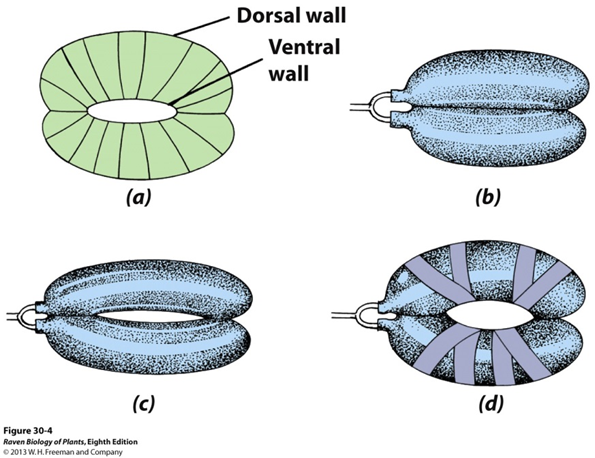
radial micellation
radial orientation of cellulose microfibrils in the guard cell walls is required for Pore Opening
prevents lateral expansion of guard cells
promotes longitudinal expansion
guard cells are attached at their ends to each other
effect of temperature on transpiration
rate of water evaporation doubles for every 10o increase in temperature
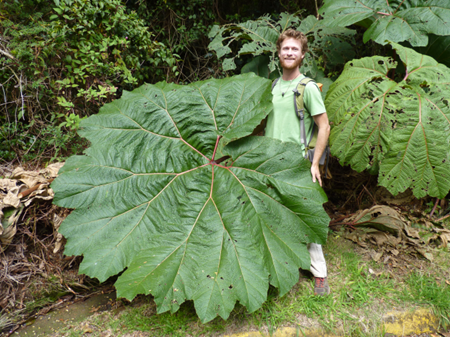
effect of humidity on transpiration
high humidity lessens the concentration gradient of water between leaf and environment
leaves in humid environments are big, have no fear of losing water!
effect of air currents on transpiration
lowers the local humidity (at the leaf’s surface)
how does water travel through a plant?
water is pulled to the tops of trees
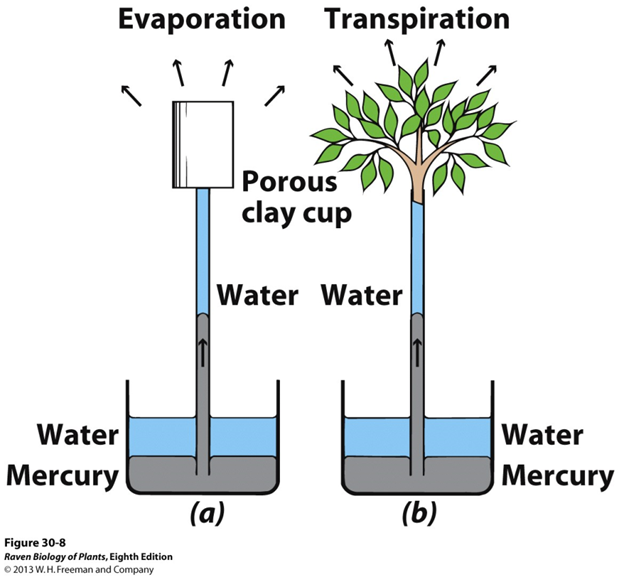
explain the cohesion-tension theory
water is “pulled” up the plant through a series of water potential changes across cells
water is lost through transpiration
lost water is replaced from within the cell
conc. of solutes is now higher, creates gradient potential between this cell and neighbors
chain reaction…water is cohesive AND adhesive!
bubbles can break the continuity of water in xylem
[surface tension] in pit pairs prevents embolism from spreading
in conifers the [torus] prevents embolism from spreading!
the limit of tree height
tensile strength of water has a breaking point
water stress on leaves due to gravity and increasing path-length resistance leads to poor photosynthesis
the maximum tension is close to the point of embolism!
how does water enter root hairs
enters directly through:
epidermis => cortex => endodermis => vascular cylinder
apoplastic
around protoplast, does NOT cross plasma membrane
cell wall

symplastic
via plasmodesmata from protoplast to protoplast
connected! through plasma membrane, not through vacuole yet
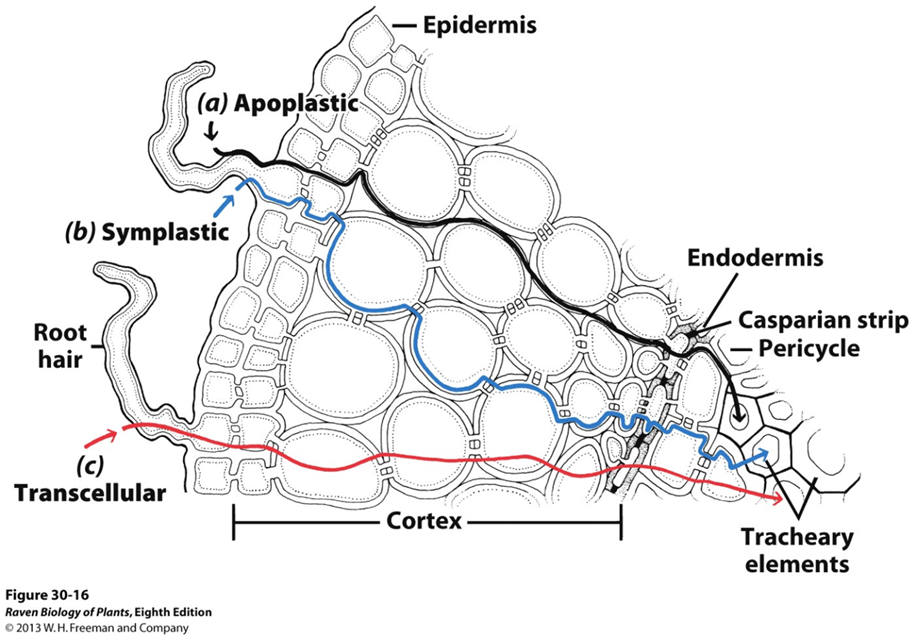
transcellular
goes from cell to cell, across plasma membranes and tonoplast (vacuole)
pass any membrane
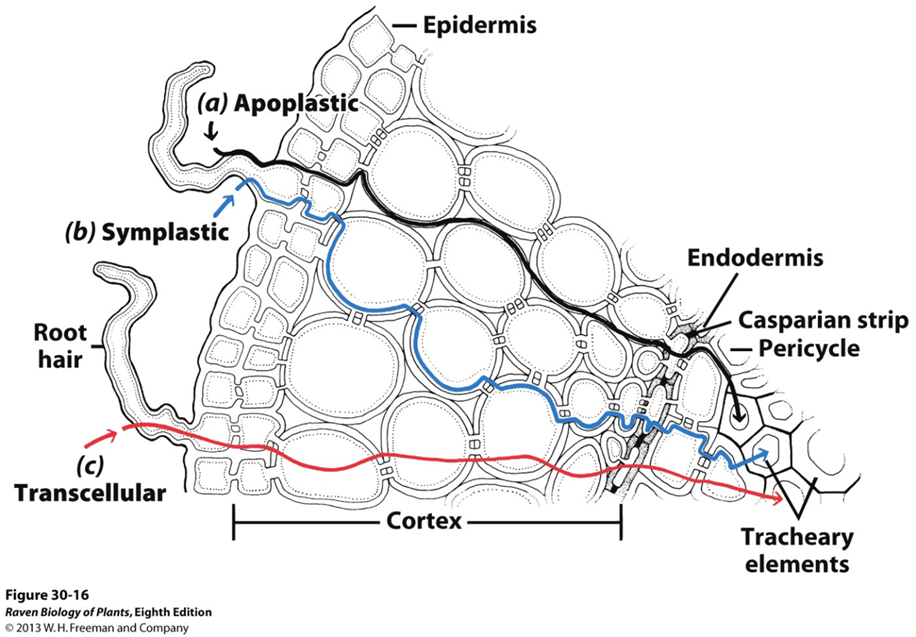
root pressure
in absence of transpiration , roots generate positive pressure
driving force in water uptake in roots is difference in water potentials in soil and xylem
can be enhanced by secretion of ions/solutes INTO the xylem
endodermis prevents movement of ions out of the xylem (bc of Casparian strip)
root pressure drives water into xylem!
translocation (assimilate transport)
movement through the phloem
“source-to-sink” movement
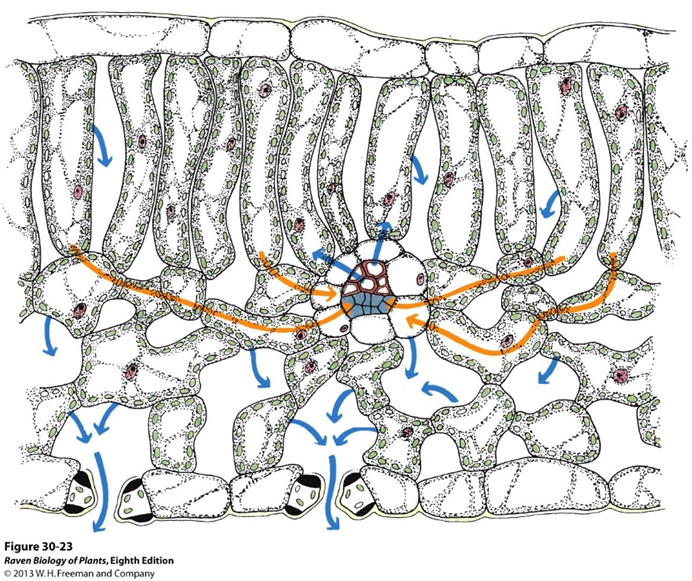
[translocation]: source
photosynthetic/storage tissue
[translocation]: sink
tissue that cannot meet their own nutritional needs
[translocation]: developing fruit
sinks that monopolize assimilates
how is phloem transport driven?
driven by osmotically generated pressure flow
pressure-flow hypothesis
assimilates are transported from source to sink along a gradient of turgor pressure developed osmotically
pressure-flow hypothesis mechanism
sugars move into sieve tubes increasing conc. gradient (Phloem Loading)
water (from xylem) enters sieve tubes via osmosis which increases turgor pressure
carried passively to a “sink”
sugar is removed from sieve tube
water moves back to xylem
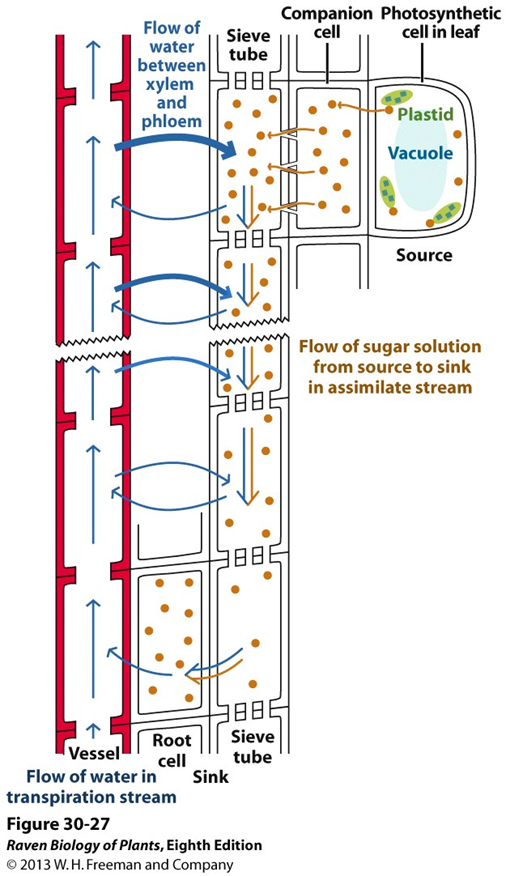
transpiration stream
water and inorganic ions taken up by root travels through this
move laterally into tissues
carried into growing plant parts
transferred to phloem in leaves, and along with sucrose, carried in [assimilate stream]
assimilate stream
movement of substances
do growing plants get more water and ions from assimilate streams or from transpiration streams?
growing plant parts get more water and ions from assimilate stream than from transpiration stream
who discovered auxins?
charles and francis darwin in 1881
explain auxin collar experiment
placed collar on plant tip
plant with collar on tip did not show phototropism
plant with collar placed somewhere that WASN’T the tip bent towards light
concluded that an “influence” is transmitted from tip to region of bending
where are auxins produced?
root and shoot meristems (initially)
leaf primordia
young leaves
developing fruits and seeds
anywhere tissue develops
what type of transport do auxins do?
both non-polar and polar transport
how does non-polar transport work in auxins?
goes in both directions
is carried in phloem
based on sink/source movement
how does polar transport work in auxins?
goes in ONE direction only
carried in vascular parenchyma
movement is independent of phloem transport based on changing sinks/sources
which plant hormone can move polarly? (only one!)
auxins are the only plant hormones that can move polarly
basipetal transport
away from the apex
acropetal transport
towards the apex
what does auxin developed in young leaf primordia do?
induces formation of the midvein
induces basipetal (tip to base) development of smaller minor veins
auxins in role in wound repair
development delayed if buds and leaves above damage are removed
auxin and apical dominance
basipetal flow of auxin from apical merstem inhibits lateral bud development
doesn’t act directly on bud, uses a secondary messenger
auxins role in development of lateral and adventitious roots
auxin from shoot travels nonpolarly through phloem
auxin from root travels polarly through parenchyma
polar auxin primes the lateral root founder cells in the pericycle
nonpolar auxin transportation triggers these cells to turn into lateral root
auxins role in fruit development
developing embryo and seed are a source of auxin
remove seed => prevent fruit from forming
parthenocarpic fruit
fruit made without fertilization, can be formed when carpal is treated with auxin
how we get seedless fruits
synthetic auxins
most mechanisms not known
some block photosynthetic electron flow
some not broken down naturally, last longer and contribute to lethality
cytokinins chemical nature:
breakdown product of DNA, resembles Adenine!
[Zeatin]: most active naturally
[Kinetin]: first discovered synthetic form
where are cytokinins synthesized?
in the root tips
describe cytokinin transport
through the xylem to:
actively dividing tissues
seeds, fruit, leaves, root tips
what are cytokinins’ main role?
regulates root and shoot production
cytokinins role in leaf senescence
delays leaf senescence
if leaves are treated with kinetin => remain green
lots of cytokinin in leaves, but NOT synthesized in leaf organs
cytokinin:auxin ratio
high auxin: root growth
high kinetin: bud growth
both equal amounts of auxin + kinetin = undifferentiated cells (meristem maintenance)
callus tissue
growth of undifferentiated plant cells
where was cytokinin discovered?
discovered in coconut milk
endosperm, contained growth stimulator
in what crop was the cytokinin zeatin isolated?
Zea mays (corn)
chemical nature of ethylene
simple hydrocarbon
C2H4
where is ethylene synthesized?
in all organs of higher plants
more in young developing leaves than fully expanded leaves
high concentration in ripe fruits
ethylene’s main role is?
inhibitory effect on cell expansion
Triple Response
decrease in longitudinal growth
increase in radial expansion of epicotyl and roots
horizontal orientation of epicotyls
this allows for seedlings to overcome obstacles!!!!
ethylene promotional effect on stem growth
allows aquatic plants to keep pace with flood waters (think rice crop)
increase in aerenchyma in submerged tissues
ethylene role in ripening fruit
[climacteric phase] of fruit development: increase in cellular respiration during ripening
triggered by increase in ethylene synthesis
agricultural importance for timing the ripening of fruit
cut fruit when its green, so that its nice and ripe in the store
ethylene role in promoting abscission
triggers enzymes that cause cell wall dissolution
used to loosen cherries, blackberries, and grapes from their branches
ethylene role in sex expression
in Cucurbitaceae, stimulates female flowers in monoecious plants
[gibberellins] stimulate male flowers
how was ethylene discovered?
1800’s street lamps defoliated trees, caused by gas leaks with ethylene
1901 shown to influence most/all aspects of growth and development in pea seedlings including:
growth of most tissue
fruit maturation
fruit and leaf abscission
senescence
abscisic acid chemical nature
isoprene unit
where is abscisic acid synthesized?
from carotenoid intermediate
in almost all cells containing chloroplasts or amyloplasts
found in every tissue and organ including seeds
abscisic acid transport
through phloem from leaves
through xylem from roots
what is abscisic acid’s main role?
primary function is to limit growth/reproduction in response to stress (water)
abscisic acid role in preventing seed germination
high levels = production of storage proteins in seeds
prevents premature germination
breaking seed dormancy corresponds to a decline in ABA concentrations
vivaparious mutants
mutant embryos that cannot become dormant
corn on the cob
either reduced sensitivity to ABA or inability to make hormone
abscisic acid role in root-to-shoot signaling
prevents water loss in water stress conditions
roots respond by increasing biosynthesis of abscisic acid by closing to reduced transpiration
can also prevent pathogen entry via stomata
how was abscisic acid discovered?
1949 discovered as dormin, a growth inhibitor in ash buds and potatoes
later in 1960 discovered as abscisin, as it appeared to accelerate abscission in leaves and fruits
however!
1969 Cracker and Abeles, 2013 Evert and Eichorn 2013 found that it had NO DIRECT ROLE IN ABSCISSION, but instead increases ethylene production
chemical nature of gibberellins
gibberellic acid
four carbon rings + COOH groups
synthesis of gibberellins occurs where?
synthesized in roots (debated)
transport of gibberellins
transported in xylem and phloem
gibberellins role in stimulating cell division/elongation
seen when applied to dwarf plants
suggests gibberellin closely associated with Growth
[gibberellin-deficient]: genes that regulate biosynthesis of GA is affected
[response affected]: GA is present, but plants don’t response to it
GA = Gibberellin
gibberellins role in breaking seed dormancy
promotes growth of seed dormancy in absence of special environmental conditions
enhances cell elongation, allowing roots to penetrate seed coat
used for uniform germination in barley malt production
also stimulate seeds to synthesize hydrolytic enzymes that can break down stored food into absorbable molecules
gibberellins role in bolting (fast growth of plant)
stem elongation followed by flowering
triggered by exposure to long days, cold, or both
cell division and elongation
can be used for early seed production
gibberellins role in fruit development
can cause parthenocarpic fruits
commercial application causes larger grapes in looser clusters in a cultivar of seedless grapes
foolish seedling disease (rice plants)
causes plant to grow rapidly, fall over, and look spindly, pale-colored, and sickly
how were gibberellins discovered?
1934 Yabuta and Sumiki
studied diseased rice plants and identified gibberellin (GA) produced from a fungus Gibberella
1956 MacMilan isolated it from a bean plants
since then, believed to be in nearly all plants
more than 136 naturally occurring
most plants contain >10
tropism
the bending or curvature of a plant part towards or away from a stimulus
positive tropism
towards a stimulus
negative tropism
away from a stimulus
phototropism
growth in response to a directional light source
phototropism experiment 1
removed coleoptile tips from oat seedlings, and placed them on agar
place that agar on one side of decapitated shoot
observed cell elongation on side with agar
concluded:
“influence” caused by auxin
chemical accumulated on the side OPPOSITE to the light source
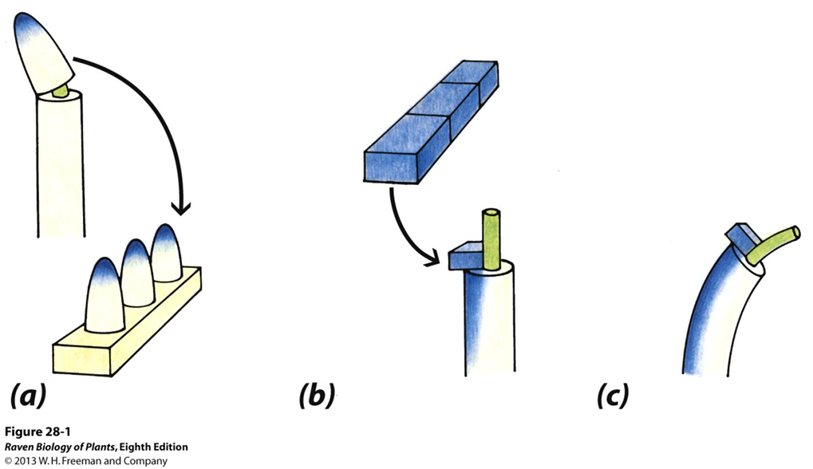
H1
light destroys auxin
H2
auxin migrates
phototropism experiment 2
coleoptile tips on agar
conditions:
dark/light
divided coleoptile tip Dark/Light
divided/partially-divided coleoptile tip AND divided agar
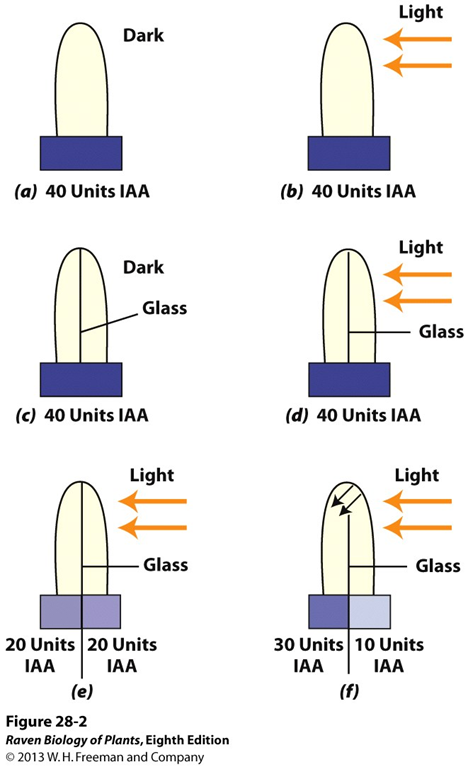
what was concluded from phototropism experiment 2?
auxin moves unilaterally at the tip
then moves basipetally to the elongation zone
mediated by photoreceptors
a pigment-containing protein that absorbslight and converts it into a biochemical response
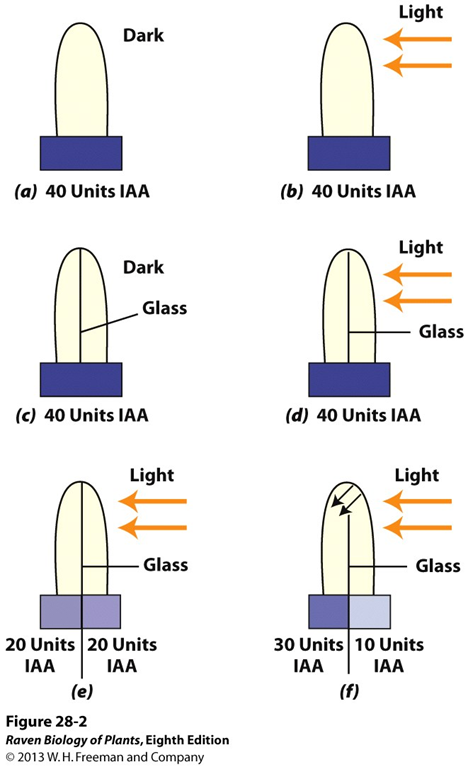
gravitropism
like phototropism, is also caused by redistribution of auxin
auxin affects roots and shoots differently
roots have what kind of gravitropism?
positive gravitropism
shoots have what kind of gravitropism?
negative gravitropism