Chapter 2 Economics Terms | Mr. Sarria
 Call Kai
 Learn
Learn Practice Test
 Spaced Repetition
 Match
Match Flashcards
 Knowt Play
1/22

Earn XP
Description and Tags
Name | Mastery | Learn | Test | Matching | Spaced | Call with Kai | Chat |
|---|
No analytics yet
Send a link to your students to track their progress
23 Terms

Chp 2 page 17
Goods
Def: Physical objects that can be produced for sale or use.
Sentence: Food, clothing, and cars are all examples of goods that satisfy consumer needs.
Connections: Related to Services (the other type of economic product); goods are tangible while services are intangible.

Chp 2 page 17
Services
Def: Actions or activities that are performed for a fee (usually money).
Sentence: A haircut, a doctor's visit, and tutoring are all services because you pay for someone's action, not a physical object.
Connections: Paired with Goods as the two categories of economic products; the US economy is heavily service-based.

Chp 2 page 17
Factors of Production
Def: The four resources needed to produce goods and services: Capital, Land, Labor, and Entrepreneurship.
Sentence: A bakery uses all four factors of production: ovens (capital), a storefront location (land), bakers (labor), and the owner's vision (entrepreneurship).
Connections: Each factor earns a different income: capital → interest, land → rent, labor → wages, entrepreneurship → profit.
Chp 2 page 17
Capital (Physical Capital / Capital Goods)
Def: The tools, machines, equipment, and buildings used to produce goods and services — NOT money.
Sentence: A factory's assembly-line robots are capital because they help produce output.
Connections: One of the four Factors of Production; distinct from Financial Capital (money used to fund business); related to Inputs.
Chp 2 page 20
Land
Def: All natural resources used in production, including water, minerals, forests, and the land itself.
Sentence: The oil drilled from underground and the farmland used to grow wheat are both classified as the factor "land”.
Connections: One of the four Factors of Production; includes both Renewable Resources (timber, water) and Nonrenewable Resources (oil, coal).

Chp 2 page 22
Labor
Def: The physical and mental effort people contribute to producing goods and services.
Sentence: The workers on an assembly line and the engineer who designed the product both provide labor.
Connections: One of the four Factors of Production; its quality is improved by Human Capital (education and training); linked to Productivity.

Chp 2 page 17
Entrepreneurship
Def: The initiative to combine the other three factors of production, take risks, and create new goods or services.
Sentence: When someone launches a startup by hiring workers, renting office space, and buying equipment, they are starting entrepreneurship.
Connections: One of the four Factors of Production; the entrepreneur earns profit (or absorbs losses); drives innovation and economic growth.

Chp 2 page 17
Opportunity Cost
Def: The value of the next-best alternative you give up when you make a choice.
Sentence: If you spend Saturday studying instead of working a shift that pays $80, your opportunity cost of studying is that $80.
Connections: Central to the PPF — every point on the curve involves an opportunity cost of producing more of one good; ties to the principle "Every choice has a cost" from Chapter 1.
Chp 2 page 17
Productivity
Def: The amount of output produced per unit of input (e.g., per worker or per hour).
Sentence: If a factory produces 500 units per worker per day instead of 300, its productivity has increased.
Connections: Higher productivity shifts the PPF outward (economic growth); related to Human Capital — better trained workers are more productive.
Chp 2 page 17
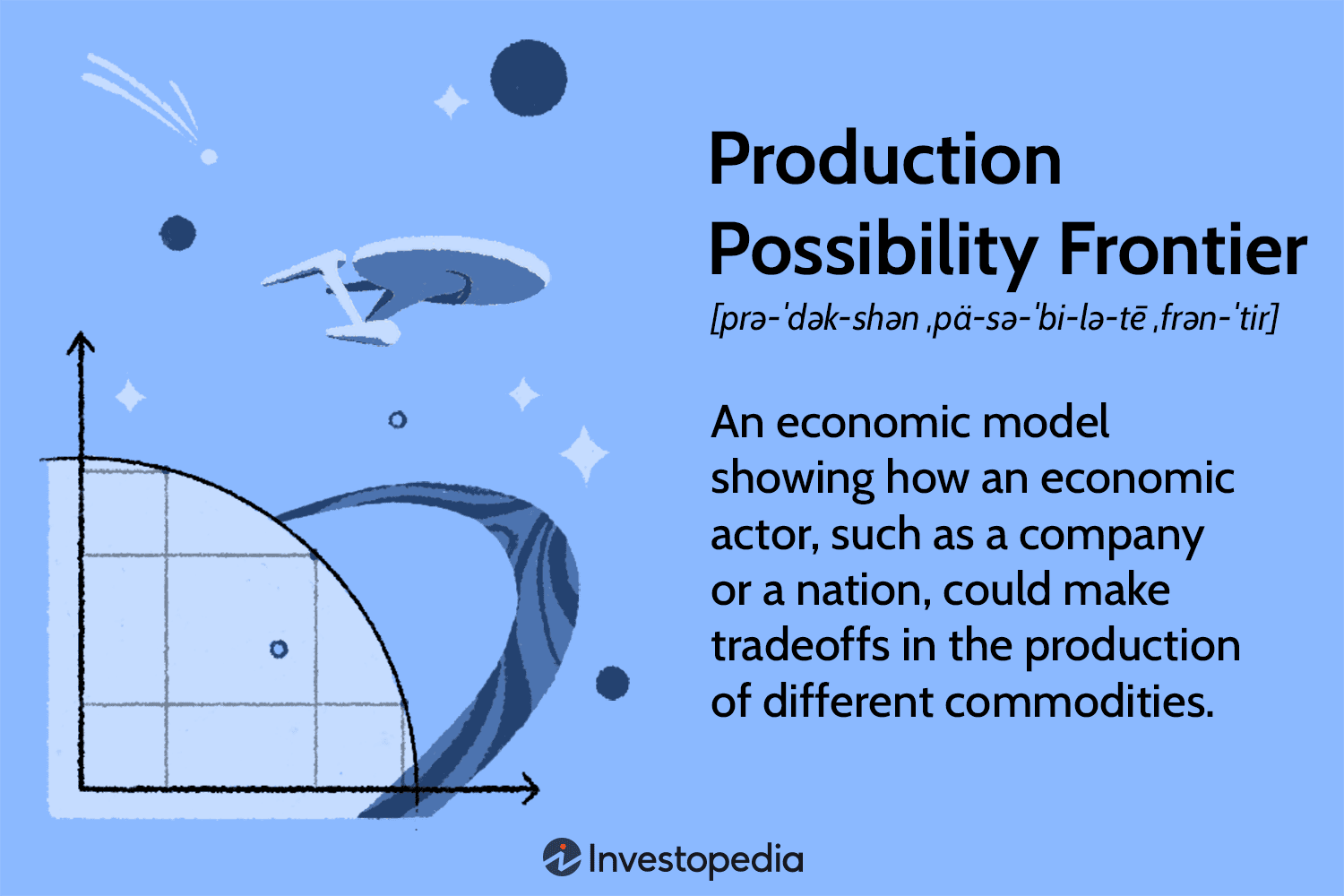
Production Possibilities Frontier (PPF) / PPC
Def: A graph showing the maximum combinations of two goods or services an economy can produce using all its resources efficiently.
Sentence: A country on its PPF producing more missiles must give up some butter, demonstrating opportunity cost.
Connections: Points ON the curve = Economic Efficiency; points INSIDE = underutilization/inefficiency; points OUTSIDE = currently unattainable without growth; relates to Opportunity Cost and Inputs/Outputs.
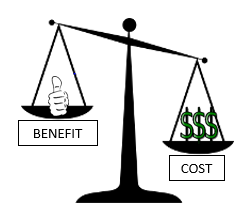
Chp 2 page 29
Economic Efficiency
Def: Using resources in a way that maximizes the production of goods and services with the least waste.
Sentence: An economy operating on its PPF is achieving economic efficiency because no resources are sitting idle.
Connections: Directly related to the PPF — efficient production means you're on the curve, not inside it; opposite of a Shortage or resource underuse.

Chp 2 page 19
Shortage
Def: A situation where the quantity demanded of a good or service exceeds the quantity available at the current price.
Sentence: During a natural disaster, bottled water often experiences a shortage as demand goes beyond supply.
Connections: Related to scarcity (Chapter 1) but not the same — scarcity is permanent and universal, while a shortage can be temporary and market-specific.

Chp 2 page 20
Inputs
Def: The resources (land, labor, capital, entrepreneurship) that go into the production process.
Sentence: Flour, sugar, an oven, and a baker's time are all inputs in producing a cake.
Connections: Part of the Production Equation (Inputs → Outputs); the four Factors of Production are the categories of inputs.

Chp 2 page 20
Outputs
Def: The goods and services that result from the production process.
Sentence: The finished cake ready for sale is the output of the bakery's production process.
Connections: Part of the Production Equation; measured by Productivity (output per unit of input); shown on the axes of the PPF.
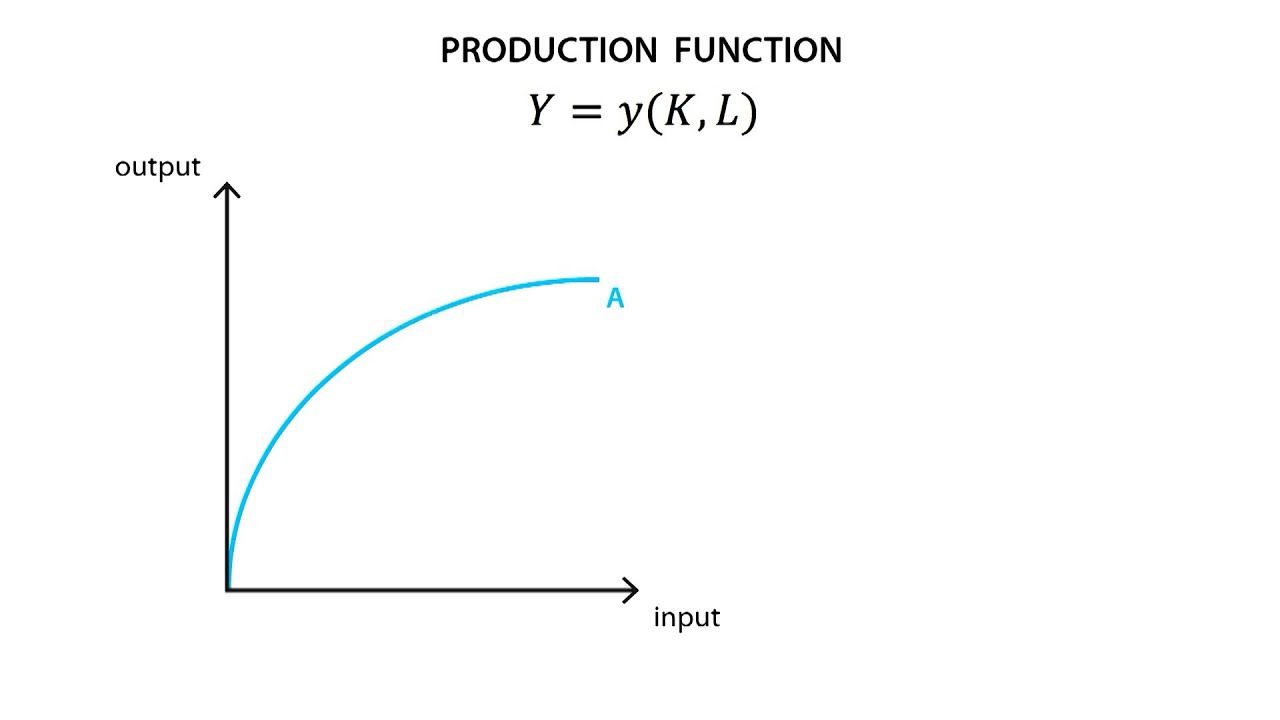
Chp 2 page 20
Production Equation
Def: The relationship showing that inputs are combined through a production process to create outputs (Inputs → Production → Outputs).
Sentence: The production equation for a car company is as follows: steel, robots, and workers (inputs) go through assembly (production) to create vehicles (outputs).
Connections: Ties together Inputs, Outputs, Factors of Production, and Productivity into one framework.

Chp 2 page 20
Renewable Resources
Def: Natural resources that can be replenished over time through natural processes (e.g., timber, solar energy, water).
Sentence: A lumber company that replants trees after harvesting is sustainably using a renewable resource.
Connections: A subcategory of Land (factor of production); contrast with Nonrenewable Resources; sustainability affects long-term PPF position.
Chp 2 page 21
Nonrenewable Resources
Def: Natural resources that exist in fixed quantities and cannot be replaced once used up (e.g., oil, coal, natural gas, minerals).
Sentence: Coal is a nonrenewable resource.
Connections: A subcategory of Land; depletion can shift the PPF inward over time; contrast with Renewable Resources.

Chp 2 page 22
Human Capital
Def: The knowledge, skills, training, and experience that workers bring to the production process.
Sentence: A full scholarship for an surgeon in his/her years of medical school and residency represent a large investment in human capital.
Connections: Improves the quality of Labor (factor of production); increases Productivity; distinct from Physical Capital (machines) and Financial Capital (money).

Chp 2 page 22
Financial Capital
Def: The money used to buy the tools, equipment, and resources needed for production.
Sentence: A bank loan that a restaurant owner uses to buy a new oven is financial capital.
Connections: Distinct from Physical Capital — financial capital is money, physical capital is the actual equipment; NOT one of the four Factors of Production by itself.
Chp 2 page 24
Total Utility
Def: The total amount of satisfaction or pleasure one gets from consuming a specific amount of a good or service.
Sentence: After eating three slices of pizza, your total utility is the combined satisfaction from all three slices.
Connections: Increases as you consume more (up to a point); built up from Marginal Utility of each additional unit; eventually impacted by Diminishing Marginal Utility.
Chp 2 page 26
Marginal Utility
Def: The additional satisfaction or pleasure gained from consuming one more unit of a good or service.
Sentence: The first slice of pizza gives you huge satisfaction, but the fourth slice adds only a little; that small addition is its marginal utility.
Connections: Each additional unit's marginal utility typically falls (Law of Diminishing Marginal Utility); when it drops below zero, you've hit Negative Utility; adds up to Total Utility.

Chp 2 page 27
Law of Diminishing Marginal Utility
Def: The principle that as you consume more units of a good or service, the additional satisfaction (marginal utility) from each extra unit tends to decrease.
Sentence: An example of diminishing marginal utility is when your first cup of coffee in the morning is amazing; by the fourth cup you barely enjoy it.
Connections: Explains why Marginal Utility falls with each unit; eventually leads to Negative Utility; foundational to demand theory and consumer behavior in economics.

Chp 2 page 26
Negative Utility
Def: The point at which consuming an additional unit of a good or service causes dissatisfaction or displeasure rather than pleasure.
Sentence: Eating a tenth slice of pizza that makes you feel sick is an example of negative utility.
Connections: Occurs when Marginal Utility drops below zero; the extreme end of the Law of Diminishing Marginal Utility; Total Utility actually decreases at this point.