MS II Exam 5 - Cervical Spine and TMJ
 Call Kai
 Learn
Learn Practice Test
 Spaced Repetition
 Match
Match Flashcards
 Knowt Play
1/245

There's no tags or description
Looks like no tags are added yet.
Name | Mastery | Learn | Test | Matching | Spaced | Call with Kai | Chat |
|---|
No analytics yet
Send a link to your students to track their progress
246 Terms
The cervical spine is extremely (mobile/stable)
mobile
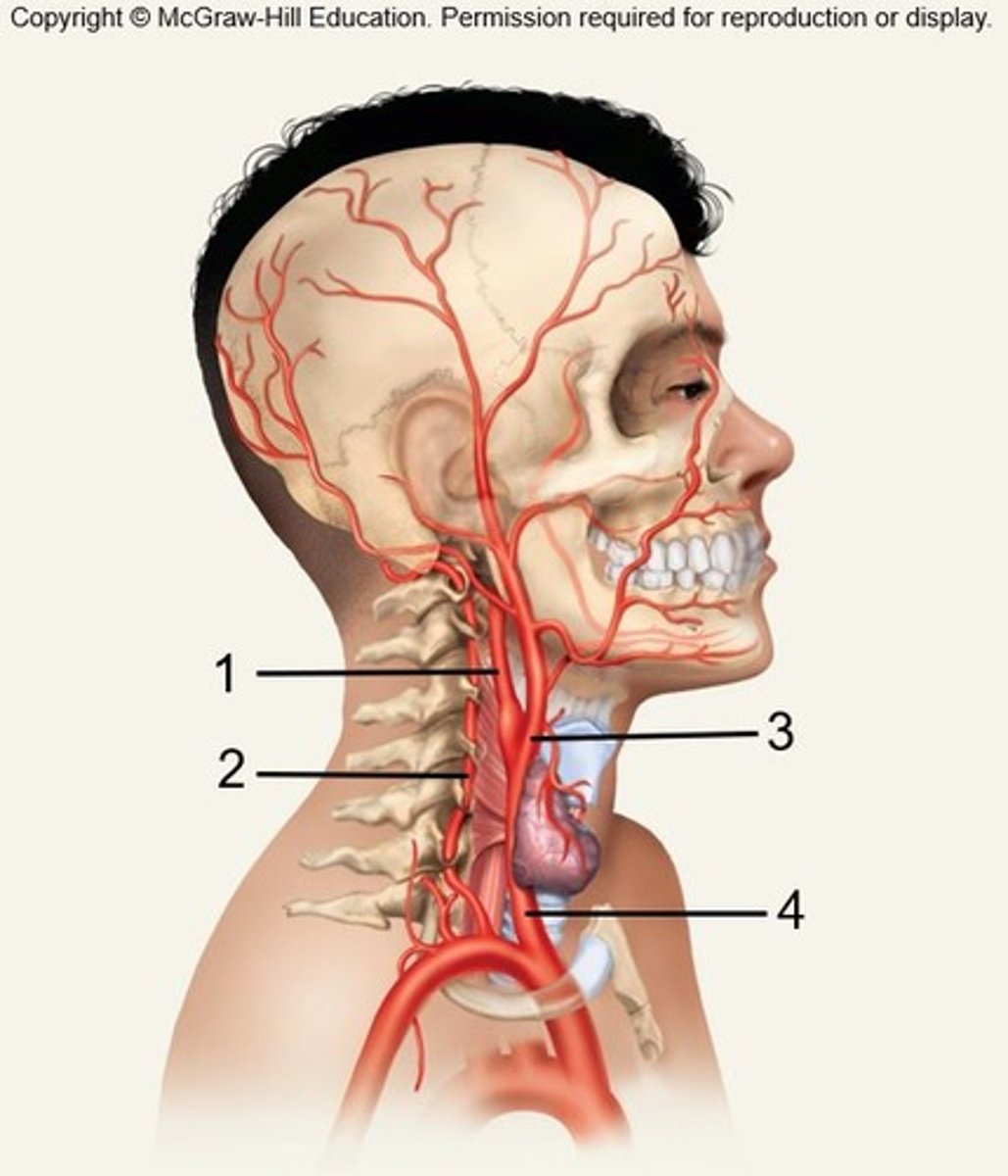
Arteries around the C spine
vertebral artery (2),
internal carotid artery (1)
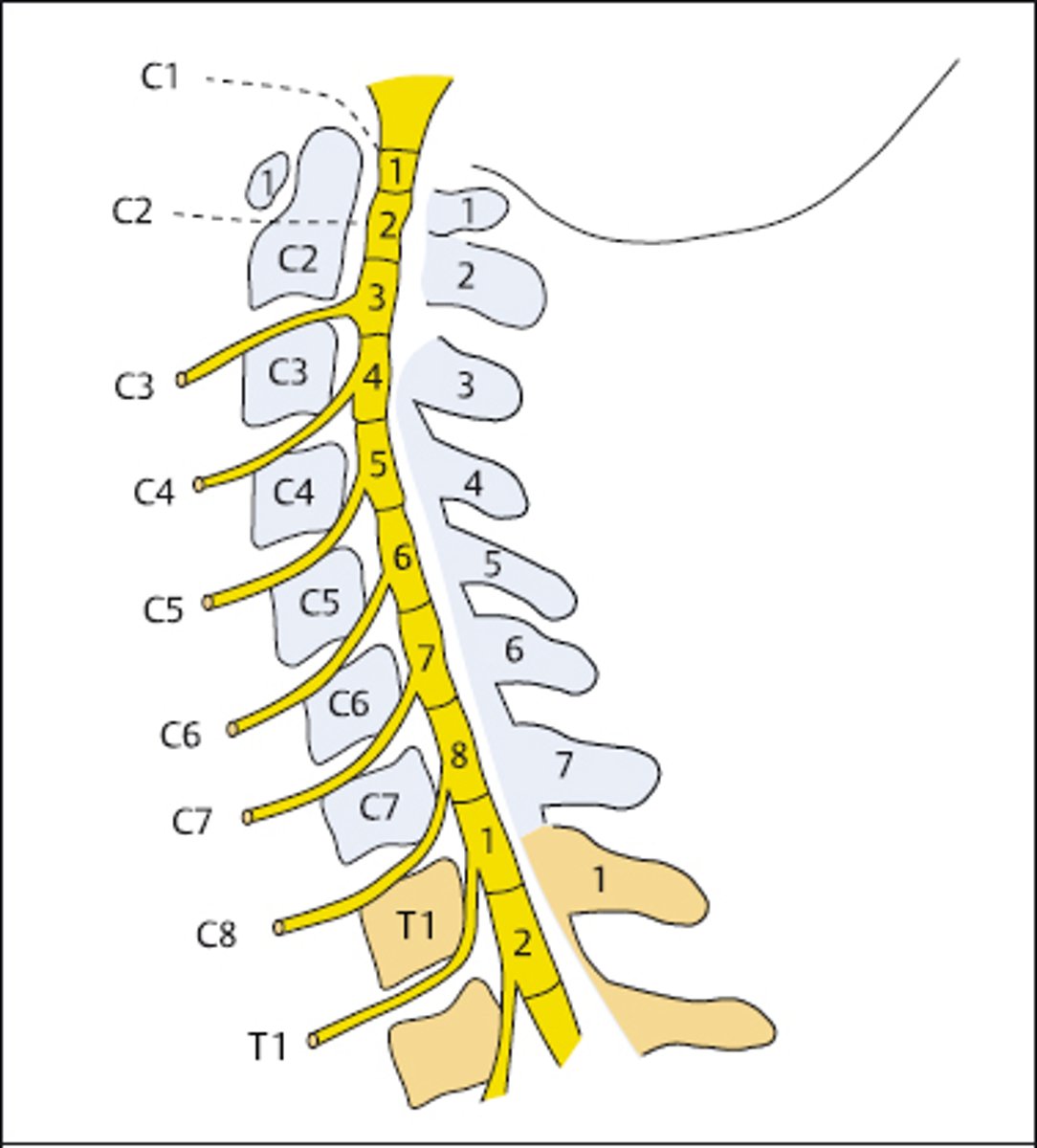
The C spine has ____ vertebrae and _____ nerve roots
7 vertebrae,
8 nerve roots
Why does it matter that the C spine is in close proximity to the shoulder?
pathologies can involve both,
rule out the shoulder when treating the C spine
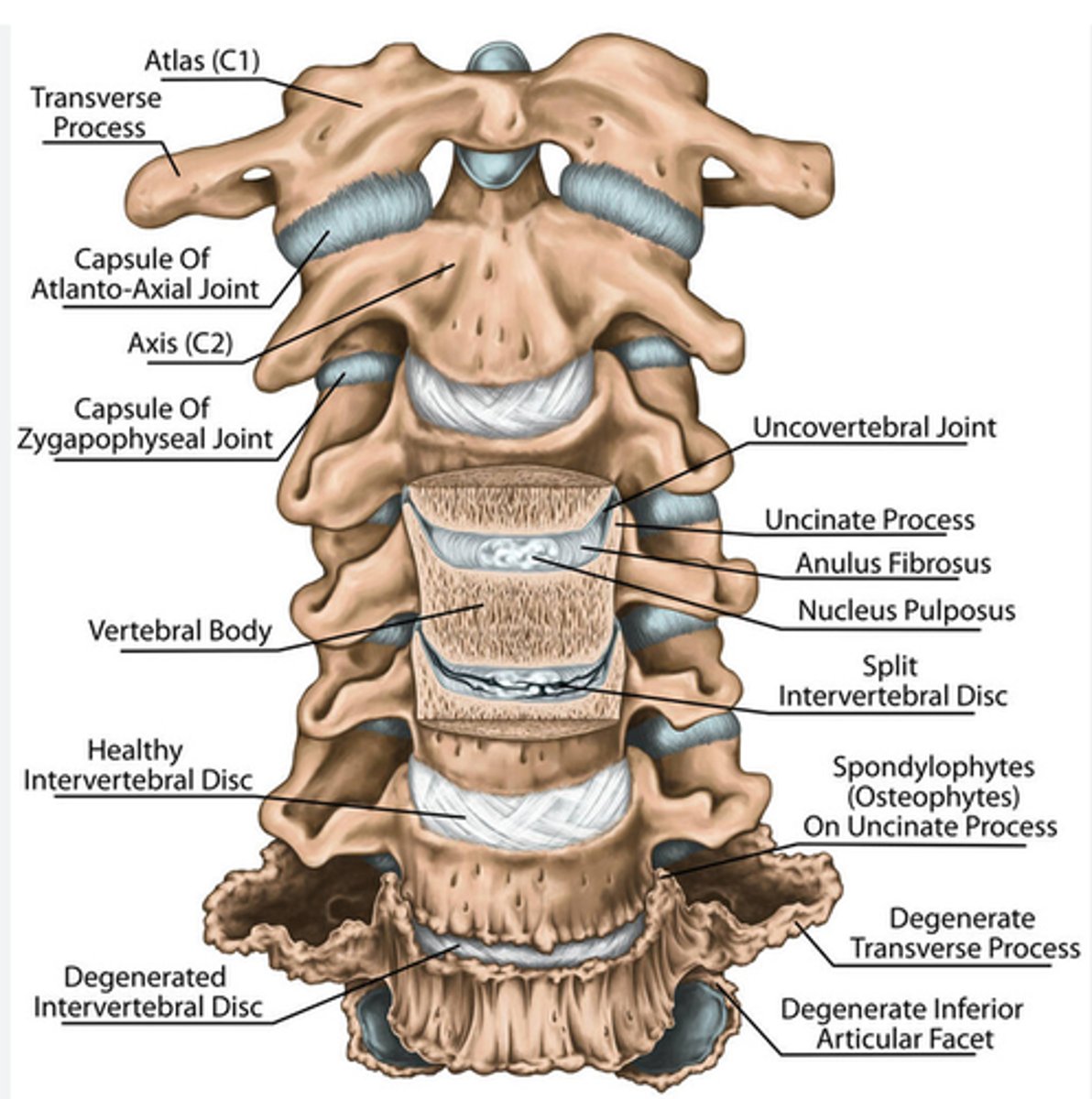
Cervical spine structures impacted by aging (3)
uncovertebral joints,
IVD,
facet joints
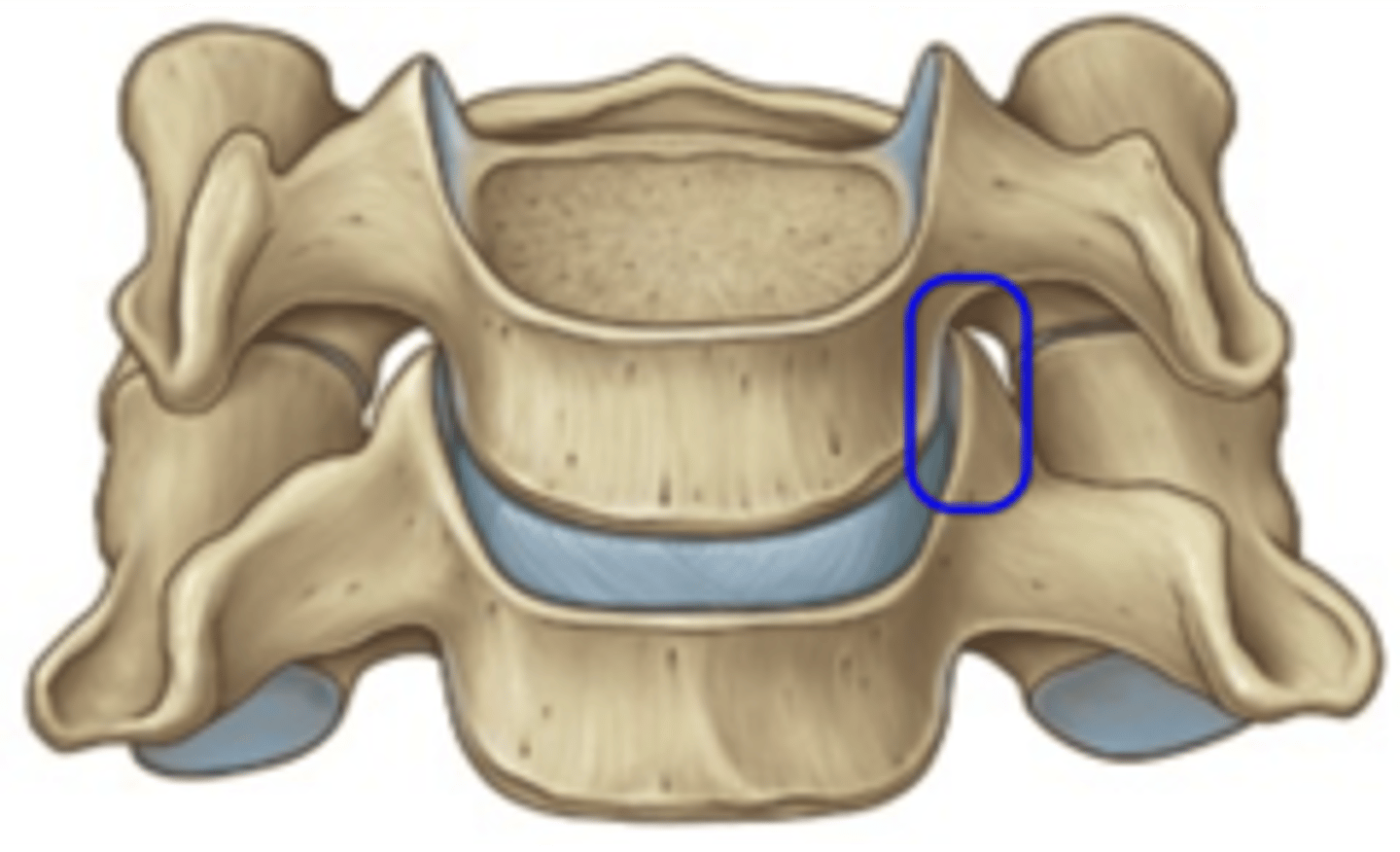
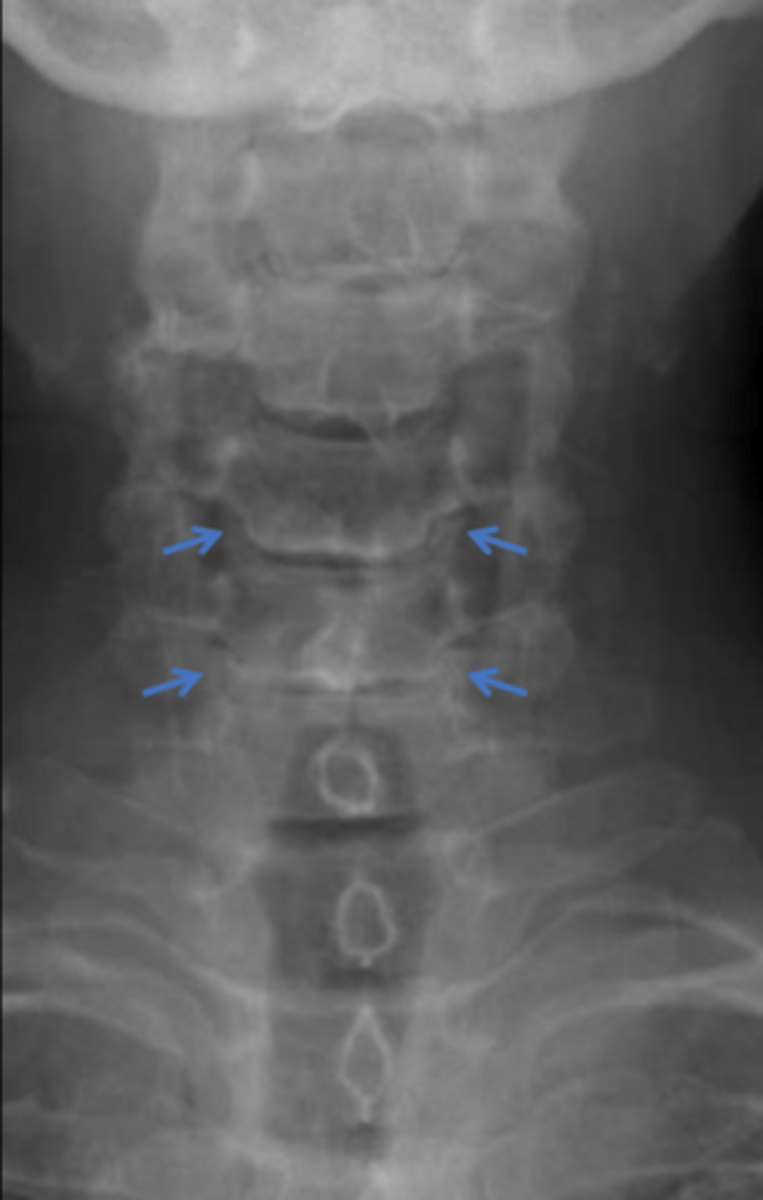
Uncovertebral joints
uncinate processes articulate with the body of the VB above, not synovial
- limits sidebending ROM
- prevents lateral translation of IVD
UV joint pathology:
Symptoms
- very little pain, just vague discomfort
- stiffness > pain
- NO referred or neuro symptoms
- morning stiffness
UV joint pathology:
Signs
- loss of extension
- neck in forward flexed position
- limited sidebending in all positions
- decreased rotation
- crepitus
At age 50-60, disc thinning and resorption are frequently seen at what cervical levels?
C5/6 or C6/7
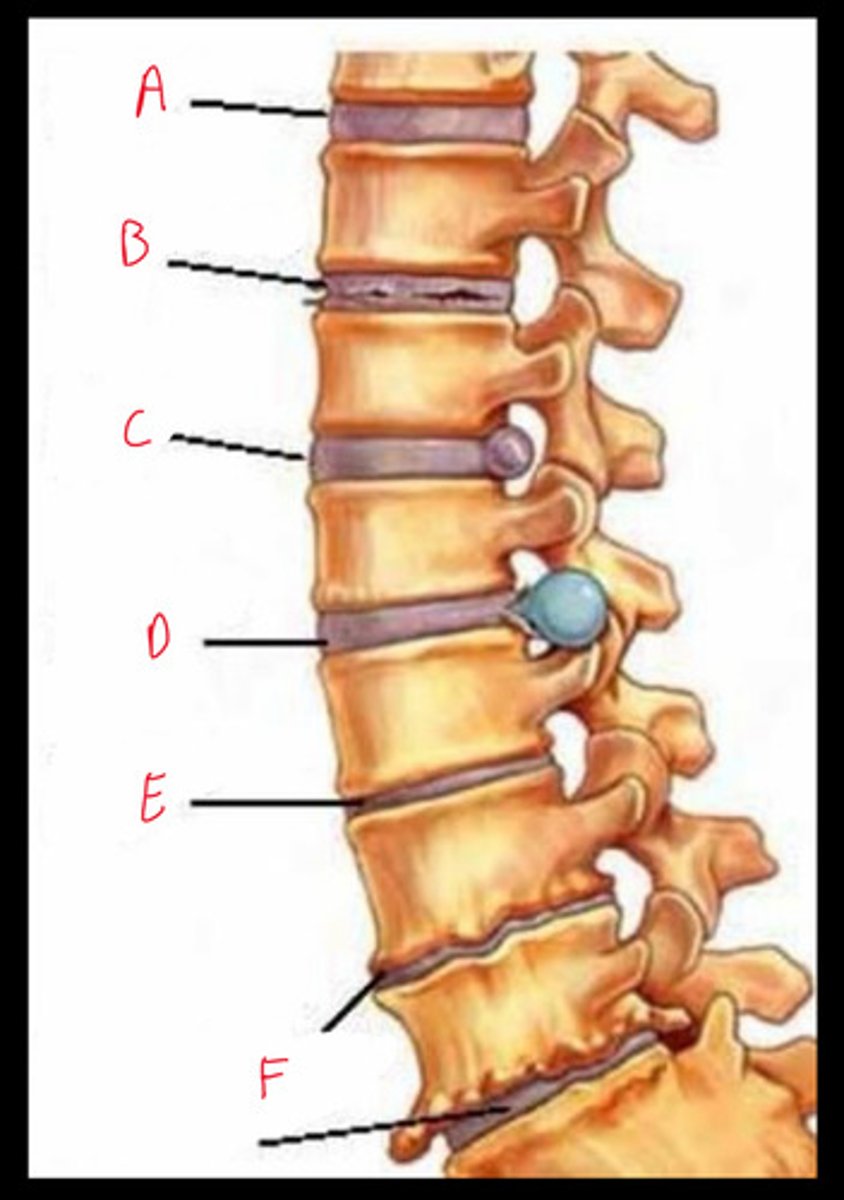
At age 70-80, spontaneous ______________ is commonly seen at lower cervical levels
fusion
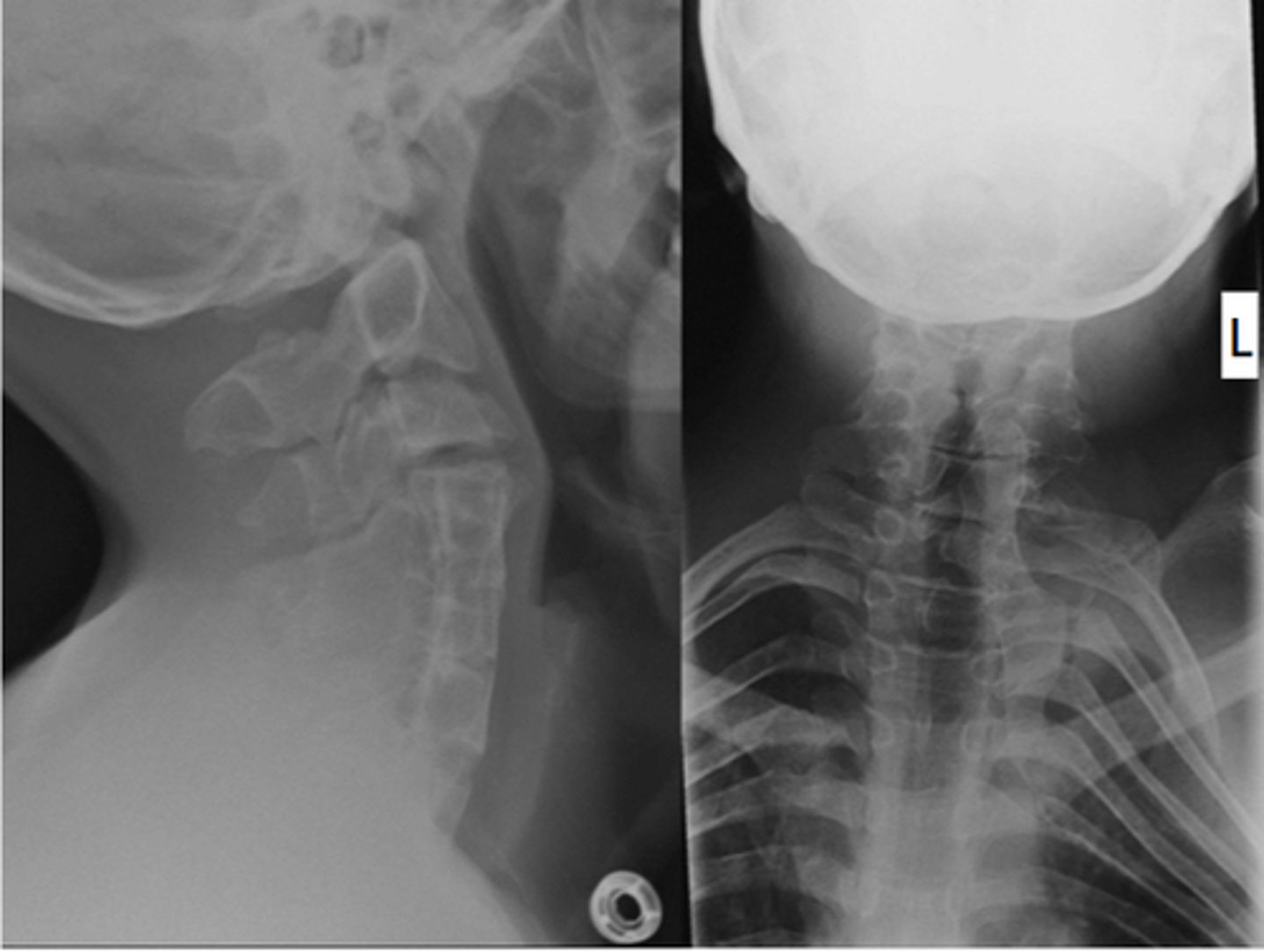
Relationship between IVD degeneration and UVJ dysfunction
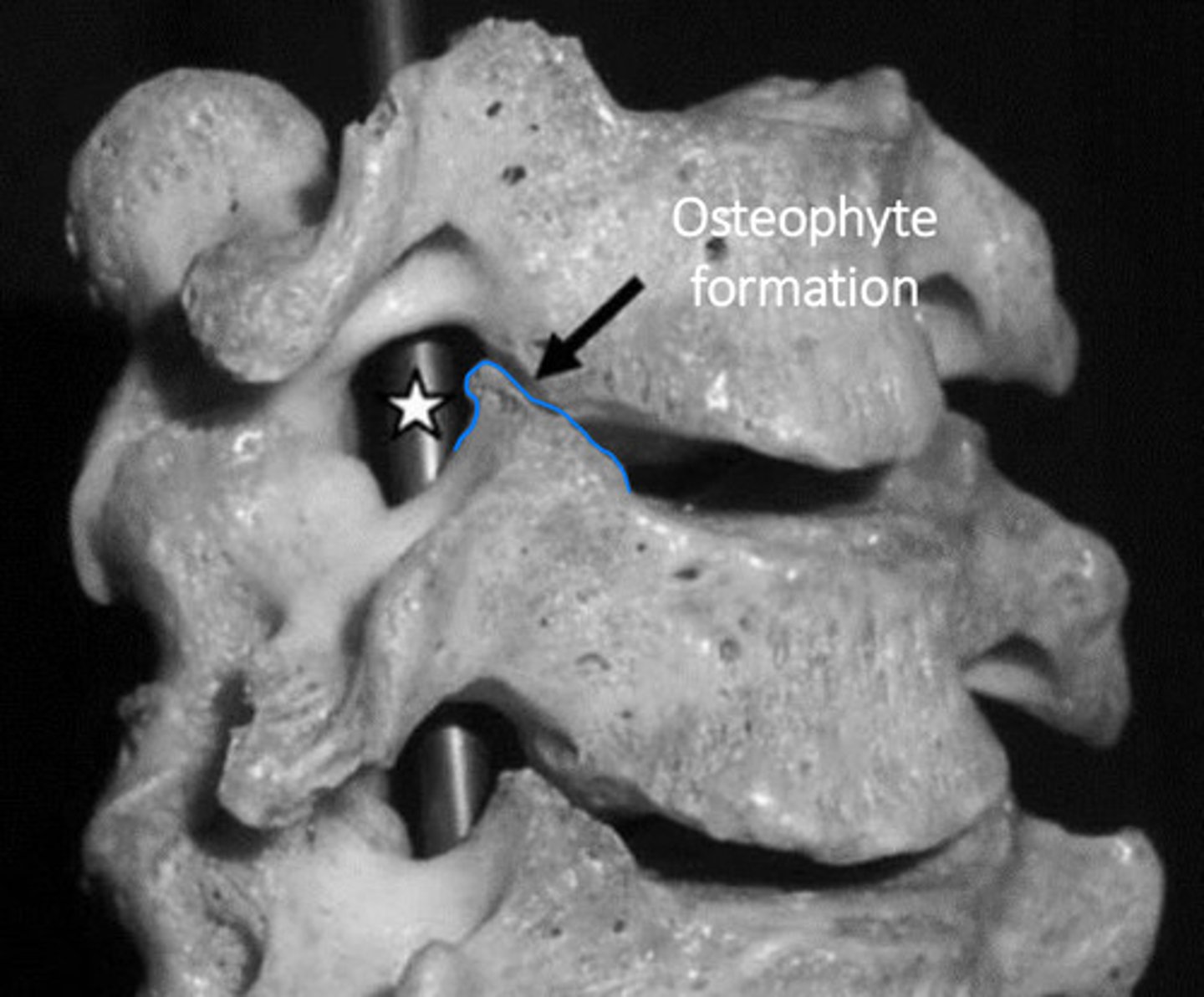
loss of disc height increases WB and results in formation of UV osteophytes and hard posterior disc protrusions
- may encroach on intervertebral and spinal canals (stenosis)
Disc fissures are normal in people over _______
35
- extent of fissuring varies according to age and disc level
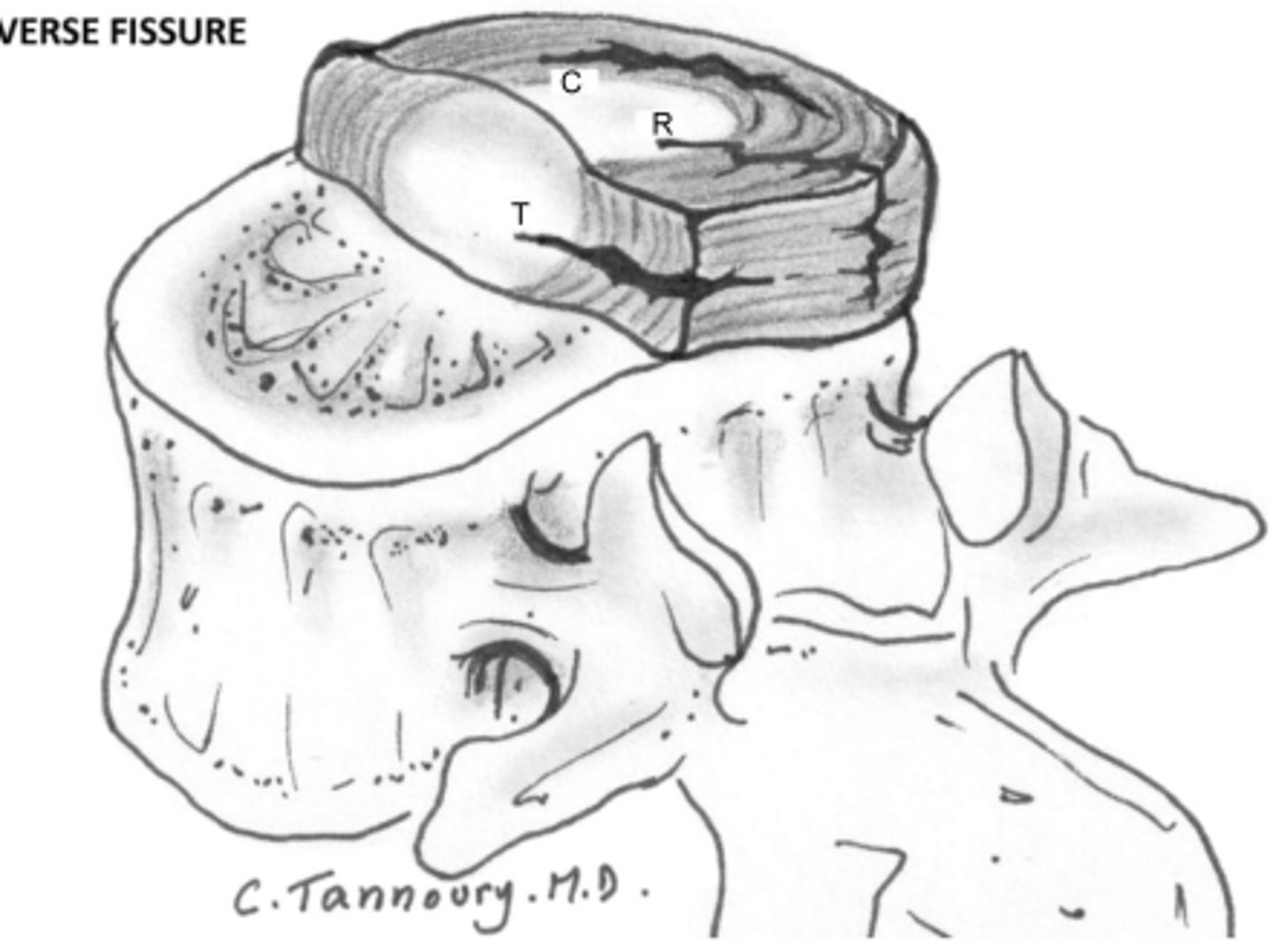
(upper/lower) cervical discs usually fissure before the other
upper
- C7/T1 is usually completely spared from fissuring
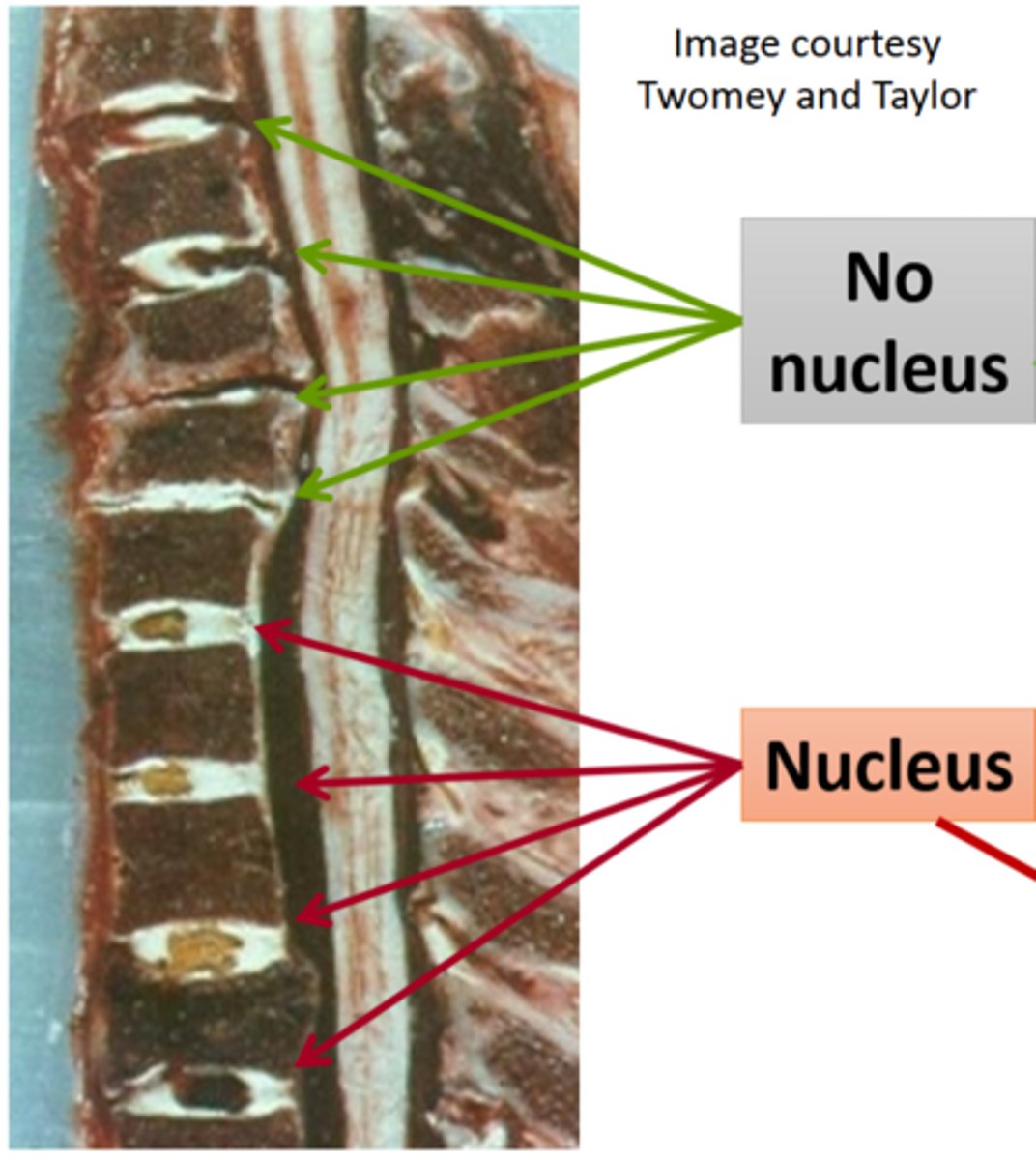
What structure do the upper 4 cervical discs lack?
nucleus pulposus
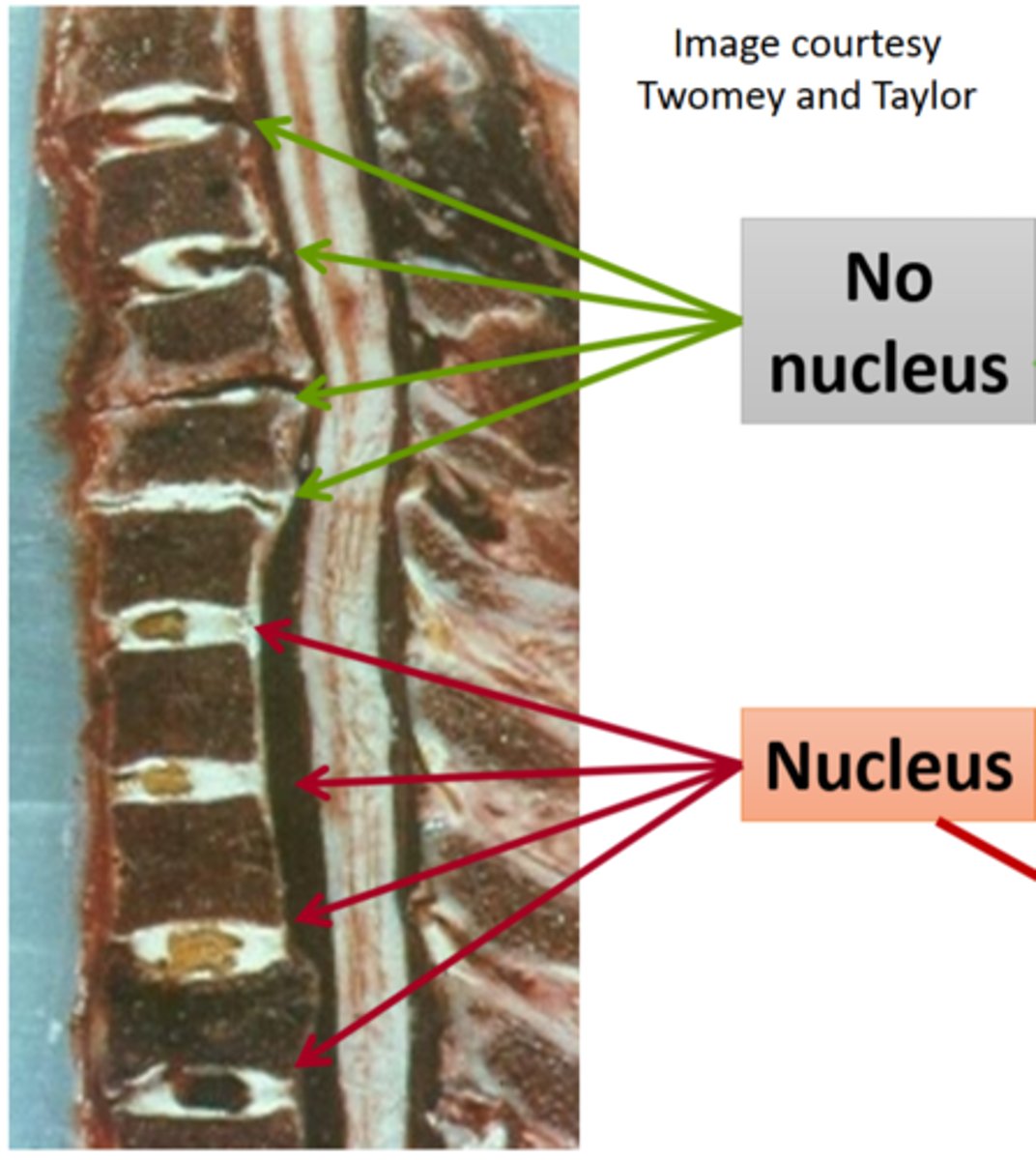
Disc fissuring in upper vs lower cervical spine
upper (no nucleus)
- no inflammatory and immune mediated chemicals
- lower incidence of upper cervical disc injury and radiculopathy
lower (nucleus)
- NP contains inflammatory and immune mediated chemicals that irritate nerve roots
- higher incidence of lower cervical disc injury and radiculopathy
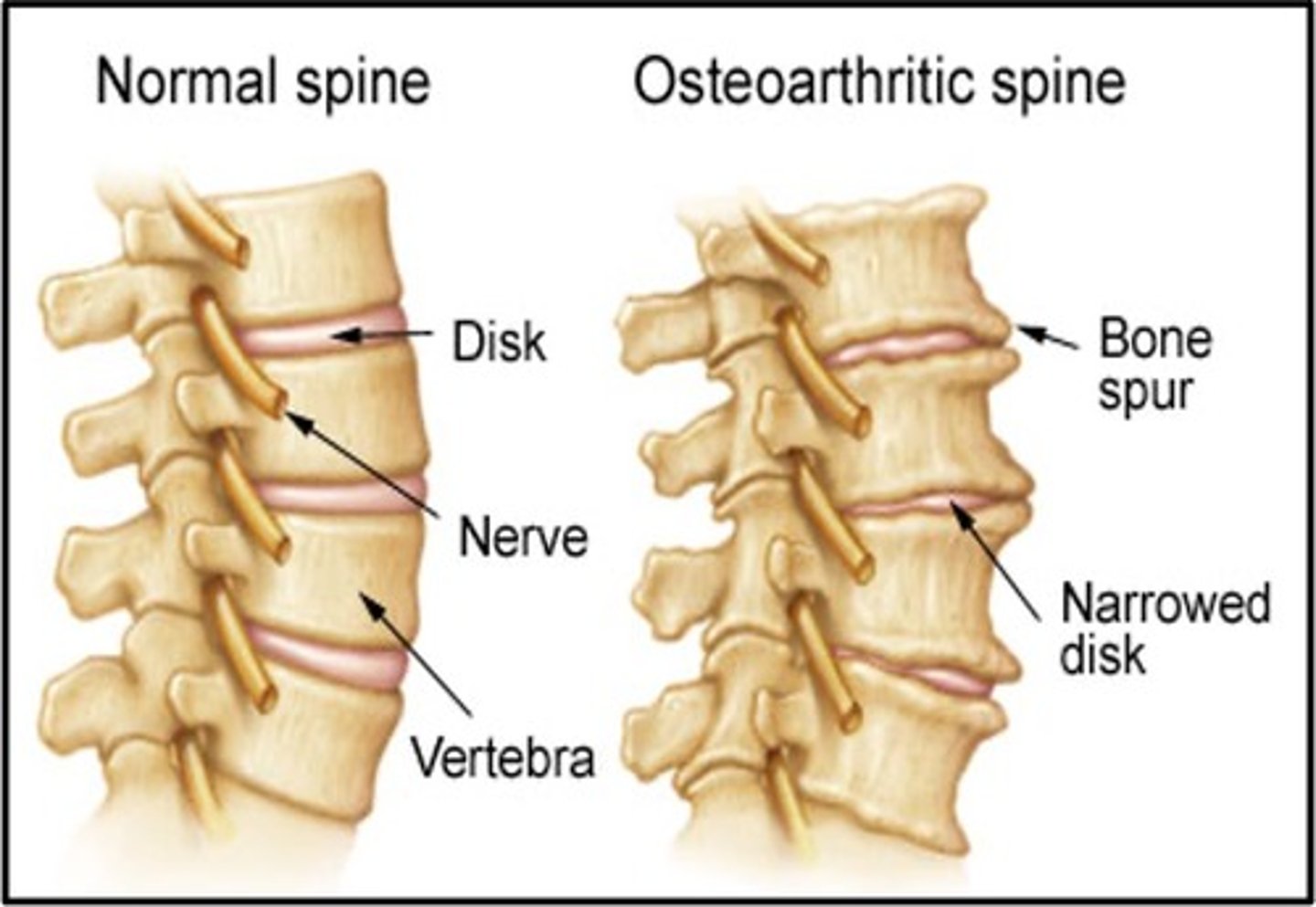
Cervical disc age changes
- discs are compressed and distorted by UV osteophytes and disc protrusions
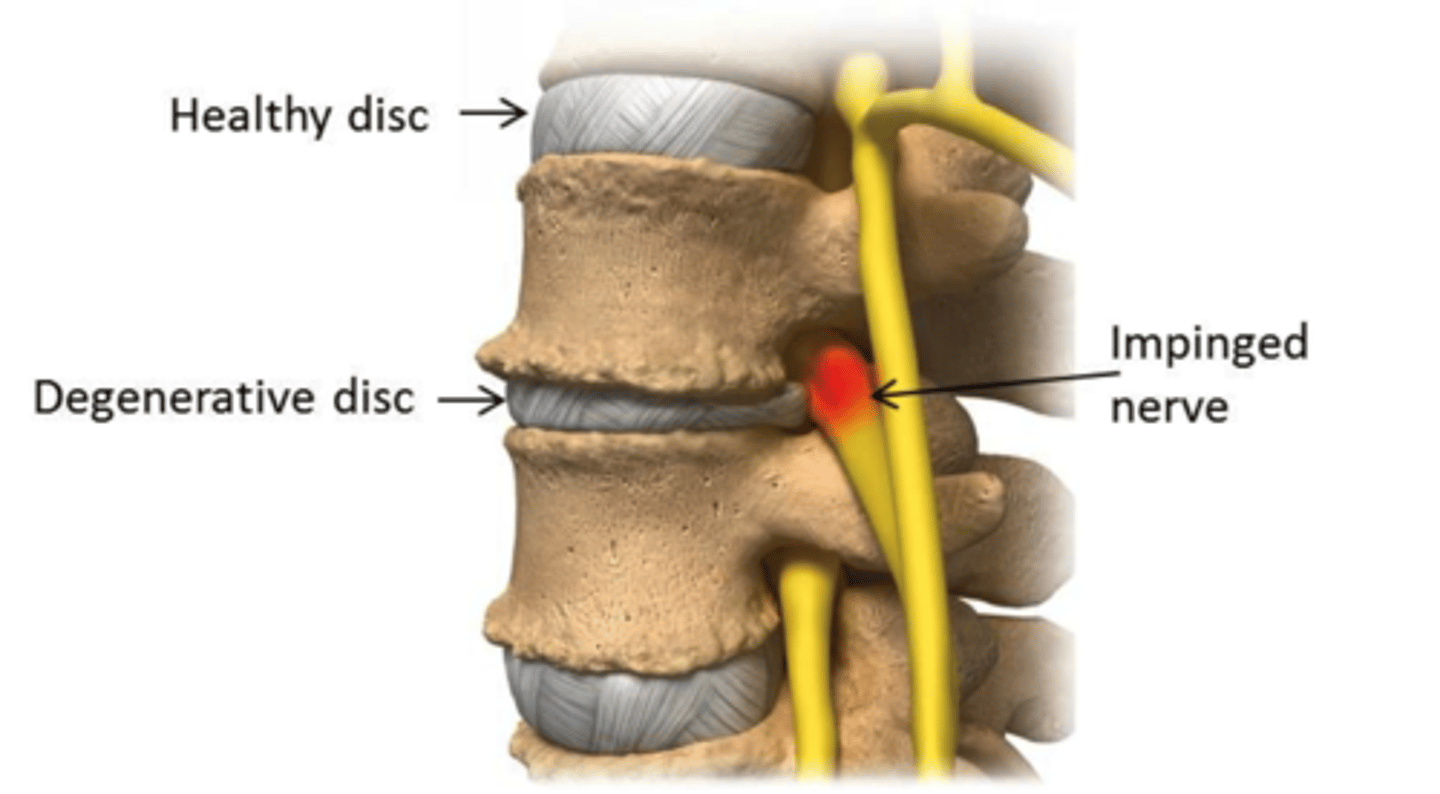
- with disc space narrowing, UV osteophytes can project into the IV foramina and into spinal canal and compress structures there (nerve roots, vertebral arteries, spinal cord)
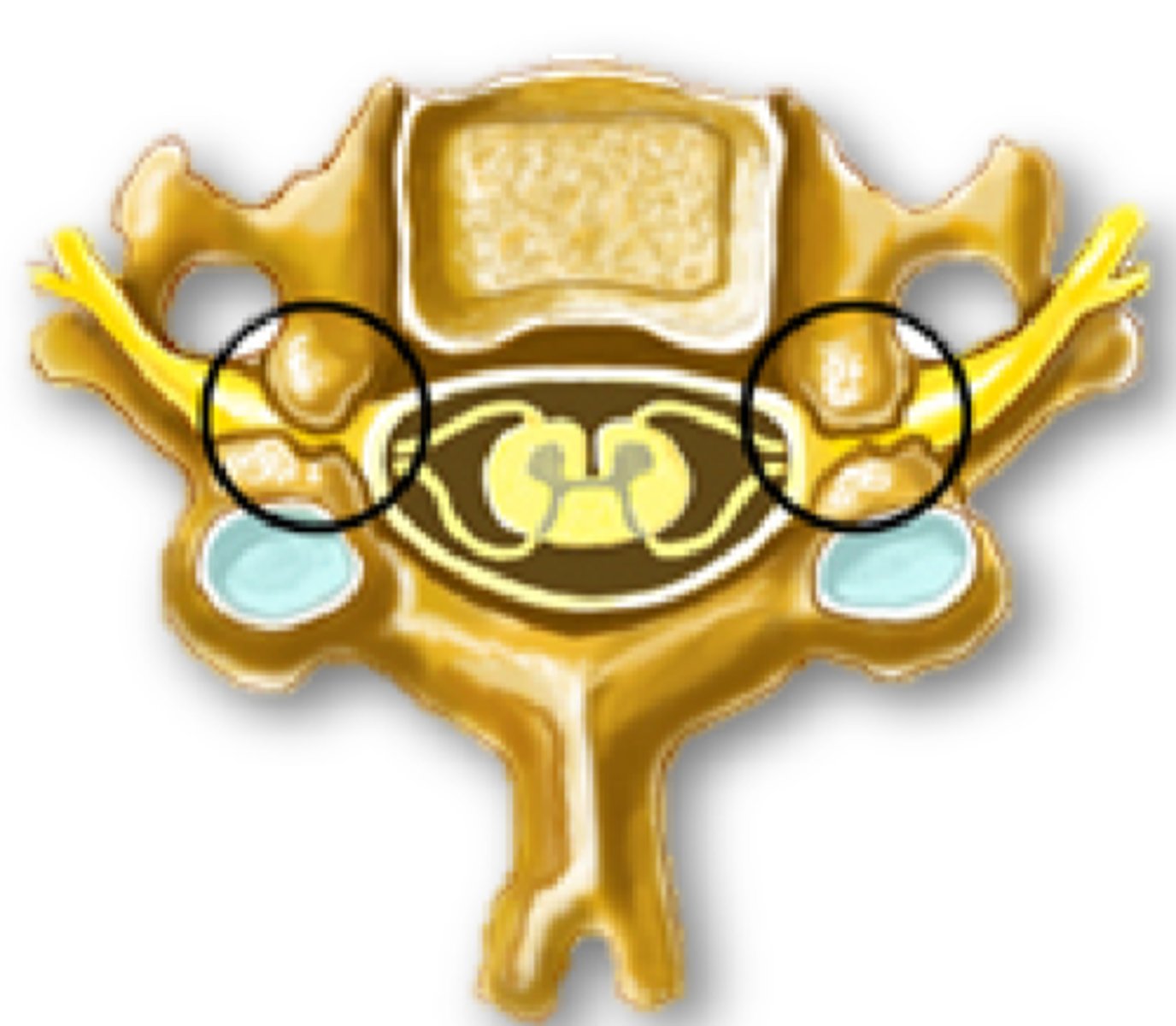
Sclerosis from the UV joints can occlude what structure?
intervertebral foramen
- high incidence of foraminal stenosis
UV osteophyte can also encroach on the vertebral _______________
artery
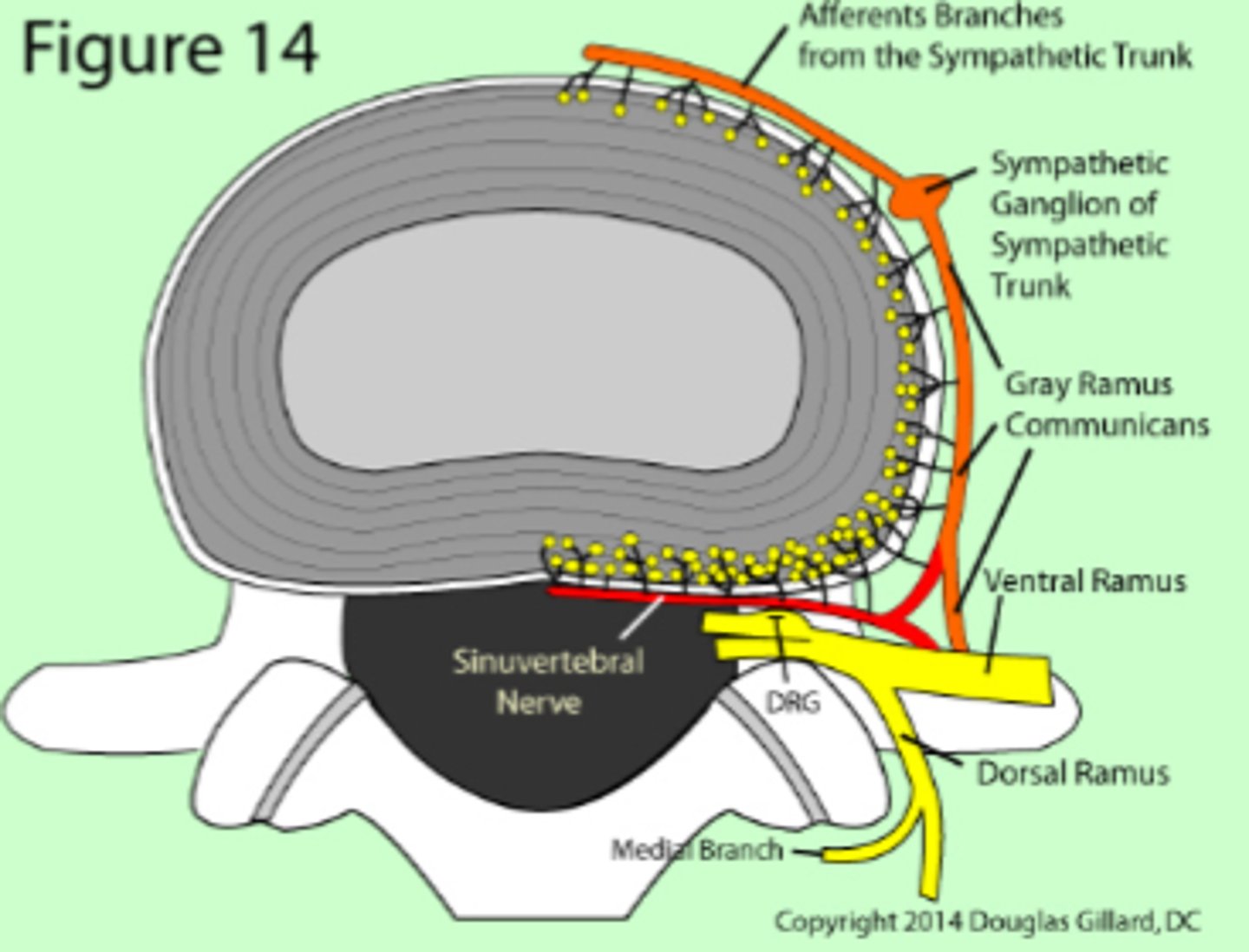
Cervical disc innervation
cervical sinuvertebral nerves and branches of the vertebral nerve
- nerve fibers only supply the outer third of the annulus
Are disc lesions more common in the cervical or lumbar spine?
lumbar
- cervical disc fissuring is typically due to UVJ
- normal, painless
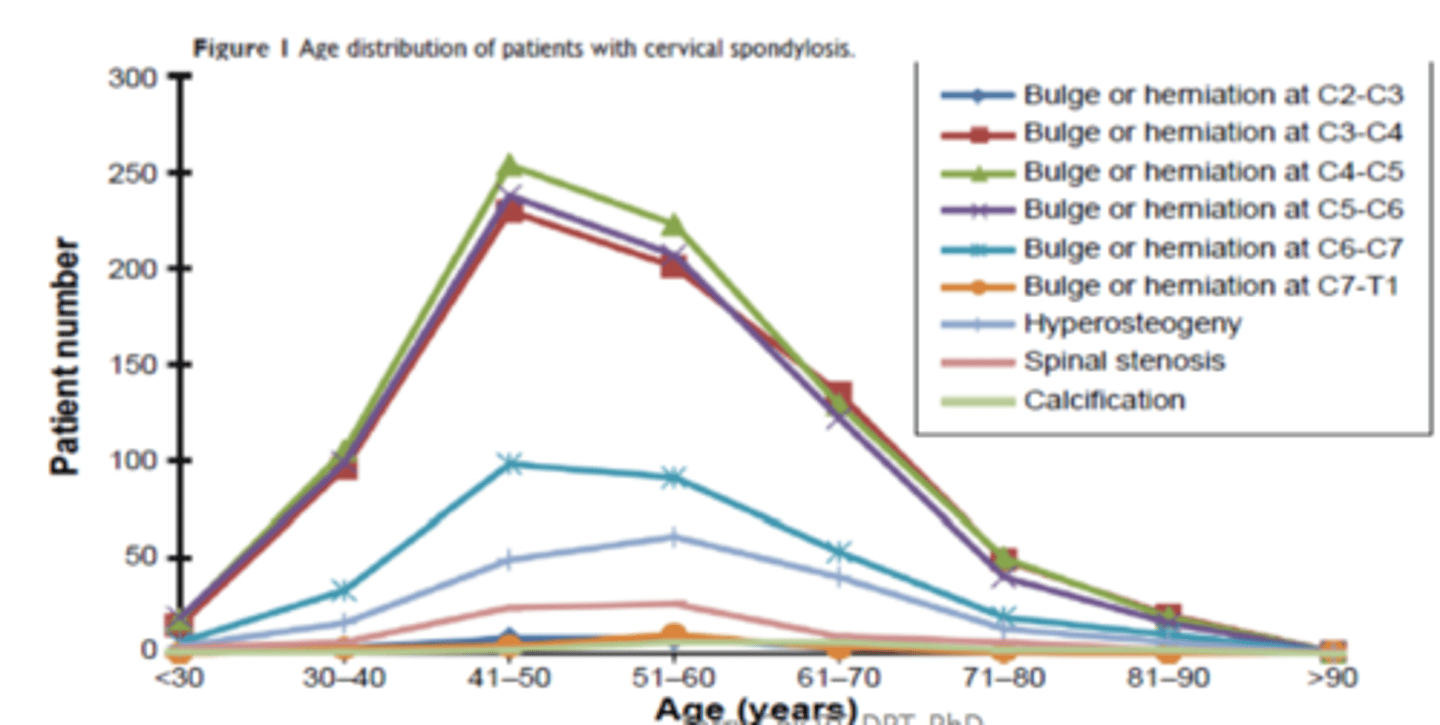
What is the only factor related to progression of degeneration of the cervical spine?
age
- incidence of cervical spondylosis decreases with aging in elderly, and is higher in middle aged adults
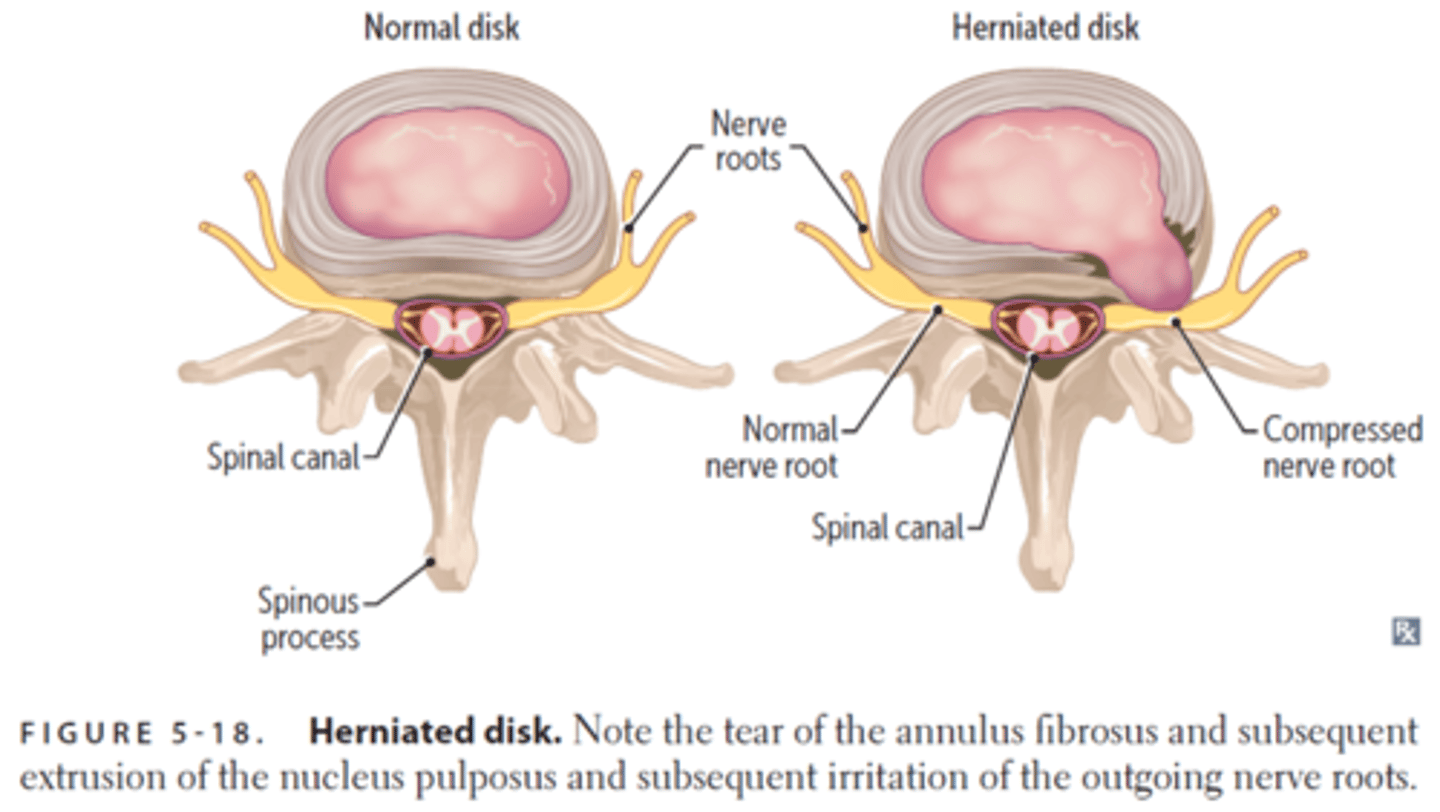
Cervical radiculopathy
mechanical pressure on a nerve that results in numbness, weakness, pins and needles
- annular walls naturally bulge over time
- space is relatively large, so an isolated disc bulge causes very little symptoms
Cervical disc trauma
trauma can cause annulus tears, end plate injuries, and annulus bruising
- bleeding mixes with inflammatory and immune mediators, which chemically irritate the dorsal root ganglion
- these chemical mediators can also remove myelin from adjacent axons, increasing sensitivity of the nerve
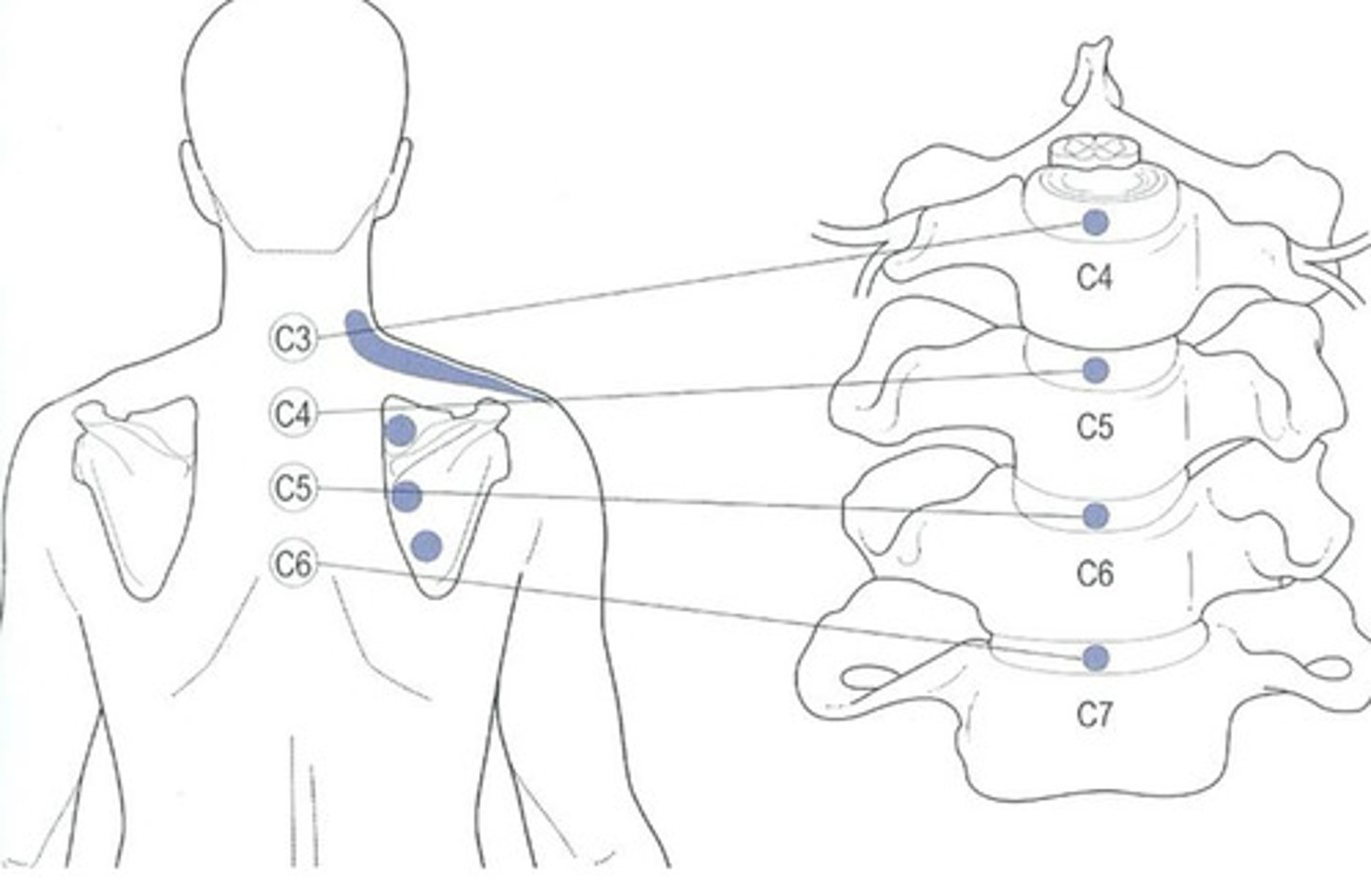
C spine disc pathology:
Cloward's point
referred pain from cervical discs can be felt in the medial part of the scapula
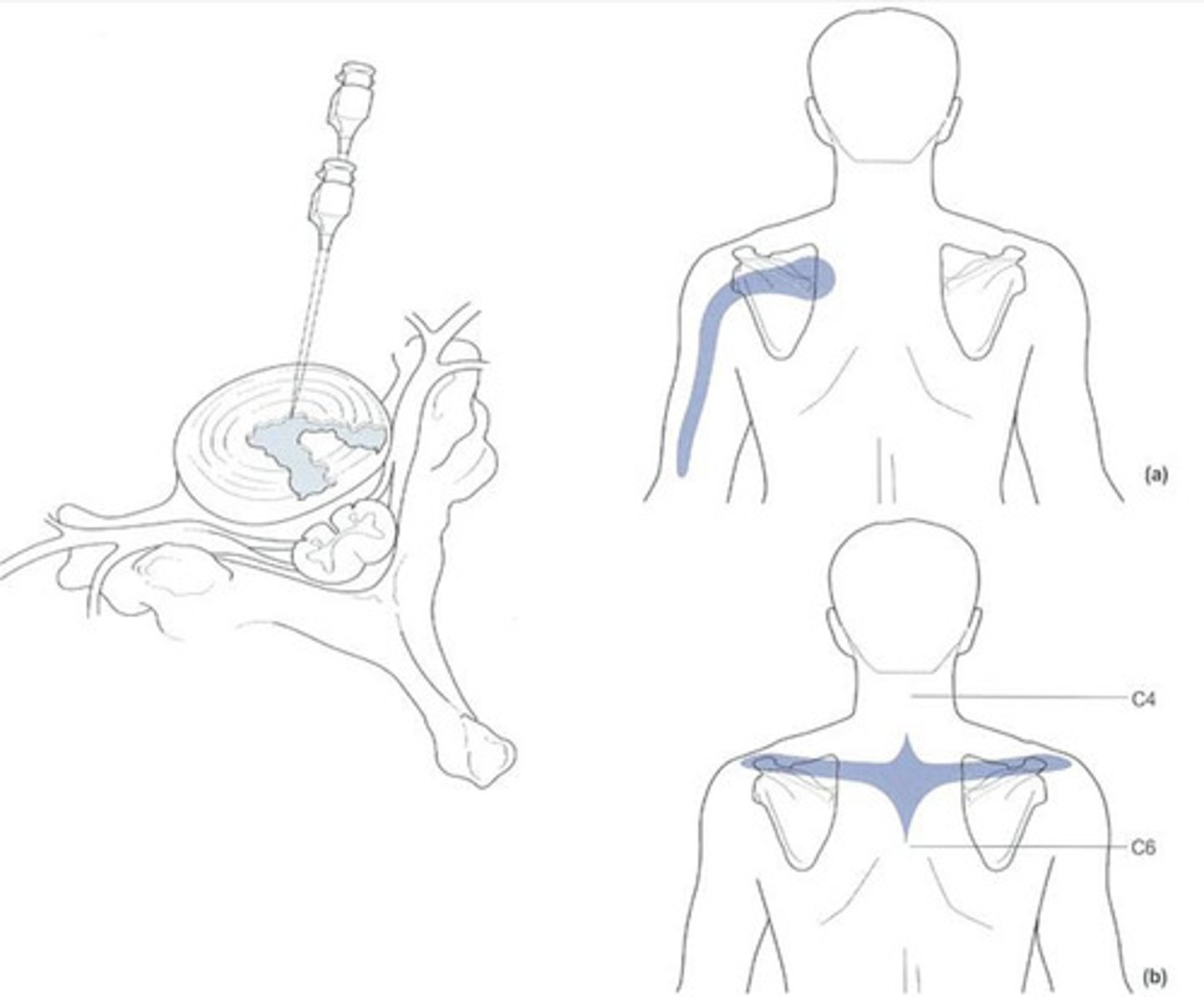
C spine disc pathology:
Lateral and posterior tear referral patterns
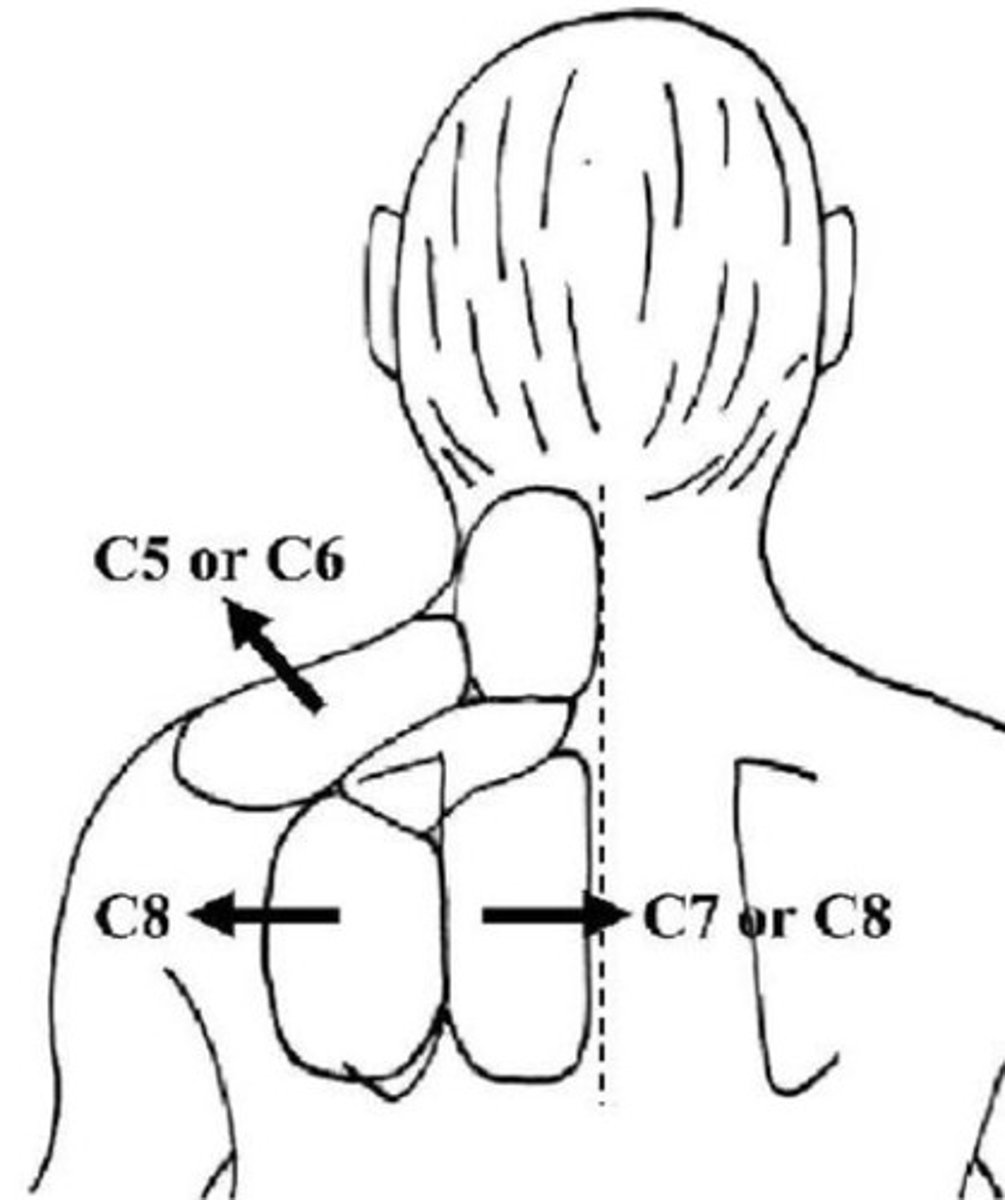
C spine disc pathology:
Pain in what regions can originate directly from the compressed nerve root?
suprascapular, interscapular, and/or scapular regions
- the site of pain is valuable for determining localization of the involved nerve root
- this is still referred pain
C spine disc pathology:
Symptoms
- cervical spine relatively pain free, could be stiff or sore
- deep burning, aching pain around scapular border, supraspinous fossa, and scapula
- referred pain to the shoulder
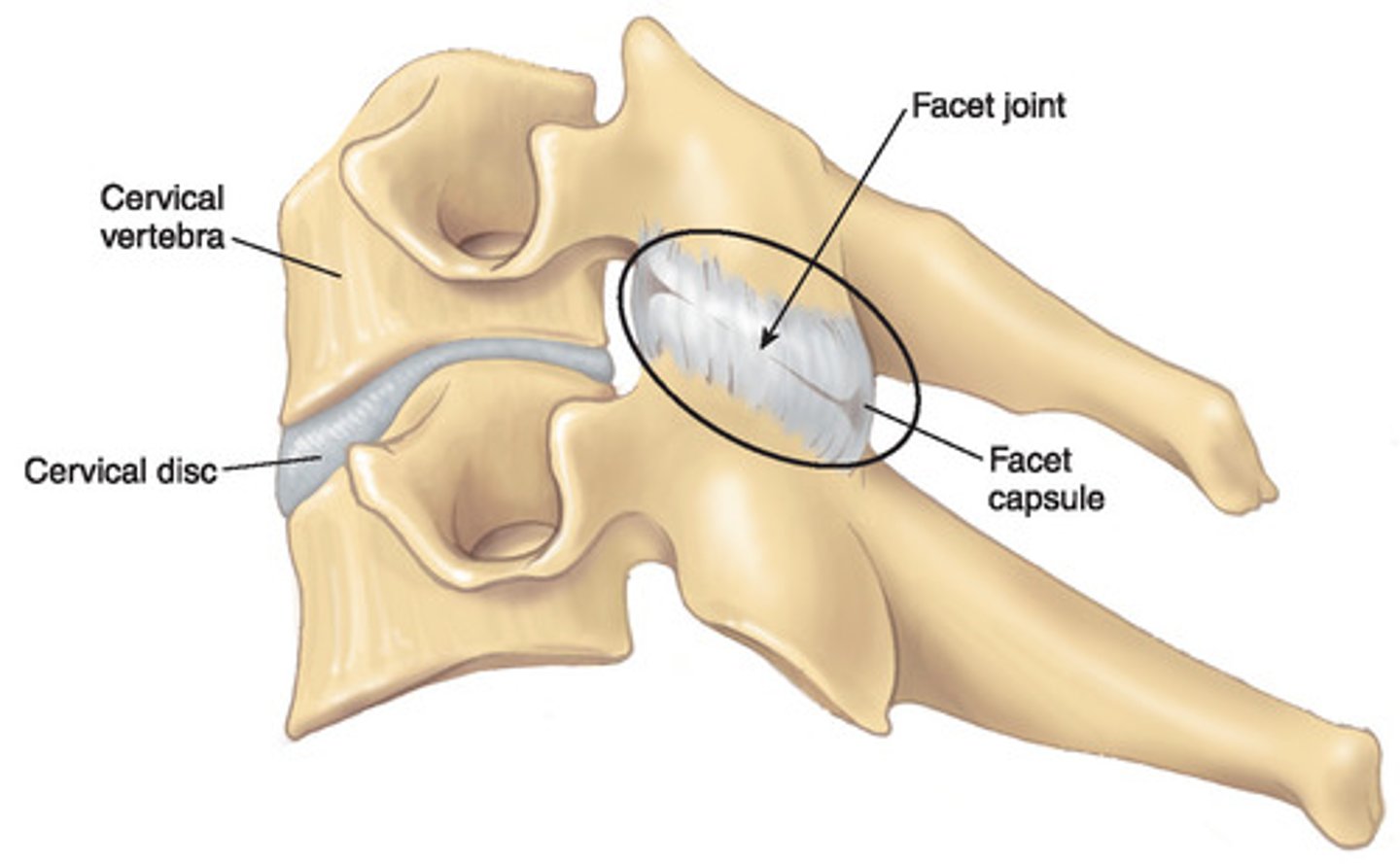
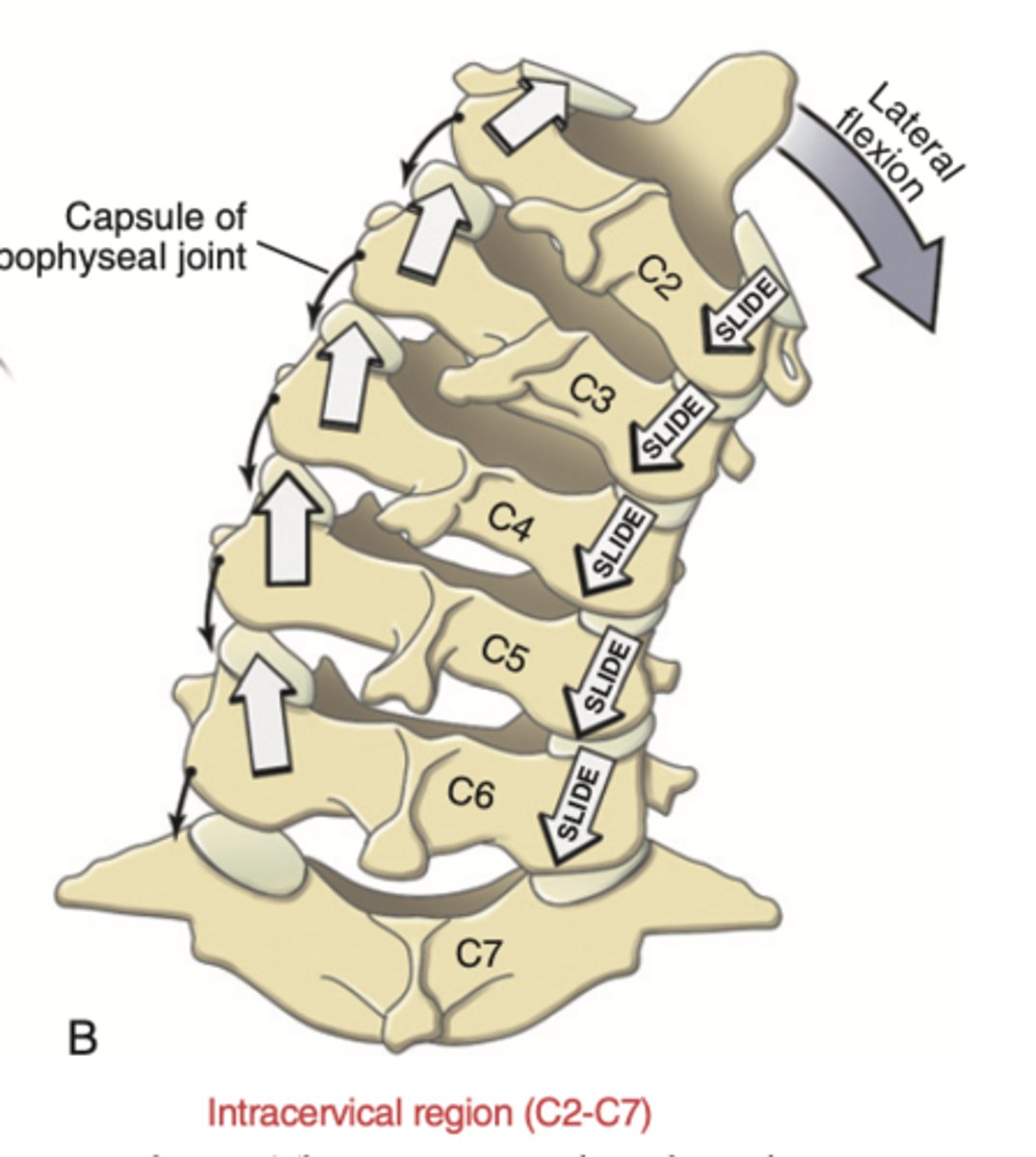
Facet joints
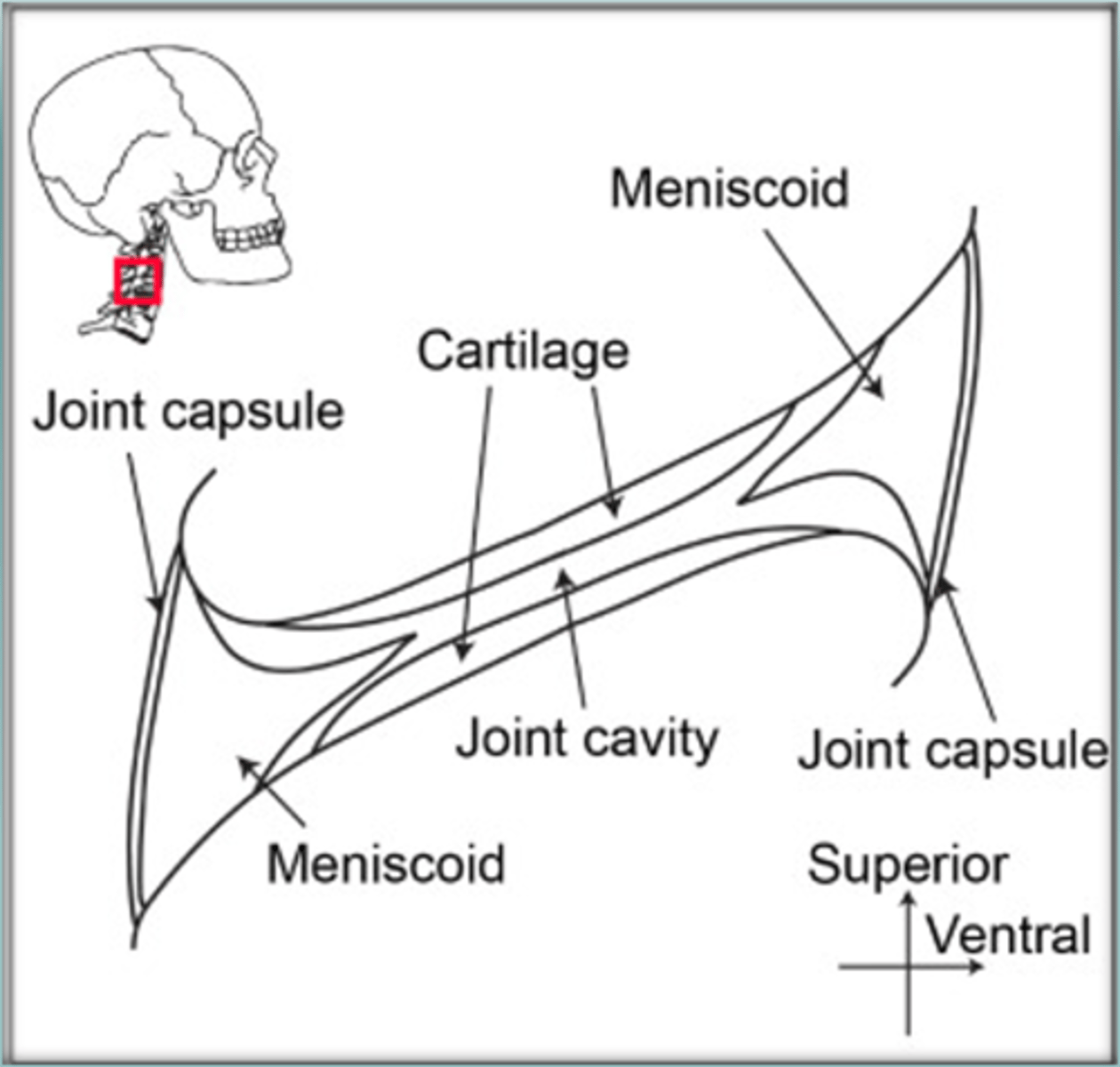
synovial joints with meniscoid structures that protrude into the joint
- overlap like roof tiles
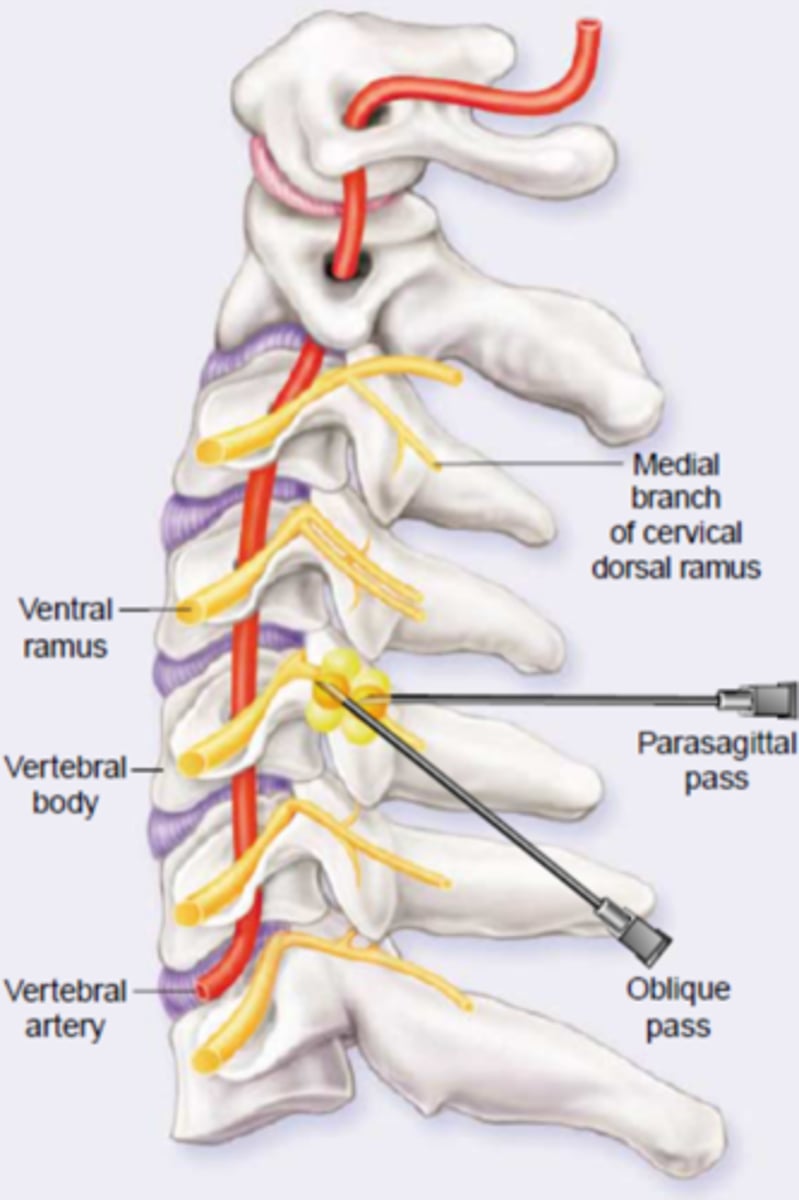
Facet innervation
medial branch of dorsal ramus
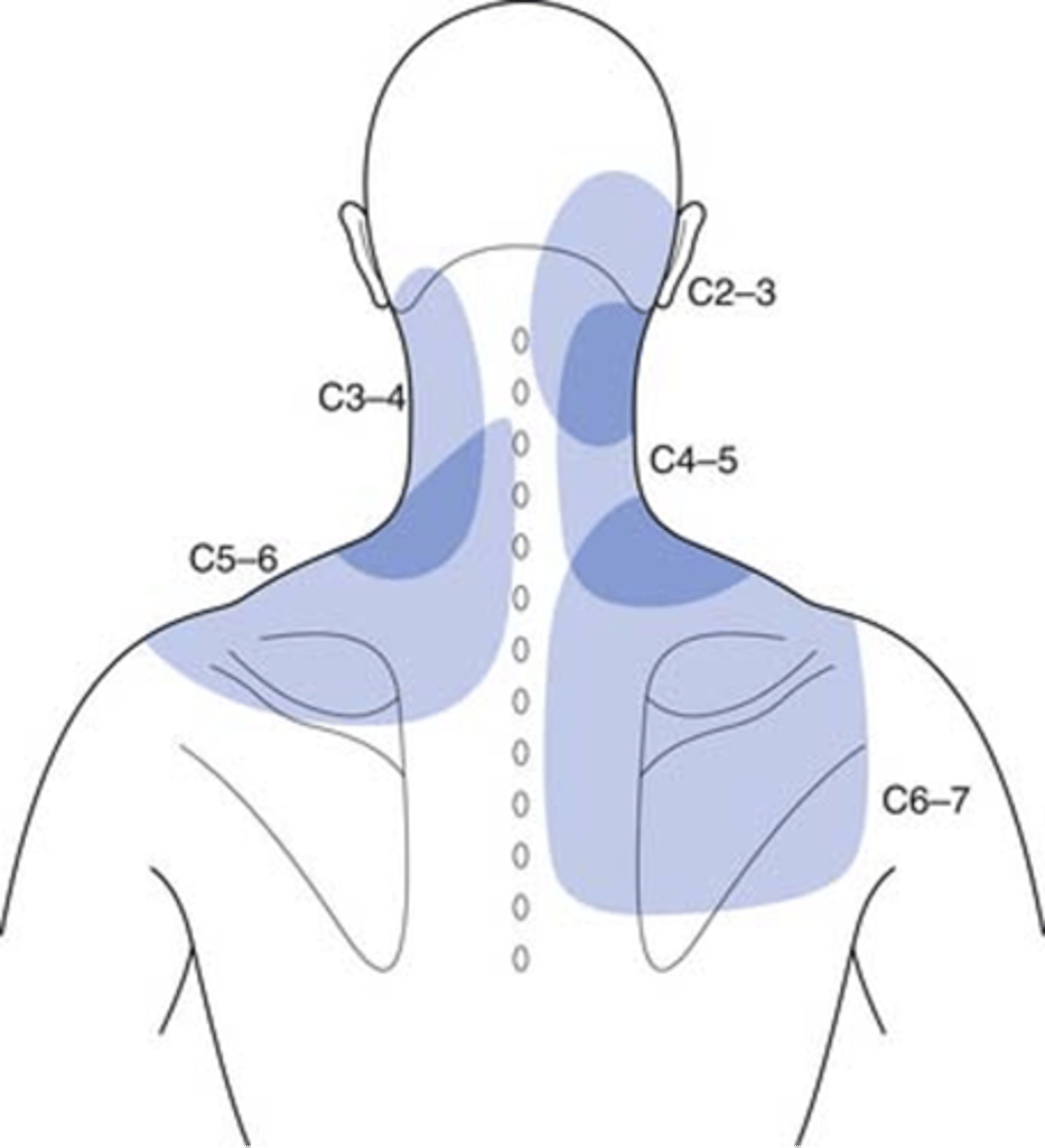
Cervical facet referral patterns
Cervical facet dysfunction:
Symptoms
- sharp, localized unilateral pain
- spasms
- referral into UE, but neck pain is always greater than referred locations
Cervical facet dysfunction:
Signs
limited extension, rotation to same side, and sidebending to same side (movements that close and compress facets)
Freyette's laws at the cervical spine
cervical spine has type 2 mechanics all the time
- sidebending and rotation happen to the same side
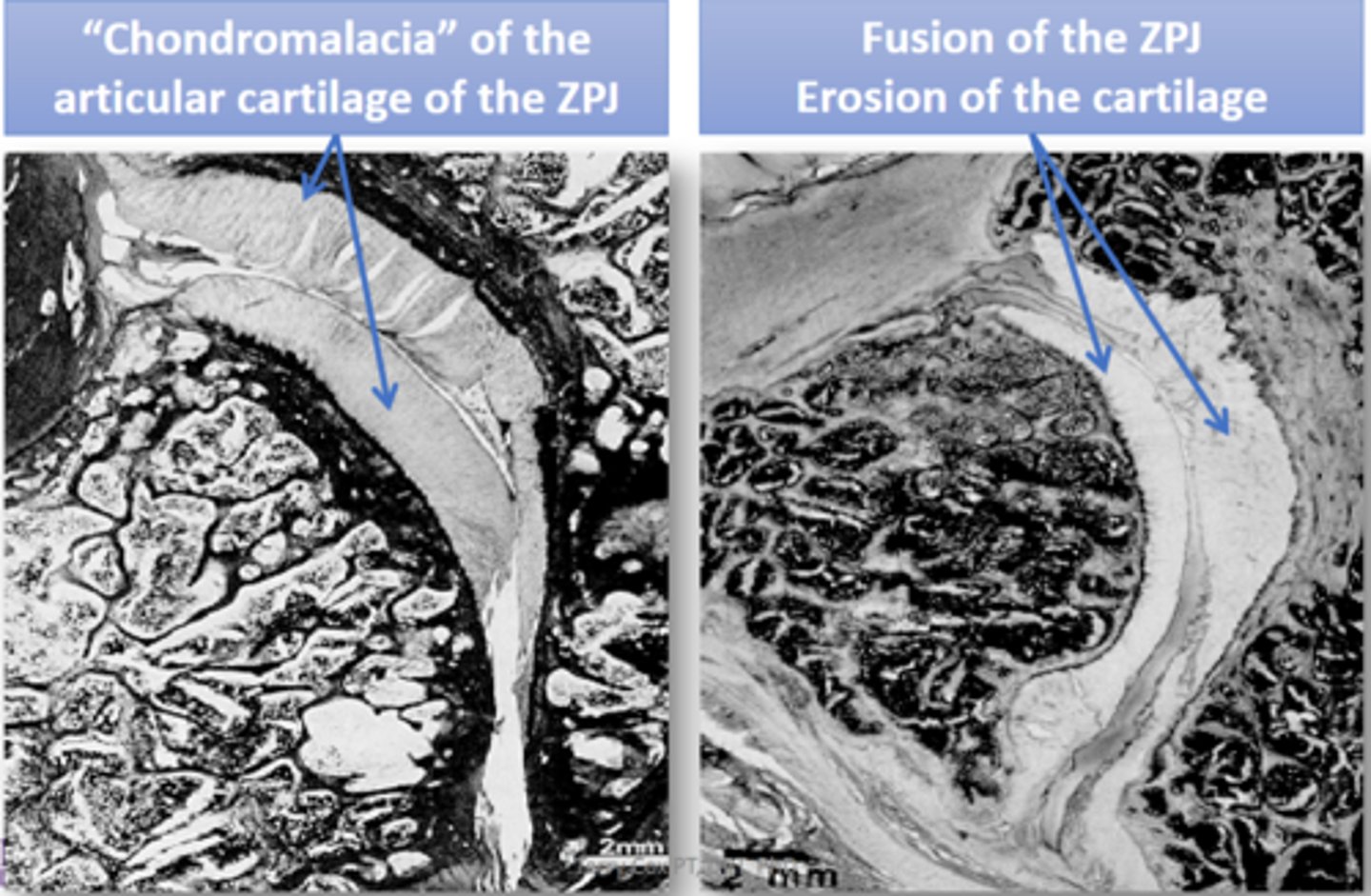
Facet joint aging
- chondromalacia of articular cartilage (softening and degeneration)
- fusion of facet joints with erosion of cartilage
Cervical facet dysfunction:
Facet lock
could be caused by meniscoid entrapment
- often happens after prolonged positioning of the neck (ex. falling asleep in weird position)
- can also happen at UV joints
In an uncovertebral joint lock, what neck positions will lateral glides be limited in?
neutral and flexion
In a facet lock, what neck positions will lateral glides be limited in?
neutral, less restricted in flexion as this creates more space in the facet
Age related changes of the spine can cause problems with what structures?
nerve root,
spinal cord,
vertebral artery
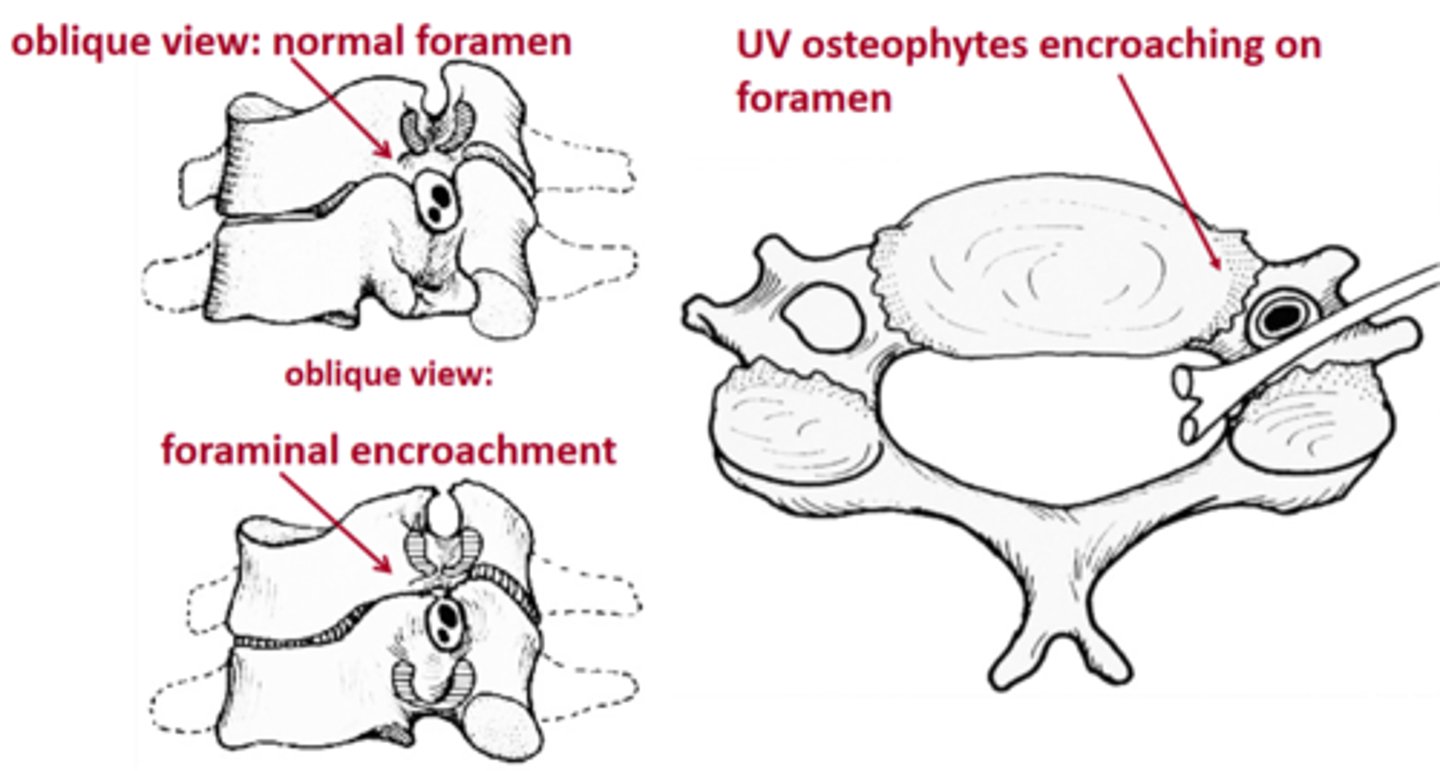
End results of age changes in the spine
foraminal stenosis and cervical radiculopathy,
cervical myelopathy,
vertebral artery insufficiency
Cervical radiculopathy:
Dermatome vs dynatome
dermatome: area of skin receiving innervation from a certain spinal level
dynatome: distribution of referred pain from irritated nerve roots
- mapping could look different from the traditional dermatomal map
- mapping is also plastic, and can change a little bit each day
Cervical radiculopathy:
Symptoms
- unilateral symptoms
- pain in a dermatomal pattern
- distal pain > proximal pain
- deep, aching pain
- pins and needles, numbness
- weakness in myotomal distribution
- severe cases will cause changes in reflexes
Cervical radiculopathy:
Signs
- protective deformities
- positive neurodynamic testing
- positive spurling's test
- distraction improves symptoms
- sensation changes in dermatomal pattern
- motor function changes in myotomal pattern
Cervical radiculopathy:
Protective deformities
C5: arm above head
C7: arm at side
forward head
Signs of "threatening" nerve root pain (4)
1. area of pain: dermatomal, distal > proximal
2. nature of pain: severe and latent
3. irritability to movement: slight movement causes distal pain
4. protective deformities
Cervical radiculopathy:
Clinical prediction rule
- ipsilateral rotation less than 60 degrees
- positive ULNT-1
- positive distraction test
- positive spurling test
hallmark: distal symptoms are more severe and follow dermatome
Symptoms of nerve root compression
- numbness in dermatome
- heavy feeling in extremity
- hypersensitivity, paresthesia
- cramping
later:
- loss of sensation
- motor weakness/atrophy
- decreased reflexes
Cervical myelopathy
compression of the spinal cord
- mainly caused by disc protrusion
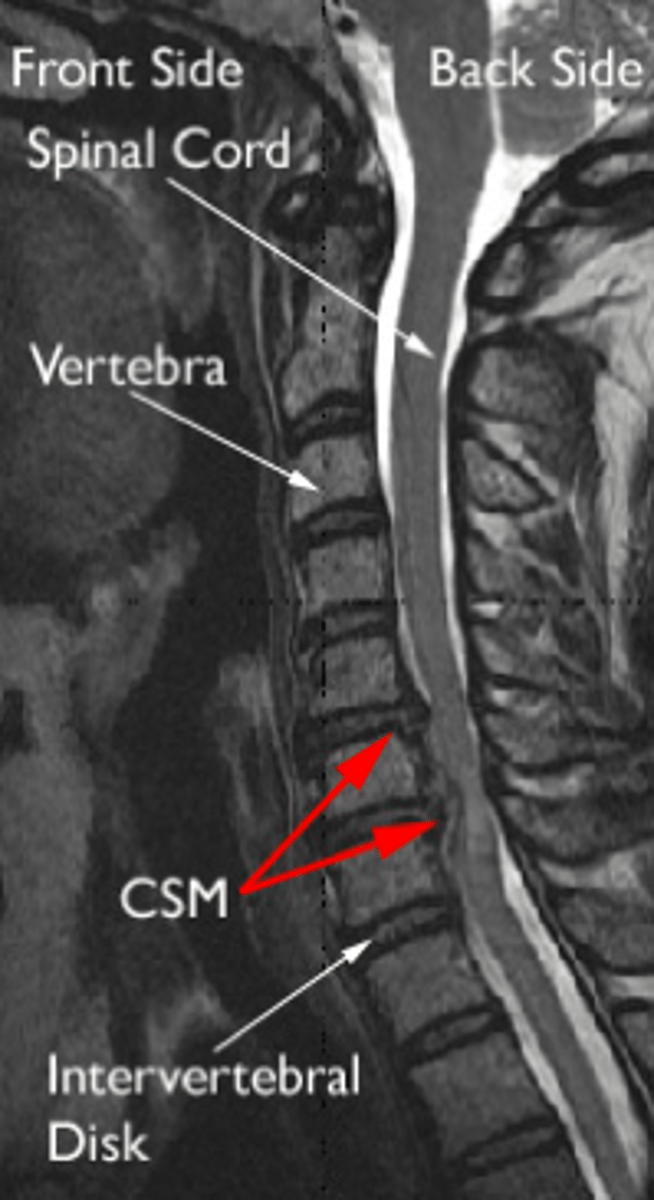
Cervical myelopathy:
Symptoms
bilateral symptoms, glove and stocking distribution
- distal symptoms almost always develop first, starting with LE
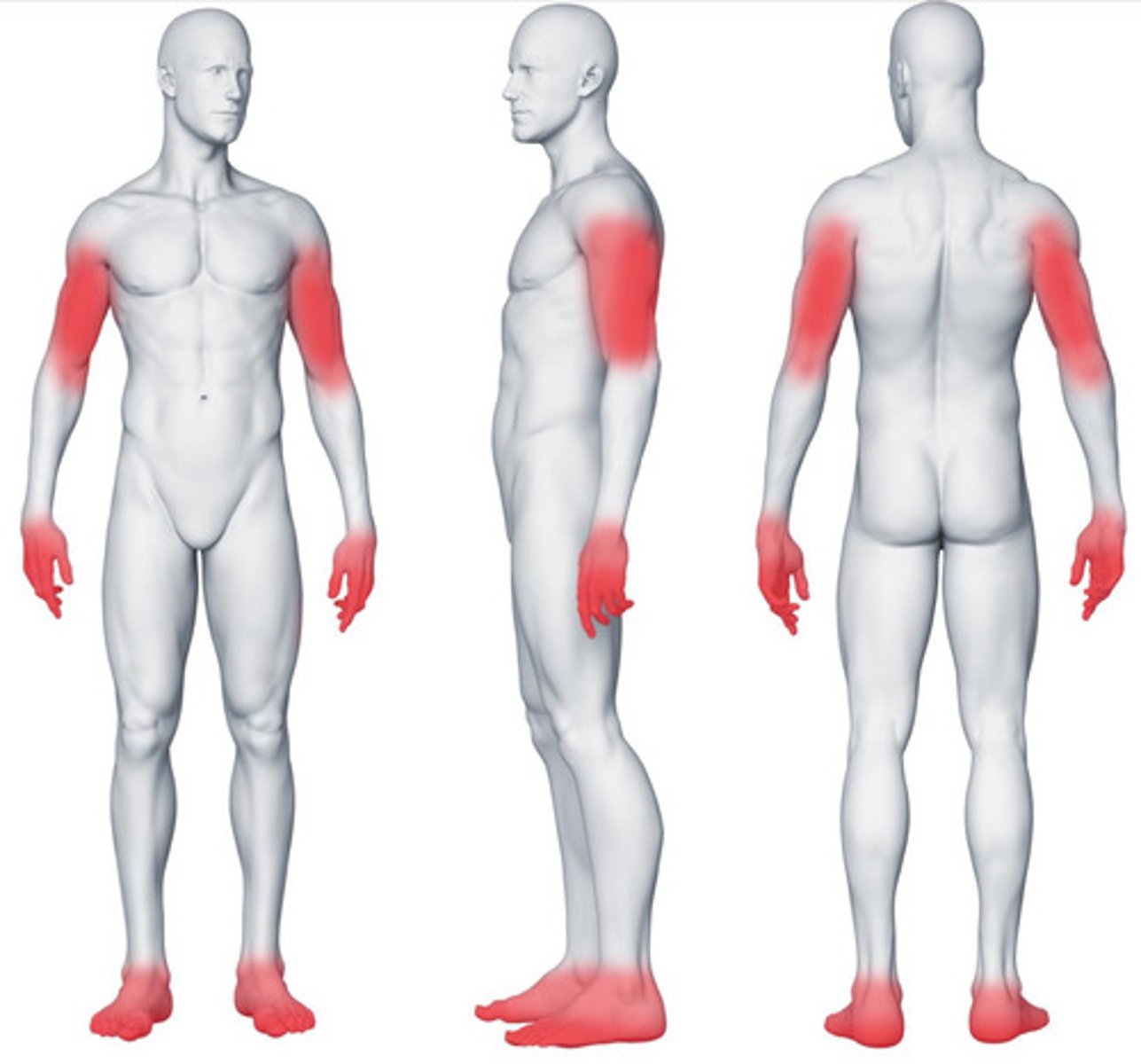
Cervical myelopathy:
Signs
- gait abnormality
- hyperreflexia of UE and LE
- babinski, hoffman, clonus (UMN signs)
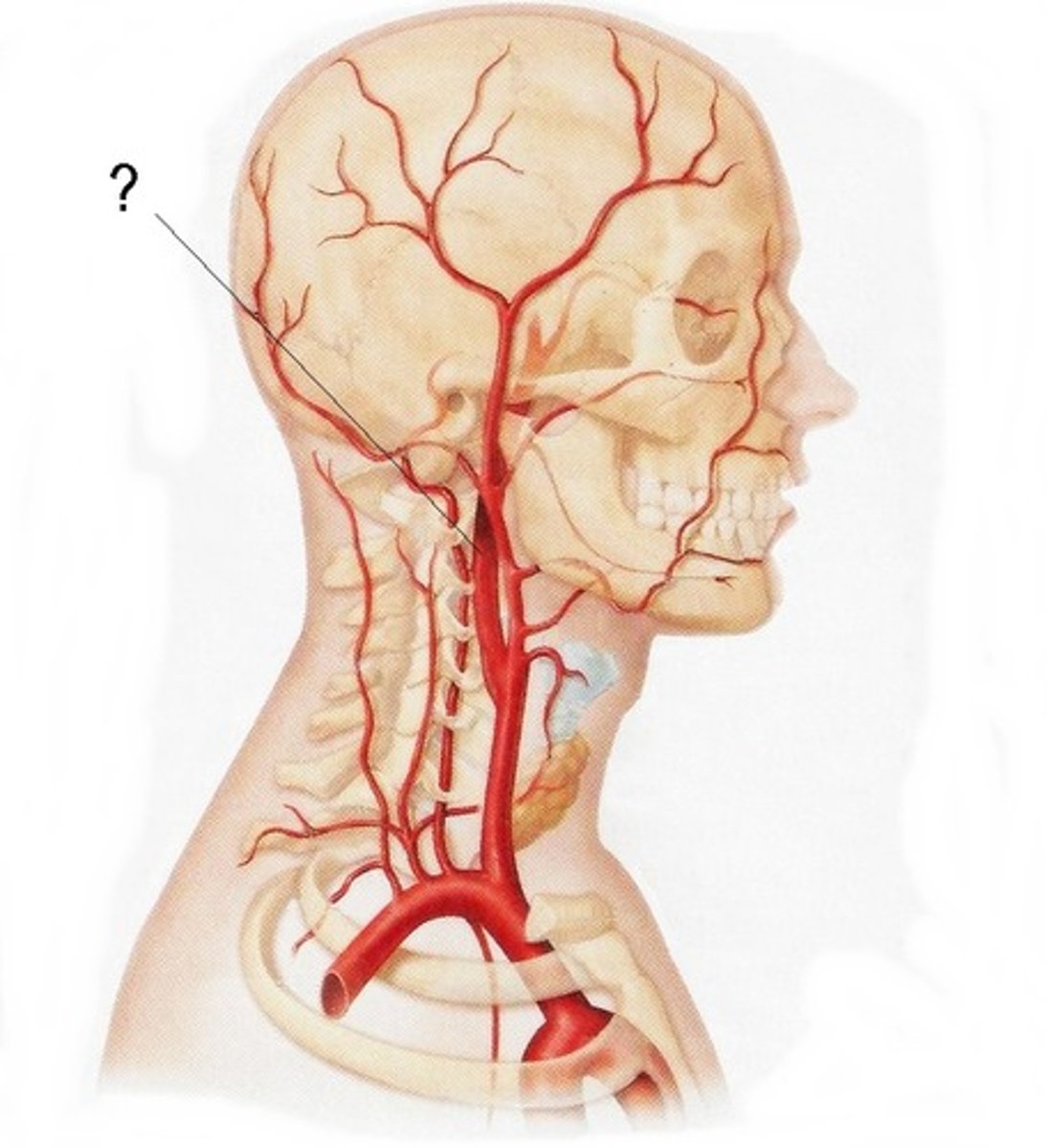
Vertebral artery
90 degree turns at upper cervical spine, travels through transverse foramen
- supplies the brainstem and contributes to the circle of Willis
- deficiency would cause cranial nerve signs
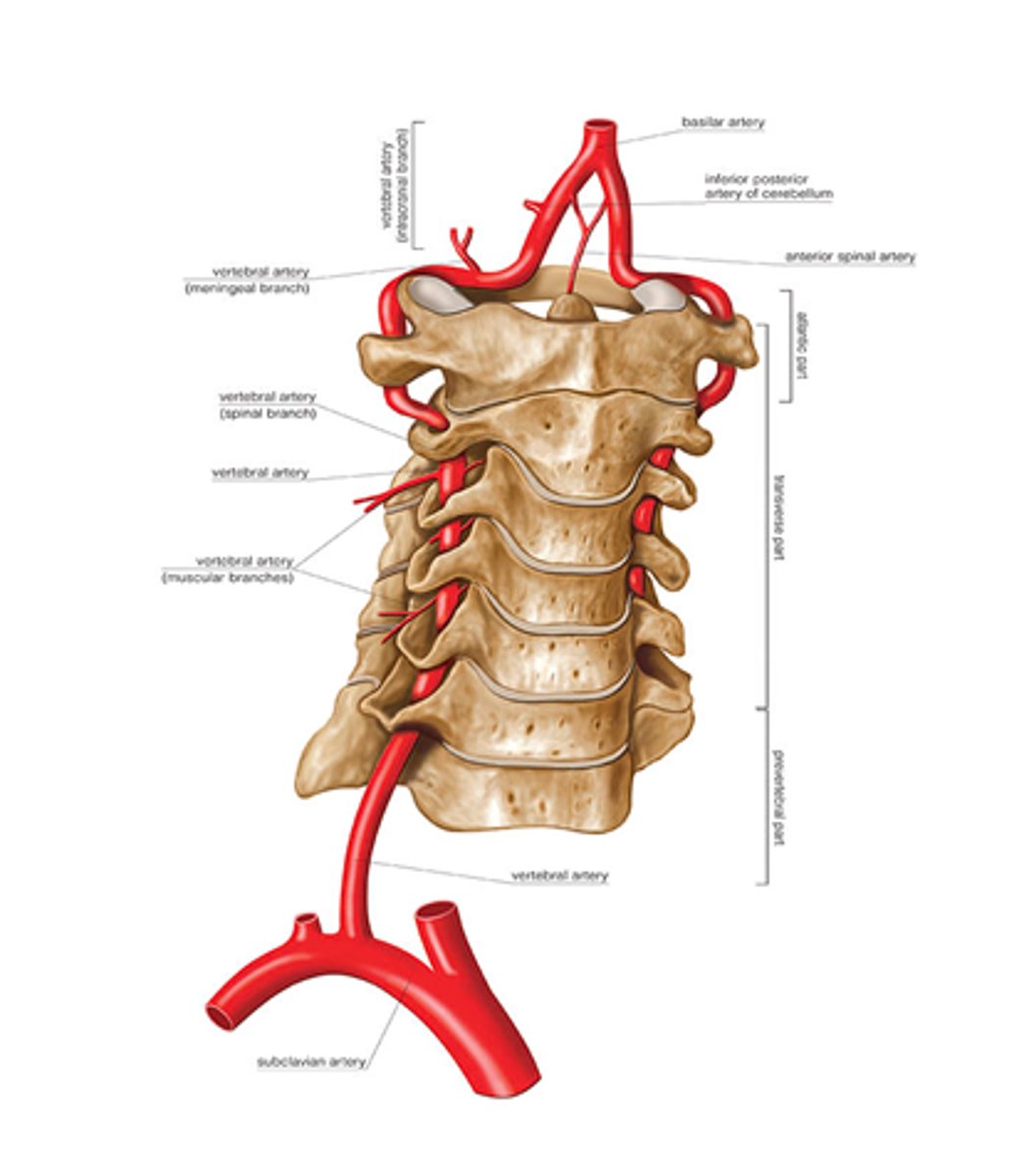
What motion decreases blood flow to the vertebral artery?
cervical rotation
- rotation to L decreases blood flow on R
- this is normal, and the other side can compensate for the slight decrease while the head is turned
- in patients with insufficiency, the other side cannot compensate and rotation will cause symptoms
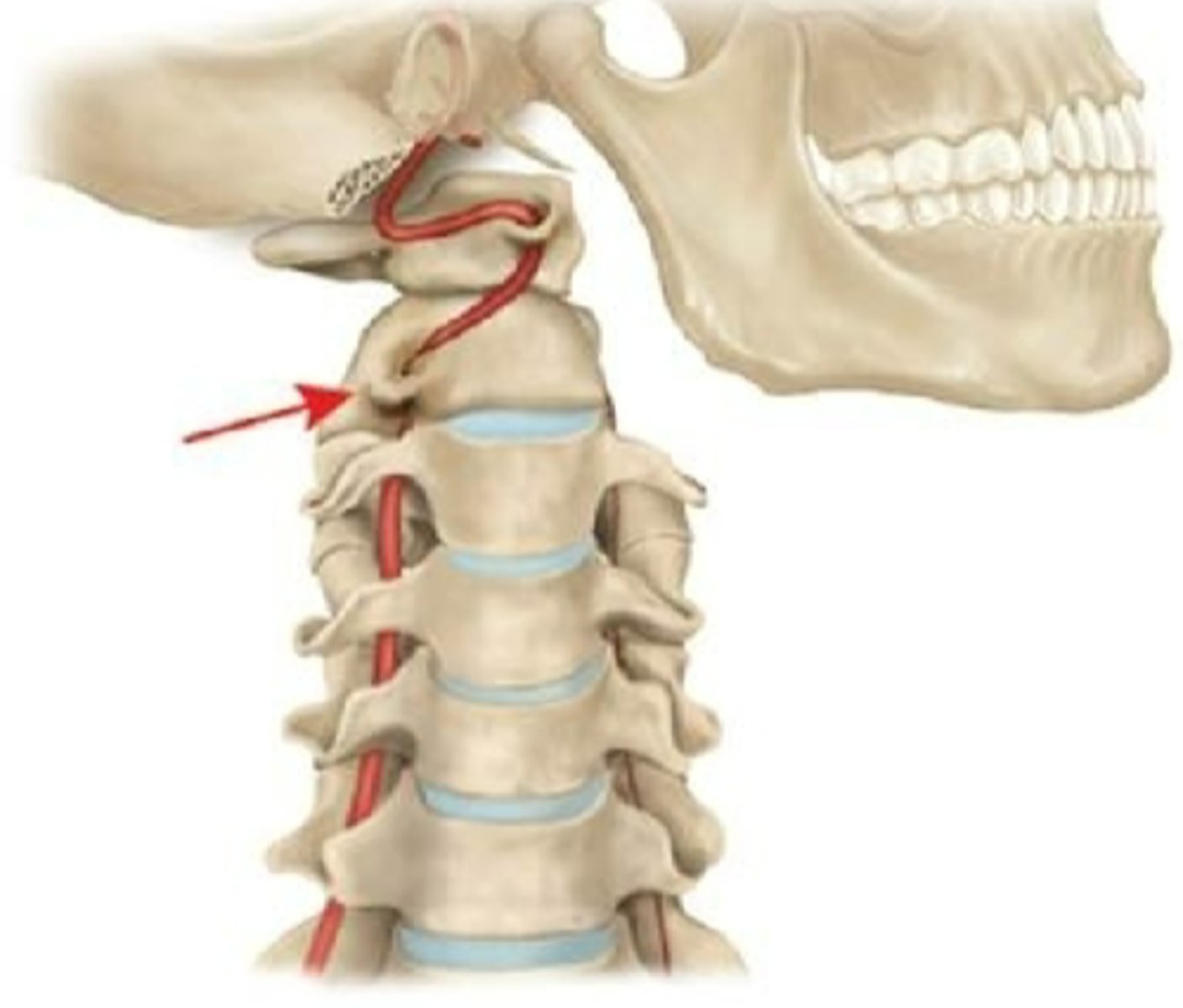
What motion decreases blood flow to the internal carotid artery?
cervical rotation with extension, or only extension
Vertebral artery insufficiency:
Symptoms
5 D's And 3 N's
- dizziness, drop attacks, diplopia, dysarthria, dysphagia
- ataxia
- nystagmus, numbness, nausea
Vertebral artery insufficiency:
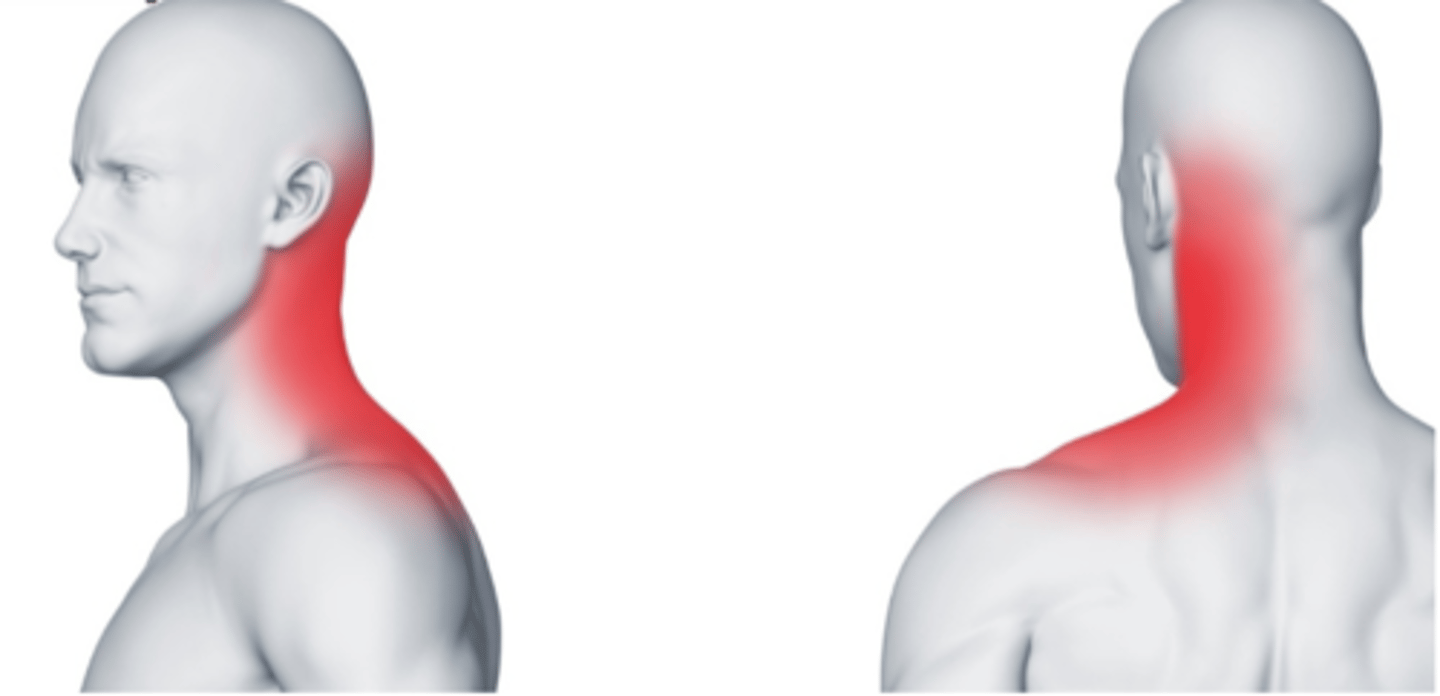
Pain distribution
location of numbness
Vertebral artery insufficiency:
Common patient populations
- elderly, RA
- MVA's
Vertebral artery insufficiency:
Testing for this condition has (good/poor) reliability
poor
- but it is the only way we can test and we need something to document
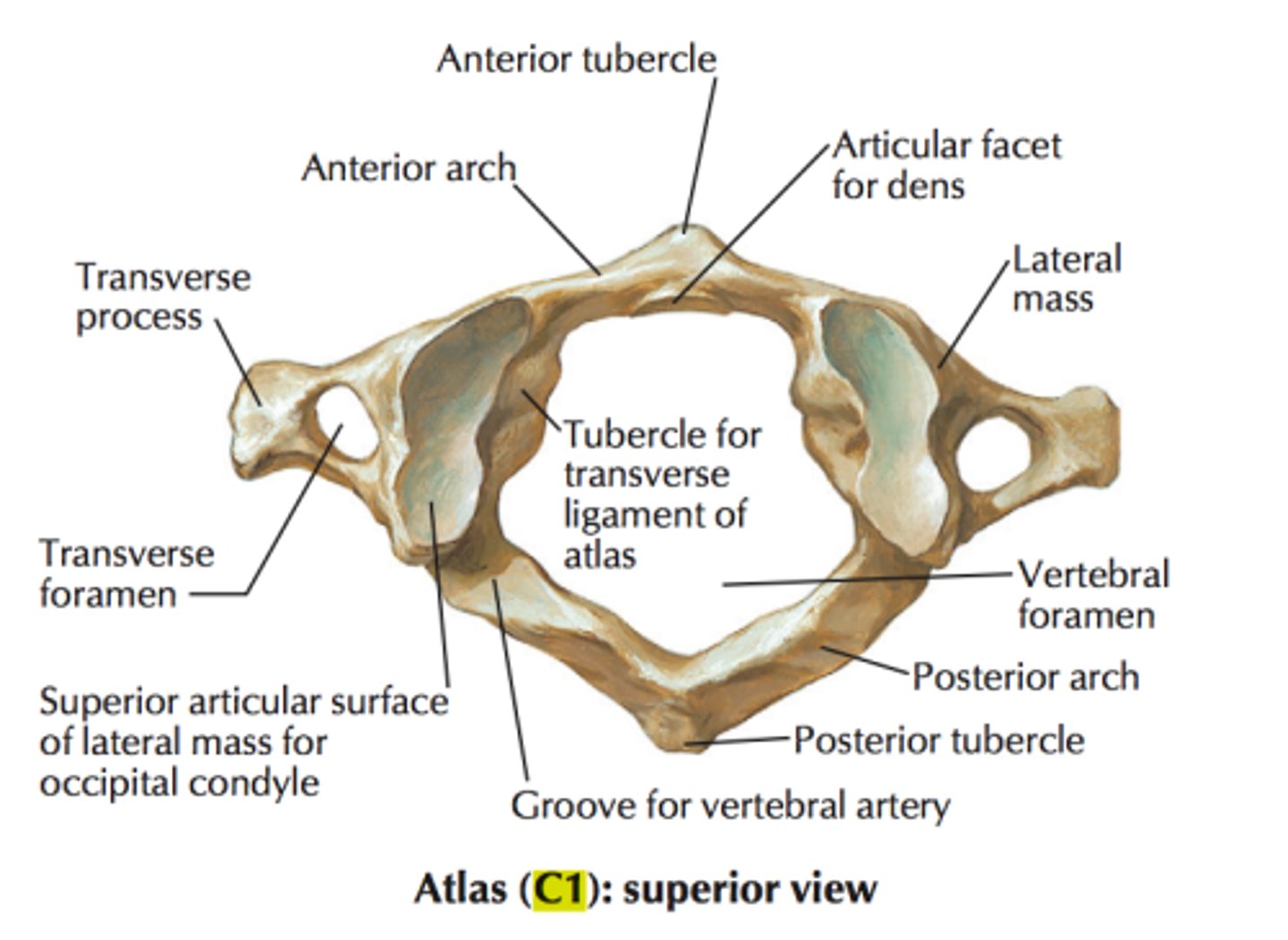
Atlas (C1) anatomy
no body or spinous process
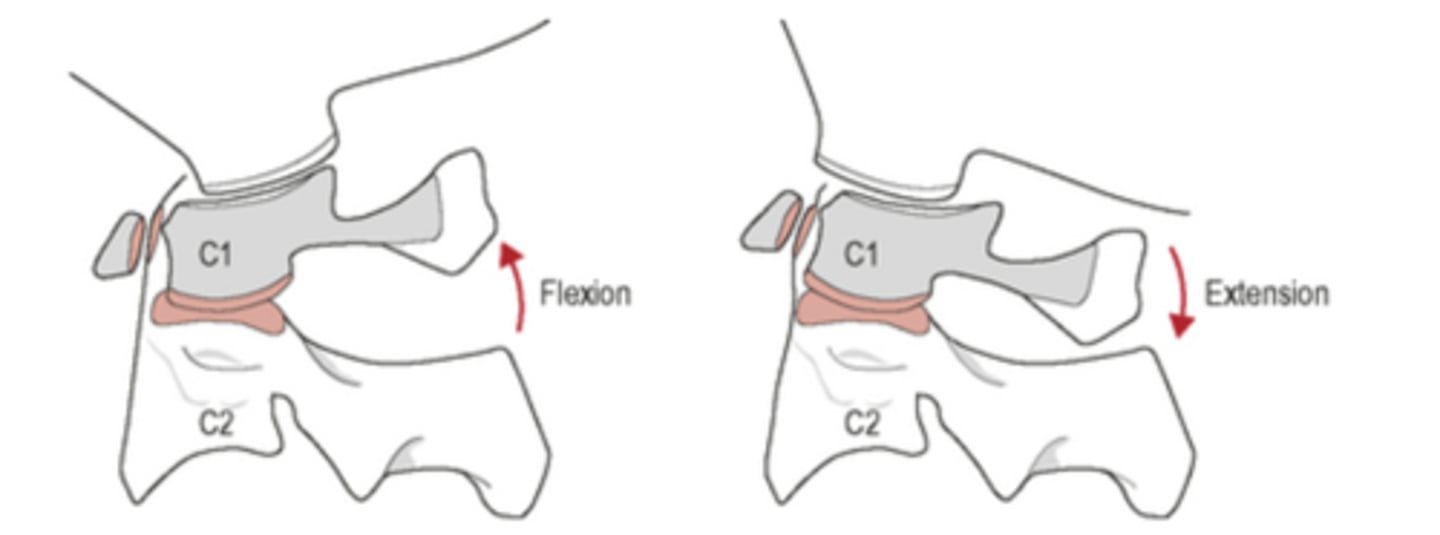
C0/C1 motions
mainly flexion, small nodding motion
- also tiny amounts of sidebending and rotation
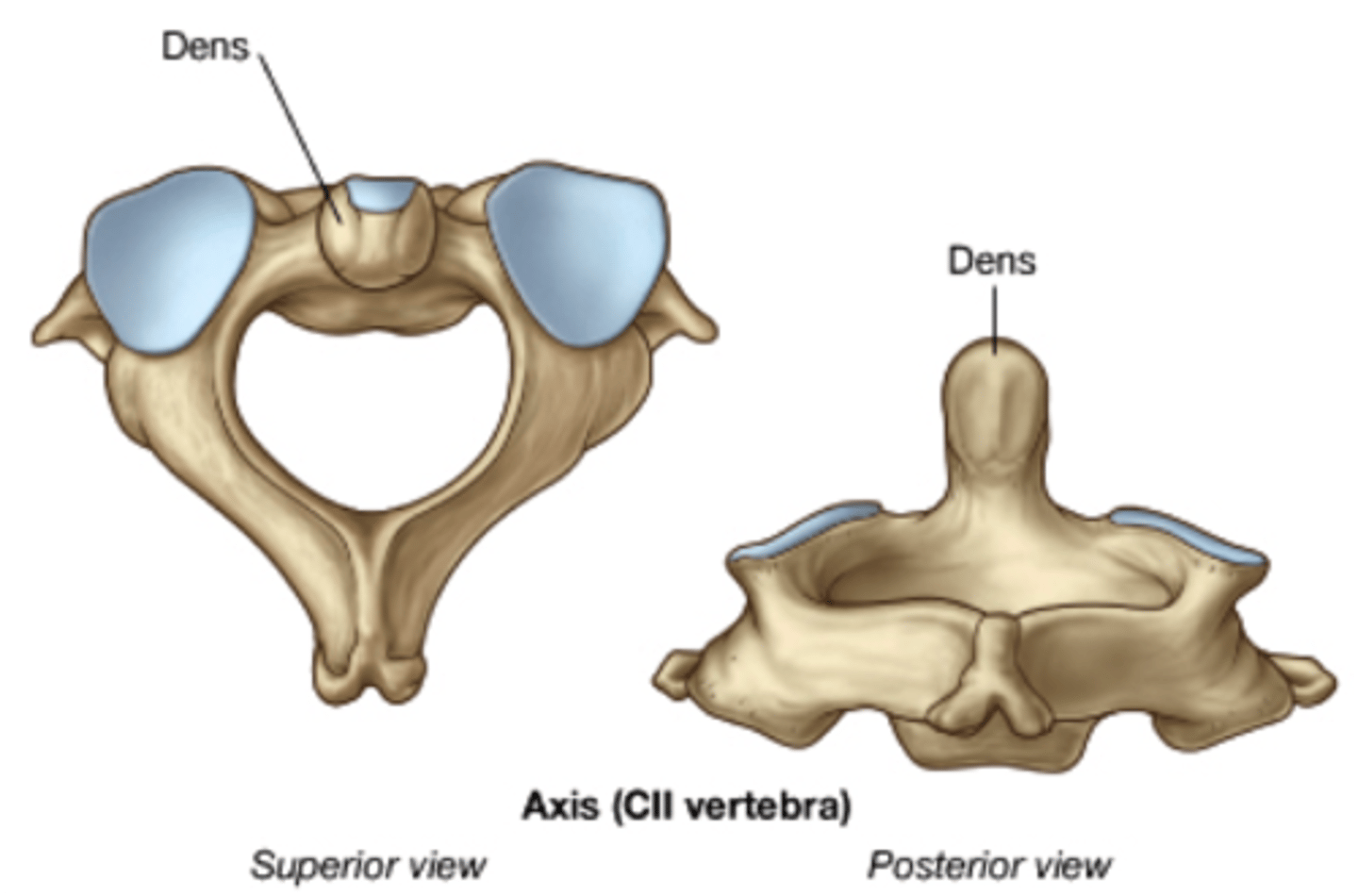
Axis (C2) anatomy
dens articulates with C1, no disc at C1/2
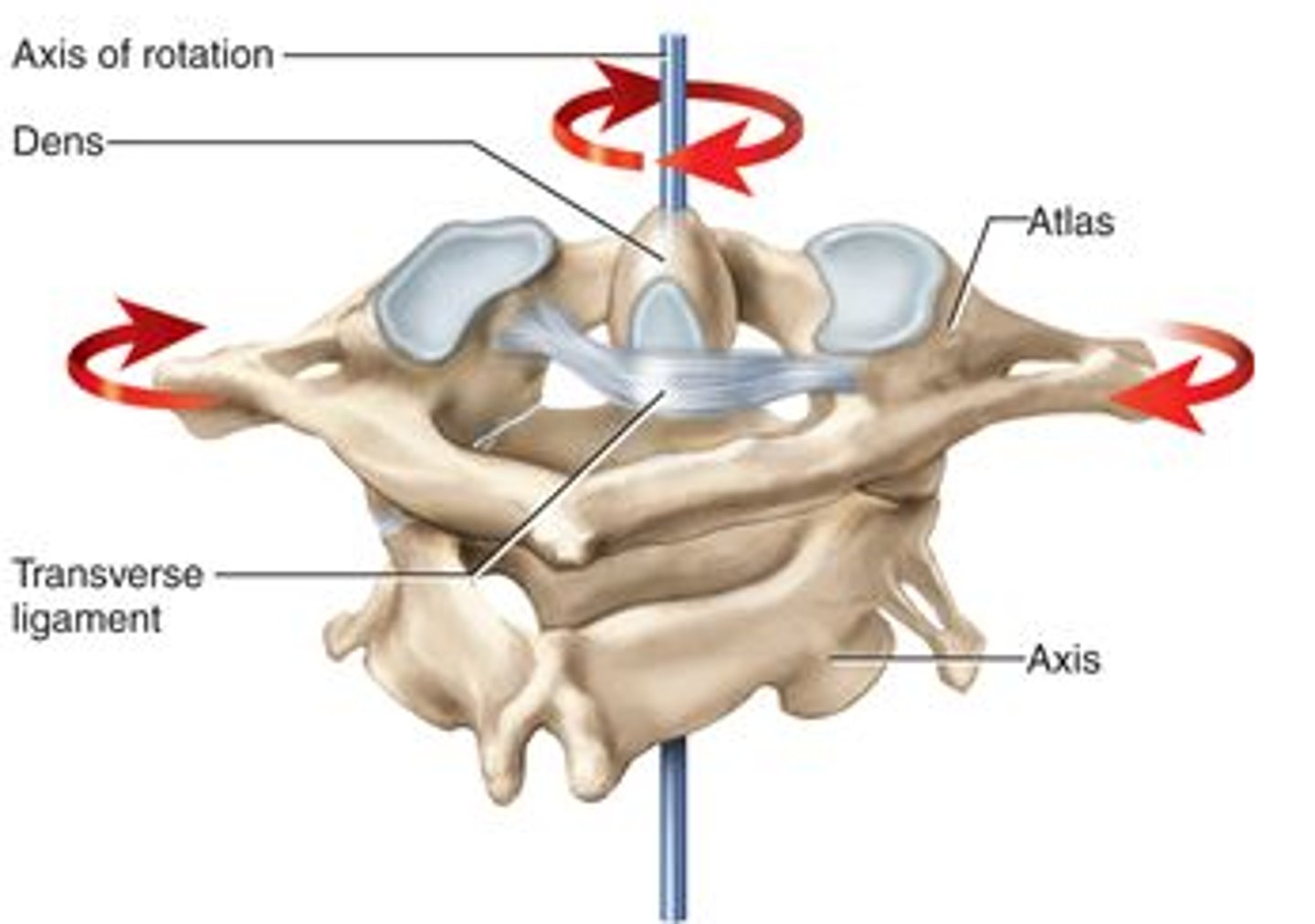
C1/C2 motions
rotation
- 60% of rotation comes from AA joint
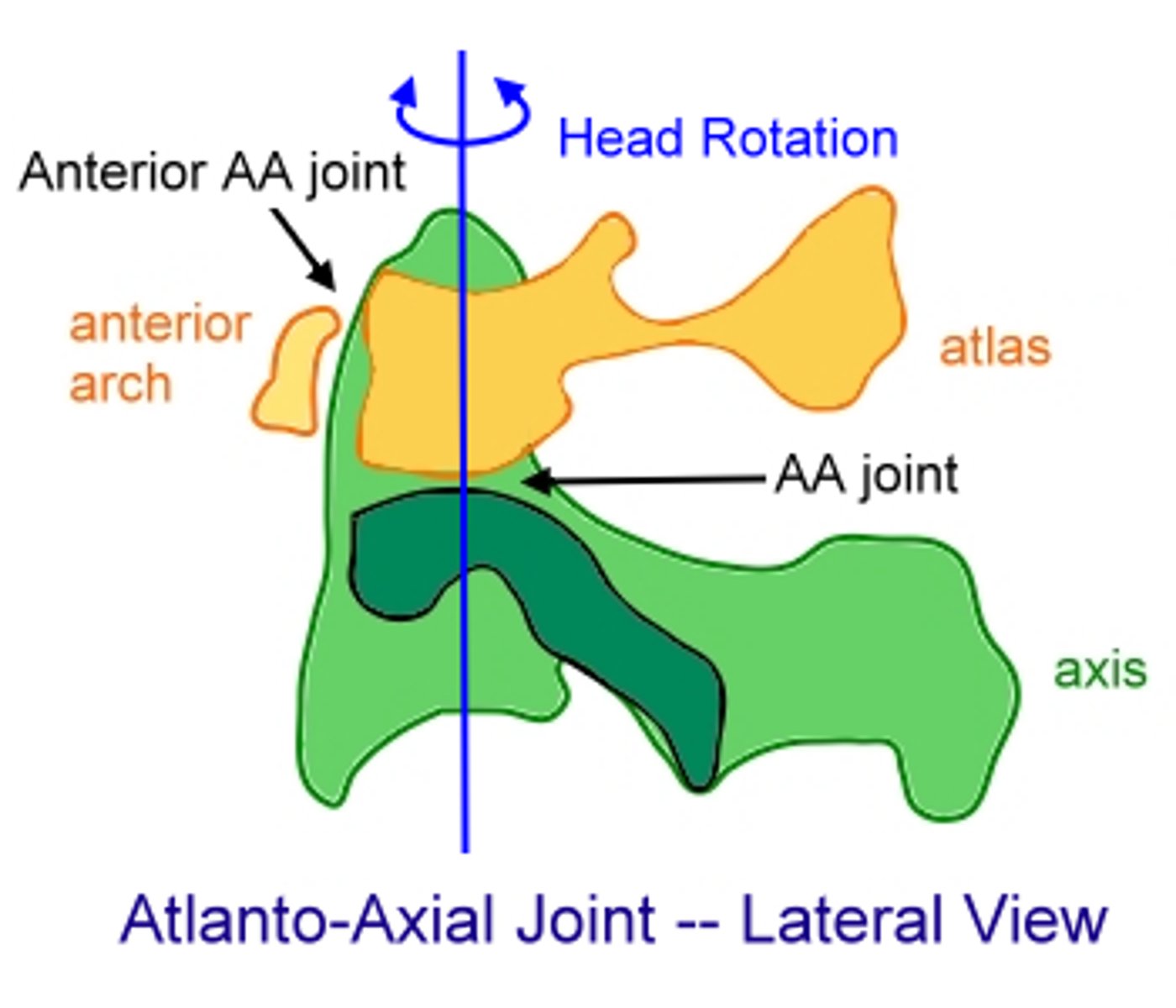
AA joint
has anterior and posterior fat pads to occupy space and increase joint congruency, since both surfaces are convex
- fat pads are highly vascularized and can get crushed
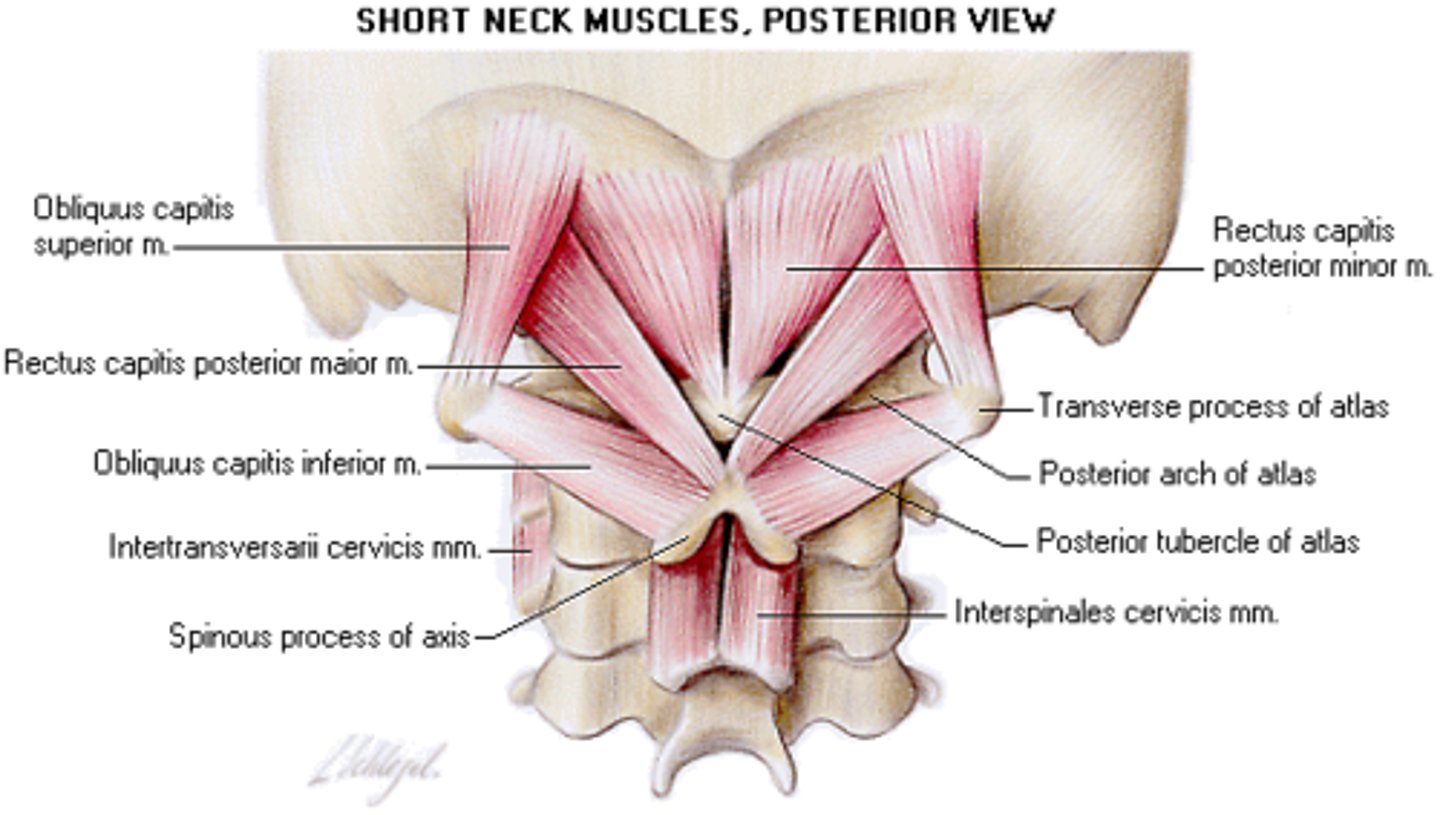
Suboccipital muscles
rectus capitis posterior major/minor, oblique capitis superior/inferior
- these muscles are very important for proprioception
- have more proprio receptors per area than any other muscle
Upper cervical dura
a small tendon from rectus capitis posterior minor inserts into the posterior dura
- keeps posterior dura tight when the neck is extended
- the direct attachment can be a source of headaches
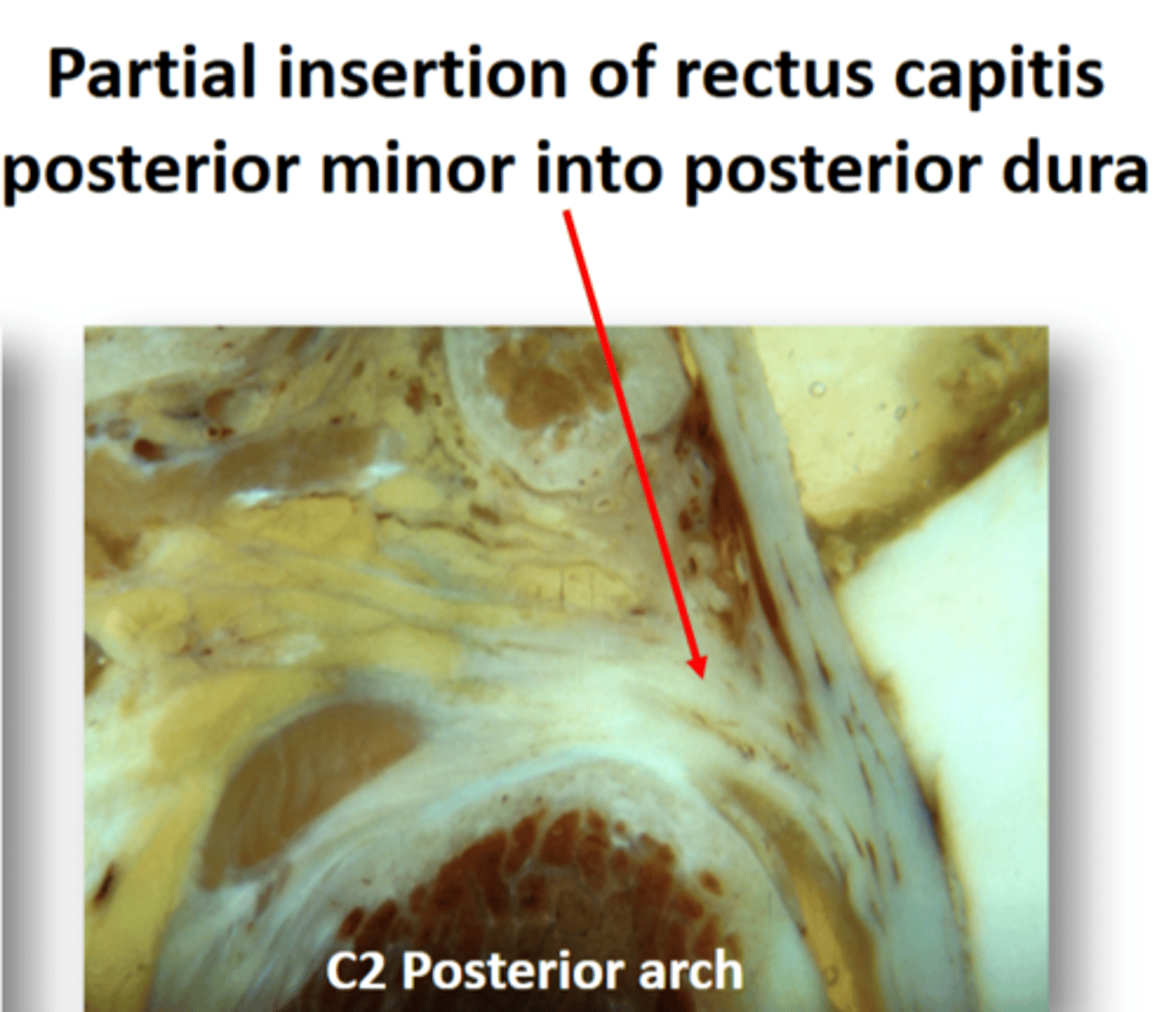
In patients with chronic tension type headaches, rectus capitis muscles _______________
atrophy
- could account for a reduction in proprioceptive output from those muscles, and contribute to the perpetuation of pain
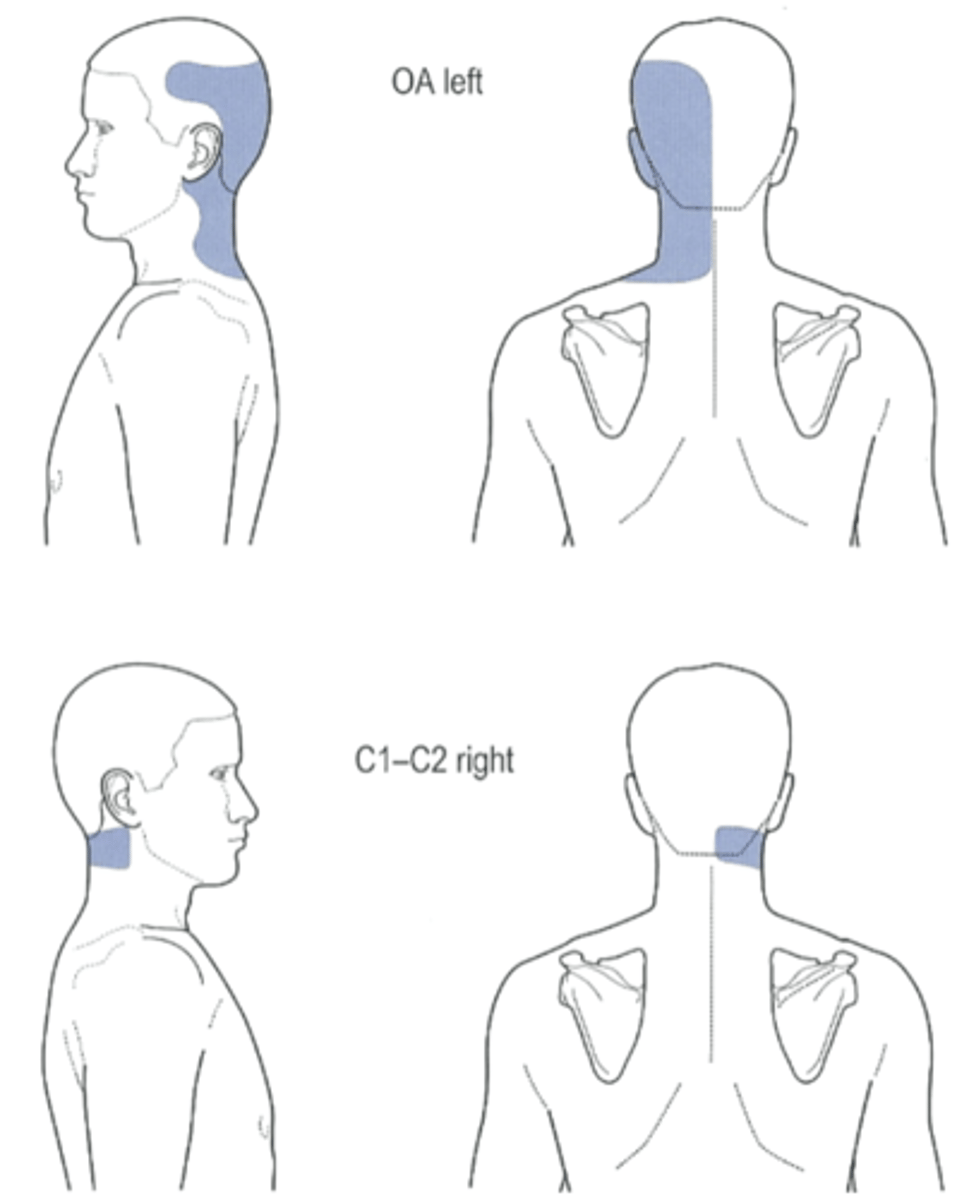
Suboccipital clinical presentation
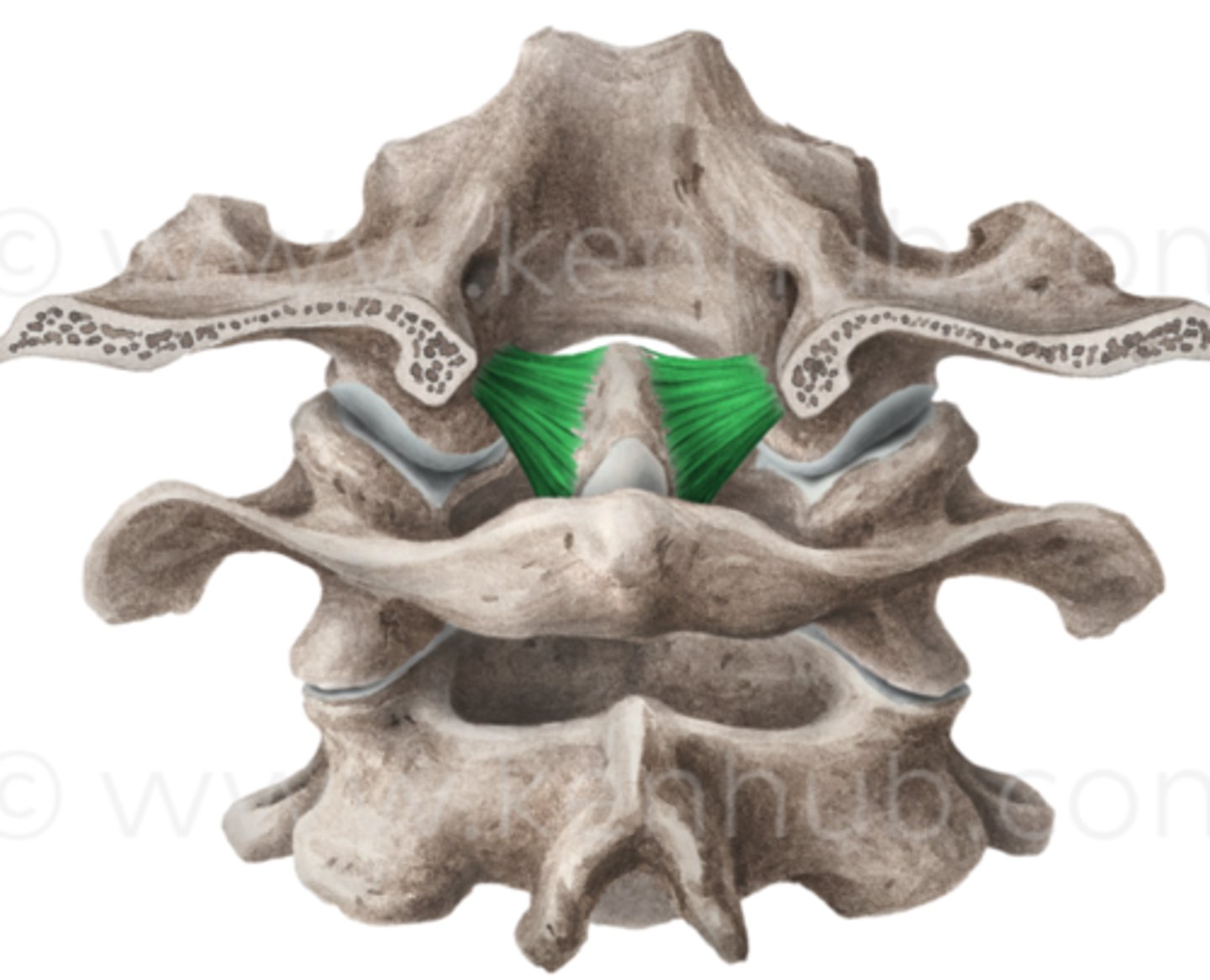
Alar ligaments
passive restraints to excessive rotation and lateral flexion
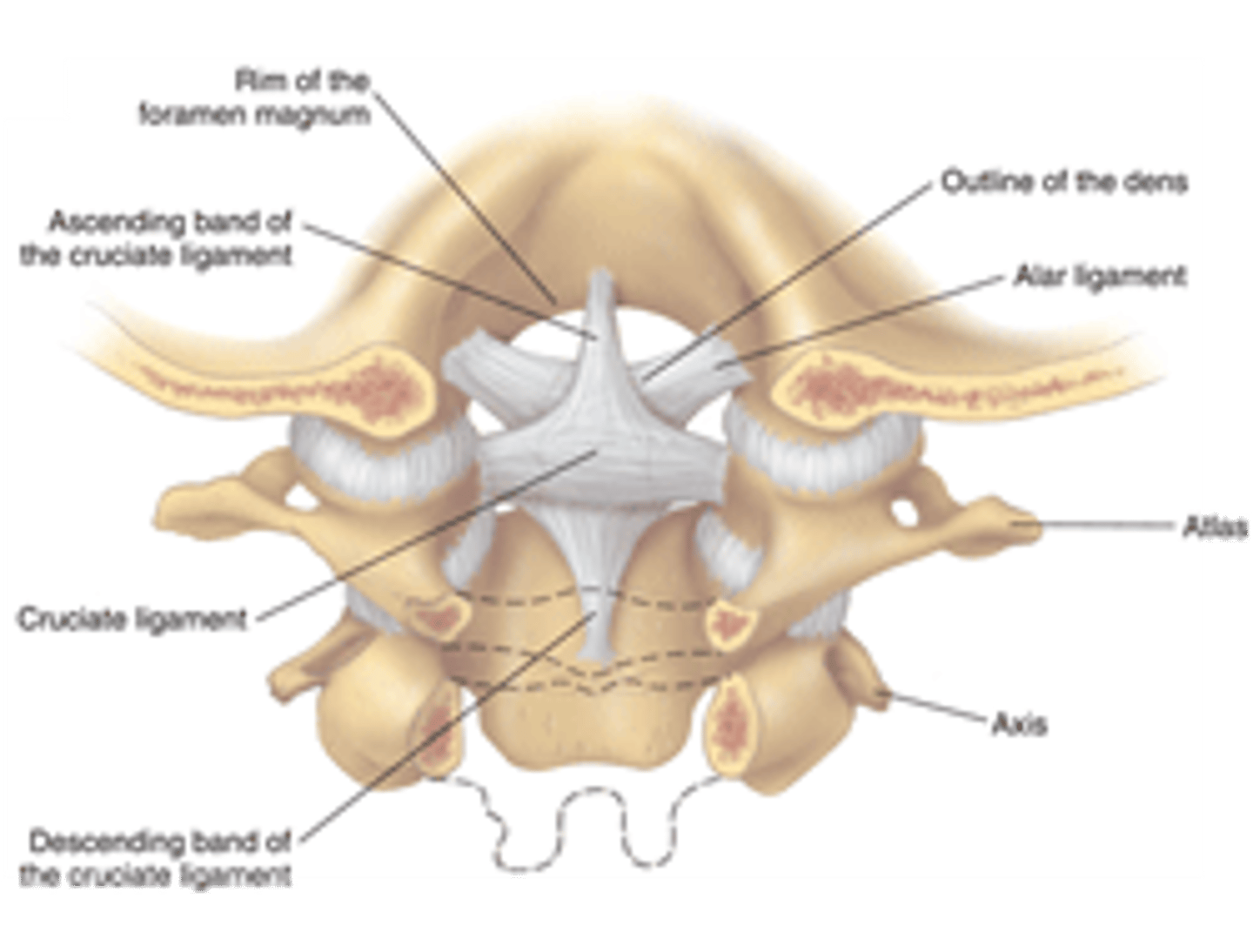
Cruciform ligament
primary passive restraint of C1 translation in the sagittal plane
- holds dens into C1 arch
- extremely strong, dens will fracture before the ligament tears
___________________ is linked to headaches
hypermobility
- C spine hypermobility could be a predisposing factor for headache development
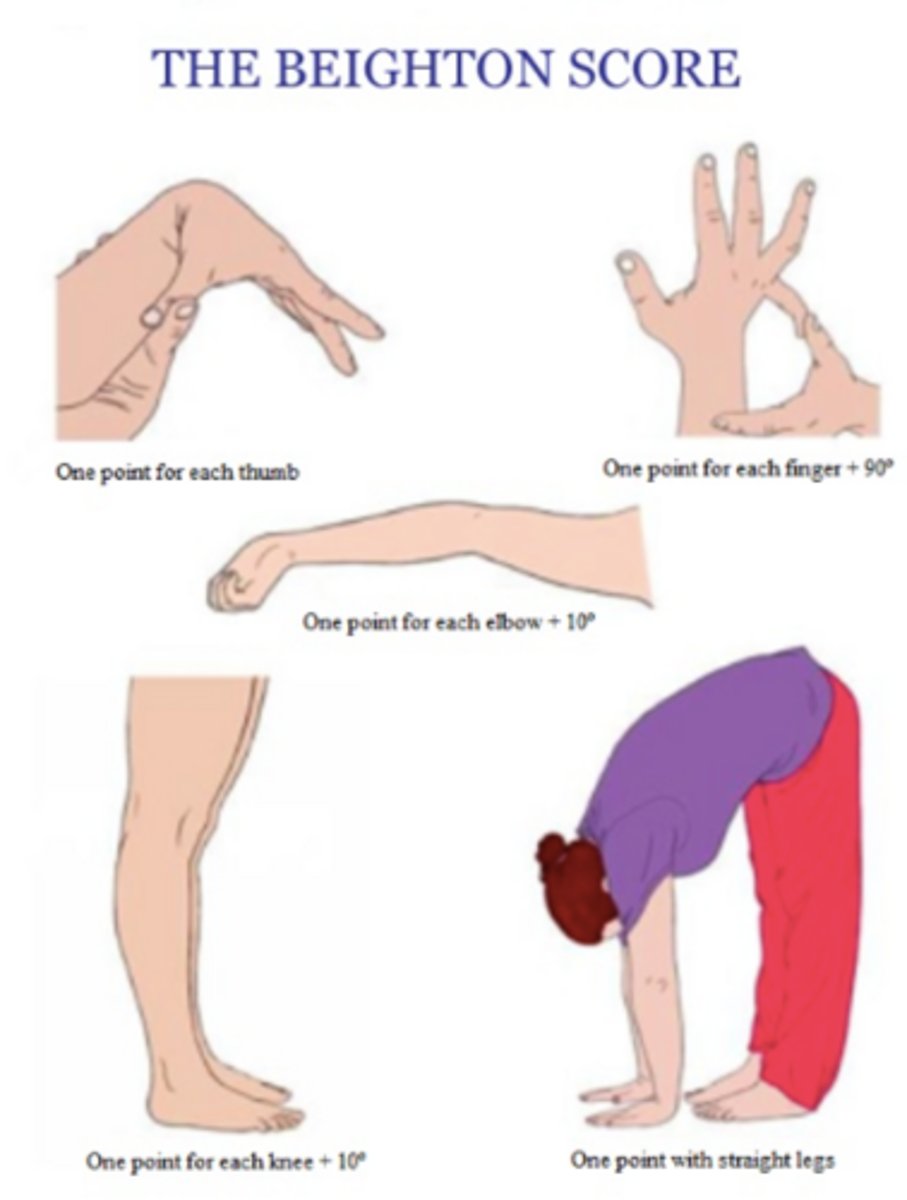
- test Beighton scale
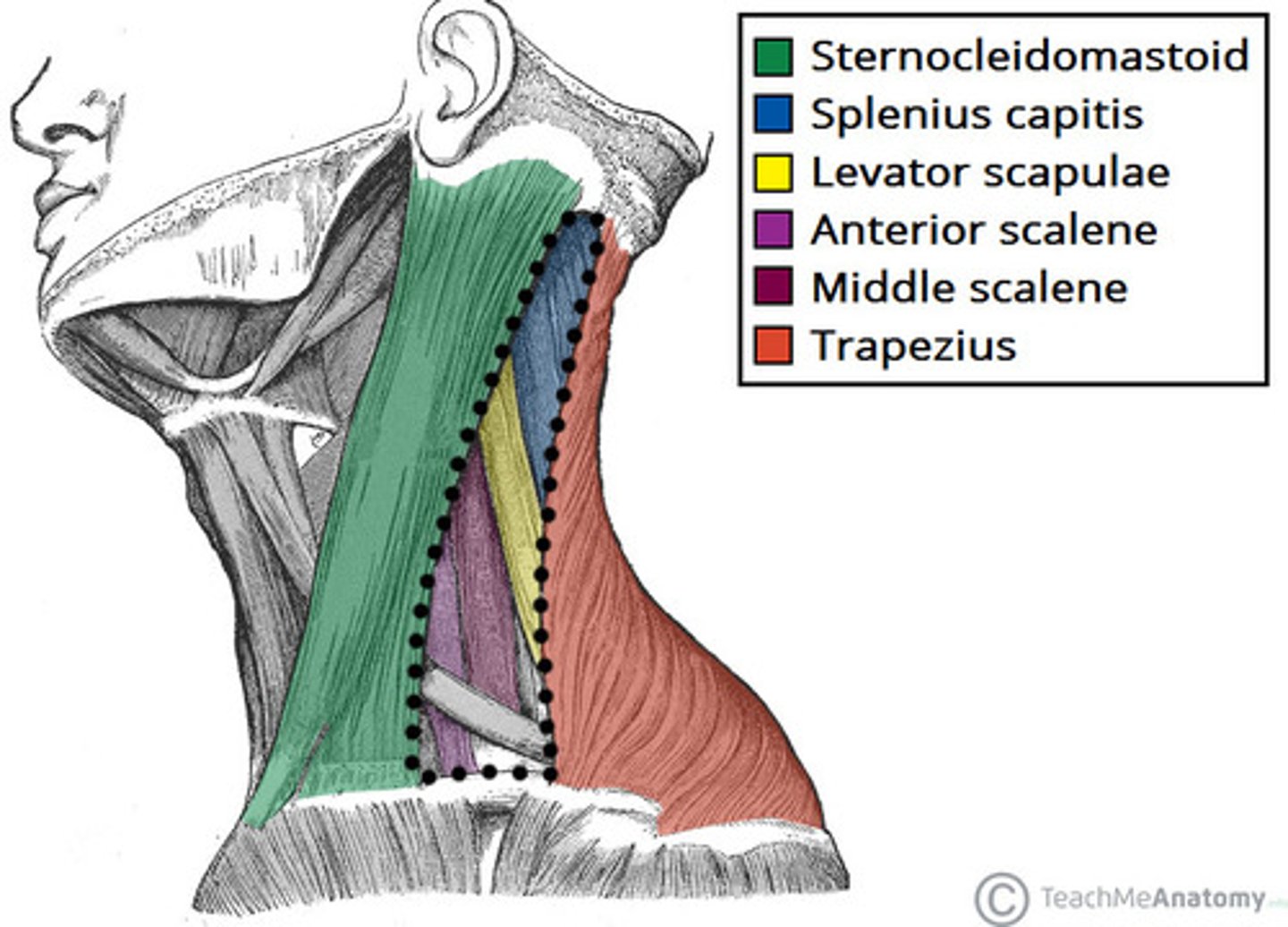
Muscles of the C spine
Manual therapy for UV joints
- central PA for extension (do this in sidelying for older pts that can't lay prone)
- distraction (could add flexion)
- mechanical traction (intermittent or static)
Manual therapy for cervical discs
- central PA for extension (sponging effect to help with diffusion)
- compression/distraction
- unilateral PA or PA with rotation (helps with cloward points and lateral fissures)
Manual therapy for facet joints
unilateral techniques
- graded exposure: start in neck flexion and progress towards extension
- unilateral PA or PA with rotation (compression, sponging)
- opening techniques (traction)
- manipulations
Foraminal stenosis compresses the nerve root, so treatment should focus on increasing what factors?
space, movement, blood
Manual therapy for foraminal stenosis:
Space
lateral glide,
traction
Manual therapy for foraminal stenosis:
Movement
active or passive nerve mobilization
Manual therapy for cervical radiculopathy
- opening techniques
- large physiological movements for nerve tissue
- traction (intermittent is better than static)
When is it okay to treat cervical myelopathy?
after a thorough screening and medical clearance to treat
Cervical myelopathy treatment:
Do you treat in flexion or extension?
treat in flexion, avoid extension as it closes the spinal canal
- cervical traction is beneficial
Vertebral artery insufficiency treatment
- thorough subjective interview
- cranial nerve screen (artery supplies the brainstem)
- neurological screening
- active and passive ROM exercises
Upper cervical spine treatment
- unilateral PA in rotation
- proprioception exercises
- soft tissue mobilization
- neurodynamics
Is whiplash a pathology or a mechanism of injury?
MOI
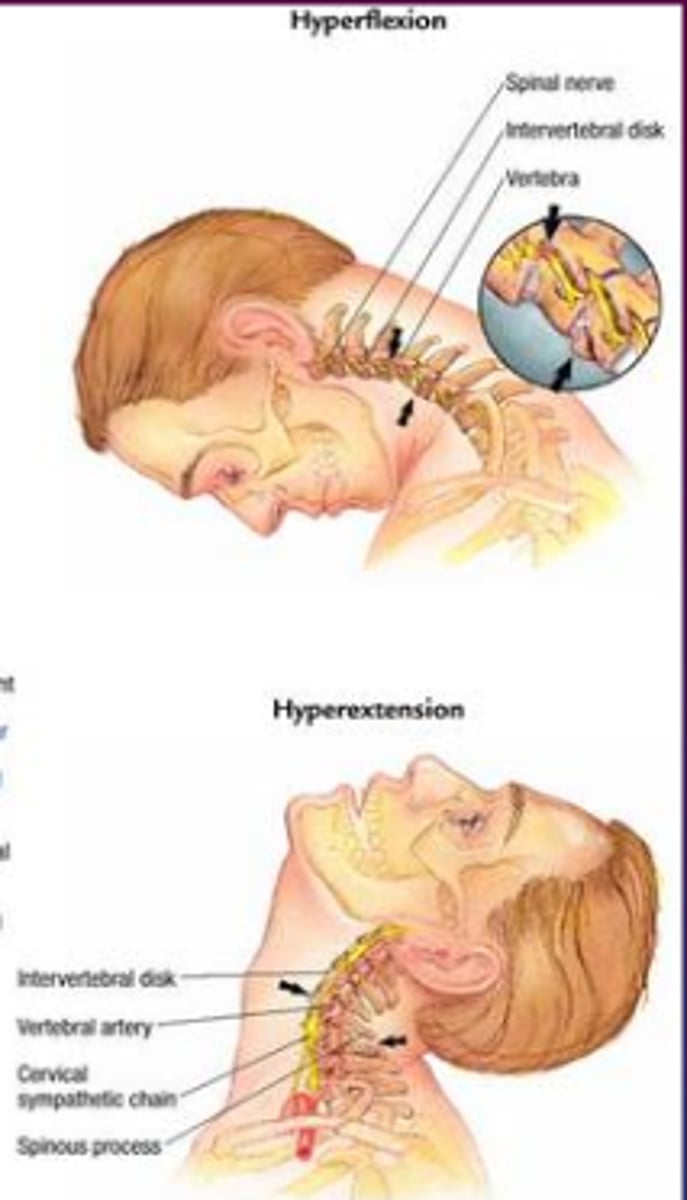
- sudden hyperextension of the neck followed by hyperflexion
- acceleration-deceleration mechanism of energy transfer to the neck
What can cause a whiplash MOI?
most commonly a rear end or side impact MVA
- can also occur during diving, sports, etc.
What does whiplash cause?
bony or soft tissue injuries (whiplash injury), which may lead to a variety of clinical manifestations (whiplash associated disorder)
Whiplash associated disorder leads to very high rates of ______________ pain and _______________
chronic pain and disability
- 1 in 4 patients following a MVA may develop pain lasting longer than 2 years
WAD diagnosis concerns
studies show high rates of missed injuries in patients diagnosed with WAD
- most commonly missed is fracture
- need further imaging if a patient with WAD is not improving
Is there a clear cause of pain in patients with WAD?
no, imaging is usually unable to find a cause of the pain
- patients have significant pain and dysfunction despite this
- causes them to be labeled as malingerers, dishonest, or neurotic
WAD diagnosis
- most valid way to determine disability post-whiplash is by taking a thorough history and evaluation
- Neck Disability Index was created for mechanical neck pain but can be used for WAD
WAD common patient population
- middle age (35-55)
- more common in women due to increased head and neck pass in comparison to supporting musculature
- women also seem to have a slower recovery time (since the injury ends up being more severe)
Are WAD symptoms clear cut or variable?
extremely variable
WAD symptoms
- neck pain and stiffness
- headache
- shoulder and back pain
- impaired focus, concentration, memory, sleep
- blurred vision, dizziness
- fatigue, depression
- buzzing in ears
Is there a correlation between chronicity of WAD and litigation/compensation claims?
no direct link between the two
- patients involved in legal process do report more pain
- could be caused by the stress of the legal process, or these patients could have more severe injuries
WAD biomechanics
- extension injuries are worse in terms of tissue damage and prognosis
- hyperextension may reach an angle of 140 degrees (normal is 45)
- in severe cases, patients can have bruising between scapulas from the occiput
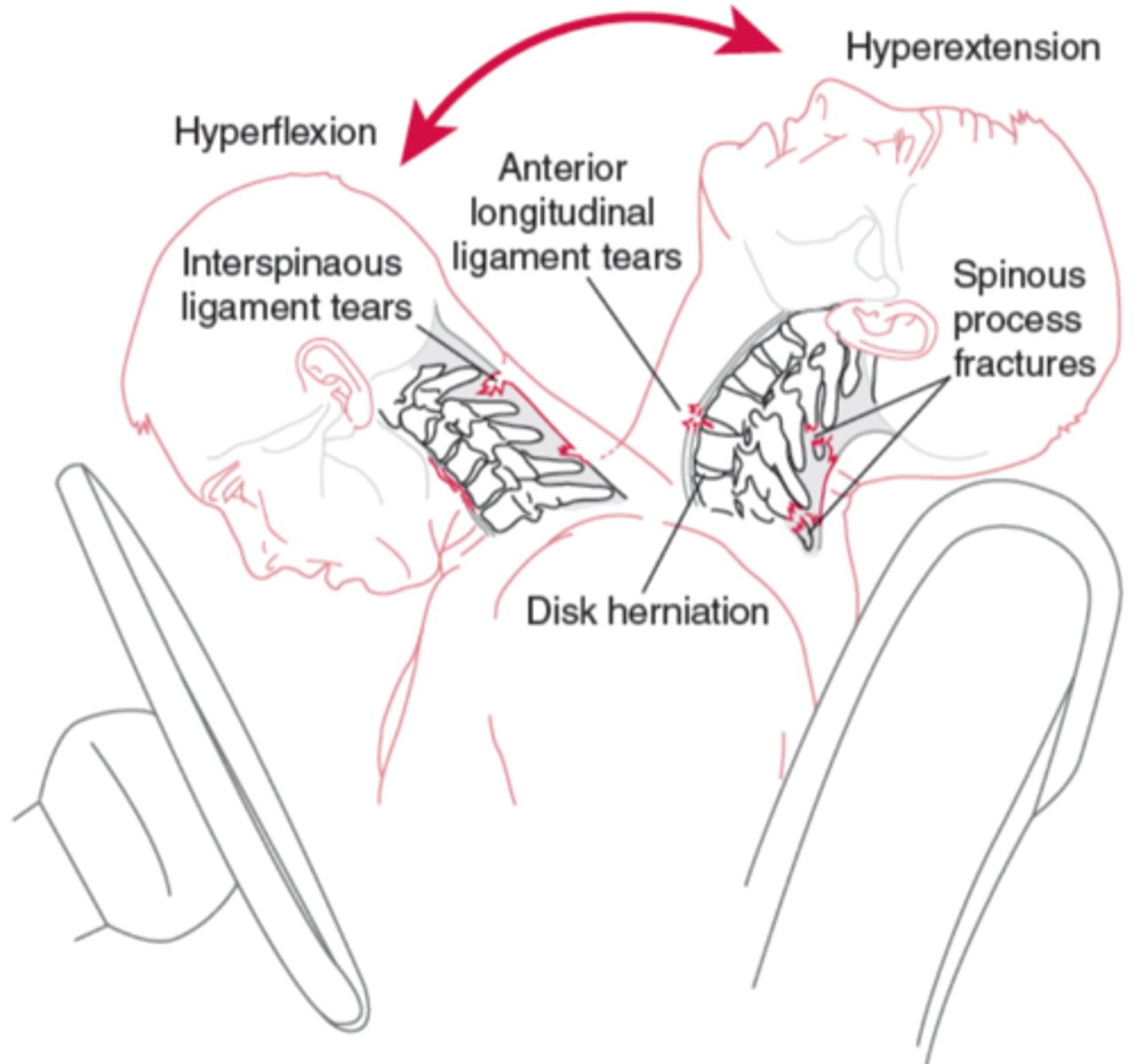
WAD biomechanics:
Forces involved in hyperextension injury
- extension
- posterior shear
- posterior compression
- anterior compression
- traction
- torsion is added with any off-center hit
Impact of seat belts on WAD
- deceleration injuries are significantly higher among victims who were wearing seat belts
- the seat belt concentrates energy to the victim
- it also protects from more severe injury and death
Is WAD more common in higher speed MVAs?
no correlation between speed and severity of injury, or amount of damage to vehicle and severity of injury
- severe trauma occurs to cervical spine tissues even in relatively slow crashes
Findings of WAD animal studies
- minor tears in longus coli and SCM
- retropharyngeal hemarthroses
- esophageal tearing
- nerve damage
- ALL tearing
- avulsion of the disc off of the VB
(none of these were detected on XR)
Findings of WAD anthropometric studies
- 15 mph impact caused an acceleration force of 10 G
- intradiscal pressure increases with flexion and decreases with extension
- there was higher inter-vertebral disc pressure in the C spine than T spine
- disc pressure was highest at C4/5 in flx/ext injury, and at C3/4 with lateral impact
- longus coli was most at risk in ext
- longus capitis was most at risk in lateral impact
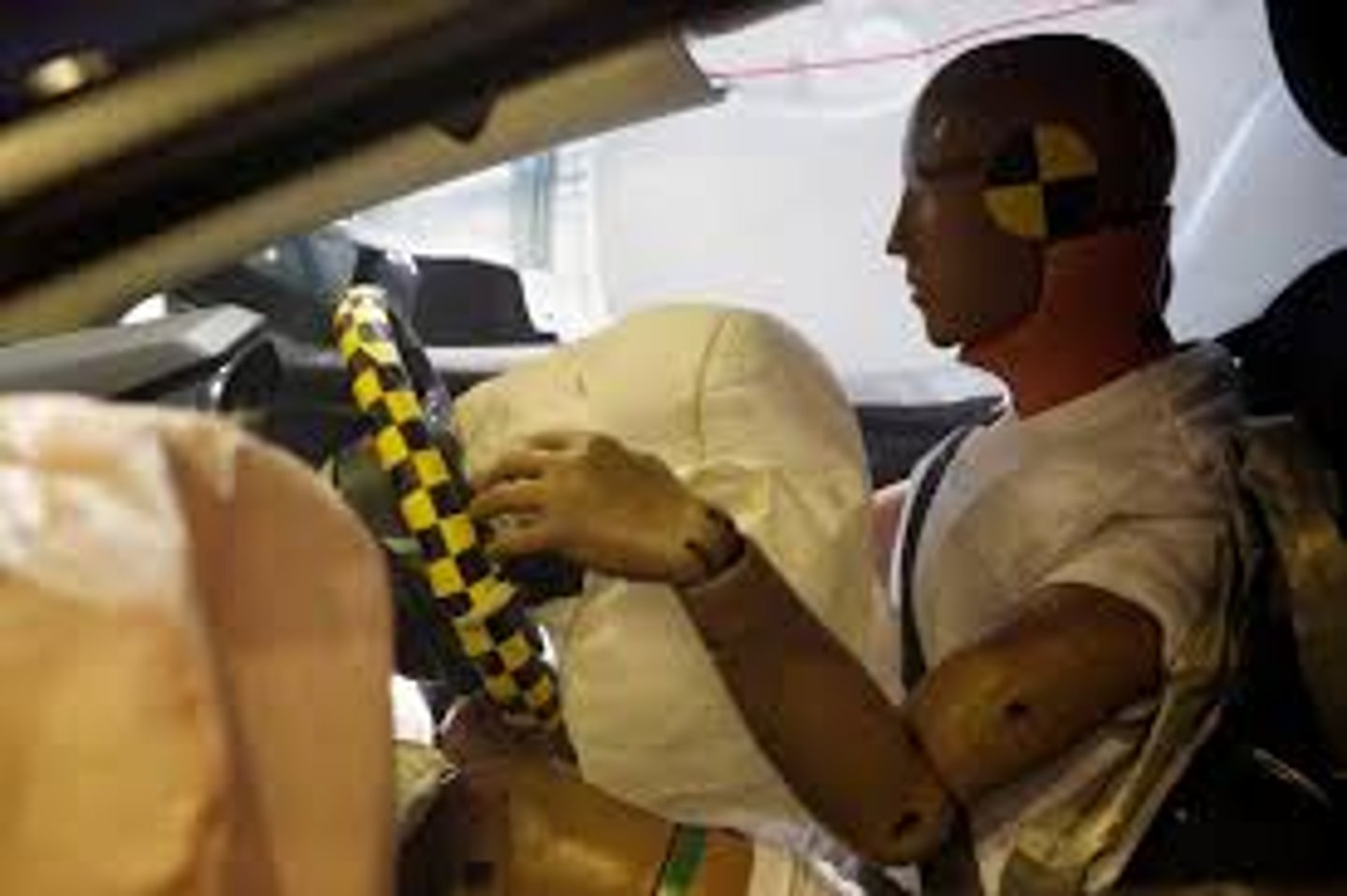
Do muscles react immediately in response to sudden head and neck movement?
no, there is a delay in reaction time for muscle contraction
- in a whiplash injury, the head reaches peak hyperflexion/extension faster than the time it takes for the muscle to reflexively contract
- there is a big difference in severity of injury in patients who saw the impact coming vs those who didn't (time to prep and contract muscles makes a difference)
Findings of WAD cadaver dissections
- 94% had disc injury
- 74% had facet injury
- 26% had fractures, most were not detected on XR
- avg of 2 segments injured
- C5/6 and C6/7 were most affected
Vertebral artery insufficiency symptoms
5 D's And 3 N's
- dizziness, diplopia, drop attacks, dysphagia, dysarthria
- ataxia
- nystagmus, numbness, nausea