lab 10 urinary physiology notes
 Call Kai
 Learn
Learn Practice Test
 Spaced Repetition
 Match
Match Flashcards
 Knowt Play
1/41

There's no tags or description
Looks like no tags are added yet.
Name | Mastery | Learn | Test | Matching | Spaced | Call with Kai | Chat |
|---|
No analytics yet
Send a link to your students to track their progress
42 Terms
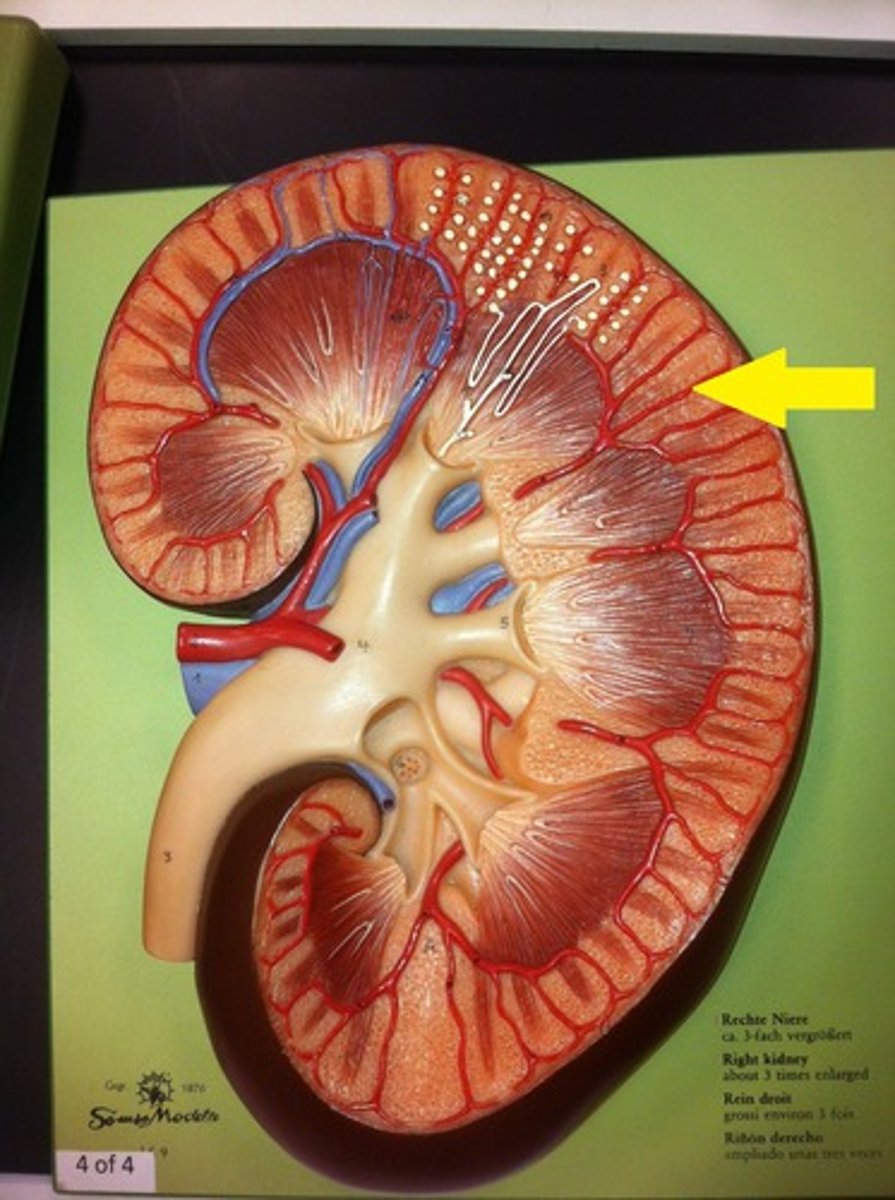
renal cortex
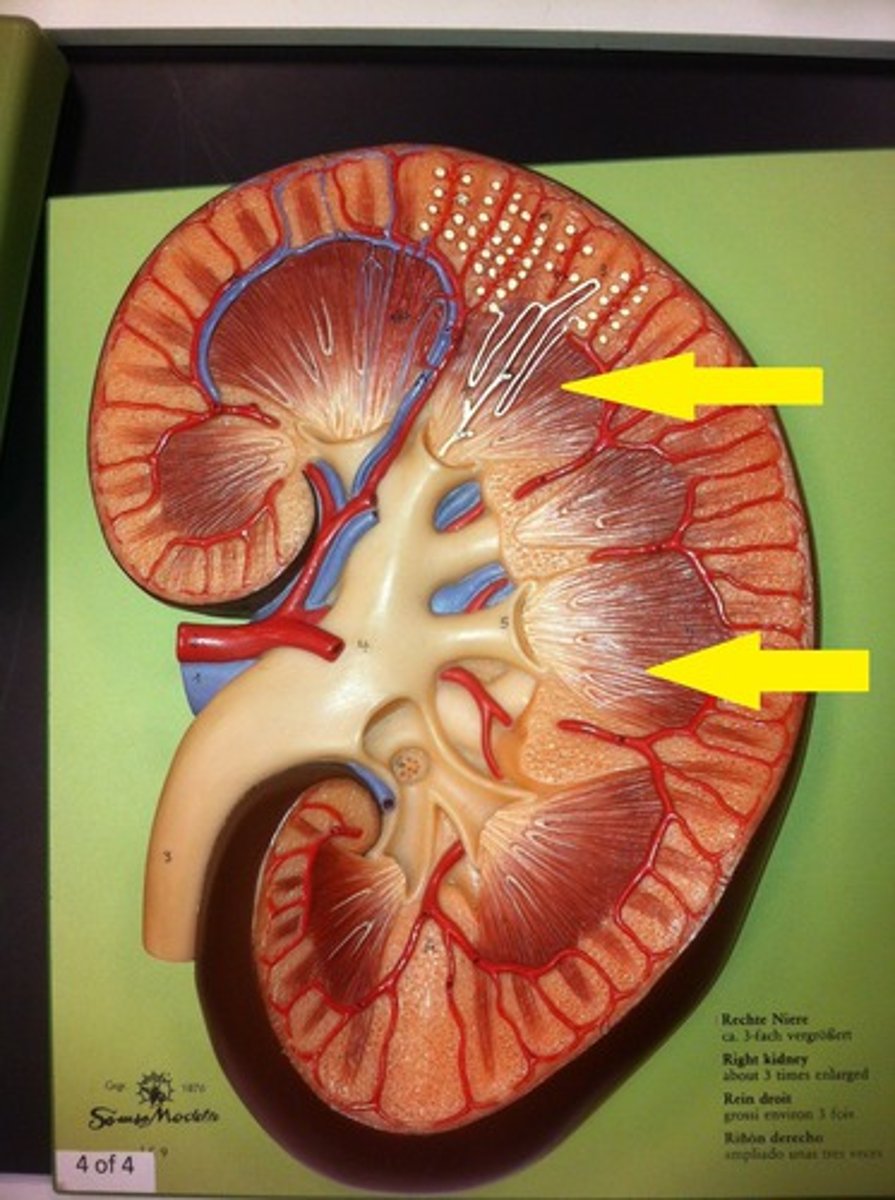
renal medulla
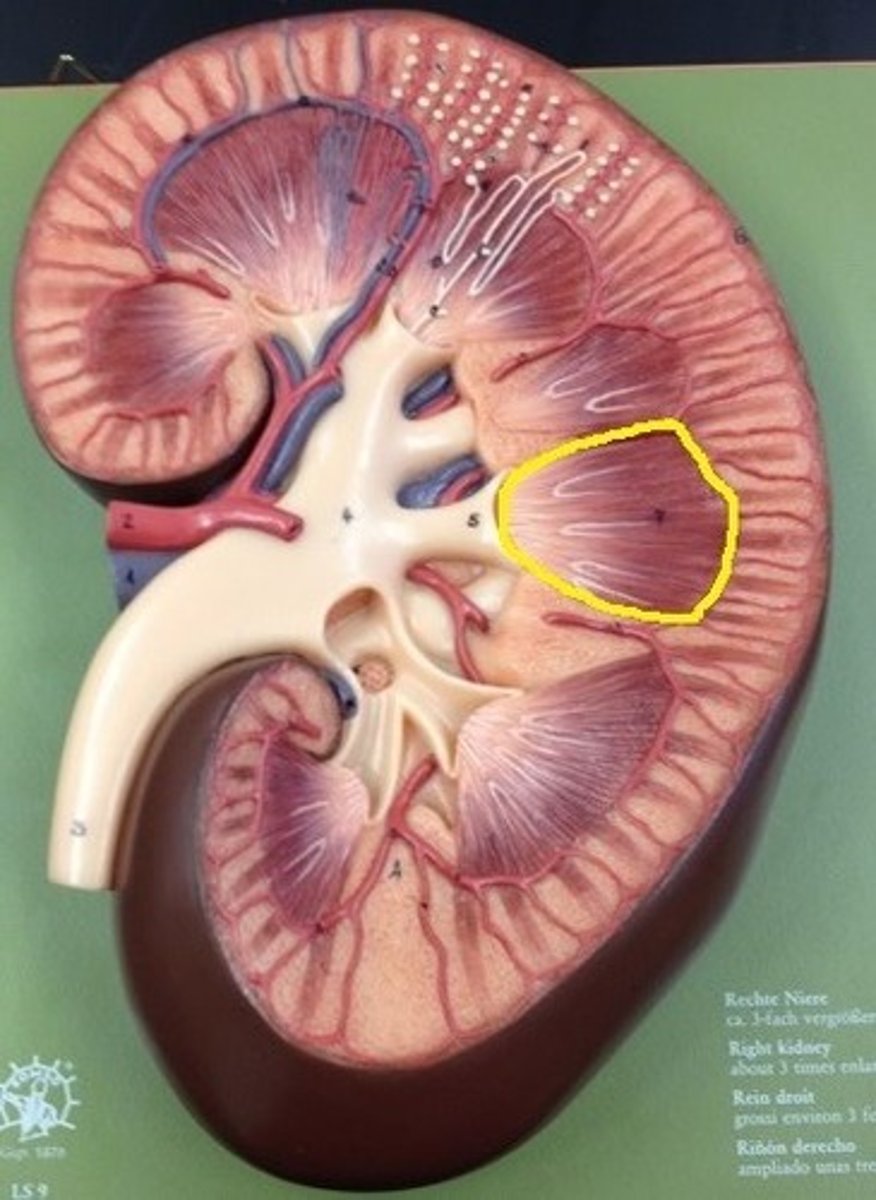
renal pyramids
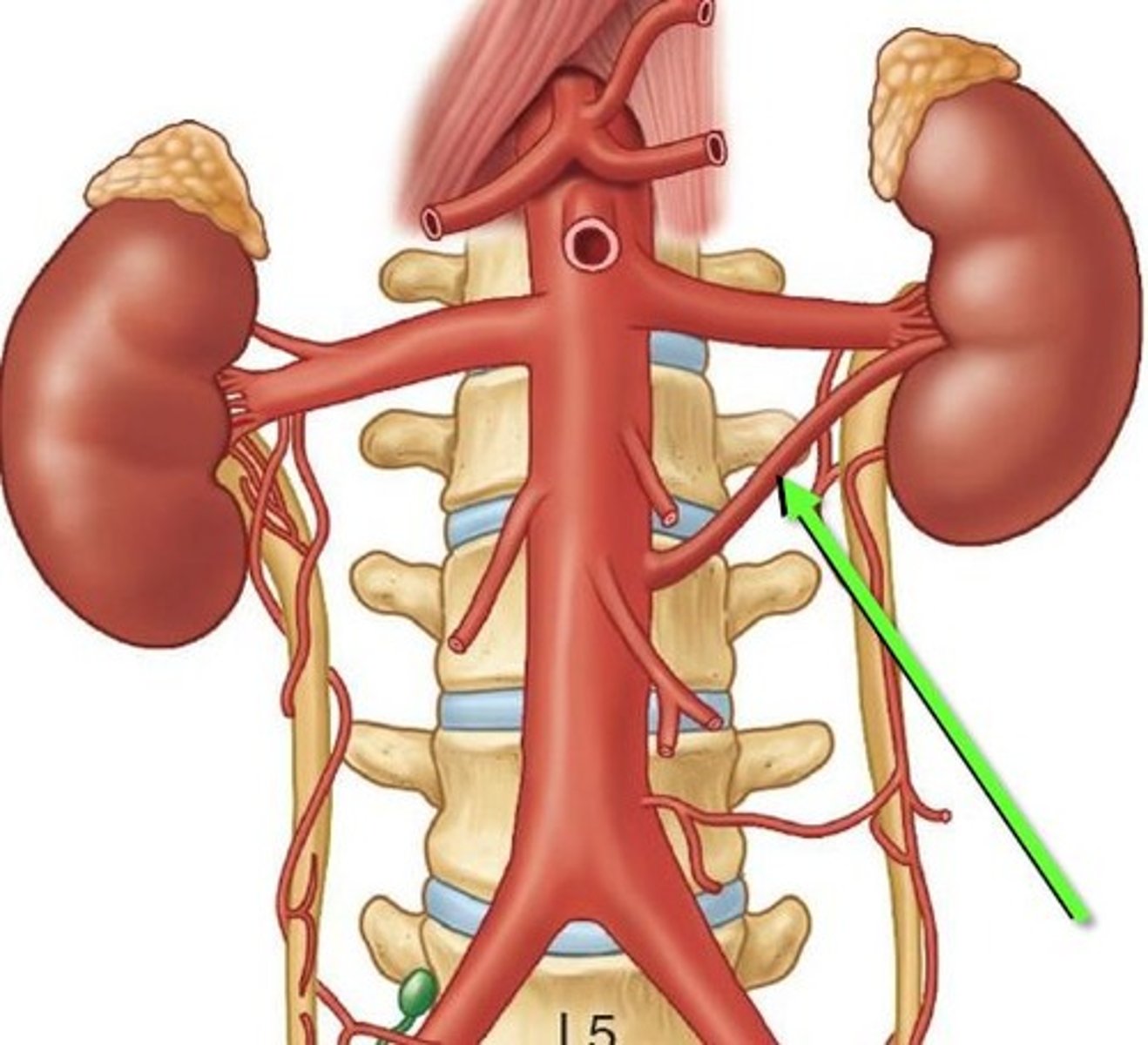
renal arteries
segmental arteries
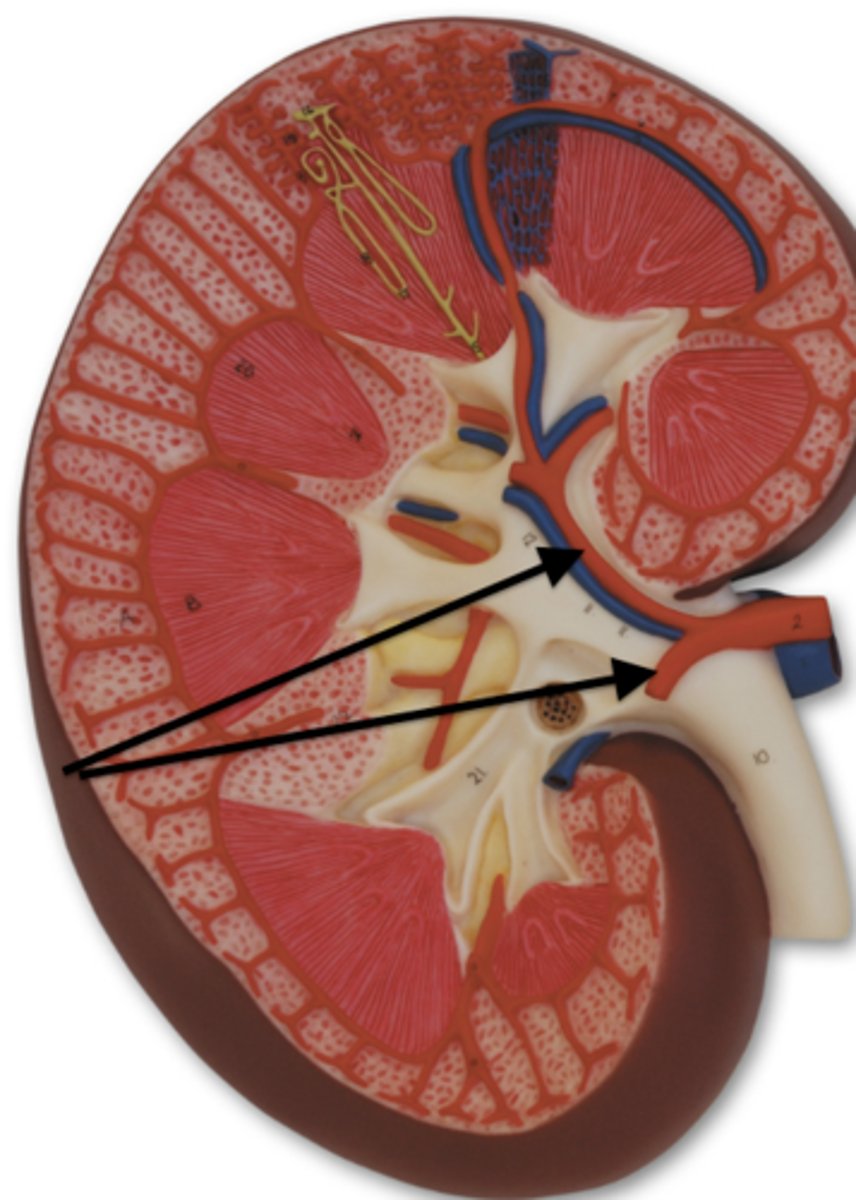
interlobar arteries
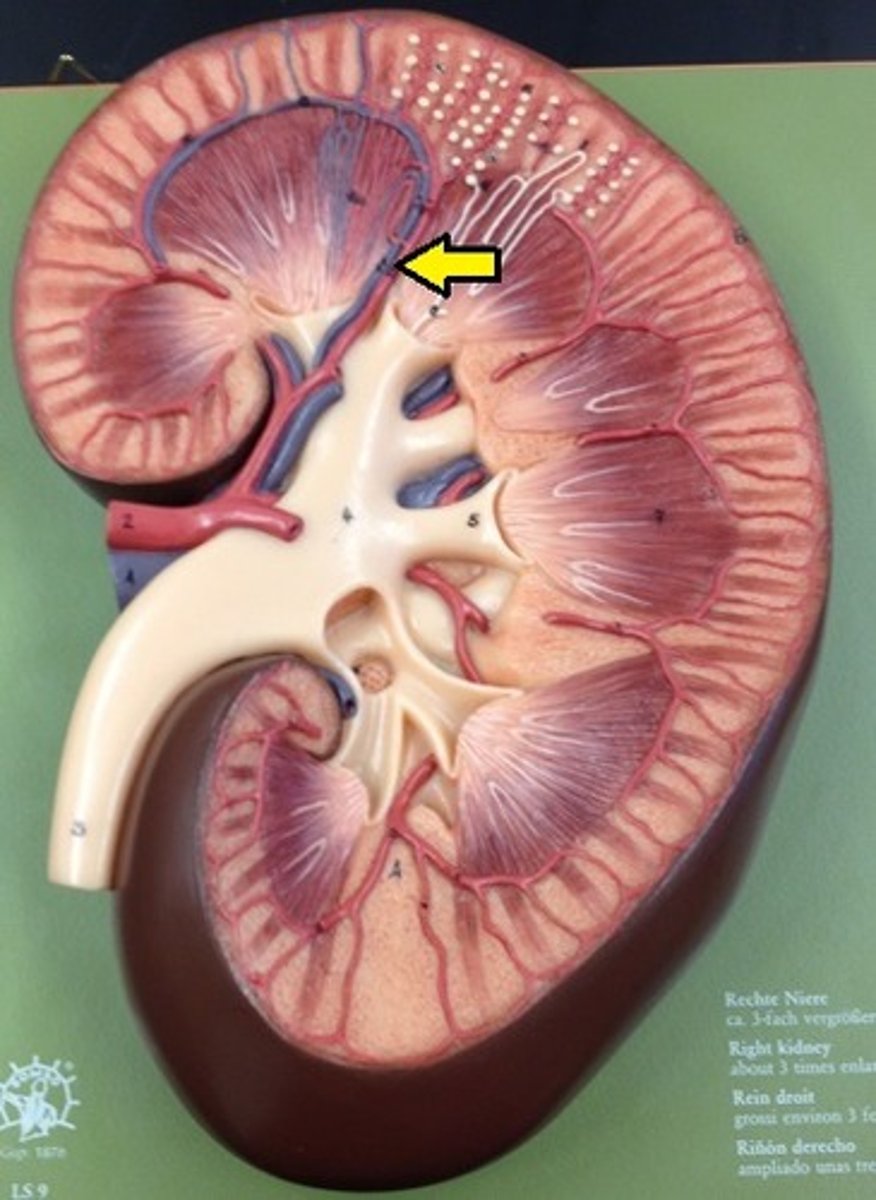
function of cortical nephron
removal of waste products and reabsorption of nutrients
renal corpuscle
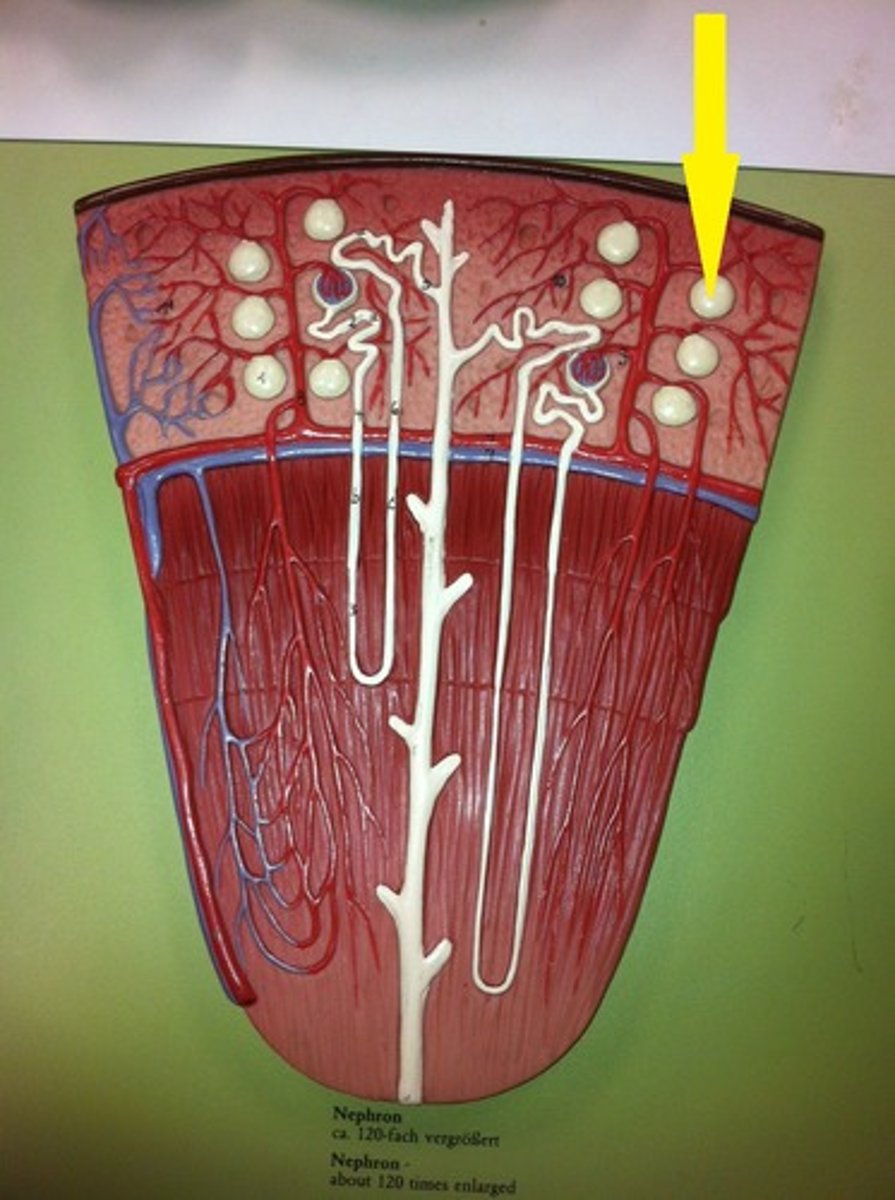
component of renal tubule
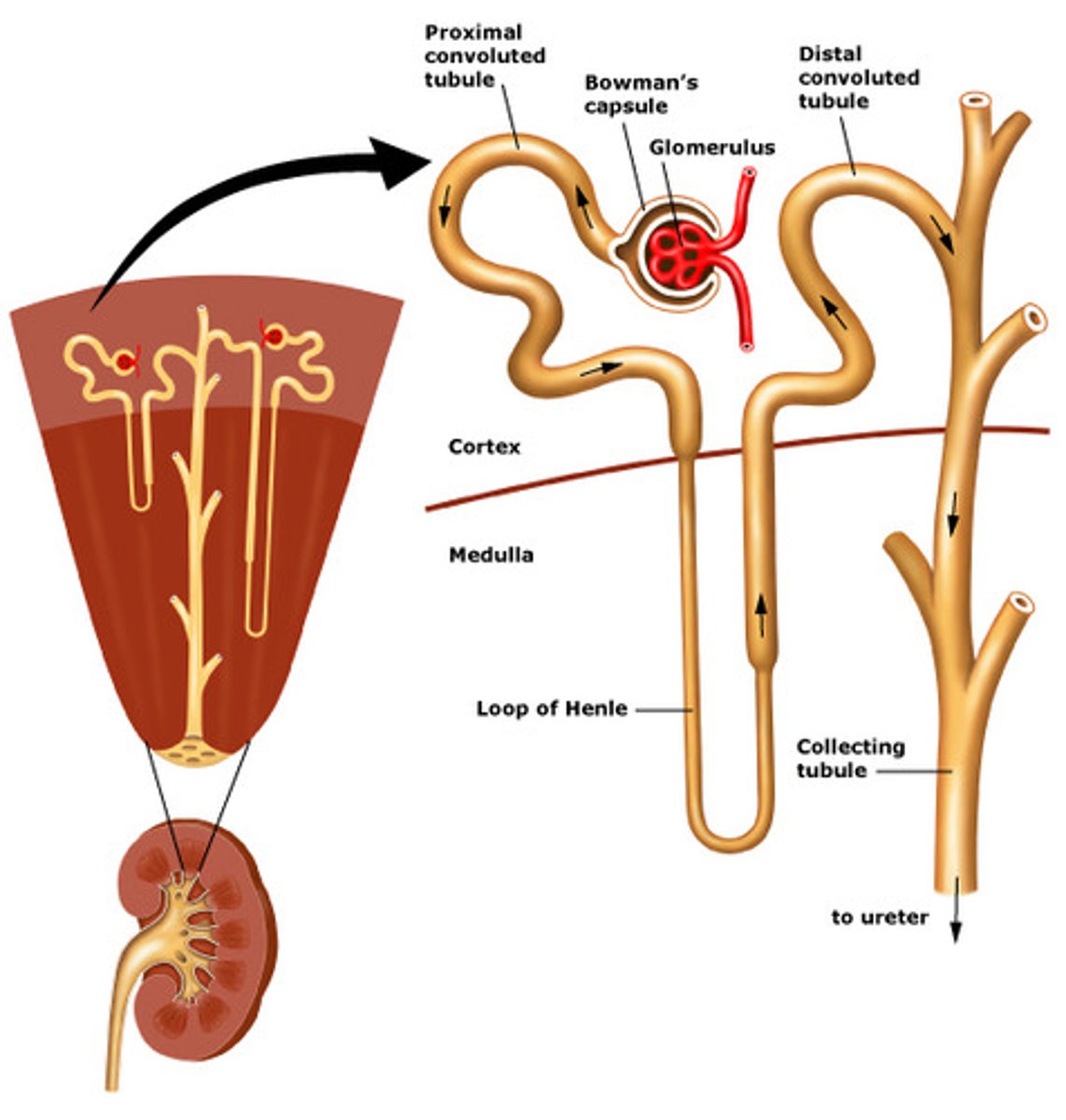
filtration membrane
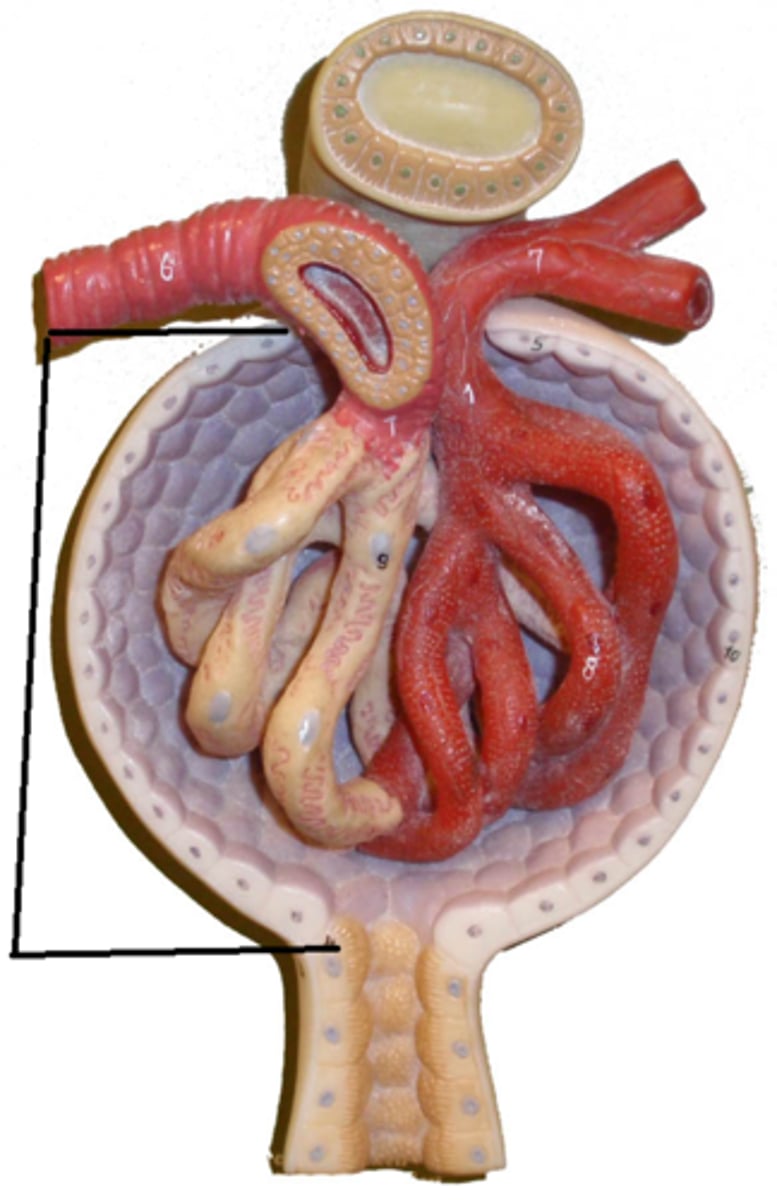
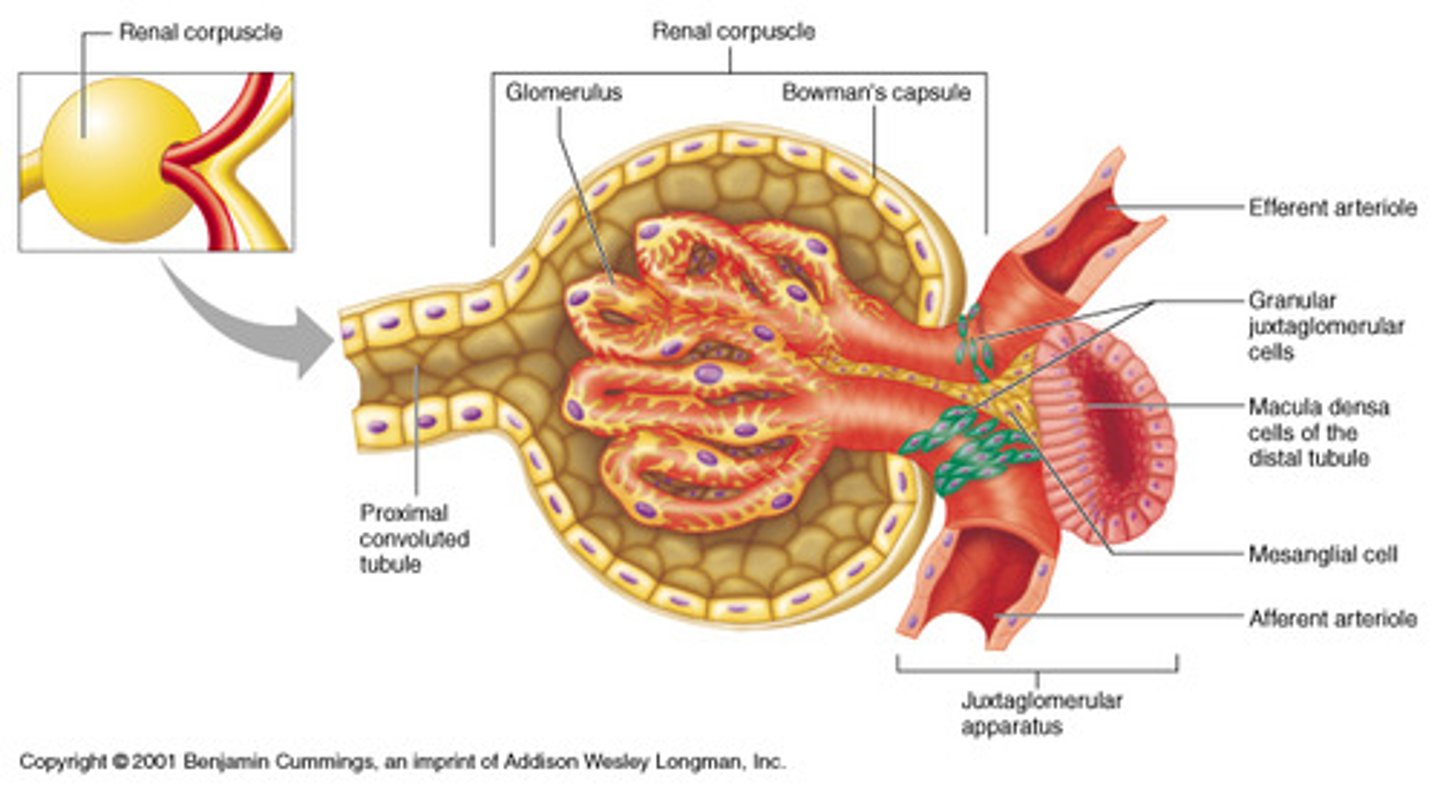
juxtaglomerular apparatus and components
excretion = + filtration - reabsorption + secretion
+: adding to tube
-: removing from tube
excretion formula
urinalysis process
-collect urine sample
-use a dipstick in urine
-let it sit for a minute
-compare color changes with the different substances
1-2 L
normal volume of urine
goes from clear to dark color (dehydrated)
color of urine
asparagus can affect this
-varies, depends on what you eat and how old urine sits (ammonia), usually no odor
odor of urine
1.003(clear)-1.035 (dark urine)
specific gravity range of urine
4.5-8
pH of urine
Diabetes Mellitus
presence of glucose in urine
kidney trauma, kidney stones
presence of erythrocytes
UTI
presence of leukocytes
hypertension, excessive exertion, glomerular nephrITIS
presence of proteins
(HP cap+COP tiss)-(COP cap+HP tiss)
(35+5)-(0+26)
NFP equation for filtration
GFR = 125 ml/min
glomerular filtration rate a minute
180L/day
glomerular filtration rate a day
[(HP gc + COP bs)-(HP bs + COP gc)]
(60+0)-(18+32)
NFP of glomerulus
because the efferent arterioles are smaller and causes a backlog of fluid
-causes increase in fluid pressure in glomerulus
-a lot of cardiac output goes here
why is HP GC high than HP cap
everything else
what is filtered by the filtration membrane
-formed elements, WBC, RBC
-plasma proteins
what is not filtered by the filtration membrane
there is only tiny openings, the blood is too big to filter through
-plasma proteins have a negative charge, the membrane has negative charge
why can't it be filtered
Na+, proteins in the membrane
what is the driving force behind most reabsorption gradient
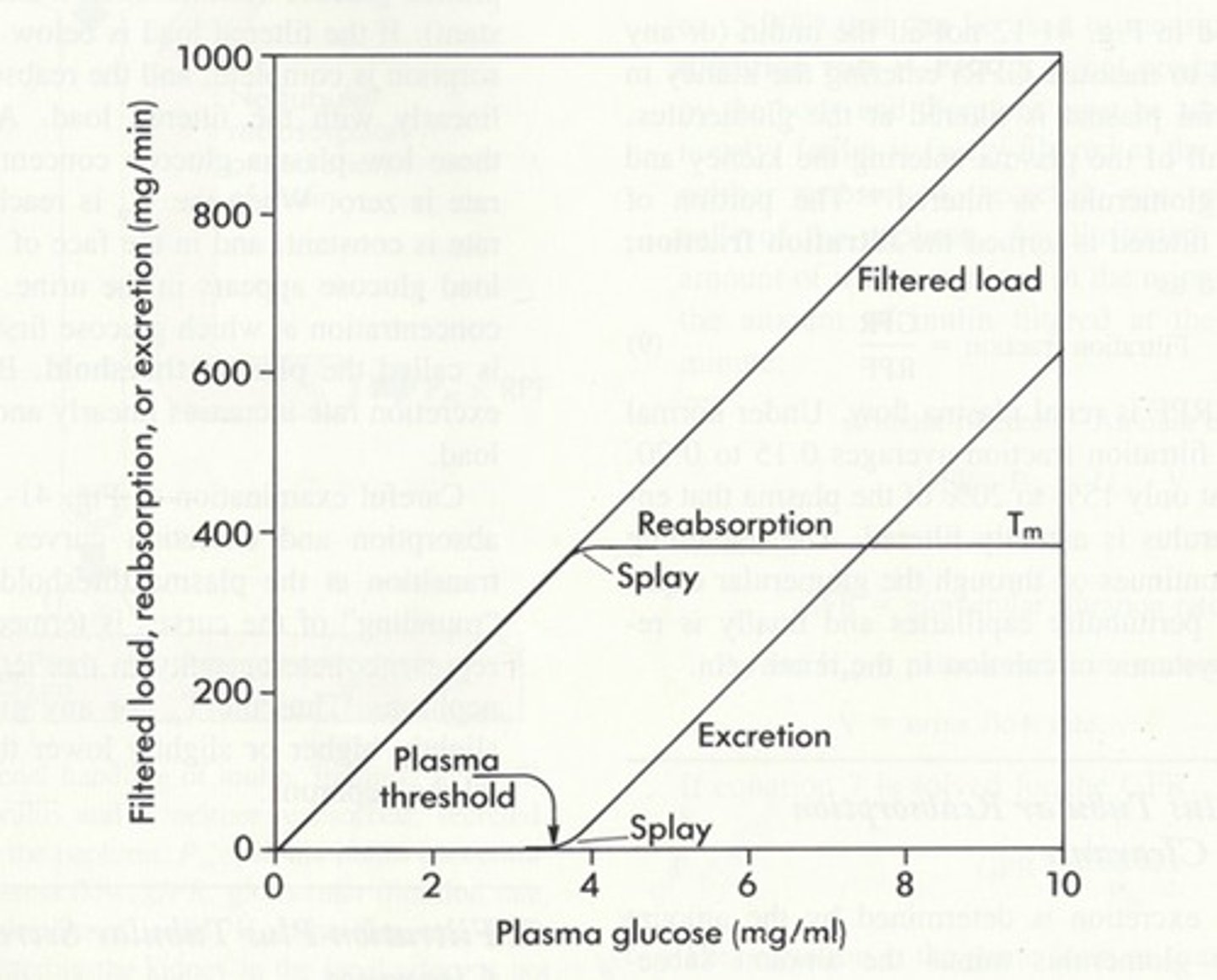
glucose, can range from 0-10
GFR x plasma glucose
recognize presence of transport proteins to reabsorb substances
has to be reabsorbed completely, 100=100, 200=200
-the maximum rate is 400mg/min which will occur at 4 mg/mL
-CANNOT REABSORB MORE THAN 400
know and apply Tmax for glucose reabsorption
interpret graphs illustrating glucose reabsorption
GFR x plasma glucose
GFR 100ml/min
-parallel differ by 400
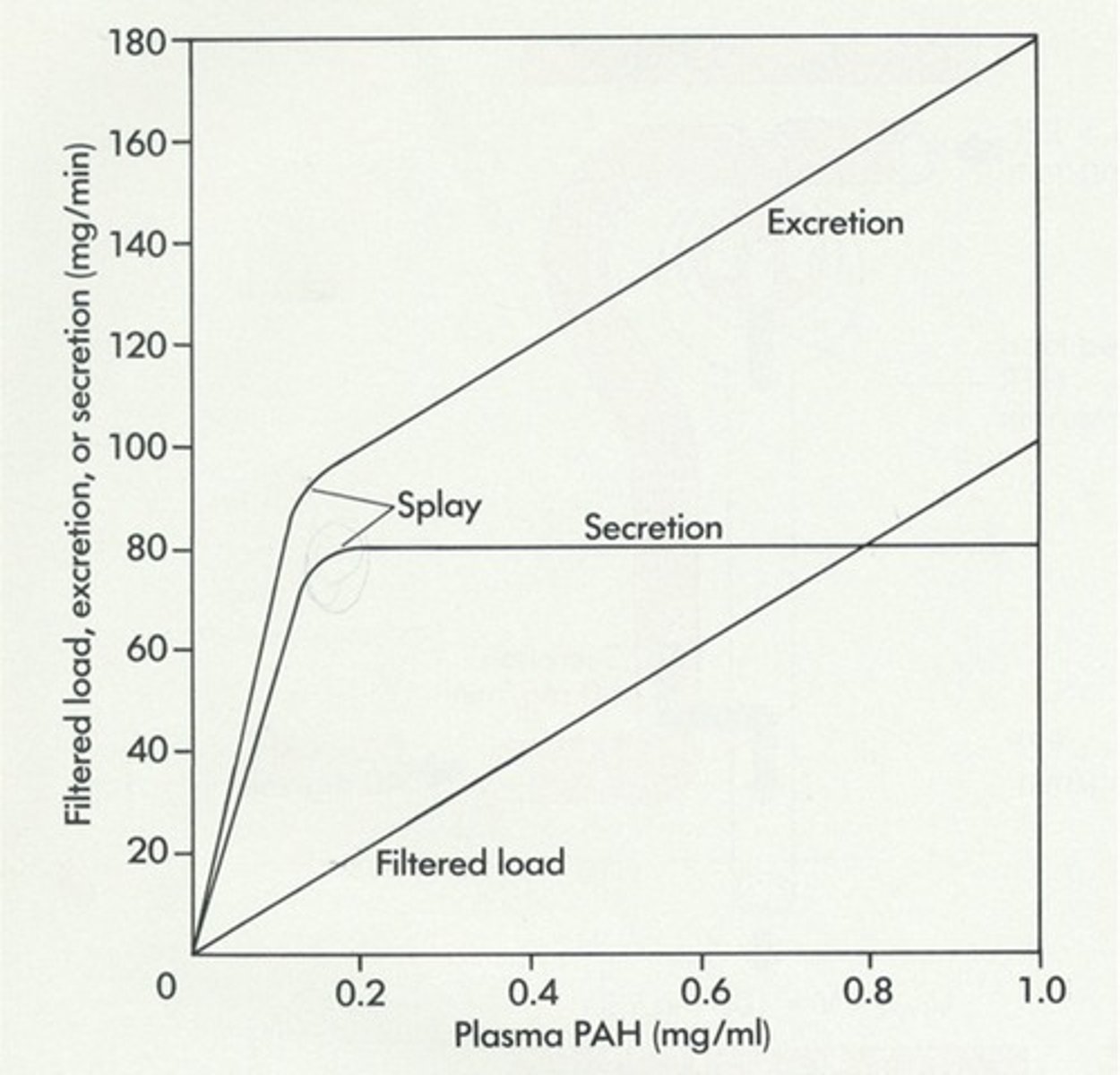
PAH: 0-1
recognize presence of transport proteins to secrete substances
PAH: the max is 80mg/min at 0.2 mg/mL
-YOU NEVER SECRETE ABOVE 80
know and apply Tmax for PAH secretion
Interpret graphs illustrating PAH secretion
no proteins for the reabsorption of PAH
20+80= 100 excreted
-differs by 80
a specialized role in the kidney's ability to concentrate urine
function of Nephron Loops of Juxtamedullary nephrons
-water comes down the descending side
-salt is pumped out of the ascending side
-DCT concentration is less than body fluid (hypotonic)
-becomes more concentrated down in the loop, but more equilibrium to interstitial space
-fluid on outside becomes more concentrated the deeper you go
Describe concentration changes to tubular fluid as it passes through renal tubule
a dilute urine is produced because the collecting duct remains impermeable to water
describe concentration changes to tubular fluid in absence of ADH
causes us to produce less urine, less pee
Describe concentration changes to tubular fluid in presence of ADH
the juxtaglomerular apparatus has granular cells and macula dense cells that detect changes
-causes ADH to be released from posterior pituitary
-aquaporence (insert pores) water leaves and goes toward the gradient
-produces more concentrated urine (darker)
Understand stimuli resulting in release of ADH