L1
 Call Kai
 Learn
Learn Practice Test
 Spaced Repetition
 Match
Match Flashcards
1/38

There's no tags or description
Looks like no tags are added yet.
Name | Mastery | Learn | Test | Matching | Spaced | Call with Kai | Chat |
|---|
No analytics yet
Send a link to your students to track their progress
39 Terms
Why do the
What is trend of US health care spending
High total mean healthcare spending
Us health spending as a percentage of GDP rising steadily. both private spending gadn total health spending exgeeed global averages
both private, public system US spends a lot of money on healthcare


US Healthcare Outcomes
poor comparative outcomes
Infant mortality: U.S. infant mortality rates are highest in developed world
infant mortality is a proxy for public health —> something we can control/is preventable

US and Covid: Cumulative COVID-19 death rates per capita in the U.S. far exceeded peer high-income nations throughout the pandemic and during the Omicron wave
despite US having echmo ability and high tech things had high mortality from covid

Measles Outbreaks: Total U.S. measles cases increased
Foodborne Illnesses: Recent surges and public health recalls involving Cyclospora (iceberg lettuce), Listeria (soft cheeses), and Salmonella.

Why is US healthcare the “worst” and the “best” of healthcare systems?
US is “best”
top technology and innovative treatments and medical institutions
save lives
lacking infrastructure to make sure that we keep people healthy and to make sure that everyone can get timely care
US is “worst”
huge barrier to access to care
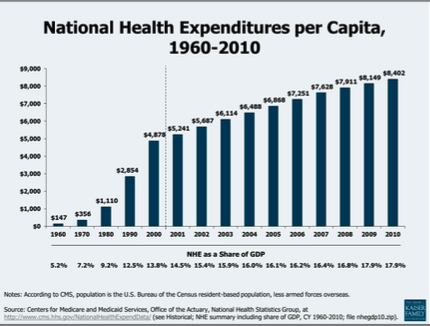
not in our lecture??? What does this image show?
not all national health expenditures are the same in the US. not all increases are the same. period of lower spending and swift changes
What is the principal chronic source of economic insecurity?
healthcare isn’t just about health; also about economy.
Rising medical costs and erosion of insurance coverage is a principle source
In the past, health insurance = health care covered
now every insurance plan has a deductibles in the thousands even after meeting them.
different forms of cost sharing: copay, co-insurance, out-of-pocket
those who have economic hardships from medical accdients still have out-of-pocket pay, might lose job, set up go-fund me
other countries health system/welfare net don’t result in making people do this when they get injured or sick
Before Affordable Care Act insurance healthcare bill was the number 1 cause of bankruptcy throughout the country
Explain the connections between insurance and employment
What happens during a global pandemic
people get insurance through their employment
a medical emergency that causes you to lose your job, you might be eligible for government funded insurance or to purchase insurance through exchanges problematic because if you get sick and cant work then you don’t have access to insurance.
Effects of the US having a privatized system
pros and cons
Privatized system: More money at stake → more investment → advanced technology and innovation.
Downside: Healthcare becomes a major economic industry → more stakeholders with competing interests → reform becomes much harder because the focus isn't only on health; financial and business interests are also involved.
How does health policy reflect our values as society?
in US, healthcare is considered a privilege you buy into and not a right
US is hierarchal system
More money
↓
More ability to pay for healthcare
↓
Greater access / more choices / potentially better care
Health policy isn't just about medicine. It reflects what society thinks is fair and what society thinks the government's role should be.
What are students taught in med school?
NOT about the US health system
it is important to learn about healthcare system
some politicians deny access to different forms of health care
important to know how patient get care, understand how they get care
Educational Gap: Medical schools historically focus heavily on clinical science while omitting practical instruction on health policy, billing, and system navigation.
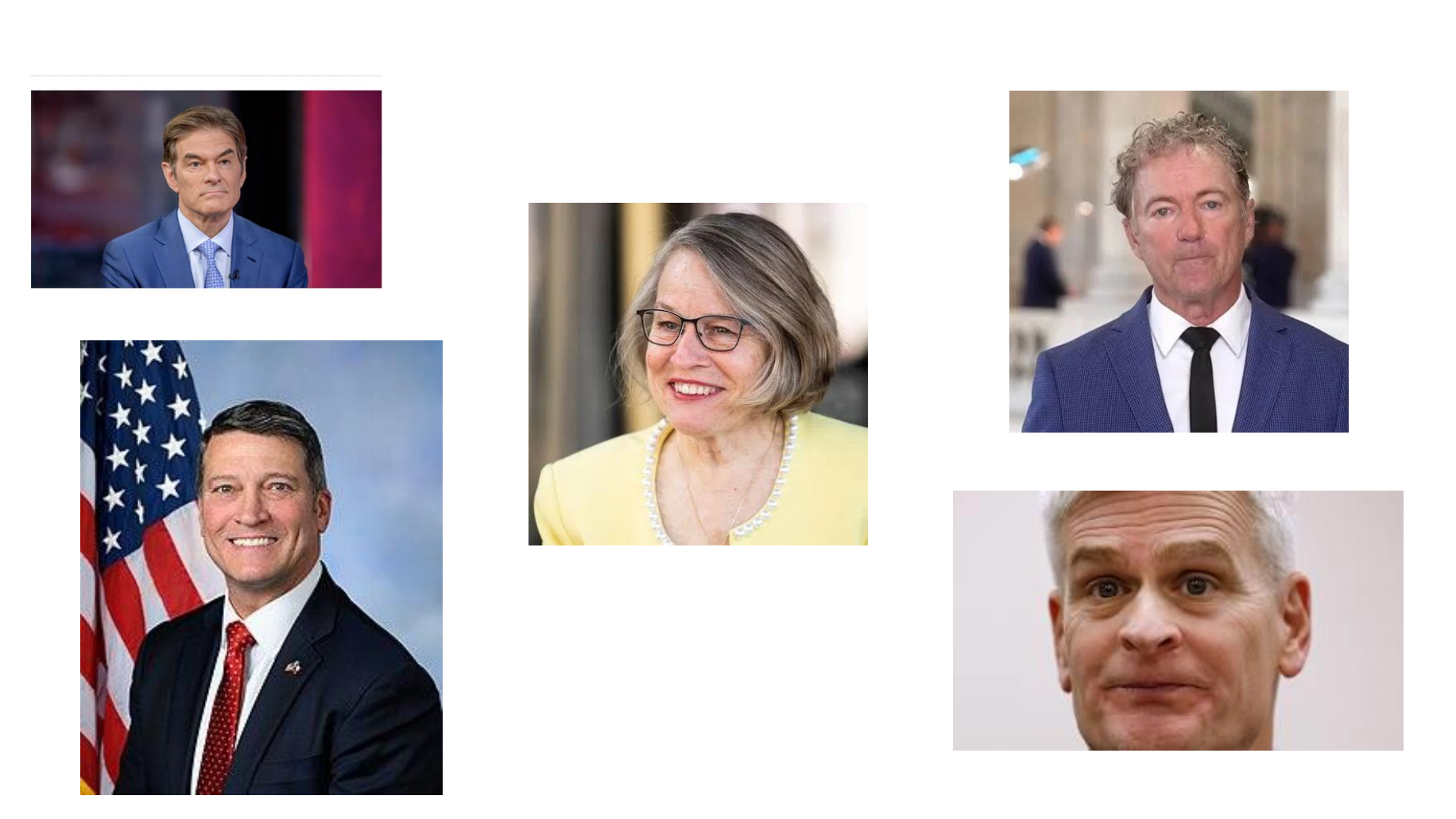
Dr. Ben Carson: Neurosurgeon and former Secretary of Housing and Urban Development (HUD).
Dr. Mehmet Oz: TV physician appointed to head the Centers for Medicare & Medicaid Services (CMS).
Bill Cassidy
Louisiana —> Gastroenterologist and Republican U.S. Senator from Louisianawho cast a key vote in confirming the HHS Secretary
poor public health outcomes
Dr. Ronny Jackson
Former White House physician and current Republican Congressman
Pediatrician Kim Schreier
Democratic congresswomen from Washington State
Overall more republican physicians in congress.
every physician group has dedicated lobby policymakers

physicians in congress
what trends are here?
21 physicians in the 119th Congress (17 in the House and 4 in the Senate), representing a disproportionately high percentage compared to the general population
The vast majority of physician-legislators in Congress are Republicans (including all 4 physicians serving in the U.S. Senate)

demonstrates a correlation between how much money you make and your politics
politics, money, and specialty (schism)
Specialty & Income Alignment
republicans primarily in high earning surgical sub-specialties (orthopedic surgery, gastroenterology, and urology)
a direct correlation between higher income/specialty earnings and Republican political alignment
Democratic Physician-Legislators: Primarily come from primary care fields (pediatrics, family medicine, OB-GYN) or nursing. Their legislative focus centers heavily on healthcare access, maternal mortality, and Black maternal health disparities
4 doctors in Senate —> all republican

Figure
Republican physicians make up a greater share than Democratic physicians but over time the share of Democratic physicians have increased
Paper
Republican physicians spent more per treatment. Political polarization among physicians is associated with differences in medical practice
shows how political values can influence medical practice. medicine is not separate from politics
Describe physicians today vs early American republic (18th and early 19th century)
Today
higher earners, positions of power, well respected socially, high politically influential group, powerful professional lobby
Early American Republic
physicians had insecure social status
lower earners
professions was divided and weak
different ways of becoming doctors; different ways of training reuslted in fighting
Used to be licensing requirements until the 1830s under the Jackson Administration licensing laws were eliminated and came back later
Low Historical Pre-eminence: In the 18th and early 19th centuries, studying medicine was considered anti-intellectual—on par with being a barber or physical tradesperson—while elite scholars chose law or theology.
Lack of Social Mobility: Medicine was not a path for upward financial mobility; doctors were either already wealthy gentlemen or struggled with modest income
In the early 1800s to the early 1900s, what changes occurred in the medical profession
physicians made changed to change their role to become more powerful in American society
hence a more insular profession —> harder to get licensed as a doctor, get into medical school, reduce competition and consolidate the power of the profession
What did the Buffalo Medical Journal tell us about physicians back in the early American republic

medicine was despised profession
anybody can become a doctor “antiintellectual”
How was medicine in the 19th century in the US
US lagged behind European counterparts
Europe has massive hospitals and scientific learning
Medical education was non clinical
At the time US didn’t have patients to see and no way to gain clinical exposure
How does the system we have make sense (HELP)

What were the 3 different tiers (ways) to become a doctor in the US in the 18th and 19th century?
1) Fancy medical schools in the US
2) Completed apprenticeships
3) Self-trained (untrained)
hang a shingle, anyone could hang a shingle and be a doctor bc no licensign requirem
Benjamin Rush 1746-1813
Signed Dec. of Independence, went to Uni
worked as as apprentice in Philly
Went to Edinburgh to study medicine, did internships in London and Paris
Hughe proponent of humoral medicine (4 humors in our body black bile, yellow bile, phlegm, and blood)
any illness came from imbalance of these substances
adjust this by blood letting
Bloodletting
by Benjamin Rush
saw no harm in loss of a pint
Yellow Fever —> Rush remained in philly and treated patients with extreme bloodletting (removing up to 70–80 ounces of blood); prob did no harm than good
this was a state of the art idea and became a common intervention
medical advisor to George Washington (Rush came from wealthy family)
died of a severe throat infection after doctors drained 9 pints (over 40%) of his blood within 24 hours
Foxglove (digitalis purpurea)
a purple flower
Foxglove has been used since the 15th century to treat cardiac conditions and remains a modern cardiac drug (digitalis/digoxin)
rare instance of a continuing treatment used today
Most treatment in 18th and 19th century today are considered harmful in today’s standard but worked in a certain context and seen to be valuable
Lobotomy procedures used to be common
System of understanding in healthcare
explain
illness/sickness
excessive energy
what was the system of medicine in this period
theory of inadequate energy
Illness/sickness
viewed as an imbalance in energy (too much excitement or too feeble)
therapy was to restore natural balance
Excessive Energy
needed to be depleted
feeble energy needed to be stimulated
(bleeding, catharsis, emetics)
System (heroic age of medicine)
system was highly visual, highly dramatic (heroic treatment)
Theory of inadequate energy
stimulation with alcohol, iron, quinine
Describe the Heroic Age of Medicine 1780s-1850s
Aggressive practices and treatments
Depletion Therapy —> removing excess energy
Balance of fluids: purging (making someone throw up or have diarrhea) or bleed to remove all excess energy
Why did heroic medicine seem to “work”? Explain the visual/dramatic aspect (still important today)
seemed to work due to the visual nature of the result of losing tons of blood or fluid patient will look visually different
doctors were very hands on and vivid; patients experienced hands on nature from a provider
patients today feel that doctors don’t do anything and just prescribe medicine
Aside from bleeding, what were other treatments patients received during the Heroic Age?
Blister skin (fluids came out of blistering aka a form of depleting)
Leeching
Medications that cause diarrhea
cathartics
Eventually people realized these depletion treatments were harmful, resulting i,,,,
People switched toward STIMULATION
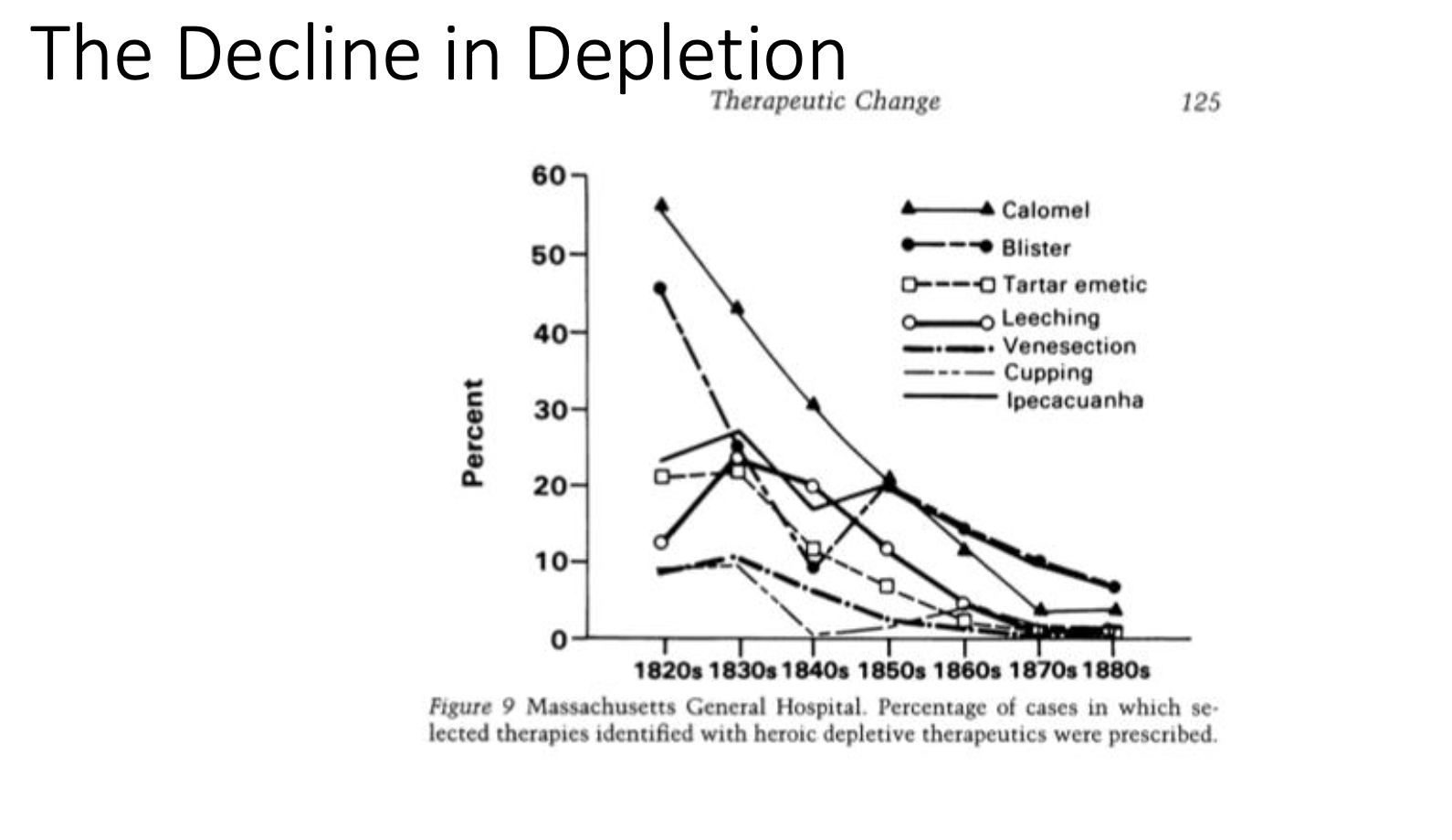
Examples of stimulation treatment
quinine therapy, alcohol, and iron to stimulate energies
based on same idea as sickness being an imbalance in energy
diff method same theory
As a response to heroic medicine, there was a rise of _________
Medical Sectarianism different groups of doctors who believed in very different ways of treating illness and disagreed with each other.
Medical Sectarianism & 3 Examples
Def: Diff opposing fields in medicine that challenged/rejected mainstream medical practice (aka Heroic medicine at the time)
Homeopaths
Osteopaths
Mesmerism
Homeopathy
Like cures like
idea that substance that causes symptoms in a healthy person could be used to treat similar symptoms in a sick person
Substance → causes symptoms X → supposedly treats symptoms X
Dilution heightens effect
more dilution = stronger effect
Samuel Hahnemann founded homeopathy after losing children to heroic treatments)
????
Diabetes —> treatment would be sugar and then dilute it ????
Mesmerism
techniques developed by Mesmer a secretarian physician
theory that magnetic fluid that flows through our body can be treated with magnets
His basic theory:
Magnetic fluid flows through body
⬇
Fluid becomes blocked/disrupted
⬇
Person becomes sick
⬇
Use magnets or other techniques to restore the flow
Osteopathy
physician developed a system of bone setting emphasized the musculoskeletal system after losing his 3 kids ????
A.T. Still & Osteopathy: Andrew Taylor Still established osteopathy in 1864 focusing on bone setting after losing three children to spinal meningitis under traditional care.
establishing the historical division between DO (Doctor of Osteopathic Medicine) and MD (Doctor of Medicine) practice pathways
What turn occurred in the mid 19ths century?
what kinds of knowledge should guide medical practice, and where should that knowledge come from?
Rise of experimental medicine based on laboratory research and not just bedside observation
Analyzing physiological symptoms
Quantifying, measuring, demarcating normal vs abnormal
temp, respiration rate, chemistry composition
more and more interventions that could get more prescise interventions
actually used introuments and not just relying ontheir senses
Transition
physicians into “men of sciene”
now more scientific and rational (a change from the past)
standardization of measuring what is wrong
Adoption of scientific medicine before it actually changed practice/improved care
Transforming medicine to a scientific approach
physicians used this as a part of elevating their profession and rise in power even though it didn’t give them immediate outcomes and actually changed practice/improved care
adopted change before it even helped patients
renewed licensing requirements and regulating entrance into the profession (1870s) —> licensing is how you restrict entrance to a profession
doctors are now scientists and not just a butcher
created the American Medical Association (first professional organization of physicians)
organizing to get more power and exclude who gets in (push away the margins)
Medicine in the 19th century was distinctly _____ practice
individualistic practice
1870s-1880s, licensing reform to restore what was erased int eh 1830s
Hostile vs. Friendly Licensing: State medical boards use licensing to regulate physician supply; states with excess doctors (e.g., Florida) maintain strict "hostile" licensing barriers, whereas doctor-scarce states (e.g., Wyoming) offer simplified "friendly" reciprocity.
Push for reform and standardization of education and practice came mostly from middle echelon of junior doctors and one of the contributing factors to the creation of the AMA in 1847 —> organization into a federation at state and national level
Summary of transformation int the 19th century
compare early to late 19th century
medicien int he 19th century
entry into practice is easy (doctor school or apprenticeship or hanging shignle)
physicians didn’t make a lot of money and thus competed with each other
no hospitals
limited amount of ppl who seeked medical care and doctors wanted to provide bc they got paid for it (private transactions strictly between these two)
this is an imbalance of power
sick patient —> physician can recommend and charge whatever
physician knows that the patient is sick will not argue and is desperate
vulnerable patients who cannot price-shop during acute illness. This asymmetry allows physicians to command authority and set treatment fees directly.
Late 19th century
physicians grew cultural authority and political capital
consolidation of power by physicians
scientific turn and physicians portrayed themselves as experts/scientists
stimulate market and restrict it
more people go into it but also restricting entry into profession
Impact of the imbalance of power in physician patient relationship set the stage
sets the stage for the private market of healthcare in the 20th century