MAURYA DYNASTY
 Call Kai
 Learn
Learn Practice Test
 Spaced Repetition
 Match
Match Flashcards
 Knowt Play
1/84

There's no tags or description
Looks like no tags are added yet.
Name | Mastery | Learn | Test | Matching | Spaced | Call with Kai | Chat |
|---|
No analytics yet
Send a link to your students to track their progress
85 Terms
WHO IS THE FOUNDER OF THE MAURYA DYNASTY
CHANDRAGUPTA MAURYA
How long did CHANDRAGUPTA MAURYA reign?
(R. 323–298 BCE)
He was known as THE GREATEST MAURYA RULER
ASHOKA
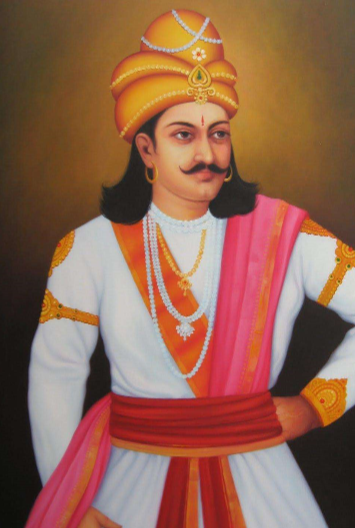
How long did ASHOKA reign?
(R. 272–231 BCE)
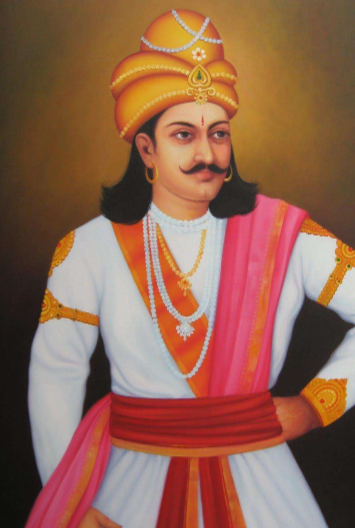
HE LEFT HIS IMPRINT ON HISTORY BY CONVERTING TO BUDDHISM AND SPREADING THE BUDDHA’S TEACHING THROUGHOUT AND BEYOND INDIA.
ASHOKA
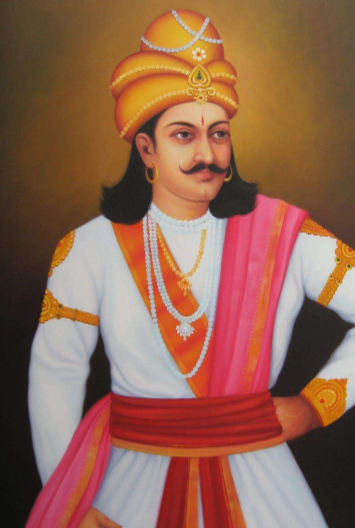
HE COMMISSIONED WORKS THAT REFLECT GREEK AND PERSIAN INFLUENCES AND ERECTED A SERIES OF PILLARS THROUGHOUT THE EMPIRE BEARING BUDDHIST TEACHINGS
ASHOKA
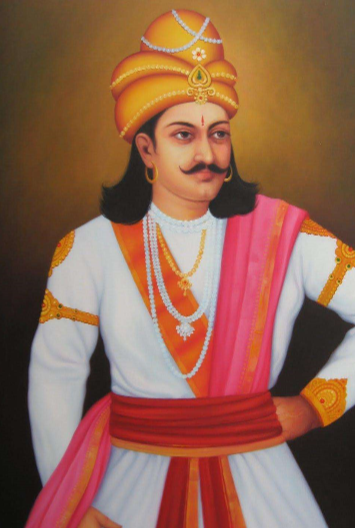
refers to the established locations bearing inscriptions of his edicts and messages, showcasing his commitment to promoting Buddhism in ancient India.
CAPITALS OF THE PILLARS OF ASHOKA
What were the 7 Capital Pillars of Ashoka?
- VAISHALILION
- SANKISSA ELEPHANT
- RAMPURVA ZEBU BULL
- LAURIA NANDANGARH LION
- RAMPURVA LION
- FOUR LIONS, ONCE POSSIBLY CROWNED BY A WHEEL
- THE LION CAPITAL OF ASHOKA
When did the Shunga Period begin?
(185-72 BCE)
After the fall of the Mauryan dynasty, what new dynasty was established?
Shunga Dynasty
The SHUNGA DYNASTY rule over where?
north central region of India
What kind of new monumental forms emerge in the SHUNGA DYNASTY?
Buddhist Art and Architecture
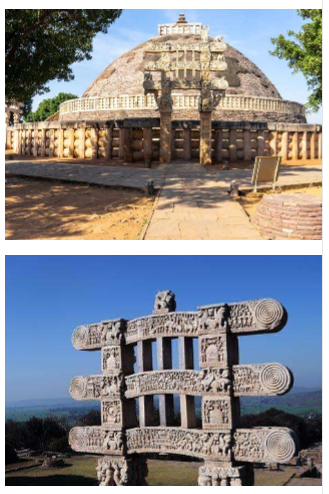
- started out as small burial mounds erected in sacred places for wealthy individuals and rulers in the Maurya Period.
Stupa
stone railing around the shoulder of the mound
Vedika
gates in the outer vedika around the stupa point to the cardinal points of the compass
Torana
a Buddhist shrine or prayer hall with a stupa at one end. In modern texts on Indian architecture, the term chaitya-griha is often used to denote an assembly or prayer hall that houses a stupa
Chaitya
(known as the Yuen-chin)
Kushan
migrated to Pakistan, Afghanistan and Northern India.
Kushans
They were nomadic Caucasians who came from southern Mongolia and northwestern China.
Kushan
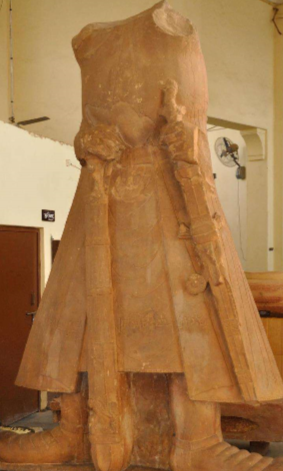
Indians trained in Roman styles worked in Gandhara, a region previously exposed to the arts of the Persians, Greeks, and Maurya emperors
Kushan Period
This period was named after Chandragupta I
Gupta Period (320-500 CE)
He was crowned in Pataliputra, the old Mauryan capital
Chandragupta I
This period covers the "classical period" of Indian art
Gupta Period (320-500 CE)
When did the Gupta period start?
(320-500 CE)
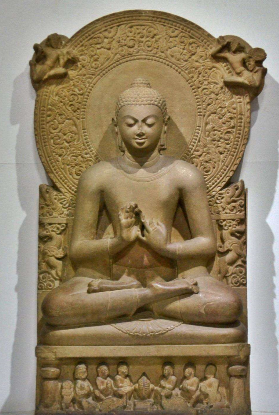
The single most famous Gupta image from Sarnath represents him as a spiritualized yogin ascetic with a large nimbus, seated crossed-legged on a Lion Throne.
Chandragupta I, Gupta Period (320-500 CE)
is said to be the art form that holds most traditions and oldest history among all the art forms in the world.
Indian Art
Their aspect of art is said to be highly realistic.
Indian Art
What are the 3 major Influences of Indian Art?
• Mohenjo-Daro
• Influence of Buddhism
• Reincarnation
To them art is one way of expressing the message of religion.
Indian Art
Art in India is_________ & __________
Sacred & Holy
Indian art enhances the intrinsic beauty of the materials used, applying_______________ & _______________
harmoniously vivid & contrasting colors
these are elements for humans to showcase feelings, eroticism, hope and love.
Primordial Elements
these elements on the other hand are part of the flow of component which they were inspired.
Flowers, elephants, birds and fish
Another important issue for them is the _____________ & _________________
Love between gods & their Loved Ones
this aspect is expressed with refined sensuality; Hugs, and body positions allude to carnal love but away from the grotesque.
Love between gods & their Loved Ones
They also represent divine battles again evil by their gods and mystics monstrous been surrender or destroyed by these divinities being.
Love between gods & their Loved Ones
What are the 5 Elements used in Indian Art?
1. Earth: Square
2. Water: Circle
3. Fire: Triangle
4. Air: Half Moon
5. Sky: Shape of a Droplet
An immense mausoleum of white marble, built in Agra between 1631 and 1648 by order of the Mughal emperor Shah Jahan in memory of his favorite wife
TAJ MAHAL
TAJ MAHAL
the jewel of Muslim art in India and one of the universally admired masterpieces of the world's heritage.
10 FOLK PAINTING FORMS THAT ARE STILL PRACTICED IN SELECT PARTS OF THE COUNTRY
1. MADHUBANI
2. MINIATURE PAINTINGS
3. PHAD
4. WARLI
5. GOND
6. KALAMKARI
7. TANJORE
8. CHERIYAL SCROLLS
9. KALIGHAT PAINTINGS
10.PATACHITRA
MADHUBANI
Also called Mithila art, it originated in the kingdom of Janak [in Nepal and in present-day Bihar
MADHUBANI
one of the most popular Indian folk arts, practiced mostly by women who wanted to be one with God
Characterized by geometric patterns, this art form wasn’t known to the outside world until the British discovered it after an earthquake in 1930’s
MADHUBANI
this earthquake that happened on the 1930’s resulted to the discovery of…….
Madhubani Paintings
It mirrored the work of _________ & _________,
Picasso and Miro
It mirrored the work of Picasso and Miro, according to William G. Archer. Most of these paintings or wall murals depict gods, flora and fauna.
MADHUBANI FOLK PAINTINGS
It mirrored the work of Picasso and Miro, according to ________________________
William G. Archer
Most of these paintings or wall murals depict _______, _________ and _________
gods, flora and fauna.
These paintings are characterized by its miniature size but intricate details and acute expressions.
MINIATURE PAINTINGS
Originating in the Mughal era, around 16th century
MINIATURE PAINTINGS
Originating in the Mughal era, around 16th century
MINIATURE PAINTINGS
these paintings are influenced by Persian styles, and flourished under Shah Jahan and Akbar’s rule.
MINIATURE PAINTINGS
these kind of folk paintings depict religious symbols and epics
MINIATURE PAINTINGS
These paintings stand out as humans are portrayed with large eyes, a pointed nose and a slim waist, and men are always seen with a turban
MINIATURE PAINTINGS
Originating in Rajasthan, is mainly a religious form of scroll painting depicting folk deities Pabuji or Devnarayan
PHAD
The 30- or 15 feet-long canvas or cloth that it is painted on is called
Phad
Vegetable colours and a running narrative of the lives and heroic deeds of deities characterize these paintings
PHAD
this is easily one of the oldest art forms of India
WARLI
Originated by the _______ ______ from the Western Ghat of India, in 2500 BCE,
Warli Tribes
It is mainly the use of circles, triangles and squares to form numerous shapes and depict daily life activities like fishing, hunting, festivals, dance and more
WARLI
What sets it apart is the human shape: a circle and two triangles.
All the paintings are done on a red ochre or dark background, while the shapes are white in color.
WARLI
Characterized by a sense of belonging with nature,
GOND
the _______ ________ in Madhya Pradesh created these bold, vibrantly colored paintings, depicting mainly flora and fauna
Gondi Tribe
The colors come from charcoal, cow dung, leaves and colored soil.
it is made up of dots and lines.
Today, these styles are imitated, but with acrylic paints.
GOND
Literally meaning ‘drawings with a pen’
KALAMKARI
Kalamkari is of two types of drawing in India:
(1) Machilipatnam, which originates from Machilipatnam in Andhra Pradesh and
(2) Srikalahasti, which originates from Chitoor in the same state
Today, Kalamkari art is used on __________ and ________ ______ and depicts anything from flora and fauna to epics such as Mahabharata or Ramayana
Sarees and Ethnic clothing
In KALAMKARI
the former refers to it _________ ________ form of art
the latter refers to it _______ ________ form of art with pen and fabric
block-printed form of art
free-flowing form of art
From down South, Thanjavur paintings originated in 1600 AD, encouraged by the Nayakas of Thanjavur
TANJORE
You can recognize a ____________ painting by its use of gold foil, which glitters and lends the painting a surreal look.
Thanjavur
These panel paintings on wooden planks depict devotion to gods, goddesses and saints.
TANJORE
Tanjore borrows its styles from __________and _________ art, as well as European styles.
Maratha and Deccani
Originating in present-day Telangana
CHERIYAL SCROLLS
CHERIYAL SCROLLS are practiced by who’s family?
Nakashi family
Cheriyal Scrolls are influenced by?
Kalamkari art
They resemble modern-day comic panels, with about 50 on each scroll
Cheriyal Scrolls
They use primary colors and a vivid imagination, a stark contrast from the traditional rigor of Tanjore or Mysore paintings
CHERIYAL SCROLLS
A recently discovered painting style, it originated in the 19th century Bengal, from Kalighat
KALIGHAT PAINTINGS
These paintings, on cloth and pattas, at first depicted Gods and Goddesses, but then took a turn towards social reform
KALIGHAT PAINTINGS
With cheap paper and paint colors, squirrel hair brushes and color pigments,
the art was characterized by flawless strokes, brushwork, and simple but bold drawings.
It sought to raise awareness about social conditions in its viewers – rich zamindars were depicted drinking wine with women, while priests were shown with ‘unchaste’ women and police being sloppy.
KALIGHAT PAINTINGS
A cloth-based scroll painting from Odisha and West Bengal, these paintings with sharp, angular bold lines depict epics, Gods and Goddesses.
PATACHITRA
Originating from the fifth century in religious hubs like Puri and Konark, around the same time that sculpturing began
PATACHITRA
What’s unique about this art form is that the dress style depicted in the paintings has heavy influence of the Mughal era.
PATACHITRA
'rang' meaning 'color' and 'aavalli' meaning 'row of colors'
RANGOLI
is an art form, originating in the Indian subcontinent,
in which patterns are created on the floor or the ground using materials such as colored rice, dry flour, colored sand or flower petals
RANGOLI