huntingtons disease, alzheimers
 Call Kai
 Learn
Learn Practice Test
 Spaced Repetition
 Match
Match Flashcards
 Knowt Play
1/43

There's no tags or description
Looks like no tags are added yet.
Name | Mastery | Learn | Test | Matching | Spaced | Call with Kai | Chat |
|---|
No analytics yet
Send a link to your students to track their progress
44 Terms
draw the map of early motor symptoms in huntingtons
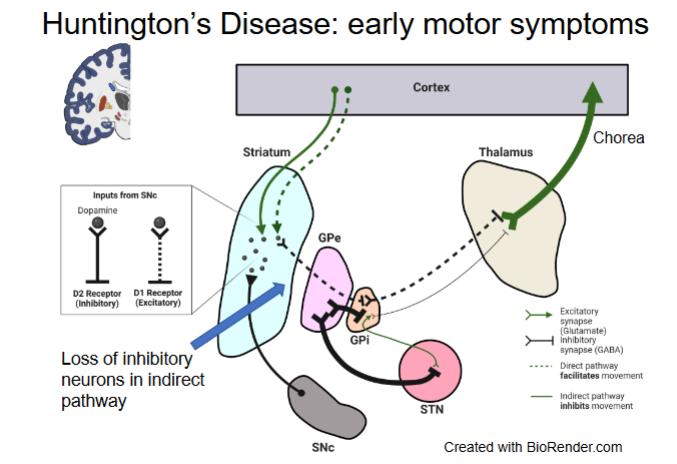
On the figure below, draw the four main dopamine pathways in the human brain. Label the pathways and the key structures within them (4 marks)
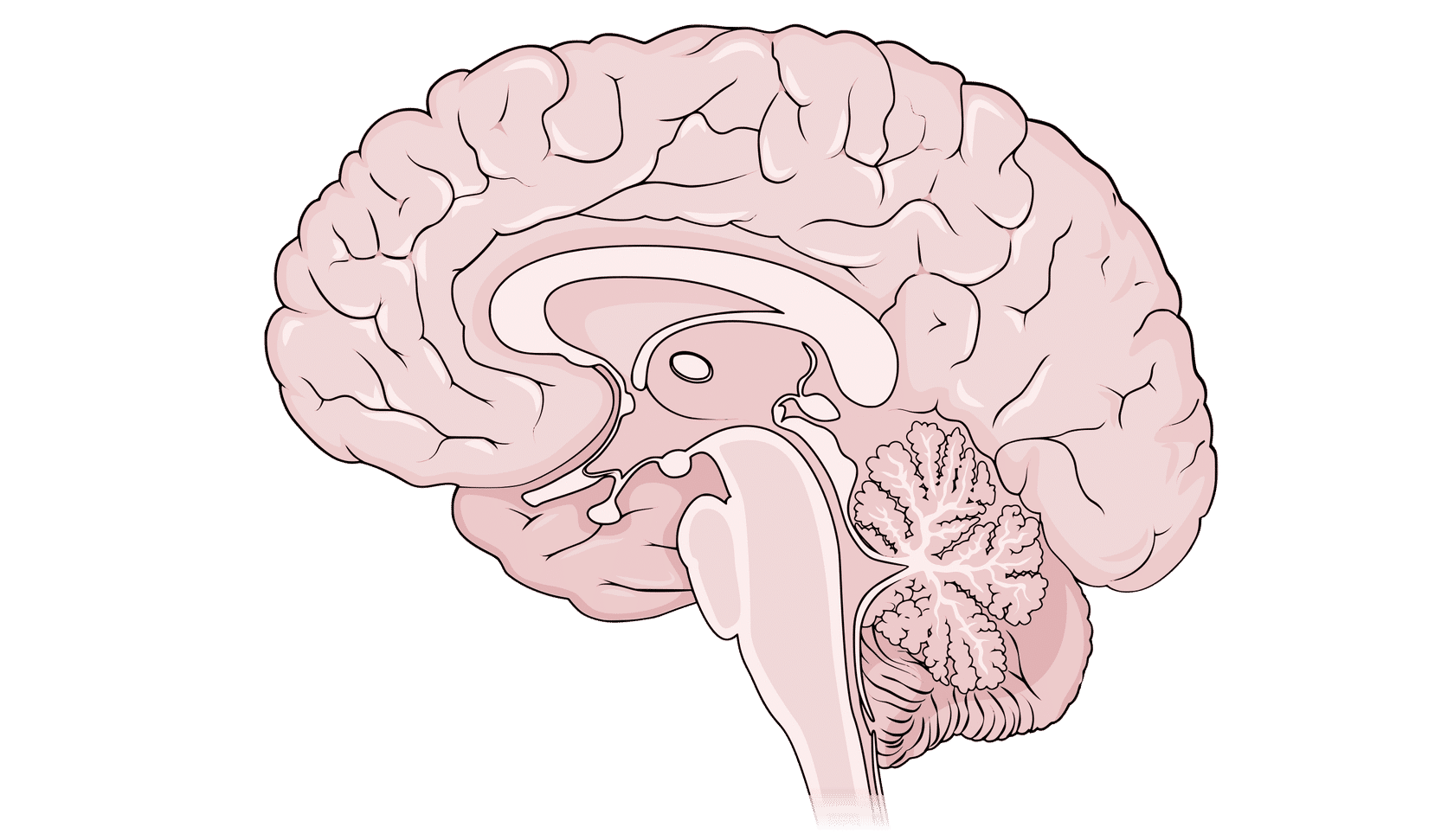
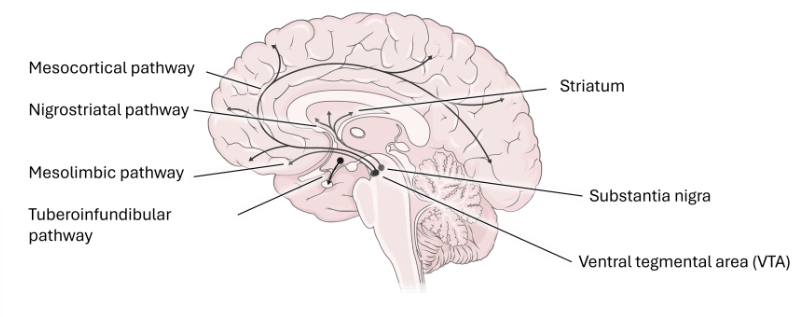
0.5 marks for name of pathway, 0.5 marks for correct origin and target
overview of huntingtons
autosomal dominant
progressive brain degeneration
symptoms start in middle life
symptoms of huntingtons
cognitive problems eg dementia
severe motor dysfunction
psychiatric problems
depression, anxiety, aggression, compulsive behaviour
aeitology of huntingtons
trinucleotide repeat disorder
depends on number of CAG (Q) repeats in huntingtin protein
the more repeats, the more severe disease
how many repeats for 50% risk of child to get huntingtons
>36
huntingtin protein
ubiquitous
function is unclear
mutant huntington seems to be toxic - mitochondrial dysfunction?
whole brain is affected
basal ganglia cells are more sensitive to the damage
indirect pathway MSNs lost first
early motor symptoms in hungtintons are caused by what
less inhibition of the thalamus by the indirect pathway
resulting in increased unwanted movement
gives rise to chorea symptoms of huntingtons
why does dopamine have reduced effect via indirect pathway?
loss of indirect pathway striatal GABAergic neurons
draw the map of late motor symptoms in huntington’s disease
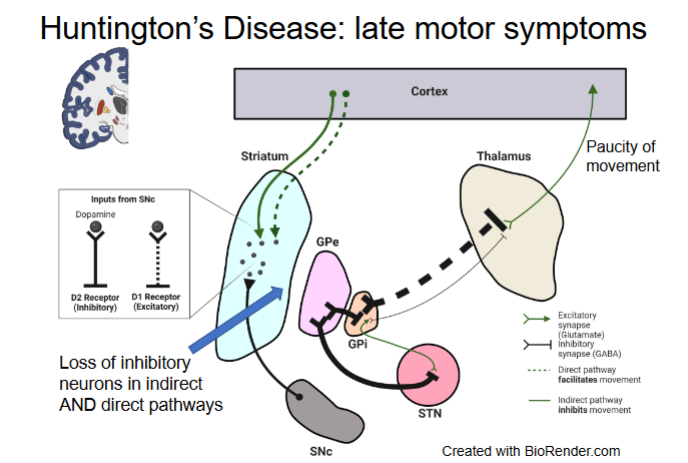
explain the late motor symptoms of huntingtons
MSN neurons are lost from direct and indirect pathway
inc inhibition of thalamus and paucity of movement
pharmacological treatments for huntingtons
tetrabenzanine (VMATi)
chloropromazine (dopamine antagonist)
haloperidol, olanapine, risperidone, quietapine (dopamine antagonists)
tetrabenazine
inhibitor of VMAT (vesicular monoamine uptake)
decreases dopamine levels
used in huntingtons
chloropromazine
dopamine antagonist
usually used as antipsychotic
haloperidol, olanzapine, risperidone and quietiapine
dopamine antagonists
antipsychotics
symptoms of alzheimers
loss of declarative memory
leads to cognitive functions - reasoning, language, calculation
psychosis with hallucinations and delusions
final stage sufferers of alzheimers characteristics
mute
incontinent
bed-ridden
epidemiology of alzheimers
prevalence increases with age
mean life expectancy is only 7 years
due to pneumonia, cardiovascular disease, wasting, dehydration
increase risk factors for alzheimers
female
older
obesity
poor cardiovascular health
smoking
genetic factors
head trauma
down syndrome
poor sleep pattern
what dec the risk of alzheimers
male
physical activity
social engagement
mediterranean diet
NSAID usage
early onset genetic risk factors for alzheimers
Amyloid precursor protein (> 30 different mutations)
Presenilin (γ secretase)
late onset of alzheimers genetic risk factors
Mostly sporadic (no identifiable cause)
Apolipoprotein E mutations increase risk
Heterozygotes 3-fold
Homozygotes 15 to 20-fold
down syndrome risk factor for alzheimers
Early onset Alzheimer’s (age 40)
Amyloid precursor protein gene is on chromosome 21
progression of disease and areas of brain affected
preclinical areas of brain affected
basal forebrain and hippocampus
mild to moderate areas affected
large area of basal forebrain
some areas of cortex
severe disease areas of brain affected
most of the brain
donzepil
AChE inhibitor in CNS
used for mild to moderate AD
Give 2 examples of AChE inhibitors which are used for mild to moderate alzheimer’s disease. [2 marks]
donzepil
rivastigmine
rivastigmine
CNS selective
reversible AChE inhibitor
mild to moderate AD
Give example of a drug for mild to moderate alzheimer’s disease which allosterically enhances nAChR?
galantamine
galantamine
CNS selective
allosterically enhances nAChR
mild to moderate AD
memantine
nmda antagonist
moderate to severe AD when AChEI are not tolerated
side effects : constipation, hypertension, headache, dizziness, drowsiness
What drug is considered for alzheimer’s disease when acetylcholinesterase inhibitors are not tolerated? Side effects may include constipation, hypertension and headache.
Memantine
Mechanism of memantine in AD
used in moderate and severe AD
NMDA antagonist
neuroprotective effect perhaps
improvements short term
antipsychotics used in AD
can cause premature death, used to control the difficult behaviour such as danger to self or others
target specifics behaviours such as danger to self or others
risperidone, haloperidol
which antipsychotics are licensed for Alzheimers Disease
risperidone
haloperidol
amyloid formation
amyloid precursor protein mutations inc beta secretase cleavage
presenilin mutations increase the rate of gamma secretase cleavage
this leads to alpha beta peptide which forms amyloid plaque
mutations for formations of amyloid plaques
Amyloid precursor protein mutations
presenilin mutations
drug targets for amyloid plaque formation
block cleavage - secretase inhibitors
MAb vs monomers
MAb vs oligomers
MAb vs plaques
Oligomerization inhibitors
biologics in trial against amyloid plaques
adacanumab
lecanemab
adacanumab
monoclonal antibody vs amyloid beta plaques
appeared to slow rate of decline
only in memory and thinking engage and only at higher doses
high cost
lecanemab trial
Ab vs soluble oligomer
phase iii
slows decline
some serious side effects
How is AD progression monitored on a biological level?
Aβ accumulation is an early event
glial activation follows Aβ
tau accumulation is best correlate of clinical decline and neuronal dysfunction.
tau as a target
initial studies on aggregation, kinases → failed
immunotherapies may have promise
neurofibrillary tangles
hyperphosphorylation leads to neurofibrillary tangles and mitochondrial damage, denoted by bursting mitochondrion
are tau and amyloid beta prion like?
yes
alternative targets for AD
Tau
initial studies on aggregation, kinases → failed
immunotherapies may have promise
Type 2 diabetes
insulin resistant may compromise brains repair function
GLP-1 agonist liraglutide works in animal models
may work in non diabetics too
neuroinflammation
epidemiological studies - NSAID
clinical trials show more harm than good, little effect