Chemical Equilibria
 Call Kai
 Learn
Learn Practice Test
 Spaced Repetition
 Match
Match Flashcards
 Knowt Play
1/33

There's no tags or description
Looks like no tags are added yet.
Name | Mastery | Learn | Test | Matching | Spaced | Call with Kai | Chat |
|---|
No analytics yet
Send a link to your students to track their progress
34 Terms
What do chemical reactants do instead of going to completion?
Products will undergo the reverse reaction and regenerate the reactants
What is dynamic equilibrium?
This is when both the forward and reverse reactions proceed at the same rate
Has the reaction stopped at dynamic equilibrium?
No
What is happening at dynamic equilibrium?
The concentrations of reactants and products remain constant but the reaction is just proceeding in both directions
What is this?

The ratio of the forward and reverse rate constants at a given temperature
If the forward rate constant increases, what happens to Kc? What about if it decreases?
Kc will decrease
What does an equilibrium expression look like?
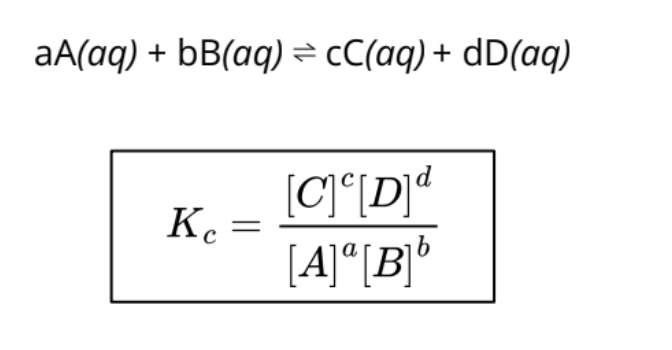
What are ommitted from equilirbium constant expressions? Why?
Solids and liquids
Their concentrations remain constant
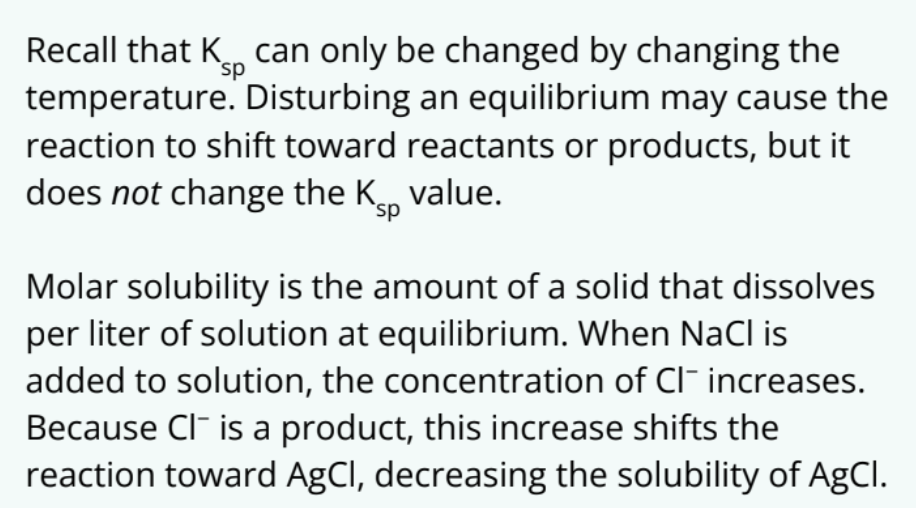
What can affect Kc?
Temperature ONLY
For reactions involving gases, equilibrium is expressed how?
In terms of partial pressures rather than concentrations
All of the following statements about equilibrium are correct EXCEPT one? Which is the EXCEPTION?
A. Adding a catalyst can shift the equilibrium
B. Increasing temperature can shift the equilibrium
C. Kc calculations use equilibrium molarities
D. Kc is used for reactions involving aqueous species
E. The value of Kc is unitless
A. Adding a catalyst can shift the equilibrium
What does it mean when K < 1?
The reaction favors reactants (the denominator is greator)
But ultimately it means that there will be more reactants than products at equilibrium
What does it mean when K > 1?
The reaction favors products (the numerator is greater)
But ultimately it means there will be more products than reactans at equilibrium
What does it mean when K = 1?
Reaction favors neither side. Both reactants and products will be equally present at equilibrium
What does the reaction quotient measure?
The value of the reactants and products before it reaches equilibrium
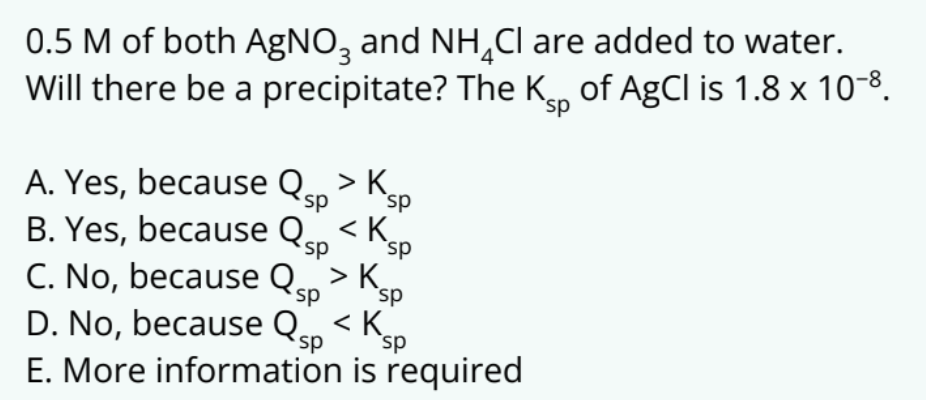
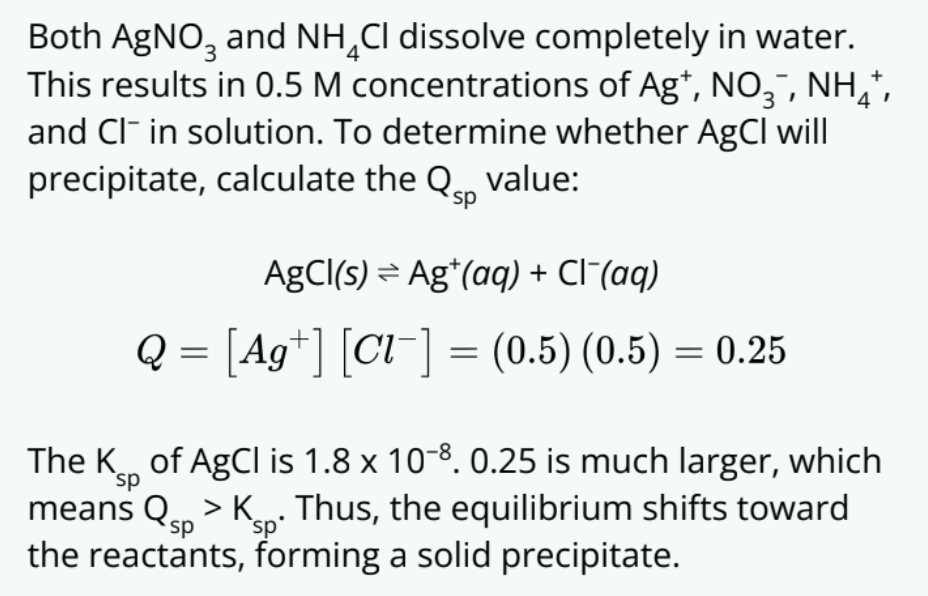
When Q > K , what does this mean?
The reaction have more products and fewer reactants than at equilibrium
To reach equilibrium, the reaction will shift left, toward the reactants
What does it mean when Q < K?
The reaction has fewer products and more reactants than at equilibrium
To reach equilibrium, the reaction will shift right, toward the products
What does it mean when Q = K?
The reaction is at equilibrium, and no net shift will happen
What does Le Chatelier’s principle talk about?
States that when a system at equilibrium is subjected to a change, the system will shift in a direction that counteracts the imposed change in order to restore a equilibrium
What are the three main ways of disturbing chemical equilibrium?
Adding or removing reactants or products
Changing the temperature
Changing the pressure or volume
In an exothermic reaction, what is happening with heat?
Heat is being released
So how is heat thought of in a reaction when it comes to exothermic reactions?
It is thought of as a product
If heat is added to an exothermic reaction, how will the reaction proceed?
To the left, increasing the reactants
If heat is removed, decreasing temperature, how will the reaction proceed?
It is the same as removing one of the products and the reaction will proceed to the right
To reduce the pressure, what does a reaction do?
It shifts toward the side with fewer total moles of gas
What if the system were expanded?
Shift to the side with the MOST moles of gas
What are strong electrolytes?
Strong acids, stong bases, and highly soluble ionic compounds
What are weak electrolytes?
Weak acid, weak bases, and sightly soluble ionic compounds
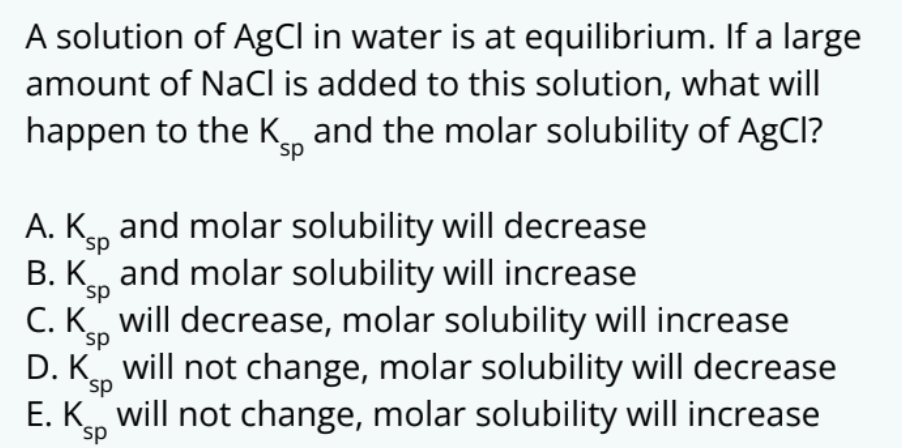
What does molar solubility display?
The amount of solute that dissolves per liter of solution at equilibrium
What is the formula for molar solubility?

What happens to ionic compounds with small Ksp values?
Less soluble and more likely to form precipitates
What happens to ionic compounds with larger Ksp values?
The are more soluble and are less likely to form precipitates