Bone Formation and Growth: Ossification, Remodeling, and Influencing Factors
 Call Kai
 Learn
Learn Practice Test
 Spaced Repetition
 Match
Match Flashcards
 Knowt Play
1/21

There's no tags or description
Looks like no tags are added yet.
Name | Mastery | Learn | Test | Matching | Spaced | Call with Kai | Chat |
|---|
No analytics yet
Send a link to your students to track their progress
22 Terms
What is ossification?
The process of bone formation.
In which situations does ossification occur?
During embryological and fetal development, when bones grow before adulthood, when bones remodel, and when fractures heal.
What are the two forms of ossification?
Intramembranous ossification and endochondral ossification.
When does intramembranous ossification begin?
During week 6 of embryonic development.
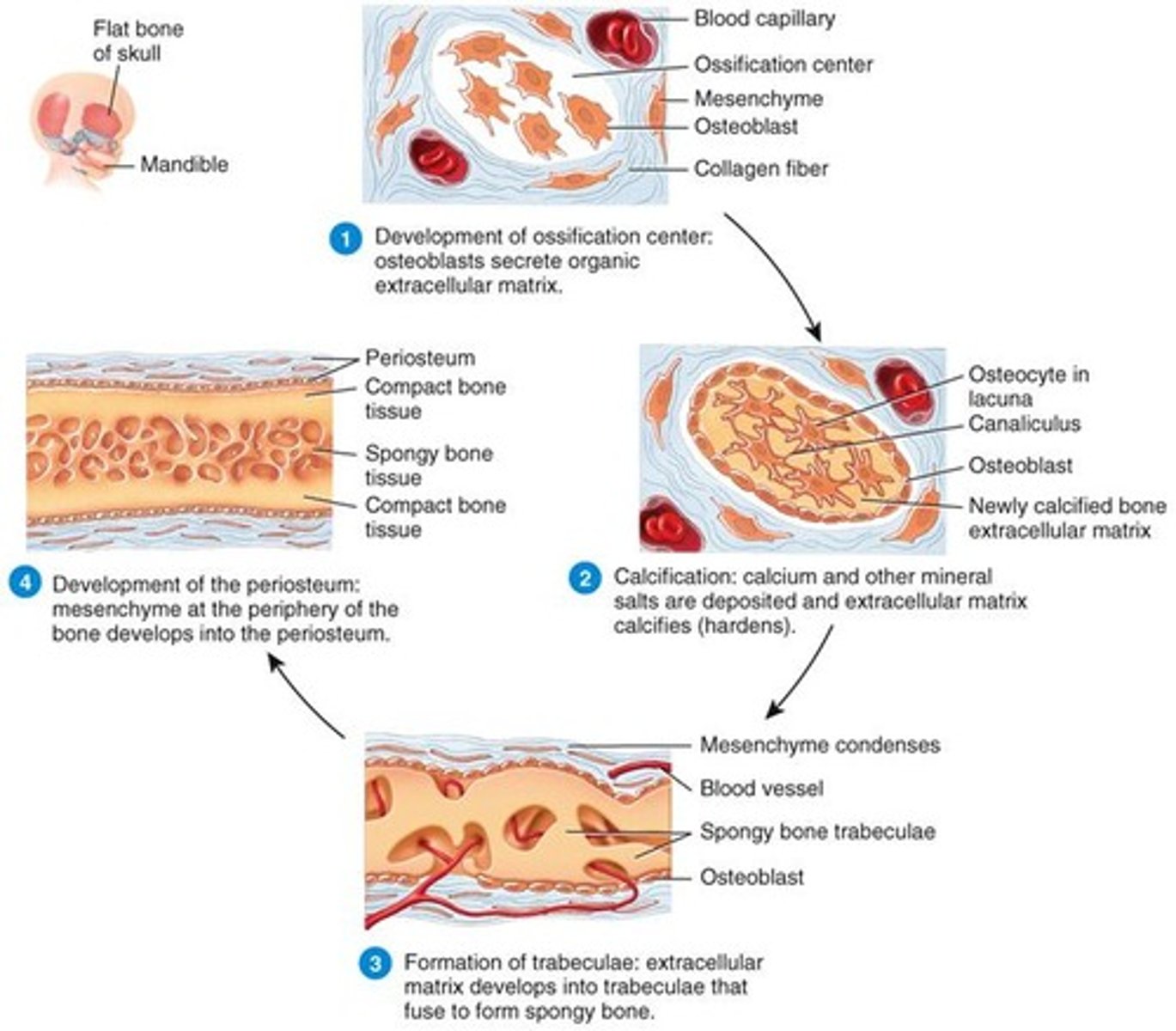
What bones are formed by intramembranous ossification?
Bones of the skull and face, mandible, and medial clavicle.
What is the process of endochondral ossification?
A cartilage model is replaced by bone.
When does endochondral ossification occur?
During embryonic and fetal development, and also during infancy, childhood, and adolescence in the epiphyseal plates of long bones.
What are the two ways bones grow after formation?
Interstitial growth (growth in length) and appositional growth (growth in thickness).
Where does interstitial growth occur?
At the epiphyseal plates of long bones.
What are the four zones of the epiphyseal plates?
Zone of resting cartilage, zone of proliferating cartilage, zone of hypertrophic cartilage, and zone of calcified cartilage.
What happens in the zone of proliferating cartilage?
Chondrocytes divide and secrete matrix, leading to interstitial growth.
What role do osteoclasts play in bone growth?
They resorb the matrix in the zone of calcified cartilage.
What is appositional growth?
Growth in thickness of bone occurring deep to the periosteum.
What initiates the formation of new osteons during appositional growth?
Osteoblasts form and deposit bone matrix as ridges that surround a periosteal blood vessel.
What is bone remodeling?
The ongoing replacement of old bone tissue with new bone tissue.
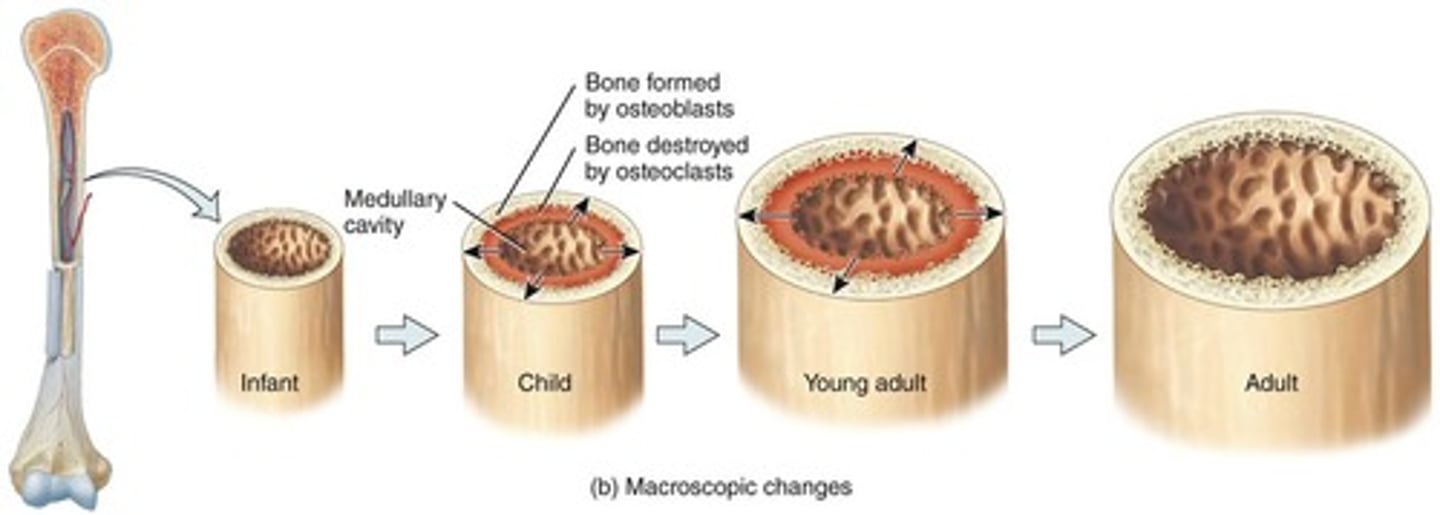
What balances bone remodeling?
Bone resorption (removal of minerals and collagen fibers by osteoclasts) and bone deposition (addition of minerals and collagen fibers by osteoblasts).
What factors affect bone growth and remodeling?
Minerals, vitamins, and hormones.
Which minerals are important for bone growth?
Calcium, phosphorus, magnesium, fluoride, and manganese.
What vitamin stimulates osteoblasts?
Vitamin A.
What is the role of Vitamin D in bone health?
It helps with calcium reabsorption.
Which hormones stimulate osteoblasts and promote cell division?
Growth hormone and insulin-like growth factors.
What role do sex hormones play in bone growth?
They promote the growth spurt and maintain bone density.