TEAS A&P Urinary System
 Call Kai
 Learn
Learn Practice Test
 Spaced Repetition
 Match
Match Flashcards
 Knowt Play
1/26

There's no tags or description
Looks like no tags are added yet.
Name | Mastery | Learn | Test | Matching | Spaced | Call with Kai | Chat |
|---|
No analytics yet
Send a link to your students to track their progress
27 Terms
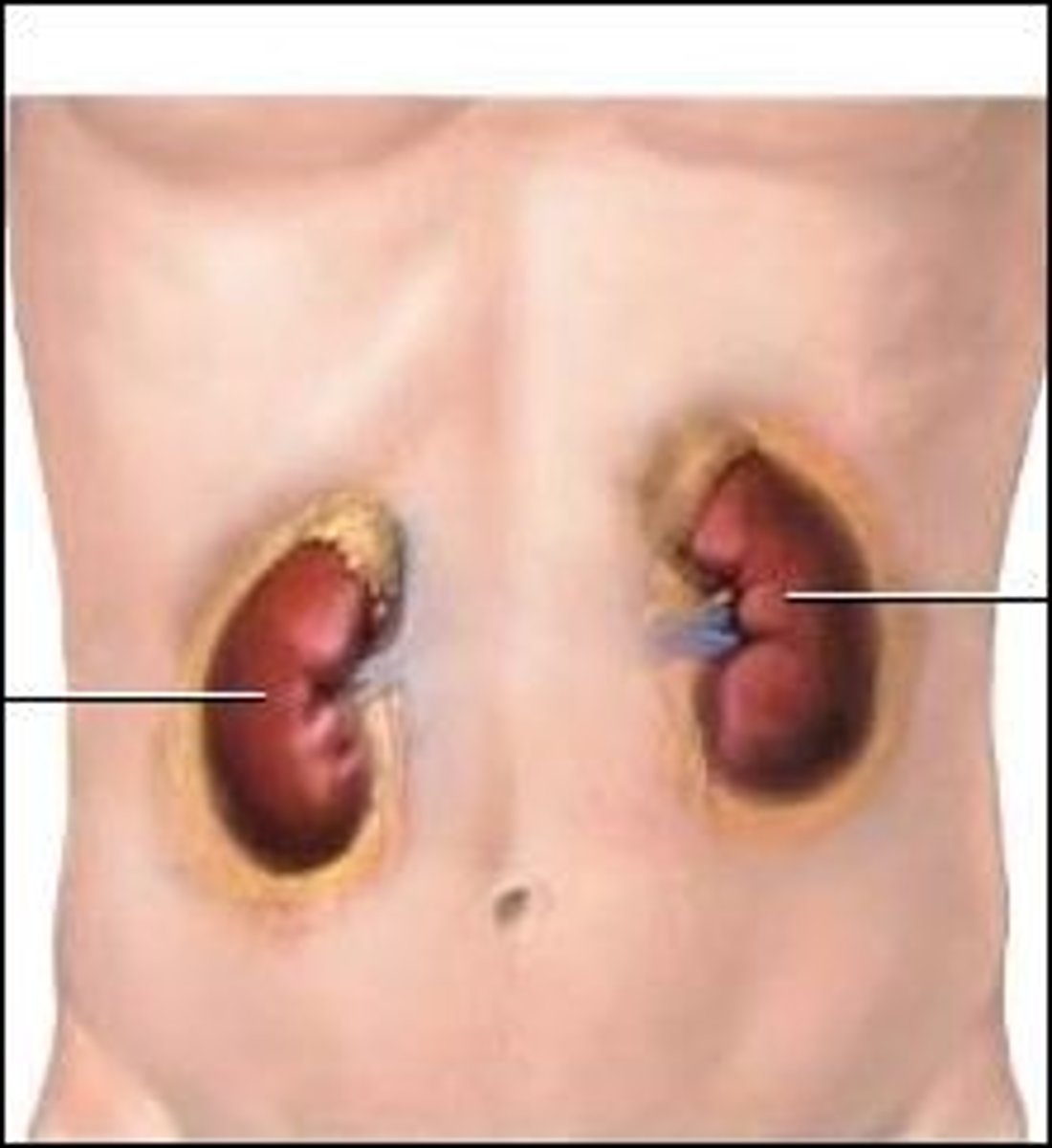
kidneys
-filter blood to remove waste products and excess water; also maintain fluid balance
-produce urine
-play a vital role in maintaining homeostasis in the circulatory system by filtering blood
urine
-fluid consisting of water, excess electrolytes, and metabolic wastes
-contains water and urea
-urine travels from the kidneys (where its produced) through the ureters to be stored in the bladder before being expelled from the body by the urethra
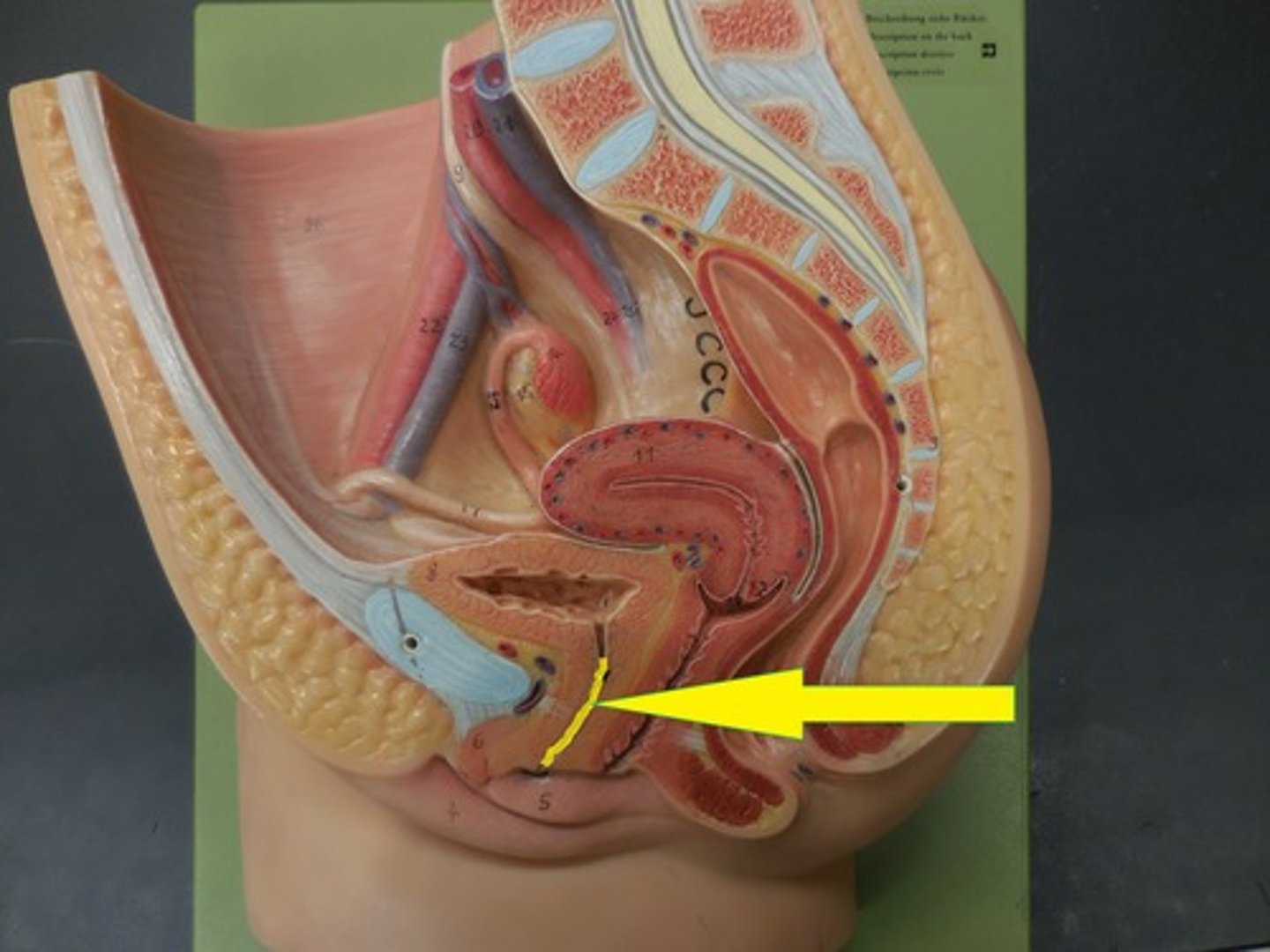
urethra
-the duct through which urine is expelled
-in males, the urethra travels through the penis and also carries semen as a part of the reproductive system
-in females, the urethra is shorter and located above the vaginal opening
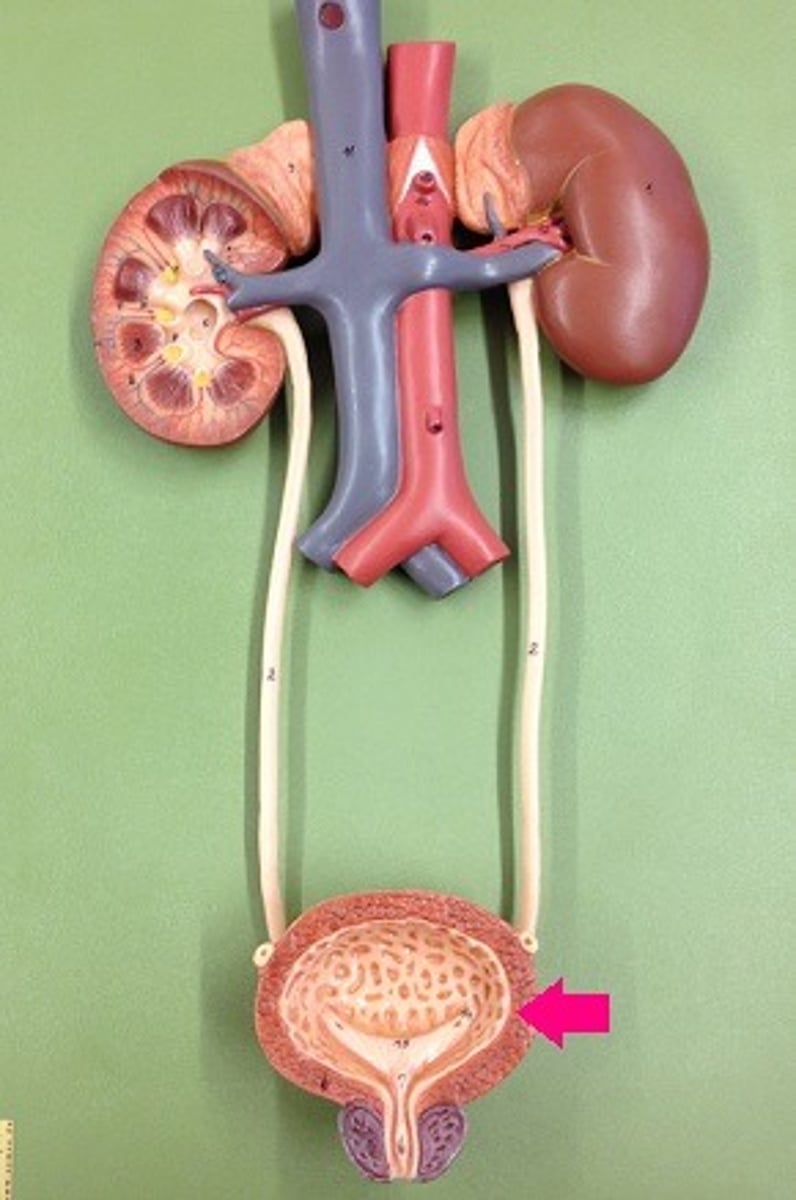
urinary bladder
-hollow muscular organ that stores urine
-urine is stored here before being expelled from the body
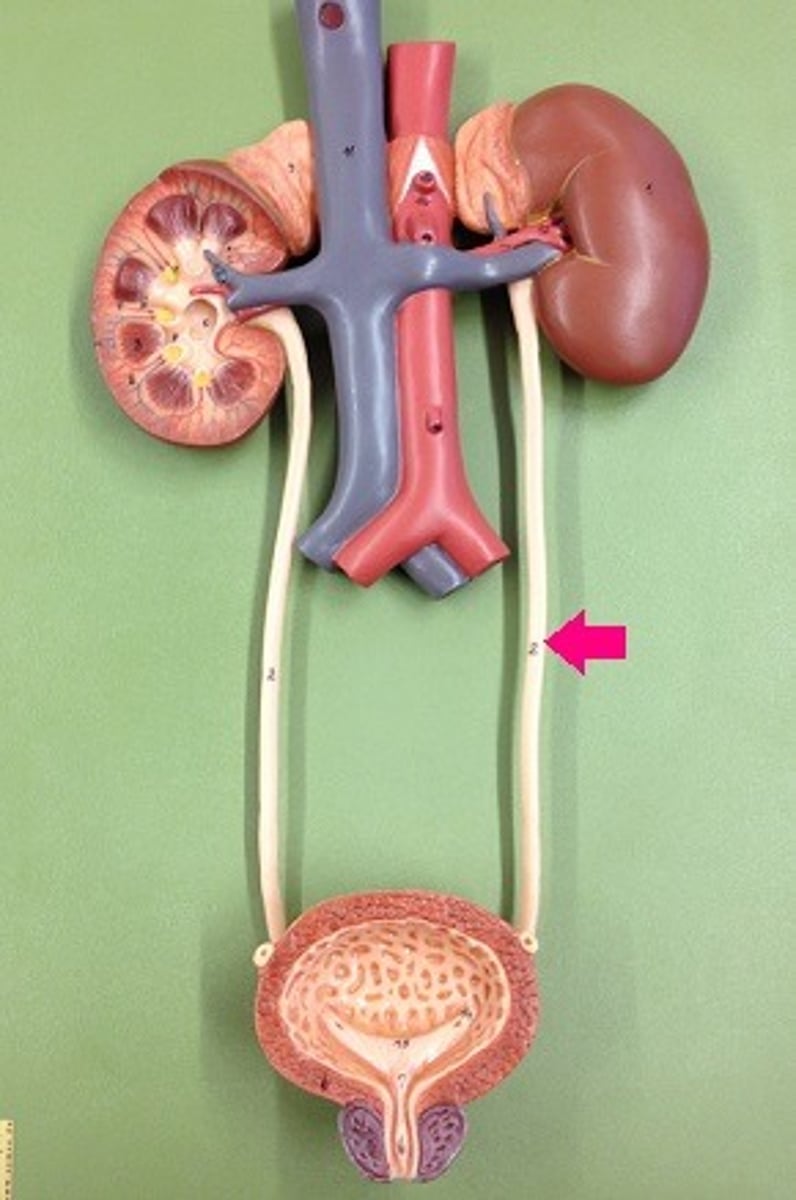
ureters
-ducts by which urine passes from the kidney to the bladder
-urine travels through the ureters to reach the urinary bladder
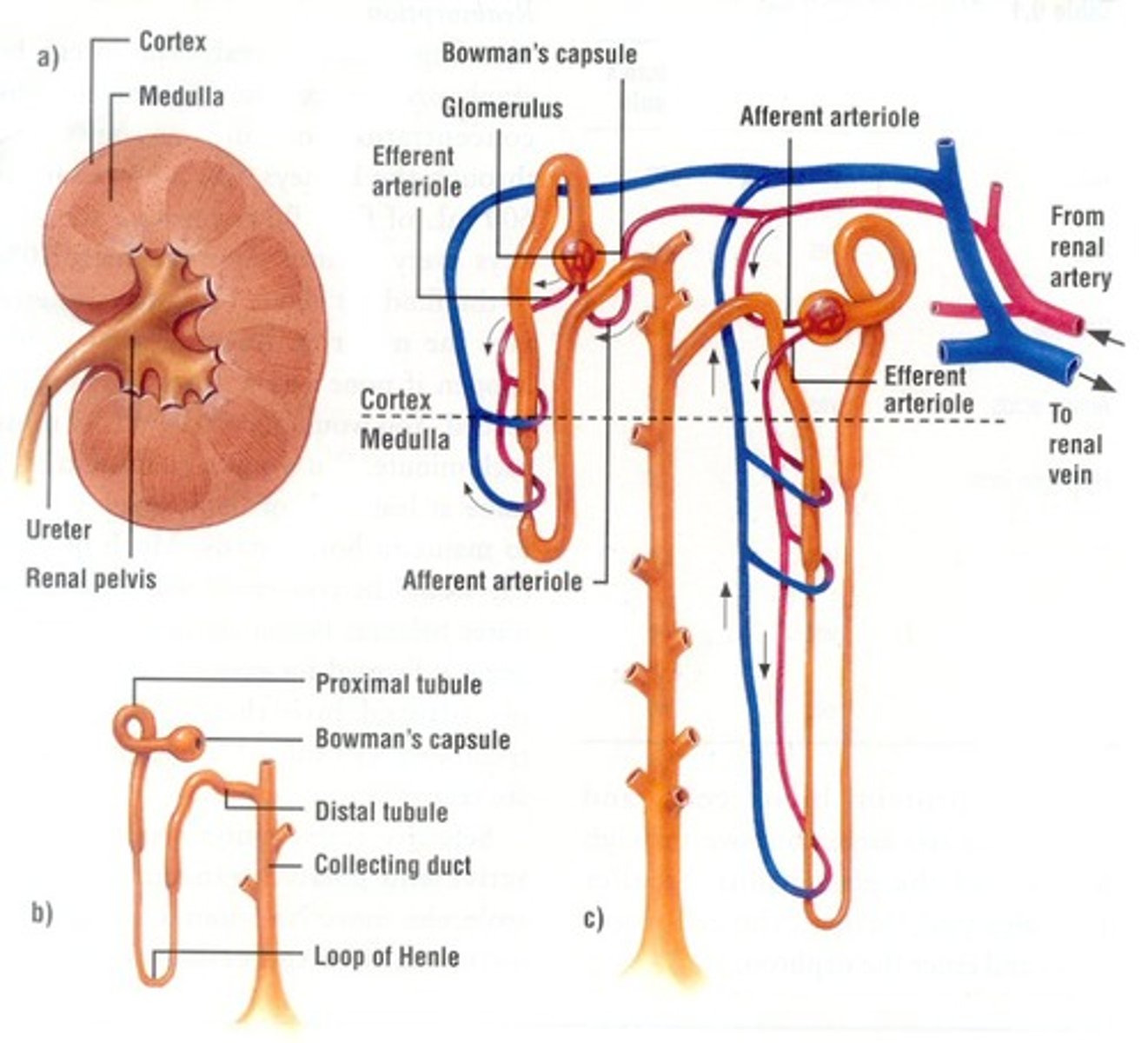
nephron
-the functional unit of the kidney
-where blood filtration and reabsorption occur
-waters, salts, and other essential components of blood are reabsorbed into the nephron, while excess water and toxins are filtered out
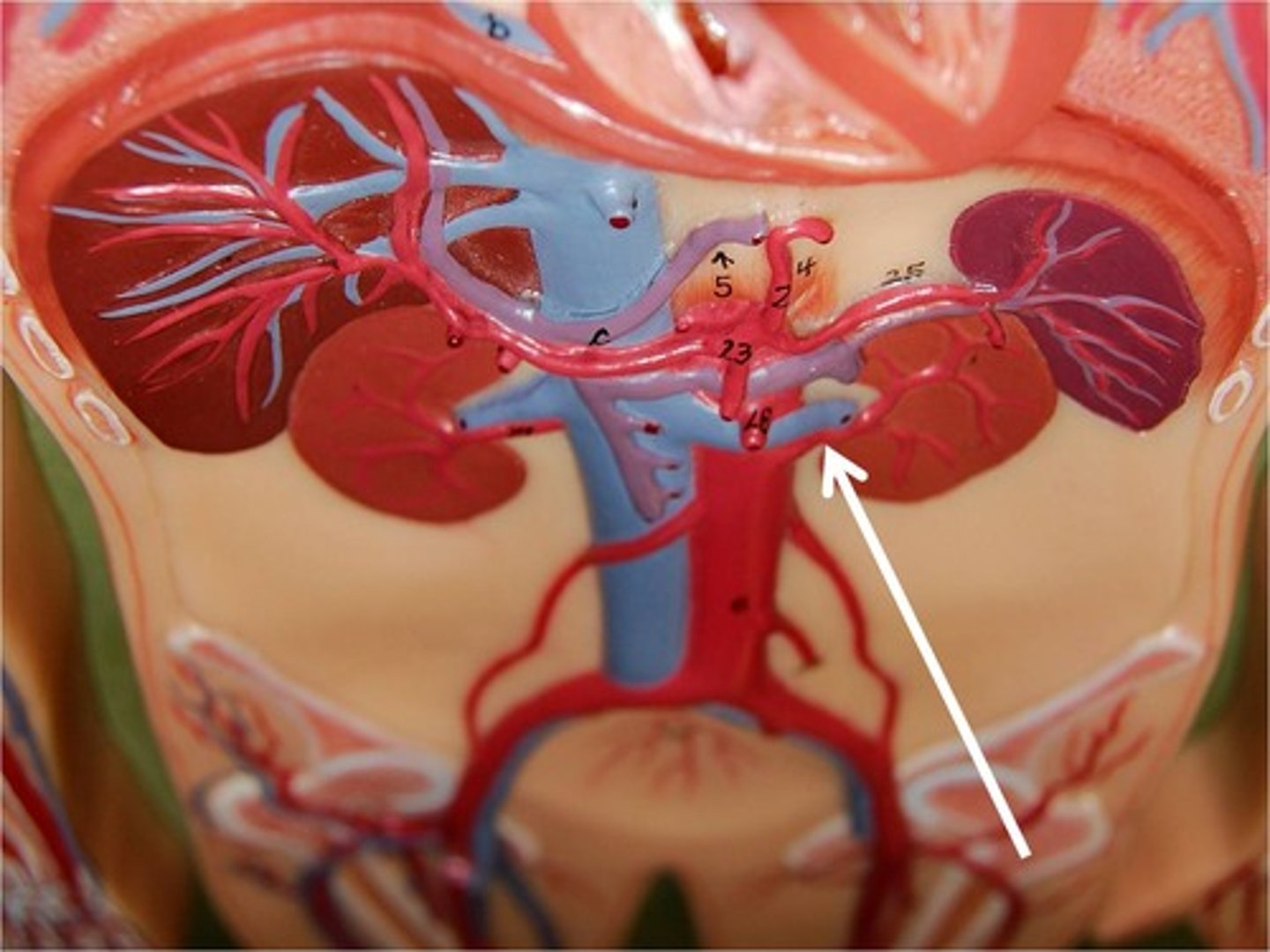
renal arteries
-carry blood from the heart to the kidneys via abdominal aorta
-kidneys receive blood from the right and left renal arteries!
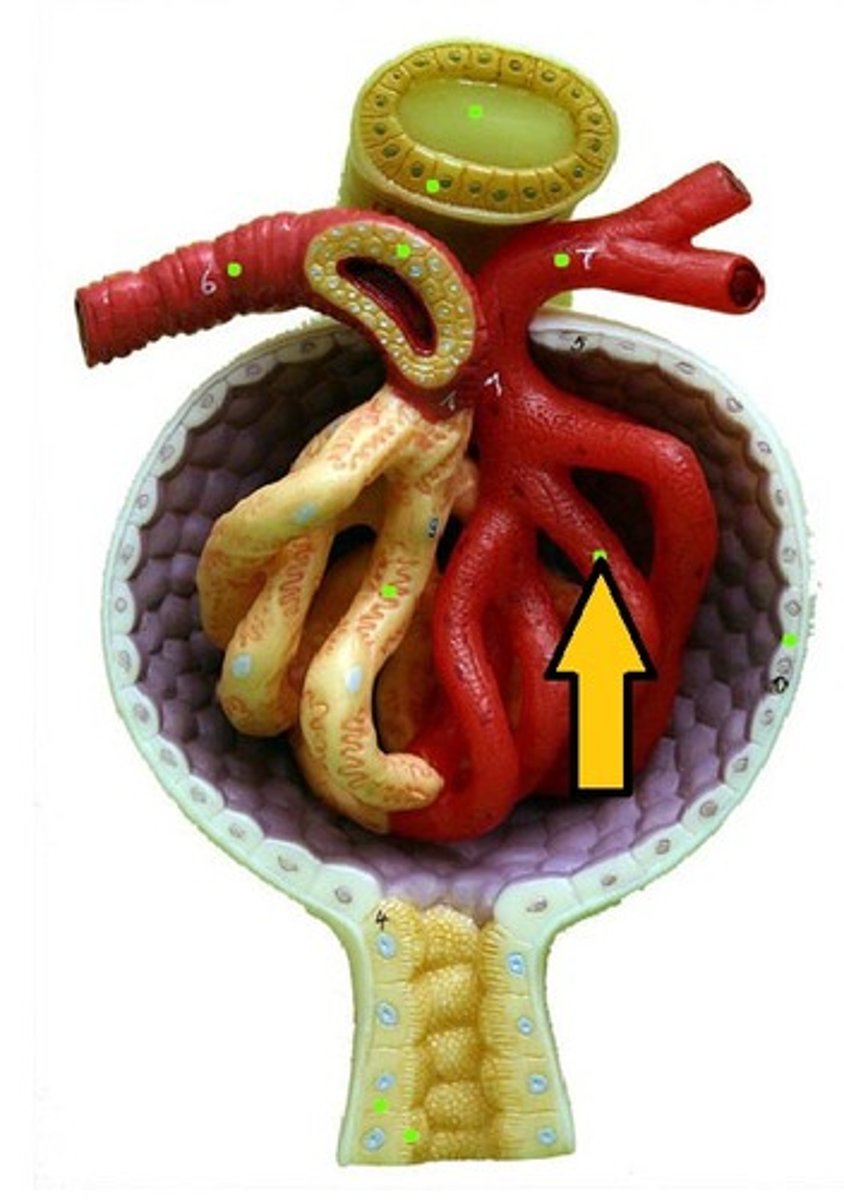
glomerulus
-renal arteries branch and feed into this
-network of capillaries that contains large pores, making it highly permeable to certain ions like sodium and potassium
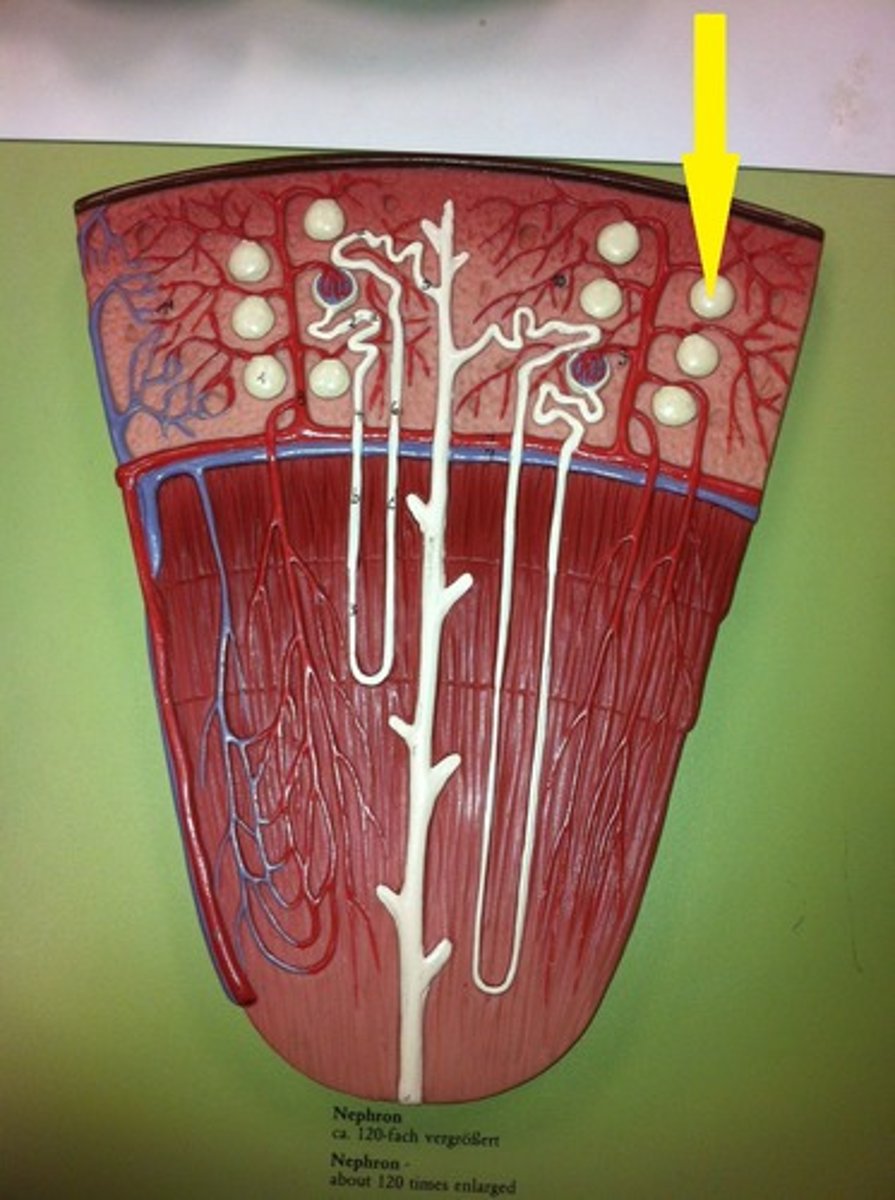
Bowman's capsule
-cup like end of the nephron that surrounds the glomerulus
-together, the Bowman's capsule and glomerulus make up the renal corpuscle (the filtration unit of the kidney)
renal corpuscle
-comprised of the Bowman's capsule and glomerulus
-filtration unit of the kidney
-blood filtering portion of the nephron
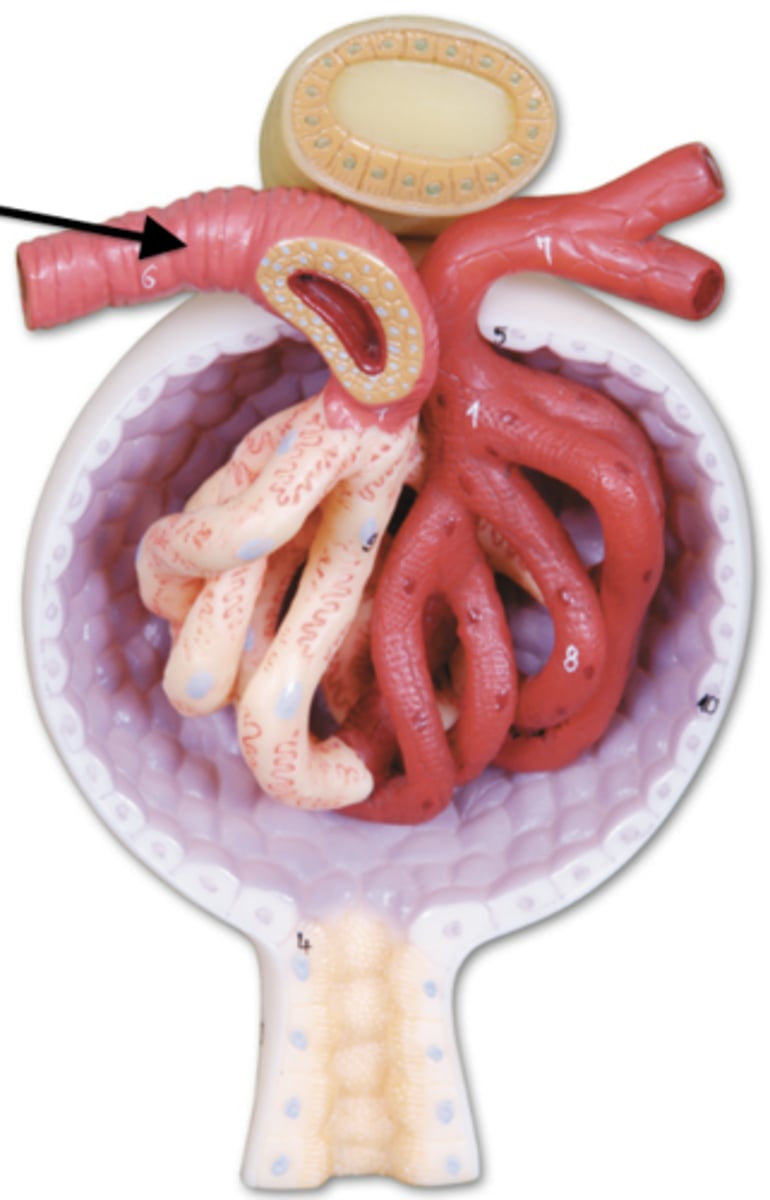
afferent arteriole
-the arteriole entering the glomerulus
-larger than the arteriole exiting the glomerulus, the efferent arteriole
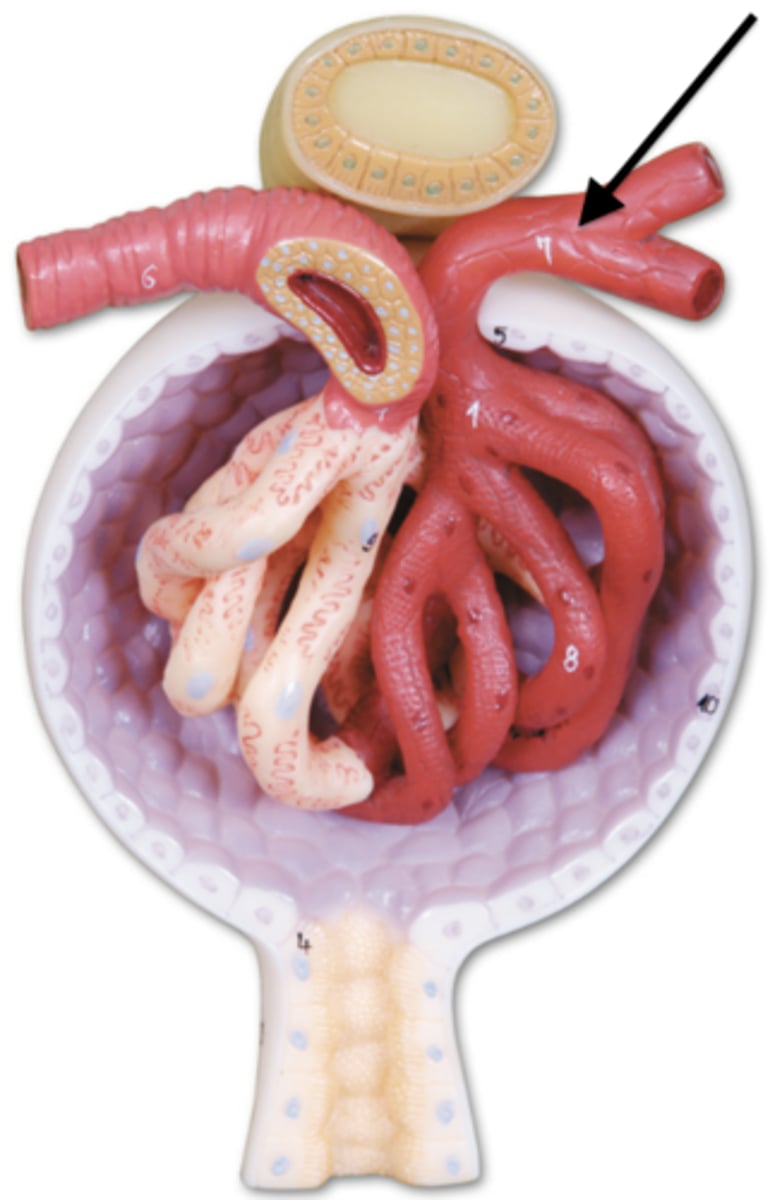
efferent arteriole
-the arteriole exiting the glomerulus
-the smaller diameter of the efferent arteriole resists a steady flow of blood, increasing he blood pressure w/i the glomerulus, which assists in "pushing" the blood components
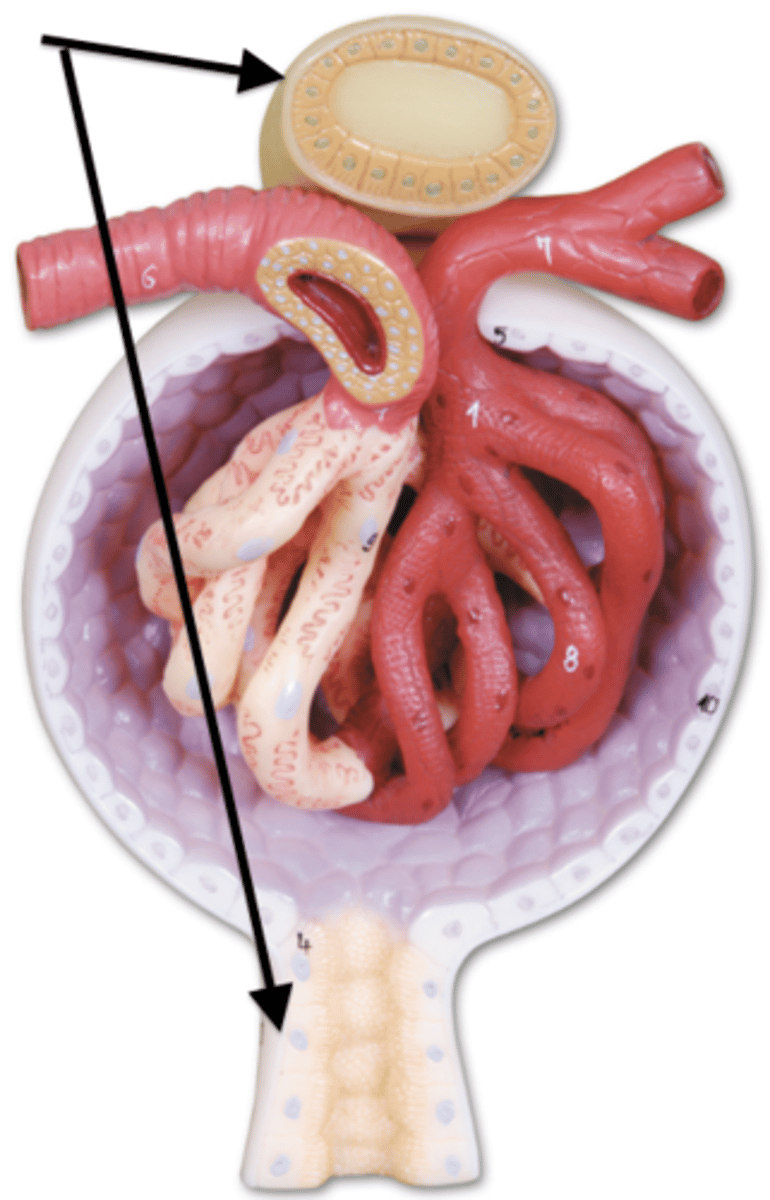
renal tubule
-the part of the nephron where blood components are reabsorbed into the bloodstream
-where salts, water, glucose, and amino acids are reabsorbed
urea
the metabolic waste product excreted in urine
hematuria
-blood in the urine
-can indicate damage to the urinary tract or kidney itself
solutes in urine
-presence of certain solutes in urine can indicate renal problems or help diagnose other conditions
-ex: glucose in the urine is a sign of diabetes; dark urine can indicate dehydration
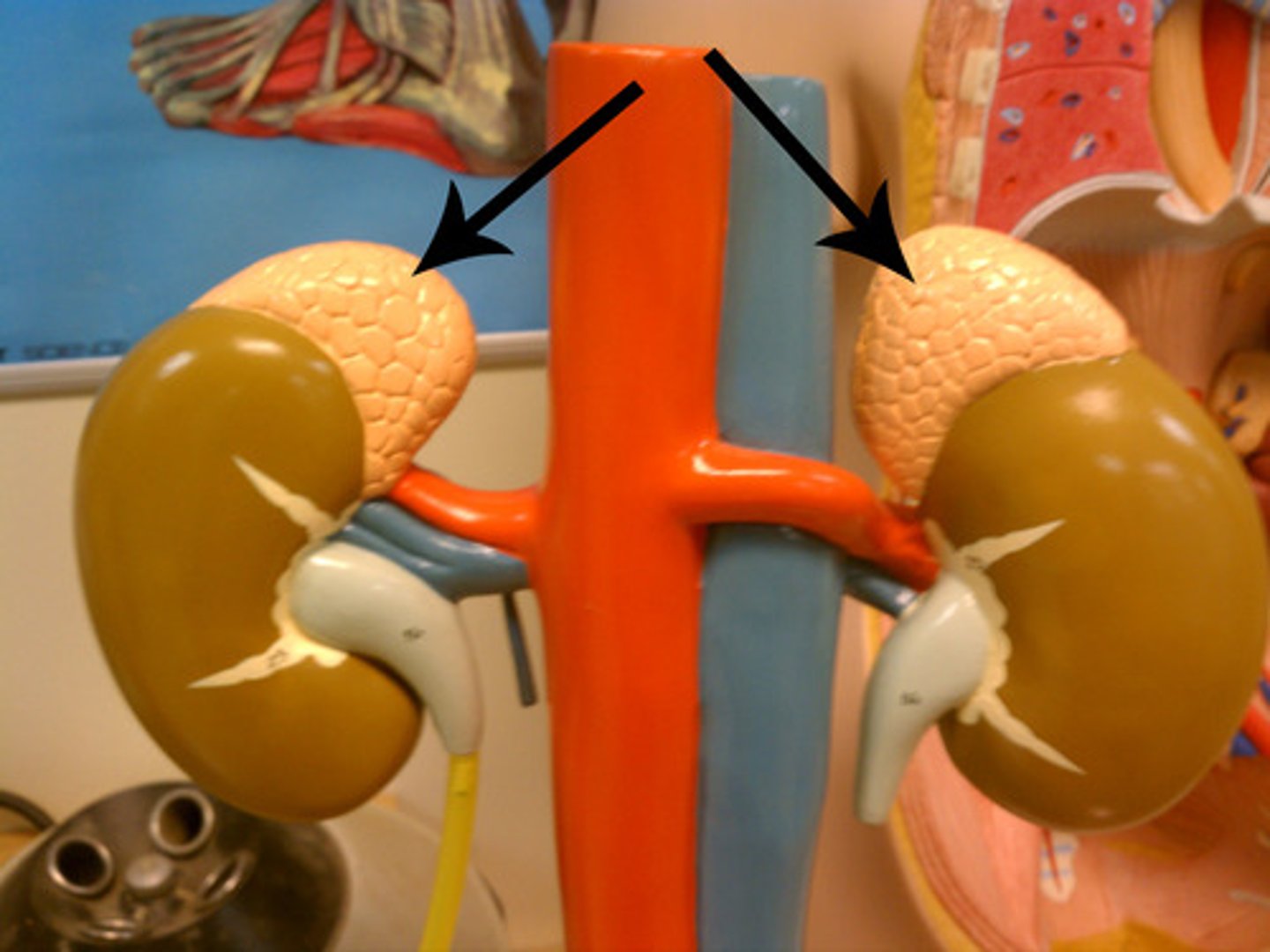
adrenal glands
-located at the tip of each kidney
-secrete several hormones, including those that regulate blood pressure and fluid balance
hormones
-react in response to decreased blood pressure to retain fluid balance
-regulate blood pressure and blood volume
-act on the kidneys to cause more or less water to be removed from the blood
renin
-trigger: decreased blood pressure
-function: this hormone activates angiotensin; increases secretion of ADH and aldosterone
-result: increases blood pressure
angiotensin
-trigger: activated by renin
-function: constricts arteriolar blood vessels; increases reabsorption of Na+ and Cl- and water retention in the renal tubules; stimulates ADH secretion
-result: increases blood pressure
antidiuretic hormone (ADH)
-also called vasopressin!
-trigger: decreased blood volume; increased osmolality of blood
-function: prevents fluid loss to maintain blood volume by increasing reabsorption of water from renal tubules and collecting ducts
-result: increases blood volume
aldosterone
-trigger: decreased blood pressure; increased K+ levels
-function: increases reabsorption of Na+ from the renal tubules, causing more water to be reabsorbed via osmosis
-result: increased blood pressure
Following the release of antidiuretic hormone (ADH), which of the following changes would occur?
Increased sensation of thirst; nephron becomes more permeable to water; urine output decreases
**Recall that ADH is released from the pituitary gland in response to decreased blood volume or increased blood concentration. The role of ADH is to regulate fluid balance in the body. Predict that the answer will reflect a conservation of body fluid to increase blood volume.
The presence of glucose in a client's urine may suggest a problem with which of the following organs?
Kidneys
A presence of which of the following substances in urine would suggest a breakdown of the renal corpuscle?
Red blood cells
Oliguria, the condition of low urine output, would be caused by which of the following?
-Dehydration
-Kidney stones
-Urinary tract infection
Which of the following explains why an enlarged prostate often results in difficulty urinating?
A swollen prostate can press against the urethra, obstructing the flow of urine from the bladder.