NJ Coastal ID 101
 Call Kai
 Learn
Learn Practice Test
 Spaced Repetition
 Match
Match Flashcards
 Knowt Play
1/19

There's no tags or description
Looks like no tags are added yet.
Name | Mastery | Learn | Test | Matching | Spaced | Call with Kai | Chat |
|---|
No analytics yet
Send a link to your students to track their progress
20 Terms

Atlantic Silverside
Menidia menidia
👀 LOOK FOR:
• Very slender, elongated body
• Large eye
• Pale/white belly
• Distinct bright silver stripe along the side, edged in darker color
• Small, upturned mouth
🌊 HABITAT:
Shallow coastal bays, creeks and estuaries; salt to brackish water.
📏 SIZE:
Usually small; up to about 6 inches.
🧠 REMEMBER:
Silver stripe + skinny body + shallow water = silverside
🎣 NJ CONNECTION:
Also called spearing and commonly used as bait. It’s an important food source for larger fish and birds.
⚠ LOOK-ALIKE:
Bay anchovy. The silverside has a smaller mouth.

Mummichog
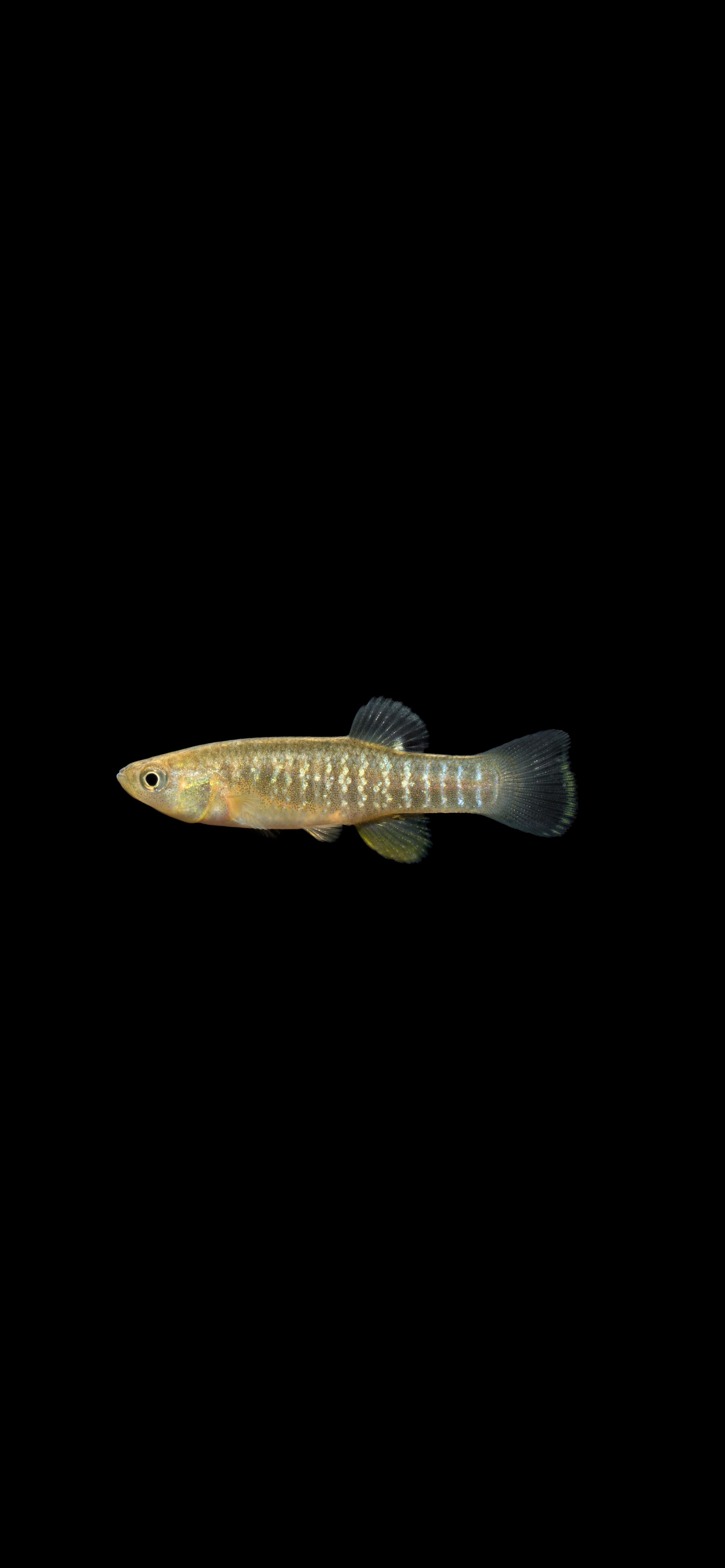
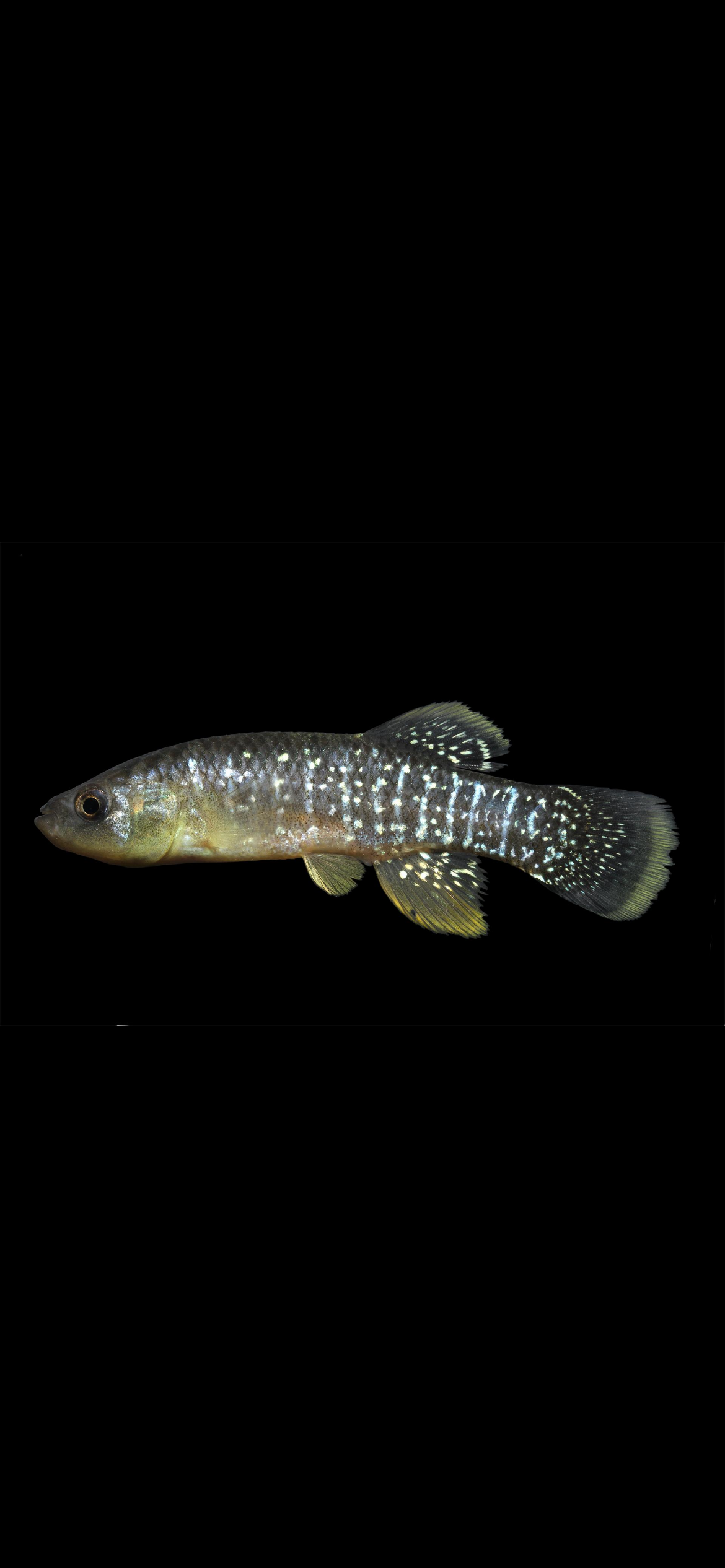
Mummichog
Fundulus heteroclitus
👀 LOOK FOR:
• Chunky little fish with a blunt-ish head
• Small mouth near the top/front of the head
• Olive, brown, gray, or yellowish body
• Often has dark vertical bars/blotches along its sides
• Males can become much more colorful during breeding season
🌊 HABITAT:
Salt marshes, tidal creeks, estuaries and shallow coastal water. They tolerate a surprisingly wide range of salinity.
🧠 REMEMBER:
Mummichog = the little salt-marsh killifish.
📍 YOUR PLACES:
This is one I particularly want you watching for around the Mullica River/Great Bay and Delaware Bay marshes.
⚠ LOOK-ALIKE:
Other killifishes. Don’t worry about separating every NJ killifish yet—we’re first training your brain to recognize the mummichog shape + habitat.

Bay Anchovy
Anchoa mitchilli
👀 LOOK FOR:
• Very slender, translucent/silvery body
• Large mouth that extends noticeably backward toward/behind the eye
• Silver stripe along the side
• Often seen schooling
🌊 HABITAT:
Shallow bays, estuaries, tidal creeks and coastal waters.
🧠 REMEMBER:
Big mouth = anchovy.
⚠ LOOK-ALIKE:
Atlantic silverside.
Both are skinny, silvery fish with a stripe—but the anchovy has the much larger mouth.
📍 YOUR PLACES:
Mullica River/Great Bay, Delaware Bay and other NJ estuaries.

Atlantic Menhaden
Brevoortia tyrannus
👀 LOOK FOR:
• Deep-bodied, laterally compressed fish
• Silvery sides
• Distinct dark spot just behind the upper edge of the gill cover
• Scales give the body a somewhat reflective, metallic look
• Usually encountered in large schools
🌊 HABITAT:
Coastal waters, bays and estuaries. Young menhaden commonly use estuaries and nearshore waters.
🧠 REMEMBER:
Big silver school + ONE dark shoulder spot = menhaden.
🐟 WHY YOU SHOULD CARE:
Menhaden are a major forage fish—they’re important food for larger predatory fish, seabirds and marine mammals. They’re also an important NJ fishery.
📍 YOUR PLACES:
Great Bay/Mullica, Delaware Bay and coastal ocean.
⚠ LOOK-ALIKE:
Other small silvery schooling fish. The dark shoulder spot is your big clue.


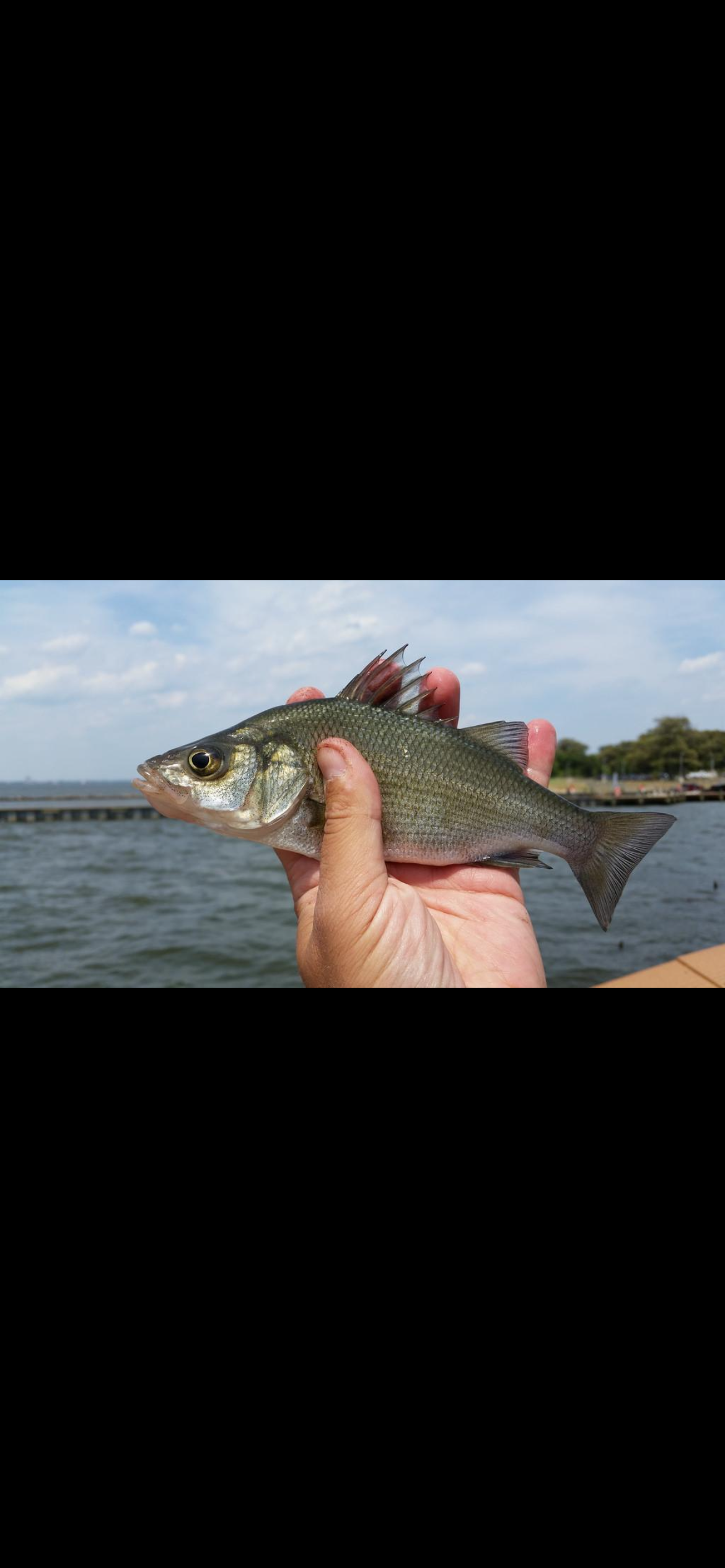
White Perch
Morone americana
👀 LOOK FOR:
• Deep, somewhat chunky silver body
• Silvery-gray sides with a darker back
• Two dorsal fins
• Slightly rounded body profile
• Usually no obvious stripes
🌊 HABITAT:
Estuaries, bays, tidal rivers and freshwater. They can tolerate a wide range of salinities.
🧠 REMEMBER:
Silver + chunky + no stripes = white perch.
📍 YOUR PLACES:
Particularly relevant to the Delaware Bay and tidal rivers, but you can encounter them well upstream too.
🎣 WHY YOU SHOULD CARE:
They’re an important recreational fish and a great example of the connection between NJ’s freshwater and coastal systems.
⚠ LOOK-ALIKE:
Striped bass. Both are in the Morone family. Striped bass has obvious dark horizontal stripes; white perch generally doesn’t.
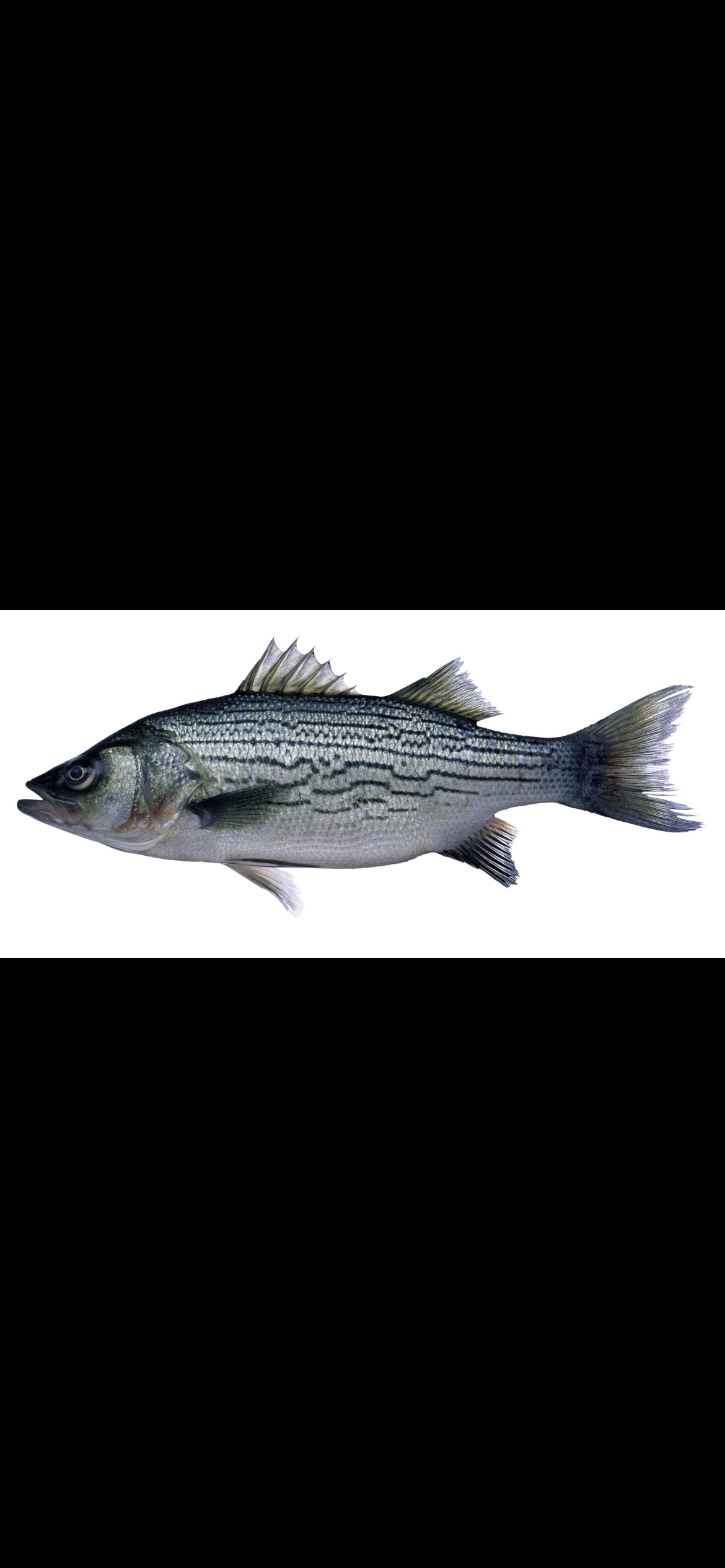
Striped Bass
Morone saxatilis
👀 LOOK FOR:
• Long, streamlined silver body
• 7–8 dark horizontal stripes running along the sides
• Two dorsal fins
• Large mouth
• Darker back, silvery sides
🧠 REMEMBER:
Silver fish + unmistakable horizontal stripes = STRIPED BASS.
🌊 HABITAT:
Coastal ocean, bays, estuaries and rivers. They migrate between freshwater and saltwater during their lives.
📍 YOUR PLACES:
Mullica River, Great Bay, Delaware Bay and the Atlantic coast.
🎣 WHY YOU HEAR ABOUT IT:
One of NJ’s major recreational fish—and a species you’ll encounter constantly in the fishing world.
⚠ LOOK-ALIKE:
White perch. They’re related, but white perch lack the bold horizontal stripes.

Summer flounder / fluke
Summer Flounder (Fluke) — Paralichthys dentatus
LOOK FOR:
Flat, oval body — basically a fish pancake 😆
Both eyes are on the same side of the head
Usually brown/olive on the eyed side with distinct dark spots
Big mouth with sharp teeth
Body is oriented with the eyed side facing upward
HABITAT:
Bays, estuaries, inlets and coastal ocean. Young fluke commonly use shallow estuarine habitat before moving into deeper water.
REMEMBER:
FLUKE = flat + both eyes on one side + spots.
NJ CONNECTION:
One of the big recreational fish you’ll hear about constantly in NJ — especially around bays, inlets and the nearshore ocean.
LOOK-ALIKE:
Winter flounder is another NJ flatfish, but fluke has its eyes and mouth positioned differently and tends to have a larger mouth with prominent teeth.
WHY YOU CARE:
This is an important one for your eventual diving/spearfishing + coastal ID brain. You want to be able to recognize the silhouette immediately rather than thinking, “uhhh… flat fish?” 😂

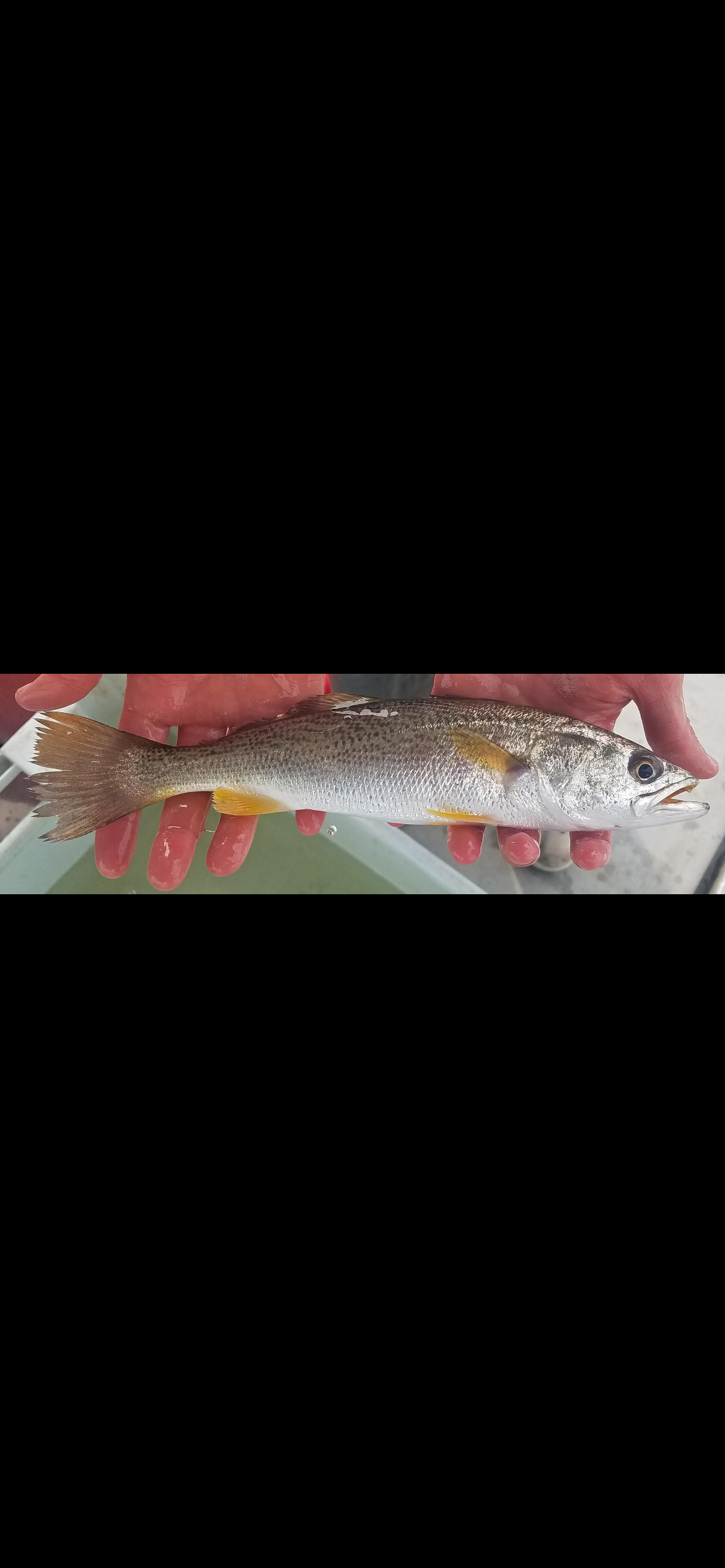
Weakfish — Cynoscion regalis
LOOK FOR:
Long, streamlined body
Silvery sides with a darker, often olive/blue-gray back
Large mouth with a pointed head
Distinct dark spots scattered across the upper sides/back
Soft-looking, elongated body rather than the chunky shape of a perch
HABITAT:
Bays, estuaries, inlets and coastal ocean waters. They use estuaries extensively, especially during warmer months.
REMEMBER:
WEAKFISH = silver, slender, spotted, BIG mouth.
NJ CONNECTION:
A classic NJ estuary/coastal species—and one you’ll encounter in discussions about recreational fishing and fish populations.
LOOK-ALIKE:
Sea trout is an old/common name for weakfish, so if you hear someone say “sea trout,” they’re talking about this fish.
WHY YOU CARE:
This is a great species for your eventual Great Bay/Mullica + open-ocean ID because it helps you start recognizing the difference between several of our long, silvery predatory fish.

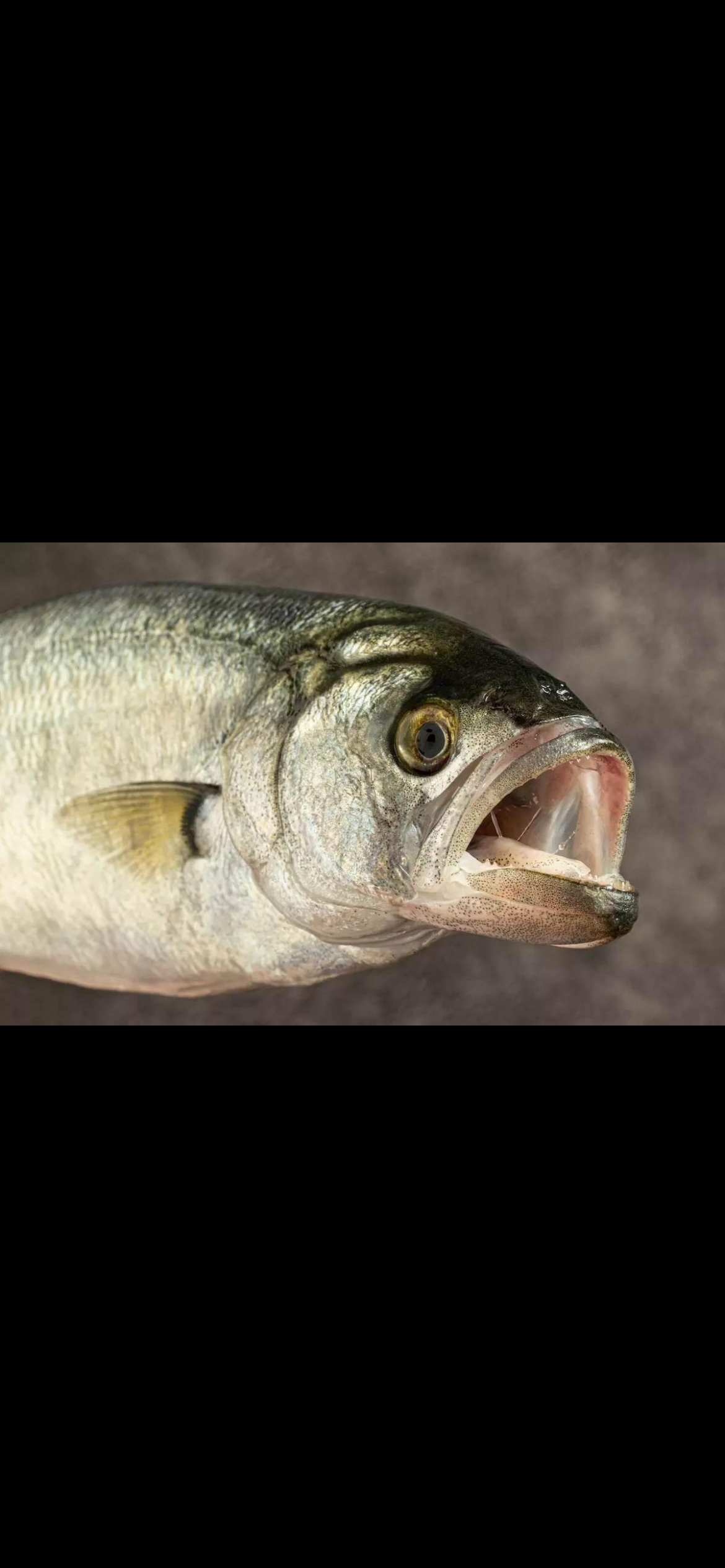
Bluefish — Pomatomus saltatrix
LOOK FOR:
Long, streamlined, powerful-looking body
Blue-green or blue-gray back fading to silvery sides
Large mouth packed with sharp, pointed teeth 😬
Forked tail
One dorsal fin set farther back along the body
Usually no obvious spots or stripes
HABITAT:
Coastal ocean, bays, inlets and estuaries. They can travel widely and are often associated with schools of baitfish.
REMEMBER:
BLUEFISH = blue back + silver body + NASTY TEETH.
NJ CONNECTION:
A very familiar NJ coastal game fish and an important predator of smaller schooling fish like menhaden.
LOOK-ALIKE:
Weakfish can also be silvery with a big mouth, but bluefish have the unmistakable toothy grin and generally lack weakfish’s characteristic spots.
WHY YOU CARE:
This is a fantastic food-web connection for your deck:
Menhaden → BLUEFISH
Silversides/anchovies → larger predators
Once you start seeing those relationships, you’re not just memorizing fish anymore—you’re learning the ecosystem.

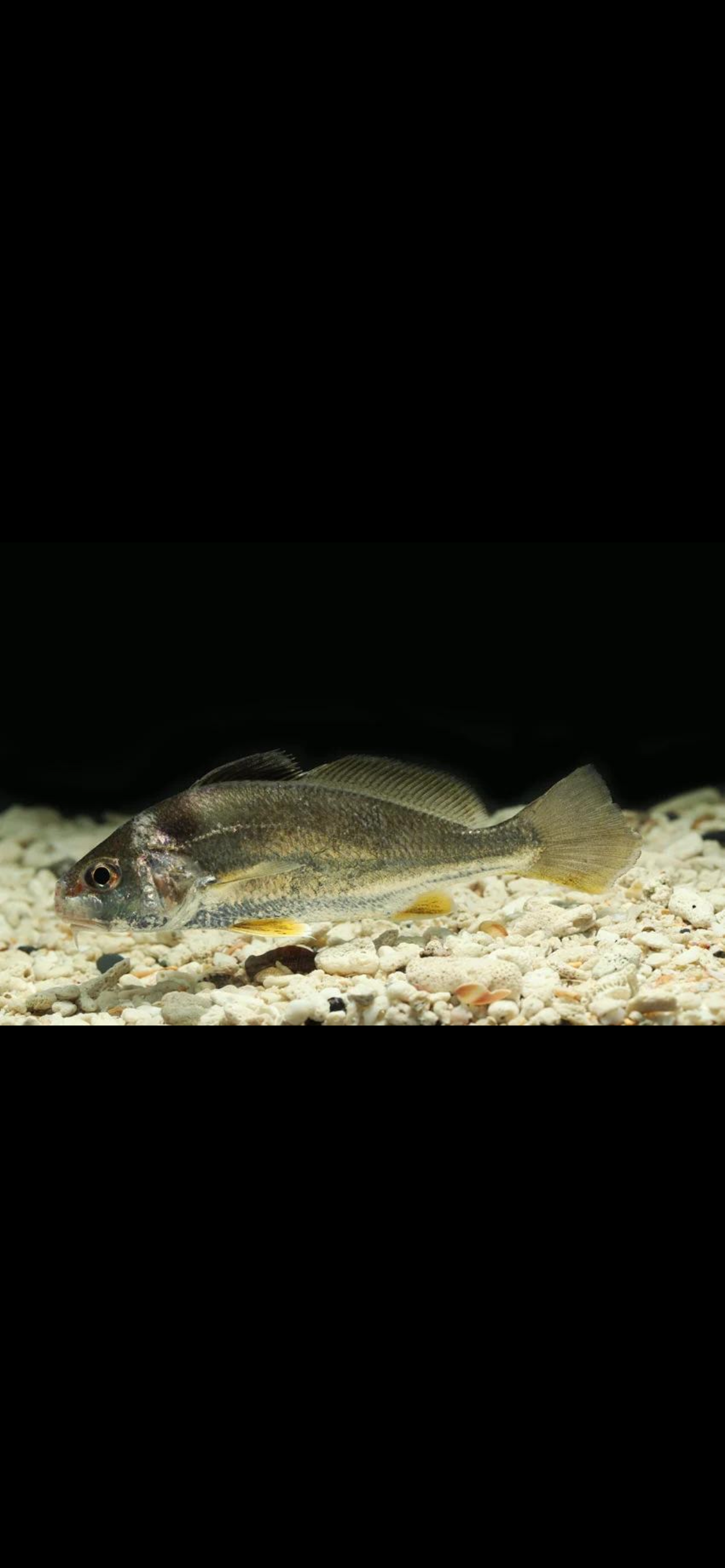
Black Sea Bass — Centropristis striata
LOOK FOR:
Chunky, deep-bodied fish
Dark blue-black, charcoal, or brownish coloration
Blue spots/lines can be visible on the head and body
Large mouth
Prominent dorsal fin with sharp spines
Tail is rounded rather than deeply forked
Color can change significantly depending on surroundings and mood
HABITAT:
Rocky bottoms, reefs, wrecks, jetties and other structure in bays and coastal ocean waters. They especially associate with structure.
REMEMBER:
BLACK SEA BASS = chunky + dark + blue markings + spiky dorsal fin.
NJ CONNECTION:
A major NJ recreational species and one you’re particularly likely to encounter around structure rather than a featureless sandy bottom.
LOOK-ALIKE:
Don’t confuse it with a generic “black/dark fish.” The chunky body + tall spiny dorsal fin + blue markings are your big clues.
WHY YOU CARE:
This is another species that becomes especially relevant if you’re eventually diving. Underwater, habitat can be just as useful as the fish’s appearance:
rock/reef/wreck + chunky dark fish = start thinking black sea bass.


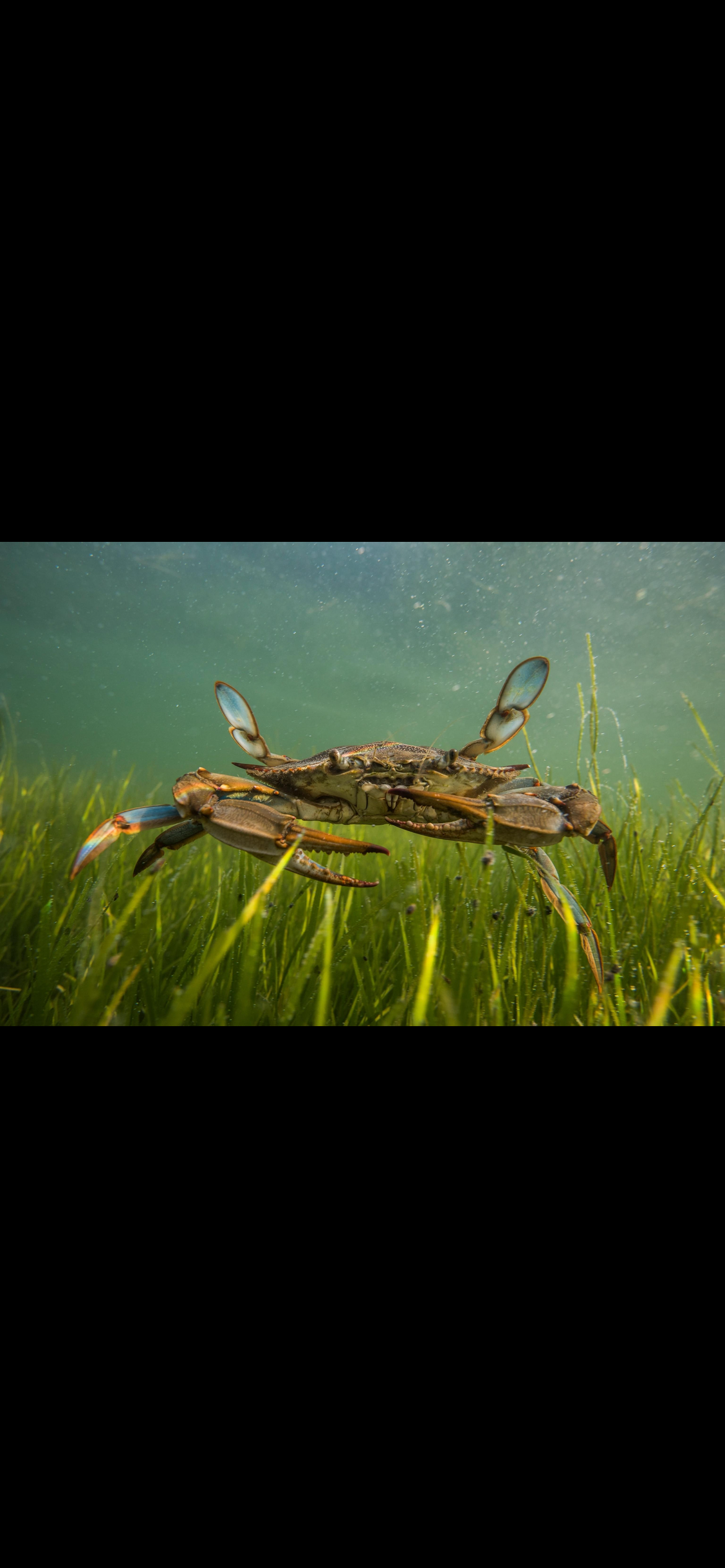
Blue Crab — Callinectes sapidus
LOOK FOR:
Broad, flattened blue-green shell
Blue claws on adult males
Two large claws at the front
Last pair of legs are flattened into paddle-shaped swimming legs
Females generally have red/orange-tipped claws rather than the vivid blue tips of males
Wide, almost oval-shaped carapace
HABITAT:
Bays, estuaries, tidal creeks, marshes and coastal waters. They love shallow, structured habitat and can be found around submerged vegetation and muddy/sandy bottoms.
REMEMBER:
BLUE CRAB = blue claws + paddle feet.
NJ CONNECTION:
Extremely familiar throughout NJ’s estuaries—including the Mullica River/Great Bay and Delaware Bay systems.
LOOK-ALIKE:
Other swimming crabs can look similar, but the flattened paddle-shaped rear legs are a huge clue.
WHY YOU CARE:
Blue crab is a perfect example of why we’re learning habitat AND ID. If you’re poking around a tidal creek and see something scuttling sideways through vegetation, you can start thinking:
“Crab + swimming paddles + estuary = blue crab.”
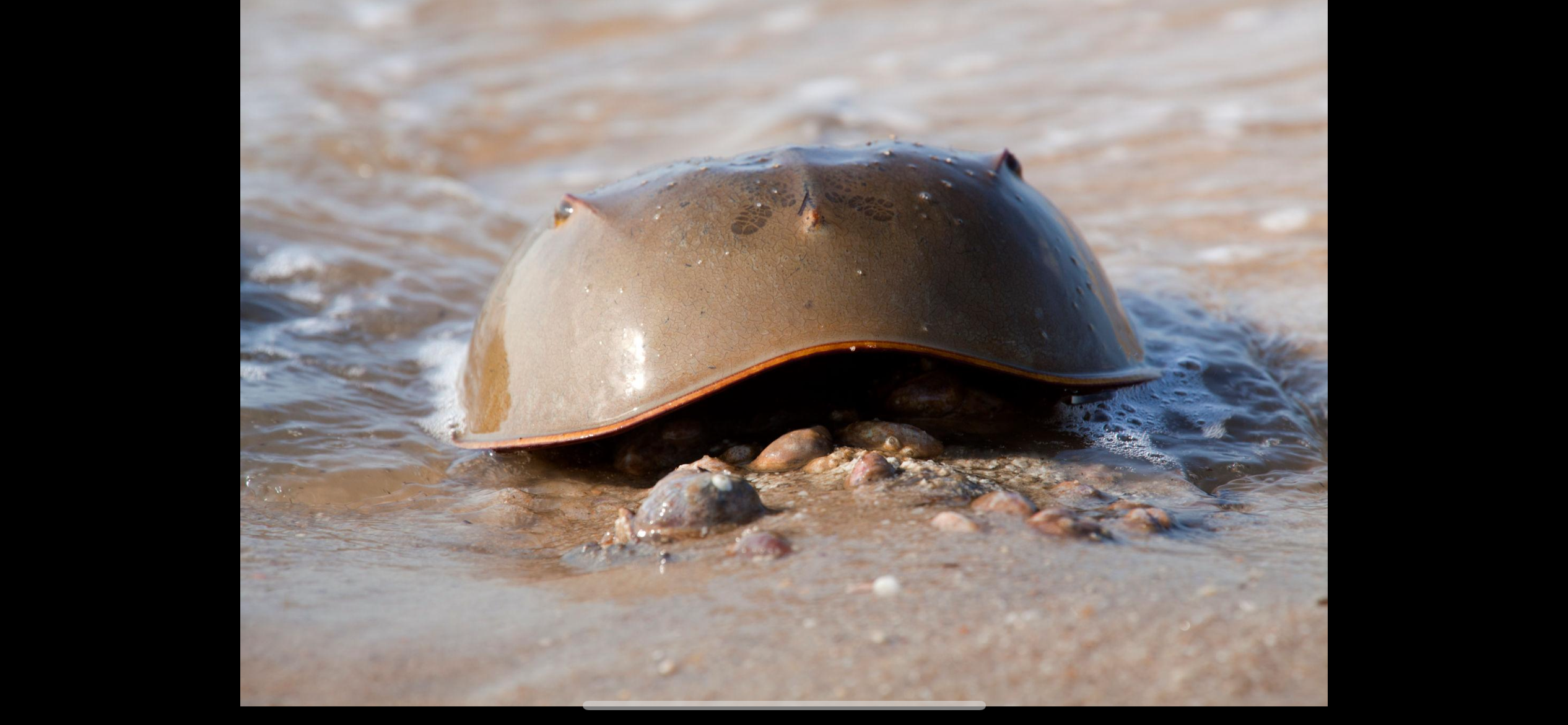
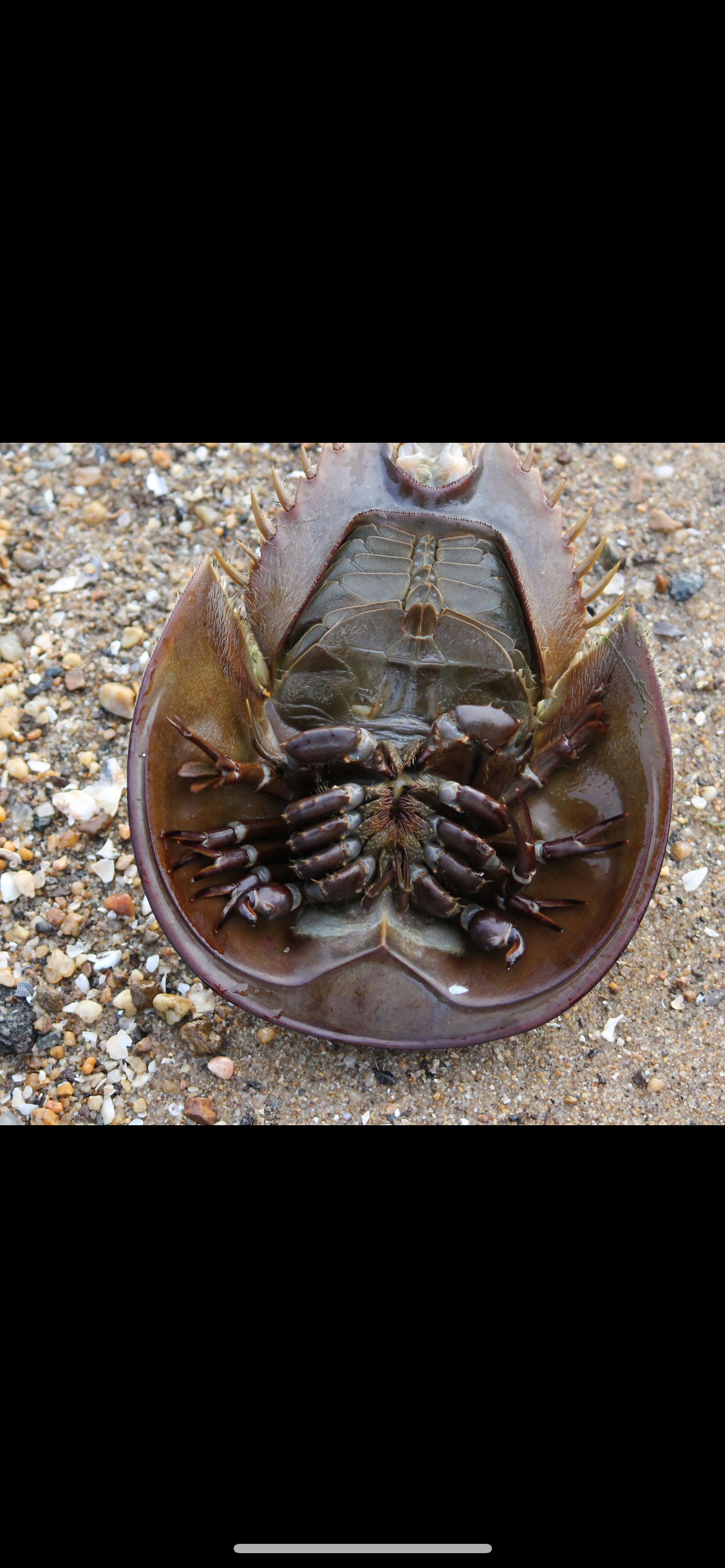
Horseshoe Crab — Limulus polyphemus
LOOK FOR:
Large, rounded helmet-shaped shell
Long pointed tail-like telson
Multiple pairs of legs tucked underneath
Brown/olive-gray shell
Looks like a prehistoric tank 😂
Despite the name, it is NOT a true crab—it’s an arthropod more closely related to spiders and scorpions.
HABITAT:
Shallow coastal waters, bays, estuaries and sandy/muddy bottoms. They come ashore seasonally to spawn.
REMEMBER:
HORSESHOE CRAB = helmet + long tail + prehistoric-looking.
NJ CONNECTION:
Delaware Bay is one of the most important horseshoe crab spawning areas in the world. They’re especially famous here for coming onto beaches to spawn, and their eggs are an important food source for migrating shorebirds.
LOOK-ALIKE:
There really isn’t a good NJ “look-alike.” Once you see that horseshoe-shaped shell + long telson, you’ve got it.
WHY YOU CARE:
This is one of those species where habitat + season + behavior can identify it almost as much as appearance. And because Delaware Bay is such a major part of your learning territory, this one is a MUST-KNOW.
IMPORTANT:
That long tail is not a stinger. It’s primarily used for righting the animal if it gets flipped over.
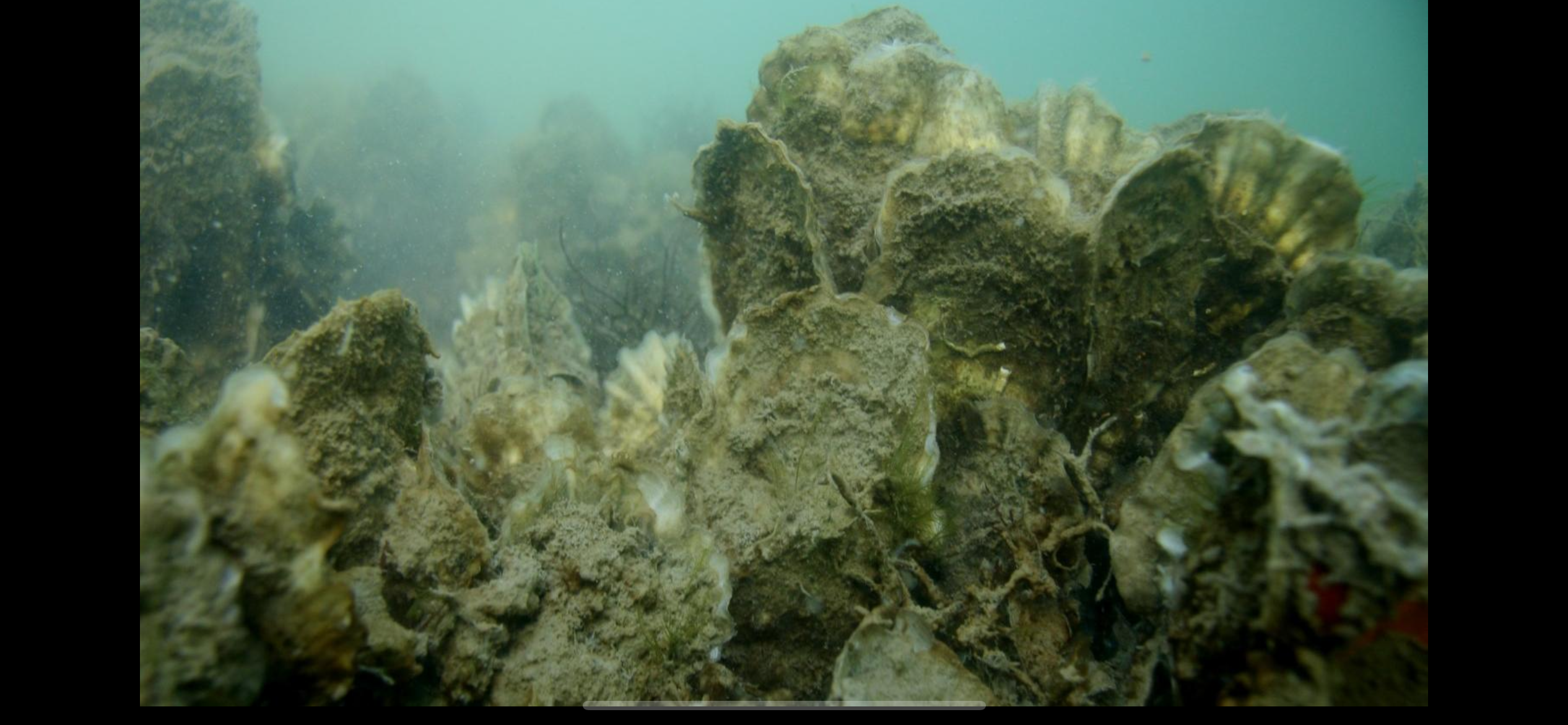
Eastern Oyster — Crassostrea virginica
LOOK FOR:
* Irregular, rough, ridged shell
* Usually gray, tan, brown, or greenish
* Shells often grow stacked on top of one another in clusters
* One shell half is usually deeper/cupped than the other
* No obvious symmetry—the shells can look wonderfully chaotic 😂
HABITAT:
Brackish and saltwater estuaries, especially on hard bottom where oysters can attach to one another and form reefs.
REMEMBER:
OYSTER = rough, irregular shell + grows in clusters.
NJ CONNECTION:
Eastern oysters occur in NJ’s estuaries, including the Delaware Bay and Mullica River–Great Bay systems. Oyster reefs provide habitat for other organisms and help filter the water.
LOOK-ALIKE:
Hard clams have smoother, more symmetrical shells.
Rough + irregular + stacked = oyster.
WHY YOU CARE:
Oysters aren’t just something you eat—they’re ecosystem engineers. A reef can provide structure and shelter for fish, crabs and other organisms.

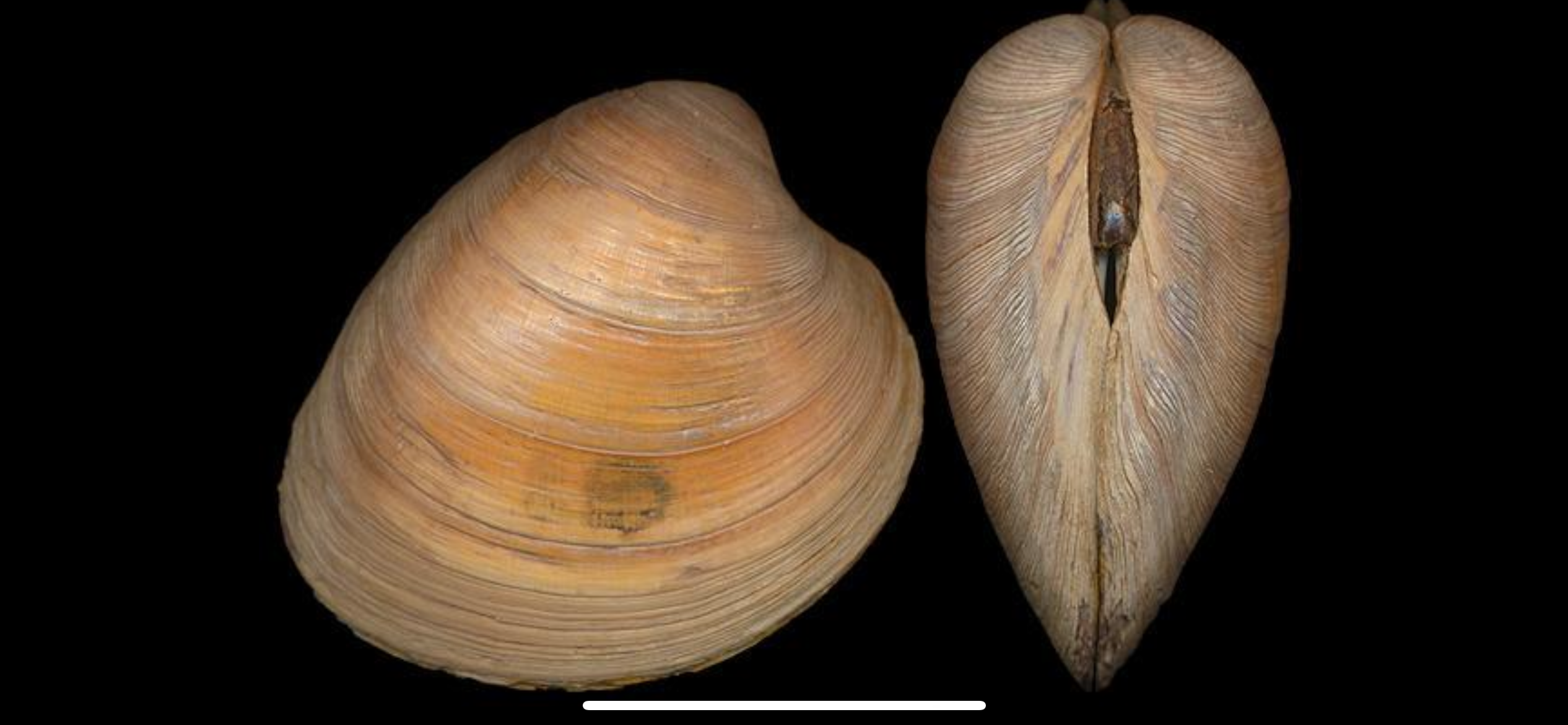
Hard Clam — Mercenaria mercenaria
Also called quahog
LOOK FOR:
Thick, rounded/oval shell
Usually gray, tan, cream, or brownish
Shell is relatively smooth compared with an oyster
Distinct concentric growth rings
Two shells are roughly symmetrical
Often found buried in sediment, rather than attached to hard surfaces
HABITAT:
Sandy or muddy bottoms in bays, estuaries and shallow coastal waters. They bury themselves in the sediment and filter-feed.
REMEMBER:
HARD CLAM = smooth-ish + symmetrical + buried.
NJ CONNECTION:
Hard clams are an important shellfish species in NJ’s bays and estuaries, including the Delaware Bay and Great Bay areas.
LOOK-ALIKE:
Eastern oyster:
Oyster = rough, irregular, attached
Hard clam = smooth-ish, symmetrical, buried
That’s the comparison I want locked into your brain.
WHY YOU CARE:
This gives you another really useful habitat ID clue. If you’re looking at soft sediment and finding paired, rounded shells rather than a reef of attached shells, start thinking clam.
🧠 One-second ID
Smooth-ish + round + buried in mud/sand = HARD CLAM.


Grass Shrimp — Palaemonetes spp.
LOOK FOR:
* Small and mostly transparent/translucent
* Slender, shrimp-shaped body
* Long antennae
* Several pairs of walking legs
* Often has a faint brown/green line or speckled appearance
* Usually only a couple inches long
HABITAT:
Shallow salt marshes, tidal creeks, seagrass and submerged vegetation, especially around structure where they can hide.
REMEMBER:
GRASS SHRIMP = tiny + translucent + living in vegetation.
NJ CONNECTION:
Very common in NJ estuarine habitats and an important food source for larger fish, crabs and birds.
LOOK-ALIKE:
There are several small shrimp species, so don’t worry about nailing the exact species yet. For this deck, your goal is recognizing the grass-shrimp type: tiny, translucent shrimp in shallow vegetated estuary habitat.
WHY YOU CARE:
This is where your food-web brain starts getting REALLY fun:
🌿 Marsh grass / seagrass
↓
🦐 Grass shrimp
↓
🐟 Small fish
↓
🐟 Larger predators
So when you’re looking into a tidal creek and see a bunch of tiny shrimp flicking through vegetation, you’re seeing part of the machinery that supports the whole estuary.
🧠 One-second ID
Tiny + see-through + hiding in grass = GRASS SHRIMP.


Smooth Cordgrass — Spartina alterniflora
LOOK FOR:
Tall, upright green grass
Long, narrow blades
Grows in dense clumps
Often has a somewhat open, vertical appearance
Can have flowering/seed stalks rising above the blades
Tolerates regular tidal flooding
HABITAT:
Low salt marshes, especially along tidal creeks and shorelines that are frequently flooded by saltwater.
REMEMBER:
SMOOTH CORDGRASS = tall grass in the low marsh.
NJ CONNECTION:
This is one of the defining plants of NJ’s salt-marsh landscape, including the Mullica River–Great Bay estuary and Delaware Bay marshes.
WHY YOU CARE:
This isn’t just scenery. Smooth cordgrass helps hold sediment in place, reduce erosion and create three-dimensional habitat for fish, shrimp, crabs and other marsh organisms.
And here’s the field trick:
🌊 Lower/easily flooded marsh → smooth cordgrass
As you move higher into the marsh, you’ll start encountering different plants.
🧠 One-second ID
Tall green grass + right beside tidal water + low marsh = SMOOTH CORDGRASS.


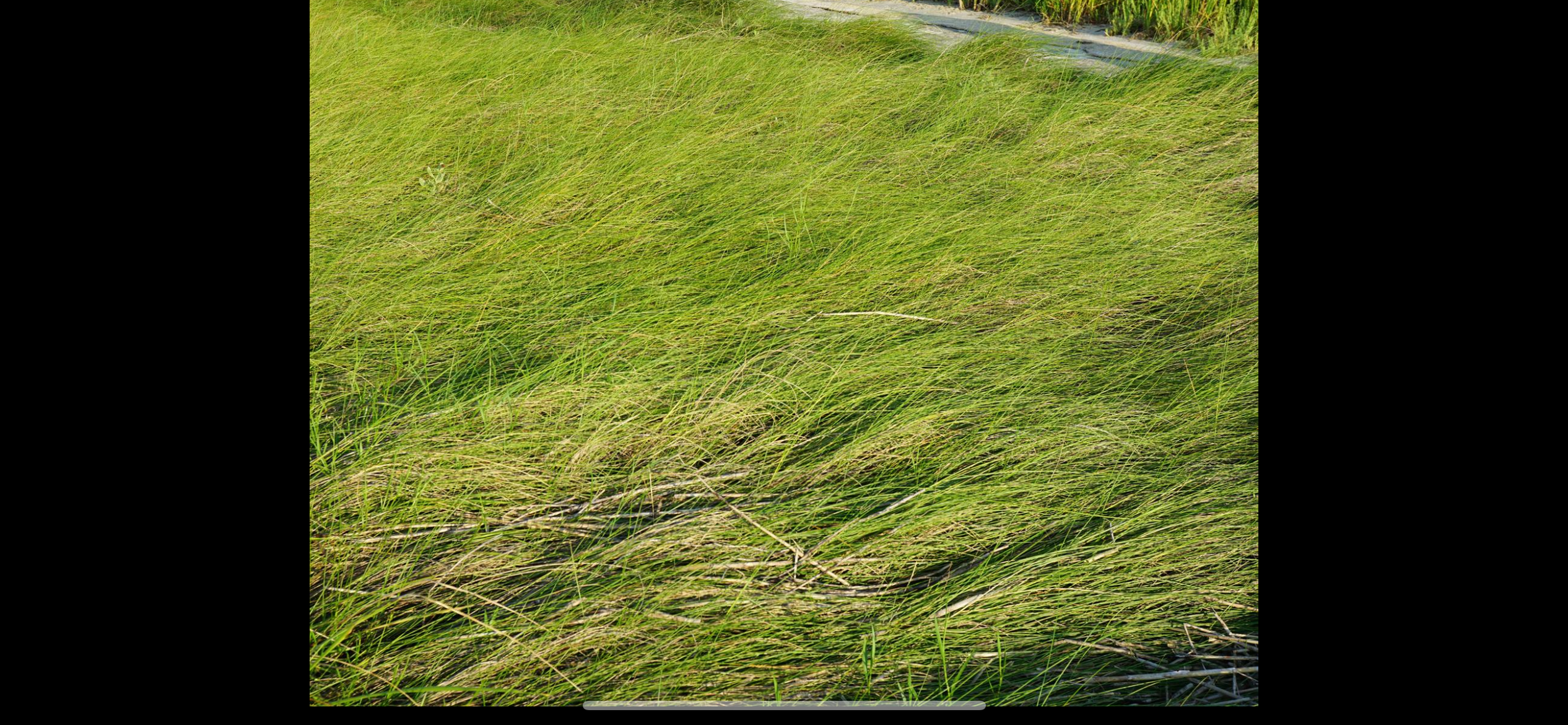
Saltmeadow Cordgrass — Spartina patens
LOOK FOR:
Fine, narrow grass blades
Usually shorter and more delicate-looking than smooth cordgrass
Blades often bend or arch over, giving it a soft, wispy appearance
Can form dense mats/meadows
Green in summer, often straw-colored/brown later in the year
HABITAT:
The higher portions of salt marsh, where it isn’t flooded as frequently as the low marsh.
REMEMBER:
SALTMEADOW = higher marsh + fine, floppy grass.
🌊 The comparison I REALLY want you to remember
Smooth cordgrass (S. alterniflora)
→ low marsh
→ frequently flooded
→ tall/upright
Saltmeadow cordgrass (S. patens)
→ high marsh
→ less frequently flooded
→ fine/floppy
That elevation difference is a HUGE field-ID clue.
NJ CONNECTION:
Very common in NJ salt marshes and especially useful for understanding the zonation of a marsh.
WHY YOU CARE:
You’re starting to learn something much more powerful than individual species:
Plants tell you where you are in the marsh.
If you can identify the vegetation zone, you can start predicting what fish, crabs and other animals you’re likely to encounter there.
🧠 One-second ID
Fine + floppy + high salt marsh = SALTMEADOW CORDGRASS.

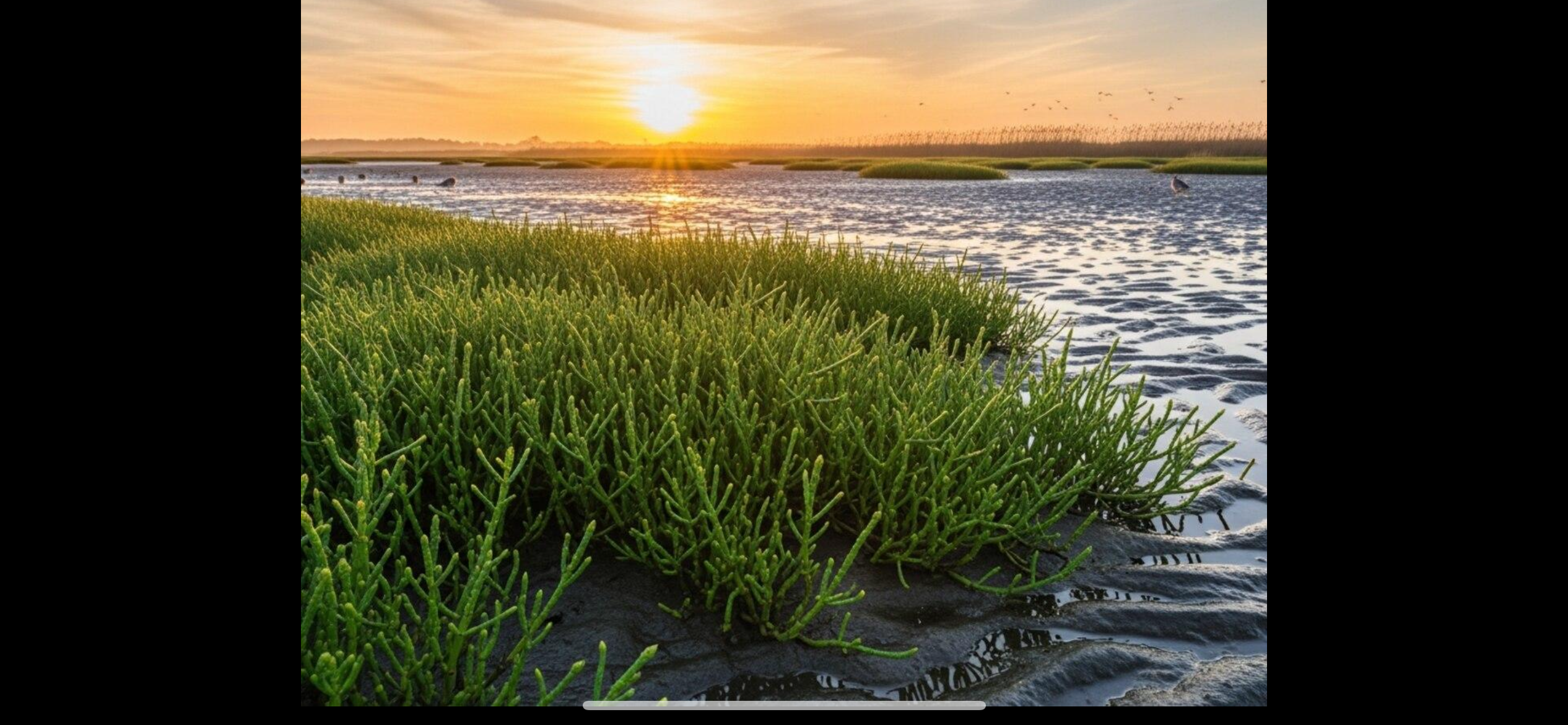
Glasswort / Pickleweed — Salicornia spp.
LOOK FOR:
Succulent, fleshy stems rather than flat grass blades
Jointed, segmented appearance — almost like tiny green beads
Usually bright green in summer
Can turn red/purple later in the season
Low-growing and often forms patches
HABITAT:
Salt marshes, especially very salty, frequently flooded areas and salt pans/marsh edges.
REMEMBER:
PICKLEWEED = little green succulent segments.
🌊 The marsh-zone connection
Think:
Low marsh: 🌿 smooth cordgrass
Higher marsh: 🌾 saltmeadow cordgrass
Salty/soggy patches: 🌱 pickleweed
That’s starting to give you a map of the marsh in your head.
NJ CONNECTION:
Common in NJ salt marshes, including the coastal estuaries you’re learning around Great Bay and Delaware Bay.
WHY YOU CARE:
Pickleweed is a halophyte—a plant adapted to salty conditions. Its fleshy tissues help it deal with that environment.
And yes: some Salicornia species are edible and are sometimes called sea asparagus. 🌱
🧠 One-second ID
Looks like tiny green succulent beads growing in salty marsh = PICKLEWEED.
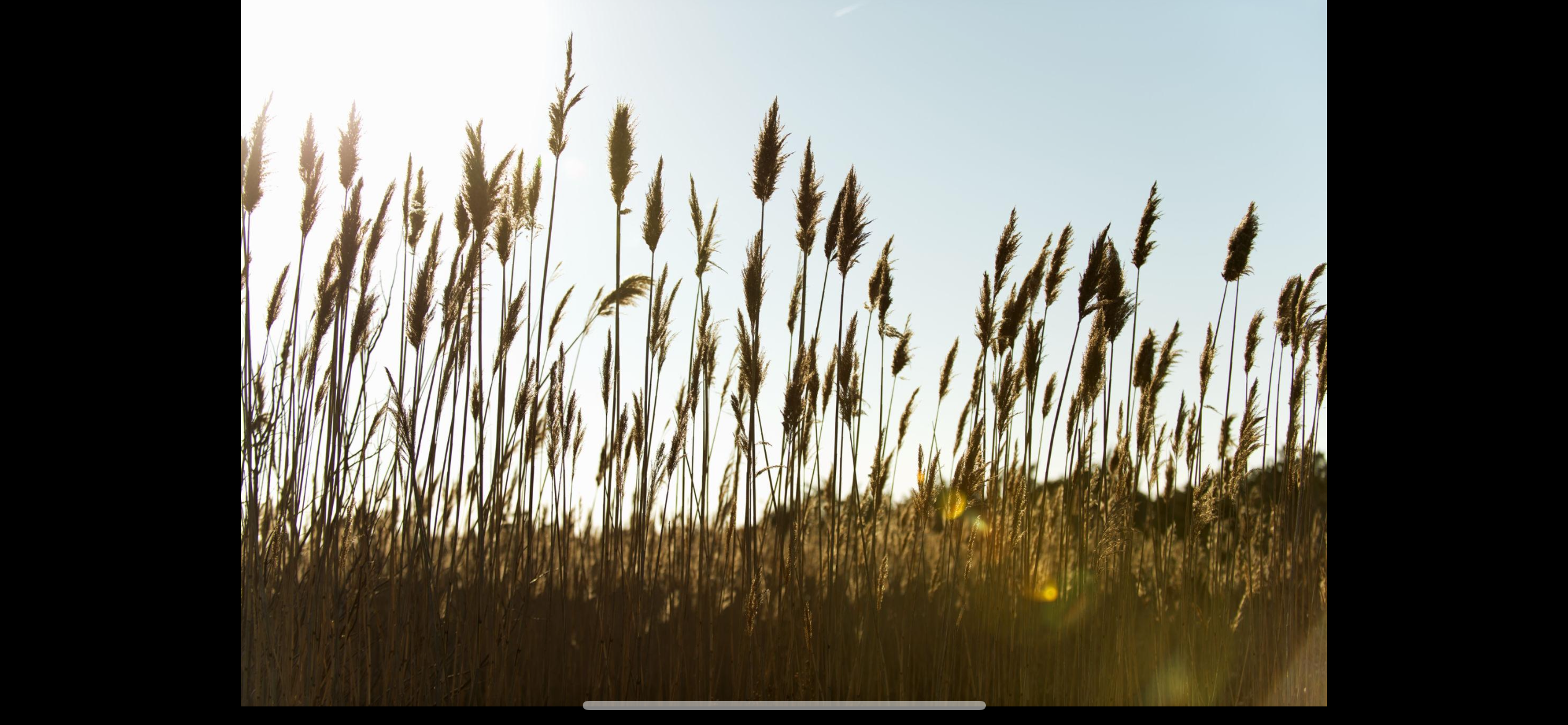
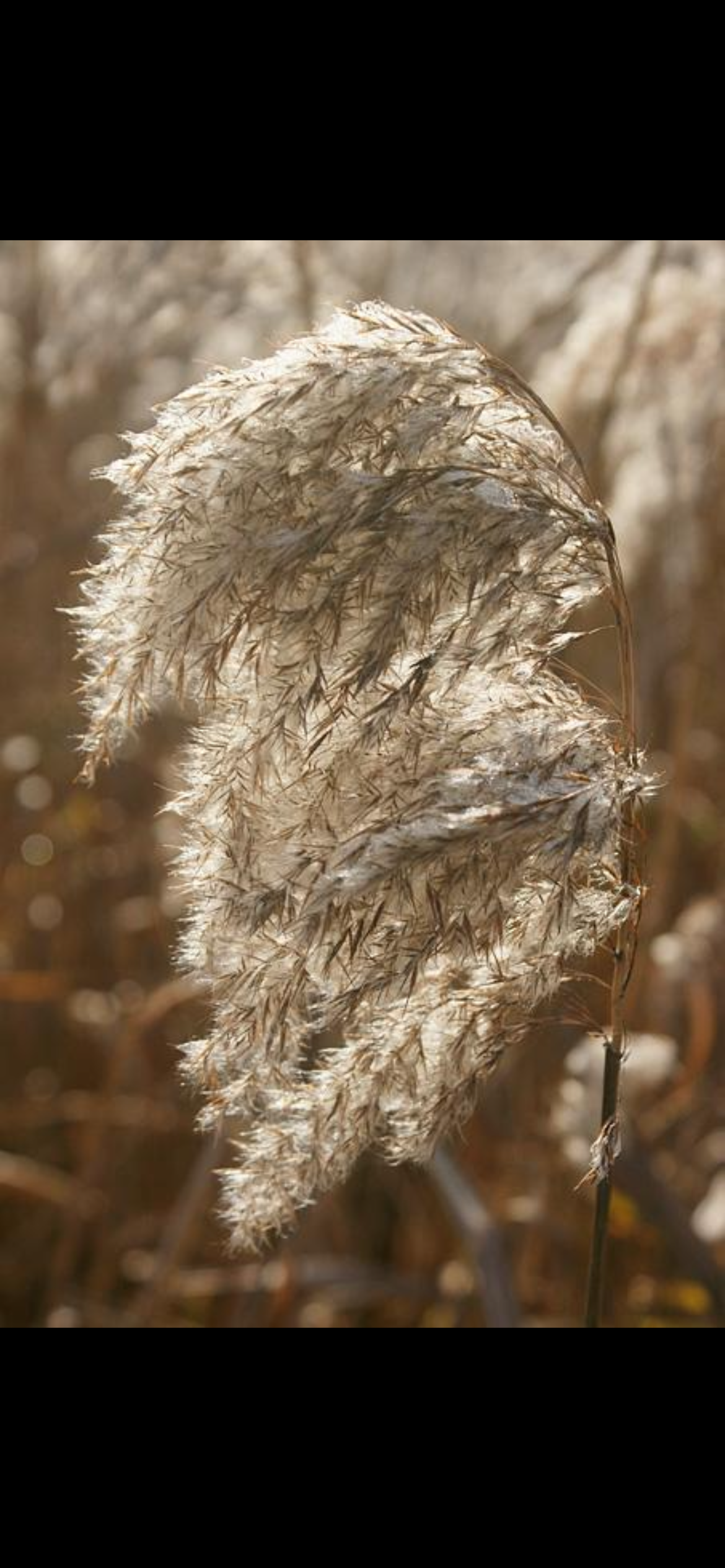
Common Reed / Phragmites — Phragmites australis
LOOK FOR:
Very tall reed—often much taller than surrounding marsh vegetation
Long, broad-ish green leaves
Stiff, upright stems
Large, feathery plume-like flower/seed head
Often forms dense walls or huge stands
HABITAT:
Wetlands, marsh edges, ditches, roadsides, disturbed areas and the edges of tidal wetlands.
REMEMBER:
PHRAGMITES = REALLY TALL + DENSE + FEATHERY PLUMES.
⚠ Important NJ ID note
When you’re learning Phragmites, you’ll hear about native vs. introduced lineages. Don’t worry about trying to determine that from a flashcard photo.
For your first-pass field ID, the goal is simply:
“That’s Phragmites.”
Species/lineage determination can come later.
NJ CONNECTION:
Phragmites is extremely widespread in NJ wetlands and can form dense stands that change the structure of habitat.
LOOK-ALIKE:
Other tall reeds/grasses exist, but the combination of towering height + dense stands + big feathery plume is a strong clue.
WHY YOU CARE:
This is a good one for your professional field brain because it’s a plant you’ll encounter well beyond pristine salt marshes. Learning to recognize it gives you an immediate sense of wetland vegetation and habitat change.
🧠 One-second ID
“Why is that grass approximately the height of a house?” → PHRAGMITES. 😂
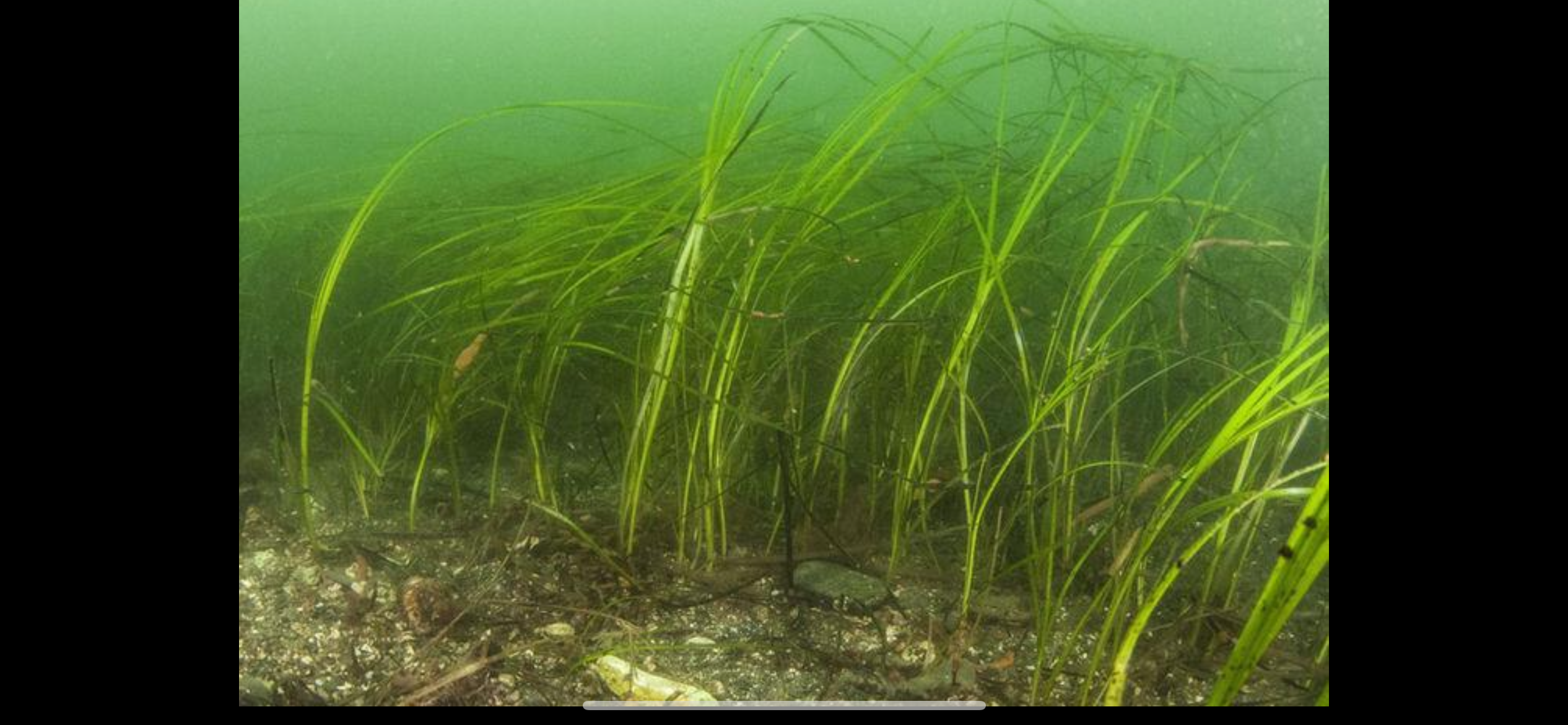
Eelgrass — Zostera marina
LOOK FOR:
* Long, flat, ribbon-like green blades
* Grows completely underwater
* Blades emerge from the bottom in dense tufts
* Forms underwater meadows
* Can look a little like long green ribbons waving in the current
HABITAT:
Shallow, clear coastal bays and estuaries where enough sunlight reaches the bottom.
REMEMBER:
EELGRASS = underwater ribbons + meadow.
🌊 NJ CONNECTION
Eelgrass is an important submerged aquatic plant in NJ’s coastal waters. Its meadows provide nursery and shelter habitat for fish, crabs, shrimp and other organisms.
And THIS is where your deck suddenly connects directly to your future diving goals:
You get underwater and see:
🌿 ribbon-like plants
🦐 shrimp
🦀 crabs
🐟 juvenile fish
You’re not just looking at “underwater grass.” You’re looking at an eelgrass habitat.
LOOK-ALIKE:
Don’t confuse it with seaweed/algae. Eelgrass is a true flowering plant with organized ribbon-like leaves and roots/rhizomes anchoring it in the sediment.
WHY YOU CARE:
Eelgrass meadows are important habitat, and learning to recognize them gives you a habitat clue before you’ve even identified the animals living there.
🧠 One-second ID
Underwater + long flat green ribbons + meadow = EELGRASS.