Polyatomic Ions List + Naming Acids + Chemistry Formulas
 Call Kai
 Learn
Learn Practice Test
 Spaced Repetition
 Match
Match Flashcards
 Knowt Play
1/33

Earn XP
Description and Tags
Flashcards covering polyatomic ion names and their corresponding chemical formulas, with the different types of acids and how to name them, and various chemistry formulas.
Name | Mastery | Learn | Test | Matching | Spaced | Call with Kai | Chat |
|---|
No analytics yet
Send a link to your students to track their progress
34 Terms
What is the chemical formula for the Ammonium ion?
NH4+
What is the chemical formula for the Hydroxide ion?
OH−
What is the chemical formula for the Nitrate ion?
NO3−
What is the chemical formula for the Nitrite ion?
NO2−
What is the chemical formula for the Cyanide ion?
CN−
What is the chemical formula for the Carbonate ion?
CO32−
What is the chemical formula and common alternative name for Hydrogen Carbonate?
Formula: HCO3−; Alternative name: Bicarbonate
What is the chemical formula for the Chromate ion?
CrO42−
What is the chemical formula for the Dichromate ion?
Cr2O72−
What is the chemical formula for the Permanganate ion?
MnO4−
What is the chemical formula for the Sulfate ion?
SO42−
What is the chemical formula for the Sulfite ion?
SO32−
What is the chemical formula for the Phosphate ion?
PO43−
What is the chemical formula for the Phosphite ion?
PO33−
What is the chemical formula for the Perchlorate ion?
ClO4−
What is the chemical formula for the Chlorate ion?
ClO3−
What chemical formula is associated with Hyperchlorite?
ClO−
What is the chemical formula for the Acetate ion?
CH3COO−
Acid
Produce H+ ions, LOWERS pH, increase acids
Binary Acid
H + ____ = hydro_____ic acid
Oxoacid
H____O = ____ic acid (+ate) / ____ous acid (+ite)
Oxanion
G17 (Halogens)
Per___ate (#4)
___ate (#3)
___ite (#2)
Hypo___ate (#1/
Bases
Produce OH- ions
Accepts H+ ions (more - than +), so increases pH lvls, more basic
Hydrates
Ionic + water
Name: ionic (charge l/ll/lll) ____ + mono/di/tri ___ hydrate
Mass → Mole → Particle
÷mm x av.
Mass → Mole → Particle
Mass ← Mole ← Particle
x mm ÷ av.

Mass A → Mole A → Mole B → Mass B
Mass A → Mole A → Mole B → Mass B
÷ mm A Ratio x mm B

Convert to Emperical Formula
1) assume 100 g, turn % → g
2) g/mm of atom
3) divide using the smallest no.
4) multiply if needed until it turns into a whole no. ratio


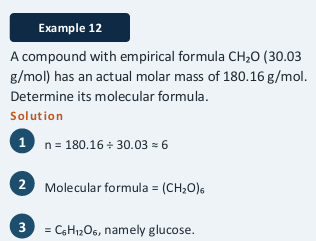
Emperical Formula → Molecular Formula
n = actual molar mass ÷ empirical formula molar mass
Molecular Formula = (Empirical Formula)n

Percent Yield
(Actual yield / Theoretical yield) x 100%


Molarity
Mole / Volume
*Must be L, not mL
*1L = 1,000 mL


Dilution
M1 V1 = M2 V2


Percent Composition
[ (n x MM of elemnt) / MM of compund ] x 100%
![<p>[ (n x MM of elemnt) / MM of compund ] x 100%</p>](https://assets.knowt.com/user-attachments/669eeba9-ab4b-458b-a6cc-134a26f3e768.png)
Limit Reactant (L.R)
mol / coefficient
Limit Reactant ICF Table
To find change:
(element coefficient / L.R coefficient) x L.R Molar Mass
