3.1 Changes of State & The Particle Model
 Call Kai
 Learn
Learn Practice Test
 Spaced Repetition
 Match
Match Flashcards
 Knowt Play
1/26

There's no tags or description
Looks like no tags are added yet.
Name | Mastery | Learn | Test | Matching | Spaced | Call with Kai | Chat |
|---|
No analytics yet
Send a link to your students to track their progress
27 Terms
What is the definition of density?
Mass per unit volume of an object
What is the equation for density? State the units.
density = mass ÷ volume
ρ=Vm
density — kilograms per metre cubed (kg/m3)
mass — kilograms (kg)
volume — metres cubed (m³)
What can the particle model be used to explain?
Different states of matter
Differences in density
Draw a particle model of a solid, liquid, and gas.

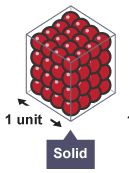
Explain the density of a solid in terms of the arrangement of atoms or molecules.
Tightly packed together — fixed regular pattern
Highest density
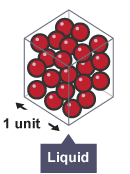
Explain the density of a liquid in terms of the arrangement of atoms or molecules.
Close together — irregular arrangement → can flow over one another
Lower density than solids — particles are less closely packed
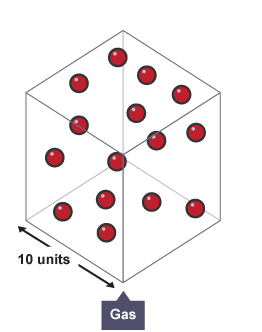
Explain the density of a gas in terms of the arrangement of atoms or molecules.
Very far apart — move freely
Lots of empty space — small mass for a given volume
Least density
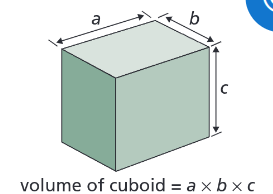
Required Practical 5 — Density — Activity 1 (Regularly Shaped Object)
Describe a method to determine the density of a regularly shaped object.
Use this equation to help you: ρ=Vm
Use ruler to measure the:
length
width
height
Calculate volume of object — l × w × h
Measure mass of object using balance — zero balance first
Calculate density using: ρ=Vm

Required Practical 5 — Density — Activity 2 (Irregularly Shaped Object)
Describe a method to determine the density of a irregularly shaped object.
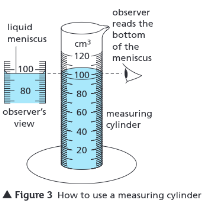
Use this equation and apparatus diagram to help you: ρ=Vm
Measure the mass of the object with a balance — zero the balance first
Fill the displacement can with water until water starts to drip from the spout
Place a measuring cylinder under the spout of the displacement can
Lower the object into the displacement can — fully submerged
Measure the volume of the water in the measuring cylinder = to the volume of the object
Calculate the density using: ρ=Vm
Required Practical 5 — Density — Activity 3 (Liquid)
Describe a method to determine the density of a liquid.
Use this equation to help you: ρ=Vm
Measure the mass of the empty measuring cylinder using a balance — zero the balance first
Pour the liquid into the measuring cylinder — e.g. 100 cm³
Measure the mass of the measuring cylinder with the liquid using a balance — zero the balance first
Calculate the mass using: final mass - starting mass
Calculate the density using: ρ=Vm
State the independent, dependent, and control variables for:
Required Practical 5 — Density — Activity 1 (Regularly Shaped Object)
Independent — object being tested
Dependent — density of the object (mass and volume)
Control:
setting balance to zero — avoids zero errors
State the independent, dependent, and control variables for:
Required Practical 5 — Density — Activity 2 (Irregularly Shaped Object)
Independent — object being tested
Dependent — density of the object (mass and volume)
Control:
starting level of water in displacement can
State the independent, dependent, and control variables for:
Required Practical 5 — Density — Activity 3 (Liquid)
Independent — liquid being tested
Dependent — density of the liquid (mass and volume)
Control:
mass of empty measuring cylinder
What are safety precautions that need to be taken for Required Practical 5 — Density?
Glass equipment breaking — hold it carefully
Water spillage — clean it up or use a sign to avoid slipping
![<ul><li><p>The figure shows a measuring cylinder containing some water, which a student used to measure the volume of a metal ring.</p></li><li><p>When measuring the volume, the student’s eye was in line with the level of the water. </p></li></ul><p>Which type of error would have been caused if the student s eye was not in line with the level of the water? [1 mark]</p>](https://assets.knowt.com/user-attachments/94bc88c8-b876-4b44-bcd2-291041314ab5.png)
The figure shows a measuring cylinder containing some water, which a student used to measure the volume of a metal ring.
When measuring the volume, the student’s eye was in line with the level of the water.
Which type of error would have been caused if the student s eye was not in line with the level of the water? [1 mark]
Random error
![<ul><li><p>The figure shows a measuring cylinder containing some water, which a student used to measure the volume of a metal ring.</p></li><li><p>The student tied a piece of thick string to the metal ring and lowered the ring into the water. </p></li></ul><p>Suggest one reason why the student should have used thin string instead of thick string. [1 mark]</p>](https://assets.knowt.com/user-attachments/b543abda-7176-43a1-a844-ddd2c0dc67f0.png)
The figure shows a measuring cylinder containing some water, which a student used to measure the volume of a metal ring.
The student tied a piece of thick string to the metal ring and lowered the ring into the water.
Suggest one reason why the student should have used thin string instead of thick string. [1 mark]
It would displace less water than thick string.

![<ul><li><p>The figure shows a measuring cylinder containing some water, which a student used to measure the volume of a metal ring.</p></li><li><p>The table below shows the results.</p></li></ul><table style="min-width: 75px;"><colgroup><col style="min-width: 25px;"><col style="min-width: 25px;"><col style="min-width: 25px;"></colgroup><tbody><tr><td colspan="1" rowspan="1" style="animation: auto ease 0s 1 normal none running none; appearance: none; background: none 0% 0% / auto repeat scroll padding-box border-box rgb(239, 239, 239); inset: auto; clear: none; clip: auto; columns: auto; contain: none; container: none; content: normal; cursor: auto; cx: 0px; cy: 0px; d: none; direction: ltr; display: table-cell; fill: rgb(0, 0, 0); filter: none; flex: 0 1 auto; float: none; gap: normal; hyphens: manual; interactivity: auto; isolation: auto; margin-right: 0px; margin-bottom: 0px; margin-left: 0px; marker: none; mask: none; offset: normal; opacity: 1; order: 0; orphans: 2; outline: rgb(31, 31, 31) none 0px; overlay: none; padding: 16px 12px 16px 0px; page: auto; perspective: none; position: static; quotes: auto; r: 0px; resize: none; rotate: none; rx: auto; ry: auto; scale: none; speak: normal; stroke: none; transform: none; transition: all; translate: none; visibility: visible; widows: 2; x: 0px; y: 0px; zoom: 1; border: 1px solid; margin-top: 0px !important;"><p><span style="color: red;"><strong>Volume of water in cm³</strong></span></p></td><td colspan="1" rowspan="1" style="animation: auto ease 0s 1 normal none running none; appearance: none; background: none 0% 0% / auto repeat scroll padding-box border-box rgb(239, 239, 239); inset: auto; clear: none; clip: auto; columns: auto; contain: none; container: none; content: normal; cursor: auto; cx: 0px; cy: 0px; d: none; direction: ltr; display: table-cell; fill: rgb(0, 0, 0); filter: none; flex: 0 1 auto; float: none; gap: normal; hyphens: manual; interactivity: auto; isolation: auto; margin-right: 0px; margin-bottom: 0px; margin-left: 0px; marker: none; mask: none; offset: normal; opacity: 1; order: 0; orphans: 2; outline: rgb(31, 31, 31) none 0px; overlay: none; padding: 16px 12px 16px 0px; page: auto; perspective: none; position: static; quotes: auto; r: 0px; resize: none; rotate: none; rx: auto; ry: auto; scale: none; speak: normal; stroke: none; transform: none; transition: all; translate: none; visibility: visible; widows: 2; x: 0px; y: 0px; zoom: 1; border: 1px solid; margin-top: 0px !important;"><p><span style="color: red;"><strong>Volume of water and ring in cm³</strong></span></p></td><td colspan="1" rowspan="1" style="animation: auto ease 0s 1 normal none running none; appearance: none; background: none 0% 0% / auto repeat scroll padding-box border-box rgb(239, 239, 239); inset: auto; clear: none; clip: auto; columns: auto; contain: none; container: none; content: normal; cursor: auto; cx: 0px; cy: 0px; d: none; direction: ltr; display: table-cell; fill: rgb(0, 0, 0); filter: none; flex: 0 1 auto; float: none; gap: normal; hyphens: manual; interactivity: auto; isolation: auto; margin-right: 0px; margin-bottom: 0px; margin-left: 0px; marker: none; mask: none; offset: normal; opacity: 1; order: 0; orphans: 2; outline: rgb(31, 31, 31) none 0px; overlay: none; padding: 16px 0px; page: auto; perspective: none; position: static; quotes: auto; r: 0px; resize: none; rotate: none; rx: auto; ry: auto; scale: none; speak: normal; stroke: none; transform: none; transition: all; translate: none; visibility: visible; widows: 2; x: 0px; y: 0px; zoom: 1; border: 1px solid; margin-top: 0px !important;"><p><span style="color: red;"><strong>Volume of ring in cm³</strong></span></p></td></tr><tr><td colspan="1" rowspan="1" style="animation: auto ease 0s 1 normal none running none; appearance: none; background: none 0% 0% / auto repeat scroll padding-box border-box rgba(0, 0, 0, 0); inset: auto; clear: none; clip: auto; columns: auto; contain: none; container: none; content: normal; cursor: auto; cx: 0px; cy: 0px; d: none; direction: ltr; display: table-cell; fill: rgb(0, 0, 0); filter: none; flex: 0 1 auto; float: none; gap: normal; hyphens: manual; interactivity: auto; isolation: auto; margin-right: 0px; margin-bottom: 0px; margin-left: 0px; marker: none; mask: none; offset: normal; opacity: 1; order: 0; orphans: 2; outline: rgb(31, 31, 31) none 0px; overlay: none; padding: 16px 12px 16px 0px; page: auto; perspective: none; position: static; quotes: auto; r: 0px; resize: none; rotate: none; rx: auto; ry: auto; scale: none; speak: normal; stroke: none; transform: none; transition: all; translate: none; visibility: visible; widows: 2; x: 0px; y: 0px; zoom: 1; border: 1px solid; margin-top: 0px !important;"><p><span style="background-color: rgba(0, 0, 0, 0);">5.0</span></p></td><td colspan="1" rowspan="1" style="animation: auto ease 0s 1 normal none running none; appearance: none; background: none 0% 0% / auto repeat scroll padding-box border-box rgba(0, 0, 0, 0); inset: auto; clear: none; clip: auto; columns: auto; contain: none; container: none; content: normal; cursor: auto; cx: 0px; cy: 0px; d: none; direction: ltr; display: table-cell; fill: rgb(0, 0, 0); filter: none; flex: 0 1 auto; float: none; gap: normal; hyphens: manual; interactivity: auto; isolation: auto; margin-right: 0px; margin-bottom: 0px; margin-left: 0px; marker: none; mask: none; offset: normal; opacity: 1; order: 0; orphans: 2; outline: rgb(31, 31, 31) none 0px; overlay: none; padding: 16px 12px 16px 0px; page: auto; perspective: none; position: static; quotes: auto; r: 0px; resize: none; rotate: none; rx: auto; ry: auto; scale: none; speak: normal; stroke: none; transform: none; transition: all; translate: none; visibility: visible; widows: 2; x: 0px; y: 0px; zoom: 1; border: 1px solid; margin-top: 0px !important;"><p><span style="background-color: rgba(0, 0, 0, 0);">5.4</span></p></td><td colspan="1" rowspan="1" style="animation: auto ease 0s 1 normal none running none; appearance: none; background: none 0% 0% / auto repeat scroll padding-box border-box rgba(0, 0, 0, 0); inset: auto; clear: none; clip: auto; columns: auto; contain: none; container: none; content: normal; cursor: auto; cx: 0px; cy: 0px; d: none; direction: ltr; display: table-cell; fill: rgb(0, 0, 0); filter: none; flex: 0 1 auto; float: none; gap: normal; hyphens: manual; interactivity: auto; isolation: auto; margin-right: 0px; margin-bottom: 0px; margin-left: 0px; marker: none; mask: none; offset: normal; opacity: 1; order: 0; orphans: 2; outline: rgb(31, 31, 31) none 0px; overlay: none; padding: 16px 0px; page: auto; perspective: none; position: static; quotes: auto; r: 0px; resize: none; rotate: none; rx: auto; ry: auto; scale: none; speak: normal; stroke: none; transform: none; transition: all; translate: none; visibility: visible; widows: 2; x: 0px; y: 0px; zoom: 1; border: 1px solid; margin-top: 0px !important;"><p><span style="background-color: rgba(0, 0, 0, 0);">0.4</span></p></td></tr></tbody></table><ul><li><p>The true volume of the ring was 0.44 cm<sup>3</sup>. </p></li><li><p>Even without using the string, the measuring cylinder could not give an accurate value for the volume of the ring. </p></li></ul><p>Give one reason why. [1 mark]</p>](https://assets.knowt.com/user-attachments/9428b4ea-1ee8-4842-a8ab-5665c21ba851.png)
The figure shows a measuring cylinder containing some water, which a student used to measure the volume of a metal ring.
The table below shows the results.
Volume of water in cm³ | Volume of water and ring in cm³ | Volume of ring in cm³ |
5.0 | 5.4 | 0.4 |
The true volume of the ring was 0.44 cm3.
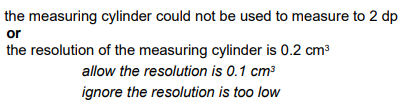
Even without using the string, the measuring cylinder could not give an accurate value for the volume of the ring.
Give one reason why. [1 mark]
The resolution of the measuring cylinder is 0.2 cm³.
![<ul><li><p>The figure shows a measuring cylinder containing some water, which a student used to measure the volume of a metal ring.</p></li><li><p>The student used a balance to measure the mass of the ring. </p></li><li><p>After the ring was removed from the balance, the reading on the balance was 0.02 g. </p></li></ul><p>How could the student use the readings from the balance to determine the correct mass of the ring? [1 mark]</p>](https://assets.knowt.com/user-attachments/70050301-dd17-452b-9960-61793001b03b.png)
The figure shows a measuring cylinder containing some water, which a student used to measure the volume of a metal ring.
The student used a balance to measure the mass of the ring.
After the ring was removed from the balance, the reading on the balance was 0.02 g.
How could the student use the readings from the balance to determine the correct mass of the ring? [1 mark]
Subtract 0.02 from the measured value.

A student investigated the density of different fruits.
The table below shows the results.
Fruit | Density in g/cm³ |
Apple | 0.68 |
Kiwi | 1.03 |
Lemon | 0.95 |
Lime | 1.05 |
The student determined the volume of each fruit using a displacement can and a measuring cylinder.
What other piece of equipment would the student need to determine the density of each fruit? [1 mark]
Balance

A student investigated the density of different fruits.
The table below shows the results.
Fruit | Density in g/cm³ |
Apple | 0.68 |
Kiwi | 1.03 |
Lemon | 0.95 |
Lime | 1.05 |
The student determined the volume of each fruit using a displacement can and a measuring cylinder.
The student only measured the volume of each fruit once.
The volume measurements cannot be used to show that the method to measure volume gives precise readings.
Give the reason why. [1 mark]
Repeat readings of volume need to be taken of each fruit to show that the readings are close together.

![<ul><li><p>The diagrams, X, Y and Z, show how the particles are arranged in the three states of matter.</p></li></ul><p>Which one of the diagrams, X, Y or Z, shows the arrangement of particles in a liquid? [1 mark]</p>](https://assets.knowt.com/user-attachments/29736a96-f15d-4a79-97df-9551ed9cef7a.png)
The diagrams, X, Y and Z, show how the particles are arranged in the three states of matter.
Which one of the diagrams, X, Y or Z, shows the arrangement of particles in a liquid? [1 mark]
Z
![<ul><li><p>The diagrams, X, Y and Z, show how the particles are arranged in the three states of matter.</p></li></ul><p>Which one of the diagrams, X, Y or Z, shows the arrangement of particles in a gas? [1 mark]</p>](https://assets.knowt.com/user-attachments/00e31b15-fe38-423d-b5b6-b186a1b872ea.png)
The diagrams, X, Y and Z, show how the particles are arranged in the three states of matter.
Which one of the diagrams, X, Y or Z, shows the arrangement of particles in a gas? [1 mark]
X
![<p>Choose the correct answer in each box to complete the sentence. [1 mark]</p><p>In a gas, the particles are _____________________________________.</p>](https://assets.knowt.com/user-attachments/2d2d7eb0-161f-491a-9883-1a4b69c6c7b3.png)
Choose the correct answer in each box to complete the sentence. [1 mark]
In a gas, the particles are _____________________________________.
moving randomly
![<p>Choose the correct answer in each box to complete the sentence. [1 mark]</p><p>In a solid, the forces between the particles are _____________________________ the forces between weaker than the particles in a liquid.</p>](https://assets.knowt.com/user-attachments/e4b9b17d-9723-44ff-b806-68b0136e90cd.png)
Choose the correct answer in each box to complete the sentence. [1 mark]
In a solid, the forces between the particles are _____________________________ the forces between weaker than the particles in a liquid.
stronger than
![<ul><li><p>The diagrams show the arrangement of the particles in a solid and in a gas. </p></li><li><p>Each circle represents one particle.</p></li></ul><p>Explain, in terms of the particles, why gases are easy to compress. [2 marks]</p>](https://assets.knowt.com/user-attachments/72bd6b84-7f9b-44e6-92d8-f29d77c37567.png)
The diagrams show the arrangement of the particles in a solid and in a gas.
Each circle represents one particle.
Explain, in terms of the particles, why gases are easy to compress. [2 marks]
Large gaps between particles
So it is easy to push particles closer together

When substances change state (______, ________, _____, ________, ________, or __________) — mass is ____________.
melt
freeze
boil
evaporate
condense
sublimate
conserved
Changes of state are physical changes which differ from chemical changes.
Explain why.
The material recovers its original properties if the change is reversed.